Tag:

Summer

Hatus.

Nepal 99 771 ergebnis
West-Nepal, Baga-La-Phedi 3750m, July
Nepal 99 772 ergebnis
West-Nepal, Baga-La-Phedi 3750m, July

Description

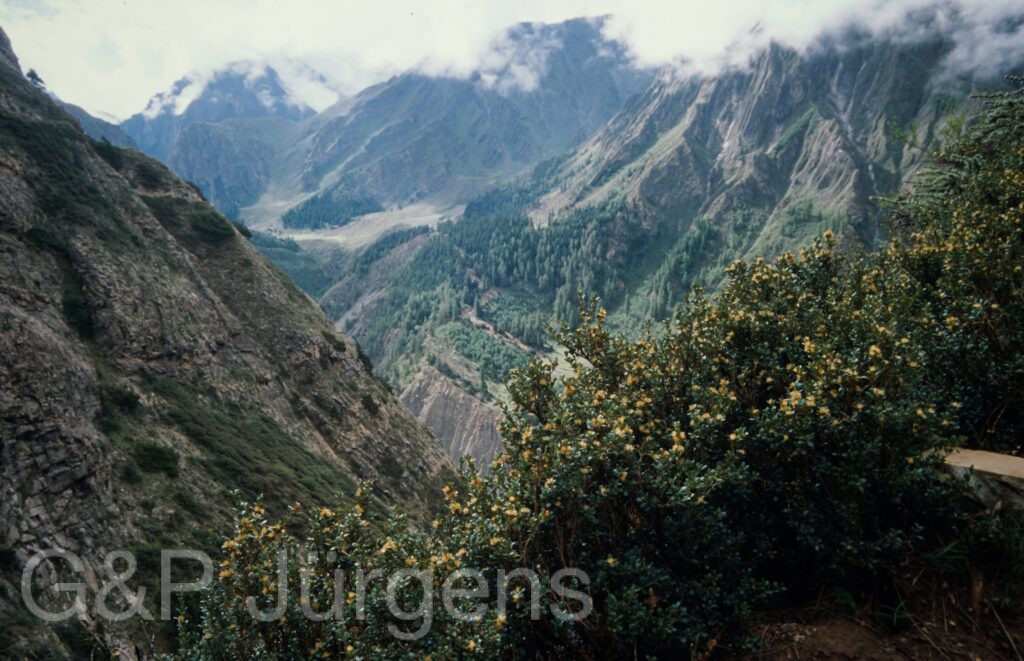
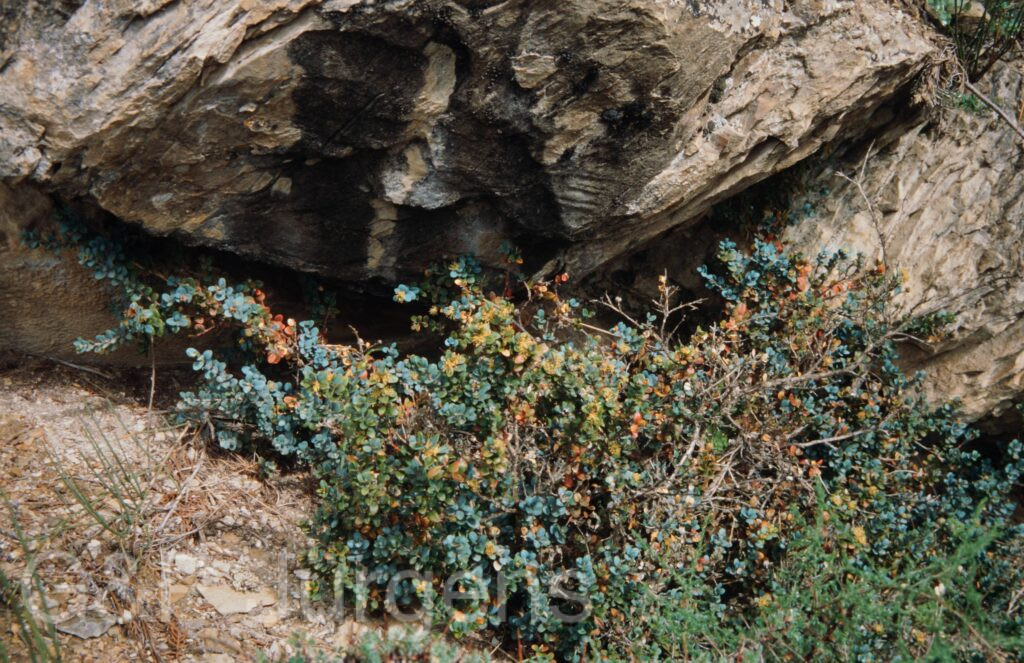
Buxus rugulosa is an evergreen shrub of the high Himalaya and the mountains of western China. GBIF (some 313 occurrences) records it from China, Nepal and Pakistan, with a few outlying records from Turkey likely reflecting cultivation. It grows on open rocky slopes, in alpine scrub, among boulders and at the upper forest margin, ascending to high elevations. The illustrated plant is from western Nepal at Baga-La-Phedi at about 3,750 m, flowering in July, a characteristically high station near or above treeline, where it forms low, hardy thickets exposed to intense radiation and cold.

The plant is a low, much-branched evergreen shrub, often dwarf and cushion-forming in exposed sites, with quadrangular young shoots. The leaves are opposite, small, leathery, obovate to elliptic and rounded or notched at the apex, with a characteristically rugulose (finely wrinkled) upper surface, glossy dark green. The flowers are small, unisexual and apetalous, borne in axillary clusters with a single terminal female flower surrounded by several males; the perianth consists of inconspicuous tepals. The fruit is a three-horned woody capsule that dehisces explosively, ejecting the shiny black seeds.

Buxus (box) is a genus of slow-growing evergreens placed in the basal eudicot family Buxaceae; the wood is dense and finely grained. Buxus rugulosa is distinguished within the Himalayan-Chinese box species by its small rugulose leaves and dwarf alpine habit. It is not currently regarded as threatened, though high-altitude Himalayan populations are restricted to specialised rocky habitats and merit monitoring, particularly given upslope pressures from a warming climate.

Author: Hatus. · Sources: POWO (Kew), Flora of China Vol. 11, Flora of Pakistan, GBIF, Köhler: Buxaceae (Species Plantarum: Flora of the World)

Lindl.

Bh09 214 G369
Bhutan Dochu-La, 3000m June
Bh09 215 G361
Bhutan Dochu-La, 3000m June
Nepal 99 190 ergebnis
West-Nepal Lara-Lake 3000m, June
Garh 07 91 ergebnis
India Garhwal Trijugi Narayan 2500m, June

Description

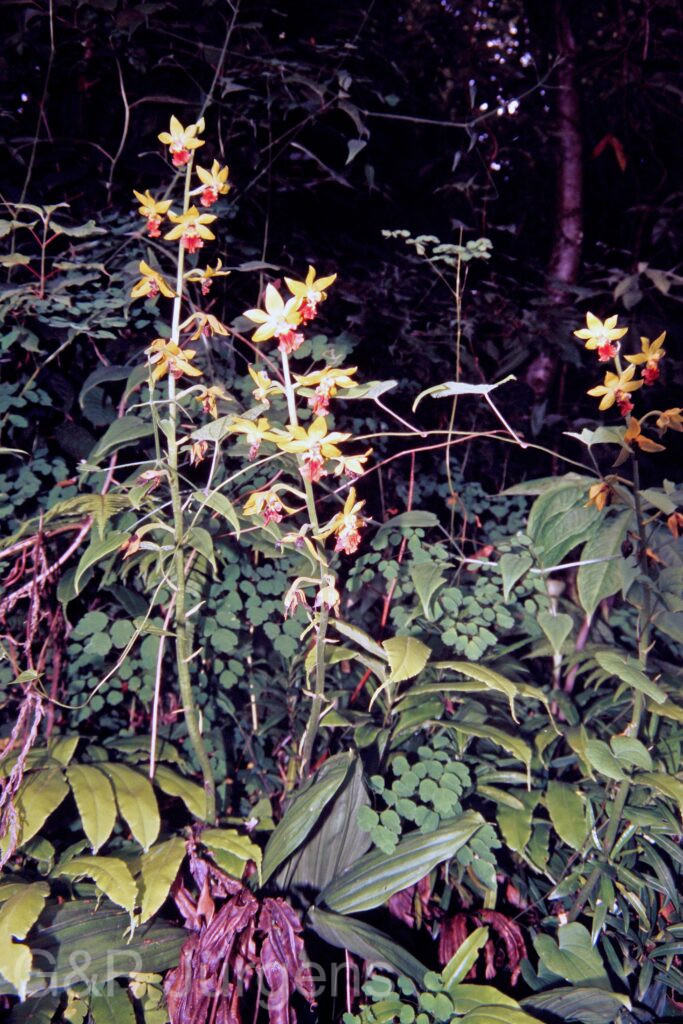
Calanthe tricarinata is a distinctive terrestrial orchid widely distributed from the western Himalayas (Pakistan, northwest India) through Nepal, Bhutan, and Myanmar to China, Taiwan, and Japan. With over 1,000 documented GBIF occurrences, it is one of the better-known Himalayan Calanthe species. It inhabits cool, moist montane forests and subalpine Rhododendron scrub at 1,500–3,500 m elevation.

The plant is an evergreen species with short, stout pseudobulbs. Leaves are 3–5, broadly elliptic, 20–35 cm long, plicate, and persist through winter. The inflorescence is an erect raceme 25–40 cm tall, bearing 8–15 flowers. The flowers are unmistakable: 3–4 cm across, with olive-green to yellowish-green sepals and petals, contrasting strikingly with the large, pendent, reddish-brown to maroon lip. The lip is deeply trilobed, the mid-lobe bifid, with three prominent parallel keels (carinae) on the disc — the diagnostic feature reflected in the name 'tricarinata'. The spur is short, 5–8 mm. Flowering occurs from May to July.

Calanthe tricarinata is readily identified by its unique green-and-brown colour combination, unlike any other Himalayan orchid. The species was photographed at the Dochu-La pass (3,000 m) in Bhutan, also recorded from the Lara Lake area of western Nepal and Garhwal (India) — documenting its broad Himalayan distribution.

Author: Lindl. · Sources: POWO (Kew), Flora of Bhutan Vol. 3, Flora of Nepal Checklist, GBIF, Pearce & Cribb: The Orchids of Bhutan (2002)

Hook.f. & Thomson

BhutanPG2011 448
Bhutan Ludlow-Sherriff-Trail Warrtlang-La, 4500m June
Sikkim2003 105 P143
Sikkim below Dzongri 3850m 08.2003
Nepal 2001 312 ergebnis ergebnis
Nepal (Gorkha) Kharka 3100m, May

Description

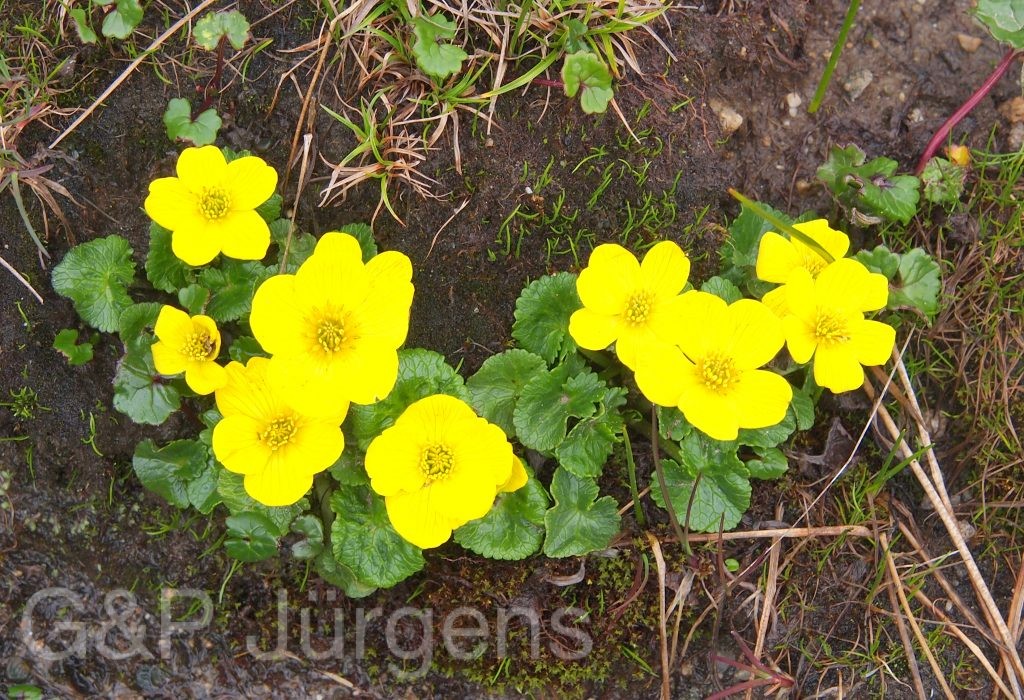
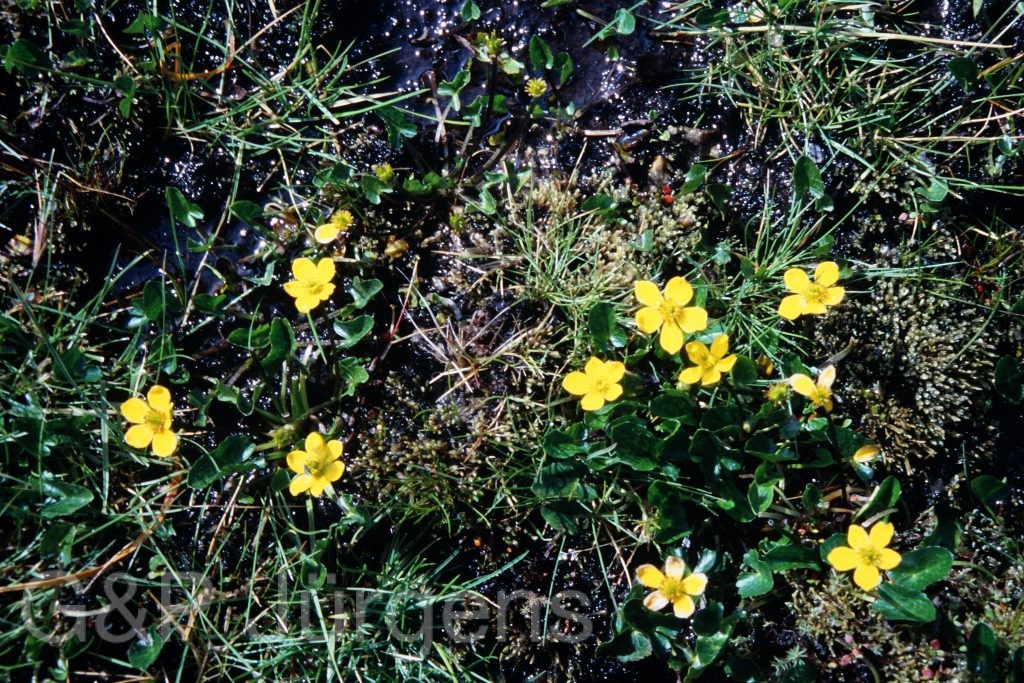
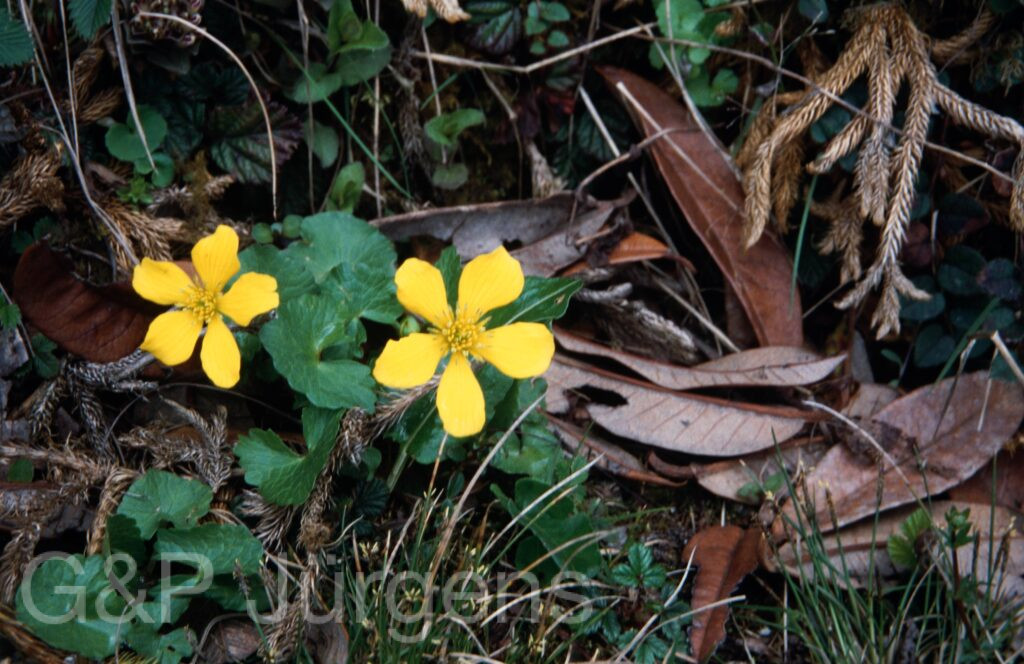
Caltha scaposa is a high-alpine marsh marigold of the Sino-Himalayan region, with records from China, India, Nepal, Bhutan and Myanmar and disjunct documentation in Korea and Mongolia; GBIF aggregates over 1,000 occurrences. It is a plant of wet alpine turf, snowmelt flushes, streamsides and moist gravelly meadows, typically between roughly 3,100 and 4,500 m. The collections illustrated span this gradient, from Warrtlang-La on the Ludlow-Sherriff trail in Bhutan at about 4,500 m in June, to the slopes below Dzongri in Sikkim near 3,850 m, and a comparatively low Gorkha station in Nepal at 3,100 m in May, where it flowers as the snow recedes.

It is a small, glabrous, somewhat fleshy perennial herb arising from a short, fibrous-rooted rhizome. The leaves are largely basal and long-petiolate, with cordate to reniform-orbicular blades bearing crenate margins and a deep cordate sinus. The flowering stem is scapose, as the epithet indicates, usually leafless and bearing a solitary terminal flower. The showy perianth consists of five to several petaloid, golden-yellow sepals, true petals being absent; the numerous stamens surround a cluster of free, sessile carpels. The fruit is an aggregate of spreading, beaked follicles dehiscing along the ventral suture.

Within Caltha, the scapose habit and solitary flower distinguish C. scaposa from the leafy-stemmed, multiflowered C. palustris group. As an obligate wetland species of the alpine zone, it indicates permanently moist soils and is pollinated chiefly by flies and early-season insects. Though locally common across a wide range and not presently considered threatened, its dependence on snowmelt hydrology makes populations sensitive to glacial retreat and altered precipitation in a warming Himalaya.

Author: Hook.f. & Thomson · Sources: POWO (Kew), GBIF, Flora of China, Flora of Bhutan, Annotated Checklist of the Flowering Plants of Nepal, Tamura's monograph of Ranunculaceae

Wall.

Bhutan2012 188
Bhutan Haar-Valley, 3300m September
Bhutan2012 313
Bhutan Haar-Valley, 3300m September
Sikkim2003 381 P537
Sikkim Tista valley 3300m August

Description

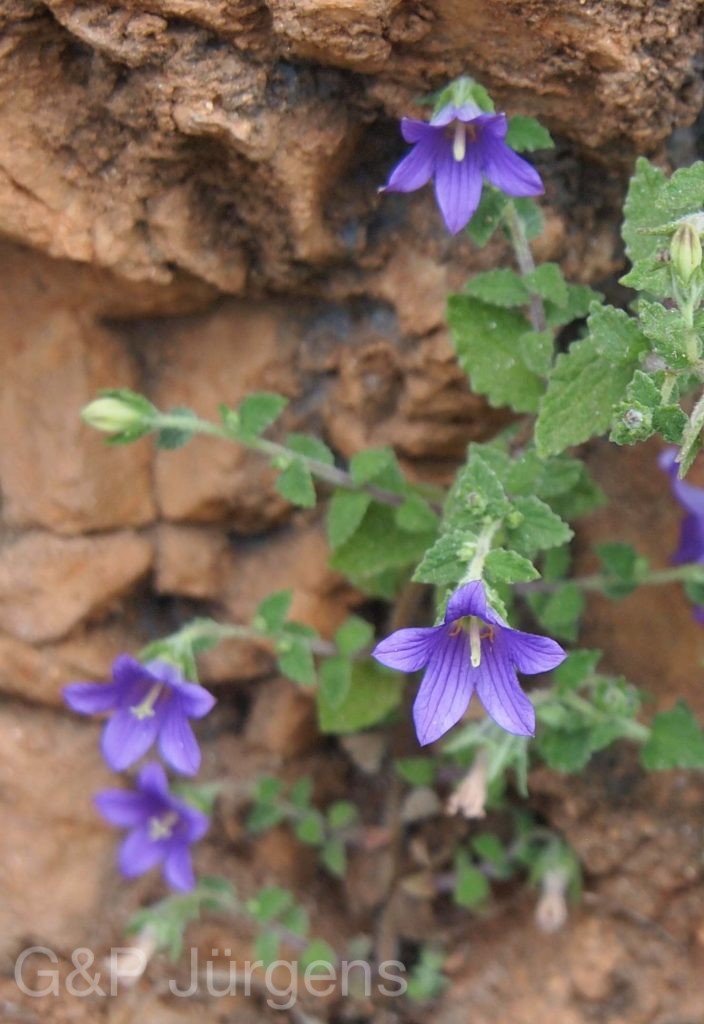
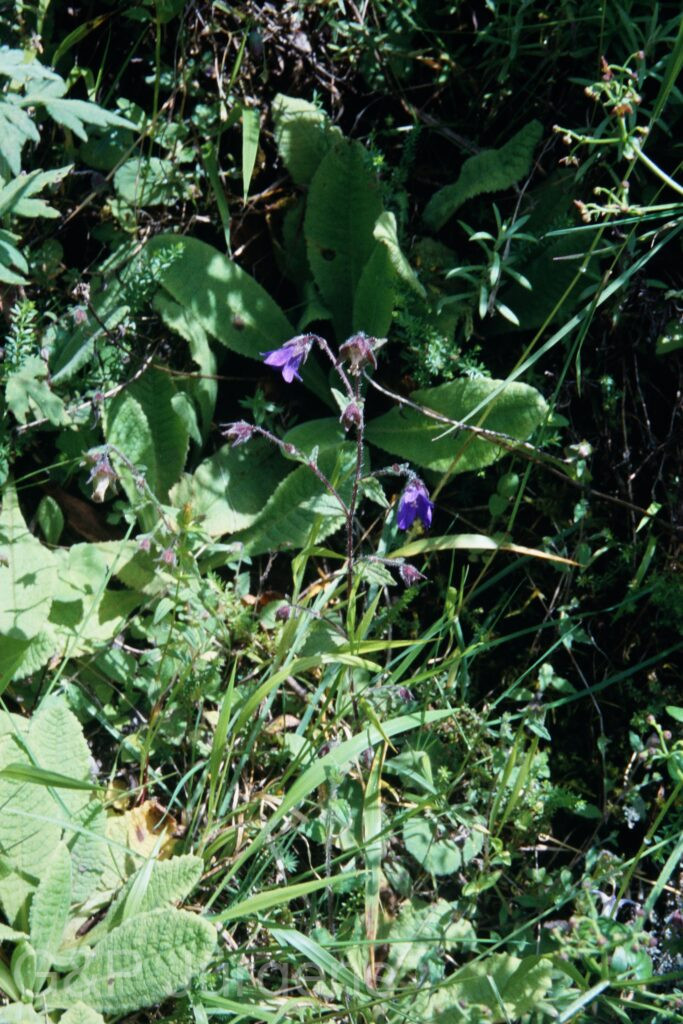
Campanula pallida is a widespread Asian bellflower with an extensive GBIF record (over 68,000 occurrences) centred on China, India, Nepal, Pakistan, Bhutan and Afghanistan, with numerous further reports across the broader range from Myanmar and Thailand to scattered cultivated and recorded localities elsewhere. It is a plant of open, well-drained ground, frequenting grassy slopes, rocky banks, terrace margins, roadside cuttings and forest clearings in the temperate and subalpine zones, broadly between about 1500 and 3500 m. The plants illustrated from the Haa valley in Bhutan at 3300 m in September and the Tista valley in Sikkim at 3300 m in August reflect its long summer-to-autumn flowering across the eastern Himalaya.

The species is a perennial herb with slender, ascending to decumbent stems bearing scattered hairs and clear latex. The leaves are alternate, ovate to oblong-lanceolate, with a crenate to serrate margin, the lower leaves petiolate and the upper sessile. The flowers are nodding, borne singly or in a loose few-flowered inflorescence; the corolla is broadly campanulate, five-lobed and pale blue to lilac or sometimes whitish, with reflexed appendages between the calyx lobes. The five stamens have dilated filament bases, and the inferior ovary matures into a nodding capsule that dehisces by basal pores to shed numerous small seeds.

Campanula is a large and taxonomically difficult genus, and C. pallida belongs to a complex of variable Himalayan bellflowers in which flower size and indumentum vary geographically. The pendulous, protandrous flowers are pollinated principally by bees, and the pore-dehiscent capsule disperses seed by wind shaking. The species is abundant, ecologically tolerant and frequently associated with semi-disturbed ground, and it is of no conservation concern.

Author: Wall. · Sources: POWO (Kew), GBIF, Flora of China, Flora of Bhutan, Flora of Pakistan, Revision of the Asiatic Campanula (Kolakovsky)

L.

Nepal 99 972 ergebnis
West-Nepal Dunai 2200m, July

Description

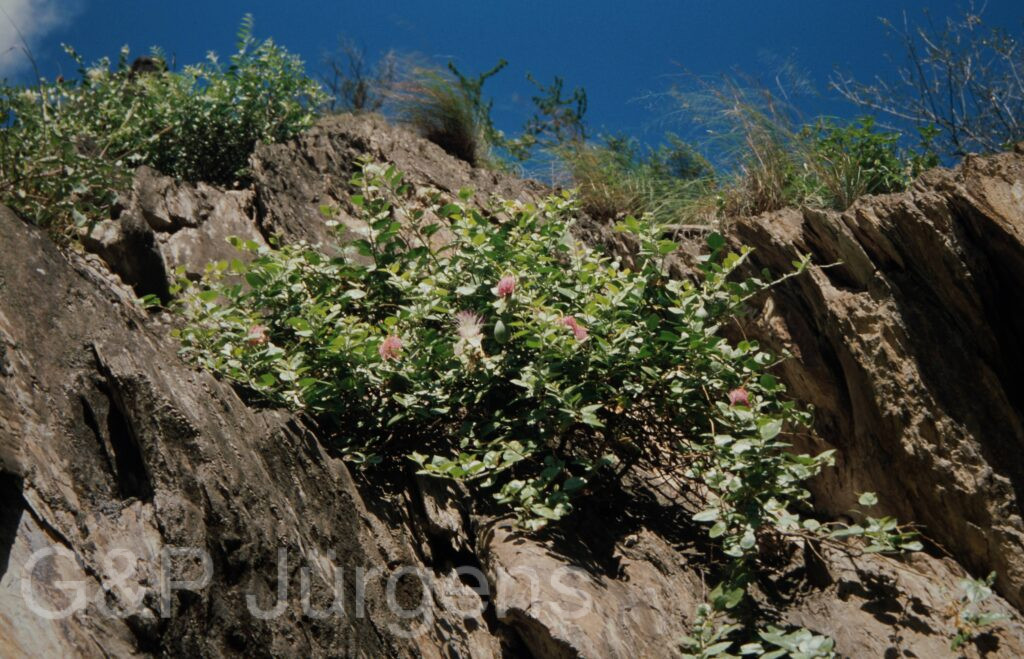
Capparis spinosa, the caper, is an exceptionally widespread sub-cosmopolitan plant of the warm-temperate, Mediterranean and arid subtropical zones, distributed from southern Europe, North Africa and the Middle East across Central Asia to the western Himalaya, Pakistan, India, China and Australia, with extensive naturalised and cultivated records worldwide; GBIF documents 22842 occurrences. It is a xerophyte of dry, sunny, stony habitats, colonising rocky outcrops, cliffs, walls, gravelly slopes and arid riverine flats. In the inner Himalaya it ascends the rain-shadowed valleys, as shown by the photographed plant from Dunai in West Nepal at 2200 m in July, growing in the dry trans-Himalayan terrain of the Dolpo region.

It is a spreading, often prostrate, deciduous shrub with trailing stems and a deep, woody perennial rootstock. The alternate leaves are simple, entire, fleshy, orbicular to obovate, and frequently subtended by a pair of recurved stipular spines, though spinescence is variable. The large, showy, short-lived flowers are solitary in the leaf axils, with four greenish sepals, four white to pinkish petals and a conspicuous brush of numerous long, purple-tinged stamens; the ovary is borne on a long gynophore. The fruit is an ellipsoid, fleshy, many-seeded berry that splits to reveal a pinkish pulp. The familiar capers of commerce are the pickled, unopened flower buds.

The species belongs to Capparis (Capparaceae), and is morphologically extremely variable across its vast range, having been split into numerous subspecies and varieties; here the family is given as in the source. Its flowers open at dusk and are pollinated by long-tongued bees and hawkmoths, while the fleshy berries are dispersed by birds and lizards. Drought-adapted, valued as a food and medicinal plant and cultivated commercially, it is abundant and of least conservation concern.

Author: L. · Sources: POWO (Kew), GBIF, Flora of China Vol. 7, Flora of Pakistan, Flora of Nepal, Capparis spinosa species complex revision (Inocencio, Rivera & al.)

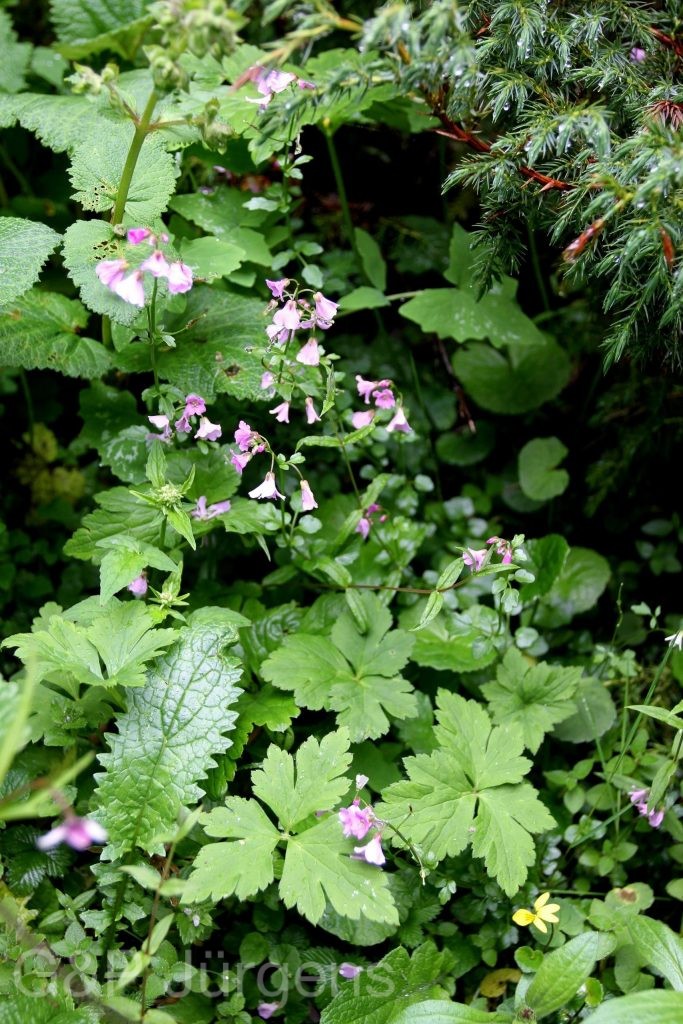
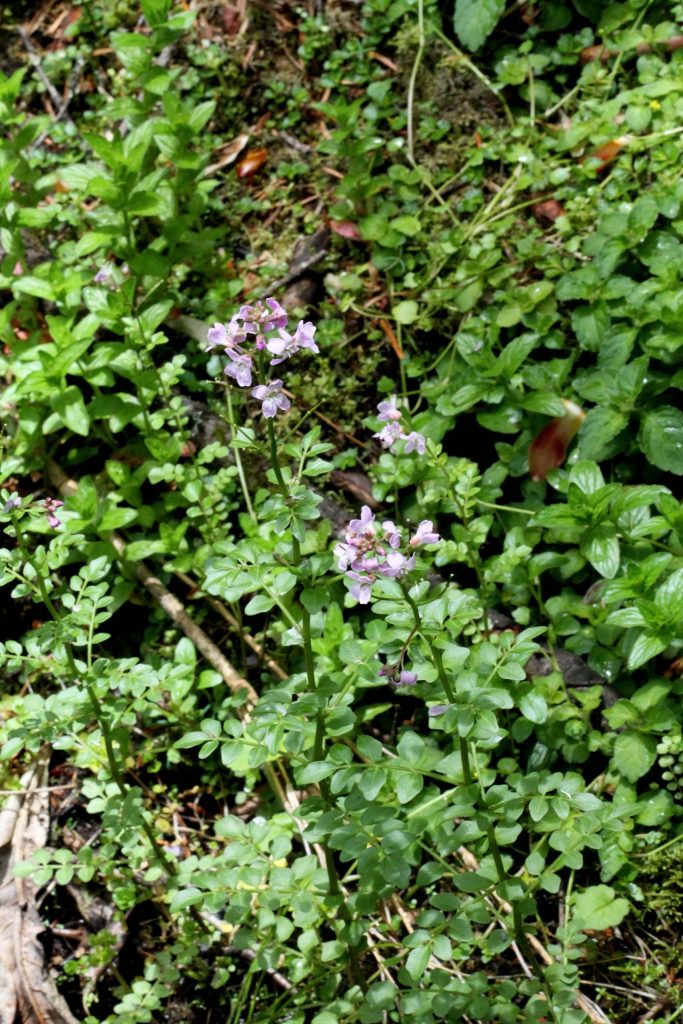
Hook.f. & Thomson

BhutanPG2011 103
Bhutan Chogcham, 3450m June
BhutanPG2011 685 01 01 scaled
Bhutan Luksor, 2900m July
BhutanPG2011 116 scaled
Bhutan Tsochenchen, 3500m June

Description

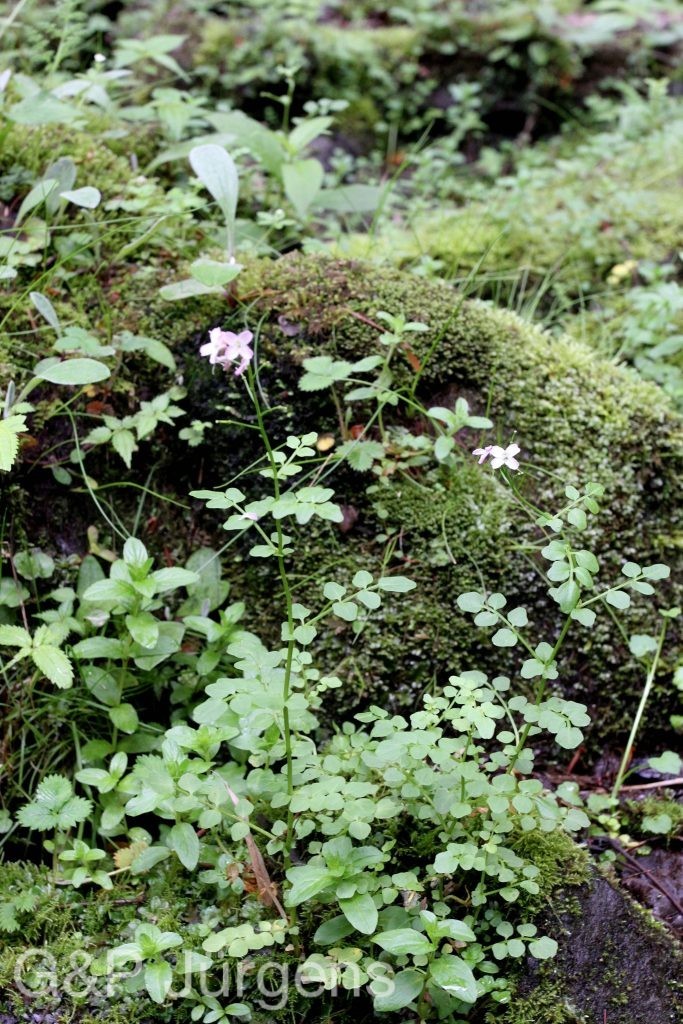
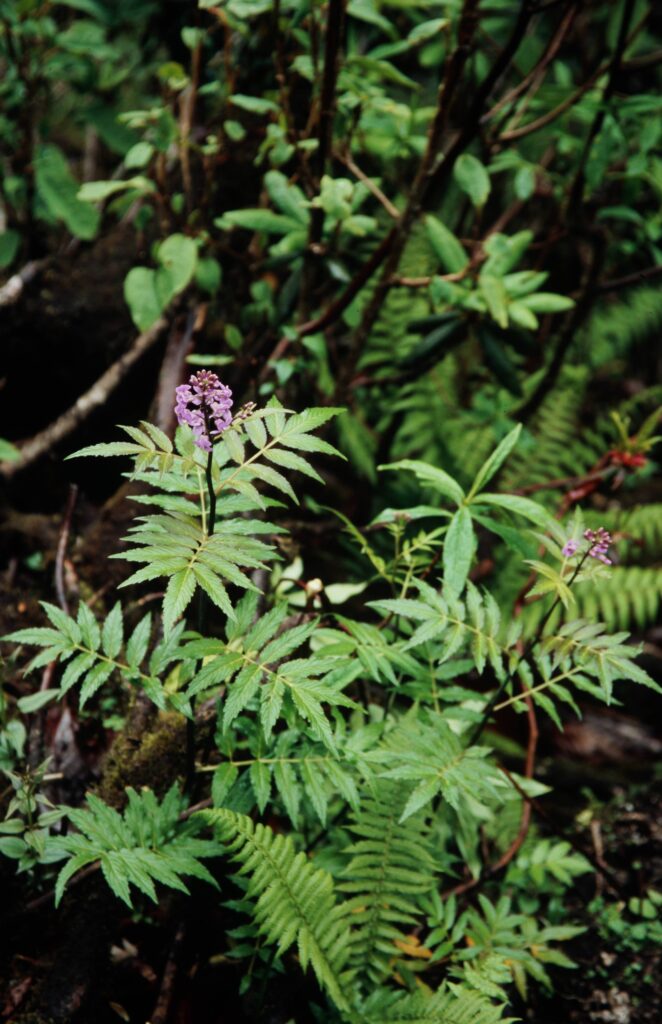
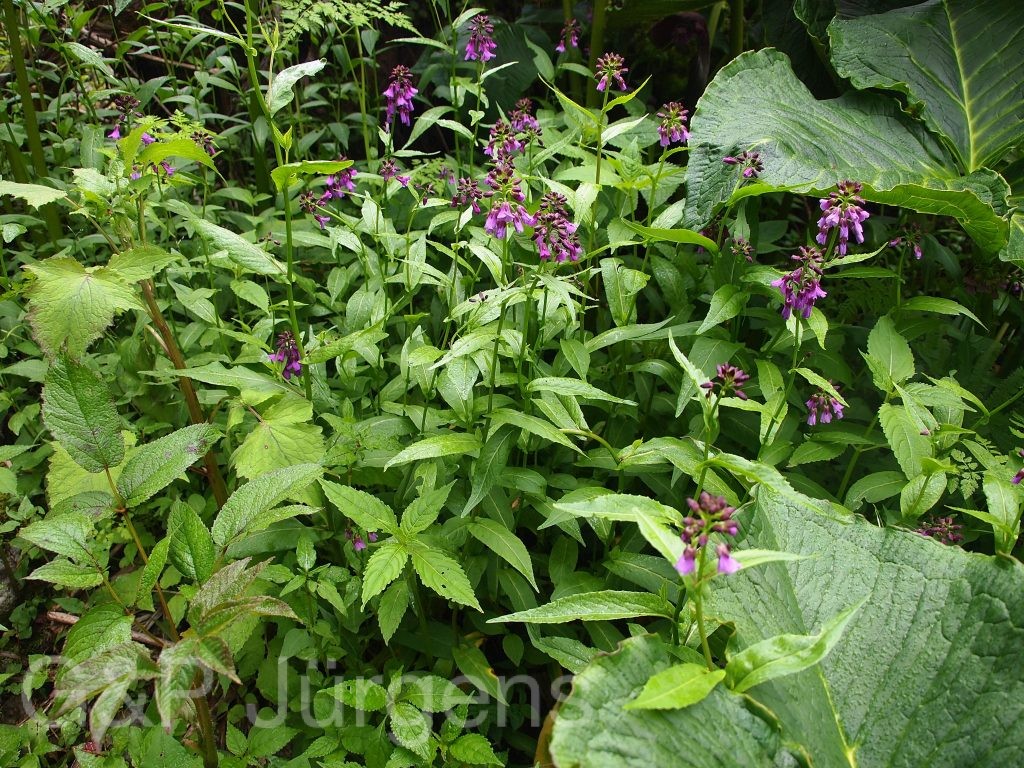
A perennial bittercress of the eastern Himalaya and adjacent mountains, recorded from China, Bhutan, India, Nepal and Myanmar, with around 577 GBIF occurrences. It is a plant of cool, wet ground, frequenting stream banks, seepages, marshy meadows, damp forest floors and shaded rocky places in the temperate to subalpine belt, mostly between about 2800 and 3800 m. The featured collections come from several Bhutanese sites in June and July, including Chogcham at 3450 m, Luksor at 2900 m and Tsochenchen at 3500 m, all moist, sheltered montane habitats.

The species grows from a slender rhizome, producing erect or ascending, glabrous to sparsely hairy stems. The leaves are pinnately compound, the lower with several pairs of stalked, ovate to lanceolate, toothed leaflets and a larger terminal leaflet; cauline leaves are similar but reduced upward. The inflorescence is a terminal raceme of small white to pale lilac flowers, each with four sepals and four clawed, spreading petals in the typical cruciform pattern, six tetradynamous stamens and a superior bilocular ovary. The fruit is a slender, linear, slightly flattened silique that dehisces elastically from the base, scattering the small seeds in a single row per locule.

Accepted by POWO and GBIF, C. griffithii belongs to a taxonomically intricate genus in which Himalayan species are distinguished by leaf division, petal size and habitat. Like many bittercresses it is closely tied to permanently moist microhabitats and the elastic silique aids local seed dispersal. It is widespread and often locally common in suitable damp ground across its range, and is not considered threatened, though it depends on intact montane wetlands and riparian zones.

Author: Hook.f. & Thomson · Sources: POWO (Kew), GBIF, Flora of Bhutan, Flora of China, Jafri monograph of Brassicaceae

O.E.Schulz

Nepal 99 539 ergebnis
West-Nepal Churta-Khola 4000m, June

Description

Cardamine loxostemonoides is a Himalayan and Sino-Himalayan bittercress recorded from Nepal, Pakistan, China, India and Bhutan, the South African and other anomalous entries among its roughly 156 occurrences best treated as database noise rather than native range. It is an alpine to subalpine herb of cool, moist habitats, growing along snowmelt rills, in damp meadows, beside streams and on seepage slopes where the soil stays saturated. The photographed plant from the Churta-Khola in West Nepal, at about 4000 m and flowering in June, is typical of its high-montane preference and its early-summer flowering coinciding with the surge of meltwater following snow retreat.

It is a perennial herb arising from a slender rhizome, with erect to ascending, often few-branched stems. The leaves are pinnately compound or pinnatisect with several pairs of lateral leaflets or segments, the terminal one frequently larger, the texture thin and the margins entire to lobed. The flowers are arranged in terminal racemes and show the regular four-petalled cruciform corolla of the family, white to pale pink or lilac, with six tetradynamous stamens. The fruit is a slender, linear, laterally compressed silique that dehisces elastically by two valves coiling from the base to fling the seeds, the style persisting as a short beak; the epithet alludes to a resemblance in stamen form to Loxostemon.

Cardamine is a large, cosmopolitan genus within Brassicaceae notable for frequent polyploidy and hybridisation, traits that complicate species delimitation in the Himalayan alpine flora. Like many relatives it favours moist, disturbed microsites and disperses by explosive silique dehiscence, allowing rapid colonisation of freshly exposed ground. The species is widespread across the high Himalaya and faces no specific conservation threat, although its dependence on reliable snowmelt moisture makes such hygrophilous alpine herbs potentially responsive to changes in precipitation and glacial regime.

Author: O.E.Schulz · Sources: POWO (Kew), GBIF, Flora of China, Flora of Pakistan, Flora of Bhutan, Al-Shehbaz revisionary studies of Cardamine (Brassicaceae)

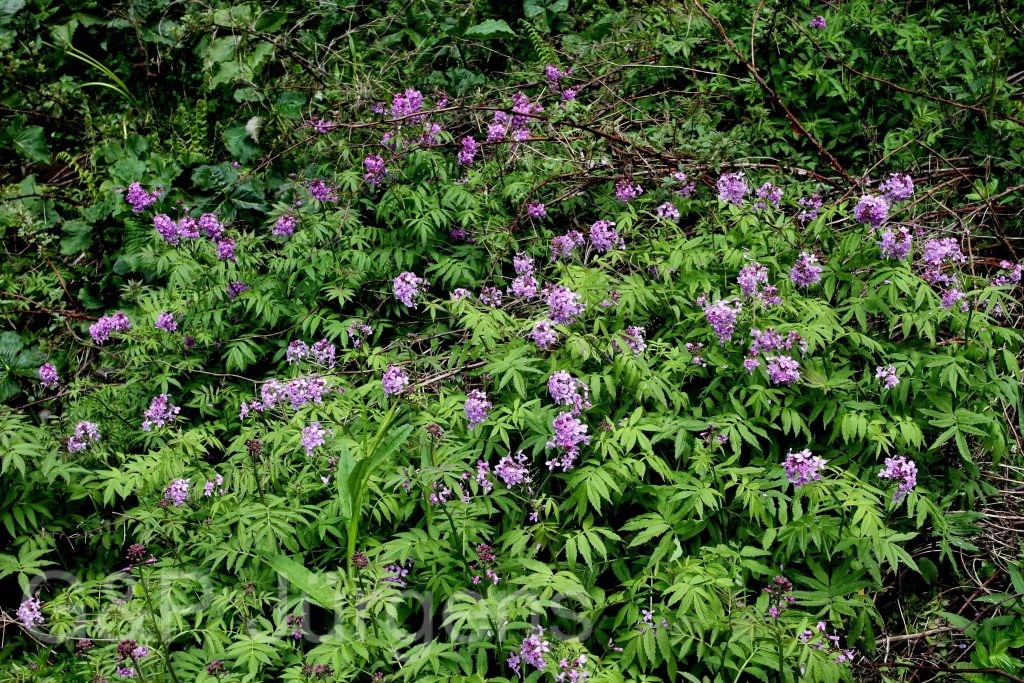
Willd.

Sikkim2011 373
Sikkim Lada-La 3800m, June
Sikkim 2006 356 ergebnis
India West-Bengal, Tamrong 2750m, May

Description

Cardamine macrophylla Willd. is a robust perennial crucifer with a broad distribution across temperate Asia, occurring in China, Russia, India, Nepal, Bhutan, Pakistan, Japan, Kazakhstan, Mongolia, Korea and elsewhere. In the Himalaya it is recorded from Sikkim at Lada-La near 3800 m, flowering in June, and from Tamrong in West Bengal at about 2750 m in May, spanning the temperate to subalpine zones. The species favours moist, shaded habitats: streamsides, wet meadows, forest margins, ravines and seepage slopes, generally between 2000 and 4000 m, on rich, humose soils. Its roughly 5068 GBIF records reflect a genuinely widespread and frequently collected species across its extensive range.

The plant arises from a creeping, scaly rhizome and produces erect, stout, leafy stems up to 70 cm or more. The leaves are pinnately compound with several pairs of large, lanceolate to ovate, serrate leaflets, the foliage notably ample for the genus, accounting for the epithet macrophylla. The flowers are borne in dense terminal corymbose racemes and are showy, with four spreading petals of pink, lilac to purplish hue and the usual tetradynamous stamens. The fruit is a long, linear, flattened silique that dehisces elastically to scatter the seeds in a single row.

Cardamine belongs to the tribe Cardamineae, a large and taxonomically complex genus in which polyploidy and hybridisation are widespread; C. macrophylla itself encompasses considerable morphological and cytological variation, with several infraspecific taxa and allied forms recognised across its range. Spreading both by seed and by rhizome, it can form extensive clonal stands in suitable wet ground. Widespread and ecologically tolerant, it is of no conservation concern, and the rhizome and young shoots are used locally as a wild vegetable.

Author: Willd. · Sources: POWO (Kew), GBIF, Flora of China, Flora of Nepal, Flora of Bhutan, Cardamine systematic revisions (Al-Shehbaz)

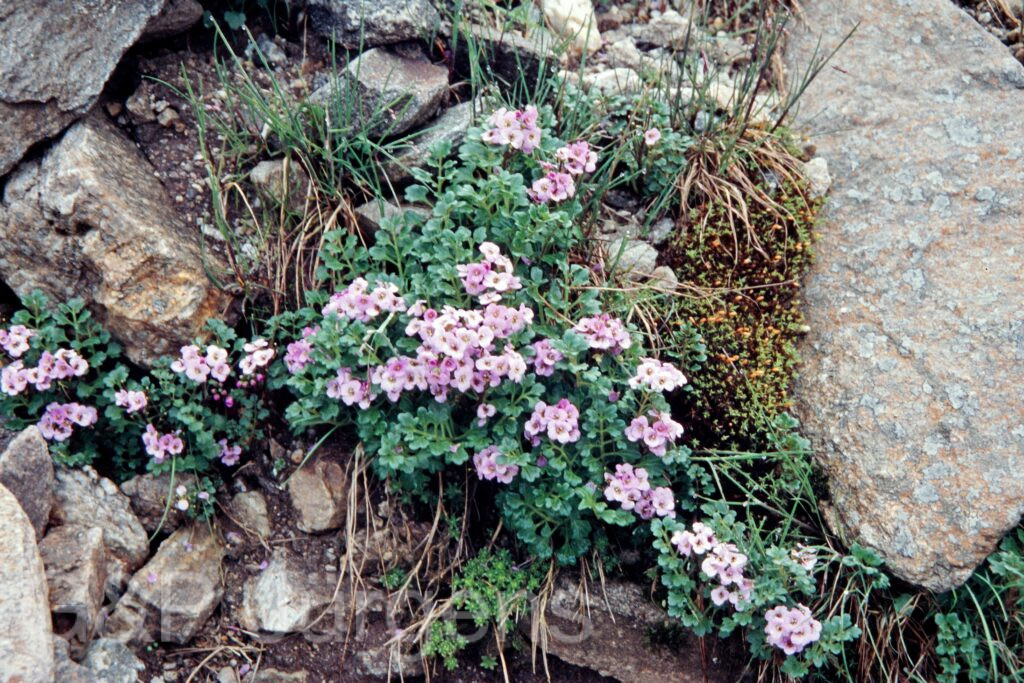
(D.Don) Wall.

Sikkim2011 380
Sikkim Lada-La 3800m, June
BhutanPG2011 602 01 1
Bhutan Ludlow-Sherriff-Trail Kem-La, 4300m July
Bh09 213 G356
Bhutan Ludlow-Sherriff-Trail Kem-La, 4300m July

Description

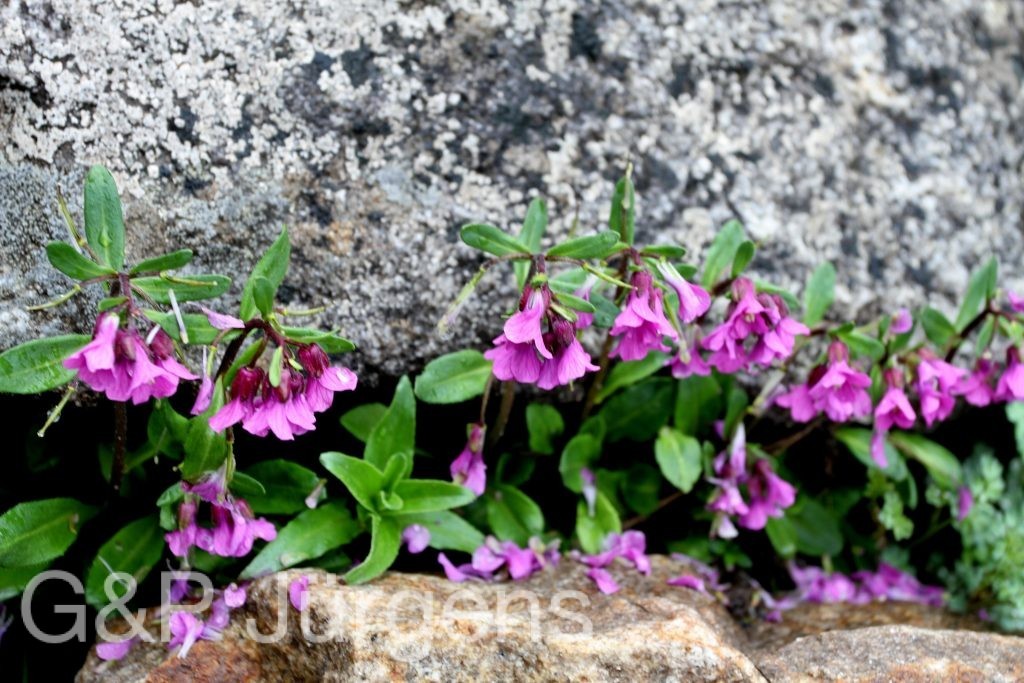
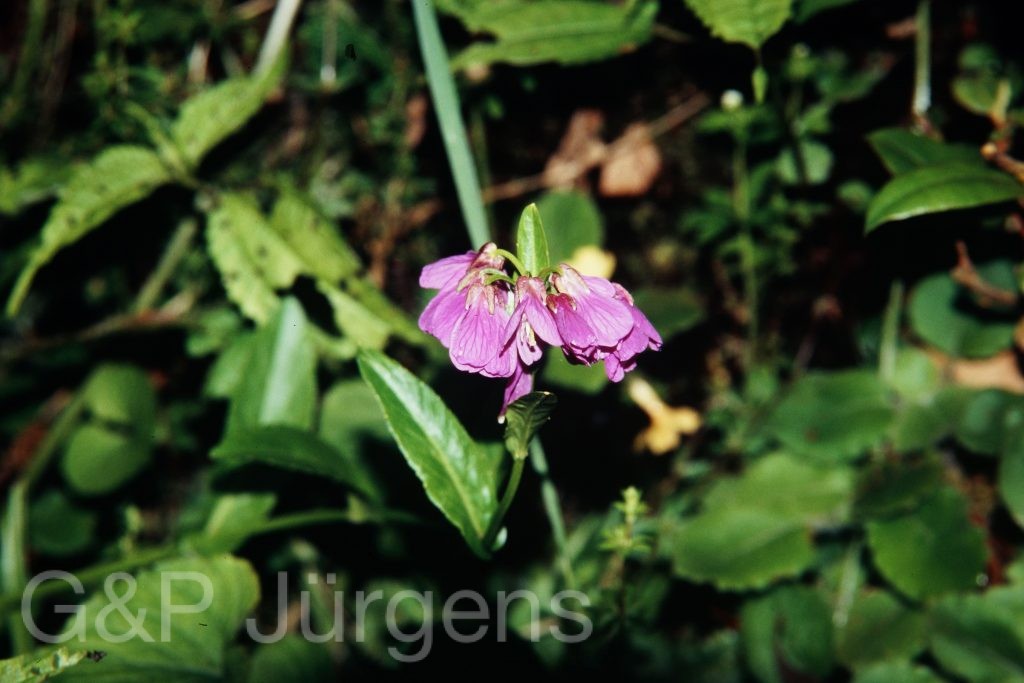
Cardamine violacea is a Sino-Himalayan crucifer recorded from Nepal, China (chiefly Xizang), Bhutan and India, with GBIF aggregating around 82 occurrences. It is a herb of high-altitude moist habitats, occupying alpine meadows, seepage slopes, stream banks and the margins of melting snow patches generally between about 3500 and 4500 m. The accompanying records illustrate this band well: material from the Lada-La in Sikkim at 3800 m flowering in June, and from the Kem-La on the Ludlow–Sherriff Trail in Bhutan at 4300 m in July, the later eastern flowering reflecting the persistence of snow cover at greater elevation. The plant favours cool, consistently damp ground rich in organic matter.

It is a slender perennial herb arising from a creeping rhizome, the stems erect to ascending and usually simple. The leaves are pinnately compound or lyrate, with a few pairs of lateral leaflets and a larger terminal segment, the margins entire to coarsely toothed; basal and cauline leaves grade in size up the stem. The inflorescence is a terminal corymb-like raceme that elongates in fruit. Flowers bear four sepals and four free, clawed petals coloured violet to purple, an unusual hue in a genus dominated by white-flowered species, with the typical tetradynamous androecium of six stamens. The fruit is a slender, linear, flattened silique that dehisces explosively to scatter the seeds.

The taxon was described as Arabis violacea by D.Don and transferred to Cardamine by Wallich; the cited Himalayan plants have at times been segregated as subsp. bhutanica. Cardamine is a large cosmopolitan genus, and its Himalayan alpine members form a difficult complex in which characters of leaf division and petal colour are critical for identification. As a specialist of snowmelt-fed alpine habitats, C. violacea is potentially vulnerable to reduced and earlier snowmelt, though its broad distribution and remote terrain limit immediate concern.

Author: (D.Don) Wall. · Sources: POWO (Kew), GBIF, Flora of China, Flora of Bhutan, Annotated Checklist of the Flowering Plants of Nepal, Jafri 'Brassicaceae' treatment

(Wall.) Makino

Garh 07 234 ergebnis
India Garwahl Trijugi Narayan 2250m, June
Sikkim 2006 469 ergebnis
Sikkim Ringi Chu 2200, May
Sikkim 2006 471 ergebnis
Sikkim Ringi Chu 2200, May

Description

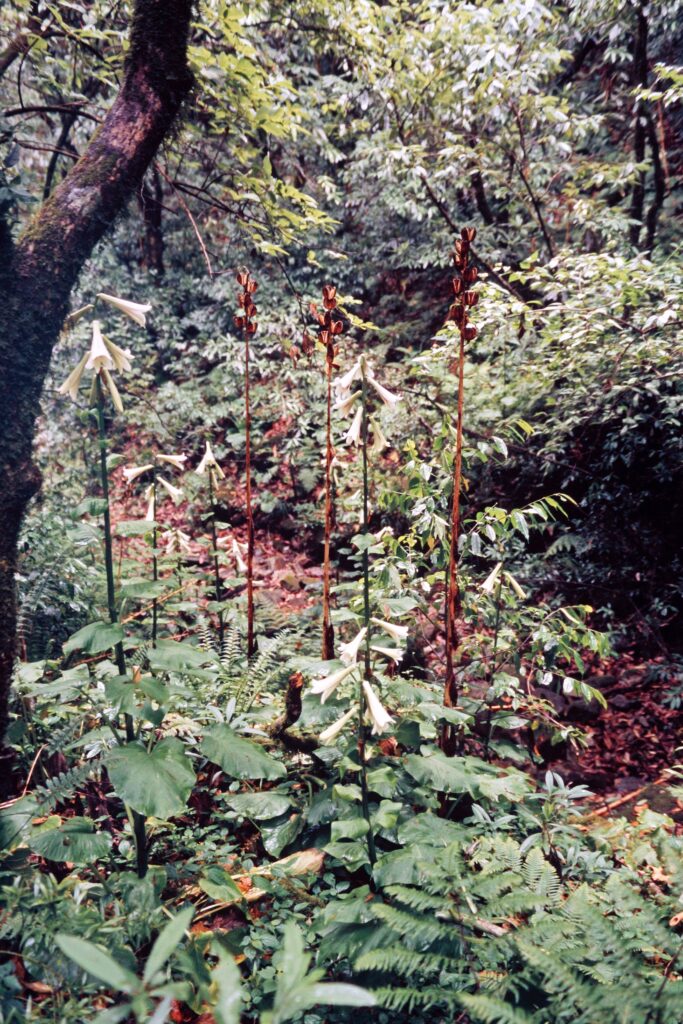
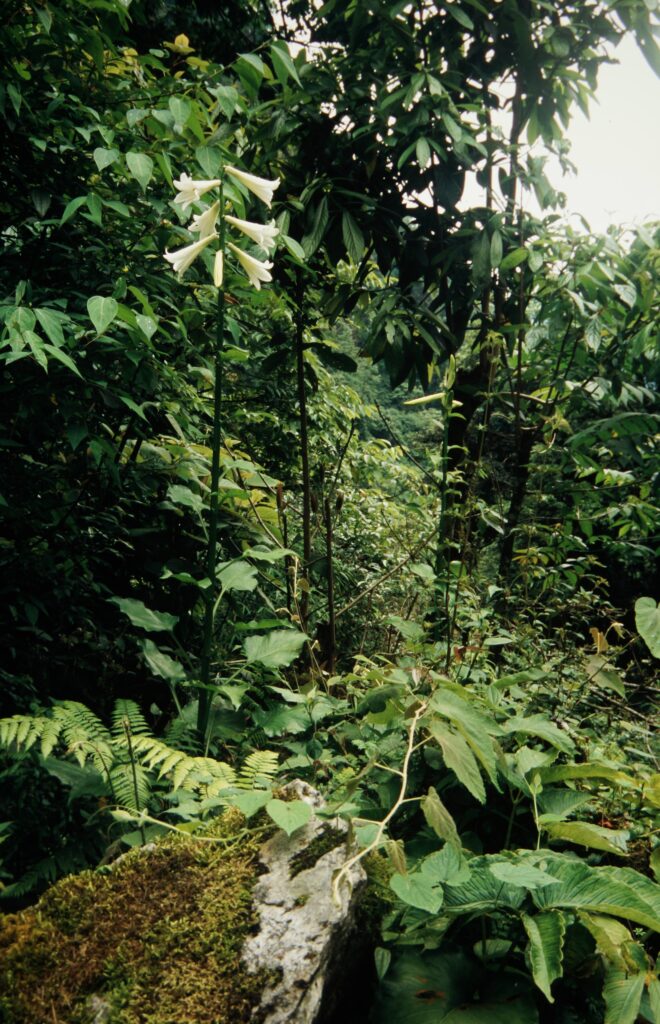
Cardiocrinum giganteum is the world's largest lily, distributed from central Nepal through Sikkim, Bhutan, and northeast India into upper Myanmar and southwestern China (Yunnan, Sichuan, Xizang). With over 1,370 occurrences recorded on GBIF, it is well-documented across its range. The species inhabits moist, shaded ravines and openings in temperate broadleaved and mixed forests at elevations of 1,500–2,800 m, favouring deep, humus-rich soils under canopies of Magnolia, Acer, and Rhododendron.
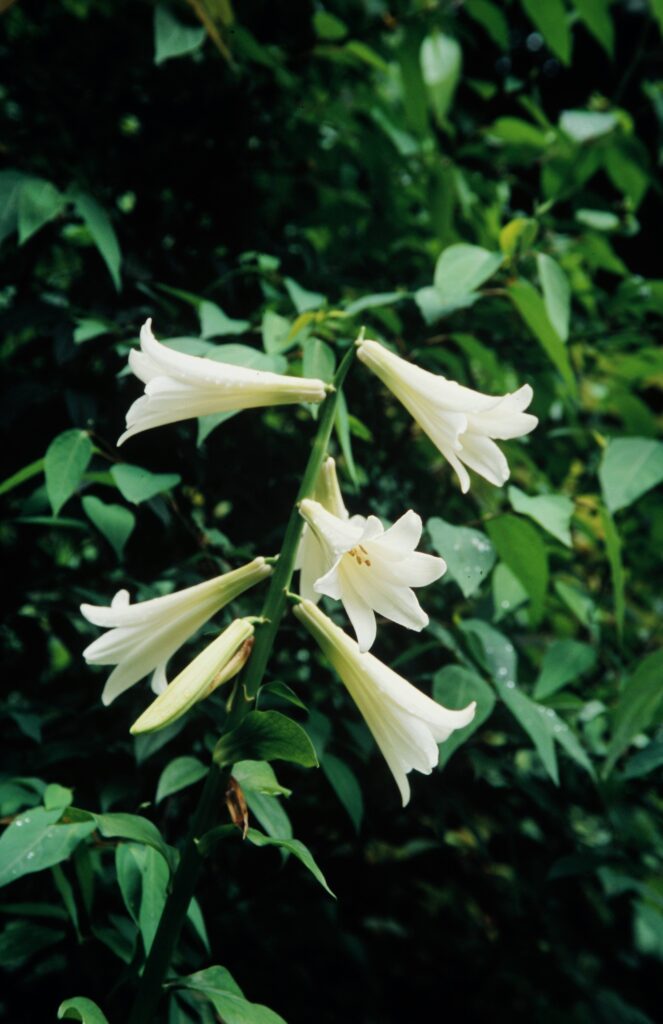
Cardiocrinum giganteum is a monocarpic perennial growing from a large, conical bulb up to 15 cm in diameter. In its final flowering year, the plant produces a stout, hollow stem reaching 1.5–3.5 m in height. Basal leaves are broadly cordate, glossy dark green, up to 45 cm long, with a conspicuous reticulate venation. The inflorescence is a terminal raceme of 10–20 large, trumpet-shaped, fragrant flowers, each 15–20 cm long, white with maroon-purple streaking inside the throat. The six tepals are slightly recurved at the tips. The fruit is an oblong, erect capsule, 4–6 cm long, containing numerous flat, winged seeds adapted for wind dispersal. After flowering and fruiting, the parent bulb dies, but several daughter bulblets persist at the base, requiring 5–7 years to reach flowering size.
The species was first described from material collected by Nathaniel Wallich in Nepal. The photographed specimens from Trijugi Narayan in Garhwal (2,250 m) and Ringi Chu in Sikkim (2,200 m) represent populations near the western and central portions of the range, respectively. Though widely cultivated in temperate gardens, wild populations face pressure from habitat fragmentation and collection. The var. yunnanense, sometimes recognized from southwestern China, differs in its bronze-flushed foliage, but its taxonomic distinctness remains debated.

Author: (Wall.) Makino · Sources: POWO (Kew), GBIF, Flora of China Vol. 24, Flora of Bhutan Vol. 3, Grierson & Long (1983)