
Hatus.
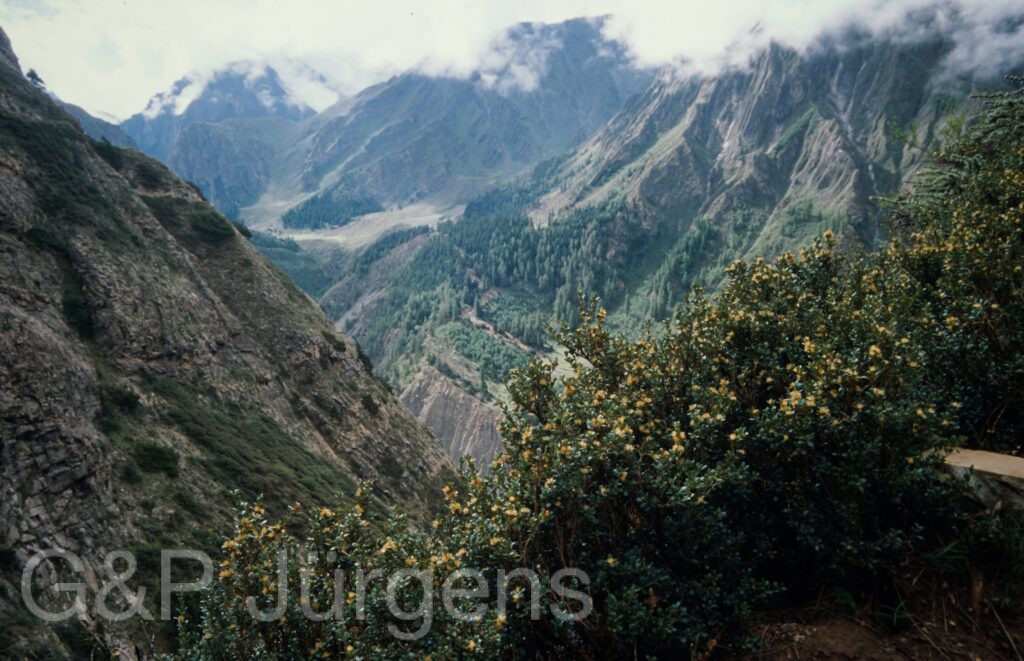
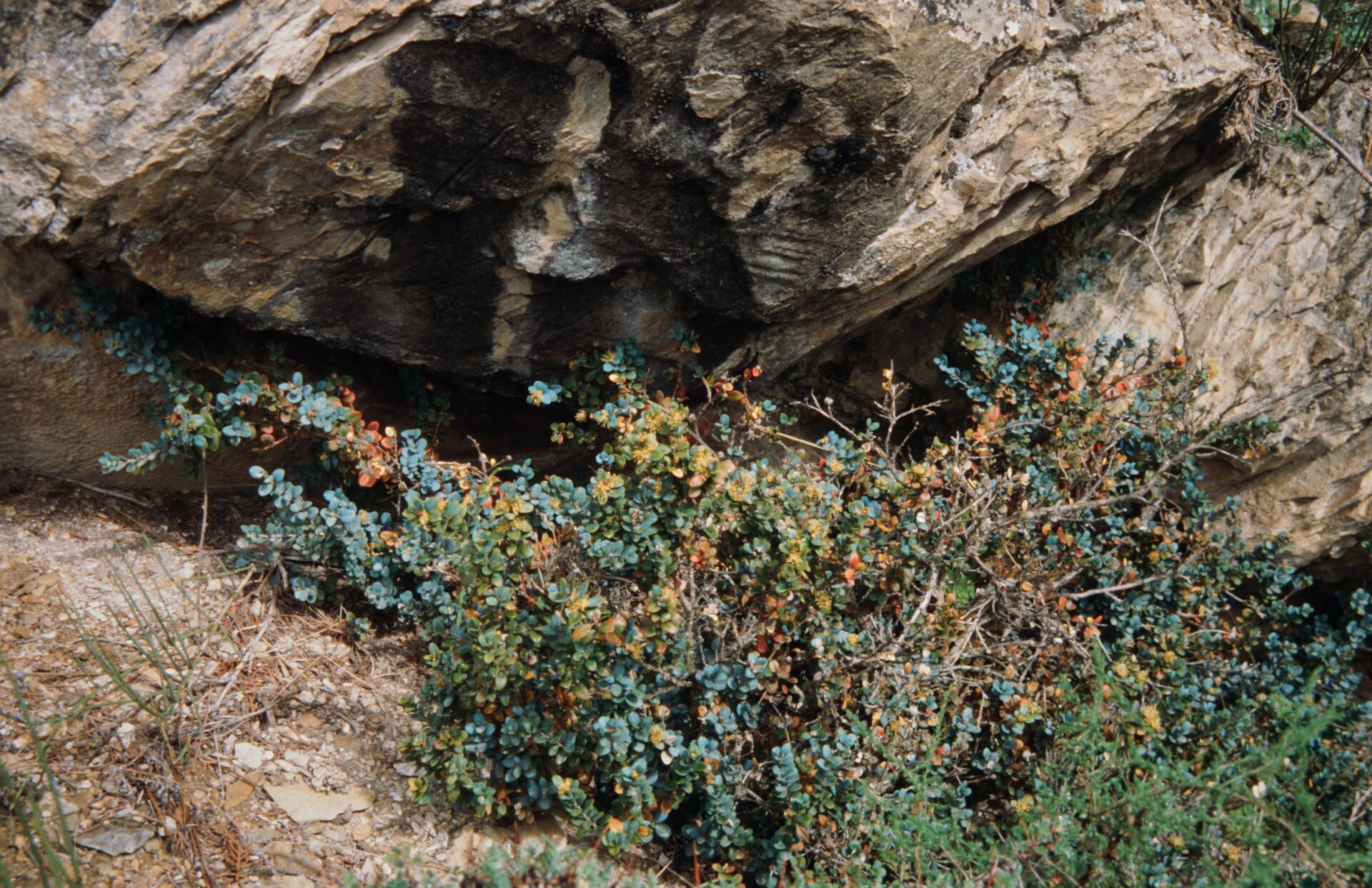
Description
Buxus rugulosa is an evergreen shrub of the high Himalaya and the mountains of western China. GBIF (some 313 occurrences) records it from China, Nepal and Pakistan, with a few outlying records from Turkey likely reflecting cultivation. It grows on open rocky slopes, in alpine scrub, among boulders and at the upper forest margin, ascending to high elevations. The illustrated plant is from western Nepal at Baga-La-Phedi at about 3,750 m, flowering in July, a characteristically high station near or above treeline, where it forms low, hardy thickets exposed to intense radiation and cold.
The plant is a low, much-branched evergreen shrub, often dwarf and cushion-forming in exposed sites, with quadrangular young shoots. The leaves are opposite, small, leathery, obovate to elliptic and rounded or notched at the apex, with a characteristically rugulose (finely wrinkled) upper surface, glossy dark green. The flowers are small, unisexual and apetalous, borne in axillary clusters with a single terminal female flower surrounded by several males; the perianth consists of inconspicuous tepals. The fruit is a three-horned woody capsule that dehisces explosively, ejecting the shiny black seeds.
Buxus (box) is a genus of slow-growing evergreens placed in the basal eudicot family Buxaceae; the wood is dense and finely grained. Buxus rugulosa is distinguished within the Himalayan-Chinese box species by its small rugulose leaves and dwarf alpine habit. It is not currently regarded as threatened, though high-altitude Himalayan populations are restricted to specialised rocky habitats and merit monitoring, particularly given upslope pressures from a warming climate.
Author: Hatus. · Sources: POWO (Kew), Flora of China Vol. 11, Flora of Pakistan, GBIF, Köhler: Buxaceae (Species Plantarum: Flora of the World)