Tag:

Montane (1500-2500 m)

(Prain) P.C.Tsoong

Bhutan2012 1298
Bhutan Trashigang 1900m, October
BhutanPG2011 391
Bhutan Dur Tsa-Chu 3380m, June

Description

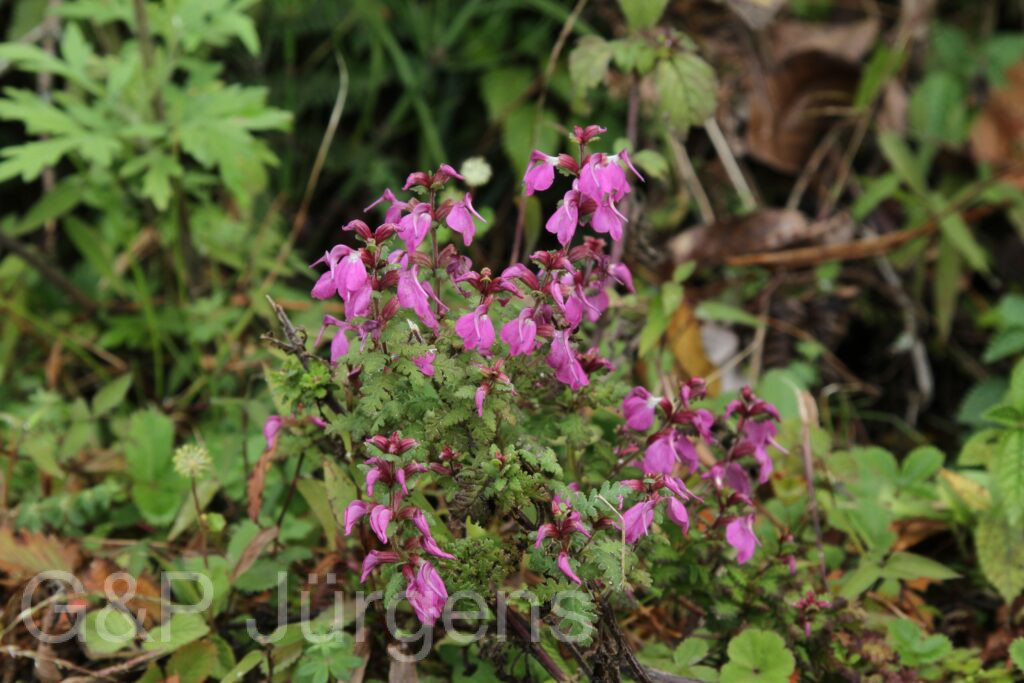
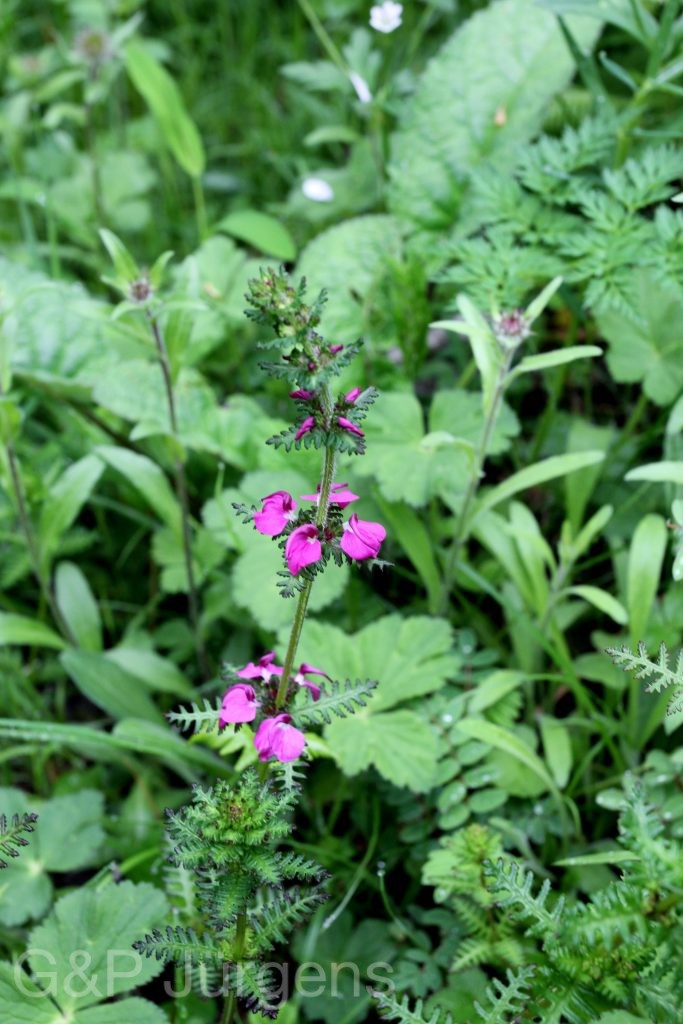
Pedicularis gracilis subsp. macrocarpa is a Sino-Himalayan lousewort distributed across southern China, northern India, Nepal and Bhutan, with about 33 documented GBIF occurrences. It occupies open forest, grassy slopes, scrub and meadow margins through a broad temperate to subalpine elevation span. The Bhutanese records illustrate this amplitude well: a population at Trashigang at 1900 m flowering in October and another at the Dur Tsa-Chu at 3380 m flowering in June, indicating tolerance of both warm-temperate forest and high subalpine grassland, on moist, humus-rich and seasonally damp ground.

It is a slender erect perennial herb, the stem often branched and the foliage finely dissected: the leaves are alternate or subopposite, pinnately divided into narrow, serrate segments. The flowers are borne in lax, leafy-bracteate terminal racemes; each has a tubular, toothed calyx and a strongly two-lipped pink to purplish corolla typical of the genus, the galeate upper lip (galea) often beaked or hooded and the spreading three-lobed lower lip forming a landing platform. The four didynamous stamens are concealed within the galea. As the subspecific epithet macrocarpa indicates, the fruit is a comparatively large, laterally compressed, beaked loculicidal capsule containing several seeds.

GBIF treats this name as a synonym while retaining Pedicularis gracilis subsp. macrocarpa as accepted, distinguished from the typical subspecies by its larger fruit. Like all louseworts it is a hemiparasite, drawing water and nutrients from neighbouring roots via haustoria while retaining green foliage. The galeate flowers are pollinated by bumblebees. The taxon is locally distributed but not of conservation concern.

Author: (Prain) P.C.Tsoong · Sources: POWO (Kew), GBIF, Flora of China Vol. 18, Flora of Bhutan Vol. 2, Flora of Nepal, A Monograph of the Genus Pedicularis
Prain

Sikkim2003 205 P285
Sikkim Dzongri 3900m, August
BhutanPG2011 719 ergebnis
Bhutan Timphu 2490m, July

Description

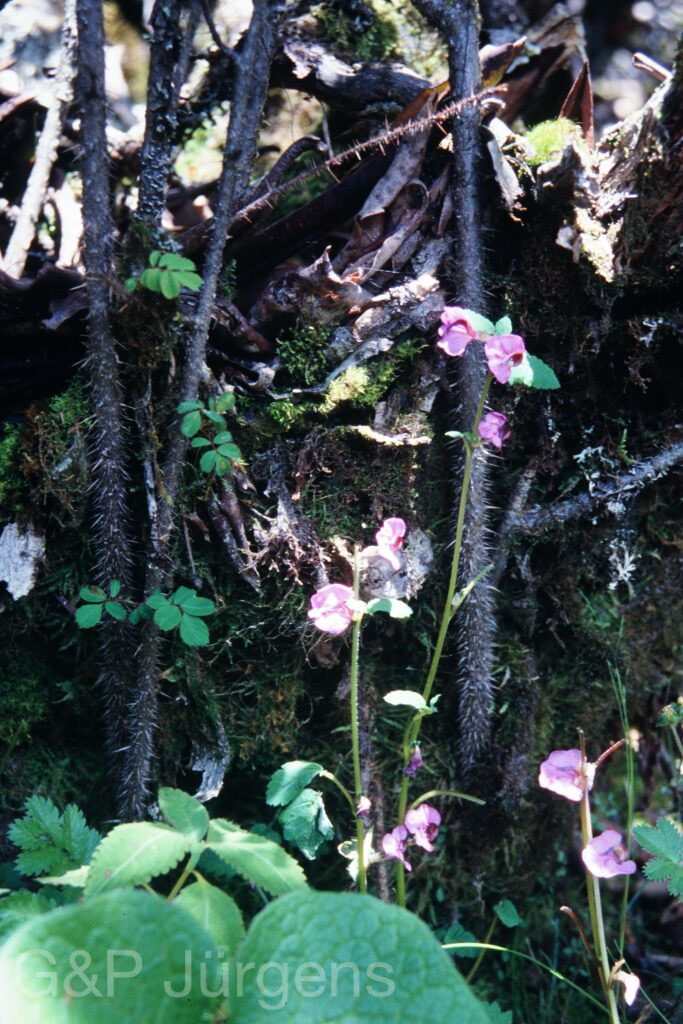
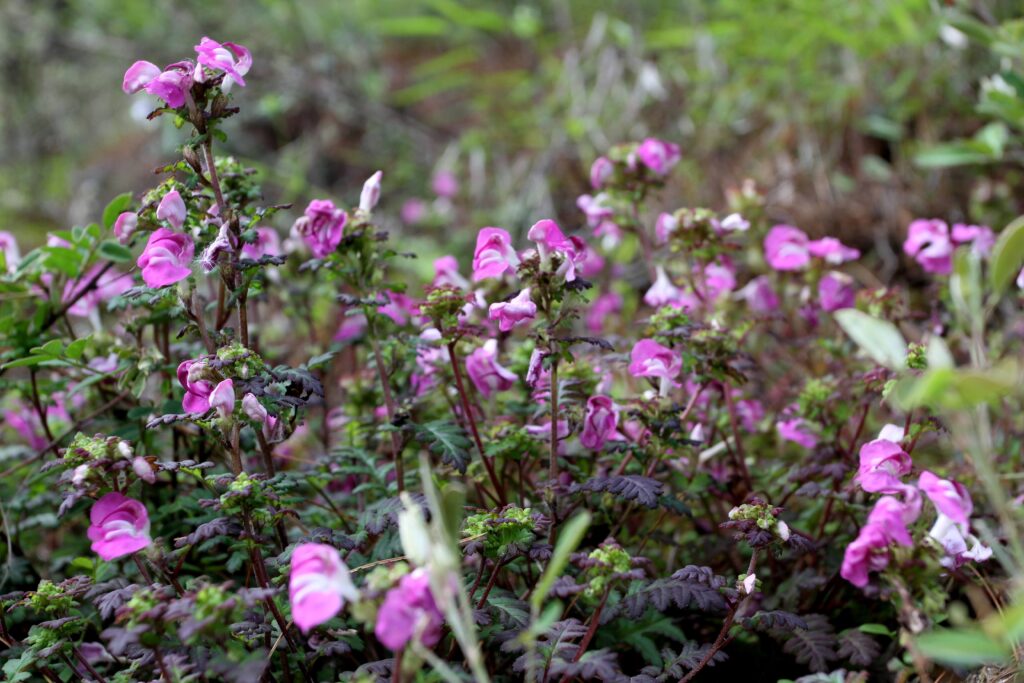
Pedicularis pantlingii is an alpine hemiparasitic herb of the eastern Himalaya, distributed across India (notably Sikkim), China, Bhutan, Myanmar and Nepal, with the Austrian (AT) record almost certainly representing cultivated or herbarium-derived material rather than a natural occurrence. The roughly 114 georeferenced collections concentrate along the high mountain arc from Sikkim and Bhutan into adjacent south-eastern Tibet. It favours moist alpine meadows, open grassy slopes, streamsides and the margins of rhododendron and dwarf-shrub thickets. As the photographed material from Sikkim's Dzongri at 3900 m in August and from Bhutan near Thimphu at 2490 m in July shows, the species ranges from upper temperate to alpine elevations, flowering through the summer monsoon when these pastures are at their most lush.

Like most members of the genus, it is a semi-parasitic perennial drawing water and nutrients from neighbouring roots via haustoria. The stems arise from a short rootstock and bear leaves that are oblong to lanceolate in outline and pinnatisect, the segments toothed and often crisped at the margin. The flowers are borne in a terminal spike or raceme, each subtended by a leafy bract, with a tubular, toothed calyx. The corolla is strongly two-lipped and characteristically galeate: the hooded upper lip (galea) is frequently prolonged into a slender beak enclosing the four didynamous stamens, while the spreading three-lobed lower lip forms a landing platform for bumblebee pollinators. The fruit is an obliquely ovoid, laterally compressed capsule containing several seeds.

The genus Pedicularis (lousewort) is exceptionally diverse in the Sino-Himalayan region, which forms its global centre of speciation, and the elaborate corolla beaks reflect tight coevolution with long-tongued bumblebees. Commemorating the collector Robert Pantling of the Sikkim botanical surveys, P. pantlingii is a regional endemic of restricted range. Although not formally assessed as threatened, its dependence on intact alpine pasture makes it sensitive to overgrazing and climate-driven upslope shifts of montane vegetation.

Author: Prain · Sources: POWO (Kew), GBIF, Flora of China Vol. 18, Flora of Bhutan Vol. 2, Flora of Nepal, Tsoong's Monograph of the Genus Pedicularis
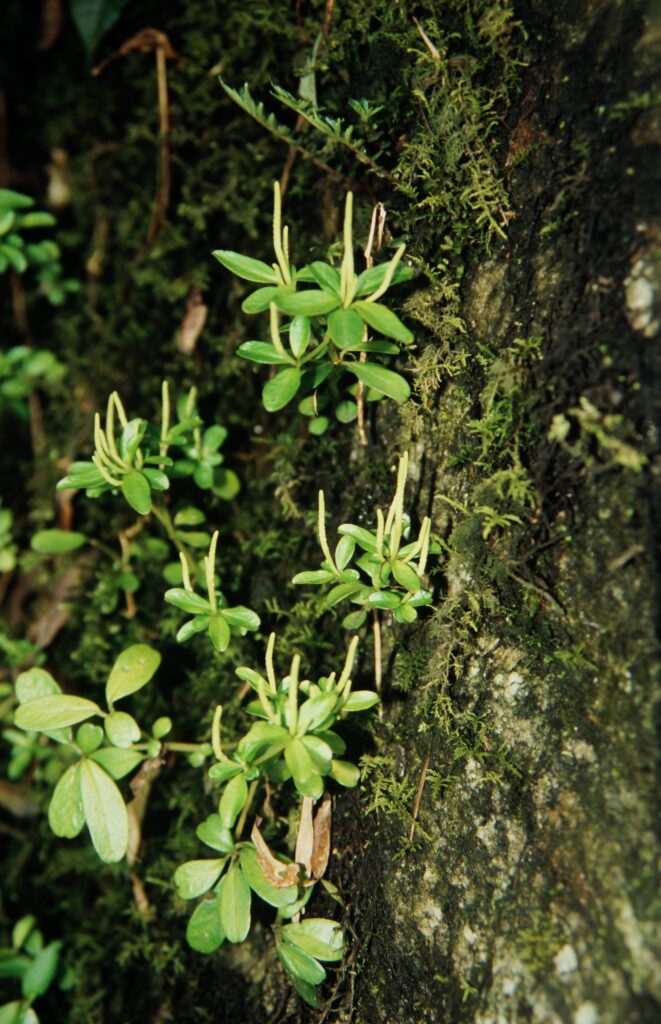
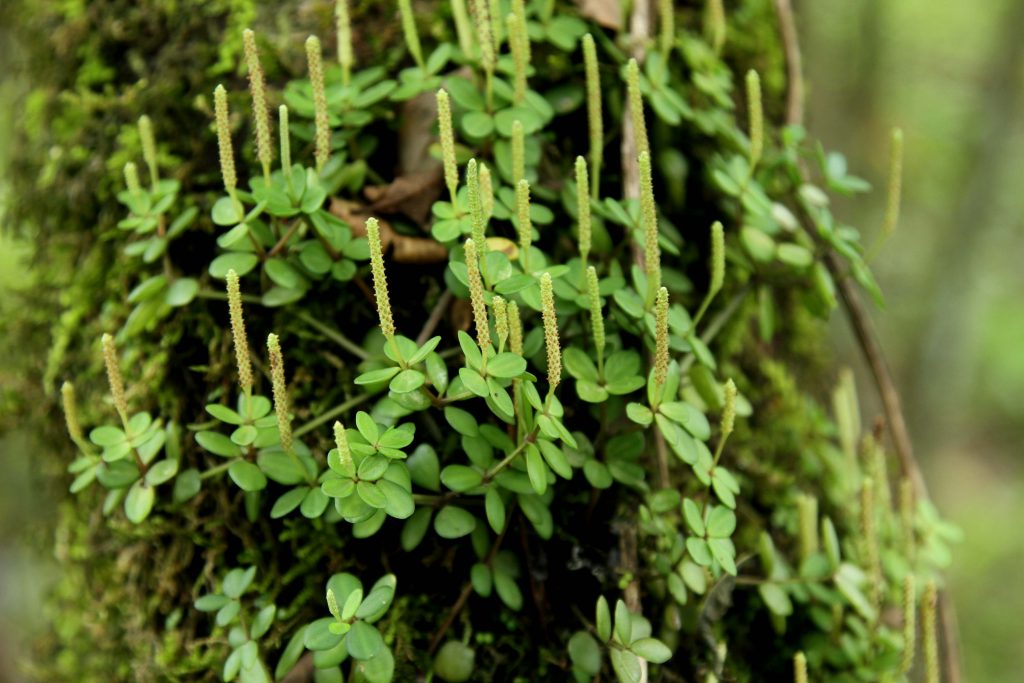
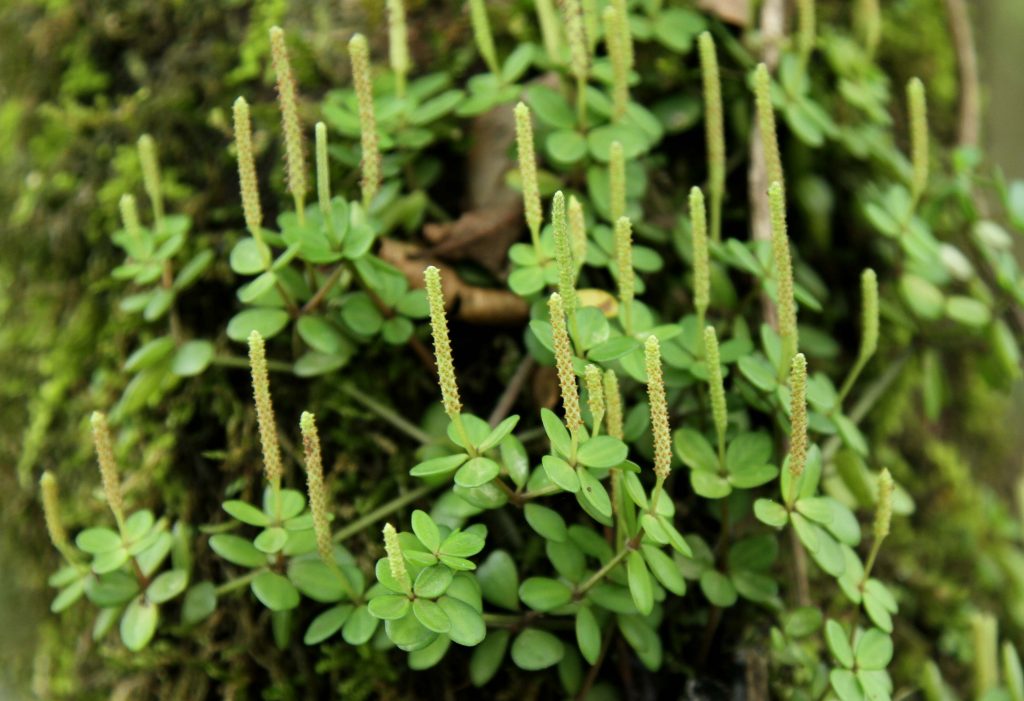
(G.Forst.) Hook. & Arn.

Bhutan2012 1010
Bhutan Trithangebe 1000m, October
Bhutan2012 1011
Bhutan Trithangebe 1000m, October
Sikkim 2006 472 ergebnis
India West-Bengal, Ruigi-Chu 2000m, May

Description

Peperomia tetraphylla is a small succulent herb of pantropical and warm-temperate distribution. GBIF (some 13,039 occurrences) documents it from the Americas (Brazil, Mexico, the United States, the Andes), Africa and the Indian Ocean islands, Asia (China, India, Indonesia, Taiwan) and Australasia, reflecting an extraordinarily wide range. It grows as an epiphyte on mossy trunks and as a lithophyte on shaded, humid rocks in forest. The illustrated plants are from Bhutan at Trithangbi (1,000 m, October) and West Bengal at Ruigi-Chu (2,000 m, May), spanning its Himalayan altitudinal range in moist broadleaved forest.

The plant is a fleshy, glabrous to finely pubescent herb with creeping then ascending stems rooting at the nodes. The leaves are succulent, characteristically borne in whorls of three to four (whence tetraphylla), small, elliptic to obovate and shortly petiolate. The inflorescence is a slender terminal or axillary spike of minute, naked, bisexual flowers lacking a perianth, each subtended by a peltate bract; the stamens are two and the stigma single. The fruit is a tiny ovoid drupelet, often borne sessile along the rachis.

Peperomia (Piperaceae) is a large pantropical genus, and P. tetraphylla is notable as one of its most widespread species, occurring on most continents. Its small succulent leaves and CAM-like physiology suit it to the seasonally dry, epiphytic microhabitats it occupies. Of no conservation concern given its vast range, it is locally used in folk medicine and is grown as a miniature ornamental, illustrating the cosmopolitan tropical element reaching into the lower Himalaya.

Author: (G.Forst.) Hook. & Arn. · Sources: POWO (Kew), Flora of China Vol. 4, Flora of Bhutan Vol. 1, GBIF, Wanke et al.: Phylogeny of Piperaceae

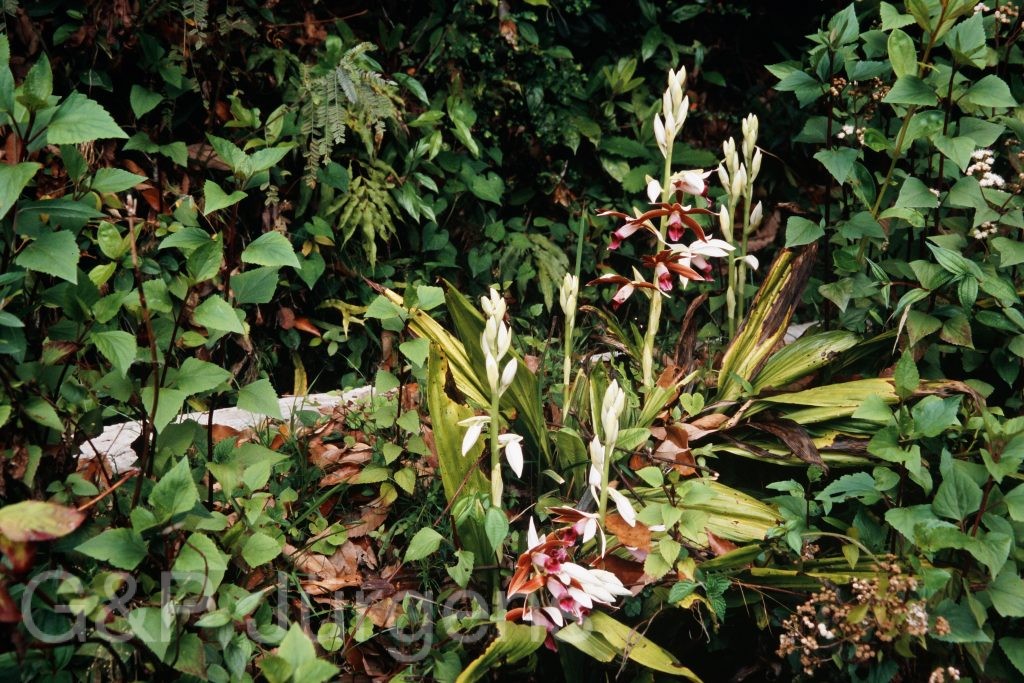
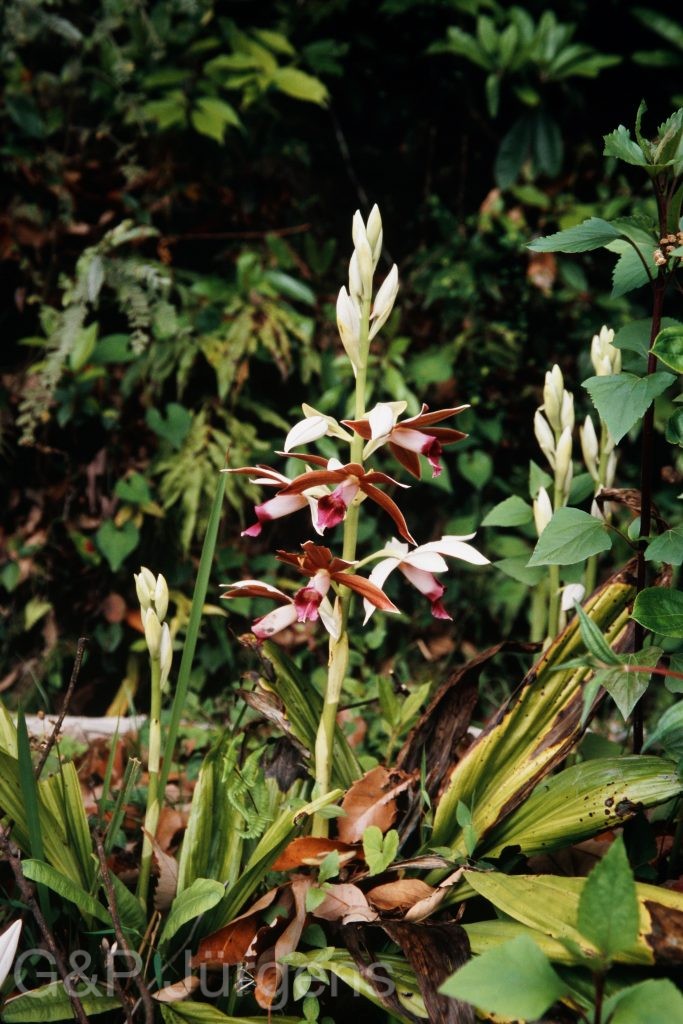
(Banks) Blume

Bh2008 482 G750
Bhutan Samtengang, 2040m April
Bh2008 483 P751
Bhutan Samtengang, 2040m April
Bh2008 485 G753
Bhutan Samtengang, 2040m April

Description

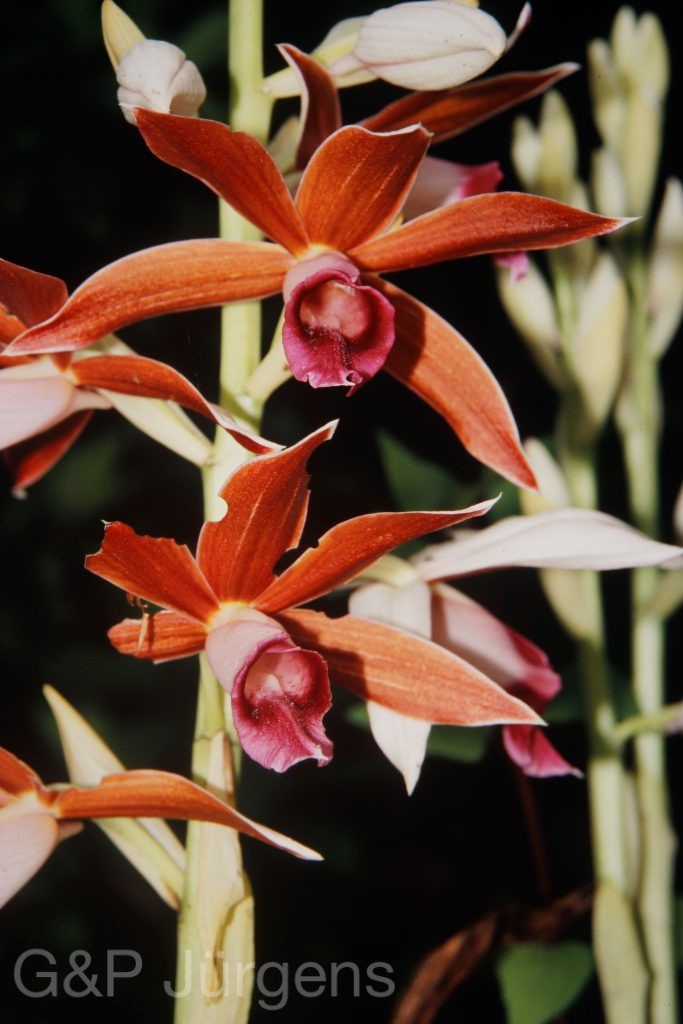
Phaius tankervilleae, the nun's-hood or swamp orchid, is a robust terrestrial orchid with an exceptionally wide Old World tropical and subtropical distribution, recorded from China, India, Bhutan, Indonesia, Malaysia, Papua New Guinea, Australia, the Pacific islands and many other regions, with around 660 occurrence records (some, as in the Americas and Caribbean, reflecting introduction). It grows in damp grassland, marsh margins, swampy forest clearings and moist roadside banks from the lowlands into the lower hills. The photographed plant from Samtengang in western Bhutan at 2040 m, flowering in April, lies toward the upper part of its montane range.

It is a large terrestrial orchid arising from clustered, conical pseudobulbs partly buried in the substrate. The leaves are few, large, broadly lanceolate, plicate (longitudinally pleated) and tapered to a sheathing base. The inflorescence is a tall, erect raceme bearing many showy flowers; the sepals and petals are similar, brownish-red to maroon within and silvery-white outside, while the prominent labellum is tubular and rolled, white flushed with rose-purple and yellow in the throat, with a short basal spur. The fruit is a pendulous capsule releasing innumerable dust-like seeds.

The accepted name Phaius tankervilleae, based on Banks's epithet and combined by Blume, is treated as current despite synonym status in the source dataset; the input family spelling "Orchideaceae" is a variant of the correct Orchidaceae. Like nearly all orchids it depends on mycorrhizal fungi for seed germination. Widely grown as an ornamental and broadly distributed in the wild, it is nonetheless locally threatened by wetland drainage and over-collection in parts of its range.

Author: (Banks) Blume · Sources: POWO (Kew), GBIF, Flora of China (Orchidaceae), Grierson & Long Flora of Bhutan, The Orchids of Bhutan (Pearce & Cribb), Seidenfaden's revisions of mainland Asian Orchidaceae

(Lindl.) Christenson & Pradhan

Bhutan2014 674
Bhutan Wangdi 2280m, May
Bhutan2014 676 scaled
Bhutan Wangdi 2280m, May
Bh2008 511 G785
Bhutan Chongsakha, 1800m April

Description

Phalaenopsis taenialis is a small epiphytic orchid distributed through the eastern Himalaya and adjacent regions, recorded from China, India, Nepal, Bhutan, Vietnam and Myanmar, with about 161 georeferenced occurrences. It grows on tree trunks and mossy branches in humid, broadleaved evergreen and semi-evergreen forest of the subtropical to lower temperate belt, broadly between 1500 and 2500 m. The cited Bhutanese localities at Wangdue (2280 m) in May and Chongsakha (1800 m) in April are typical of its moist, sheltered mid-elevation forest habitat, where it flowers in spring before the full monsoon.

It is a dwarf, monopodial epiphyte, often nearly leafless at flowering, with a short stem bearing well-developed, flattened, photosynthetic roots that clasp the bark. The leaves, when present, are few, thin and elliptic, and may be shed during the dry season. The inflorescence is a slender raceme of small, delicate flowers; the sepals and petals are pinkish to pale lilac, spreading, and the three-lobed labellum is the distinctive feature, with a callus and small lateral lobes characteristic of the species. The fruit is a dry, ribbed capsule releasing dust-fine seeds.

The species was long placed in Kingiella or Doritis and is sometimes segregated as Hygrochilus or Aerides allies, but is now treated within an enlarged Phalaenopsis following the combination by Christenson and Pradhan. Its deciduous, root-dominated habit is an adaptation to seasonally dry epiphytic perches. As a forest-dependent epiphyte vulnerable to habitat loss and orchid collection, it is of conservation interest across its range.

Author: (Lindl.) Christenson & Pradhan · Sources: POWO (Kew), GBIF, Flora of China, Flora of Bhutan, Christenson's monograph of Phalaenopsis

(Wight & Arn.) Benth.

Nepal 2001 184 ergebnis ergebnis
East-Nepal Sabha-Khola 2000m, May
Nepal 2001 476 ergebnis ergebnis
Nepal (Gorkha) Labubhesi 1200m, May

Description

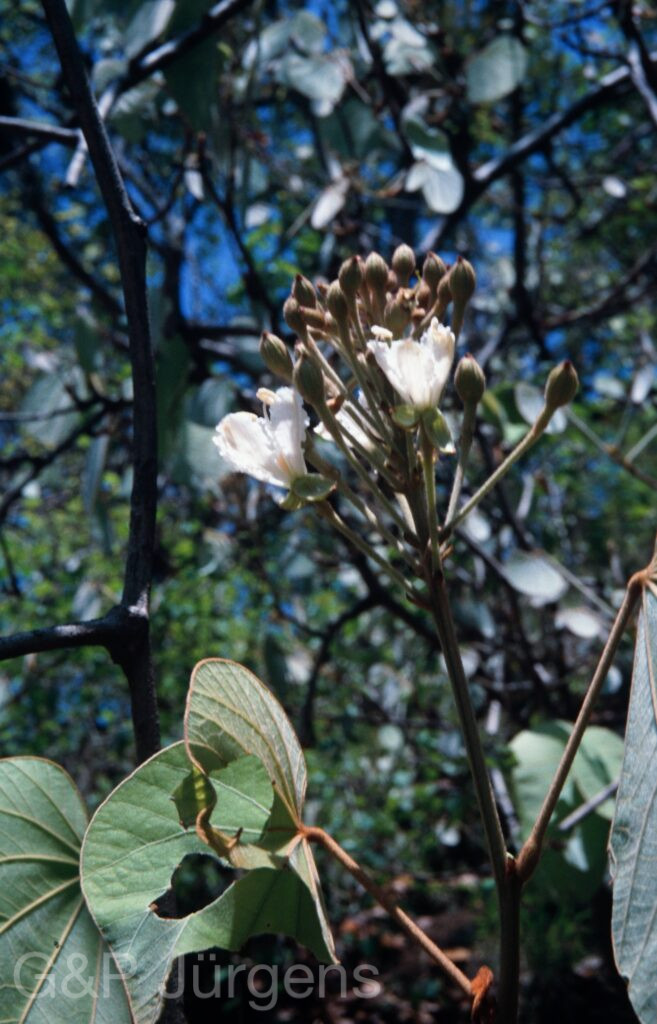
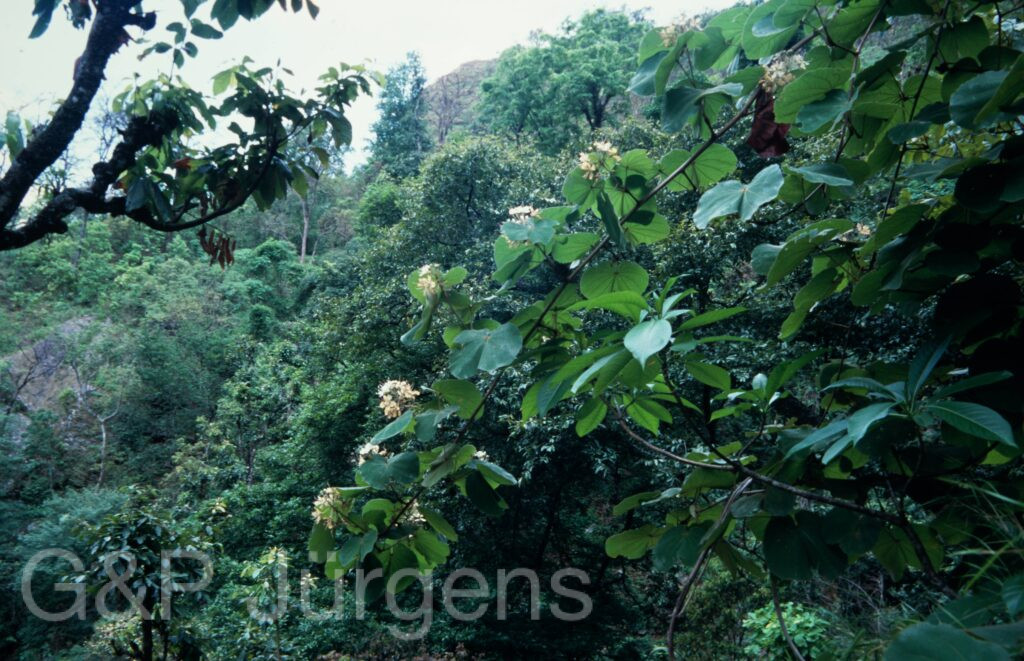
Phanera vahlii (formerly placed in Bauhinia) is a massive woody climber of the Indian subcontinent and Indo-Burmese region, native to India, Nepal, Bhutan, Bangladesh, Myanmar, Laos, Vietnam and China, with over 400 georeferenced records and many further occurrences reflecting cultivation and naturalisation elsewhere. It is a liana of subtropical forests, riverine thickets and forest edges. The Nepalese populations documented from the Sabha Khola in the east at about 2000 m and from Labubhesi in Gorkha at about 1200 m, both flowering in May, span its broad altitudinal tolerance from foothill valleys into temperate forest.

The plant is a gigantic, high-climbing leguminous vine ascending by paired, coiled tendrils, with stems and young parts clothed in dense ferruginous tomentum. The leaves are large, broadly orbicular and conspicuously bilobed at the apex, deeply notched between two rounded lobes in the manner characteristic of the Bauhinia alliance, the lower surface rusty-pubescent. The flowers are borne in large terminal panicles; each has a campanulate calyx and five cream to yellowish-white, clawed petals, with fertile stamens and reduced staminodes. The fruit is a large, woody, oblong pod densely covered with brown velvety hairs and containing several flattened seeds.

The segregation of Phanera from Bauhinia, based on tendrillate climbing habit, stamen number and pollen characters, is now widely followed though some authorities retain a broadly circumscribed Bauhinia. The species is economically important: its tough fibre yields cordage and its very large leaves are used as plates and for wrapping. Widespread and frequently exploited, it is not considered threatened.

Author: (Wight & Arn.) Benth. · Sources: POWO (Kew), GBIF, Flora of Nepal, Flora of British India, Flora of China, Wunderlin's revision of Bauhinia and Phanera

Kunth

Bhutan2012 770
Bhutan Zemgang 1600m, October

Description

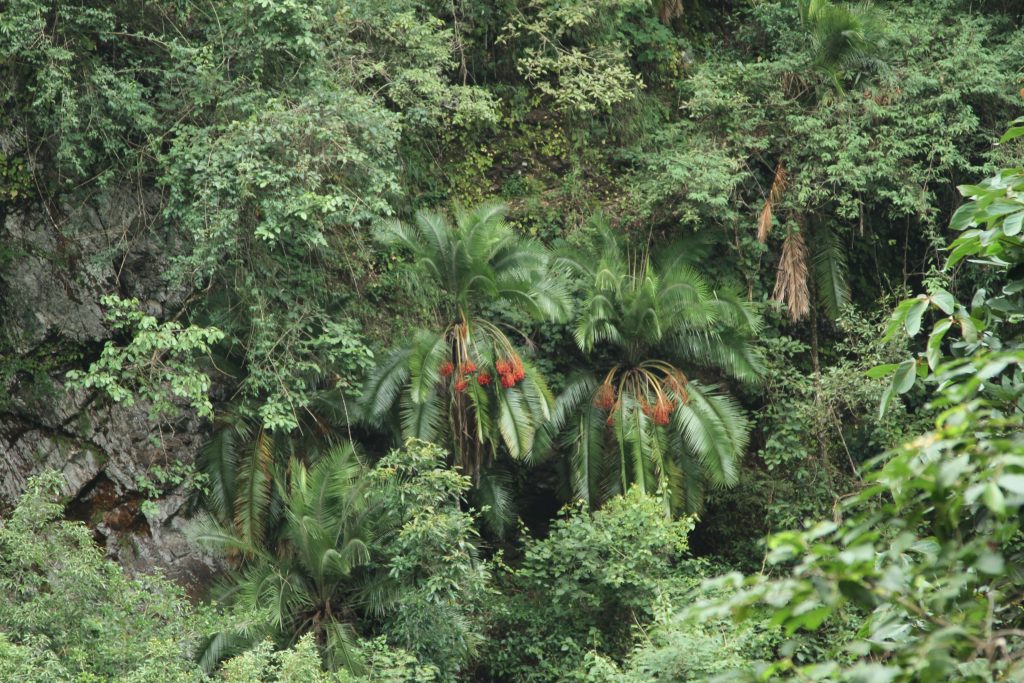
Phoenix loureiroi Kunth is a small date palm broadly distributed across South and Southeast Asia, recorded by GBIF from Taiwan, India, Thailand, China, Vietnam, Nepal, Myanmar, the Philippines, Laos, Pakistan, Cambodia and Bhutan, with cultivated occurrences in the United States, Cuba, Brazil and Spain, totalling over 2000 records. It grows in open forest, savanna, grassy slopes and rocky hillsides from the lowlands into the lower montane zone, tolerating seasonally dry, fire-prone ground. The Bhutanese material from Zhemgang at 1600 m in October reflects its presence in the warm subtropical foothills.

It is a small, often clustering palm with a short, sometimes subterranean stem clothed in persistent leaf bases, rarely forming a slender erect trunk. The leaves are pinnate and arching, the leaflets (pinnae) linear-lanceolate and stiff, the lower ones modified into sharp spines (acanthophylls), a defining feature of Phoenix. The plants are dioecious, the inflorescences branched spadices enclosed in a spathe, the small unisexual flowers cream to yellowish. The fruit is a small ellipsoid drupe ripening purplish-black to reddish, with thin sweet flesh around a single grooved seed, dispersed by birds.

Phoenix loureiroi is a polymorphic species with several recognised varieties spanning its wide range. As a relative of the cultivated date palm, it provides minor local uses for thatch, fibre and fruit, accounting for the scattered cultivated records. Its fire- and drought-tolerant habit and broad Indo-Malesian to Sino-Himalayan distribution make it a resilient element of open landscapes, and it is not threatened, although habitat conversion locally reduces wild populations.

Author: Kunth · Sources: POWO (Kew), GBIF, Flora of China Vol. 23, Flora of Bhutan Vol. 3, Flora of Pakistan, Barrow monograph of the genus Phoenix (Palmae)

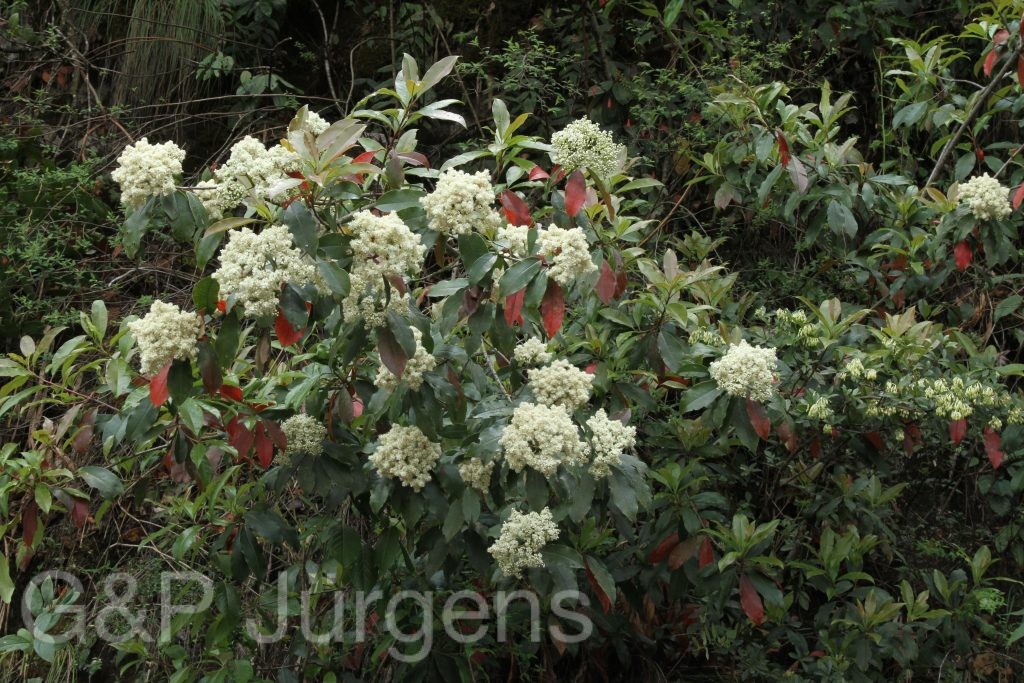
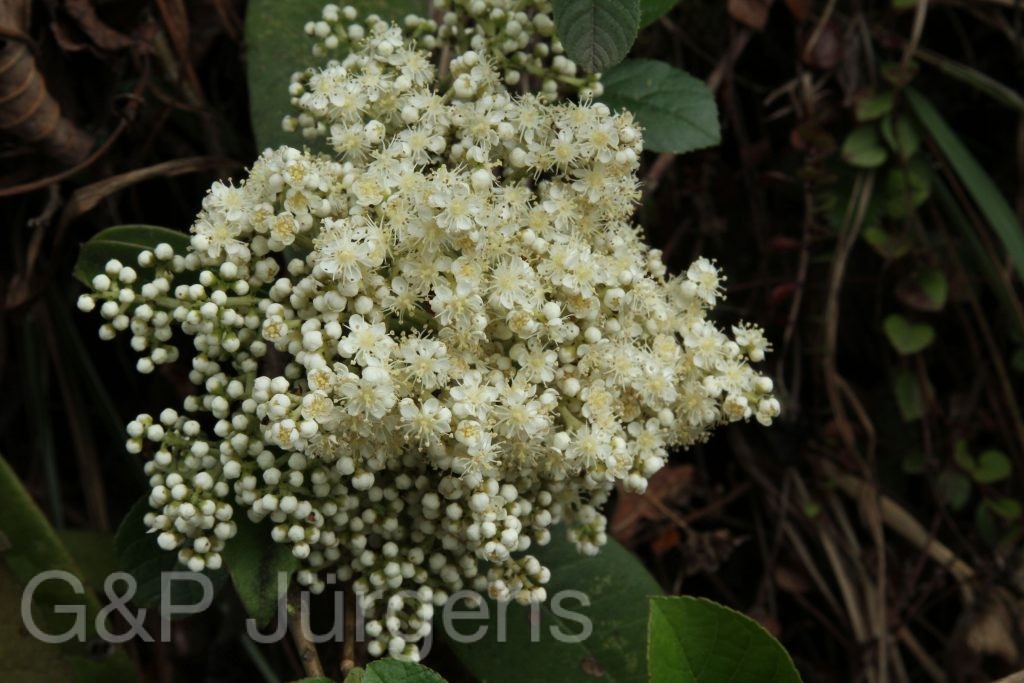
Lindl.

Bhutan2014 22
Bhutan Sandrup 850m, May
Bhutan2014 481
Bhutan Tongsa 2000m, May

Description

Photinia integrifolia is an evergreen tree or large shrub of broad Indo-Malesian distribution, with verified occurrences across China, Indonesia, India, Sri Lanka, Nepal, Myanmar, Thailand, Bhutan, Malaysia, Vietnam, Laos, the Philippines, Korea, Bangladesh and Timor-Leste, and well over a thousand GBIF records reflecting its wide range and abundance. It grows in subtropical to lower-temperate broadleaved and evergreen forest, on slopes and along ridges, generally from near 800 up to about 2500 m. The Bhutanese material cited, from Sandrup at around 850 m and Tongsa near 2000 m, both in May, spans the altitudinal breadth of its habitat from warm foothill forest into cooler mid-elevation woodland.

The tree has smooth grey bark and bears alternate, leathery, glabrous leaves that are oblong to elliptic-lanceolate with entire (rarely obscurely toothed) margins, the integri-folious character of the epithet, tapering to a short petiole. The small white flowers are massed in terminal corymbose panicles; each has five spreading petals, numerous stamens and an inferior to half-inferior ovary. The fruit is a small subglobose pome, red ripening to dark purple-black, containing one or few seeds and readily taken by birds.

Photinia, of subfamily Amygdaloideae (formerly Maloideae), is allied to Pyrus and Sorbus, and P. integrifolia, described by Lindley, is distinguished within the Asian group by its entire-margined evergreen leaves. Ecologically it is a useful timber and fuelwood tree whose bird-dispersed pomes contribute to forest regeneration. Given its very wide distribution and frequency across South and South-East Asia, it is of least conservation concern.

Author: Lindl. · Sources: POWO (Kew), GBIF, Flora of China, Flora of Bhutan, Flora of British India

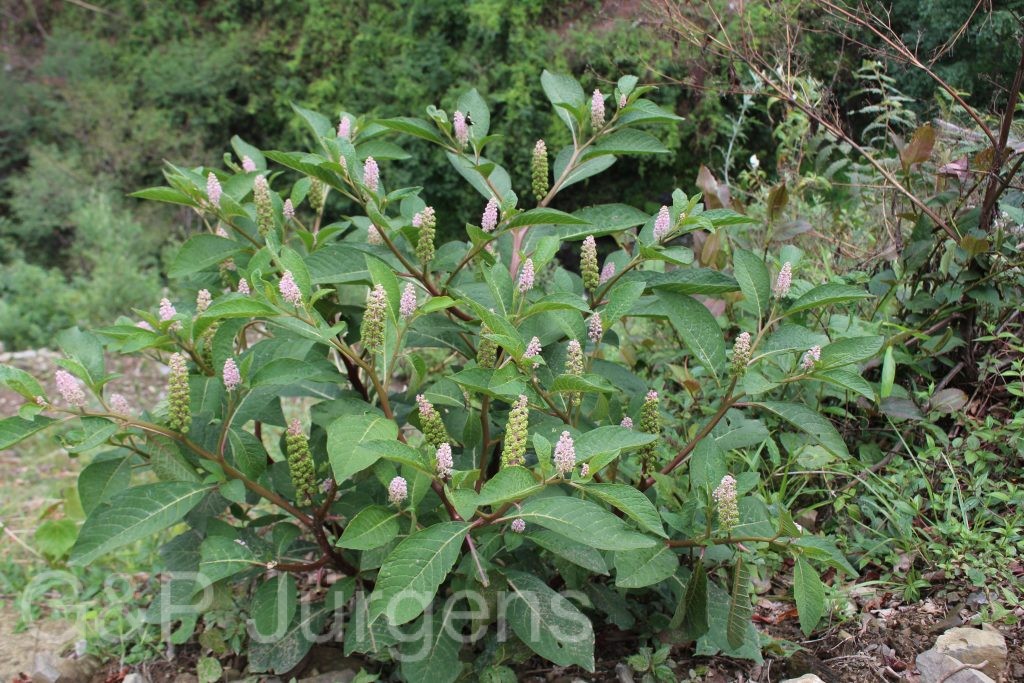
Roxb.

Bhutan2014 111
Bhutan Trashigang 1550m, May

Description

Phytolacca acinosa is a robust herbaceous perennial native to the temperate and subtropical mountains of Asia, from the Himalaya and China eastward to Korea and Japan, and now widely naturalised across Europe, where GBIF records dominate; the more than 40,000 occurrences logged reflect its abundance as an introduced plant across the Netherlands, Belgium, Germany, France and Britain as much as its native Asian range. Within its indigenous range it grows at forest margins, in clearings and on disturbed or cultivated ground at lower and middle elevations. The photographed plant was recorded in eastern Bhutan at Trashigang around 1550 m in May, a setting typical of this nitrogen-loving herb.

The plant arises from a stout, fleshy, often massive perennial taproot and produces tall, erect, branching, somewhat succulent stems. The leaves are alternate, large, elliptic to ovate-lanceolate, entire, with an acute apex and tapering base. The flowers are borne in dense, erect to suberect racemes opposite the leaves; each has five whitish to greenish tepals, the stamens and free carpels typically numbering around eight to ten. The fruit is a fleshy, depressed-globose berry of distinct segments, ripening dark purple-black, each with a single shining seed.

Phytolacca (Phytolaccaceae) is a small genus of pokeweeds known for their berry-like fruits and saponin-rich tissues. P. acinosa is distinguished from the American P. americana by its erect fruiting racemes and free carpels. The young shoots are eaten as a cooked vegetable in Asia, though the root and mature plant are toxic. Far from threatened, it is a successful colonist, now widespread and sometimes weedy beyond its homeland.

Author: Roxb. · Sources: POWO (Kew), GBIF, Flora of China Vol. 5, Flora of Bhutan Vol. 1, Flora of Nepal, Flora of Pakistan, Nowicke monograph of Phytolaccaceae

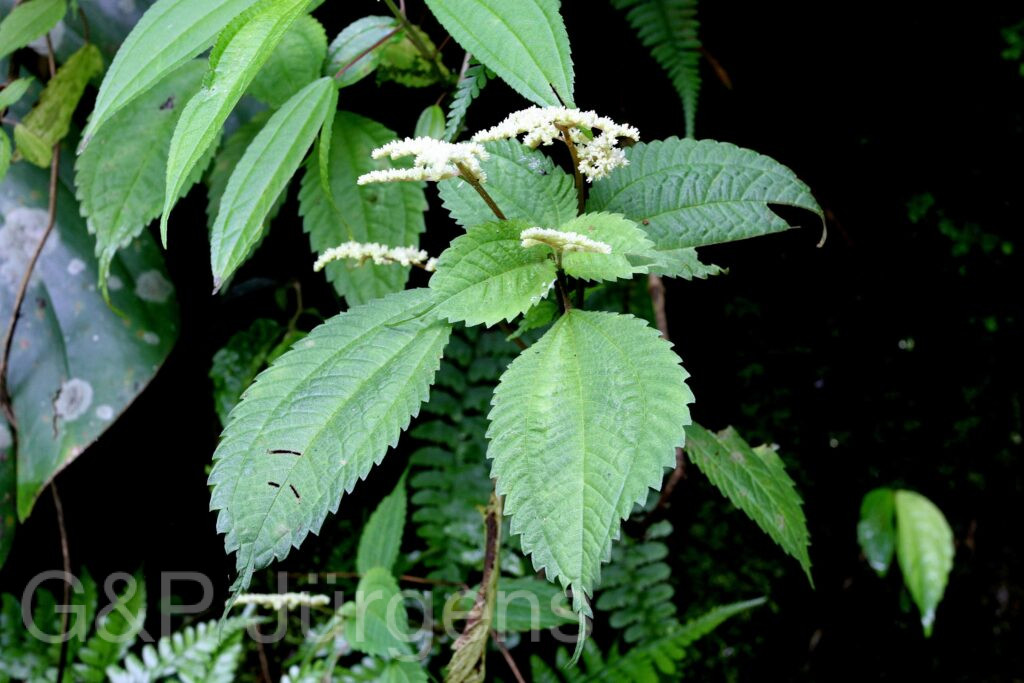
Wedd.

Sikkim2011 6
Bhutan Tista-valley 1900m, October

Description

Pilea insolens is a Sino-Himalayan herbaceous species distributed from central Nepal through Sikkim, Bhutan, and northeast India (Darjeeling, Arunachal Pradesh) to Bangladesh, Myanmar, southern China, Japan, and Indonesia. GBIF records 94 occurrences across this range. The species inhabits damp, shaded habitats in subtropical and warm-temperate forests at elevations of 800–2,400 m, where it colonises moist rocks, stream banks, tree bases, and old walls in areas of high humidity. It is most abundant in the eastern Himalayan valleys that receive heavy monsoon precipitation.
Pilea insolens is a succulent, erect to ascending, monoecious perennial herb, 15–40 cm tall. Stems are fleshy, translucent, glabrous, and often reddish-brown at the base. Leaves are opposite, markedly anisophyllous — a characteristic feature, with the larger leaf of each pair broadly ovate to suborbicular, 3–8 cm long, and the smaller leaf often reduced to a stipule-like scale or small blade less than 1 cm. The larger leaf surface is dark green, often with a cystolith-dotted texture visible as pale streaks, with crenate to serrate margins and three prominent basal veins. Stipules are small, membranous, and soon deciduous. Male and female flowers are borne in separate axillary cymes on the same plant; the male flowers are minute with four perianth segments, while the female flowers are even smaller, with an achene enclosed by persistent perianth lobes.
The photographed specimen from the Tista valley in Bhutan at 1,900 m in October represents a typical occurrence in the humid, deeply incised river valleys of the eastern Himalayas. Pilea insolens is distinguished from other Himalayan congeners by its pronounced leaf anisophylly combined with the broadly ovate, crenate larger leaf. The genus Pilea is enormous, with over 700 species globally, and the eastern Himalayan region is a centre of diversity with numerous narrowly distributed endemics. The species' extension from the Himalayas into Japan and Indonesia reflects a shared subtropical element across the monsoon-influenced forests of East and Southeast Asia. Its reliance on humid, undisturbed forest microsites makes it sensitive to deforestation and stream-channel modification.

Author: Wedd. · Sources: POWO (Kew), GBIF, Flora of China Vol. 5, Flora of Bhutan Vol. 1, Grierson & Long (1983), Chen (1982) — Revision of Chinese Pilea