Tag:

Montane (1500-2500 m)

(Griff.) D.G. Long & A.G. Mill.
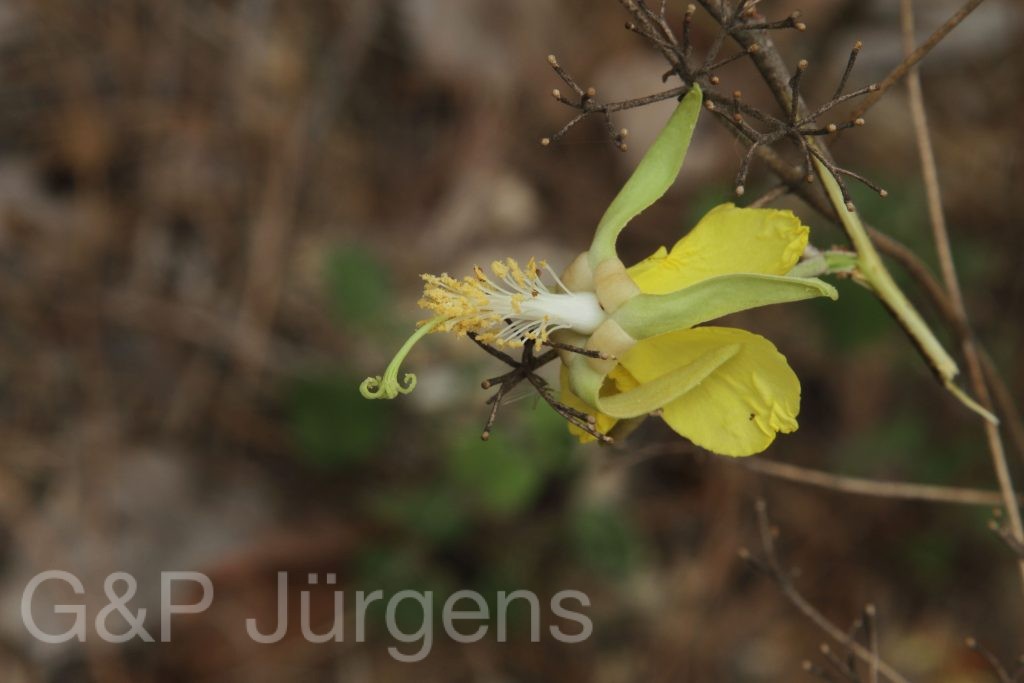
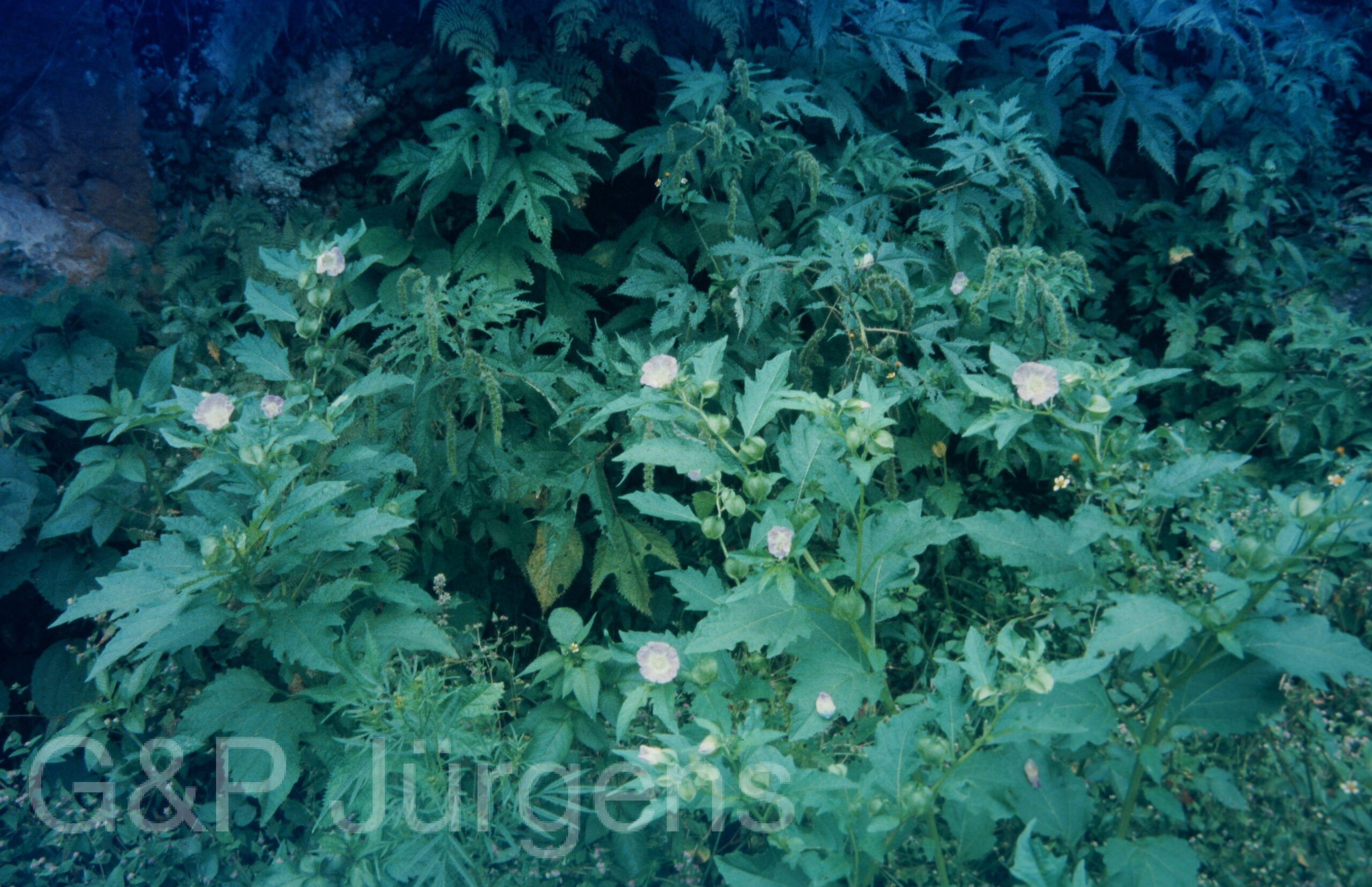
Bhutan2014 257
Bhutan Karu-Chu 1800m, May
Bhutan2014 258
Bhutan Karu-Chu 1800m, May

Description

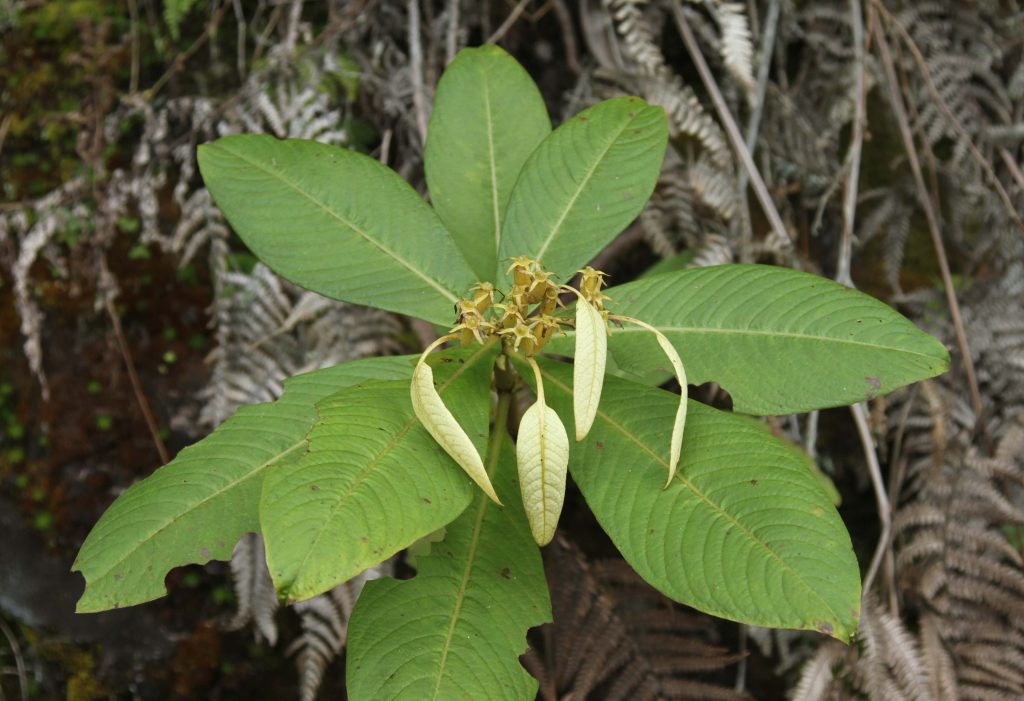
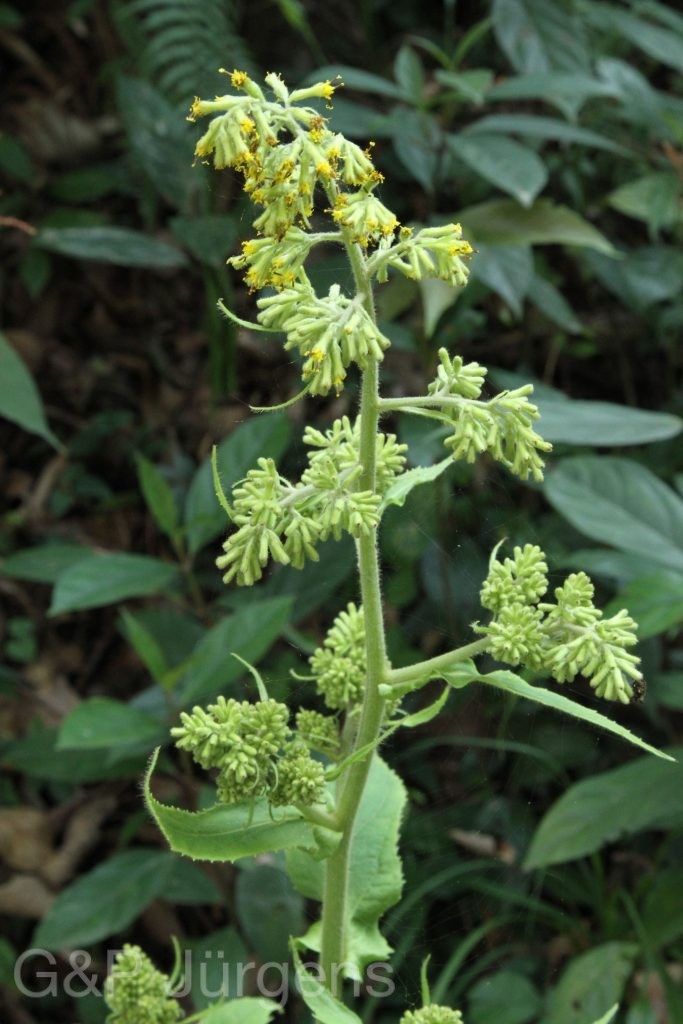
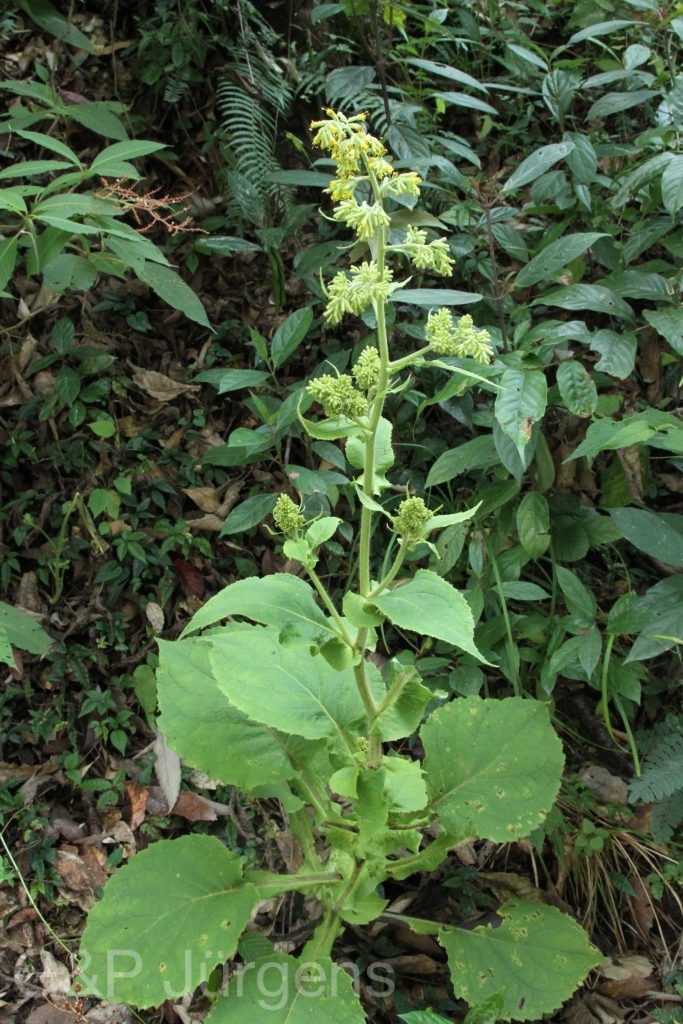
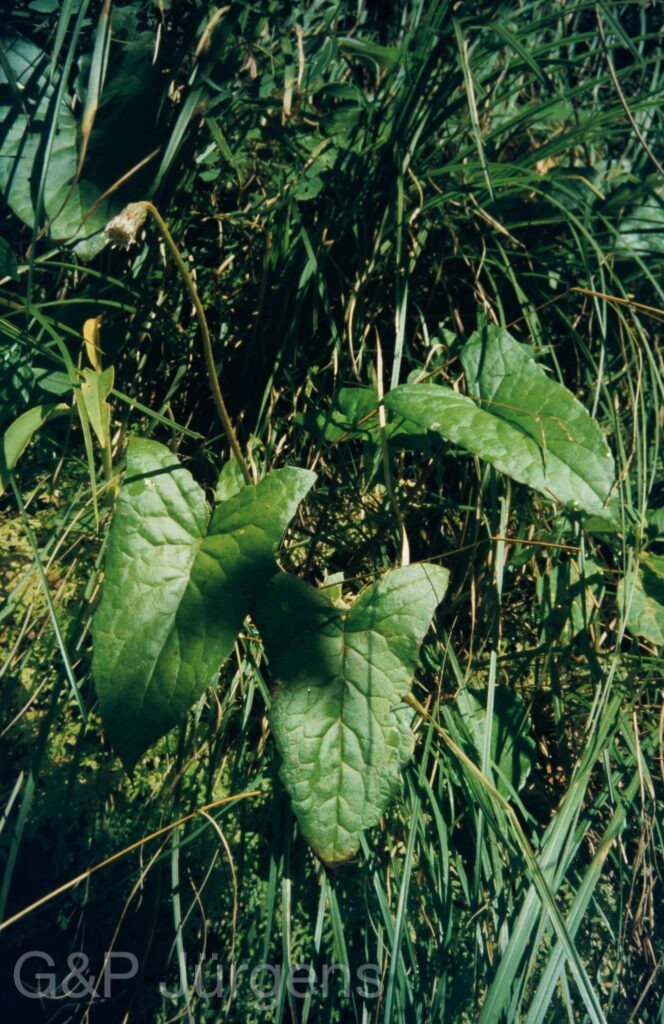
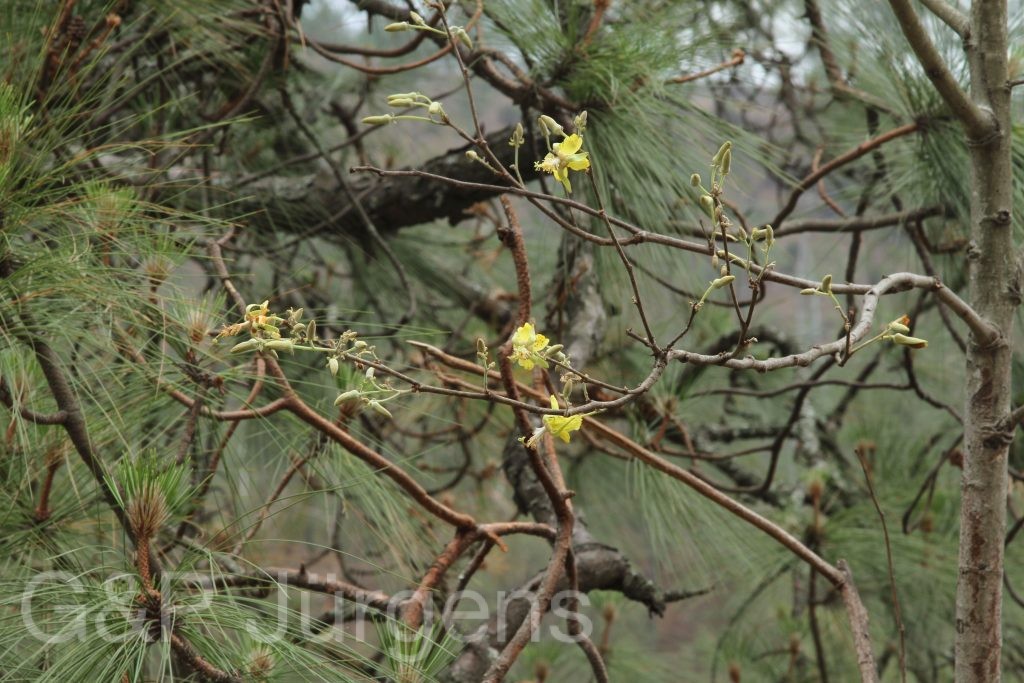
Nayariophyton zizyphifolium is a little-collected shrub of the Eastern Himalayan foothills and adjacent Indo-Burmese region, known from a modest 45 georeferenced records concentrated in India (IN), Nepal (NP) and Bhutan (BT), with a peripheral occurrence in Thailand (TH). It is a plant of warm subtropical to lower temperate valleys and hill slopes, occurring in open forest, scrub and on rocky banks at low to middle elevations. The plant photographed at Karu-Chu in Bhutan at about 1800 m in May reflects this warm, sheltered river-valley habitat, well below the alpine flora and typical of the species' restricted foothill range. Under the name used here GBIF treats the record as a synonym, with Nayariophyton zizyphifolium itself standing as the currently accepted name.

It is an erect, somewhat woody shrub with stellate-pubescent young branches. The leaves are alternate, ovate to broadly elliptic with a serrate margin and a three-veined base, recalling the foliage of Ziziphus, from which the specific epithet zizyphifolium derives; they are clothed, especially beneath, with stellate hairs typical of the Malvaceae. The flowers are axillary, subtended by an epicalyx, with five sepals and five petals in the usual mallow arrangement and a column of fused stamens surrounding the style. The fruit is a schizocarpic, several-segmented mericarp characteristic of the genus, the dry segments separating at maturity.

Nayariophyton (Malvaceae) is a small, taxonomically isolated genus of the Eastern Himalaya, and the combination here reflects the revisionary work of D.G. Long and A.G. Miller for the Flora of Bhutan. Its scant collection record and narrow foothill distribution make it of biogeographic interest as an element of the Indo-Himalayan endemic flora. Given its limited known range and the conversion of low-elevation valley habitat, the species warrants attention from a conservation standpoint, though it has not been formally assessed.

Author: (Griff.) D.G. Long & A.G. Mill. · Sources: POWO (Kew), GBIF, Flora of Bhutan, Flora of British India, Long and Miller revision of Eastern Himalayan Malvaceae
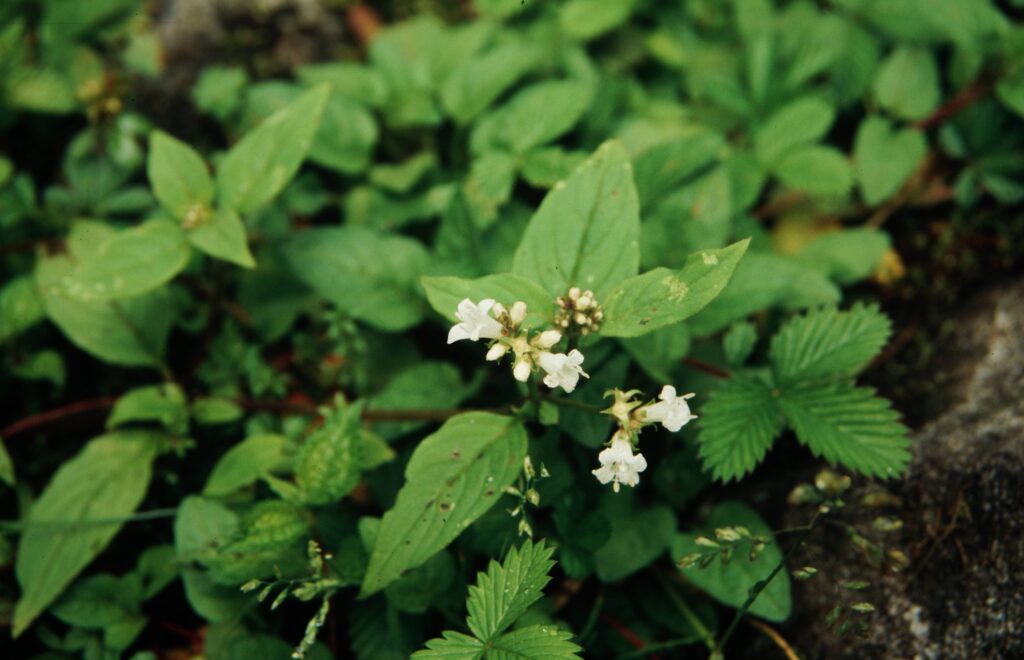
(L.f.) W.H.Lewis

Sikkim 2006 467 ergebnis
India West-Bengal, Ruigi-Chu 2000m, May

Description

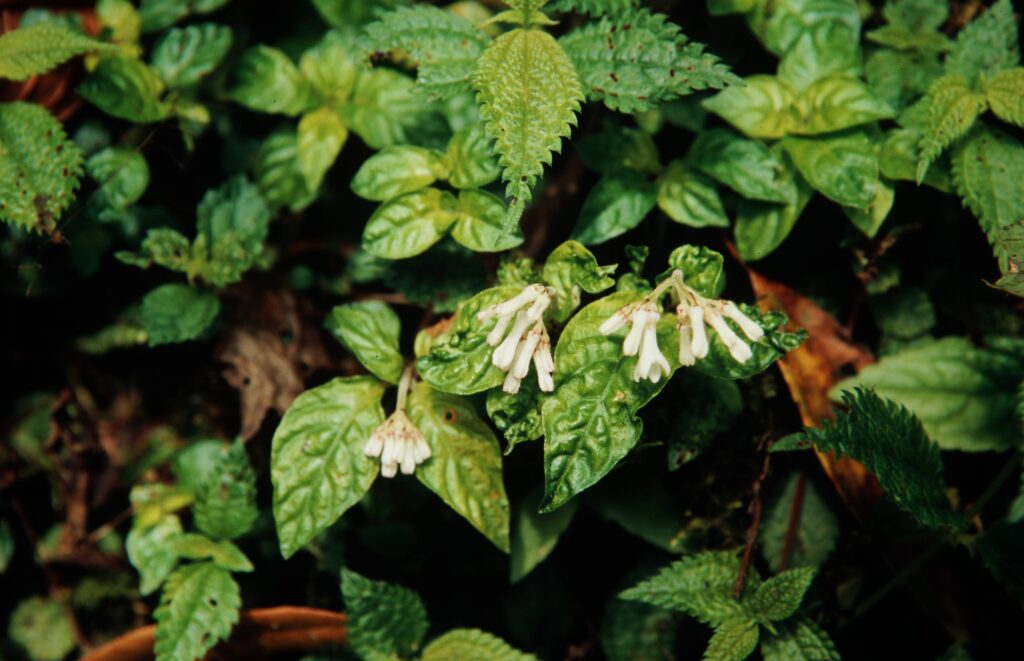
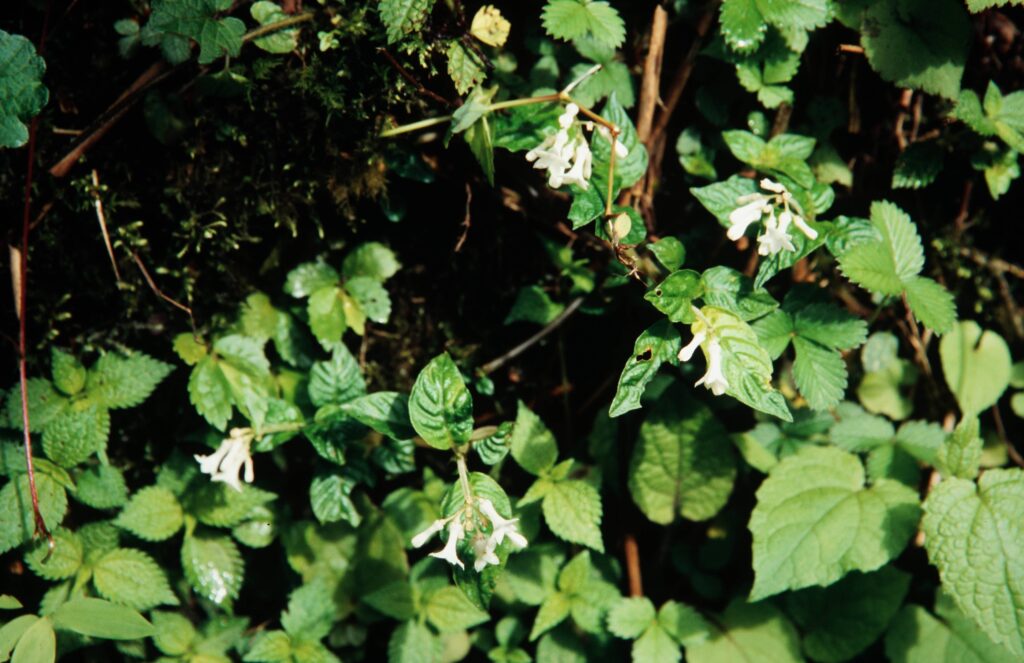
Neanotis hirsuta (L.f.) W.H.Lewis is a slender herbaceous member of the Rubiaceae with a remarkably broad Asian-Pacific distribution, recorded from India, Nepal, Bhutan, Pakistan and Sri Lanka eastwards through China, Taiwan, Japan and Korea, across Southeast Asia (Myanmar, Thailand, Vietnam, Malaysia, Indonesia, Philippines) to New Guinea and the Solomon Islands; with over 2,700 georeferenced occurrences it is among the more frequently collected species in this group. It grows in moist, shaded situations on forest floors, along streambanks, on damp rocks and trail margins and in disturbed grassy ground. The photographed plant from Ruigi-Chu in West Bengal at about 2,000 m in May reflects its presence in the humid mid-montane forests of the eastern Himalaya.

The species is a weak, creeping to ascending annual or short-lived perennial with slender, often hairy, four-angled stems that root at the lower nodes. The leaves are opposite, ovate to lanceolate, with interpetiolar stipules bearing fine bristles. Small flowers are borne in axillary and terminal clusters; each has a four-lobed calyx, a white to pale lilac funnelform corolla with four spreading lobes, four stamens and an inferior bilocular ovary. The fruit is a small didymous capsule that splits to release numerous minute angular seeds.

The genus Neanotis was segregated from Anotis and the broad Hedyotis–Oldenlandia complex by W. H. Lewis, and species delimitation within it remains intricate owing to subtle differences in habit and indumentum. Tolerant of disturbance, N. hirsuta often behaves as a pioneer of moist open ground and can be locally weedy. It is widespread and of no conservation concern.

Author: (L.f.) W.H.Lewis · Sources: POWO (Kew), Flora of China Vol. 19, Flora of Bhutan Vol. 2, GBIF, Lewis: Revision of the genus Neanotis (1966)

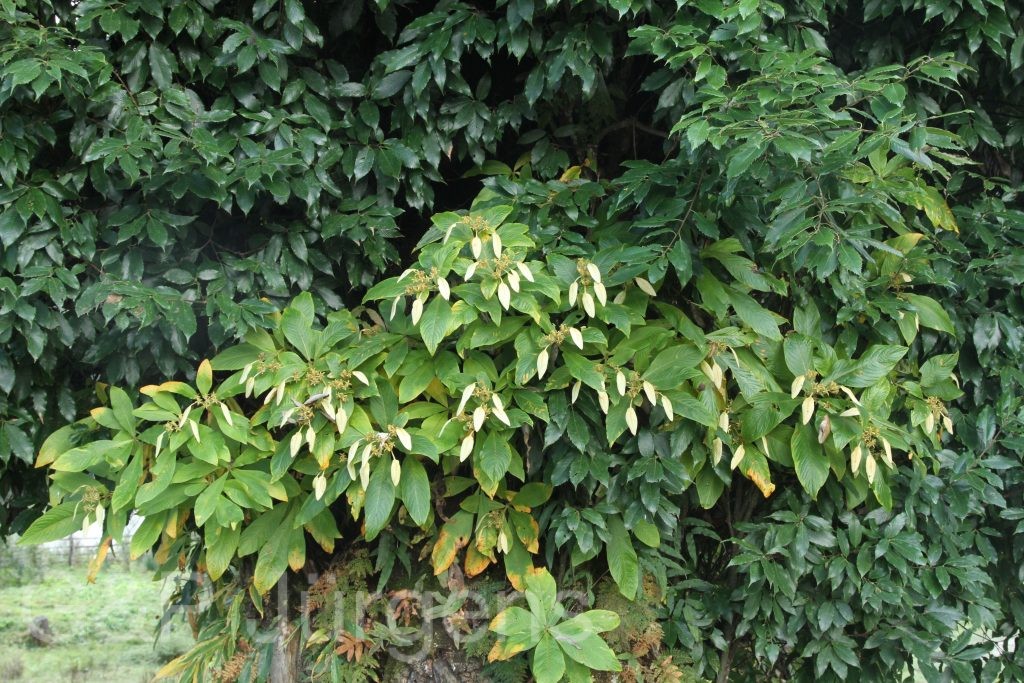
(Wall.) Bennet

Bhutan2015 41
Bhutan Wangdi Phoang 2000m, October
Bhutan2012 941
Bhutan Tumching-La 2300m, October
Sikkim2003 40 K52.2
Sikkim above Yoksam 1860m 08.2003

Description

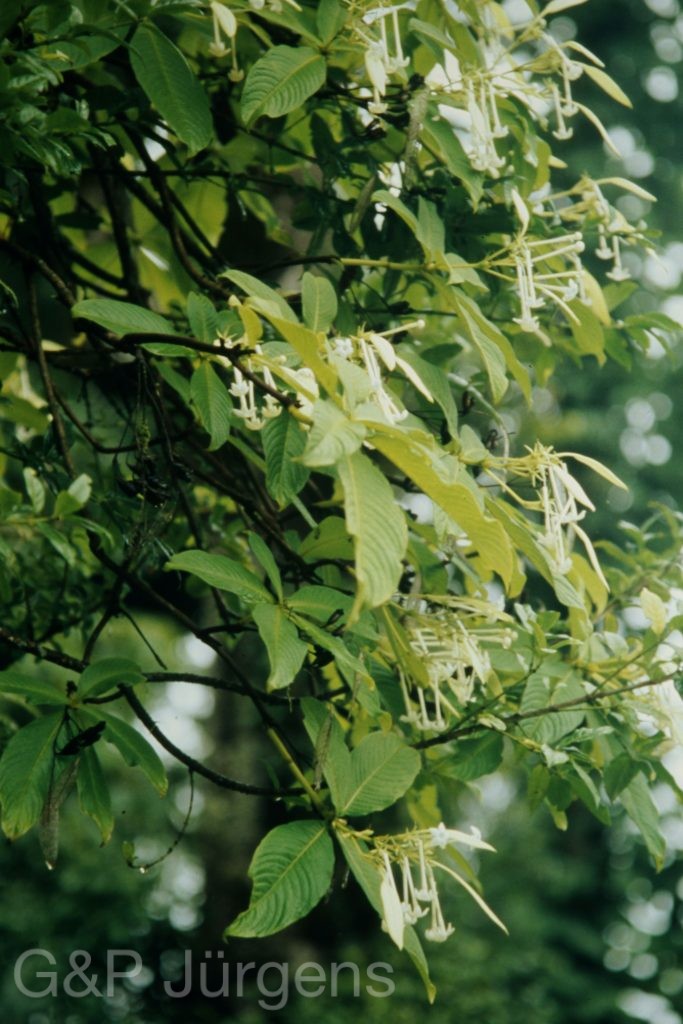
Neohymenopogon parasiticus is an epiphytic shrub of the eastern Himalaya and adjacent Sino-Himalayan and Indochinese mountains, distributed through China, Nepal, India, Thailand, Myanmar, Bhutan and Vietnam (gbif_countries: CN, NP, IN, TH, MM, BT, VN, ZZ, GB, PG), with some 438 GBIF occurrences. Despite the epithet it is not truly parasitic but grows perched on the trunks and mossy branches of trees in humid, mid-elevation broadleaved and mixed forest, occasionally also on rocks. The illustrated collections range from above Yoksam in Sikkim at about 1860 m up to Wangdi Phoang and Tumching-La in Bhutan at around 2000–2300 m, recorded in the late-monsoon to autumn months, reflecting its preference for moist, cloud-bathed submontane forest.

The plant is a glabrous to finely hairy epiphytic shrub with opposite, elliptic to obovate leaves clustered toward the branch tips, the stipules interpetiolar as in Rubiaceae. The flowers are borne in terminal cymose clusters and are showy by virtue of enlarged, white, petaloid calyx-lobes (calycophylls) that subtend the inflorescence and aid pollinator attraction, surrounding tubular corollas. The fruit is a ribbed, dehiscent capsule releasing many small, winged seeds suited to wind dispersal among the canopy.

Neohymenopogon was segregated from Hymenopogon to accommodate this distinctive Himalayan epiphytic lineage, and the species is placed in the madder family among the calycophyll-bearing Rubiaceae that mimic the petaloid bracts of Mussaenda and its allies. As an epiphyte dependent on intact, humid forest canopy, it is sensitive to deforestation, though it remains locally frequent across its range and is not currently of conservation concern.

Author: (Wall.) Bennet · Sources: POWO (Kew), GBIF, Flora of Bhutan, Flora of China, Flora of Nepal, Robbrecht's studies of Rubiaceae systematics

(L.) Gaertn.

Nepal 99 955 ergebnis
West-Nepal Dunai 2150m, July

Description

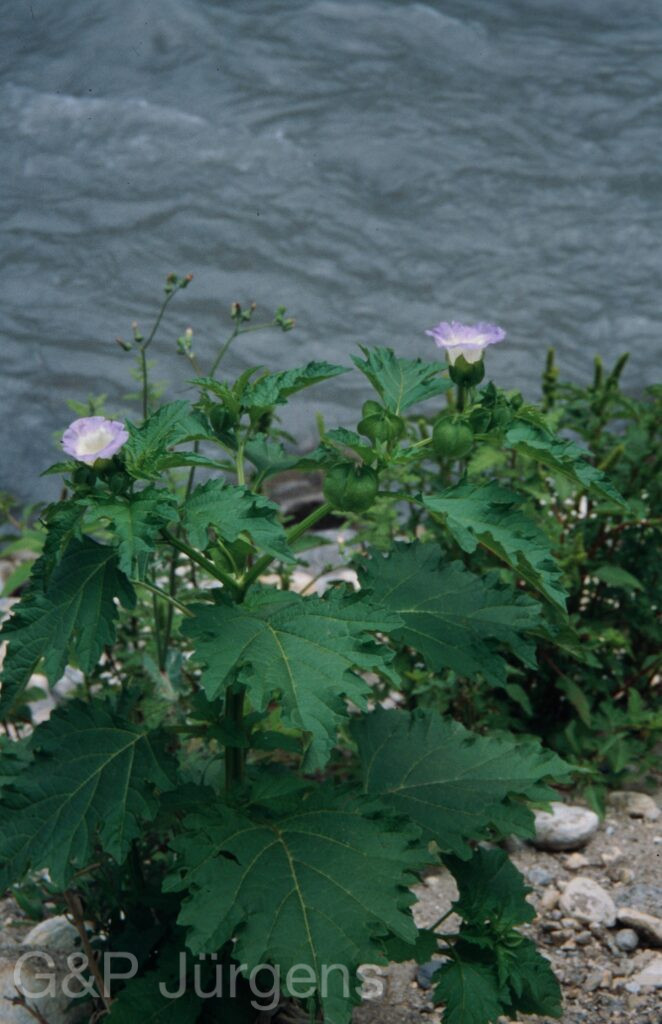
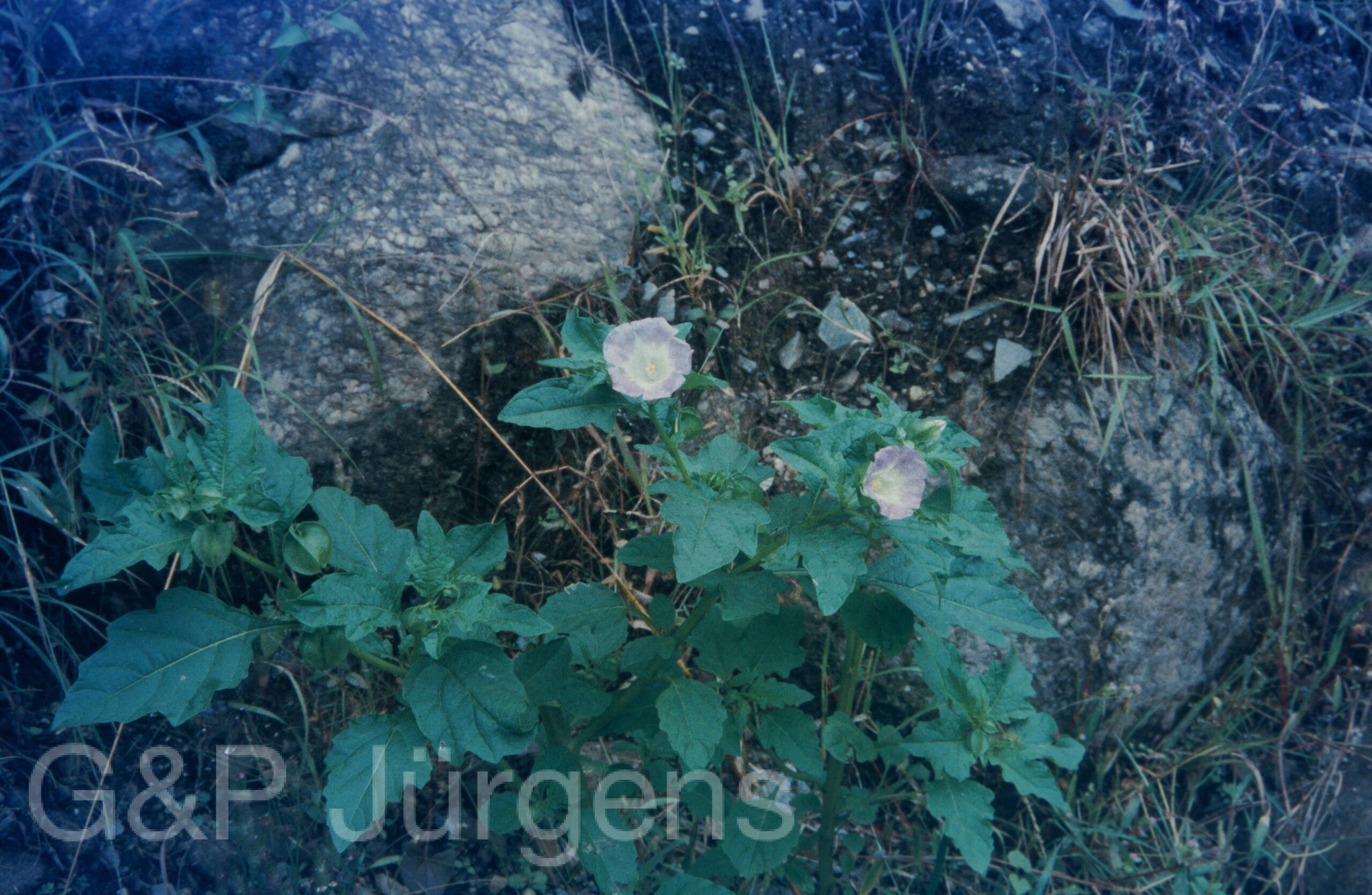
Nicandra physalodes (L.) Gaertn., the shoo-fly plant or apple-of-Peru, is an annual herb native to the Andean region of South America (notably Peru) but now naturalised almost worldwide as a weed of cultivation and waste ground. The very large GBIF occurrence record spans Europe, North and South America, southern Africa, Australasia, China and beyond, reflecting its cosmopolitan ruderal status. In the Himalaya it is a familiar plant of cultivated fields, village margins and disturbed ground; the records from Dunai in west Nepal at 2,150 m in July and from Sitel in Garhwal, India, at 1,850 m in September document its occurrence as a monsoon-season weed in the western and central Himalayan hill zone.

Nicandra is a robust, erect, glabrous annual reaching up to 1–1.5 m, with stout, angular, branching stems. The leaves are alternate, ovate to elliptic, with coarsely sinuate-dentate or lobed margins. The solitary, axillary flowers are pale blue to lilac with a paler, often whitish throat; the corolla is broadly campanulate and shallowly five-lobed. Most distinctive is the persistent, accrescent calyx with five deeply sagittate-cordate, sharply angled lobes that enlarge and become inflated and papery, enclosing the dry, many-seeded berry in a manner resembling the husk of Physalis, hence the epithet physalodes.

The genus Nicandra is monotypic and forms an isolated lineage within Solanaceae, placed in its own subfamily Nicandroideae and of long-standing interest in phylogenetic studies of the family. The plant is mildly toxic, containing withanolide-type compounds, and has been used traditionally as an insect repellent, accounting for the vernacular name shoo-fly. Its remarkable success as a global colonist makes it a textbook example of a New World species turned cosmopolitan agricultural weed.

Author: (L.) Gaertn. · Sources: POWO (Kew), GBIF, Flora of China Vol. 17, Flora of Pakistan (Solanaceae), Hunziker: The Genera of Solanaceae

Griff.

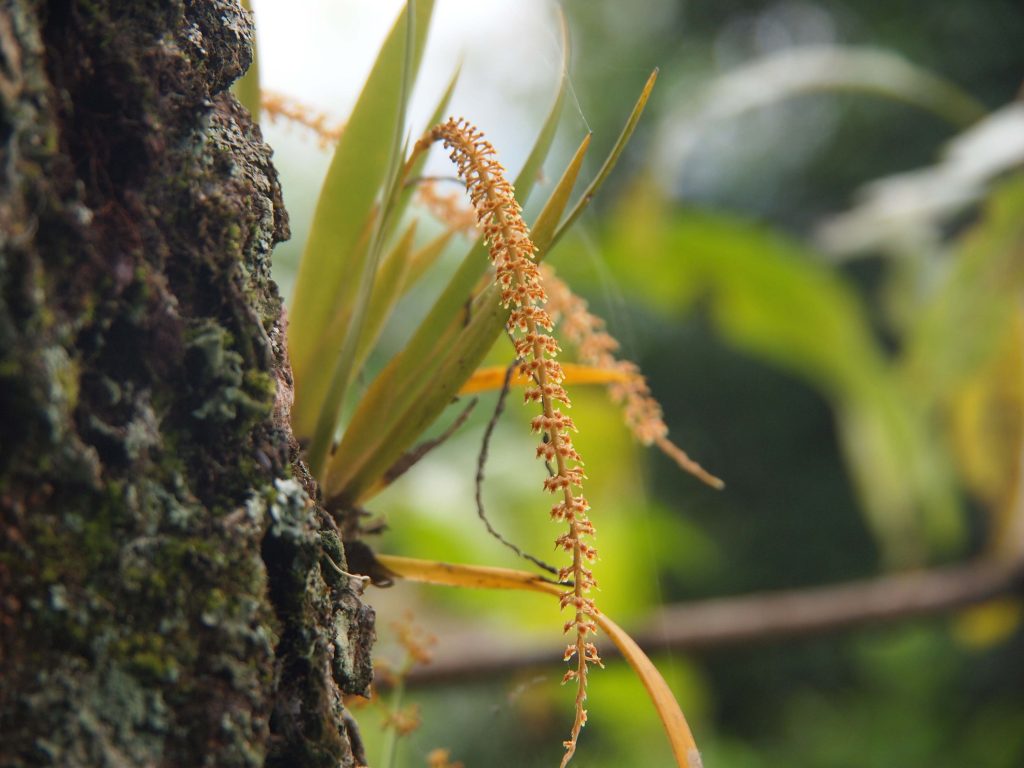
Bhutan2012 814 Kopie
Bhutan Zemgang 2000m, October
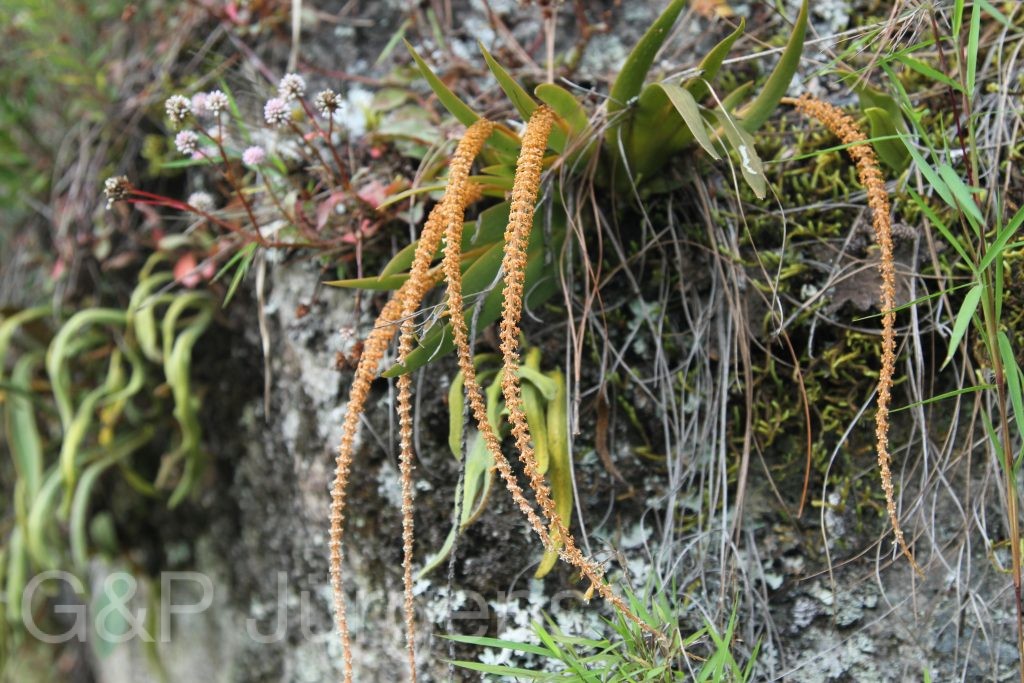
Bhutan2012 1146
Bhutan Tashiyangtse 1500m, October

Description

Oberonia acaulis is a small epiphytic orchid widespread across tropical and subtropical Asia, recorded from India, Nepal, Bhutan, China, Myanmar, Bangladesh, Thailand, Vietnam and beyond, with about 198 GBIF occurrences. It grows in warm, humid broad-leaved and subtropical forest, perched on tree trunks and branches in shaded, moist situations from the lowlands into the lower montane zone. The images document it in Bhutan at Zemgang around 2000 m and at Tashiyangtse near 1500 m, both in October, when the minute flowers are borne in dense spikes among forest epiphyte communities.

It is a tufted, dwarf epiphyte lacking pseudobulbs, with a short stem bearing a fan of equitant, laterally flattened (iris-like), fleshy leaves arranged in two ranks. From the centre of the fan arises a slender, erect to arching scape terminating in a long, densely many-flowered cylindrical raceme. The flowers are extremely small, numerous, yellowish to orange-brown, arranged in whorls; the labellum is the most conspicuous part, typically three-lobed with a divided or toothed apex, distinguishing the species within the genus. The fruit is a tiny ellipsoid capsule.

Oberonia is a large pantropical genus of "button orchids" notable for the diminutive size and great number of their flowers, which complicates field identification and rests heavily on the structure of the lip. The minute flowers are thought to be pollinated by small flies or midges. Like all orchids the genus is listed on CITES Appendix II; O. acaulis is widespread and common across its broad range and is not considered threatened.

Author: Griff. · Sources: POWO (Kew), GBIF, Flora of China, Flora of Bhutan, Flora of British India, Genera Orchidacearum (Vol. 4 Epidendroideae)

Lindl.

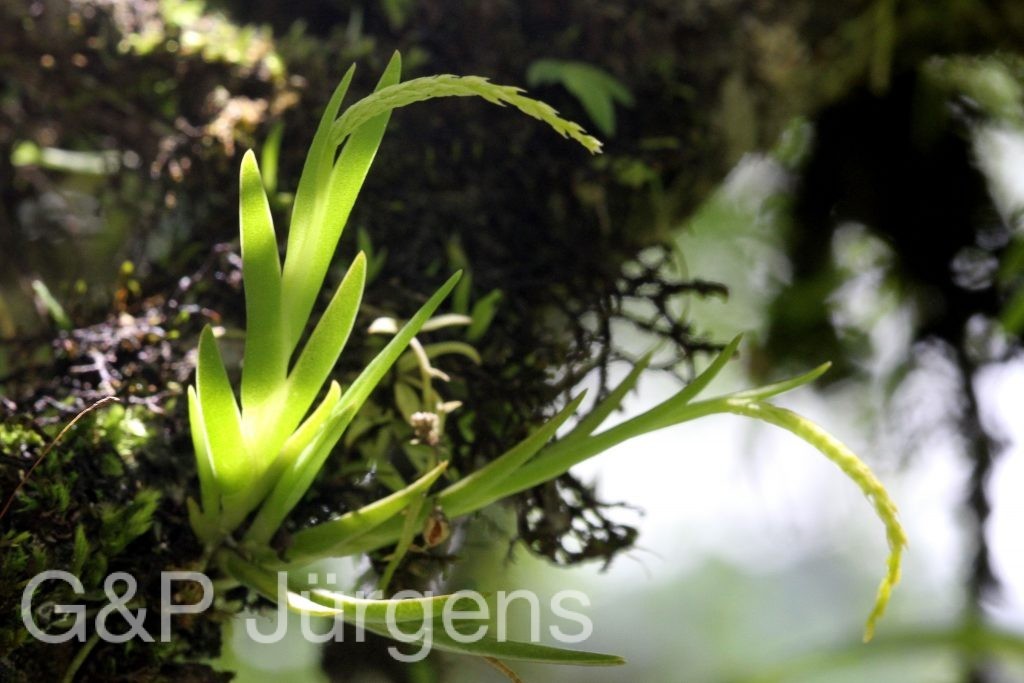
BhutanPG2011 35 ergebnis
Bhutan Wangdi 2000m, June

Description

Oberonia obcordata is a diminutive epiphytic orchid of the Eastern Himalaya and adjacent Southeast Asia, recorded from China, India, Nepal, Thailand and Bhutan, with around 40 occurrences in GBIF. It grows as an epiphyte on the trunks and branches of trees in humid subtropical to lower montane broad-leaved forest, generally at moderate elevations of roughly 1,000 to 2,200 m. The plant illustrated was photographed near Wangdue (Wangdi) in western Bhutan at about 2,000 m in June, where the species flowers in the warm, moist conditions of the early monsoon.

It is a small, tufted epiphyte without pseudobulbs, the short stem bearing a fan of laterally flattened, equitant, fleshy leaves arranged in two ranks, as is characteristic of the genus. The inflorescence is a slender, pendent to arching raceme densely crowded with very numerous, minute flowers arranged in whorls along the axis. The tiny flowers are yellowish to orange-brown; the small sepals and petals spread, and the labellum, from which the epithet derives, is obcordate and more or less notched at the apex. The column is very short, and the fruit is a minute ellipsoid capsule containing exceedingly fine seeds.

Oberonia is a large palaeotropical genus of dwarf, fan-leaved epiphytes distinguished chiefly by the form of the diminutive labellum, here obcordate and emarginate. The minute flowers are pollinated by small insects, and establishment is mycorrhiza-dependent. Inconspicuous and easily overlooked, the species is relatively poorly documented; though not specifically assessed, it shares the general CITES Appendix II protection of the family, and its persistence is linked to intact mid-elevation forest.

Author: Lindl. · Sources: POWO (Kew), GBIF, Flora of China, Flora of Bhutan, The Orchids of Bhutan (Pearce & Cribb), Pridgeon et al. Genera Orchidacearum

Bureau & Franch.

Bhutan2015 458
Bhutan Trongsa 2100m, October
Bhutan2015 457
Bhutan Trongsa 2100m, October

Description

Onosma paniculatum is a robust, bristly-hairy herb of the eastern Himalaya and adjacent China, with GBIF documenting 255 occurrences across China and Bhutan. It favours open, sunny banks, dry rocky slopes, roadside cuttings and disturbed grassy ground in warm-temperate to montane country. The photographed plant grows at Trongsa in central Bhutan at about 2100 m, flowering in October, a relatively low and autumn-flowering station consistent with the species' tolerance of dry, exposed habitats.

The plant is a biennial or short-lived perennial with stiffly erect stems clothed in spreading, often pustular-based setae that render it harshly scabrid. The basal and lower leaves are linear to lanceolate, the cauline leaves smaller and sessile. The inflorescence is an open, branched panicle of scorpioid cymes; the flowers are pendent with a tubular-campanulate corolla, blue to violet (sometimes purplish), exserted anthers and a long, slender style. The fruit comprises four smooth, ovoid-trigonous nutlets.

GBIF treats the spelling Onosma paniculatum as a synonym, with Onosma paniculata accepted as the correct orthography. Onosma is a large Old World genus whose roots yield naphthoquinone red dyes long used locally, and several Himalayan species are gathered for traditional medicine and colouring. The genus is taxonomically difficult owing to indumentum variation and intergrading forms, so reliable identification depends on nutlet and corolla detail. Its prominence at disturbed sites makes it a familiar, weedy component of the eastern Himalayan flora.

Author: Bureau & Franch. · Sources: POWO (Kew), GBIF, Flora of China, Flora of Bhutan, Riedl's revision of Onosma (Boraginaceae)

Hook.f.

Description

Ophiorrhiza treutleri is an eastern Himalayan understorey herb confined to India, Nepal and Bhutan, documented by roughly 39 georeferenced records that cluster in the moist mid-montane forests of the region. It is a plant of shaded, humid habitats, growing on the floor of dense evergreen and mixed broadleaved forest, along streamsides, mossy banks and damp ravines where atmospheric humidity remains high throughout the year. The specimen photographed at Tolung in West Bengal (India) at about 2200 m in May reflects its typical occurrence in the cool, perpetually damp montane belt, where it flowers in spring beneath a closed canopy.

It is a small perennial or weakly suffrutescent herb with slender, often decumbent stems that root at the lower nodes and bear a sparse indumentum. The leaves are opposite, ovate to elliptic-lanceolate, acuminate at the apex and somewhat asymmetric at the base, with conspicuous lateral venation and small interpetiolar stipules characteristic of the family. The inflorescence is a terminal, scorpioid cyme; the flowers are small, white to pinkish and tubular, with a five-lobed corolla and an inferior bilocular ovary. As in many Ophiorrhiza, the species is distylous, producing pin and thrum flowers. The fruit is a characteristically broad, didymous (two-lobed) capsule that dehisces loculicidally to release numerous minute angular seeds.

Ophiorrhiza belongs to the tribe Ophiorrhizeae of the Rubiaceae and is notable for the accumulation of camptothecin and related alkaloids, which has drawn pharmacological interest to several species. The heterostyly of O. treutleri promotes outcrossing through insect-mediated pollination, while its capsular fruits are adapted to rain-splash and gravity dispersal in the still air of the forest floor. As an obligate shade species tied to undisturbed montane forest, it is vulnerable to canopy opening, and its conservation is effectively linked to the protection of intact eastern Himalayan woodland.

Author: Hook.f. · Sources: POWO (Kew), GBIF, Flora of China Vol. 19, Flora of Bhutan Vol. 2, Flora of Nepal, Deb & Mondal Revision of the Genus Ophiorrhiza (Rubiaceae)

(Royle) X.D.Xu & V.A.Funk

Garw 2005 419 ergebnis
India Garhwal Didina 2470m, September
Garh 07 70 ergebnis
India Garhwal Nanu Mandakini 2300m, June

Description

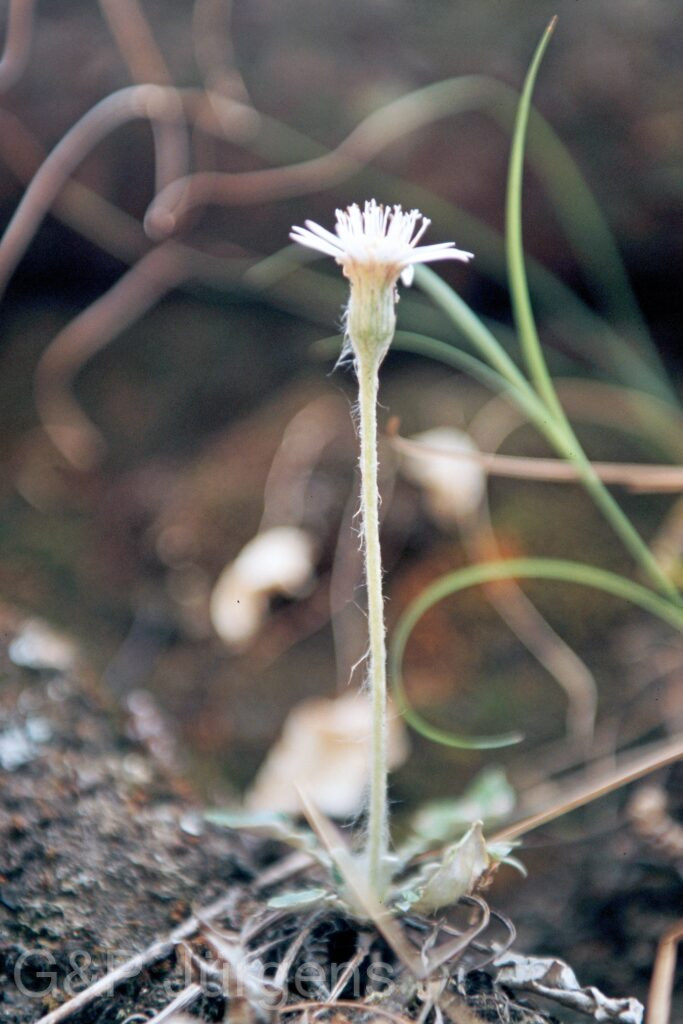
Oreoseris gossypina is a rosette-forming perennial herb of the temperate and subalpine Himalaya, recorded from Pakistan, India, Nepal, China and Bhutan across more than 300 occurrences. It typically inhabits open grassy slopes, rocky banks and forest margins, often on disturbed or grazed ground, at elevations of roughly 1800 to 3500 m. The documented collections derive from Garhwal in India, at Didina (2470 m, September) and the Nanu Mandakini valley (2300 m, June), the two dates spanning much of its long flowering and fruiting season in the Western Himalaya.

The plant produces a basal rosette of obovate to oblanceolate leaves that are conspicuously white-woolly beneath, the dense cottony indumentum giving rise to the epithet gossypina. The leaf margins are sinuate-dentate and the lamina narrows into a winged petiole. Solitary capitula are borne on slender, bracteate scapes; each head is heterogamous and radiate, with an involucre of imbricate, often arachnoid-hairy phyllaries. The marginal ray florets are ligulate and pale, the disc florets tubular; the achenes are ribbed and surmounted by a pappus of barbellate bristles aiding wind dispersal.

The species was long placed in Gerbera and is also encountered under Leibnitzia; its current placement in Oreoseris (Mutisieae) reflects molecular and morphological revision by X.D. Xu and V.A. Funk. As a member of an early-diverging composite lineage it is of phylogenetic interest, and its mutisioid floral structure attracts a range of pollinating insects. The species is widespread and faces no recognised threat.

Author: (Royle) X.D.Xu & V.A.Funk · Sources: POWO (Kew), GBIF, Flora of China, Flora of Pakistan, Annotated Checklist of the Flowering Plants of Nepal, Xu & Funk revision of Mutisieae

Oryza sativa

by G & P Jürgens

L.

Bhutan2015 559
Bhutan Moshu 1700m, October

Description

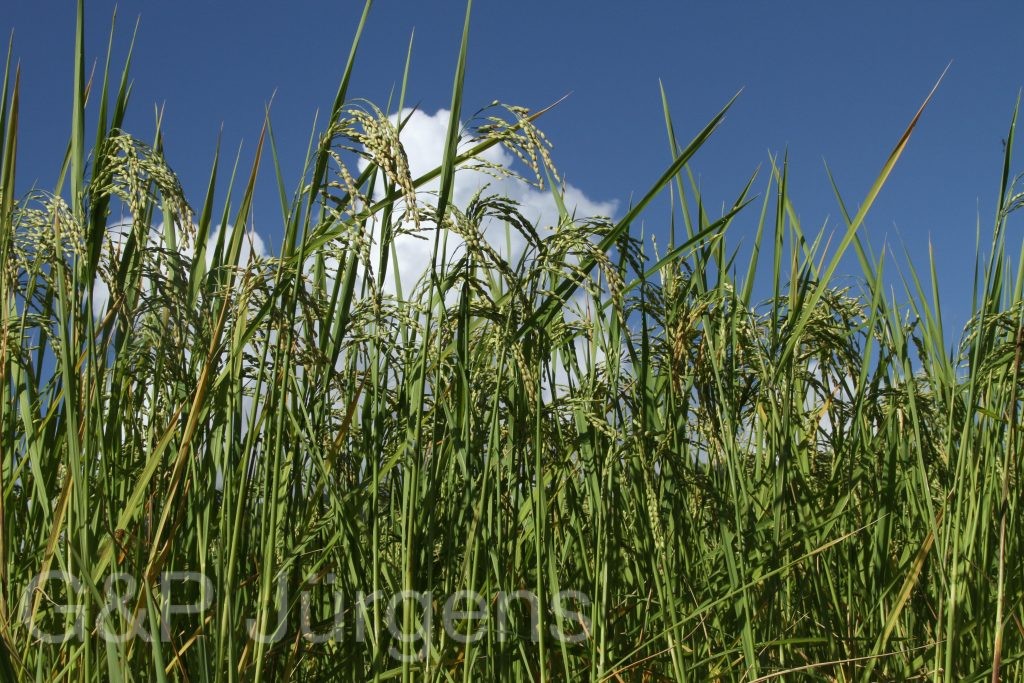
Oryza sativa, Asian cultivated rice, is the world's most important cereal staple and is grown across the warm-temperate to tropical zones of every inhabited continent. Domesticated in Asia from wild progenitors such as O. rufipogon, it is documented in GBIF by more than four hundred thousand occurrences spanning India, China, Southeast Asia, the Americas, Africa, Europe and beyond, reflecting both its agricultural ubiquity and intensive germplasm collection. It is essentially never truly wild but rather a cultigen of flooded paddies, irrigated terraces and seasonally inundated fields, with weedy and feral forms persisting around cultivation. The plant photographed at Moshu in Bhutan at 1700 m in October represents the terraced mid-montane rice cultivation characteristic of the Bhutanese Himalaya, where hardy, often red-grained landraces are grown well above the typical lowland range and are harvested as the autumn paddies ripen to gold.

The plant is an annual (occasionally short-lived perennial) grass forming erect tufts of hollow, jointed culms typically 0.5 to 1.5 m tall, rooting at the lower nodes and tolerant of standing water. The leaves are linear, flat and scabrous, with a long membranous ligule and well-developed auricles at the junction of sheath and blade. The inflorescence is a terminal, much-branched, nodding panicle bearing numerous laterally compressed spikelets, each reduced to a single fertile floret subtended by two small sterile lemmas; the fertile lemma is keeled and may be awned or awnless. Six stamens and a feathery, two-branched stigma effect predominantly self-pollination, and the fruit is the familiar caryopsis (grain), enclosed by the persistent lemma and palea as the husk.

Oryza belongs to the grass family Poaceae, tribe Oryzeae, a lineage of marsh-adapted grasses. As a domesticate, O. sativa encompasses immense genetic diversity organised principally into the indica and japonica subspecies groups, together comprising tens of thousands of landraces and modern cultivars adapted to environments from deepwater floodplains to upland terraces. Bhutanese and Himalayan rice agriculture, often involving cold-tolerant high-altitude landraces, is of particular interest for crop genetic conservation. The species is of no conservation concern itself, but the in-situ and ex-situ preservation of its traditional landraces and of wild Oryza relatives is a recognised priority for global food security.

Author: L. · Sources: POWO (Kew), GBIF, Flora of China Vol. 22, Flora of Bhutan Vol. 3 Part 2, Flora of Nepal, Flora of Pakistan, Wild and Cultivated Rices (Oryza): a Taxonomic Treatment (T.T. Chang; Vaughan, The Wild Relatives of Rice)