
L.
Description
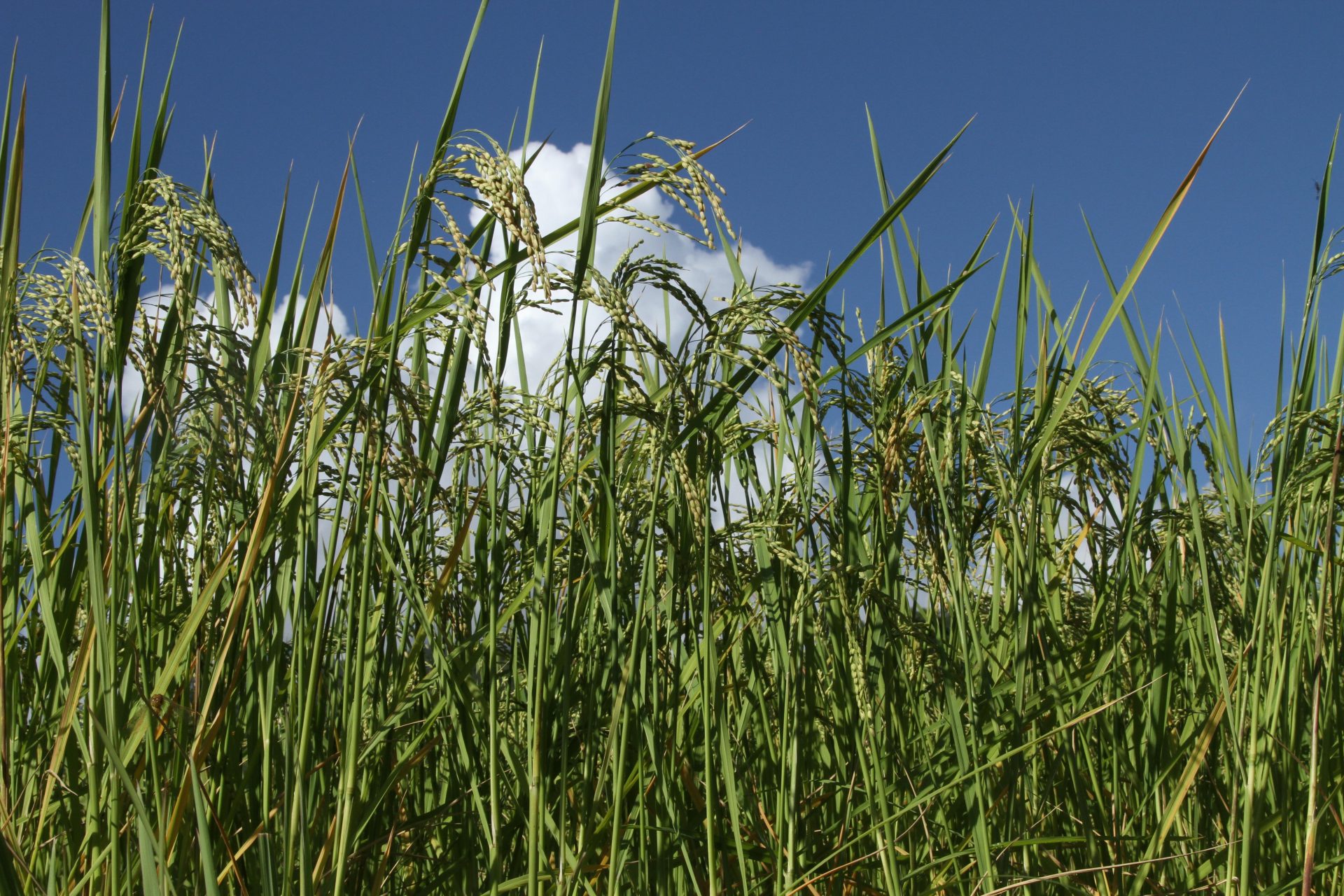
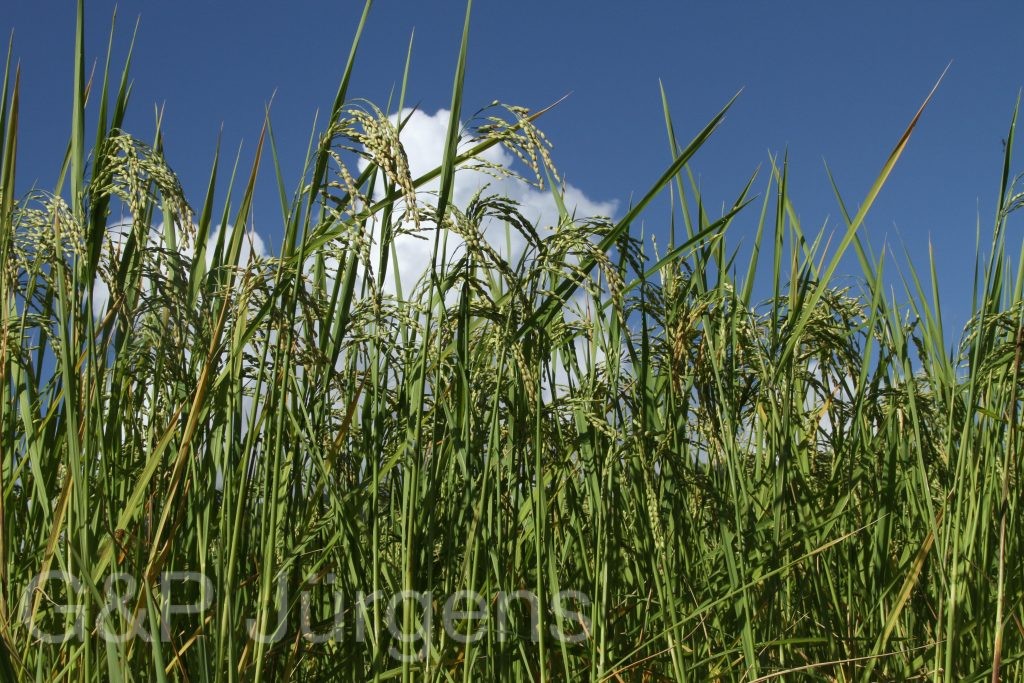
Oryza sativa, Asian cultivated rice, is the world's most important cereal staple and is grown across the warm-temperate to tropical zones of every inhabited continent. Domesticated in Asia from wild progenitors such as O. rufipogon, it is documented in GBIF by more than four hundred thousand occurrences spanning India, China, Southeast Asia, the Americas, Africa, Europe and beyond, reflecting both its agricultural ubiquity and intensive germplasm collection. It is essentially never truly wild but rather a cultigen of flooded paddies, irrigated terraces and seasonally inundated fields, with weedy and feral forms persisting around cultivation. The plant photographed at Moshu in Bhutan at 1700 m in October represents the terraced mid-montane rice cultivation characteristic of the Bhutanese Himalaya, where hardy, often red-grained landraces are grown well above the typical lowland range and are harvested as the autumn paddies ripen to gold.
The plant is an annual (occasionally short-lived perennial) grass forming erect tufts of hollow, jointed culms typically 0.5 to 1.5 m tall, rooting at the lower nodes and tolerant of standing water. The leaves are linear, flat and scabrous, with a long membranous ligule and well-developed auricles at the junction of sheath and blade. The inflorescence is a terminal, much-branched, nodding panicle bearing numerous laterally compressed spikelets, each reduced to a single fertile floret subtended by two small sterile lemmas; the fertile lemma is keeled and may be awned or awnless. Six stamens and a feathery, two-branched stigma effect predominantly self-pollination, and the fruit is the familiar caryopsis (grain), enclosed by the persistent lemma and palea as the husk.
Oryza belongs to the grass family Poaceae, tribe Oryzeae, a lineage of marsh-adapted grasses. As a domesticate, O. sativa encompasses immense genetic diversity organised principally into the indica and japonica subspecies groups, together comprising tens of thousands of landraces and modern cultivars adapted to environments from deepwater floodplains to upland terraces. Bhutanese and Himalayan rice agriculture, often involving cold-tolerant high-altitude landraces, is of particular interest for crop genetic conservation. The species is of no conservation concern itself, but the in-situ and ex-situ preservation of its traditional landraces and of wild Oryza relatives is a recognised priority for global food security.
Author: L. · Sources: POWO (Kew), GBIF, Flora of China Vol. 22, Flora of Bhutan Vol. 3 Part 2, Flora of Nepal, Flora of Pakistan, Wild and Cultivated Rices (Oryza): a Taxonomic Treatment (T.T. Chang; Vaughan, The Wild Relatives of Rice)