Tag:

Montane (1500-2500 m)

Wedd.

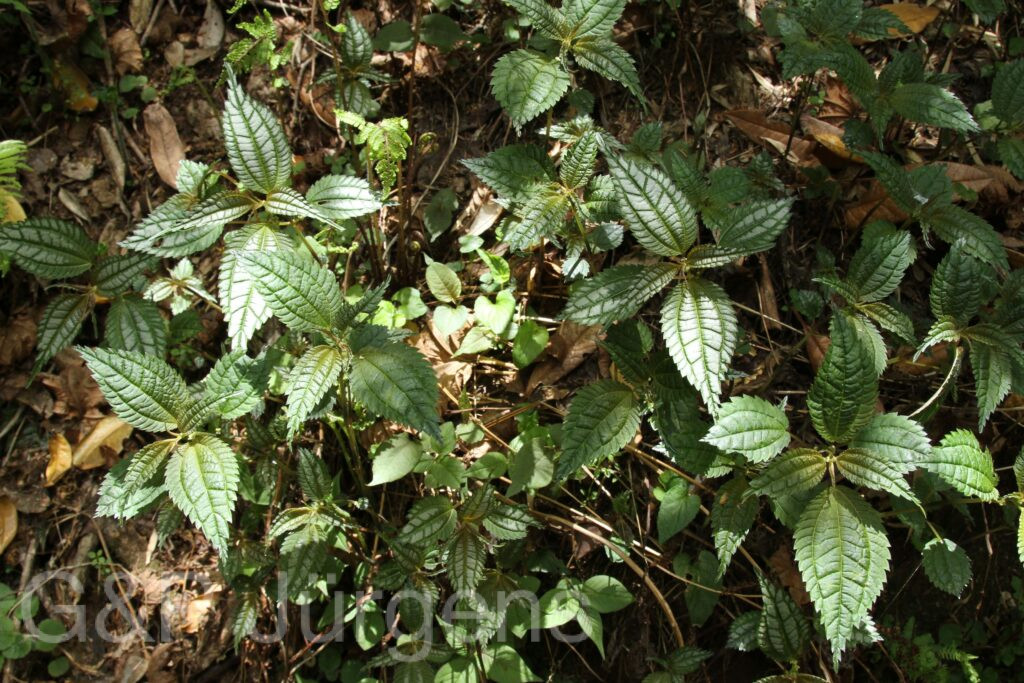
Bhutan2014 833
Bhutan Thimphu 2450m, May

Description

Pilea symmeria is a herbaceous member of the nettle family with a broad Asian range, GBIF documenting it from China, Nepal, Bhutan, NE India, Thailand, Indonesia and Japan across some 217 records. It is a plant of shaded, humid habitats, growing on moist rock faces, stream banks, ravines and the floor of broadleaved evergreen forest. The photographed plant from Thimphu in Bhutan at 2,450 m (May) is representative of its mid-montane occurrence, where it favours cool, sheltered and consistently damp microsites typical of the genus.

It is a soft, glabrous perennial or annual herb with succulent, often translucent stems frequently rooting at the lower nodes. The leaves are opposite, equal or somewhat unequal in a pair, ovate to elliptic, with a toothed or crenate margin and conspicuous linear cystoliths visible on the surface, the venation triplinerved at the base as is characteristic of Pilea. The plants are typically monoecious, the minute unisexual flowers borne in small axillary cymes; the male flowers have a 4-merous perianth and explosively dehiscent stamens, while the female flowers produce a small, compressed achene.

The family is here correctly Urticaceae. Pilea is the largest genus of the nettle family and a notoriously difficult one, the species separated on subtle differences in leaf shape, stipules, cystolith pattern and inflorescence. The explosive release of pollen by the recoiling stamens is a hallmark dispersal mechanism of the family. As a widespread, shade-adapted forest herb of no particular rarity, P. symmeria is not regarded as threatened, though it is sensitive to disturbance of the humid forest understorey it requires.

Author: Wedd. · Sources: POWO (Kew), Flora of Bhutan Vol. 1, GBIF, Flora of China Vol. 5, Friis: Urticaceae (in Families and Genera of Vascular Plants)
(Lindl.) Kuntze

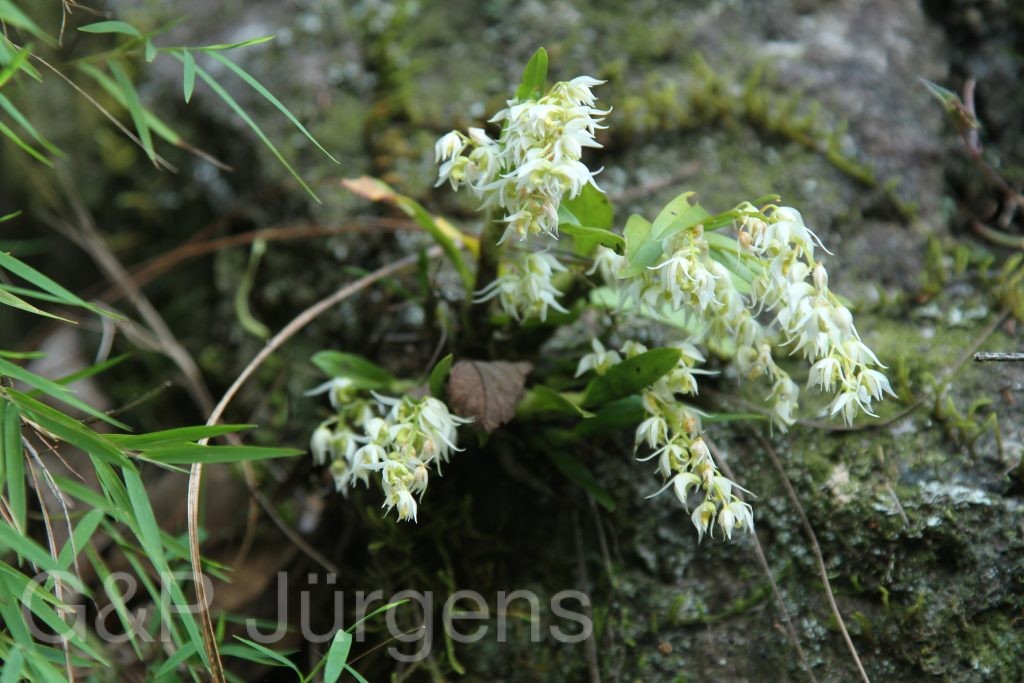
Bhutan2012 1144
Bhutan, Trashiyangtse 1780m, October
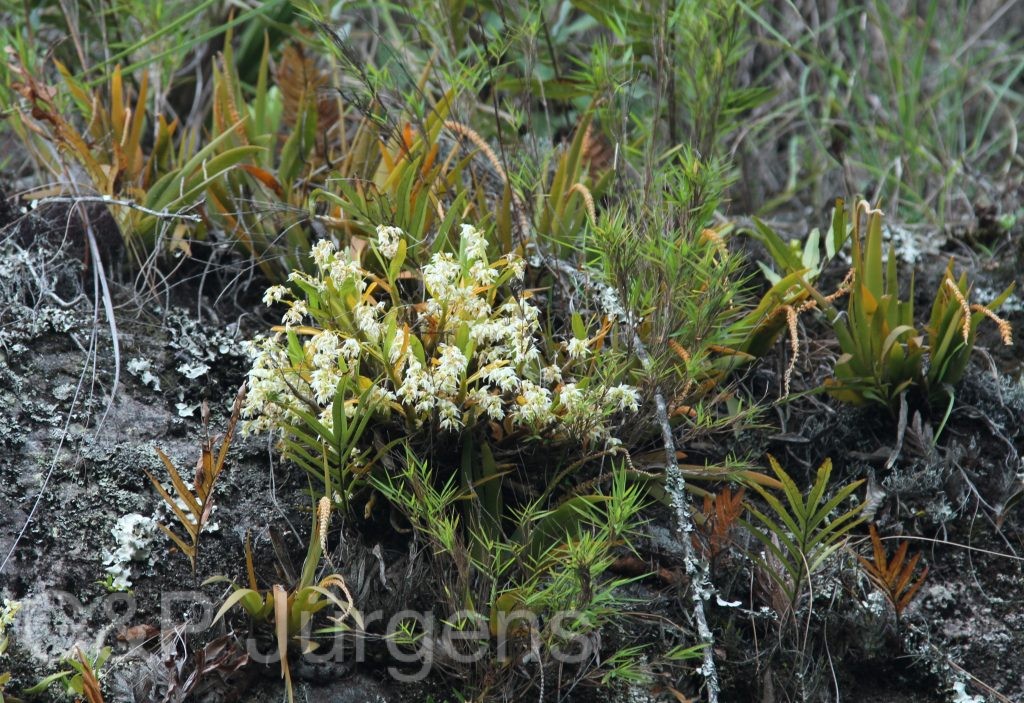
Bhutan2012 1143
Bhutan, Trashiyangtse 1780m, October

Description

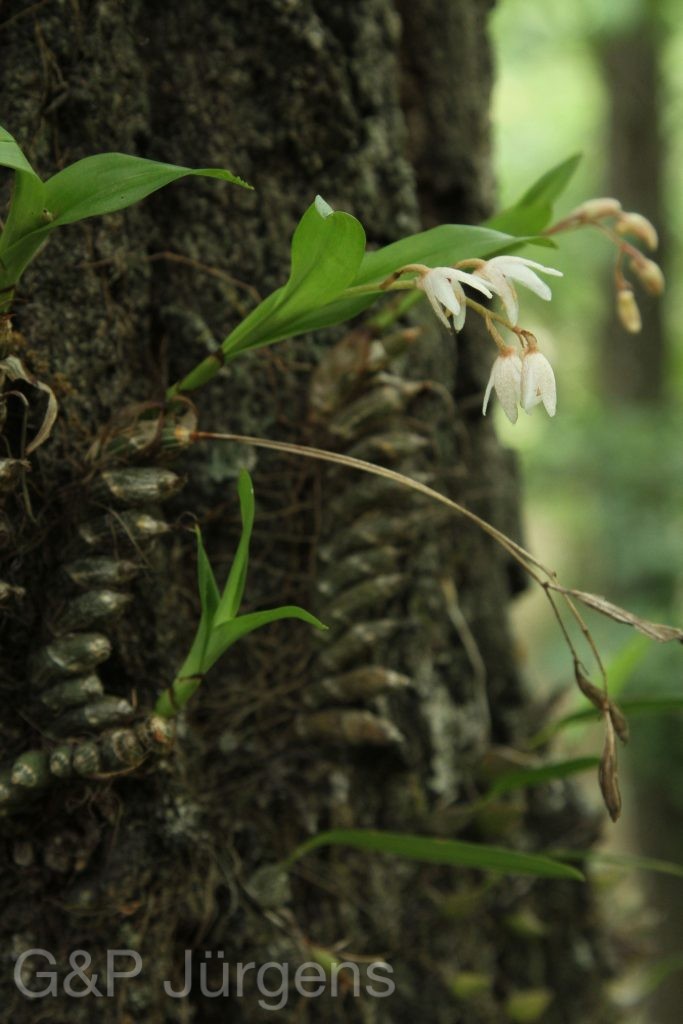
Pinalia acervata is an epiphytic orchid of the warm-temperate and subtropical forests of tropical Asia, ranging widely from China and India through Myanmar, Thailand, Vietnam, Cambodia, Malaysia and Singapore to Bhutan and Nepal, with 114 GBIF records reflecting this broad Indo-Burmese and Sino-Himalayan span. It grows as a humidity-loving epiphyte on mossy trunks and branches in evergreen broadleaved forest, generally at low to moderate elevations. The illustrated plant was found at Trashiyangtse in eastern Bhutan at about 1780 m in October, in the warm, monsoon-fed valleys where epiphytic orchid communities are particularly rich.

The species forms clustered, cylindrical to fusiform pseudobulbs that are densely tufted, each bearing several distichous, lanceolate to oblong leaves toward the apex. The inflorescences are lateral racemes, frequently densely many-flowered and clothed, like the ovaries and outer floral parts, in the rusty or whitish woolly indumentum characteristic of the segregate genus. The small flowers are whitish to pale yellow, with a saccate mentum formed by the lateral sepals against the column foot, and a small three-lobed lip; the fruit is a small ribbed capsule.

The taxon was long placed in the large pantropical genus Eria, as Eria acervata, and the basionym (Lindl.) Kuntze reflects this history; modern phylogenetic work has resolved many former Eria species into smaller, better-circumscribed genera, with this species now treated under Pinalia in tribe Podochileae. As a widespread, adaptable epiphyte it is not considered threatened, though local populations depend on the persistence of humid forest canopy and are diminished by deforestation.

Author: (Lindl.) Kuntze · Sources: POWO (Kew), GBIF, Flora of China, Flora of Bhutan, Genera Orchidacearum (Pridgeon et al.)

(Lindl.) Kuntze

Bhutan2014 177
Bhutan Trashigang 2100m, May

Description

Pinalia excavata is an epiphytic orchid of the Eastern Himalaya and adjacent southern China and Indochina, with GBIF records from China, India, Nepal, Bhutan and Myanmar and a modest tally of documented occurrences. It grows as an epiphyte on tree trunks and mossy branches in humid broad-leaved and evergreen montane forest, favouring shaded, well-ventilated situations in the warm-temperate to lower montane belt. The species occupies low to middle elevations; the photographed plant from Trashigang in eastern Bhutan at about 2100 m in May represents a typical station within its altitudinal range, flowering in late spring as the pre-monsoon humidity rises.

The plant produces clustered, fusiform to cylindrical pseudobulbs arising from a creeping rhizome, each bearing several apical leaves. The leaves are lanceolate to elliptic, thin-textured to somewhat leathery and prominently veined. The inflorescence is a lateral or subterminal raceme bearing numerous small flowers, the rachis and ovaries usually clothed in fine hairs as is characteristic of the genus. The flowers are pale, whitish to cream or yellowish, with spreading sepals and petals; the lateral sepals are adnate to the column foot to form a short mentum, and the trilobed labellum bears raised keels or ridges along its disc. The column is short and footed, and the fruit is a small ribbed capsule.

Pinalia comprises species formerly placed in the broadly circumscribed Eria, segregated on the basis of molecular and morphological evidence; P. excavata was originally described under Eria and is treated by current authorities under Pinalia. As a forest epiphyte dependent on intact humid canopy, it is vulnerable to deforestation and habitat degradation across its range, although it is not presently the subject of a formal threat assessment.

Author: (Lindl.) Kuntze · Sources: POWO (Kew), GBIF, Flora of China, Flora of Bhutan, The Orchids of Bhutan (Pearce & Cribb)

Kuntze

Nepal 2001 462 ergebnis ergebnis
Nepal (Gorkha) Gunda 1700m, May

Description

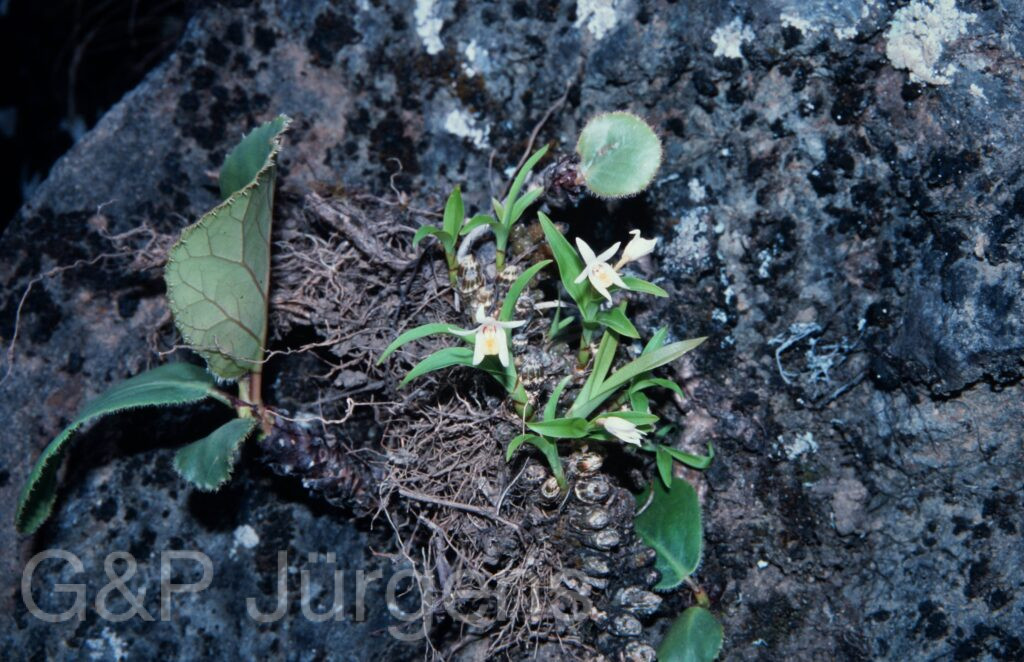
Pinalia leucantha is an epiphytic orchid of the central and eastern Himalaya, recorded from northern India, Nepal, Bhutan and adjacent southern China, with georeferenced collections (c. 59 in GBIF) along the moist subtropical to lower temperate belt of the range. It typically grows on mossy trunks and major branches of broad-leaved forest trees, occasionally on shaded rocks, between roughly 1000 and 2000 m. The photographed plant from Gorkha district, Gunda (1700 m, flowering in May), is characteristic of this monsoon-influenced habitat, where high humidity and a marked dry winter govern the growth cycle.

The species is a tufted, sympodial epiphyte forming clustered, fusiform to cylindrical pseudobulbs that are several-noded and clothed when young in papery sheaths. Each pseudobulb bears a few apical, oblong-lanceolate to elliptic, coriaceous leaves with acute tips. The inflorescence is a lateral to subterminal raceme carrying numerous small, whitish to cream flowers, the floral parts frequently invested with fine ferruginous hairs typical of the genus. Sepals and petals are spreading, the lateral sepals adnate to the column foot to form a short mentum; the lip is three-lobed with a fleshy, often keeled disc, and the pollinia are eight, waxy and clavate.

The genus Pinalia comprises species formerly placed in a broadly circumscribed Eria, segregated within tribe Podochileae (subtribe Eriinae) on vegetative and column characters supported by molecular data, and many Himalayan epiphytes have been recombined into it. As a widespread forest epiphyte, P. leucantha is not currently regarded as threatened, though like most epiphytic orchids it is sensitive to deforestation and collection; CITES Appendix II listing applies to all Orchidaceae in trade.

Author: Kuntze · Sources: POWO (Kew), GBIF, Flora of Nepal, Flora of Bhutan, Flora of China (Orchidaceae), The Orchids of Bhutan

Pinus bhutanica

by G & P Jürgens

Grierson, D.G.Long & C.N.Page

Bhutan2015 468
  Bhutan Trongsa 2300m, October
Bh2008 479 P744
Bhutan, Chongsakha 1800m, May

Description

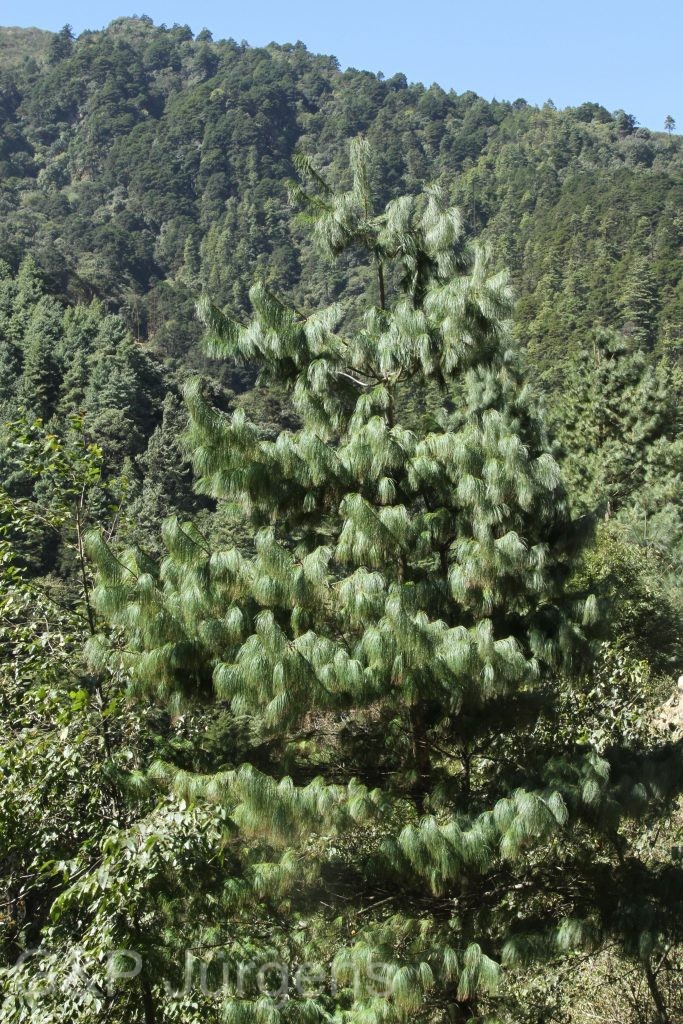
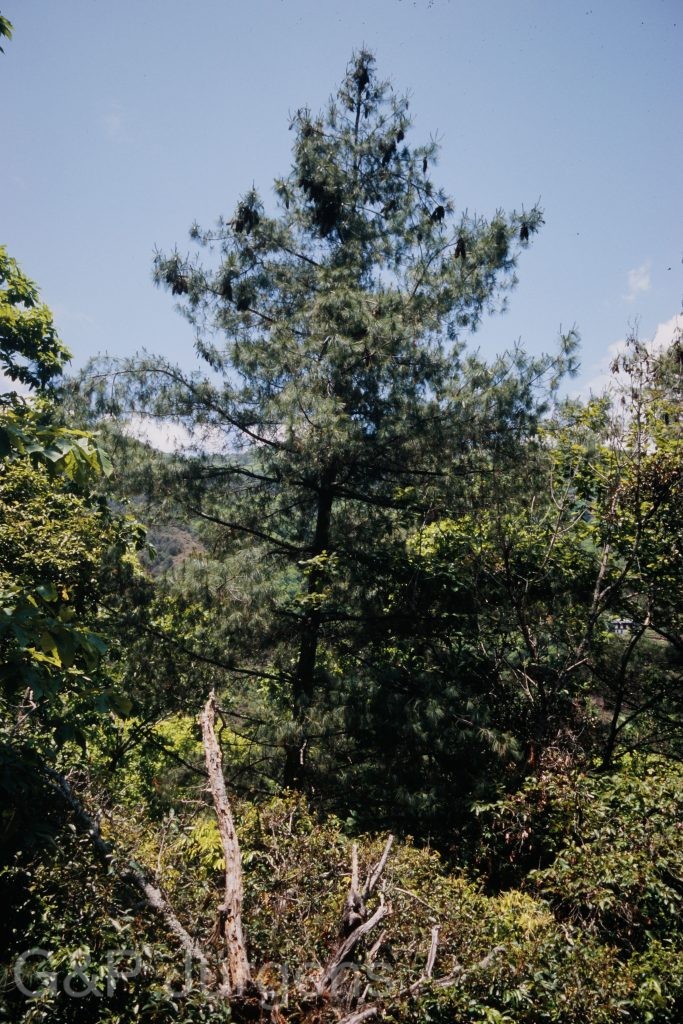
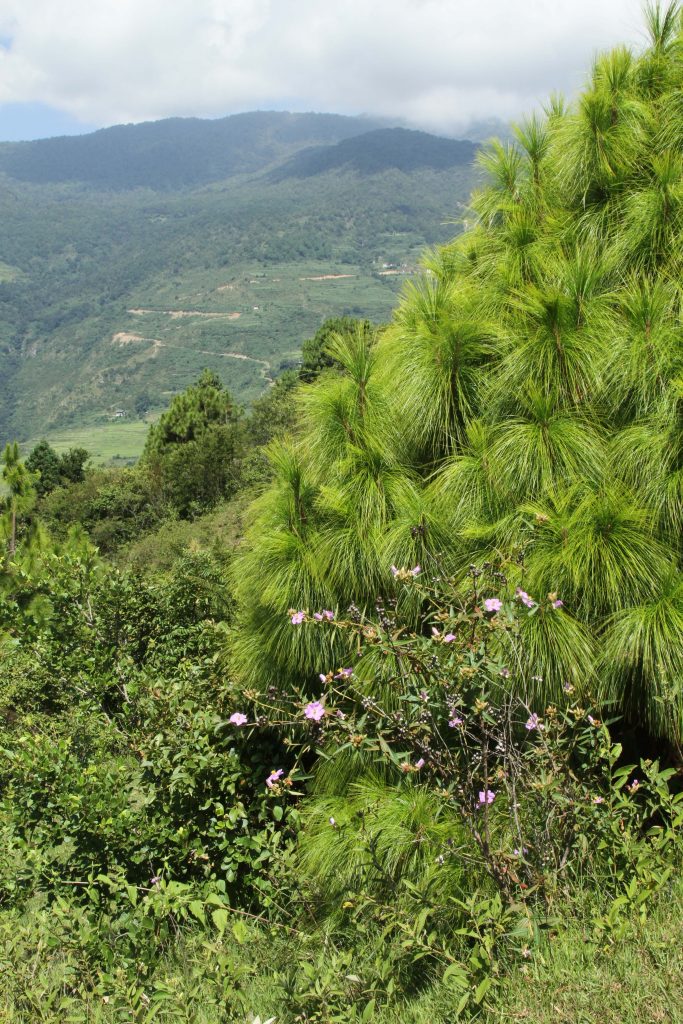
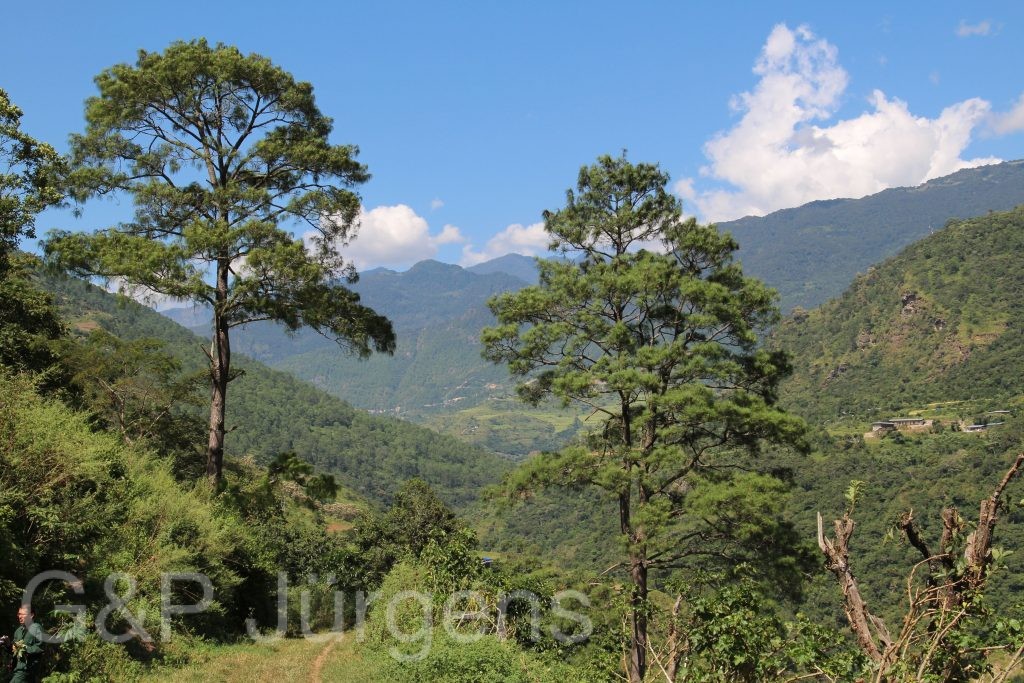
Pinus bhutanica Grierson, D.G.Long & C.N.Page is a five-needled white pine of the eastern Himalaya, restricted to Bhutan, north-eastern India (Arunachal Pradesh) and adjacent south-eastern Tibet (China); GBIF records about 96 occurrences, the few extralimital points reflecting cultivation or database artefacts. It grows in warm-temperate to subtropical montane forest, often on humid, monsoon-exposed slopes, typically between about 1,700 and 2,400 m. Both photographed stands are Bhutanese – Trongsa at 2,300 m in October and Chongsakha at 1,800 m in May – matching its known occurrence in the wet central and eastern Bhutanese hills.

It is an evergreen coniferous tree to 25 m or more, with spreading branches and a somewhat open crown. The needles are borne in fascicles of five, and are notably long, slender and pendulous, drooping gracefully and distinguishing it from the related P. wallichiana. The species is monoecious, with small pollen cones clustered at the base of new shoots and erect young seed cones that mature in the second year. The mature cone is large, cylindrical and resinous, with thin woody scales; the seeds are winged for wind dispersal, borne beneath the cone scales.

Pinus bhutanica was described as recently as 1980 and belongs to subgenus Strobus (the soft or white pines), being closely allied to the widespread Himalayan blue pine P. wallichiana, from which it differs chiefly in its longer, conspicuously drooping needles and more pronounced resin glands. Its narrow eastern Himalayan range makes it of biogeographic interest as a regional endemic of the wetter Bhutan-Arunachal sector; it is assessed by IUCN as Least Concern owing to stable populations within extensive forest.

Author: Grierson, D.G.Long & C.N.Page · Sources: POWO (Kew), GBIF, Flora of Bhutan, Flora of China, IUCN Red List of Threatened Species, Farjon Handbook of the World's Conifers, Grierson Long & Page protologue of Pinus bhutanica

Sarg.

Bhutan2012 531
Bhutan Wangdi, Phodrang 2400m, September
Bhutan2015 312
Bhutan, Trongsa 2100m, October

Description

Pinus roxburghii, the chir or longleaf Himalayan pine, is the dominant conifer of the dry outer ranges and inner valleys of the Himalaya, native across India, Nepal, Bhutan, Pakistan, Afghanistan and China, and widely planted elsewhere, as reflected by occurrence records from South Africa, the United States, New Zealand and Europe. It forms extensive open forests on warm, sun-exposed slopes, ridges and rain-shadowed valleys, characteristically between about 500 and 2300 m. The trees photographed near Wangdi Phodrang at 2400 m and Trongsa at 2100 m in Bhutan illustrate its presence in the dry inner Himalayan valleys, where it forms the lower montane pine belt below the broad-leaved and fir zones.

It is a large evergreen tree with a tall, often clear bole and a rounded to spreading crown, the thick bark deeply fissured into reddish-brown plates that confer fire resistance. The needles are borne in fascicles of three, long, slender and pendulous, light green and finely serrulate, with a persistent basal sheath. It is monoecious: the male strobili cluster at the base of new shoots, while the woody seed cones are large, ovoid-conical and hard, the cone scales bearing a stout, recurved umbo. The winged seeds are released at maturity and dispersed by wind.

Pinus roxburghii belongs to the hard pines (subgenus Pinus) and is the characteristic fire-adapted, drought-tolerant pioneer of the Himalayan subtropical pine forest, regenerating vigorously after burning and forming nearly pure stands. It is economically important as a source of resin (oleoresin tapped for turpentine and rosin), construction timber and fuelwood. Though not threatened given its vast range, its needle litter and flammability strongly shape fire regimes and understorey composition across the lower Himalaya.

Author: Sarg. · Sources: POWO (Kew), GBIF, Flora of China, Conifers of the Himalaya, Annotated Checklist of the Flowering Plants of Nepal, Farjon's A Handbook of the World's Conifers

(Sm.) D.Don

Nepal1992 42 P60 ergebnis
Nepal Nundhaki 1500m March 
Nepal1992 56 P81 ergebnis
Nepal Nundhaki 1500m March 
Nepal1992 242 P359 ergebnis
Nepal Nundhaki 1500m March 

Description

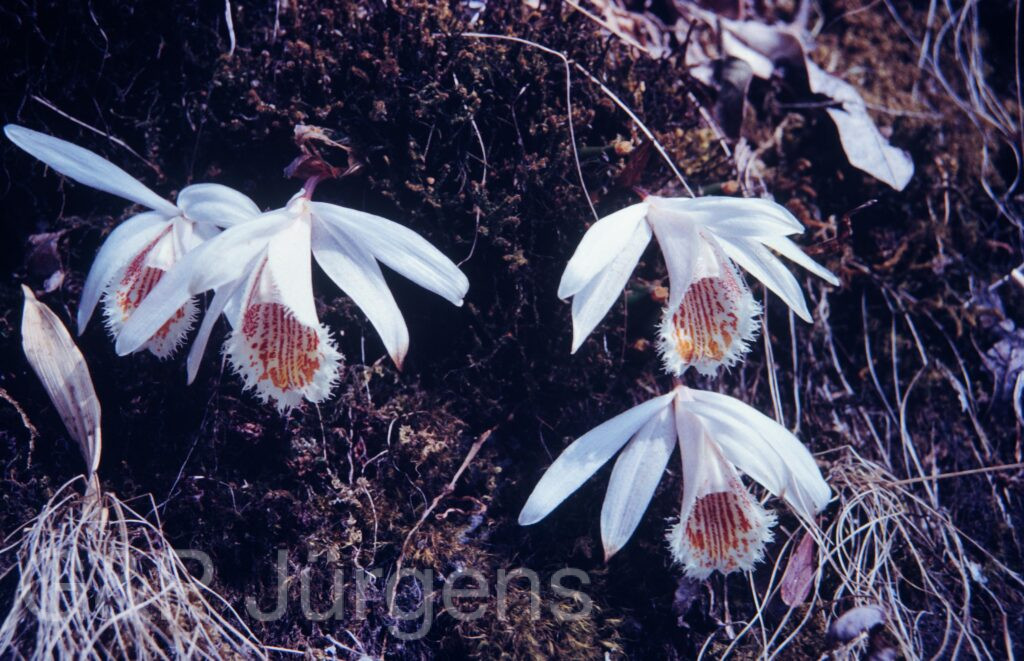
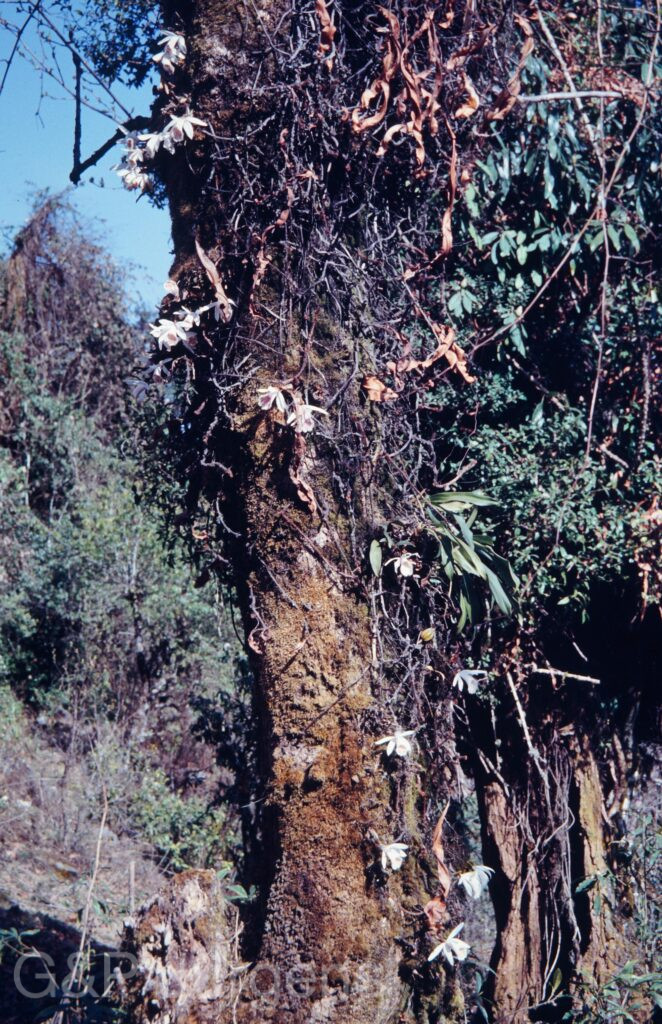
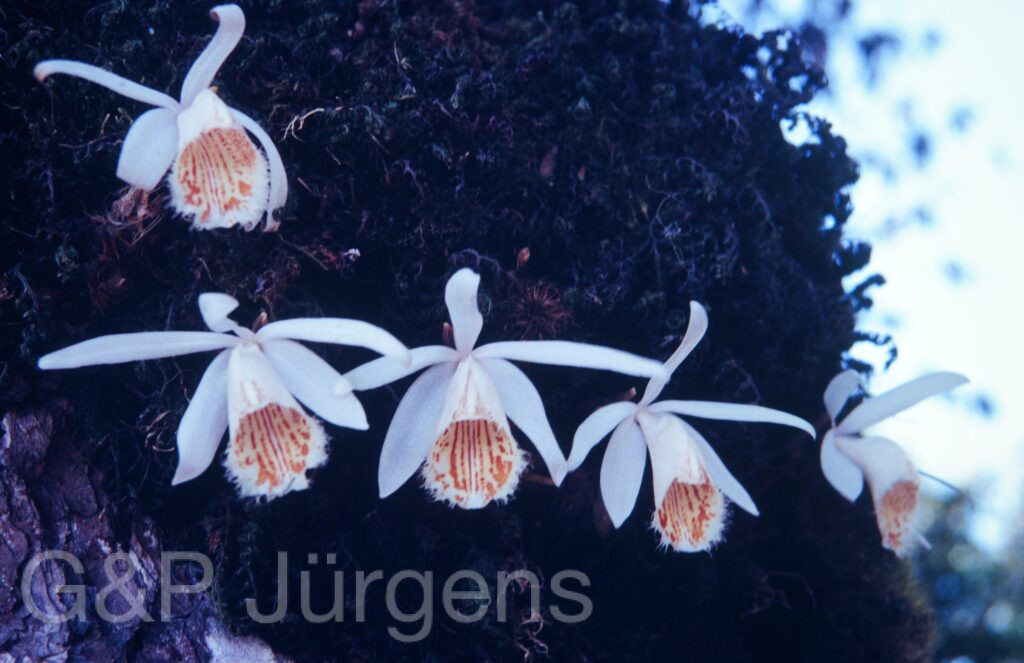
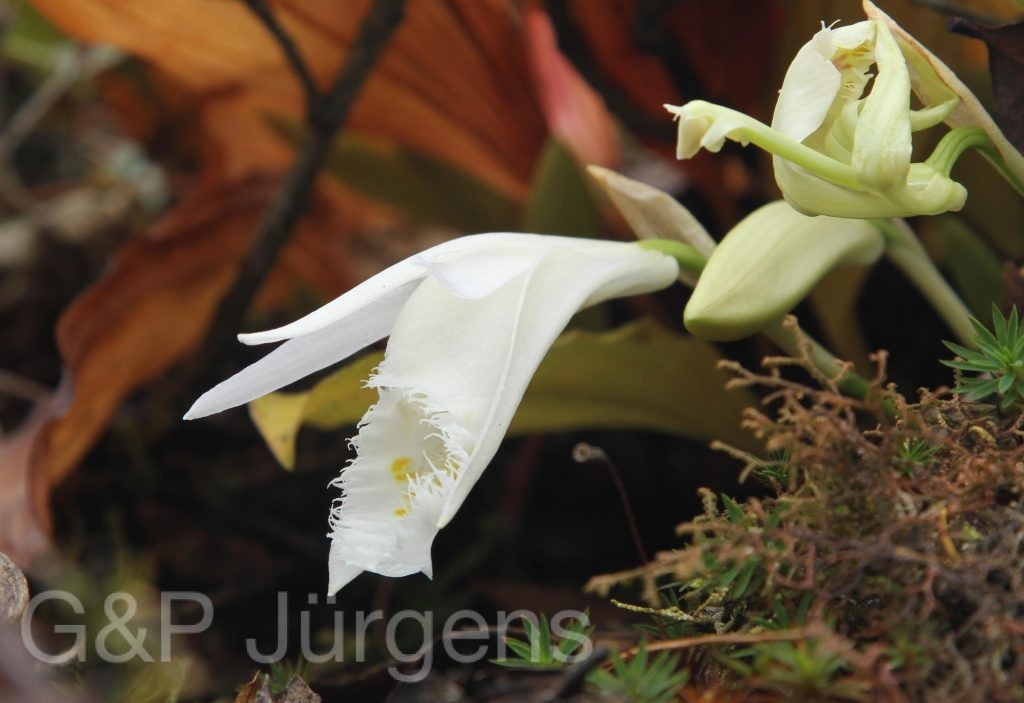
Pleione humilis is a dwarf orchid of the Himalaya and adjoining mountains, native to Nepal, India, Bhutan, Myanmar and Thailand, with around 136 georeferenced occurrences across this eastern arc. It grows chiefly as an epiphyte on mossy tree trunks and branches, and occasionally as a lithophyte on shaded, humus-covered rocks, in cool, humid temperate forest. The illustrated plant from Nundhaki in Nepal, at about 1500 m and flowering in March, exemplifies the species' habit of blooming in late winter to early spring, characteristically before or as the new leaves expand at relatively low montane elevations.

The plant grows from small, flask- to top-shaped, often warty pseudobulbs, each producing a single (occasionally paired) plicate, deciduous leaf. The flowers, usually borne singly on a short scape from the base of the pseudobulb, are large for the plant's size and showy, with spreading, narrow, white to pale pink sepals and petals. The conspicuous trumpet-shaped labellum is broadly funnel-form and frilled at the margin, white marked within by yellow to brown and red blotches and bearing several toothed or fringed keels (lamellae) along the disc. The slender, winged column lies enclosed within the lip, and the fruit is a ribbed dehiscent capsule shedding dust-like seeds.

Pleione is a small genus of about two dozen Sino-Himalayan and Southeast Asian orchids, much admired and cultivated, of which P. humilis is one of the winter-flowering, single-leaved species. As with all orchids it is protected under CITES Appendix II, and wild populations are threatened by collection for horticulture and by clearance of the moist forest on which the epiphytic plants depend; conservation therefore hinges on protecting both the species and its montane forest habitat.

Author: (Sm.) D.Don · Sources: POWO (Kew), GBIF, Flora of Bhutan (Orchidaceae), Flora of China (Orchidaceae), Cribb & Butterfield: The Genus Pleione (monograph)

(Sm.) D.Don

Bhutan2012 828 Kopie
Bhutan Tongsa 2050m, October
Bhutan2012 831 Kopie
Bhutan Tongsa 2050m, October
Bhutan2012 1302
Bhutan Trashigang 1900m, October

Description

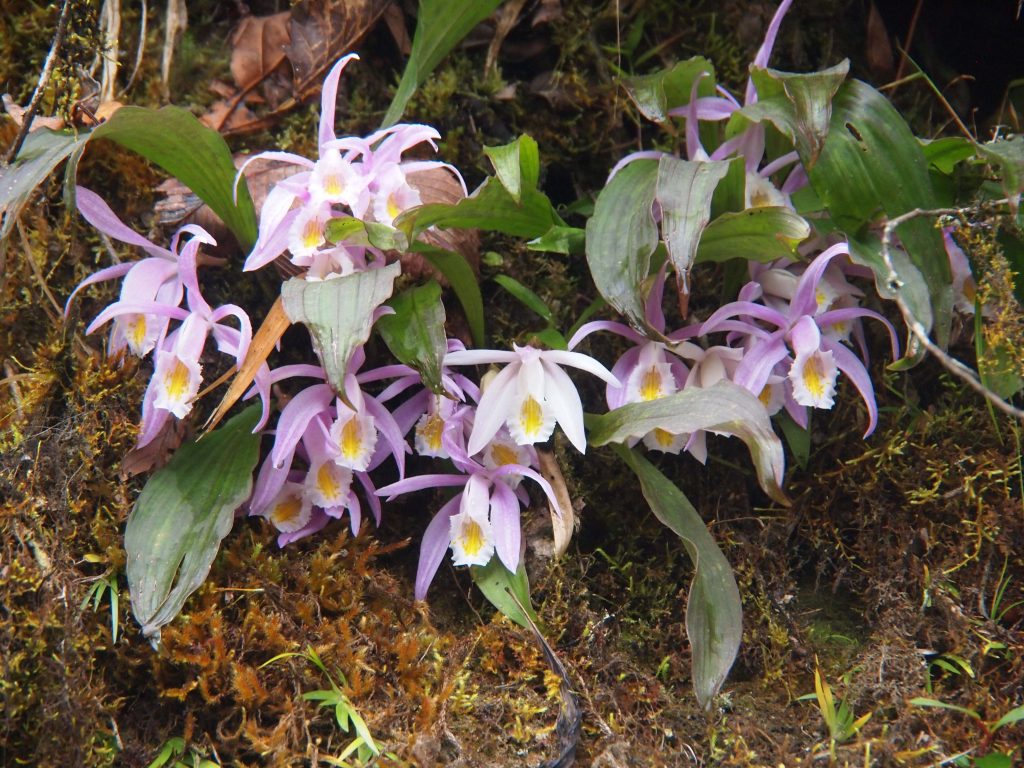
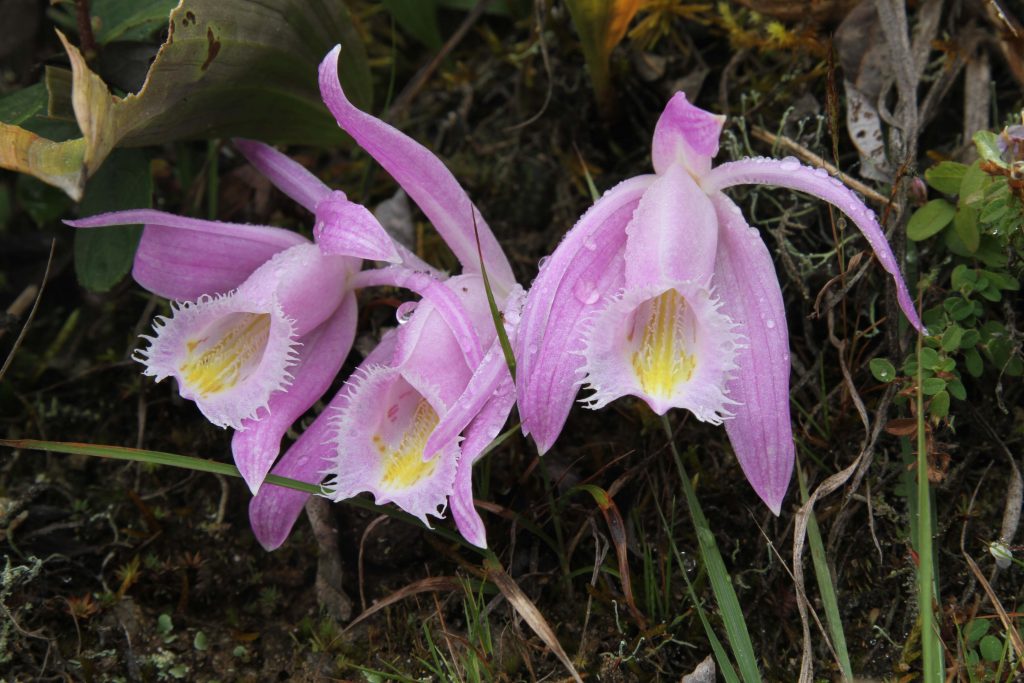
Pleione praecox is an autumn-flowering epiphytic and lithophytic orchid of the eastern Himalaya and Indo-Burmese region, ranging through India, Nepal, Bhutan, China, Thailand, Myanmar, Vietnam and Bangladesh, with cultivated records in Britain and the United States among its roughly 335 GBIF occurrences. It grows on mossy tree trunks, rocks and banks in humid broadleaved montane forest, typically between about 1200 and 2500 m. The cited Bhutanese plants from Trongsa (2050 m) and Trashigang (1900 m), both flowering in October, exemplify its diagnostic late-season anthesis, the epithet praecox referring to bloom appearing as or before the leaves develop.

The species is a deciduous sympodial orchid producing conspicuous, flask-shaped to conical pseudobulbs, often mottled green and purple, each typically bearing one or two pleated, lanceolate leaves that are shed in the dormant season. The showy flowers, borne singly (rarely paired) on a short scape from the base of a pseudobulb, have spreading rose-pink to magenta sepals and petals. The funnel-shaped labellum is the showpiece: broad, fimbriate at the margin, and marked internally with several toothed or lamellate crests and reddish-brown blotching. The column is slender and winged, and the fruit is an ellipsoid capsule.

Pleione is a small genus of subtribe Coelogyninae, and P. praecox is among its most horticulturally prized species, widely cultivated by alpine and orchid growers, which accounts for its scattered records in Europe and North America. Its showy labellum attracts bee pollinators despite offering little reward. Although locally frequent, wild populations face pressure from commercial and amateur collection of pseudobulbs and from clearance of montane forest, making in-situ conservation of its epiphytic habitat important.

Author: (Sm.) D.Don · Sources: POWO (Kew), GBIF, Flora of Bhutan, Flora of China (Orchidaceae), Cribb & Butterfield The Genus Pleione

D.Don

Bhutan2015 187
Bhutan Zhemgang 1000m, October
Bhutan2015 188
Bhutan Zhemgang 1000m, October
Bhutan2014 194
Bhutan Trashyangtse 2100m, May
Bhutan2014 195
Bhutan Trashyangtse 2100m, May

Description

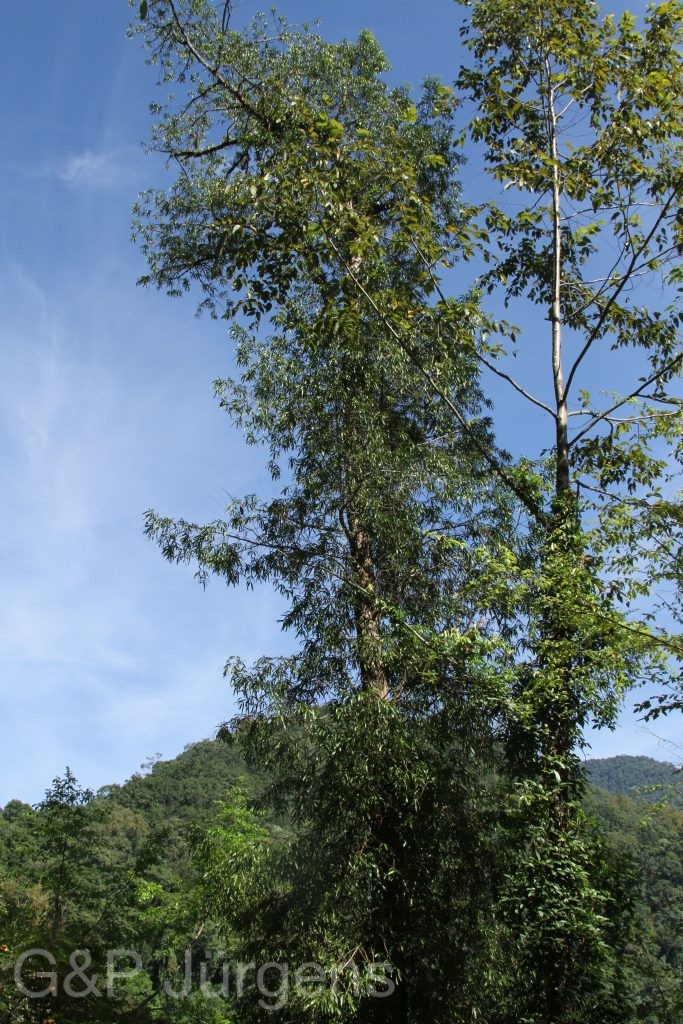
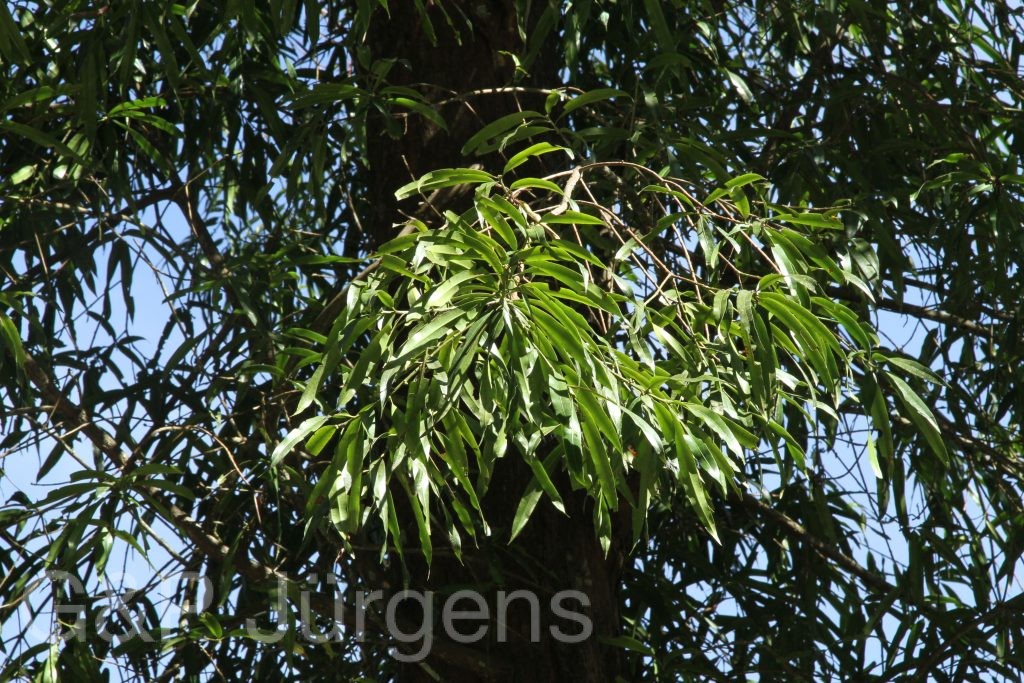
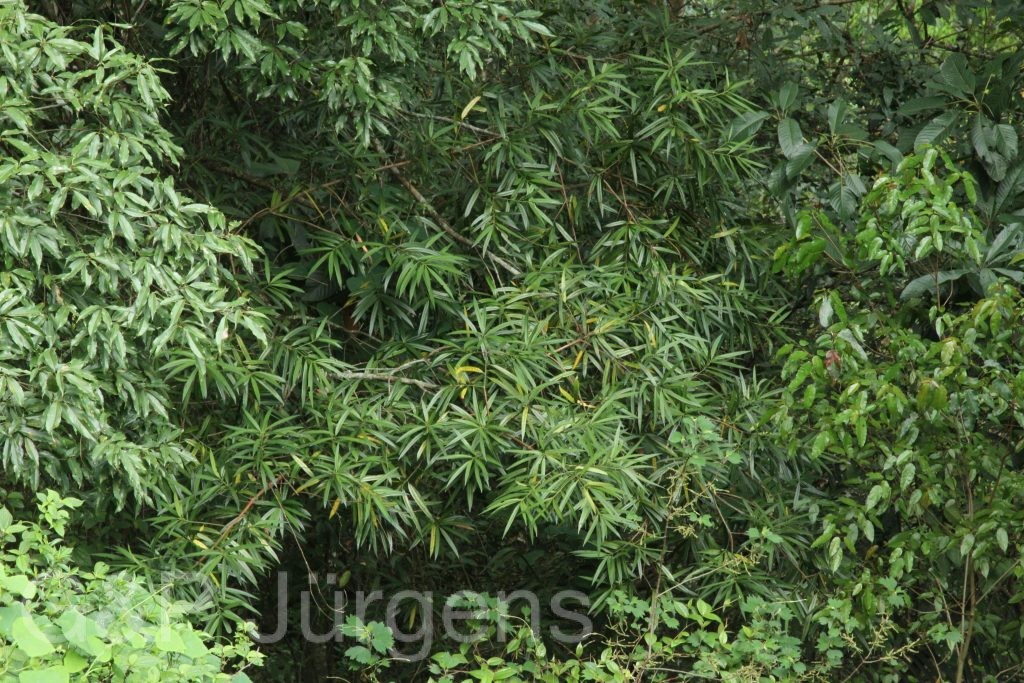
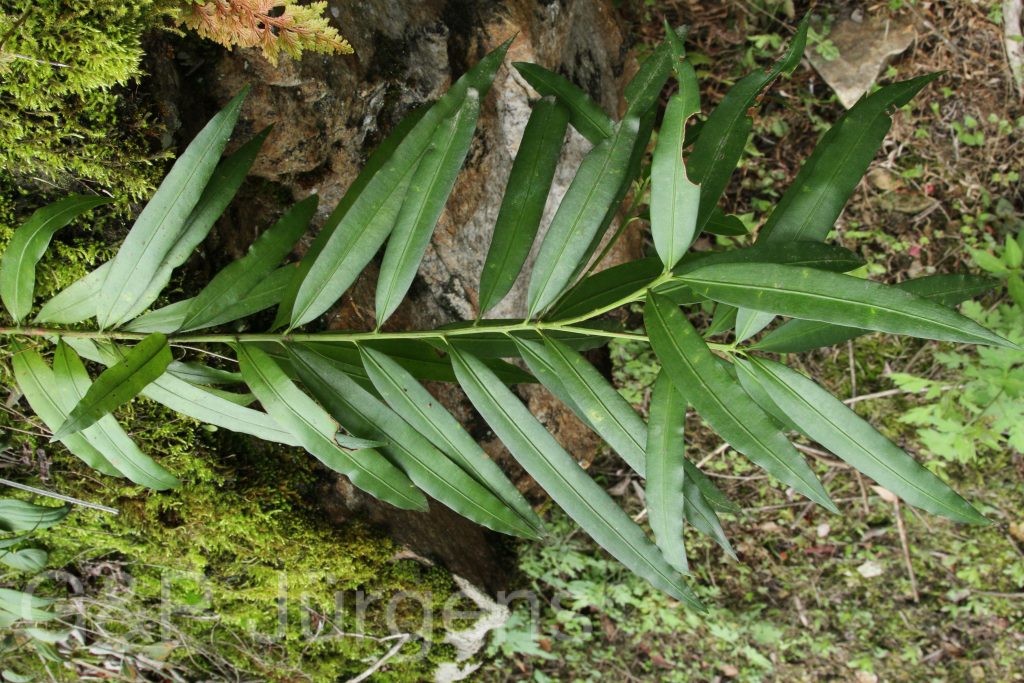
Podocarpus neriifolius, the brown pine or oleander-leaved podocarp, is a broadly distributed evergreen conifer of tropical and subtropical Asia and the western Pacific, with GBIF recording over 3,100 occurrences from Papua New Guinea, Fiji, Indonesia, Vietnam, China, Malaysia, the Solomon Islands, the Philippines, India, Thailand, Nepal, Vanuatu, Cambodia, Laos and beyond. In the eastern Himalaya it occurs in warm broad-leaved and mixed forest of the foothills and lower mountains, generally between about 500 and 2100 m. The images from Zhemgang in Bhutan at 1000 m, in October, and from Trashyangtse at 2100 m, in May, bracket its altitudinal range in that country, showing it as a scattered emergent or canopy tree in humid, evergreen subtropical forest on well-drained slopes.

It is an evergreen tree commonly 10-25 m tall, occasionally much larger, with grey to brown, fibrous, flaking bark and a dense crown. The leaves are spirally arranged but often appearing two-ranked, simple, narrowly lanceolate and leathery with a prominent midrib and a long, gradually tapering apex, recalling the foliage of oleander as the epithet indicates. The species is dioecious: pollen cones are slender, cylindrical and borne in leaf axils, while the seed cones are reduced to one or two ovules seated on a swollen, fleshy receptacle (the epimatium and aril) that ripens red to purple, the single seed crowned by a green to bluish covering and dispersed by birds.

Podocarpus is the largest genus of the Southern Hemisphere-centred family Podocarpaceae, and P. neriifolius is among its most wide-ranging species, exhibiting considerable variation in leaf size across its vast area. It is valued for its fine, even timber, which has led to local overexploitation, though its enormous geographic range means it is assessed by the IUCN as Least Concern overall. In the Himalaya it represents a tropical-Gondwanan conifer lineage reaching its northern limits in the warm forests of the eastern foothills.

Author: D.Don · Sources: POWO (Kew), GBIF, Flora of China Vol. 4, Flora of Bhutan Vol. 1, Flora of Nepal, de Laubenfels' revision of Podocarpus and the Podocarpaceae

Kuntze

Bhutan2012 1165
Bhutan Trashiyangtse 1780m, October

Description

Pogostemon linearis is an Asian mint distributed through India, China, Bhutan, Myanmar, Bangladesh and westward to Iran, with around 99 georeferenced records in GBIF. It is a plant of warm-temperate to subtropical hill country, occurring on open grassy slopes, forest edges, streambanks and disturbed ground in the lower and middle montane zone. The Bhutanese material photographed near Trashiyangtse at about 1780 m in October reflects its typical autumn flowering at modest elevation, where it benefits from the warm, moist conditions of the eastern Himalayan foothills and frequently colonises seasonally damp, sunny situations.

The species is an erect to ascending herb or subshrub with quadrangular stems that are often pubescent. The leaves, as the epithet indicates, are narrow, linear to linear-lanceolate, sessile or shortly petiolate, with serrate to subentire margins and an acute apex. The flowers are borne in dense, cylindrical, spike-like verticillasters forming a terminal thyrse; each small flower has a tubular, five-toothed calyx and a campanulate, weakly two-lipped corolla. The four stamens are characteristically long-exserted and bear conspicuously bearded filaments, a diagnostic feature of Pogostemon, giving the inflorescence a fluffy appearance. The fruit comprises four smooth nutlets enclosed by the persistent calyx.

Described by Kuntze, P. linearis belongs to a genus best known for P. cablin, the source of patchouli oil. The bearded, far-exserted stamens place it firmly within Pogostemon and distinguish it from related Lamiaceae genera. Its broad distribution, ecological tolerance and association with open and disturbed habitats indicate a secure conservation status throughout its range.

Author: Kuntze · Sources: POWO (Kew), GBIF, Flora of Bhutan, Flora of China, Bhatti & Ingrouille revision of Pogostemon