
(Lindl.) Kuntze
Description
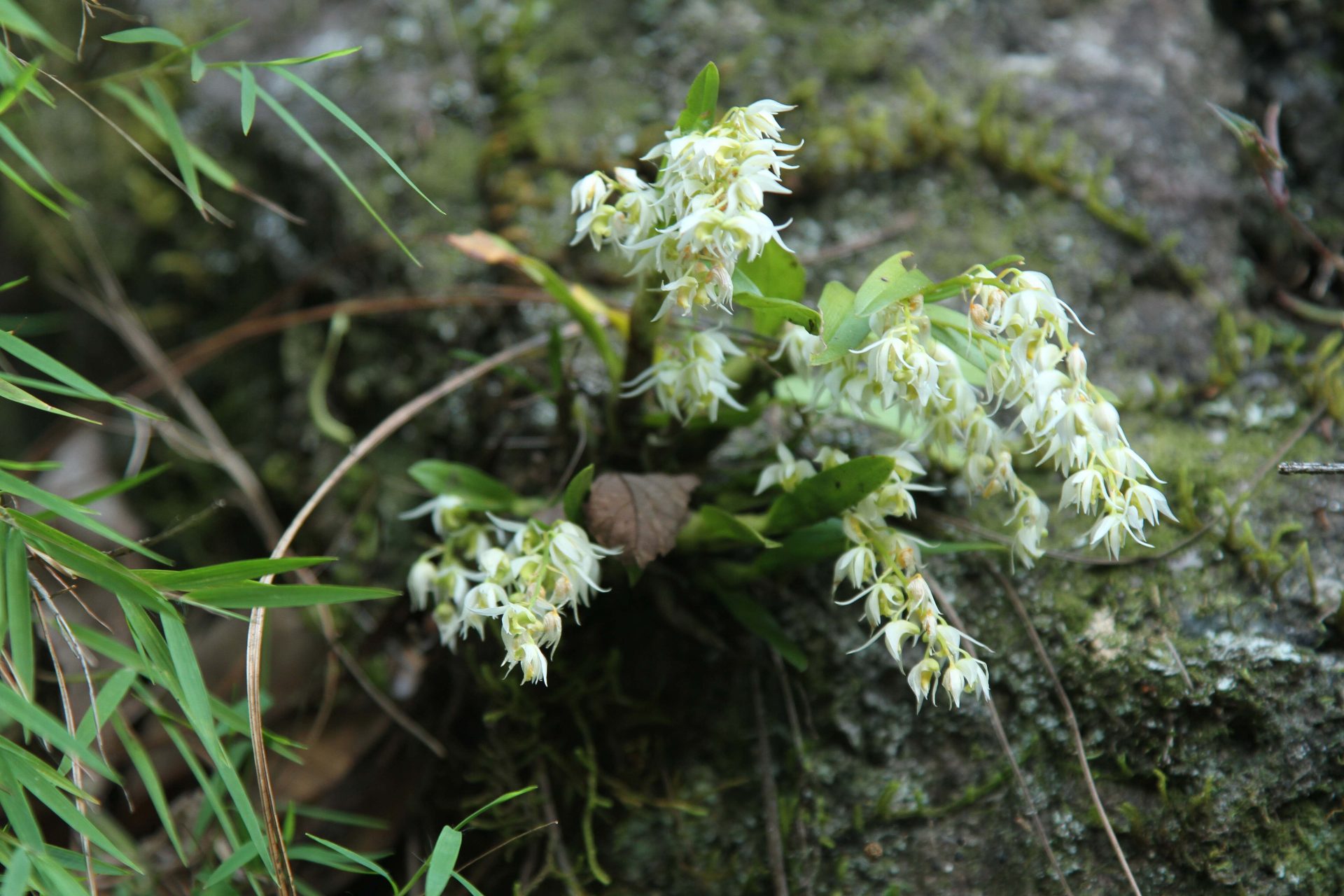
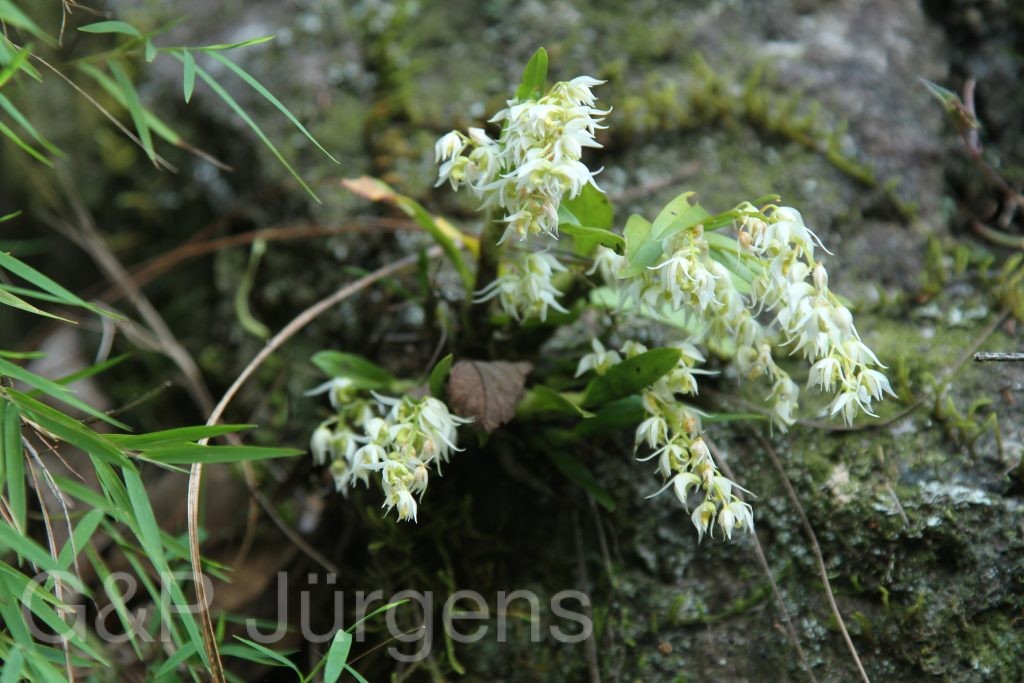
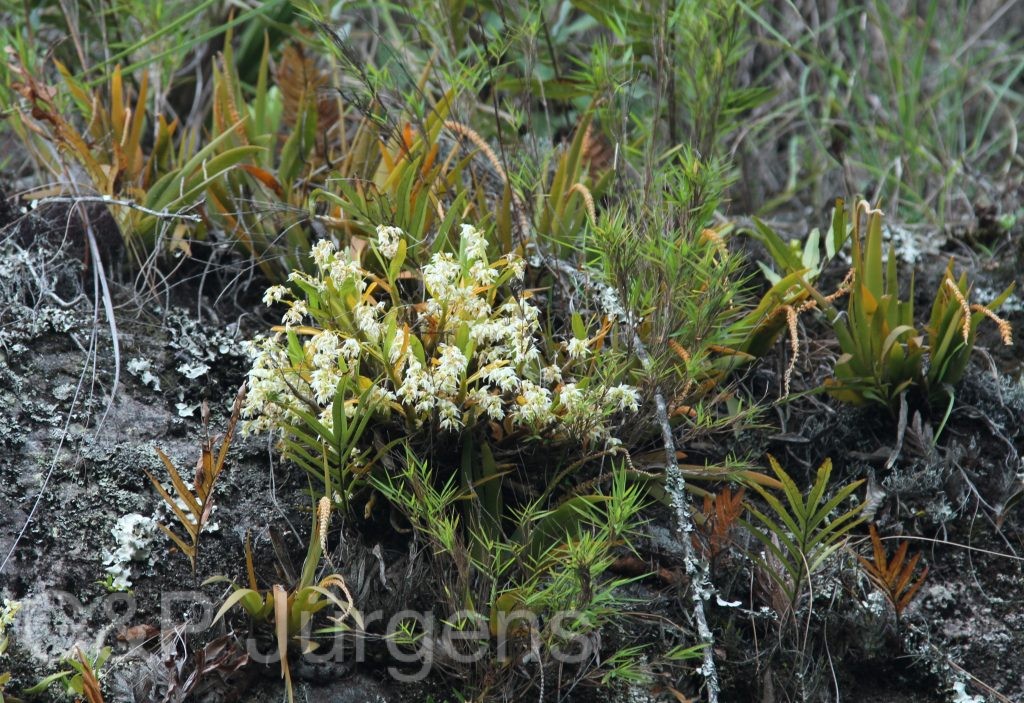
Pinalia acervata is an epiphytic orchid of the warm-temperate and subtropical forests of tropical Asia, ranging widely from China and India through Myanmar, Thailand, Vietnam, Cambodia, Malaysia and Singapore to Bhutan and Nepal, with 114 GBIF records reflecting this broad Indo-Burmese and Sino-Himalayan span. It grows as a humidity-loving epiphyte on mossy trunks and branches in evergreen broadleaved forest, generally at low to moderate elevations. The illustrated plant was found at Trashiyangtse in eastern Bhutan at about 1780 m in October, in the warm, monsoon-fed valleys where epiphytic orchid communities are particularly rich.
The species forms clustered, cylindrical to fusiform pseudobulbs that are densely tufted, each bearing several distichous, lanceolate to oblong leaves toward the apex. The inflorescences are lateral racemes, frequently densely many-flowered and clothed, like the ovaries and outer floral parts, in the rusty or whitish woolly indumentum characteristic of the segregate genus. The small flowers are whitish to pale yellow, with a saccate mentum formed by the lateral sepals against the column foot, and a small three-lobed lip; the fruit is a small ribbed capsule.
The taxon was long placed in the large pantropical genus Eria, as Eria acervata, and the basionym (Lindl.) Kuntze reflects this history; modern phylogenetic work has resolved many former Eria species into smaller, better-circumscribed genera, with this species now treated under Pinalia in tribe Podochileae. As a widespread, adaptable epiphyte it is not considered threatened, though local populations depend on the persistence of humid forest canopy and are diminished by deforestation.
Author: (Lindl.) Kuntze · Sources: POWO (Kew), GBIF, Flora of China, Flora of Bhutan, Genera Orchidacearum (Pridgeon et al.)