Hook.f. & Thomson ex. Benth.
Description
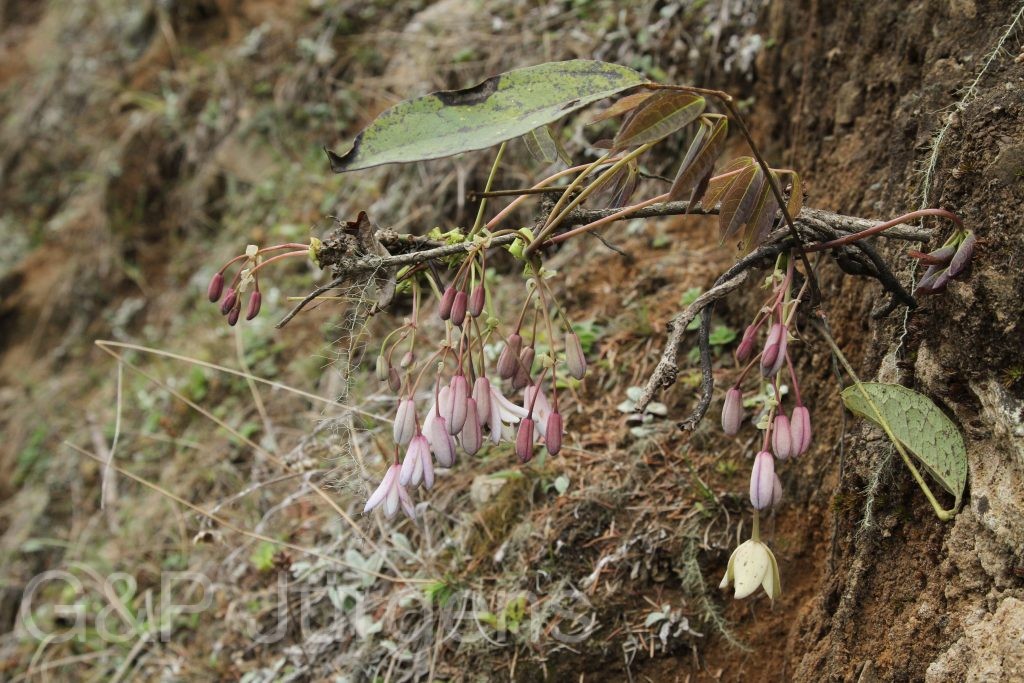
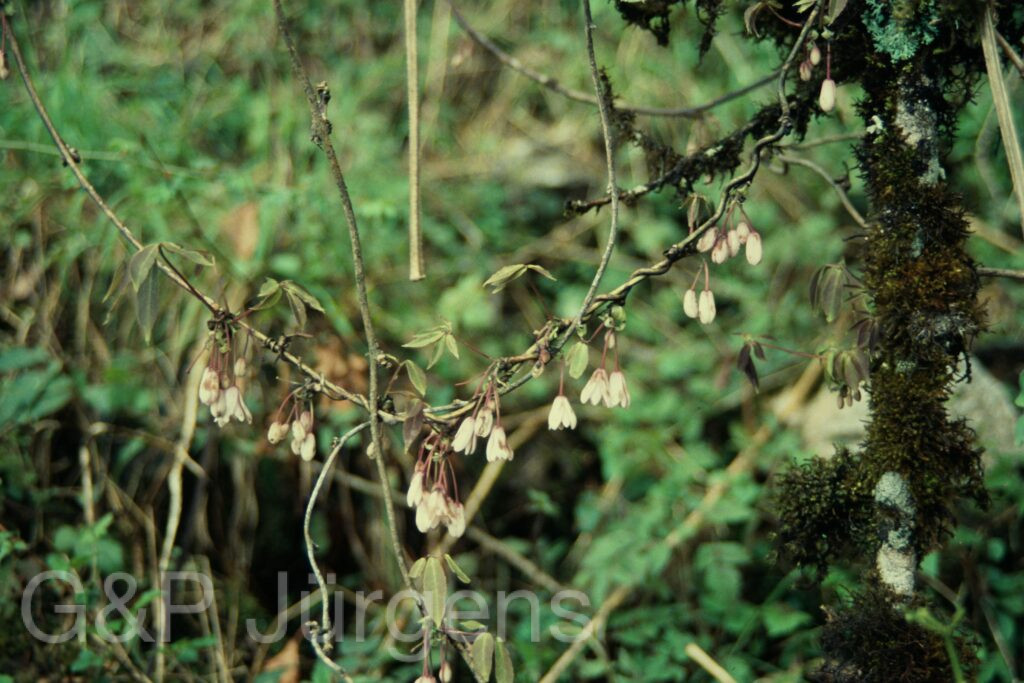
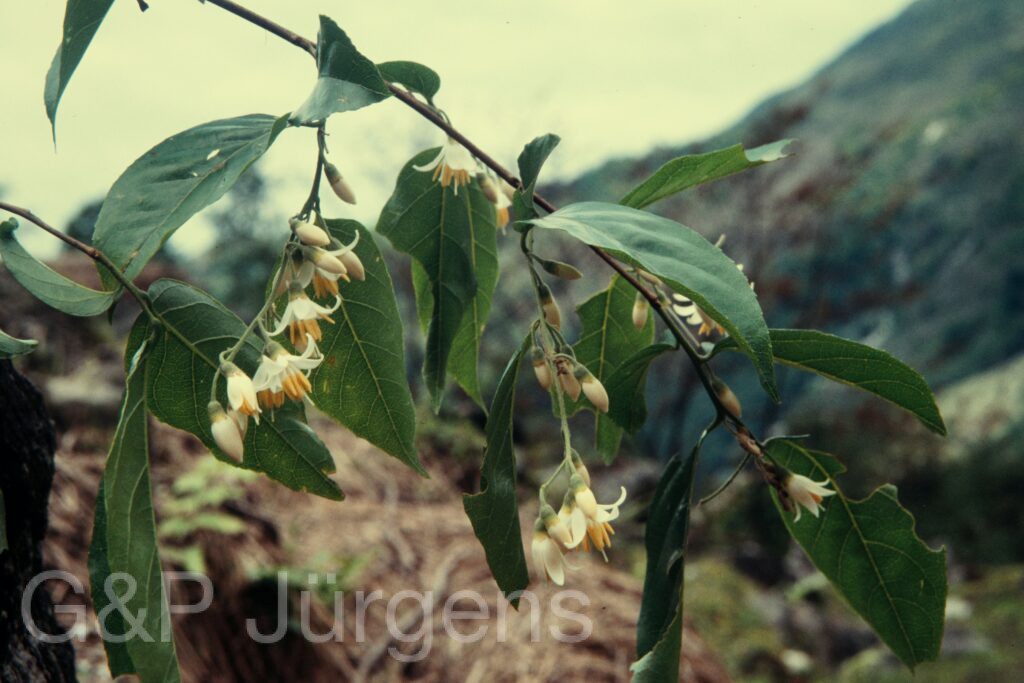
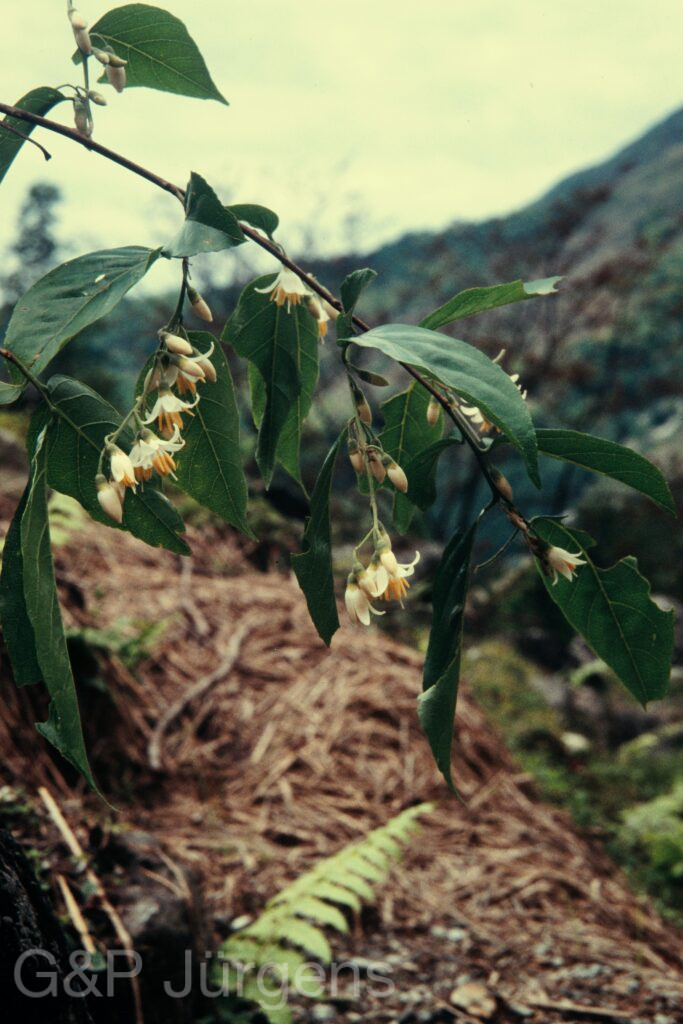
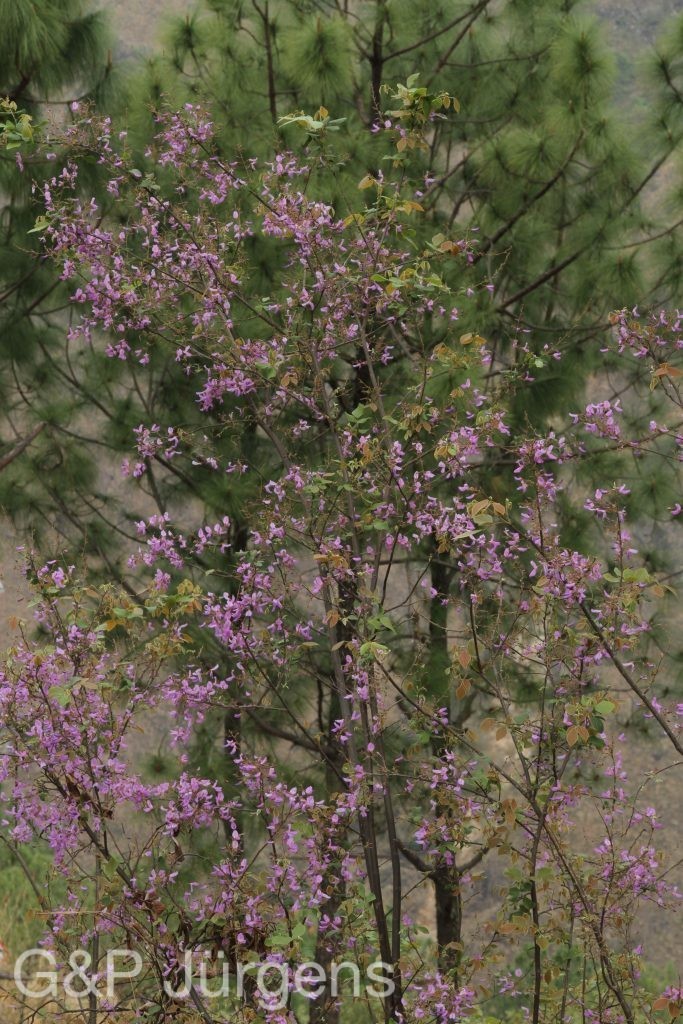
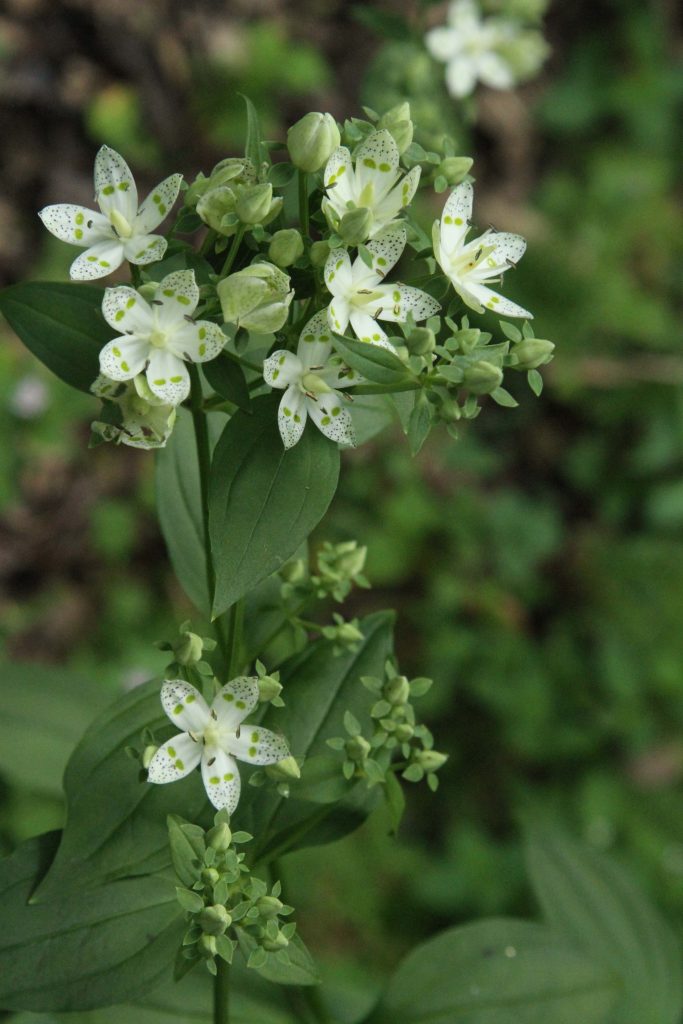
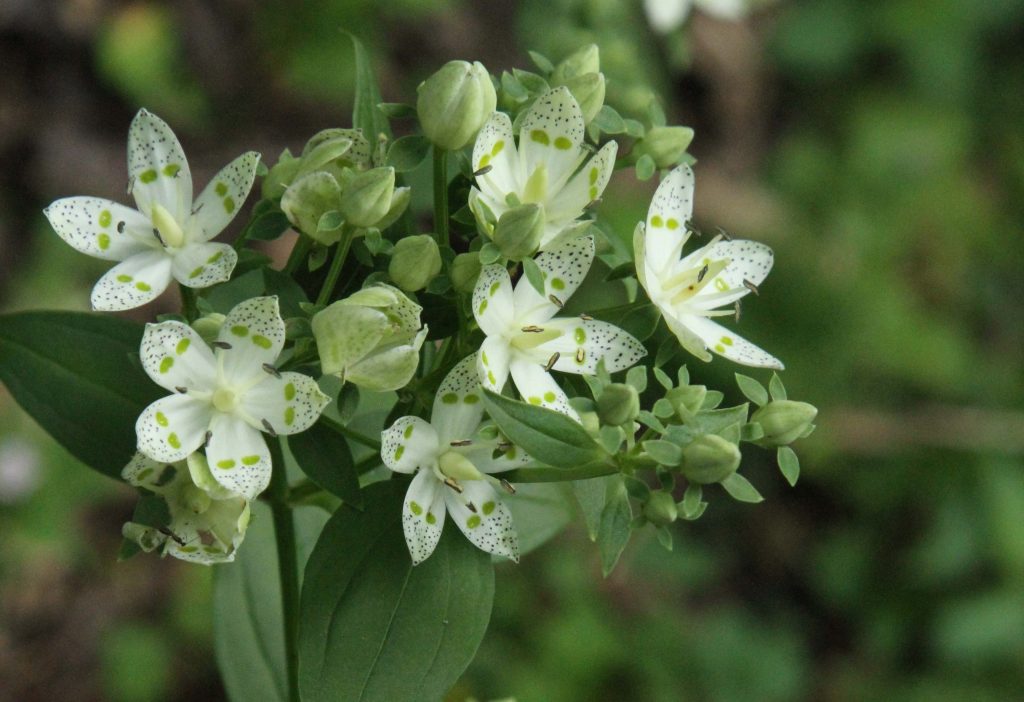
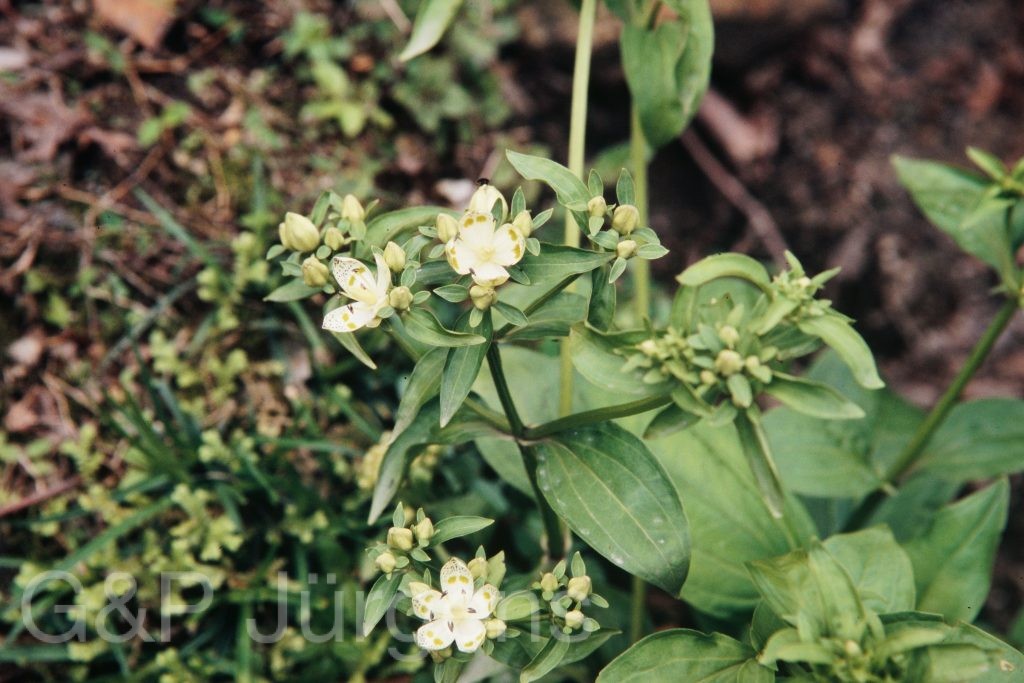
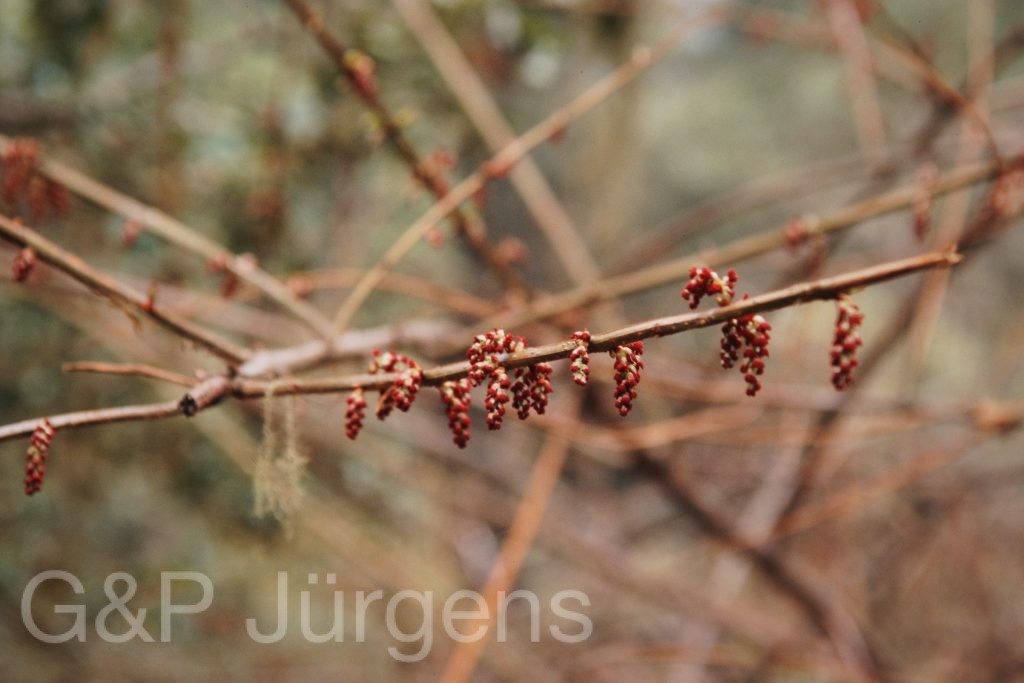
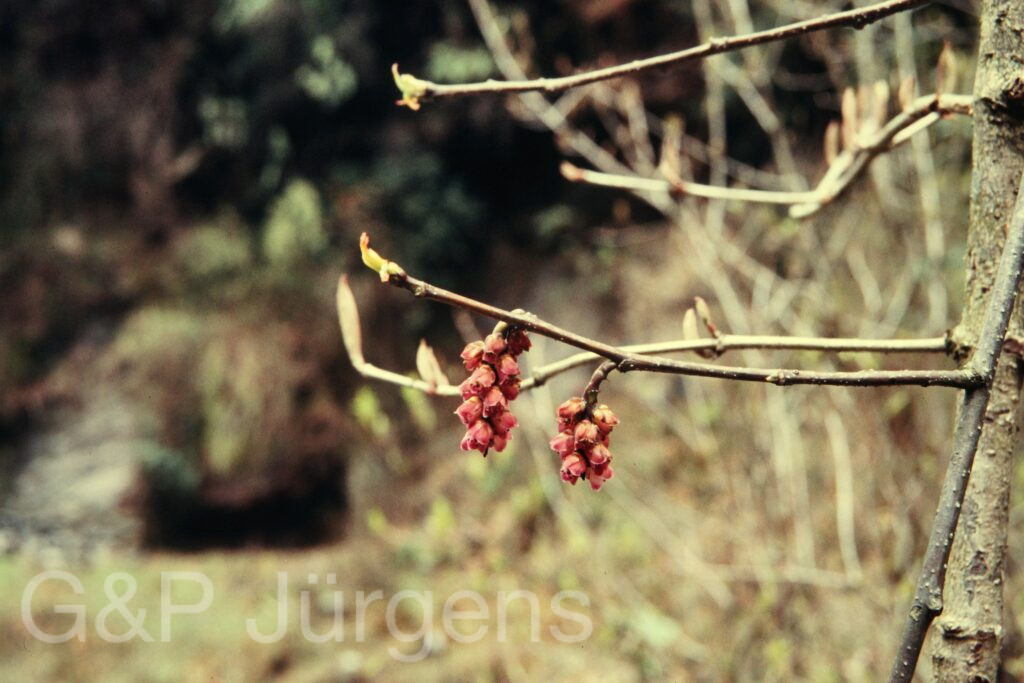
Stachyurus himalaicus is a Sino-Himalayan shrub distributed from Nepal and northern India through Bhutan, northern Myanmar and southern China to Taiwan, with around 4100 GBIF occurrences and a peripheral introduced presence in Japan, Korea and cultivation in Belgium. It grows in moist broad-leaved and mixed evergreen forest, along streamsides, forest margins and shrubby slopes in the warm-temperate to lower cool-temperate belt, roughly 1500 to 3000 m. The plants recorded along the Thimphu-Chu in Bhutan at 2800 m and at Mewa-Khola in Nepal at 2470 m, both flowering in April before leaf expansion, exemplify its precocious early-spring display on humid montane slopes.
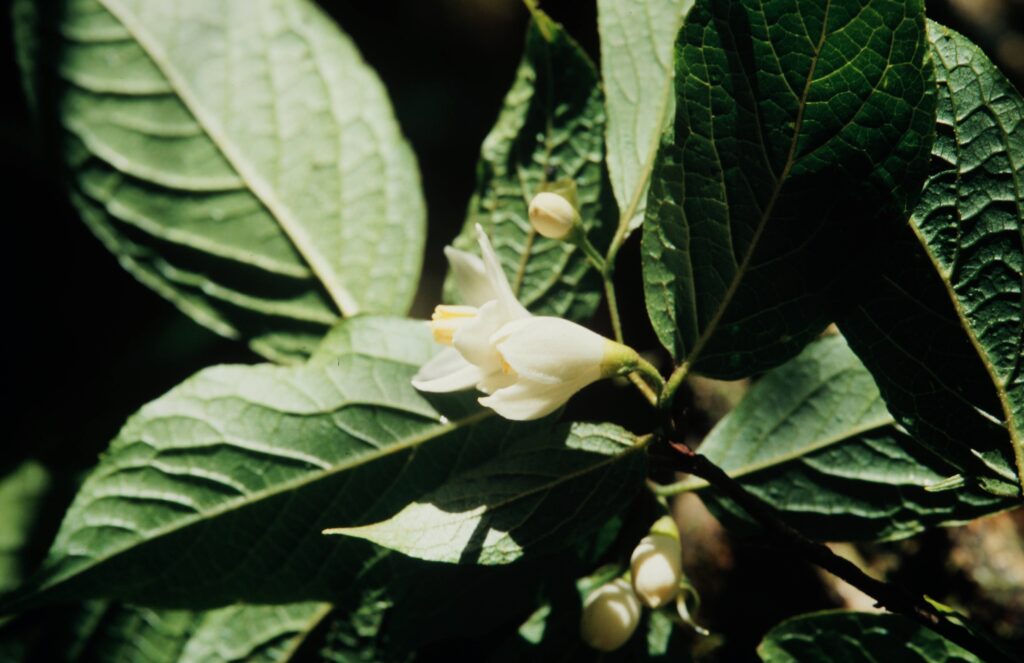
It is a deciduous shrub or small tree with reddish-brown, glabrous, lenticellate branchlets. The leaves are alternate, ovate-lanceolate to oblong, acuminate, with serrate to serrulate margins and a slender petiole, the young foliage sometimes flushed reddish. Its diagnostic feature is the inflorescence: stiff, pendent, spike-like racemes produced from the leafless nodes, each bearing numerous small, shortly pedicellate, bell-shaped pale yellow flowers with four sepals, four petals and eight stamens. The superior ovary develops into a small, globose, leathery to fleshy berry containing many minute seeds embedded in pulp.
Stachyurus is the sole genus of the small family Stachyuraceae, an isolated lineage within the Crossosomatales, and S. himalaicus is its principal Himalayan representative, distinguished from the Chinese S. chinensis by leaf and inflorescence characters. The pre-foliar flowering exploits an open canopy and attracts early-season bees, while the berries are bird-dispersed. The species is common and not of conservation concern.
Author: Hook.f. & Thomson ex. Benth. · Sources: POWO (Kew), GBIF, Flora of China Vol. 13, Flora of Bhutan Vol. 2, Flora of Nepal, A Revision of the Genus Stachyurus (Stachyuraceae)