
Siebold & Zucc.
Description
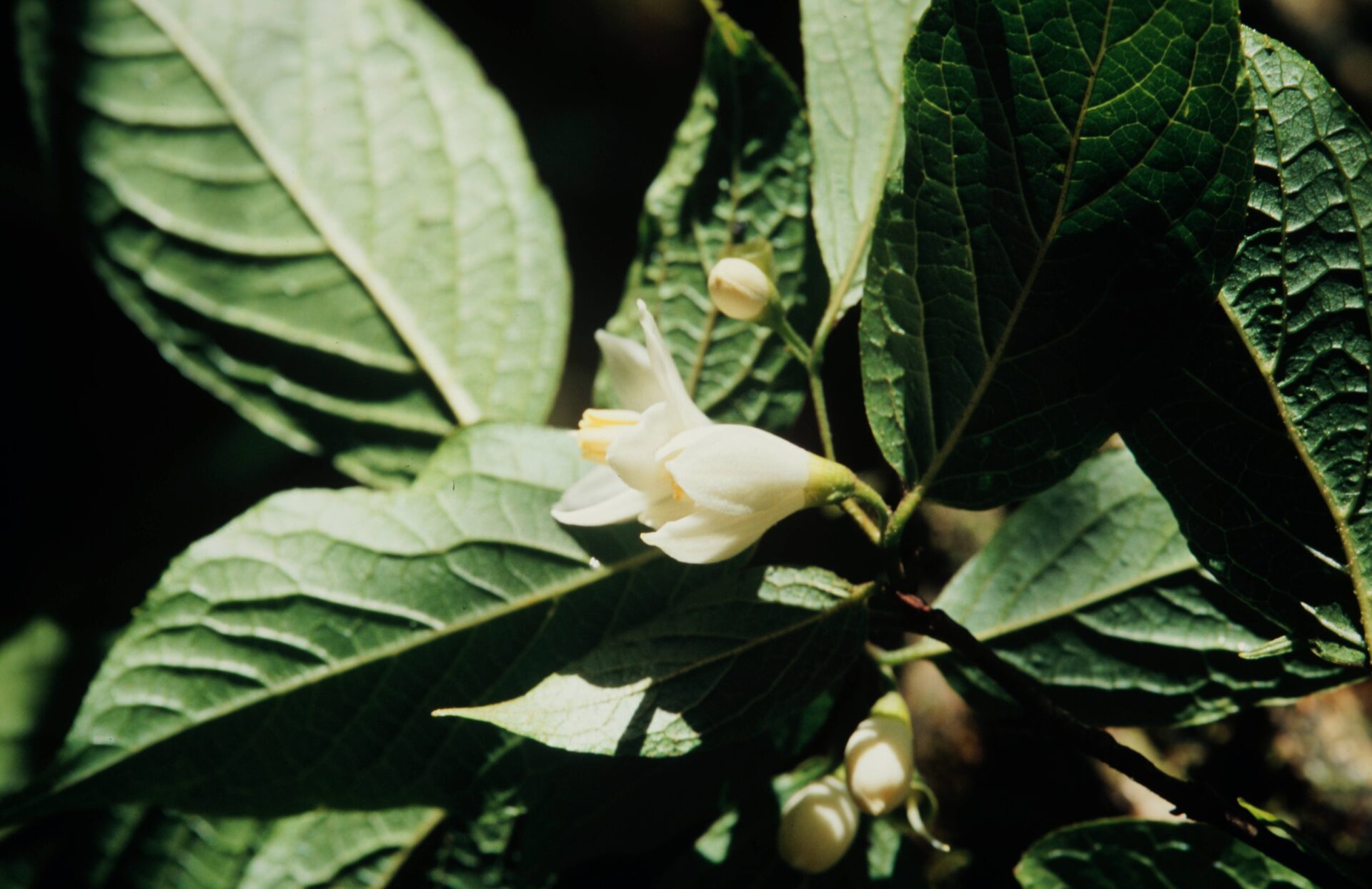
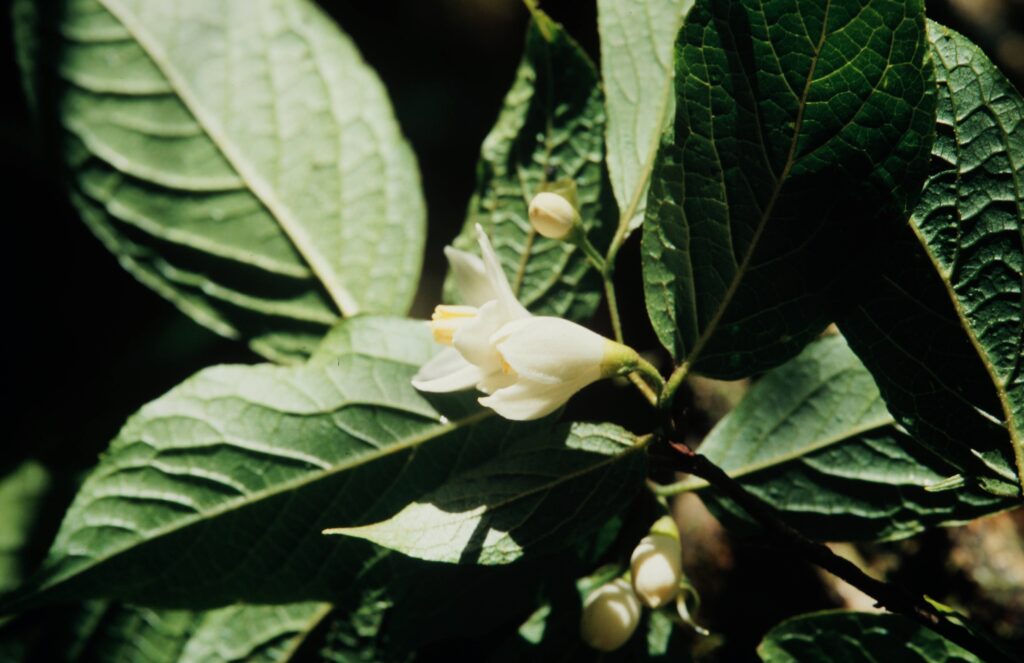
Styrax japonicus, the Japanese snowbell, is a deciduous shrub or small tree of the Styracaceae, distributed through temperate East Asia and extending into the eastern Himalaya. GBIF data (over 16,000 occurrences) reflect its native range across Japan, Korea, China, Taiwan, Myanmar and the eastern Himalaya, together with extensive cultivation in temperate gardens worldwide. In the wild it grows in deciduous and mixed broadleaved forest, on slopes, along streams and at forest margins, in the warm-temperate to lower montane belt. The collection from Tolung in West Bengal at 2,450 m in May illustrates its occurrence in the moist montane forests of the eastern Himalaya at flowering time.
The tree reaches up to about 10 m, with smooth grey bark and slender, often horizontally spreading branches. The leaves are alternate, simple, ovate to elliptic, with a finely serrate margin and an acuminate apex. The flowers are pendulous and borne singly or in few-flowered racemes from the leaf axils on slender pedicels; the white, bell-shaped corolla is deeply five-lobed and fragrant, subtended by a small cupular calyx, with about ten stamens forming a central column of yellow anthers. The fruit is an ovoid to subglobose, greyish, slightly tomentose drupaceous capsule containing usually a single hard seed.
The Styracaceae is a small family of woody plants notable as a source of aromatic balsamic resins (benzoin, storax) yielded by certain Styrax species. S. japonicus is among the most widely planted ornamentals of the family, valued for its profuse, snowbell-like spring flowers. Its disjunct occurrence in the eastern Himalaya is of biogeographic interest, reflecting the floristic links between the Sino-Japanese region and the eastern Himalaya; though broadly secure, its forest populations there depend on intact montane woodland.
Author: Siebold & Zucc. · Sources: POWO (Kew), Flora of China Vol. 15, Flora of Bhutan Vol. 2, GBIF, Hwang & Grimes: Styracaceae – Flora of China account