Tag:

Montane (1500-2500 m)

Mill.

Bhutan2014 108
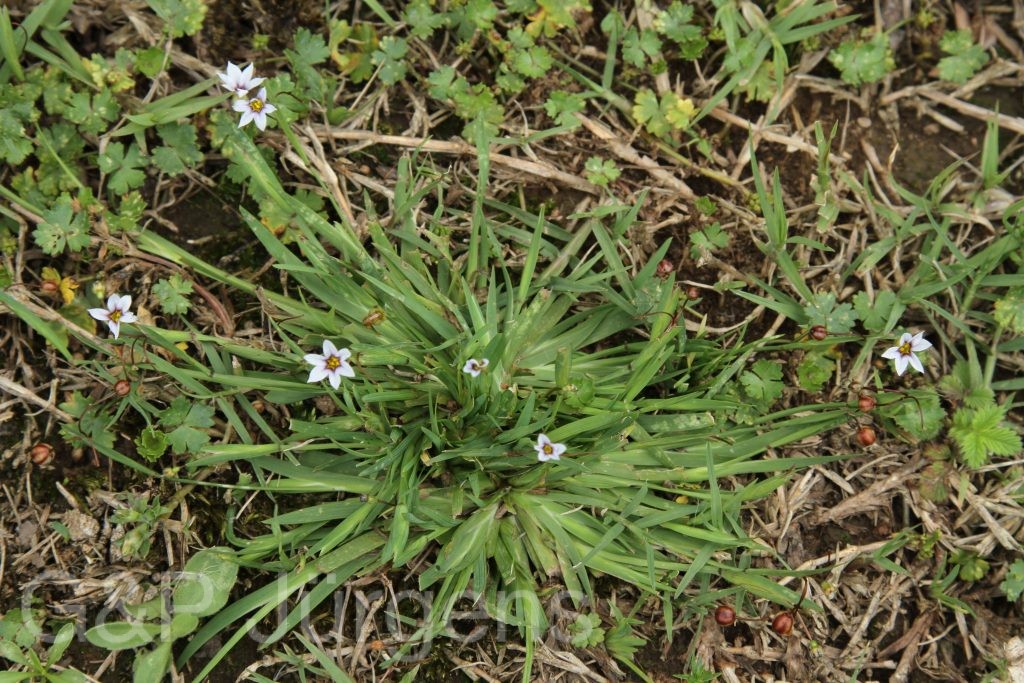
Bhutan Trashigang 1550m, May

Description

Sisyrinchium angustifolium, the narrow-leaved blue-eyed grass, is native to eastern North America (US, CA) but is widely naturalised, with more than 15,000 GBIF occurrences extending across western Europe (FR, ES, IE, GB, DE, BE), eastern Asia (KR, JP) and elsewhere. In the Himalaya it occurs as an introduced and locally established plant of damp meadows, lawns, ditches and grassy roadsides. The individual recorded at Trashigang in eastern Bhutan at 1550 m in May reflects its naturalisation in moist, open, subtropical to warm-temperate grassland, where it flowers in spring on seasonally moist ground.

Despite the common name it is no grass but a tufted perennial of the Iridaceae, forming clumps of narrow, linear, equitant leaves arising in two ranks from a short rhizome. The flowering stems are markedly flattened and conspicuously winged, often branched, and bear terminal clusters of flowers subtended by paired green spathes. Each ephemeral flower has six spreading blue to violet tepals abruptly apiculate with a small terminal mucro, contrasting with a yellow centre; the three stamens have filaments united into a tube around the style. The fruit is a small globose to obovoid loculicidal capsule containing numerous black, rounded seeds.

The species belongs to the large American genus Sisyrinchium and is taxonomically complex, with several allied microspecies and frequent confusion with S. montanum and S. bermudiana. Its flowers open only in sunshine and are bee-pollinated, while prolific seed favours self-establishment in mown swards. Outside its native range it behaves as a benign garden escape.

Author: Mill. · Sources: POWO (Kew), GBIF, Flora of Bhutan Vol. 3, Flora of Nepal, Flora of China Vol. 24, The Genus Sisyrinchium (Iridaceae) Monograph
C.C. Huang

Bhutan2014 596
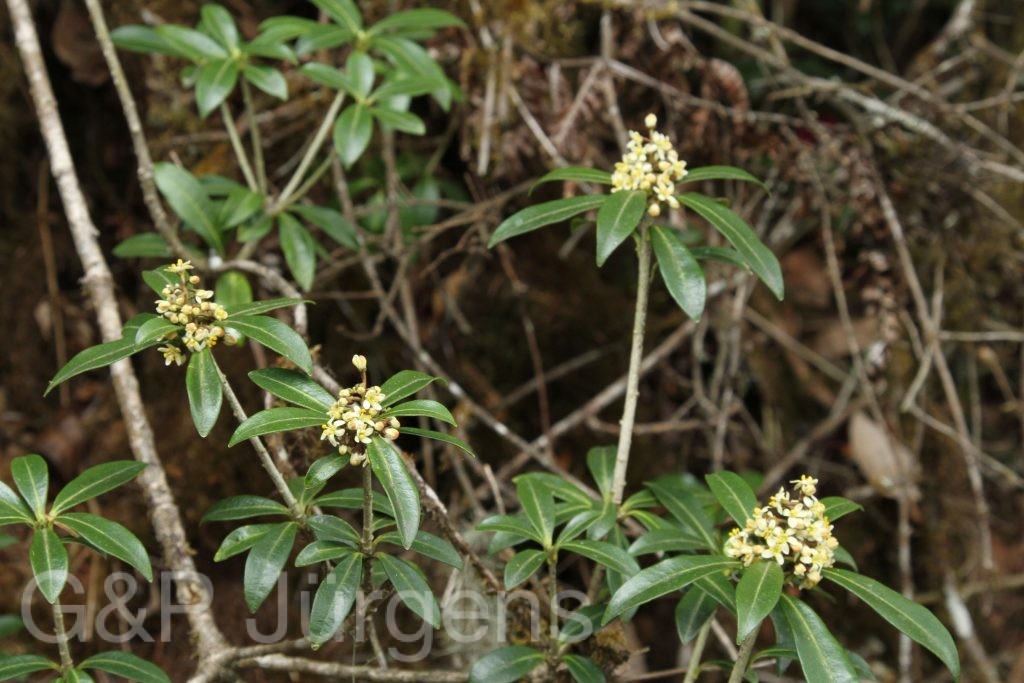
Bhutan Phobjika 2400m, May
Nepal 1994 84 ergebnis
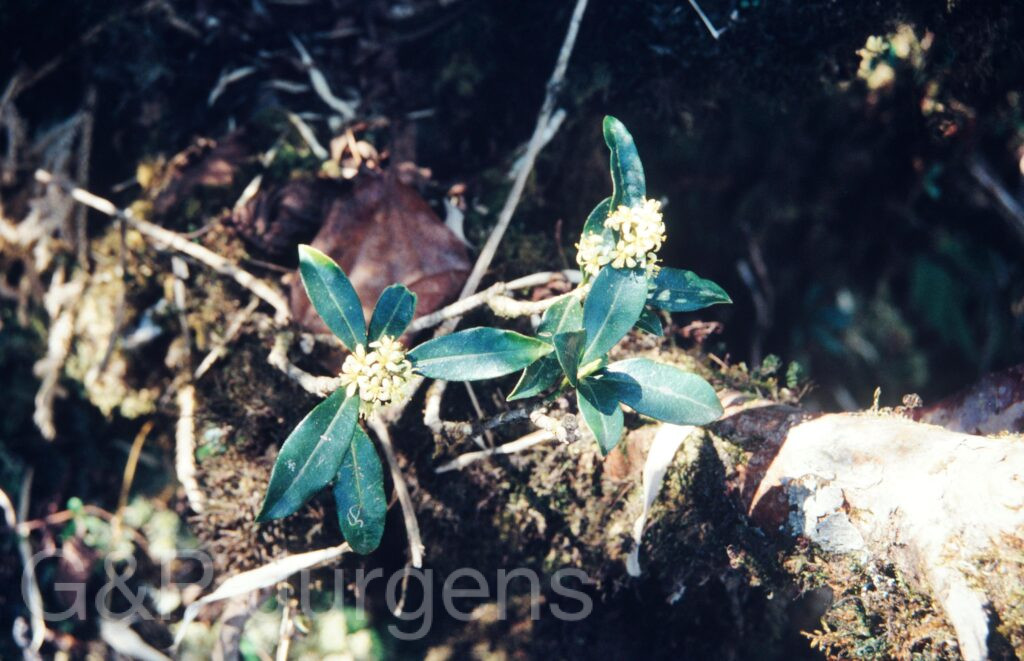
Ost-Nepal Jaljale Himal
3000m April

Description

Skimmia multinervia is an evergreen shrub of the eastern Himalaya and adjacent China, with GBIF records (about 294) confined to China and Bhutan but its wider native range extending along the Himalaya into Nepal and northeastern India. It occupies the cool, humid montane and subalpine forest zone, as shown by collections at Phobjika in Bhutan around 2400 m in May and on the Jaljale Himal in eastern Nepal near 3000 m in April. There it grows in the shaded understorey of broad-leaved and conifer forest, among rhododendrons and on mossy slopes, favouring moist, organic-rich, well-drained soils.

The plant is a compact, much-branched aromatic shrub whose foliage releases a pungent citrus scent when crushed, owing to the translucent oil glands typical of Rutaceae. The leaves are alternate, often crowded toward the branch tips, elliptic to oblanceolate, leathery and entire, with the numerous lateral veins to which the epithet refers. The species is functionally dioecious, bearing small whitish to cream flowers in terminal panicles with four to five petals; male and female plants must grow together for fruit to set. The fruit is a fleshy, bright red drupe persisting through the colder months and dispersed by birds.

Skimmia is a small Asian genus within the citrus family, distinguished by its evergreen aromatic habit, dioecy and red drupaceous fruits; its species, including S. multinervia, are valued in temperate horticulture for winter colour. As a forest-understorey shrub dependent on intact, moist montane woodland, it is sensitive to forest clearance and grazing, though across its range it remains locally frequent and is not regarded as globally threatened.

Author: C.C. Huang · Sources: POWO (Kew), GBIF, Flora of China Vol. 11, Flora of Bhutan Vol. 1, Flora of Nepal, A Monograph of the Genus Skimmia (Rutaceae)

A.DC.

Nepal 2001 232 ergebnis ergebnis
Nepal (Gorkha) Tullikot 1800m, May

Description

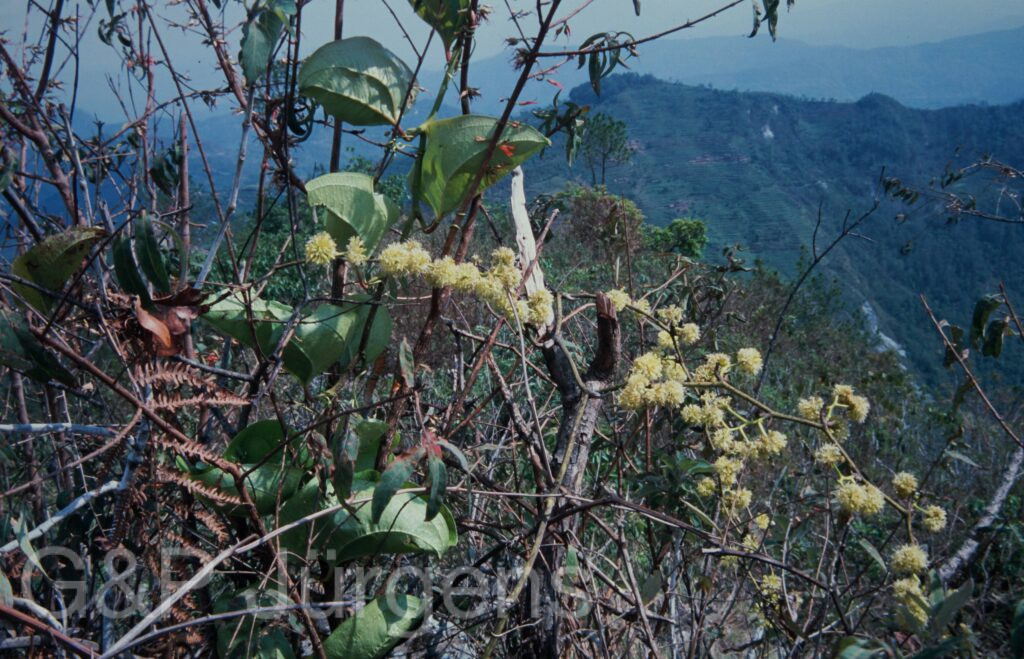
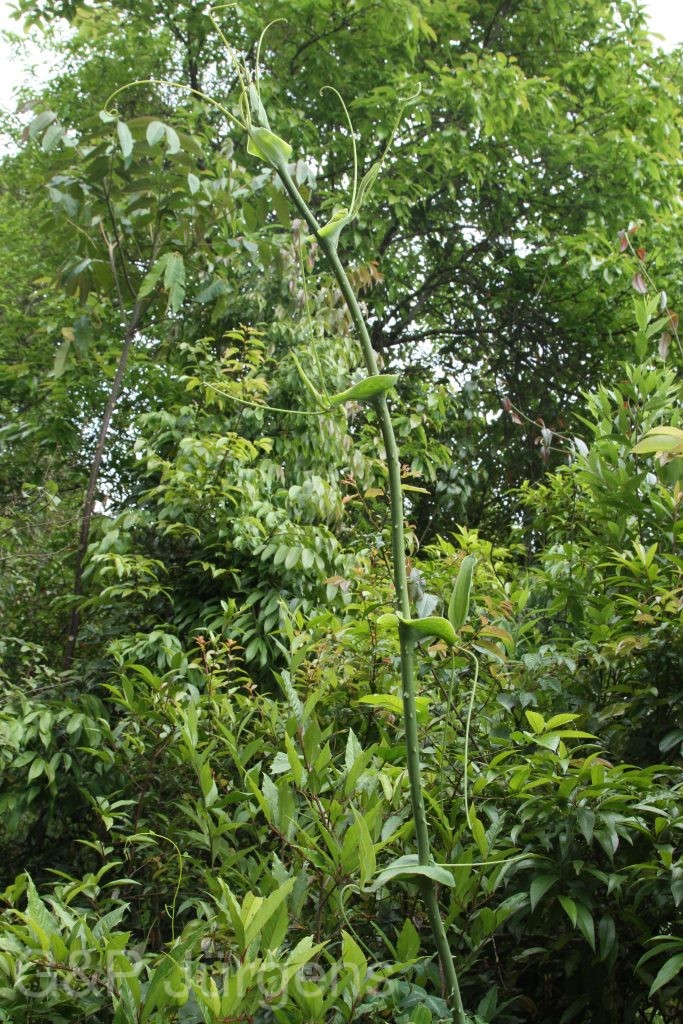
Smilax orthoptera is a climbing monocot of the eastern and central Himalaya, recorded by GBIF from India, Nepal and Bhutan in a modest dataset of about 35 occurrences, an accepted species of the warm-temperate hill forests. It scrambles through the understorey and along forest margins, thickets and shrubby slopes of the lower and middle hill zone, broadly between roughly 1500 and 2500 m, where moist, monsoon-fed broad-leaved forest provides the supports its tendrils require. The image from Tullikot in the Gorkha district of Nepal at 1800 m, in May, places the plant in this mid-hill belt at the start of the growing season, climbing over neighbouring vegetation in dappled forest shade.

It is a woody to subwoody climber arising from a tough, knotty rhizome, with slender, angular to ridged, often prickly stems. The alternate leaves are stalked and bear at the base of the petiole a pair of tendrils derived from stipular appendages, by which the plant climbs; the blades are ovate to ovate-lanceolate, leathery, with several prominent curving main veins running from base to apex in the manner characteristic of the genus. The plant is dioecious, the small greenish to yellowish flowers borne in axillary umbels with six tepals and, in staminate flowers, six stamens; female flowers develop into small globose berries containing few seeds, dispersed by birds.

Smilax is a large, mainly tropical and warm-temperate genus and the principal element of the family Smilacaceae, set apart within the monocots by its climbing habit, paired petiolar tendrils and net-veined yet parallel-ribbed leaves. S. orthoptera is one of several Himalayan species distinguished by stem armature, leaf shape and the form of the tendril-bearing petiole. Restricted in range but locally frequent within its forest habitat, it has not been assessed as threatened, although the species depends on the persistence of intact mid-elevation Himalayan forest.

Author: A.DC. · Sources: POWO (Kew), GBIF, Flora of China Vol. 24, Flora of Nepal, Flora of Bhutan Vol. 3, Koyama's monographic studies of Asian Smilax

Lour.

Bhutan2014 216
Bhutan Mongar 1920m, May
Bhutan2014 217
Bhutan Mongar 1920m, May

Description

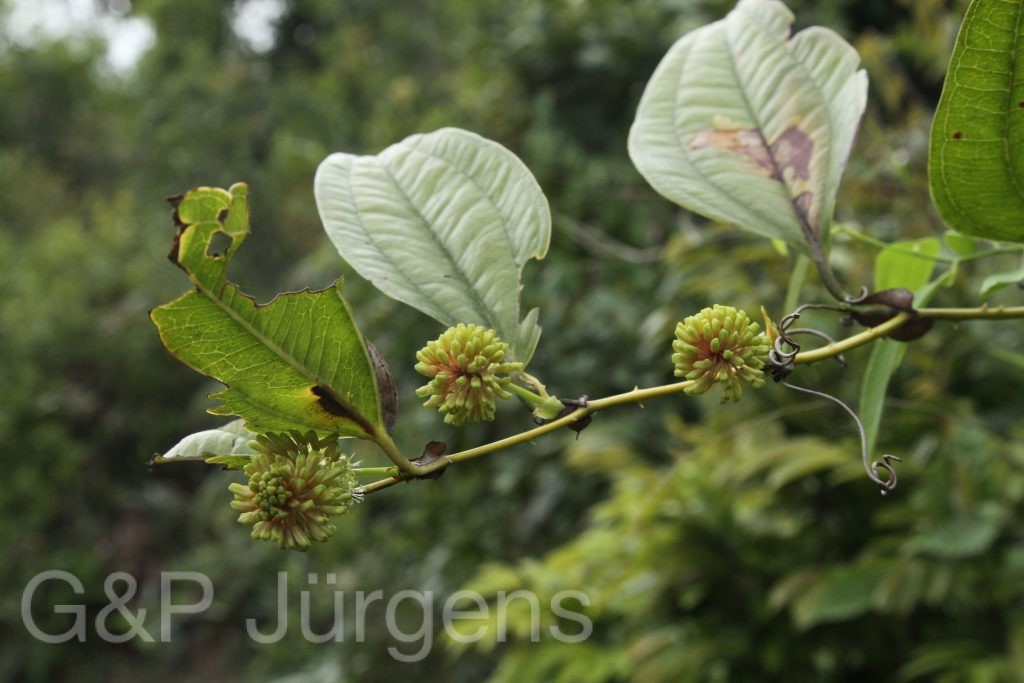
Smilax perfoliata is a robust scrambling climber of the eastern Himalaya, Indo-China and East Asia, ranging from Nepal, Bhutan and north-east India through Myanmar, Thailand, Laos, Cambodia and Vietnam to southern China, Taiwan, Japan, Korea and Sri Lanka, with records also in Indonesia. GBIF holds around 618 occurrences. It is a woody liana of broad-leaved evergreen and semi-evergreen forest, thickets and forest margins, scrambling over shrubs and into the lower canopy at low to middle elevations. The plant from Mongar in eastern Bhutan at 1920 m in May is typical of the temperate to subtropical forest belt it favours.

It is a dioecious vine arising from a thick woody rhizome, the climbing stems and branches armed with scattered prickles. Its leaves are alternate, leathery, broadly ovate to elliptic with several prominent arching main veins; the petiole bears a conspicuous sheathing, clasping wing (whence perfoliata) from which spring a pair of slender tendrils that anchor the climber. The small greenish-yellow flowers are unisexual in axillary umbels, the perianth of six free tepals, staminate flowers with six stamens, pistillate with a superior trilocular ovary. The fruit is a small globose berry ripening dark blue-black, with one to few bird-dispersed seeds.

Smilax, the sole large genus of Smilacaceae, is set apart among monocots by its net-veined, petiole-tendril-bearing leaves and woody climbing habit. S. perfoliata belongs to a complex of broad-leaved Asian climbers delimited by petiole-sheath morphology and leaf venation. Several species of the genus yield sarsaparilla-type saponins and have medicinal uses, the young shoots sometimes eaten. Widespread and adaptable to disturbed forest, S. perfoliata is of no conservation concern.

Author: Lour. · Sources: POWO (Kew), GBIF, Flora of China Vol. 24, Flora of Bhutan Vol. 3, Annotated Checklist of the Flowering Plants of Nepal, Koyama revision of Asiatic Smilax

Kunth

Sikkim 2006 278 ergebnis
Sikkim India Tolung-Chu 1530m, May

Description

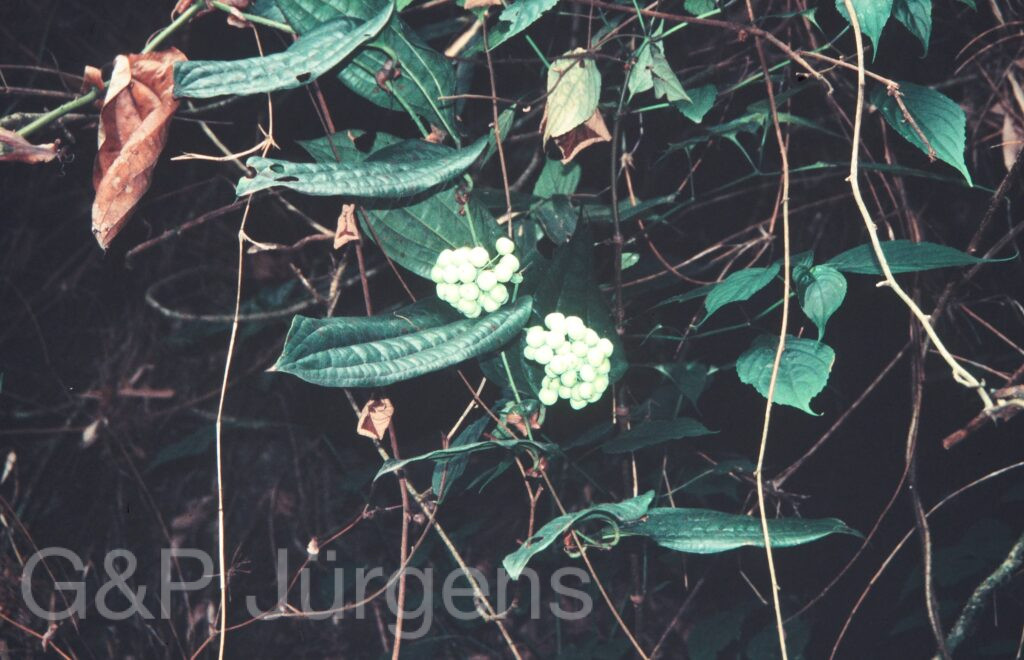
Smilax wallichii is a woody, scrambling climber of the Smilacaceae, distributed through the eastern Himalaya. GBIF records are sparse (13 occurrences) and confined to Nepal, India and Bhutan, indicating a comparatively restricted, undercollected range. The species is a plant of subtropical to lower temperate broadleaved forest, where it climbs through trees and shrubs at forest margins, along streams and on ravine sides. The collection from the Tolung-Chu valley in Sikkim at 1,530 m in May exemplifies its occurrence in the humid, evergreen-forested foothill and lower montane belt of the region.

The plant develops from a stout, woody rhizome and produces tough, climbing stems that are often armed with scattered prickles. As in all Smilax, the leaves are alternate, simple, with a characteristic suite of curved-convergent main veins and a reticulate venation, the petiole bearing a pair of tendrils derived from stipular appendages that grip surrounding vegetation. The plants are dioecious; the small, greenish, six-tepalled flowers are borne in axillary umbels, the staminate flowers with six stamens and the pistillate flowers with a three-locular ovary. The fruit is a small, globose berry, ripening dark, containing few seeds.

Smilax is the principal genus of the otherwise small, exclusively climbing family Smilacaceae, distinguished within the monocots by its net-veined leaves, tendrillar petioles and dioecious umbels. Several species are sources of sarsaparilla and are used medicinally, and the rhizomes of Himalayan taxa enter local pharmacopoeias. The limited records of S. wallichii reflect both genuine rarity and under-sampling; as a forest-dependent liana, it is sensitive to the clearance and fragmentation of mid-elevation broadleaved forest.

Author: Kunth · Sources: POWO (Kew), Flora of China Vol. 24, Flora of Bhutan Vol. 3, GBIF, Koyama: Smilacaceae of the Himalaya and Eastern Asia

Solanum betaceum

by GP Jürgens

Cav.

Bhutan2015 313
Bhutan Zhemgang 1650m, October
Bhutan2015 314
Bhutan Zhemgang 1650m, October

Description

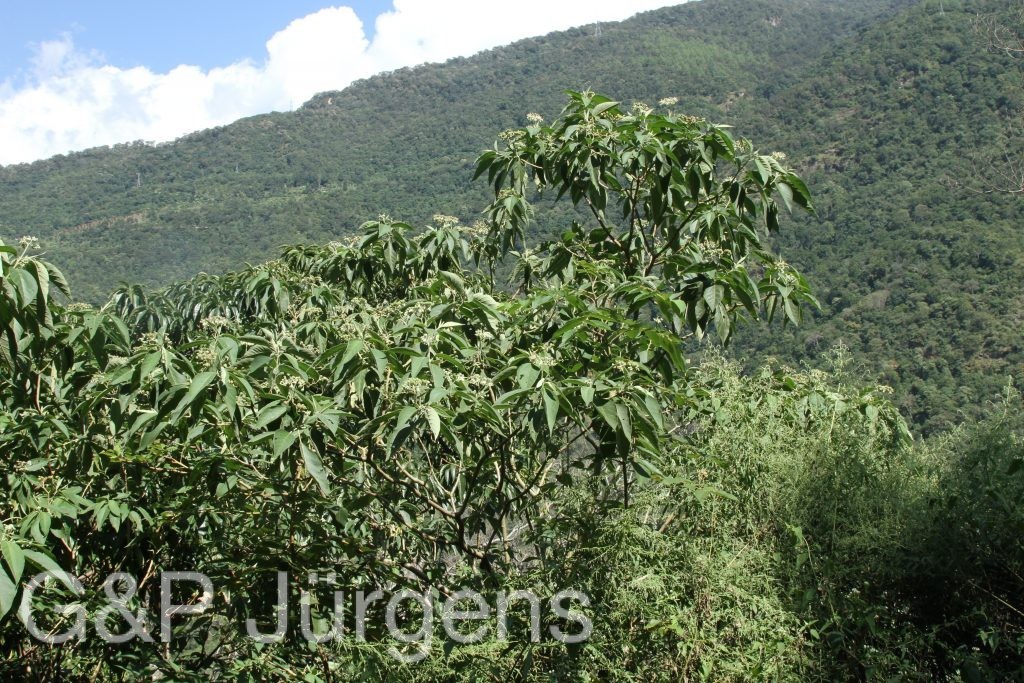
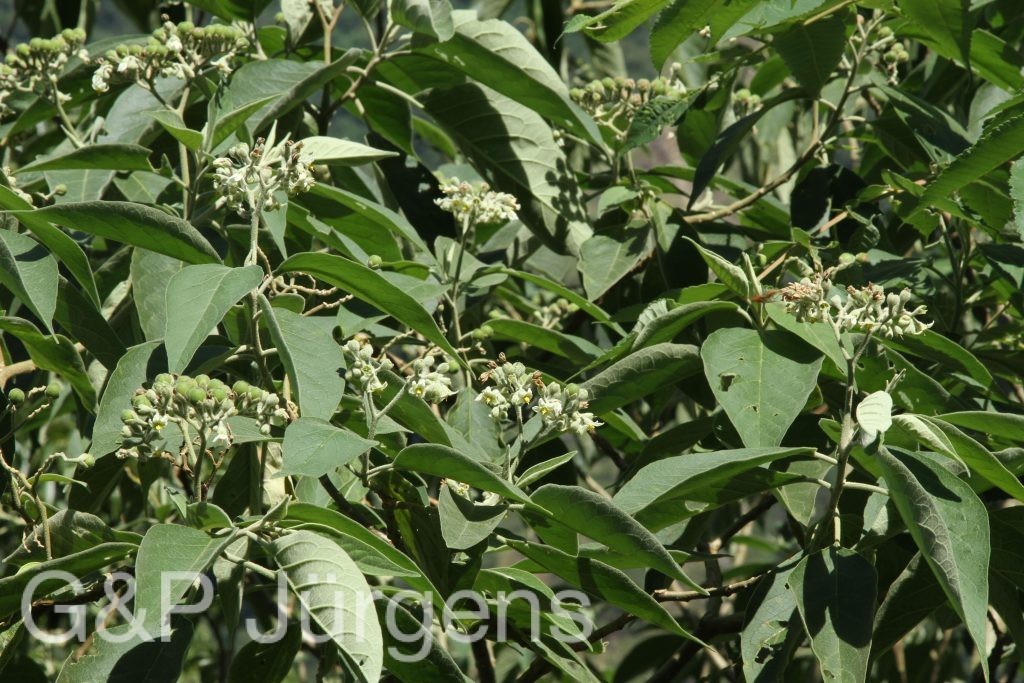
Solanum betaceum Cav. (the tamarillo or tree tomato, long known as Cyphomandra betacea) is a small tree native to the Andean region of South America but now cultivated and naturalised pantropically and in warm-temperate areas; GBIF records (about 4,314 occurrences) span Colombia, Ecuador, Peru, Bolivia, Argentina and Brazil in its native range, together with widespread introductions in Europe, Australasia, southern Africa and South Asia. In the Himalaya it is grown and locally escapes in warm mid-elevation valleys; the photographed plant is from Zhemgang in central Bhutan at about 1,650 m, fruiting in October in cultivation on subtropical hill slopes.

It is a fast-growing, soft-wooded shrub or small tree 2-5 m tall with a brittle, sparingly branched trunk. The leaves are large, alternate, ovate-cordate, softly pubescent and pungently scented, with entire margins and a long petiole. The flowers are borne in lateral cymes and are fragrant, with a rotate to shallowly campanulate pale pink to lilac corolla 1-2 cm across and the connivent yellow anthers typical of Solanum. The fruit is a smooth, egg-shaped berry 4-8 cm long, ripening orange-red to deep purplish, with two locules of small flat seeds embedded in tart, jelly-like pulp.

Molecular phylogenetics has subsumed the former genus Cyphomandra within Solanum, where these arborescent species form a distinct clade pollinated by fragrance-collecting bees. S. betaceum is economically important as the tamarillo, cultivated commercially in New Zealand, the Andes and elsewhere for its vitamin-rich fruit. As a domesticated and widely naturalised crop it is of no conservation concern; in some regions it behaves as a minor environmental weed.

Author: Cav. · Sources: POWO (Kew), GBIF, Flora of China, Solanaceae Source database, Bohs revision of Cyphomandra (Solanum), Flora of Bhutan, Solanaceae treatments in Andean floras

Buch.-Ham. ex D. Don

Bh09 353 P569
Bhutan Wangdi, 2400m June
Bh09 354 G570
Bhutan Wangdi, 2600m June

Description

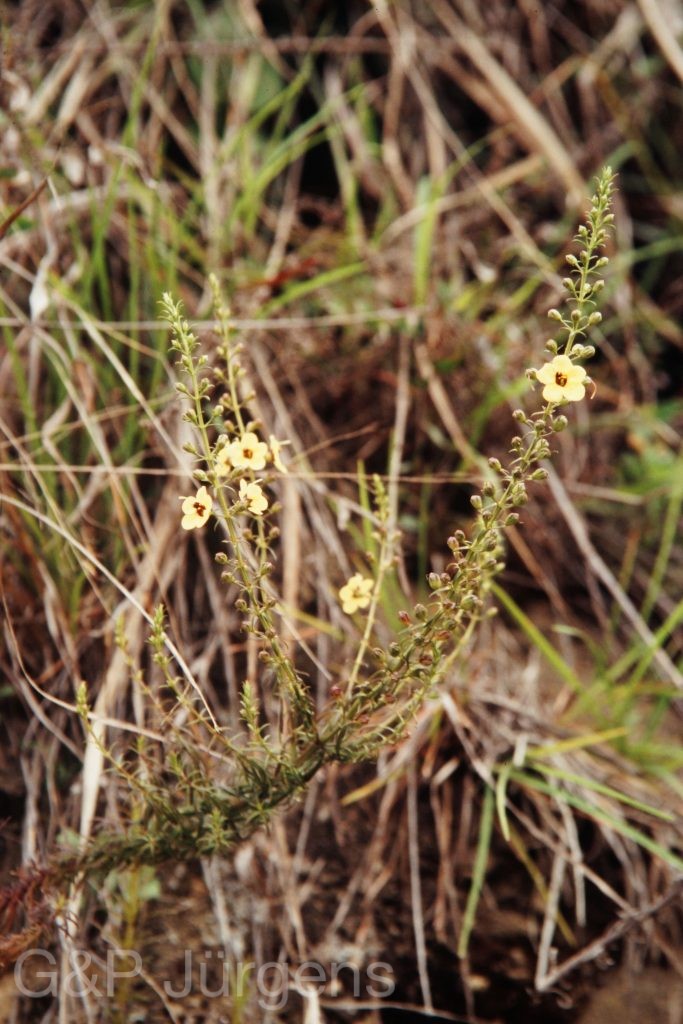
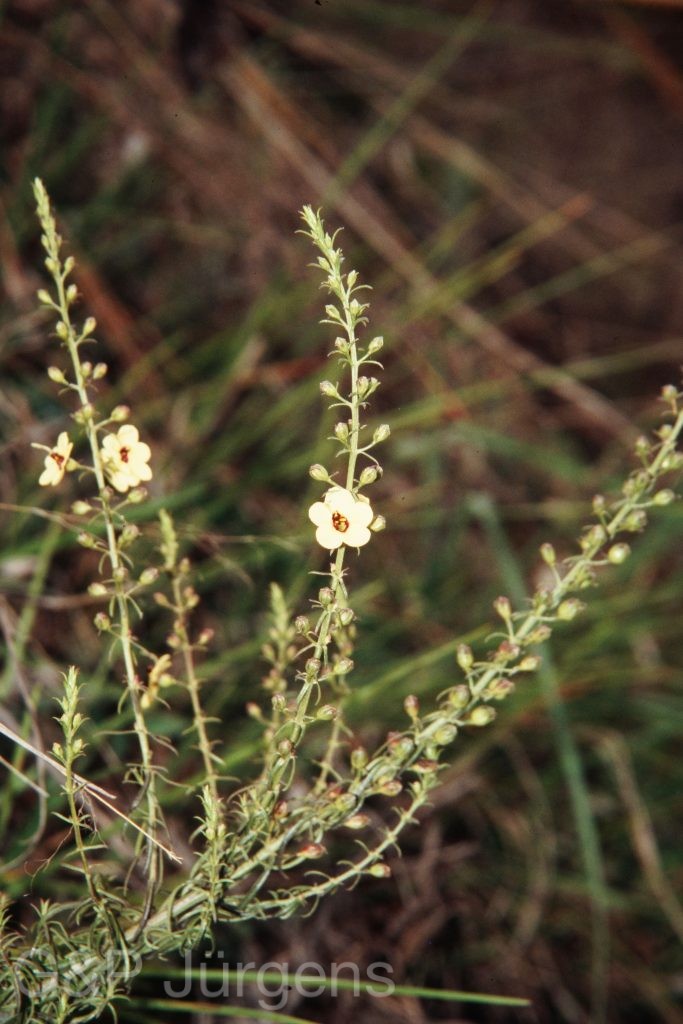
Sopubia trifida Buch.-Ham. ex D.Don is a slender hemiparasitic herb of broad palaeotropical distribution, recorded across South and Southeast Asia and tropical Africa, including China, India, Nepal, Bhutan, Myanmar, Thailand, Indonesia, the Philippines, Sri Lanka, Madagascar, Papua New Guinea and several African nations; GBIF lists around 840 occurrences. It favours open grassy slopes, savanna, terraced field margins, scrub and disturbed sunny ground, mostly from the lowlands up to about 2700 m. The photographed plants were collected near Wangdi in Bhutan at 2400 and 2600 m in June, in the open warm-temperate grassland where this erect parasite grows attached to the roots of grasses.

The plant is an erect annual or perennial herb with stiff, wiry, often branched and minutely scabrous stems. The leaves are opposite below and alternate above, narrowly linear, sessile and frequently divided into a few filiform segments, the epithet trifida referring to this three-parted condition. The flowers are borne in lax terminal spike-like racemes; the corolla is rotate, typically pink to rose-purple, with a short tube and five subequal spreading lobes, while the calyx is campanulate and ribbed. The fruit is a small ovoid, loculicidal capsule containing numerous minute, angular seeds.

Now placed in the broadly recircumscribed Orobanchaceae following the transfer of hemiparasitic genera from the former Scrophulariaceae, Sopubia is a facultative root parasite drawing water and nutrients from neighbouring grasses through haustoria while retaining photosynthetic capacity. Its wide tropical range and tolerance of disturbed grassland account for its abundance. The species is common and not of conservation concern, and is sometimes regarded as a weedy associate of pastures and fallow land.

Author: Buch.-Ham. ex D. Don · Sources: POWO (Kew), GBIF, Flora of China, Flora of Bhutan, Flora of Ceylon, Fischer revision of Sopubia and allied Orobanchaceae

(D.Don) Lindl.

Bhutan2015 77
Bhutan Wangdi Galegphug 1500m, October
Bhutan2012 641
Bhutan Tserang 1600m, September
Bhutan2012 642
Bhutan Tserang 1600m, September

Description

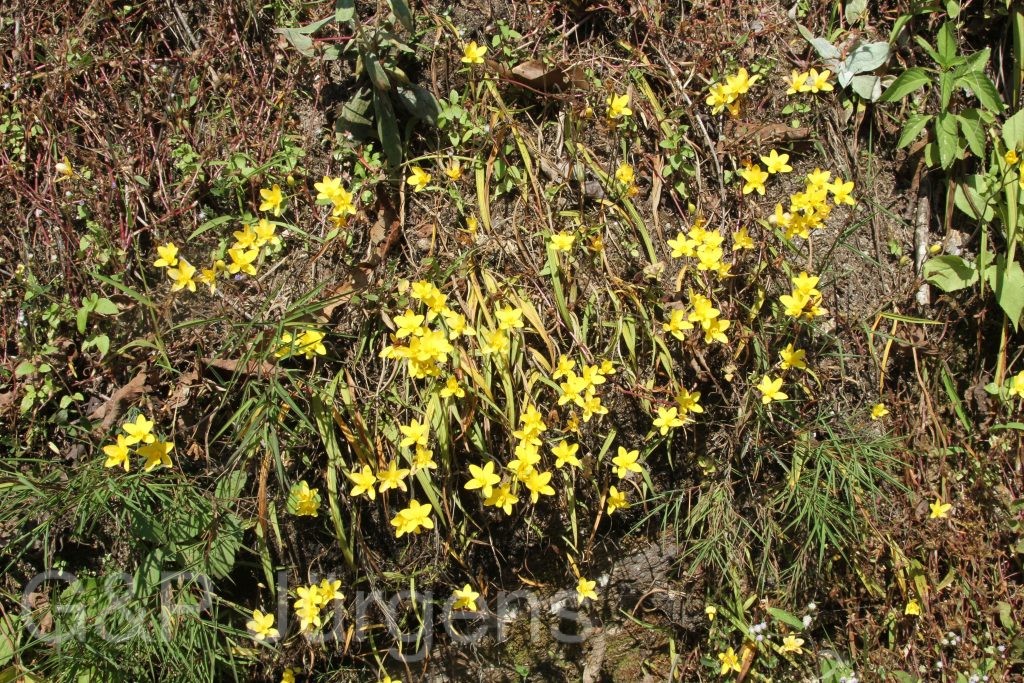
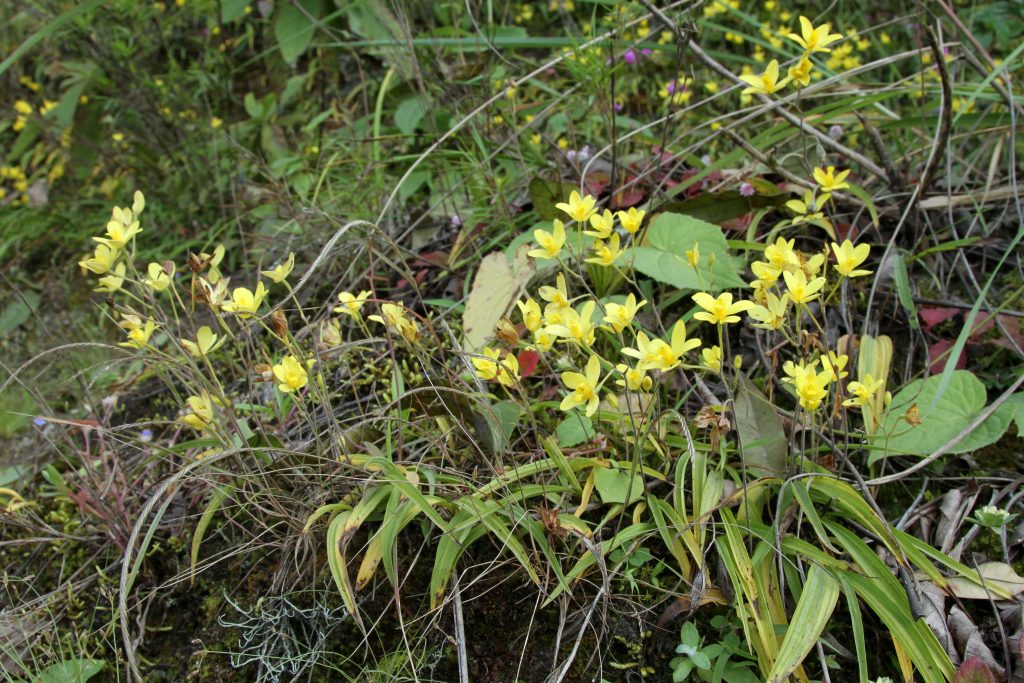
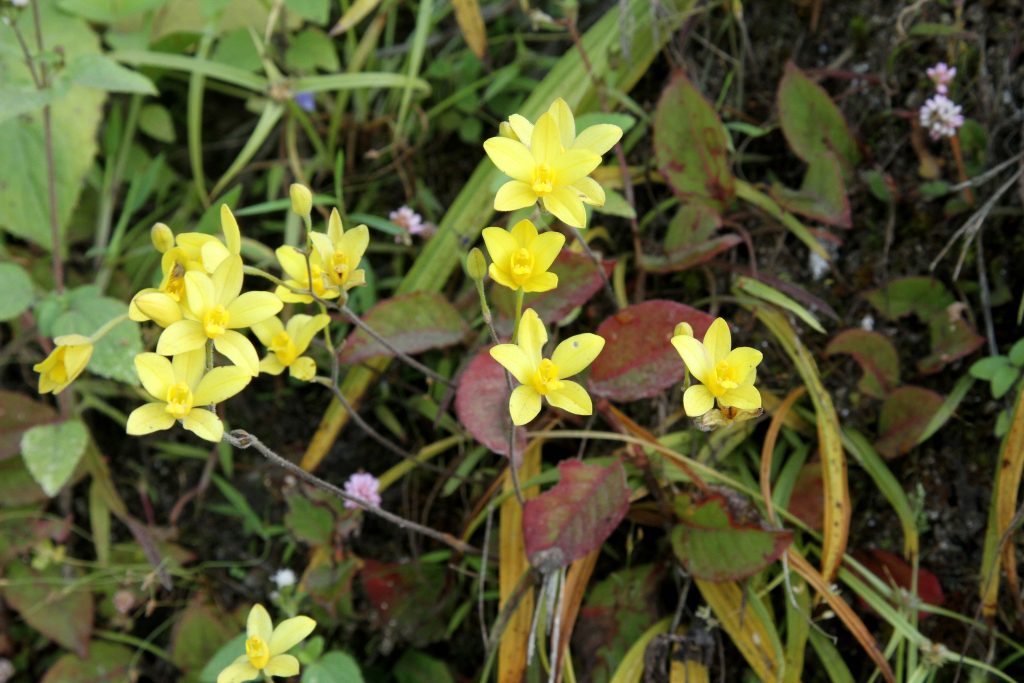
Spathoglottis ixioides is a small terrestrial orchid of the Himalaya, recorded from Nepal, India, Bhutan and China, a relatively narrowly distributed species with 146 occurrences in GBIF. It grows on open grassy banks, mossy rock ledges, humus-rich slopes and forest margins, generally between 1500 and 3500 m. The Bhutanese localities given, Wangdi Galegphug at about 1500 m in October and Tserang at 1600 m in September, reflect the warm-temperate to subtropical montane grassland and bank habitats where it flowers in the post-monsoon autumn, often among grasses on damp, partly shaded ground.

The species is a dwarf, deciduous, terrestrial herb growing from a small subterranean pseudobulb or corm-like tuber. From this arise a few narrowly lanceolate, plicate (longitudinally pleated) leaves that taper to a slender base. The slender erect inflorescence carries one to a few comparatively large flowers; the floral segments are bright yellow, with spreading ovate-lanceolate sepals and petals and a distinctly three-lobed labellum bearing raised keels or calli on the disc and small lateral lobes flanking the column. The fruit is a small ellipsoid dehiscent capsule releasing numerous dust-like seeds.

Spathoglottis (subtribe Collabiinae, tribe Collabieae of the Epidendroideae) is chiefly a tropical Asian and Pacific genus, and S. ixioides is among its most cold-tolerant, high-altitude members, the yellow flowers and reduced deciduous habit distinguishing it within the genus. Like most terrestrial orchids it depends on mycorrhizal fungi for germination of its minute seeds and is pollinated by bees. Although locally frequent in suitable habitat, its restricted range, specialised ecology and the broad pressures of habitat disturbance and orchid collection warrant monitoring, and all orchids are listed under CITES Appendix II.

Author: (D.Don) Lindl. · Sources: POWO (Kew), GBIF, Flora of Bhutan, Orchids of Bhutan, Genera Orchidacearum (Pridgeon et al.)

(Pers.) Ames

Bhutan2014 92
Bhutan Trashigang 1450m, May
Bh2008 471 G732
Bhutan Tsang-Chu, 1800m April
Nepal1992 92 P126 ergebnis
Nepal Amjilassa 2300m March 

Description

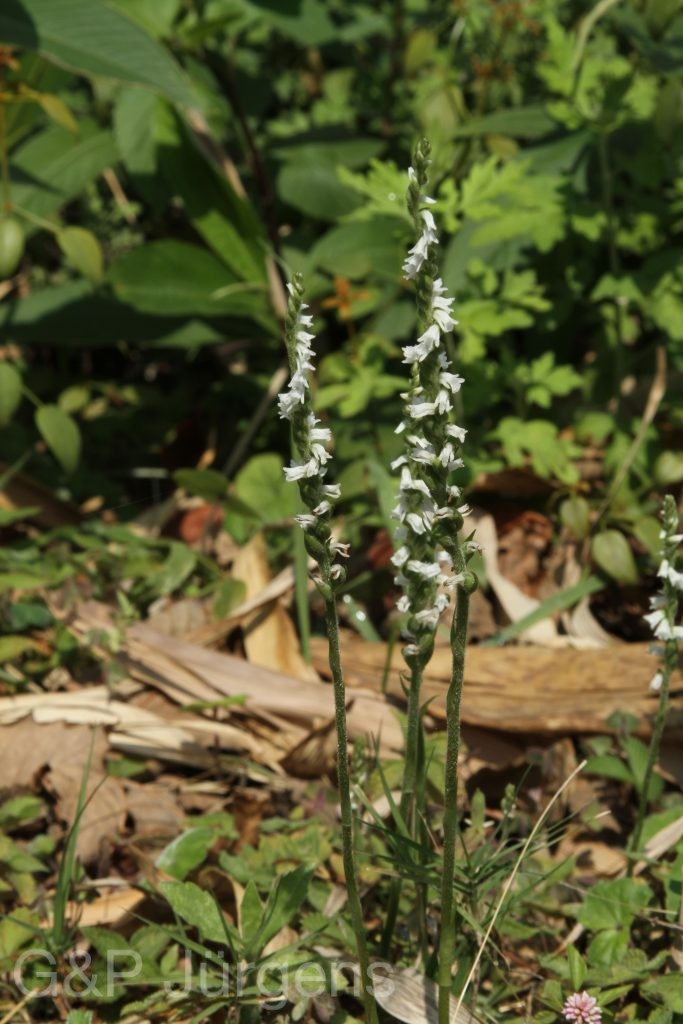
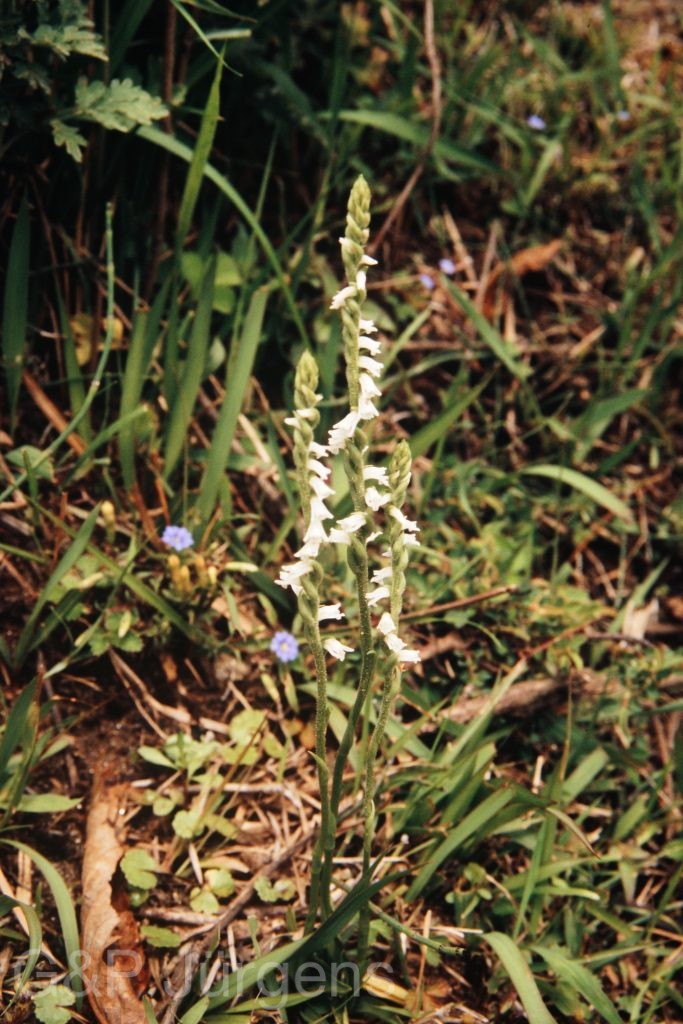
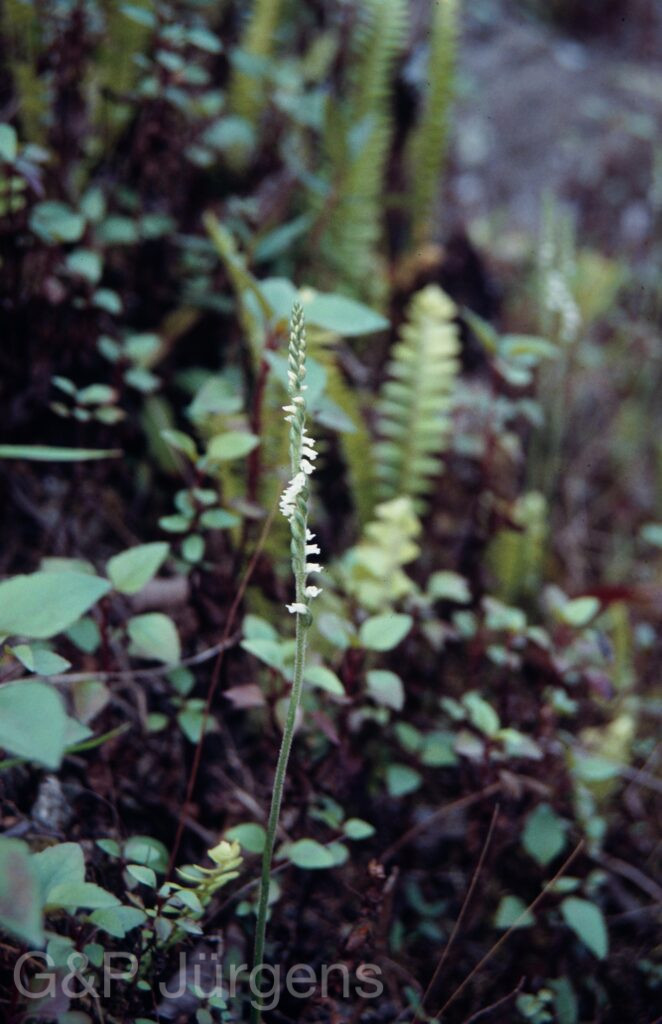
Spiranthes sinensis, the Chinese ladies'-tresses, is one of the most widespread terrestrial orchids of the Old World, documented in GBIF by some 7880 occurrences spanning eastern Asia from China, Japan, Korea and Russia through India, Nepal, Bhutan and Southeast Asia to Australia, New Caledonia and Sri Lanka. It occupies open, moist grassland, marshy meadows, streambanks, paddy margins and grassy slopes from near sea level to about 3000 m. The photographed Himalayan plants from Trashigang in Bhutan at 1450 m in May, the Tsang-Chu at 1800 m in April and Amjilassa in eastern Nepal at 2300 m in March illustrate its tolerance of a wide elevational and seasonal range in damp, sunny situations.

It is a slender terrestrial orchid with fleshy, fasciculate, tuberous roots and a tuft of linear to oblanceolate basal leaves. The erect, finely pubescent inflorescence bears numerous small flowers arranged in a characteristic single spiral around the axis. The flowers are typically pink to rose-purple with a white, recurved, crisped-margined labellum bearing a yellowish, papillose central callus; the dorsal sepal and petals converge to form a hood over the short column. The fruit is a small, erect, ellipsoid capsule releasing dust-like seeds.

A member of subtribe Spiranthinae of the Orchidaceae (here under the input spelling Orchideaceae), S. sinensis forms a taxonomically complex, polyploid-rich aggregate from which several segregates such as S. australis and S. hongkongensis have been recognised. Like most orchids it depends on mycorrhizal fungi for germination and is pollinated chiefly by bees. Despite local declines from wetland drainage, its enormous range and weedy persistence in disturbed grassland make it of Least Concern, though it is protected under CITES Appendix II as for all orchids.

Author: (Pers.) Ames · Sources: POWO (Kew), GBIF, Flora of China, Flora of Bhutan, Annotated Checklist of the Flowering Plants of Nepal, Pridgeon et al. Genera Orchidacearum

Benth.

BhutanPG2011 841
Bhutan Paro-Chu, 2400m July
Nepal 99 587 ergebnis
West-Nepal Garpung-Khola 3300m, July

Description

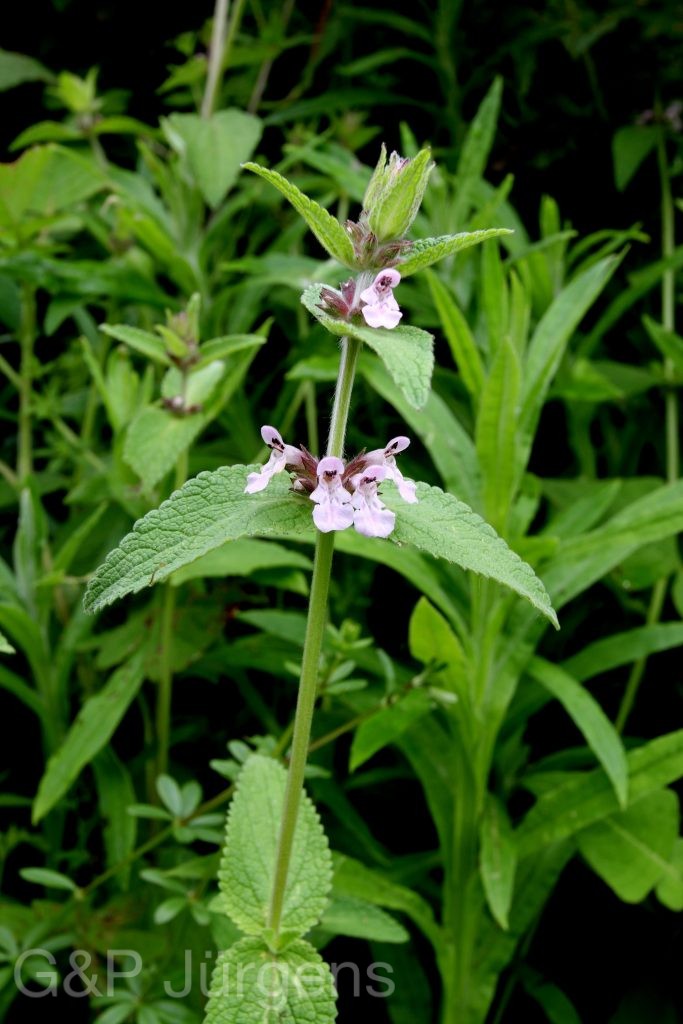
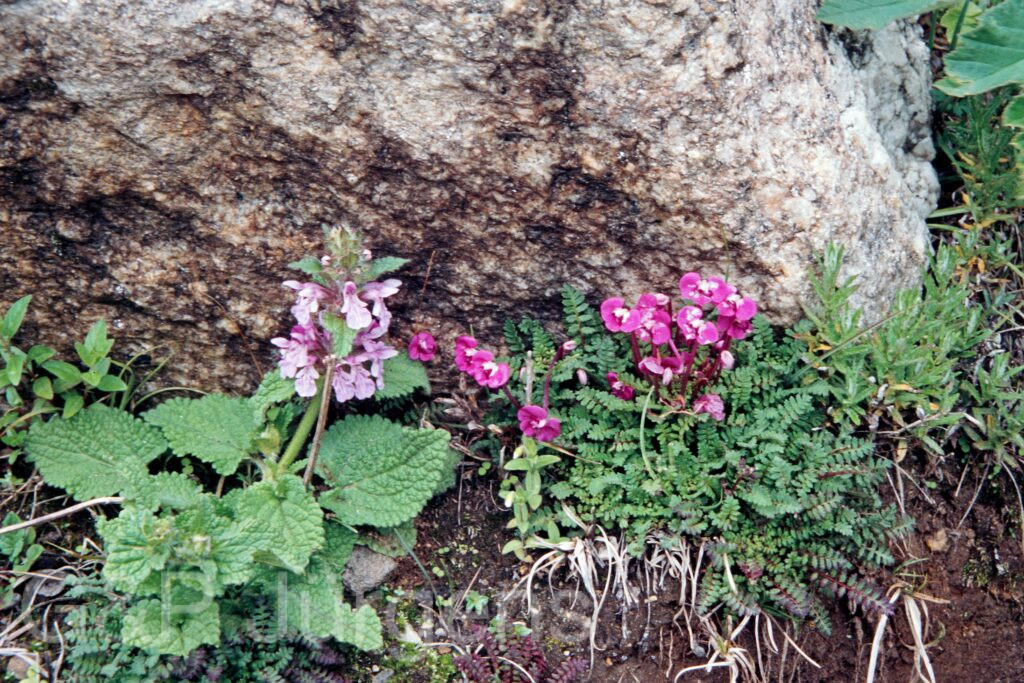
Stachys melissifolia is a perennial mint-family herb of the Himalaya and adjacent mountains, recorded from Nepal, China, India, Bhutan and Pakistan, with around 146 occurrences in GBIF; under its current treatment the name is accepted for the Himalayan plant. It occupies forest margins, moist shaded banks, shrubberies and grassy slopes of the temperate and lower subalpine belt, broadly between 2000 and 3500 m. The photographs from the Paro Chu in Bhutan at about 2400 m and from the Garpung Khola in West Nepal at about 3300 m, both in July, show the species in flower during the summer monsoon in its typical mid-montane woodland-edge habitat.

The plant is an erect to ascending perennial with the quadrangular stems characteristic of the Lamiaceae, usually softly hairy. The leaves are opposite, ovate to oblong with a cordate to rounded base, crenate-serrate margins and a rugose, wrinkled surface, somewhat resembling those of balm (Melissa), as the epithet melissifolia denotes. The flowers are borne in distinct whorls (verticillasters) forming an interrupted terminal spike; the calyx is tubular-campanulate with five subequal teeth, and the bilabiate corolla is pinkish to purple with a short, erect upper lip and a spreading three-lobed lower lip. The fruit comprises four small ovoid nutlets enclosed in the persistent calyx.

Stachys is a large, cosmopolitan genus of the Lamiaceae subfamily Lamioideae, and its Himalayan members have been subject to repeated nomenclatural revision, several names having passed in and out of synonymy. The verticillate inflorescence and bilabiate corolla are adapted to pollination by bees and other long-tongued insects. Widely distributed through the temperate Himalaya, S. melissifolia is common and of no conservation concern.

Author: Benth. · Sources: POWO (Kew), GBIF, Flora of China, Flora of Bhutan, Annotated Checklist of the Flowering Plants of Nepal, Harley et al. Labiatae in The Families and Genera of Vascular Plants