
Cav.
Description
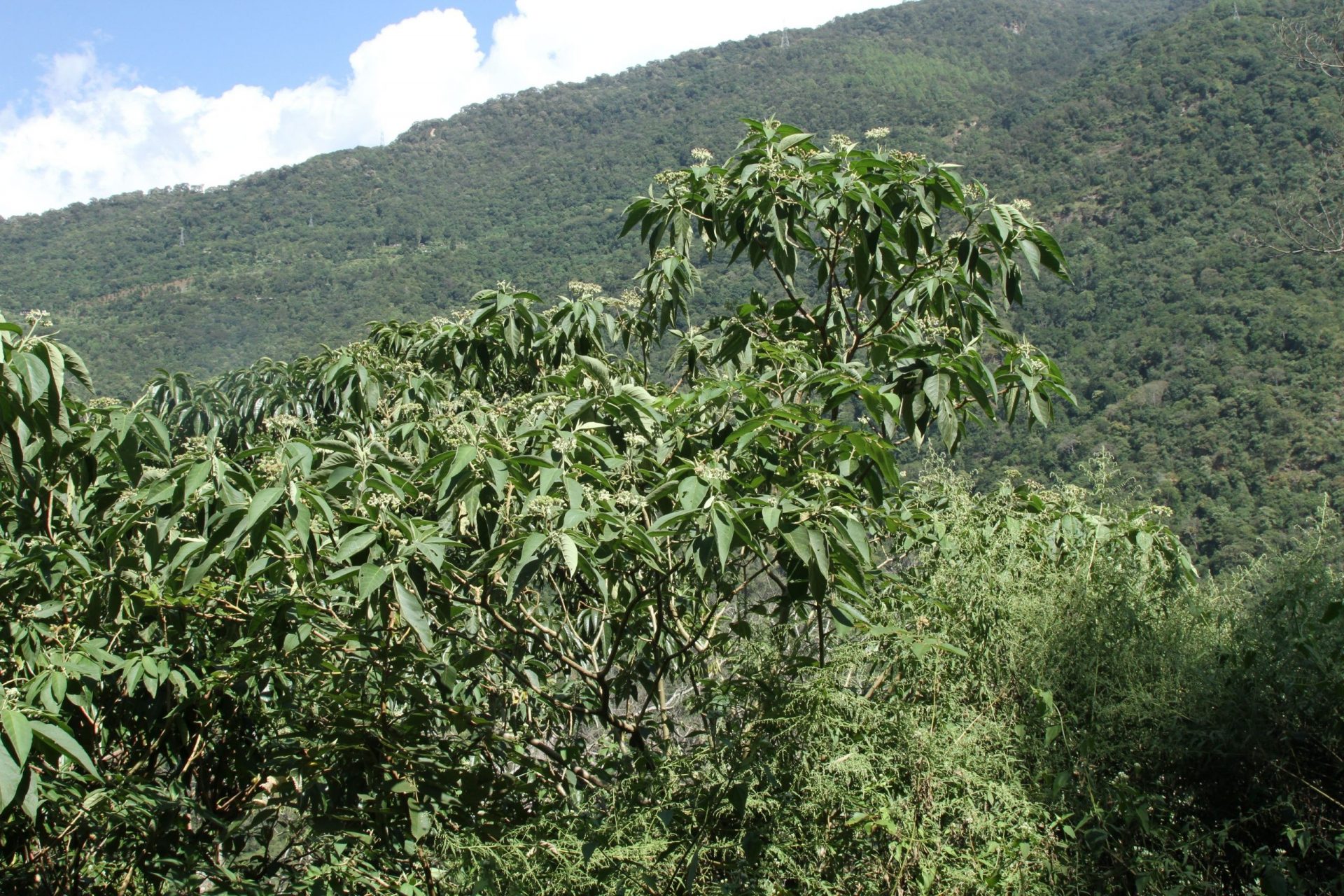
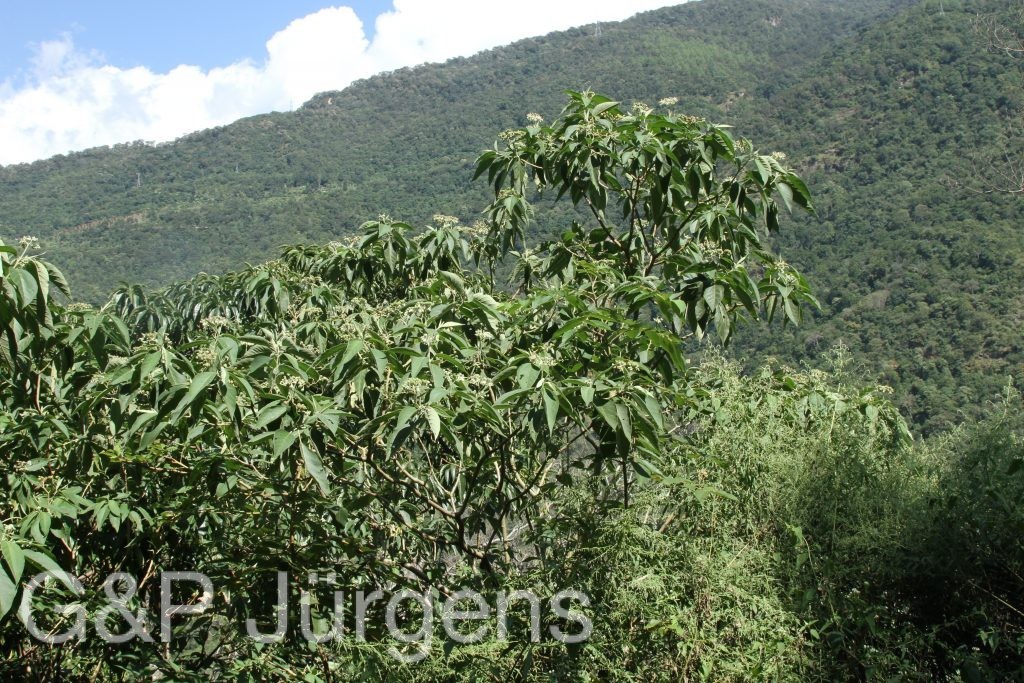
Solanum betaceum Cav. (the tamarillo or tree tomato, long known as Cyphomandra betacea) is a small tree native to the Andean region of South America but now cultivated and naturalised pantropically and in warm-temperate areas; GBIF records (about 4,314 occurrences) span Colombia, Ecuador, Peru, Bolivia, Argentina and Brazil in its native range, together with widespread introductions in Europe, Australasia, southern Africa and South Asia. In the Himalaya it is grown and locally escapes in warm mid-elevation valleys; the photographed plant is from Zhemgang in central Bhutan at about 1,650 m, fruiting in October in cultivation on subtropical hill slopes.
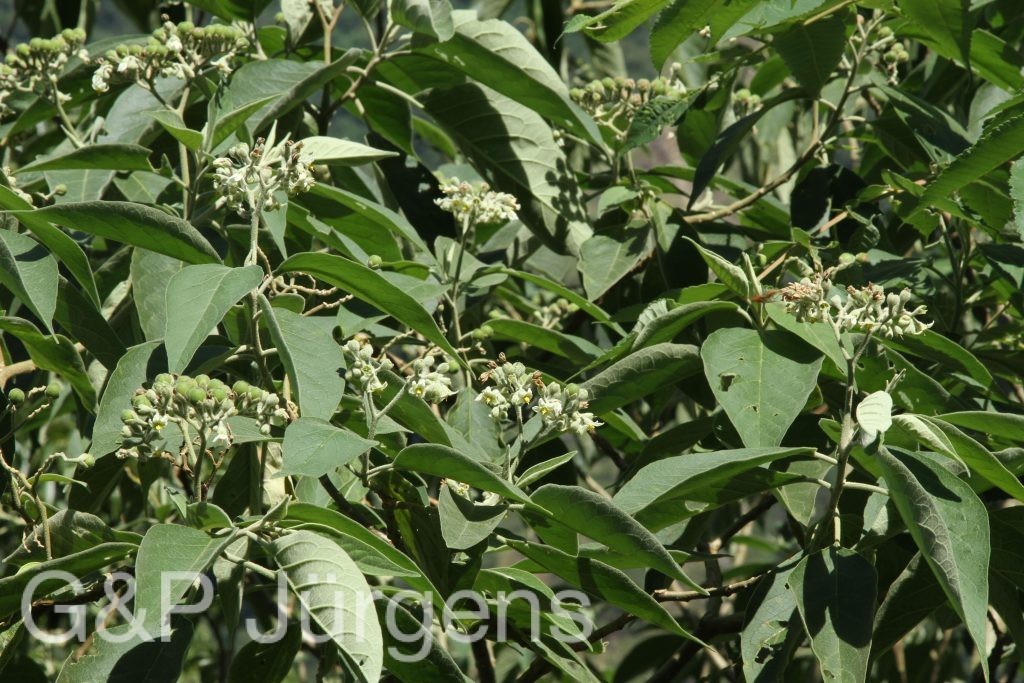
It is a fast-growing, soft-wooded shrub or small tree 2-5 m tall with a brittle, sparingly branched trunk. The leaves are large, alternate, ovate-cordate, softly pubescent and pungently scented, with entire margins and a long petiole. The flowers are borne in lateral cymes and are fragrant, with a rotate to shallowly campanulate pale pink to lilac corolla 1-2 cm across and the connivent yellow anthers typical of Solanum. The fruit is a smooth, egg-shaped berry 4-8 cm long, ripening orange-red to deep purplish, with two locules of small flat seeds embedded in tart, jelly-like pulp.
Molecular phylogenetics has subsumed the former genus Cyphomandra within Solanum, where these arborescent species form a distinct clade pollinated by fragrance-collecting bees. S. betaceum is economically important as the tamarillo, cultivated commercially in New Zealand, the Andes and elsewhere for its vitamin-rich fruit. As a domesticated and widely naturalised crop it is of no conservation concern; in some regions it behaves as a minor environmental weed.
Author: Cav. · Sources: POWO (Kew), GBIF, Flora of China, Solanaceae Source database, Bohs revision of Cyphomandra (Solanum), Flora of Bhutan, Solanaceae treatments in Andean floras