Tag:

Sikkim

Flowers of Sikkim — 350 species from the Sikkim Himalaya in northeast India, a compact yet botanically extraordinary region that climbs from subtropical valleys to the alpine zone beneath Kangchenjunga. Sikkim is a classic centre of Himalayan plant diversity, celebrated for its rhododendrons, primulas, orchids and gentians. Each entry provides a botanical description, distribution, habitat and flowering season with the original field photograph.

Cortiella hookeri

by GP Jürgens

(C.B.Clarke) C.Norman
Sikkim2003 243 P334
Sikkim Dzongri 4100m, August

Description

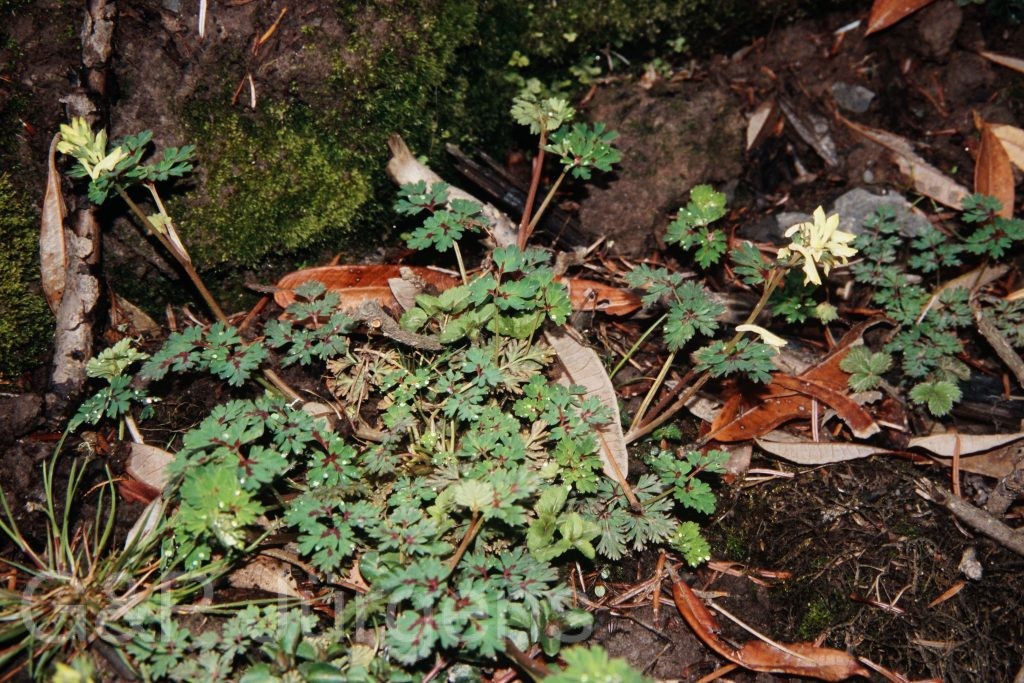
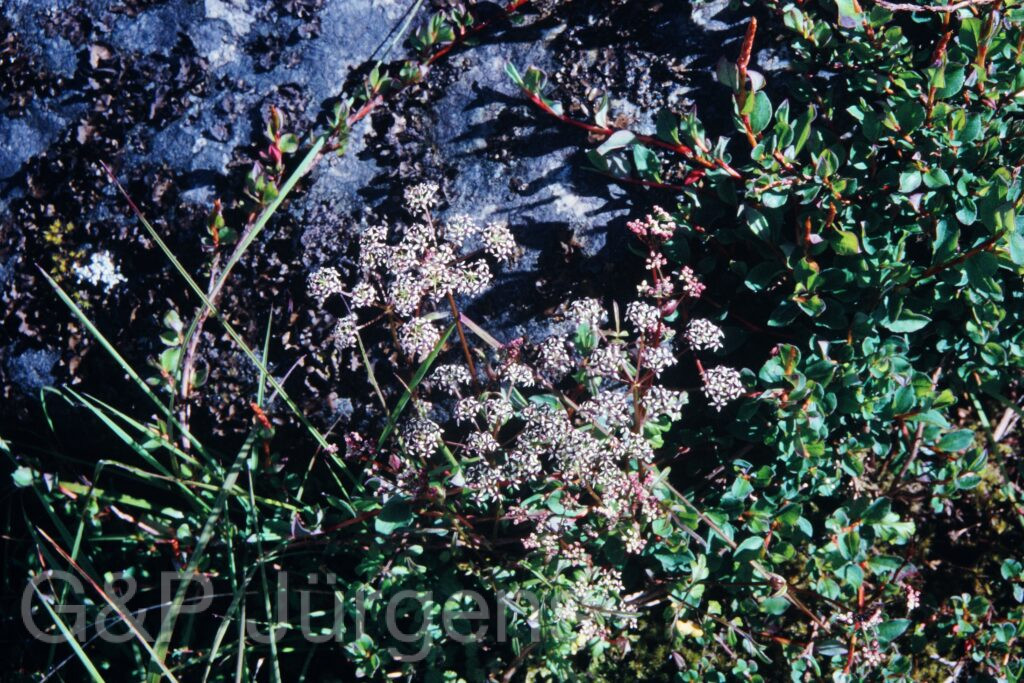
Cortiella hookeri is a cushion-forming umbellifer of the high Himalaya and Tibetan Plateau, distributed through Nepal, China, India and Bhutan; GBIF records 115 occurrences, concentrated in the alpine zone of this region. It grows on open stony slopes, gravelly alpine turf, screes and exposed ridges, typically above 4000 m where few flowering plants persist. The illustrated material was gathered in Sikkim at Dzongri at about 4100 m in August, a classic high-alpine station where the species flowers late in the short growing season among rock and short turf swept by monsoon cloud.

The plant is a low, compact perennial herb forming a flattened rosette or cushion from a stout, often woody taproot crowned by the fibrous remains of old leaf bases. Leaves are crowded, petiolate and pinnately to ternately dissected into small, firm, often crowded segments adapted to cold and wind. The inflorescence is a condensed, sessile or short-stalked compound umbel held close to the rosette, subtended by conspicuous bracts and bracteoles; the small flowers are white to pinkish, five-merous, with inflexed petals and an inferior ovary. The fruit is a dorsally somewhat compressed schizocarp splitting into two ribbed mericarps, the ribs and vittae providing key diagnostic characters.

Cortiella is a small genus of the Sino-Himalayan alpine flora, segregated within the carrot family on fruit anatomy and habit, with C. hookeri commemorating J. D. Hooker. POWO and GBIF accept the name. Its cushion habit and high-elevation niche exemplify the convergent growth forms that allow Apiaceae to colonise the harshest Tibetan alpine ground.

Author: (C.B.Clarke) C.Norman · Sources: POWO (Kew), GBIF, Flora of China, Flora of Bhutan, Annotated Checklist of the Flowering Plants of Nepal, Umbelliferae of the Sino-Himalaya (Apiaceae monograph)
(Prain) D.G. Long

Sikkim2011 347
Sikkim Lada-La 4000m, June
BhutanPG2011 653
Bhutan Thitha-Tso, 4300m June
BhutanPG2011 652 1
Bhutan Thitha-Tso, 4300m June

Description

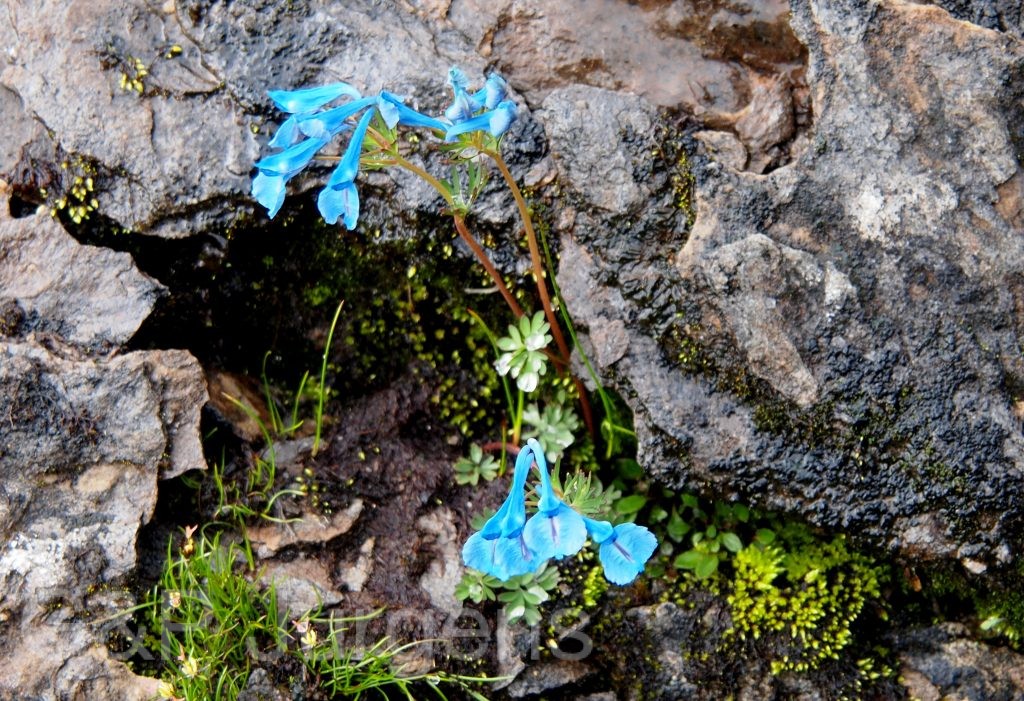
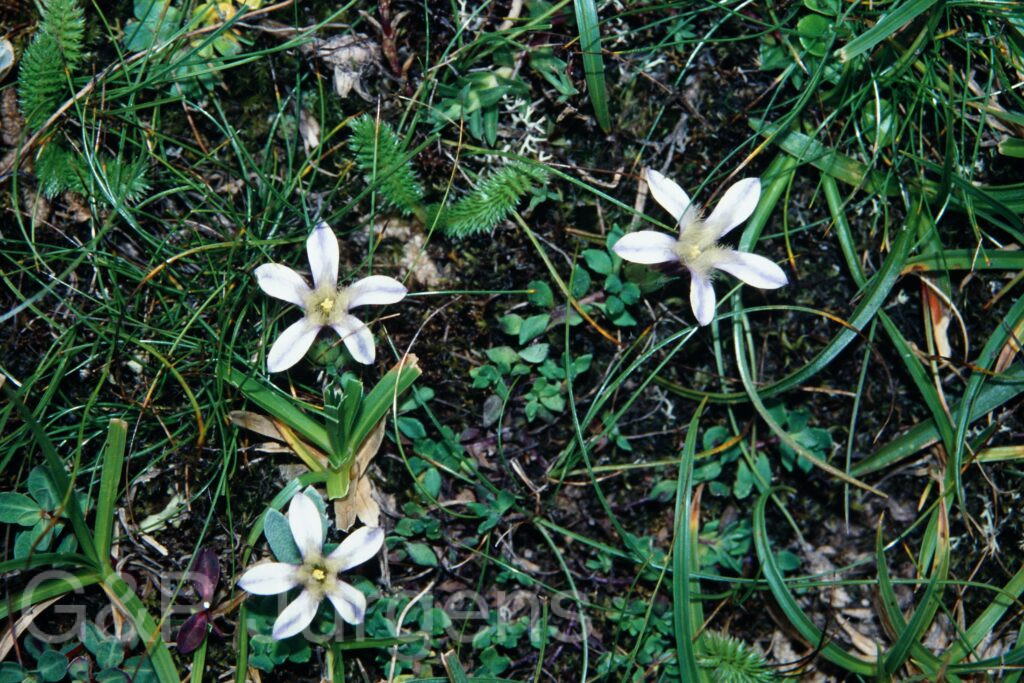
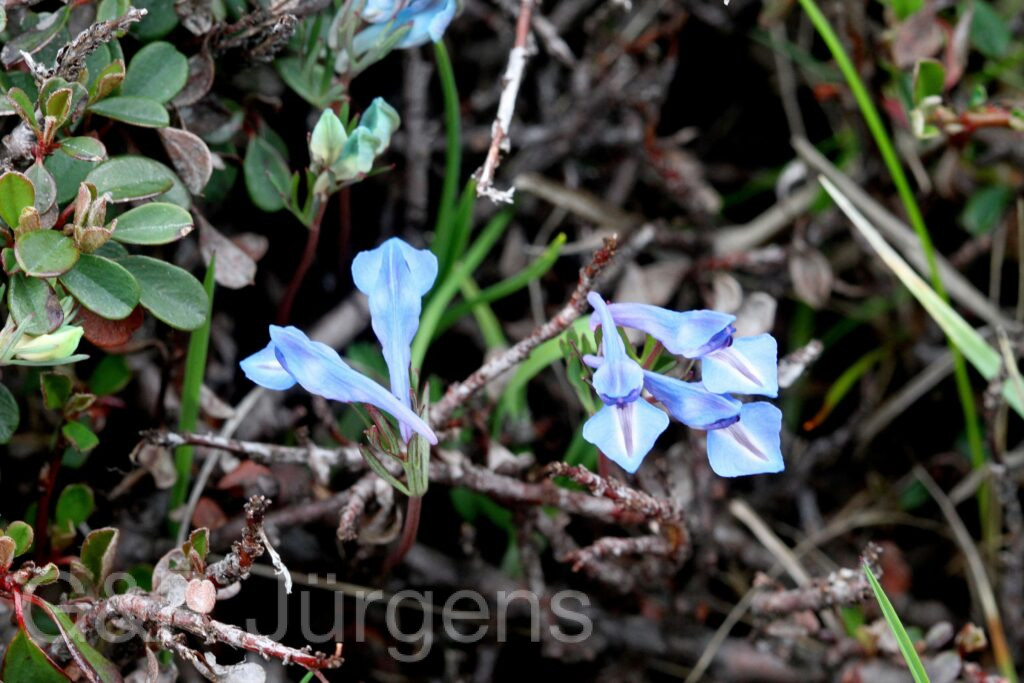
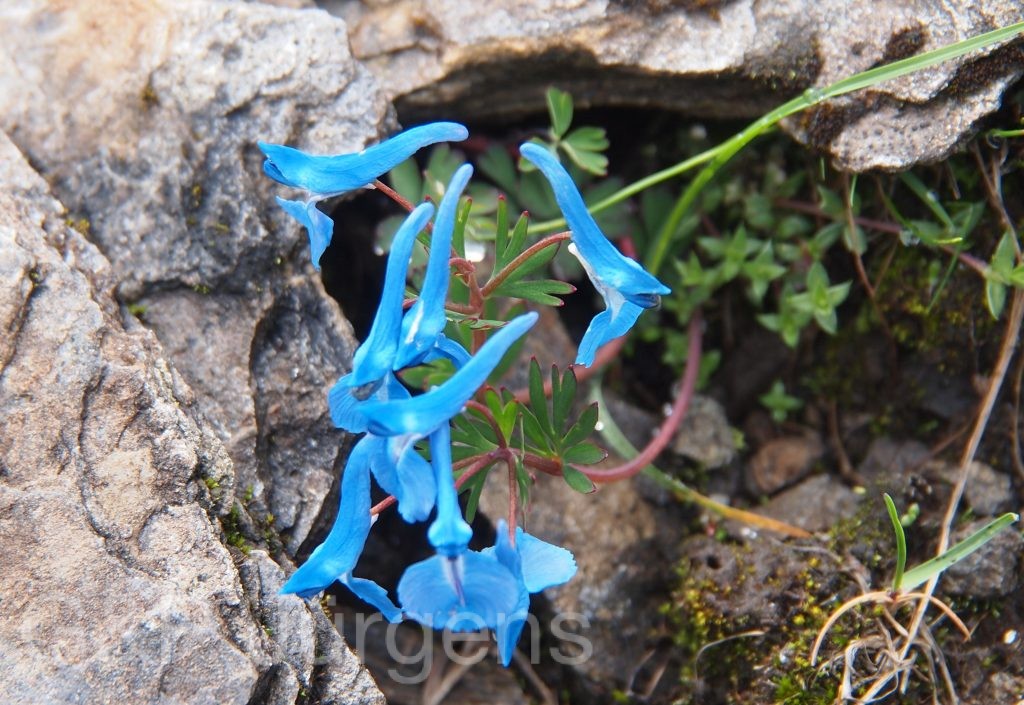
Corydalis ecristata is a small alpine herb of the higher Himalaya, distributed through Nepal, India, China and Bhutan (NP, IN, CN, BT), with about 58 recorded occurrences. It grows on open stony slopes, in screes, alpine turf, moraine and damp gravelly ground near snowmelt, characteristically in the high alpine to subnival zone, broadly between about 3800 and 4800 m. The gatherings cited come from Lada-La in Sikkim at 4000 m and from Thitha-Tso in Bhutan at 4300 m, both flowering in June, an elevation and early-summer season typical of the species, which colonises freshly exposed, well-drained debris in the brief window following the retreat of snow.

The plant is a small, glabrous, somewhat glaucous perennial herb arising from a slender tuber or rootstock. The leaves are mostly basal and finely divided, ternately to pinnately dissected into narrow ultimate segments, with long petioles. The flowers are few, borne in a short terminal raceme; each is strongly zygomorphic with four petals in two whorls, the outer upper petal prolonged backward into a nectar spur, the inner petals cohering over the stigma. As the epithet 'ecristata' indicates, the petals are crestless (lacking the dorsal wing or crest found in many congeners), the corolla blue to sky-blue, sometimes with darker markings. The fruit is a slender, dehiscent, few-seeded capsule.

Corydalis (subfamily Fumarioideae of the Papaveraceae, sometimes treated in Fumariaceae) attains exceptional diversity in the Sino-Himalayan alpine flora, where blue-flowered, tuberous species like C. ecristata are a conspicuous element of the high screes. The spurred, bilaterally symmetric flowers are pollinated chiefly by bumblebees seeking the nectar held in the spur. As a specialist of high-altitude scree and moraine with a fairly restricted range, it is dependent on stable alpine conditions, though it is not at present regarded as threatened.

Author: (Prain) D.G. Long · Sources: POWO (Kew), GBIF, Flora of Bhutan, Flora of China, The Genus Corydalis (Liden & Zetterlund monograph)

(Prain) Fedde

Bh2008 379 G589
Bhutan Gogona 3200m, May

Description

Corydalis sikkimensis is an Eastern Himalayan endemic distributed across the high mountains of Sikkim and adjacent India, eastern Nepal, Bhutan and southern Xizang (China), with GBIF documenting 18 georeferenced collections from these four countries (IN, NP, BT, CN). It occupies the subalpine to lower alpine belt, typically between 3000 and 4000 m, growing in moist shaded conifer and Rhododendron forest margins, on humus-rich banks, beside snow-melt rivulets and among damp rocks. The photographed plant from Gogona in central Bhutan at about 3200 m in May illustrates its phenology, flowering with the early summer monsoon when soils are saturated and light is filtered through the forest canopy.

It is a slender, glabrous, glaucous perennial herb arising from a small fibrous-rooted or shortly tuberous rootstock. The erect to ascending stems bear thin, several-times ternately or pinnately divided leaves, the ultimate segments ovate to obovate and often shallowly lobed, the lower leaves long-petiolate. Flowers are borne in lax terminal racemes subtended by small entire or toothed bracts; each zygomorphic flower comprises four petals, the upper petal produced into a slender, somewhat curved or decurved spur, the inner petals connate at the apex and crested. The corolla is typically blue to purplish-blue. The fruit is a narrow dehiscent capsule containing small black shining seeds.

A member of the large and taxonomically intricate genus Corydalis (Papaveraceae, subfamily Fumarioideae), the species belongs to the predominantly Sino-Himalayan radiation centred on the eastern Himalaya and Hengduan Shan. Like many congeners it is pollinated by long-tongued bumblebees attracted to the spurred corolla, and its alkaloid-rich tissues are characteristic of the family. Though restricted in range, it occurs in remote, little-disturbed high-elevation habitats and is not presently regarded as threatened, but its narrow endemism makes it sensitive to climate-driven shifts in the alpine zone.

Author: (Prain) Fedde · Sources: POWO (Kew), GBIF, Flora of China Vol. 7, Flora of Bhutan Vol. 1, Flora of Nepal, Monograph of the genus Corydalis (Lidén & Zetterlund)

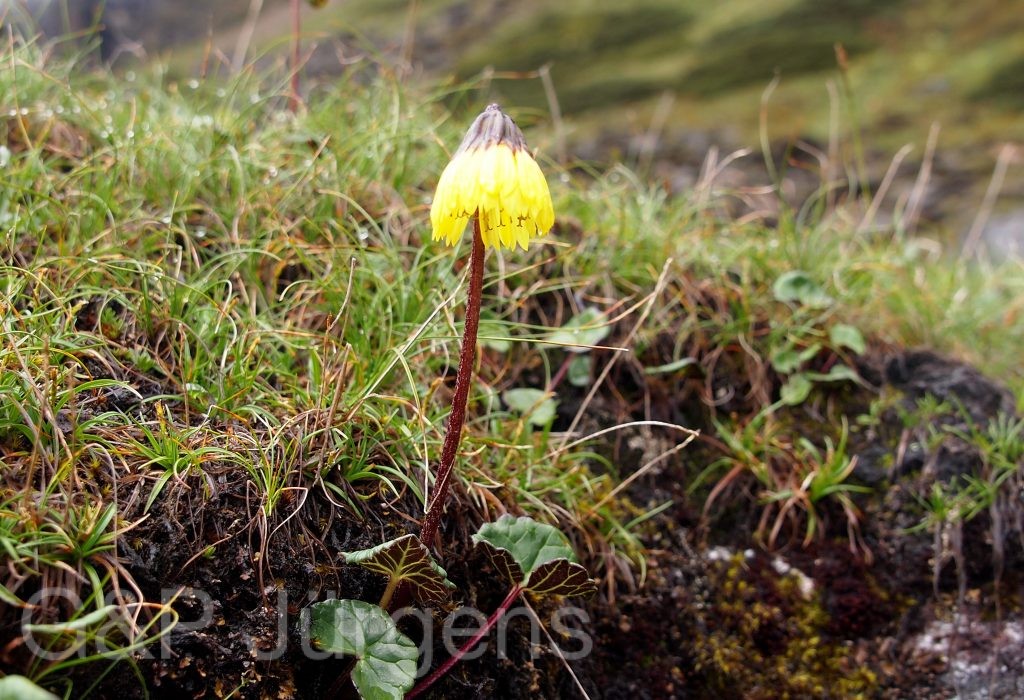
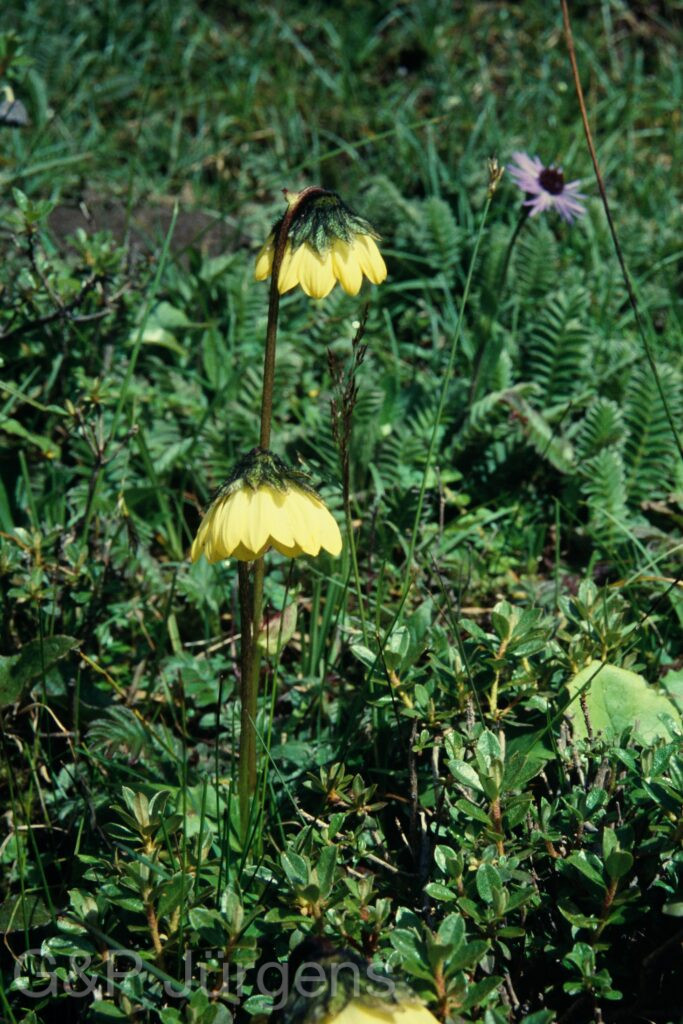
C.B.Clarke

Sikkim2003 312 P442
Sikkim Saniti-Lake 4300m August

Description

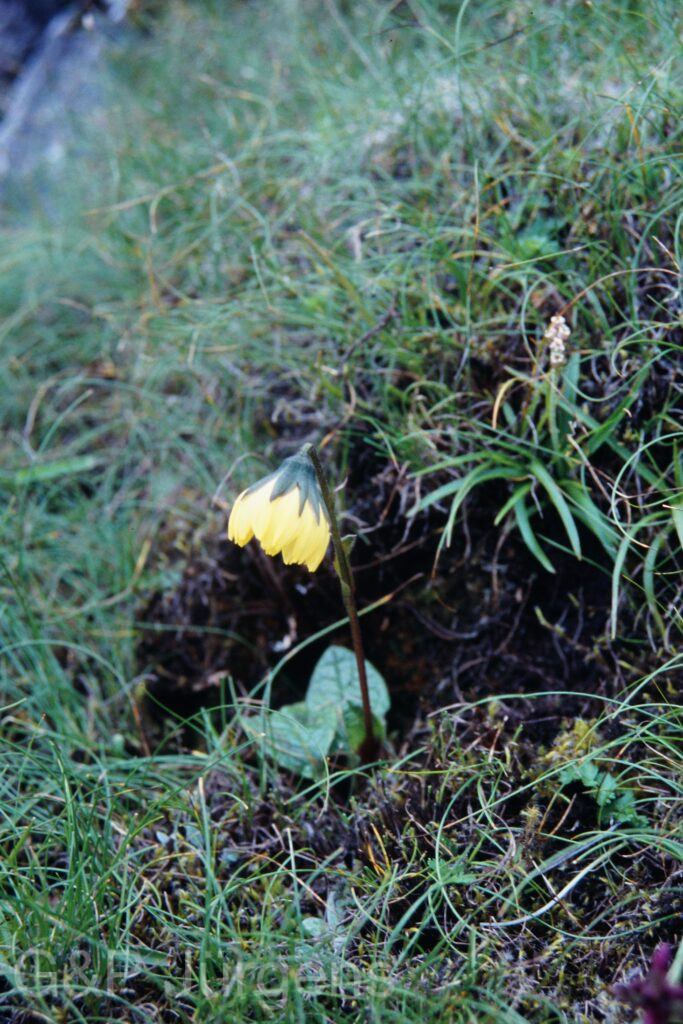
Cremanthodium oblongatum is an alpine herb of the eastern Himalaya and southern Tibetan Plateau, recorded from Nepal, China (Xizang), India and Bhutan, with 214 occurrences in GBIF (the German points reflecting cultivated or herbarium material). It grows on open alpine meadows, screes, rocky slopes and moist turf at high elevation, generally between 3600 and 5000 m. The plant photographed near Saniti Lake in Sikkim at about 4300 m in August is typical of the cold, humid, well-irrigated alpine grassland it occupies during the brief monsoon-driven flowering period high above the treeline.

The species is a perennial herb arising from a short rhizome with fibrous roots. The mostly basal leaves are long-petiolate with oblong to elliptic, entire or shallowly toothed blades, somewhat fleshy and often with a whitish or purplish cast. The flowering stem is erect, simple and bears one or few solitary, nodding (pendent) capitula, the nodding habit being a defining genus character. Each head has a hemispherical involucre of subequal, often dark purple-haired phyllaries, an outer ray of yellow ligulate female florets and a central disc of yellow tubular bisexual florets. The fruit is a glabrous cylindrical achene crowned by a pappus of fine whitish bristles.

Cremanthodium (tribe Senecioneae) is a Sino-Himalayan alpine genus closely allied to Ligularia and Parasenecio, distinguished by its characteristically nodding heads, an adaptation thought to shelter the florets from rain, cold and ultraviolet exposure at high altitude. Pollination is by alpine bumblebees and flies, and the plumed achenes are wind-dispersed. The species is locally frequent within its narrow alpine band and is not formally assessed as threatened, but its restriction to cold high-elevation habitats makes it potentially vulnerable to climate-driven warming and the upslope compression of the alpine zone.

Author: C.B.Clarke · Sources: POWO (Kew), GBIF, Flora of China, Flora of Bhutan, Good Revision of the Genus Cremanthodium

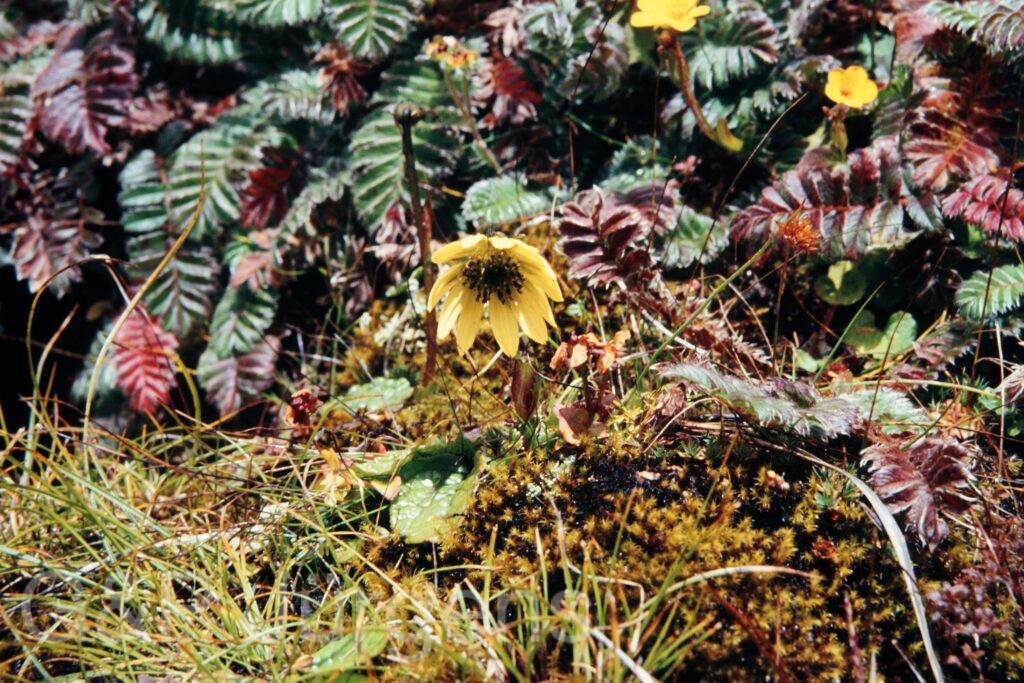
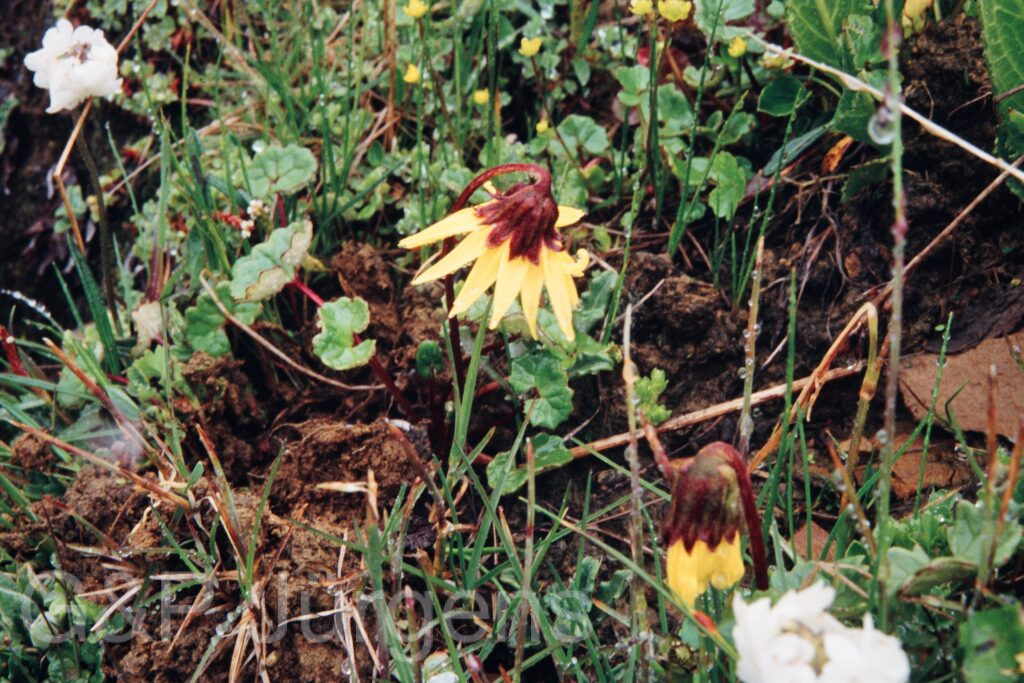
Benth.

Sikkim2003 335 G472
Sikkim Saniti-Lake 4100m August

Description

Cremanthodium palmatum is an alpine herb of the eastern Himalaya and adjacent Sino-Himalayan mountains, recorded in GBIF (about 330 occurrences) from China, India, Bhutan, Myanmar, Nepal and Taiwan. It inhabits moist alpine meadows, streamsides, seepage slopes and rocky turf, generally between 3500 and 4500 m, where late-summer monsoon moisture sustains lush herbaceous growth. The photographed population at Saniti Lake in Sikkim at 4100 m in August typifies its preferred high-elevation, snowmelt-fed habitat, flowering as the brief alpine summer reaches its peak.

It is a perennial with a short rhizome and fibrous roots, producing erect, somewhat glandular-hairy stems. The basal leaves are long-petiolate and palmately lobed or divided, the blade reniform to orbicular in outline with toothed segments, recalling the foliage of a buttercup; the stem leaves are reduced and sessile upwards. The capitula are usually solitary and nodding, characteristic of the genus, with broad campanulate involucres of subequal, often dark-margined bracts. The ray florets are yellow, ligulate and spreading, surrounding numerous yellow tubular disc florets; the fruit is a cylindrical, glabrous achene crowned by a pappus of fine white bristles.

Cremanthodium belongs to tribe Senecioneae of the Asteraceae and is closely allied to Ligularia and Parasenecio, distinguished by its predominantly nodding, solitary alpine capitula. The genus is centred on the Hengduan Shan and eastern Himalaya, where rapid diversification has accompanied uplift and glacial cycling, making C. palmatum part of a characteristic high-alpine endemic radiation. Restricted to specialised cold, wet habitats but locally frequent across its range, it is not regarded as globally threatened, though such alpine specialists are sensitive to climatic warming.

Author: Benth. · Sources: POWO (Kew), GBIF, Flora of China, Flora of Bhutan, Annotated Checklist of the Flowering Plants of Nepal, Good revision of Cremanthodium

(DC.) Benth. 

BhutanPG2011 282
Bhutan Jule-Tso, 4100m June
Sikkim2003 110 P149
Sikkim Dzongri 3900m August
Nepal 95 161 P262 ergebnis
Nepal Rupien La 3900m October
Nepal 99 619 ergebnis
West-Nepal Kagmara-La 4300m, July

Description

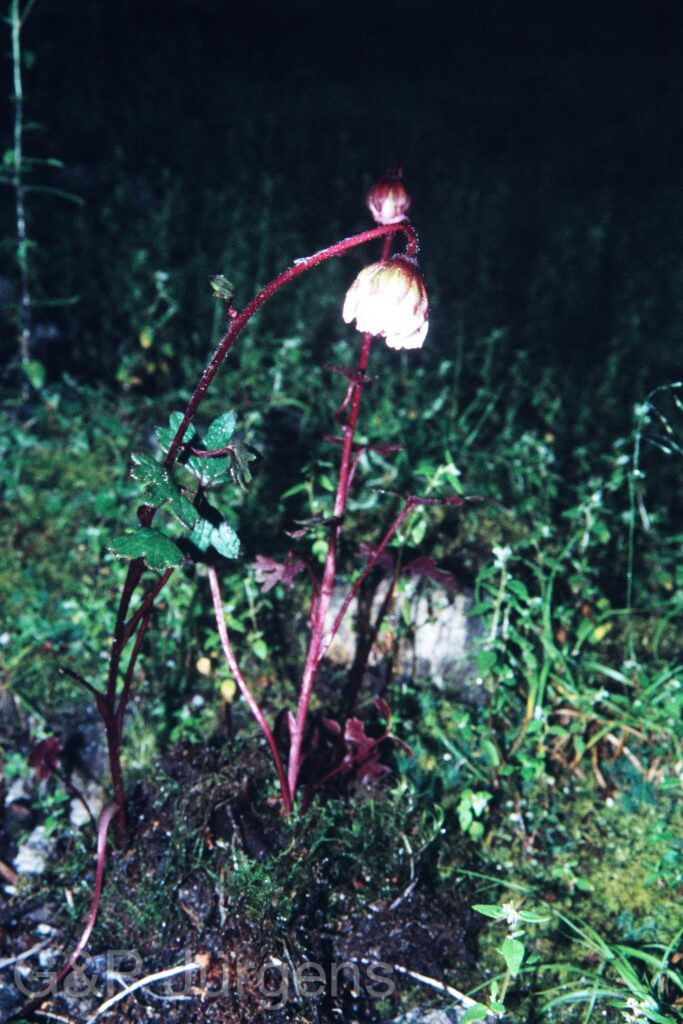
Cremanthodium reniforme is a high-alpine herb of the central and eastern Himalaya, distributed through Nepal, India (Sikkim), Bhutan and adjacent China; the 294 occurrences map a continuous Himalayan arc, with outlying records in New Zealand reflecting cultivated material. It grows on moist alpine meadows, rocky slopes, screes and streambanks, characteristically between about 3500 and 4800 m. The collated localities, from Bhutan's Jule-Tso at 4100 m and Sikkim's Dzongri at 3900 m to the Rupien La and the Kagmara-La in west Nepal at 3900–4300 m, span June to October, illustrating its strictly high-elevation distribution and protracted summer flowering in the snow-melt zone.

The species is a perennial herb with a short rhizome bearing fleshy roots and erect, often purplish, arachnoid scapose stems. The basal leaves are conspicuous, long-petiolate and reniform to cordate-orbicular, with a palmately veined, dentate blade; the cauline leaves are few and reduced. The capitula are large, solitary and nodding, radiate, with an involucre of blackish-hairy phyllaries. The ray florets are female and golden-yellow, the disc florets tubular and yellow. The cypselae are oblong and glabrous, bearing a pappus of soft, brownish or whitish barbellate bristles roughly equalling the corolla.

Cremanthodium is a Sino-Himalayan genus of about seventy species centred on the Hengduan Shan and Himalaya, segregated from Ligularia chiefly by its solitary nodding capitula, an adaptation that shields pollen and developing achenes from rain and intense alpine radiation. The reniform basal leaves make C. reniforme distinctive among its congeners. Restricted to high alpine habitats yet wide-ranging, it is not currently regarded as threatened, though such species are sensitive to climatic warming and upslope habitat compression.

Author: (DC.) Benth. · Sources: POWO (Kew), GBIF, Flora of China Vol. 20-21, Flora of Bhutan, Flora of Nepal, Good Revision of Cremanthodium

K.K.Shrestha

Sikkim2003 288 P391
Sikkim Saniti-Lake 4250m August

Description

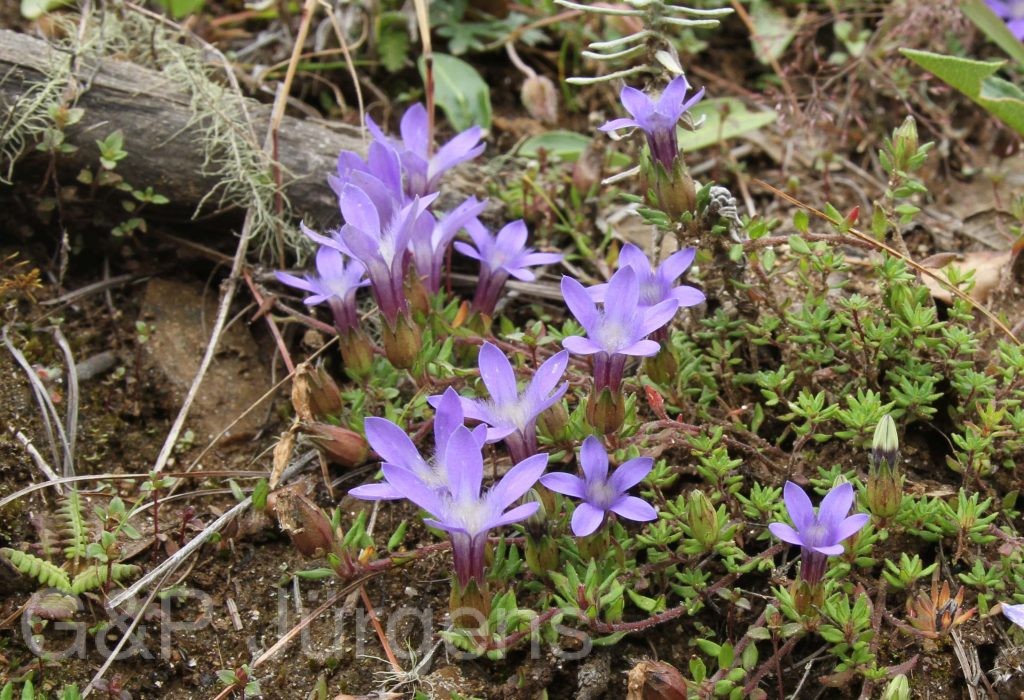
Cyananthus himalaicus is a high-alpine perennial known from the central and eastern Himalaya, with GBIF records concentrated in Nepal (gbif_countries: NP) and only seven documented occurrences, indicating a narrowly recorded and infrequently collected taxon. Like its congeners it inhabits open alpine turf, rocky slopes, screes and the margins of glacial meltwater, growing well above treeline in the cool, short-season environments of the inner ranges. The illustrated material was gathered near Saniti Lake in Sikkim at about 4250 m in August, when the late-summer flush of alpine flowering coincides with the waning monsoon, a habitat typical for the genus along the moist Himalayan crest.

The plant forms low, often mat-like or loosely tufted growth from a slender woody rootstock, with prostrate to ascending stems bearing small, alternate, entire to shallowly toothed leaves that are frequently revolute and somewhat fleshy. The flowers are solitary and terminal, with a campanulate to tubular corolla that is typically blue to violet-blue, five-lobed, and bearded within the throat by a ring of hairs, a hallmark of Cyananthus. The calyx is tubular and densely hairy, and the fruit is a capsule enclosing numerous small seeds.

Cyananthus is a Sino-Himalayan genus of the bellflower family centred on the alpine zone, and C. himalaicus belongs to the assemblage of small-flowered, prostrate species adapted to exposed, well-drained high-mountain sites. Its limited occurrence data reflect under-collection in remote terrain rather than necessarily a restricted range; nonetheless its apparent rarity in records argues for attention to its alpine habitats, which are sensitive to grazing pressure and climatic warming.

Author: K.K.Shrestha · Sources: POWO (Kew), GBIF, Flora of Nepal, Flora of China, Annotated Checklist of the Flowering Plants of Nepal, Revision of the genus Cyananthus (Campanulaceae)

Hook.f. & Thomson

Bhutan2012 84
Bhutan Shele-La, 4100m September
Bhutan2012 87
Bhutan Shele-La, 4100m September
Sikkim2003 136 G184
Sikkim Dzongri 3950m, August

Description

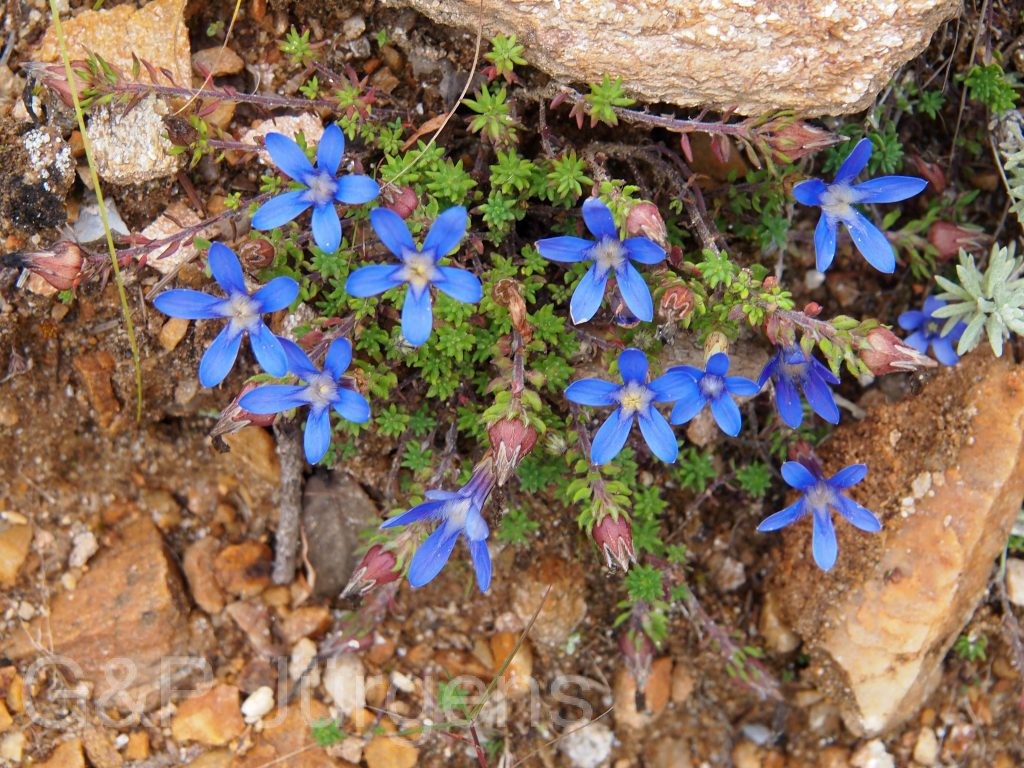
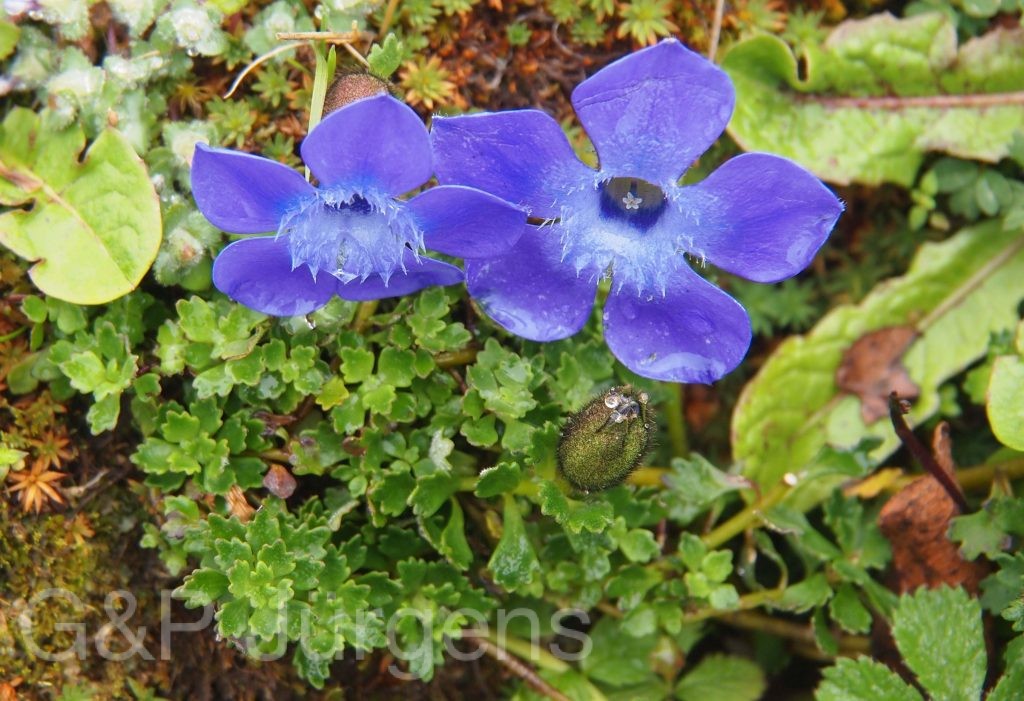
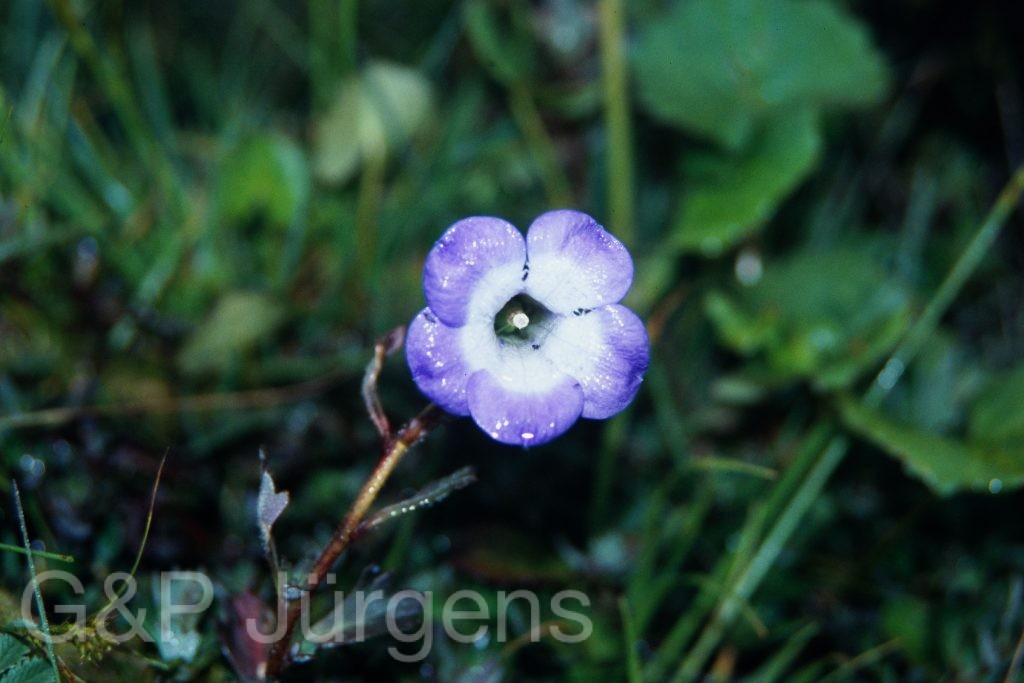
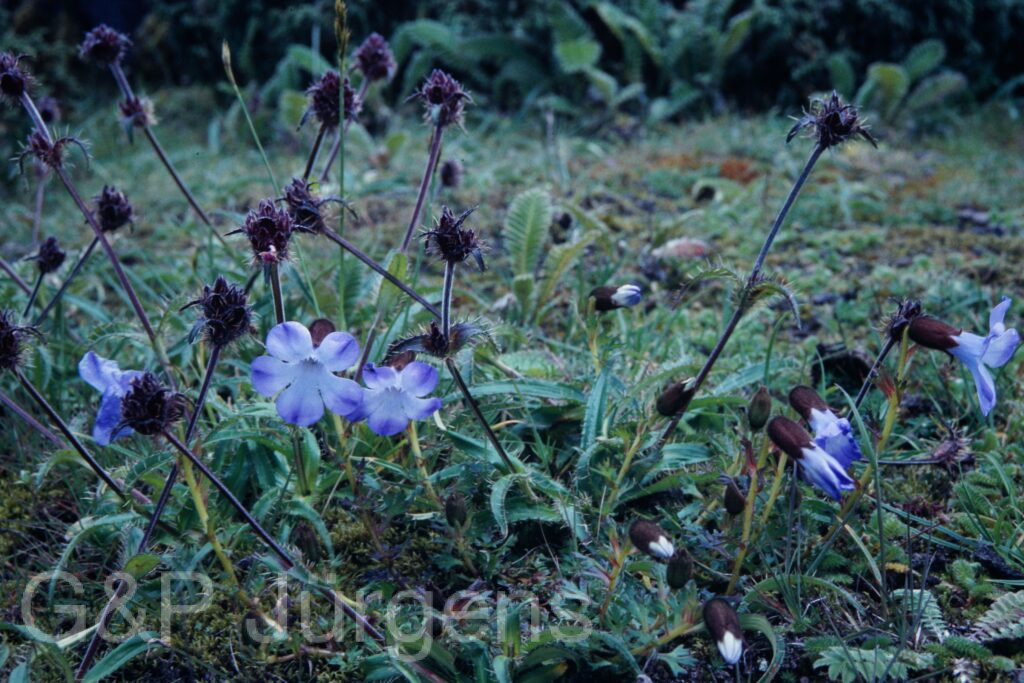
Cyananthus incanus is a low alpine perennial of the eastern Himalaya and adjacent Tibet, recorded from China, Nepal, India, Bhutan and Myanmar, with about 777 occurrences in GBIF. It grows on open alpine turf, stony slopes, screes and the margins of dwarf rhododendron scrub, generally between 3500 and 4500 m, in well-drained sites of the upper alpine zone. The photographs from the Shele La in Bhutan at about 4100 m in September and from Dzongri in Sikkim at about 3950 m in August show the plant flowering through the late-monsoon and early-autumn season typical of the high eastern Himalaya.

The plant is a mat-forming or loosely tufted perennial with a stout, woody rootstock from which radiate slender, prostrate to ascending stems. The small leaves are alternate, ovate to obovate, entire or slightly toothed, and clothed in greyish hairs, the indumentum reflected in the epithet incanus. The flowers are solitary and terminal, comparatively large for the plant; the calyx is densely hairy and tubular, and the broadly bell-shaped to funnelform corolla is blue to purplish-blue with five spreading lobes and a conspicuous tuft of hairs (a beard) closing the throat, a hallmark of the genus. The fruit is a capsule splitting from the apex to release numerous small seeds.

Cyananthus is a small Sino-Himalayan genus of the Campanulaceae distinguished from Campanula by its terminal solitary flowers, a deeply lobed corolla and the bearded throat. The cushion or mat habit and woolly leaves are typical adaptations to the cold, wind-exposed and sun-drenched conditions of the alpine zone. Several species, including C. incanus, are prized in alpine and rock gardens for their intense blue flowers. Locally frequent across its range, it is not regarded as threatened.

Author: Hook.f. & Thomson · Sources: POWO (Kew), GBIF, Flora of China, Flora of Bhutan, Annotated Checklist of the Flowering Plants of Nepal, Lammers' classification of the Campanulaceae

Wall. ex Benth.

Bhutan2012 75
Bhutan Shele-La, 4100m September
Sikkim2003 114 G154
Sikkim below Dzongri 4000m 08.2003
Sikkim2003 130 P176
Sikkim Dzongri 4100m 08.2003

Description

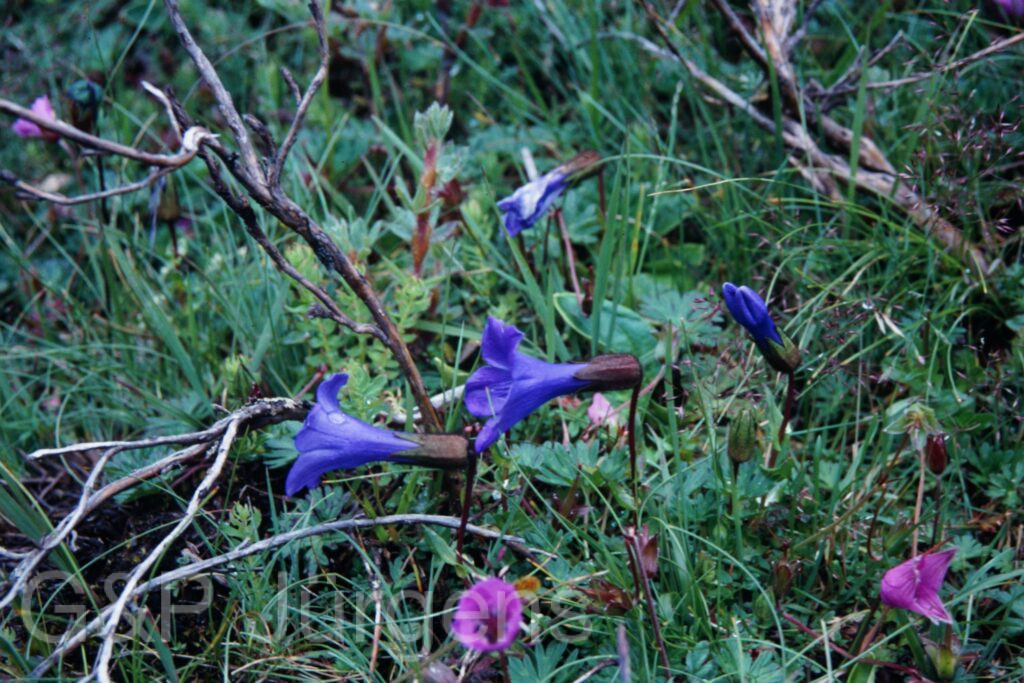
Cyananthus lobatus is a well-known Himalayan trailing bellflower distributed from Nepal through India, Bhutan and southern Tibet (China) into Myanmar, with the genus's comparatively abundant 515 GBIF records (additional European and North American codes reflect its popularity in cultivation). It grows in the alpine and upper subalpine zones on open grassy slopes, rock ledges, screes and moist turf, broadly between about 3000 and 4500 m. The plants illustrated, from the Shele-La in Bhutan at around 4100 m in September and from Dzongri in Sikkim near 4000 m in August, occupy this late-summer to autumn alpine habitat.

It is a low, mat-forming or sprawling perennial herb arising from a stout rootstock, with prostrate to ascending, often reddish stems bearing small, alternate, obovate leaves that are usually lobed or toothed and somewhat fleshy. The flowers are solitary and terminal, large and showy for the plant's size; the broadly funnelform to bowl-shaped corolla is deep blue to violet-blue, five-lobed, and conspicuously bearded with white hairs in the throat, subtended by a swollen, hairy calyx tube. The fruit is a capsule enclosed in the persistent calyx, releasing numerous small seeds.

Cyananthus is a Sino-Himalayan genus distinguished from other Campanulaceae by its terminal solitary flowers, throat beard and superior ovary, and C. lobatus is its most familiar species, long valued as a choice late-flowering rock-garden plant, which explains its wide ex-situ record base. Its prostrate, cushiony habit suits exposed high-altitude ground. The species is widespread and locally common across the Himalaya and is not considered threatened, although alpine grazing and warming-driven upslope vegetation shifts could affect individual populations.

Author: Wall. ex Benth. · Sources: POWO (Kew), GBIF, Flora of Bhutan, Flora of China, Annotated Checklist of the Flowering Plants of Nepal, Lammers Revision of Campanulaceae

(Nannf.) K.K.Shrestha

Sikkim2003 127 G173
Sikkim Dzongri 4000
Sikkim2003 128 G174
Sikkim Dzongri 4000m 08.2003

Description

Cyananthus macrocalyx subsp. spathulifolius is a high-alpine perennial of the eastern and central Himalaya and adjacent China, recorded from China, Nepal, Bhutan and India, with GBIF documenting about 56 occurrences for the taxon. It grows on open alpine turf, rocky slopes, stabilised scree and moraine in the alpine zone, commonly between 3500 and 4500 m. The photographed plant was found at Dzongri in Sikkim at about 4000 m in August, flowering late in the monsoon summer when its broad blue corollas appear among low alpine herbage on these exposed high ridges.

The plant is a low, somewhat tufted to prostrate perennial with slender, ascending or trailing stems arising from a stout rootstock and exuding milky latex when broken. The leaves are small, alternate and crowded, with spathulate to obovate blades (the source of the subspecific epithet), the margins entire to few-toothed. The flowers are solitary and terminal, comparatively large for the plant; the calyx is conspicuously inflated and large, as the specific epithet "macrocalyx" indicates, often hairy. The corolla is broadly campanulate, blue to purplish-blue, with five spreading lobes and a bearded throat; there are five stamens and an inferior to half-inferior ovary, maturing into a capsule.

The taxon belongs to Cyananthus (Campanulaceae), a Sino-Himalayan genus distinguished from Campanula by its hypogynous nectary disc and large calyx. Recombined by K.K. Shrestha, this subspecies is a regional variant of the polymorphic C. macrocalyx complex. A specialist of high, well-drained alpine habitats, it is naturally localised but not known to be threatened, though sensitive to grazing and warming-driven contraction of the alpine zone.

Author: (Nannf.) K.K.Shrestha · Sources: POWO (Kew), GBIF, Flora of China, Flora of Nepal, Flora of Bhutan, revision of Cyananthus (Shrestha)