Edgew. & Hook. f.
Description
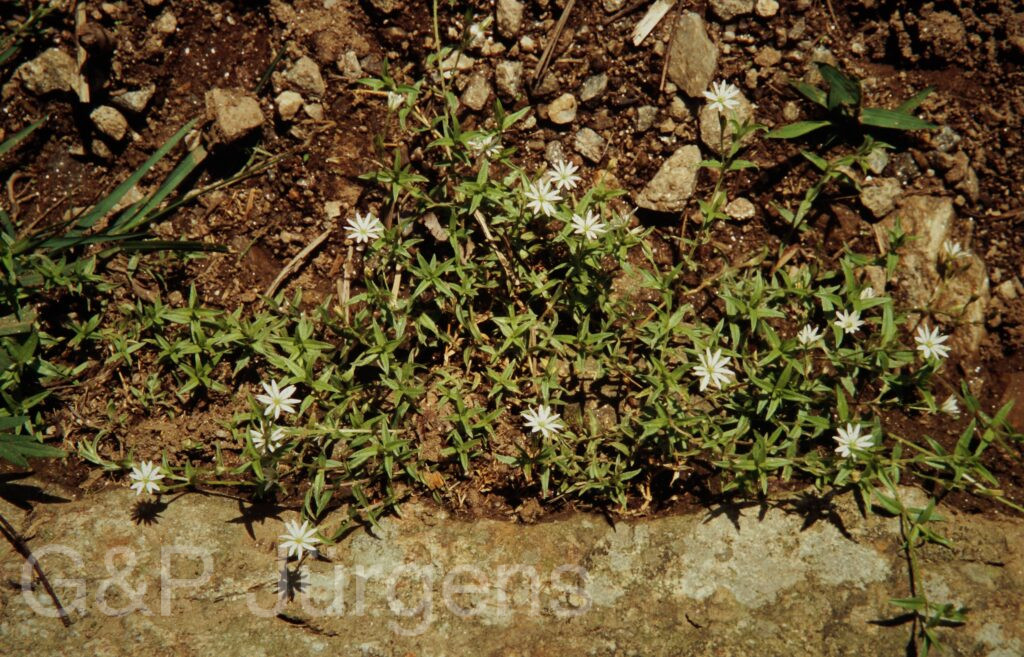
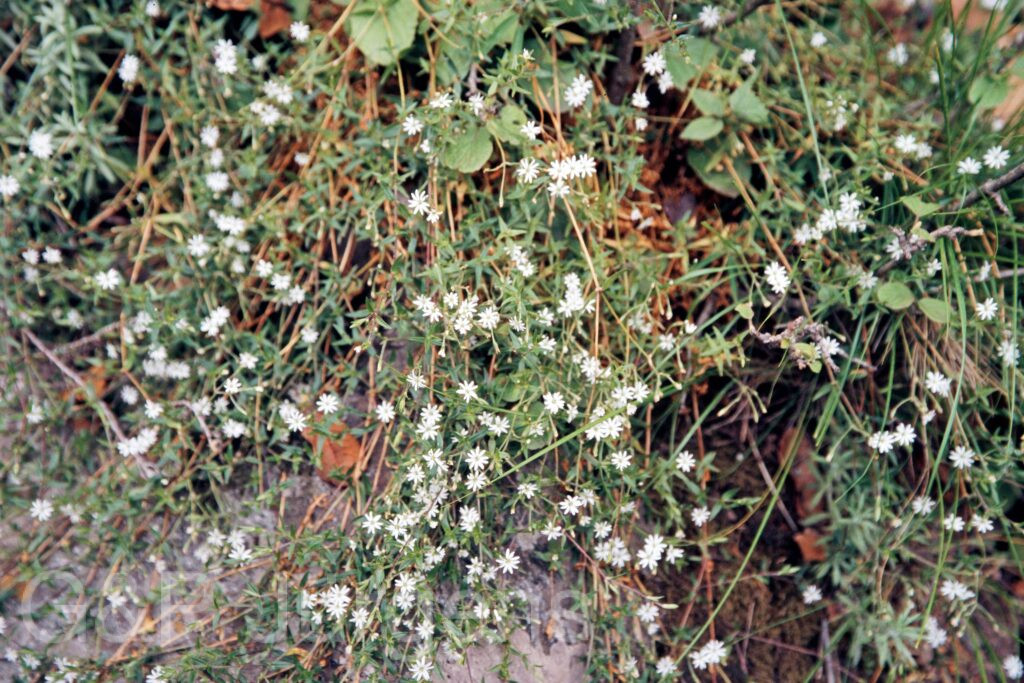
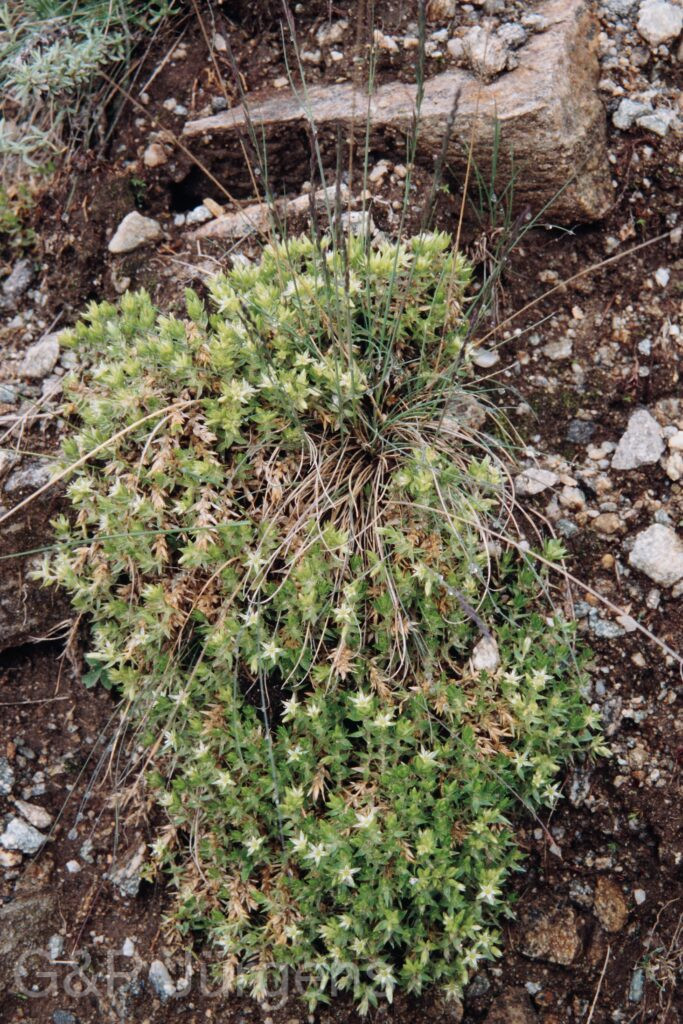
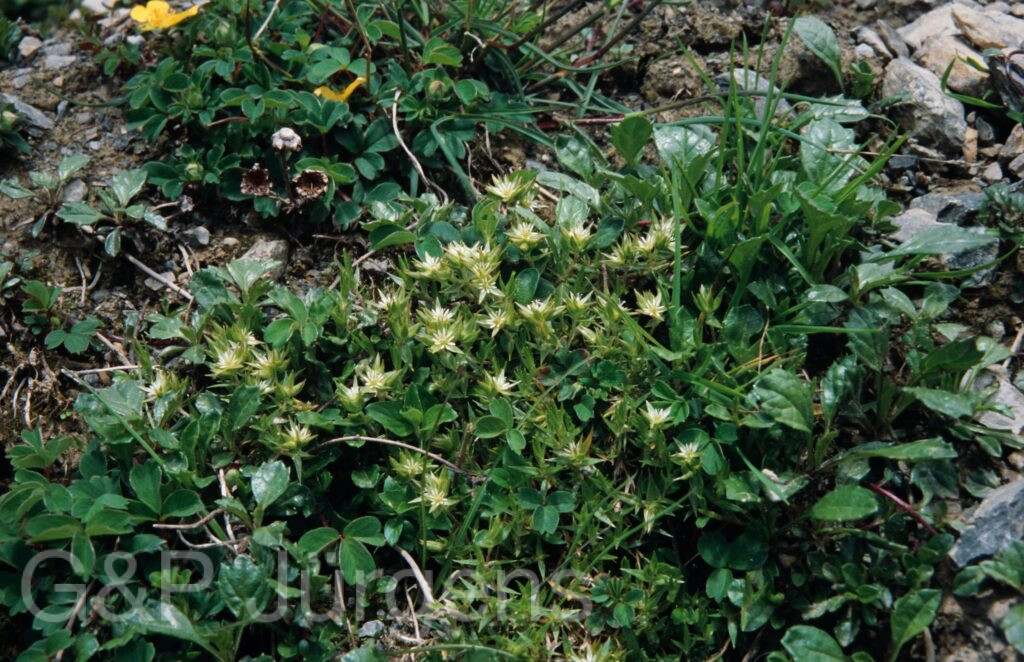
Stellaria decumbens var. pulvinata is a diminutive alpine chickweed of the Himalaya and adjoining Tibetan plateau, recorded by GBIF from China, India, Nepal and Bhutan with around 104 occurrences. The variety occupies cold, exposed alpine and subnival terrain, where it grows in rock crevices, on stabilised scree and among cushion vegetation at very high elevations. It was photographed in West Nepal in the Churta-Khola at 4100 m in June and near the Baga-La-Phedi at 4500 m in July, habitats typical of its preference for open, gravelly ground close to the upper limit of vascular plant life.
As its epithet pulvinata implies, this variety forms dense, hard, compact cushions, more condensed than the laxer typical S. decumbens. The slender, much-branched stems are crowded and decumbent, bearing small, sessile, narrowly lanceolate to ovate leaves arranged in opposite pairs, often somewhat fleshy and ciliate at the margins. The minute flowers are solitary or few, with five free, lanceolate, acuminate sepals and five white petals that are deeply bifid for roughly half their length, the characteristic forked petals of Stellaria; stamens are typically ten and the styles three. The fruit is a small ovoid capsule dehiscing by six valves and releasing several reniform, finely tuberculate seeds.
GBIF accepts the variety. The cushion habit represents convergent adaptation to wind desiccation, frost and a short season shared by many unrelated high-Himalayan plants. Within Caryophyllaceae the species belongs to a complex of dwarf alpine Stellaria whose infraspecific limits remain debated. No conservation concern attaches to this widespread, naturally cryptic high-altitude taxon.
Author: Edgew. & Hook. f. · Sources: POWO (Kew), GBIF, Flora of Nepal, Flora of China, monograph of Himalayan Caryophyllaceae