
Nees
Description
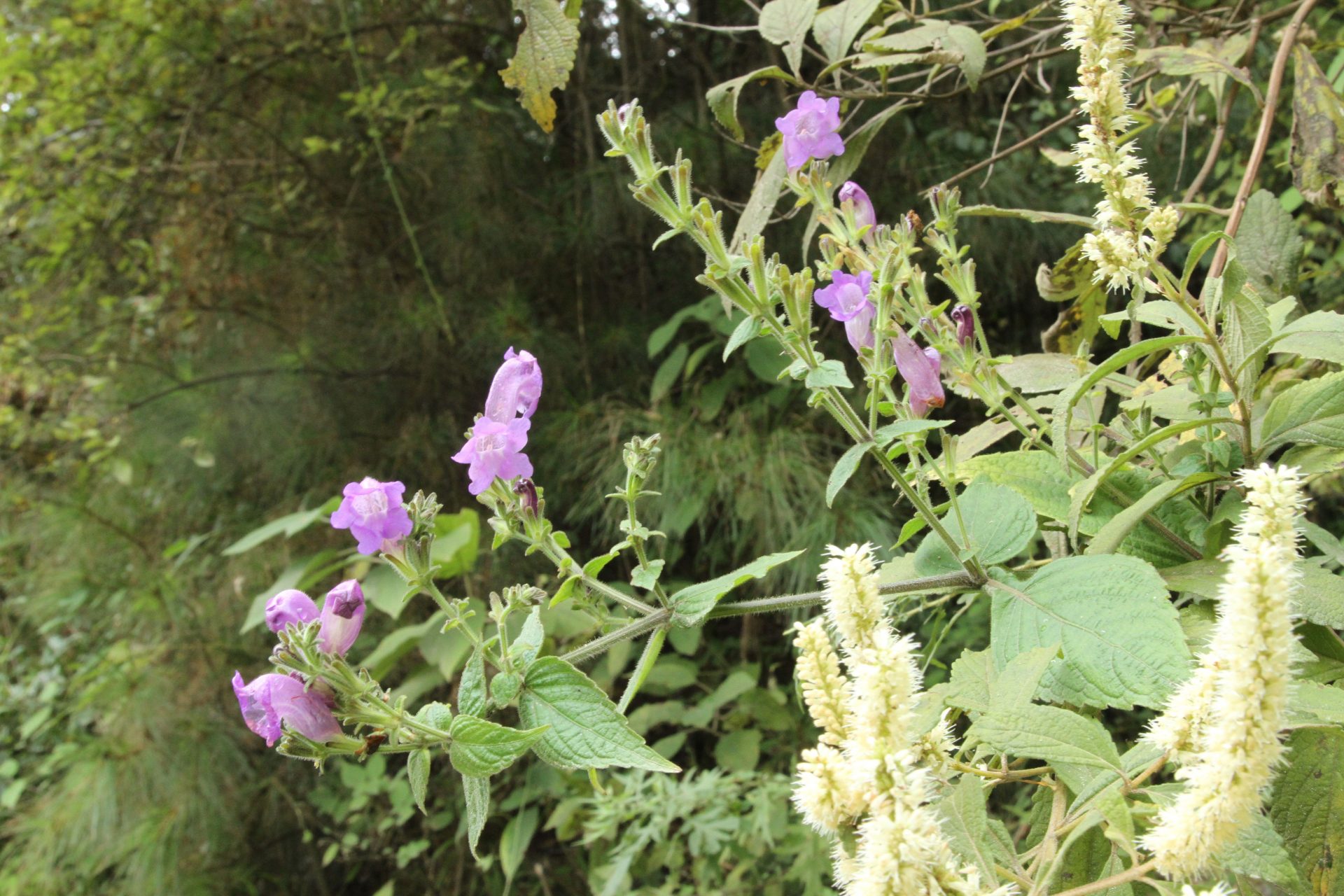
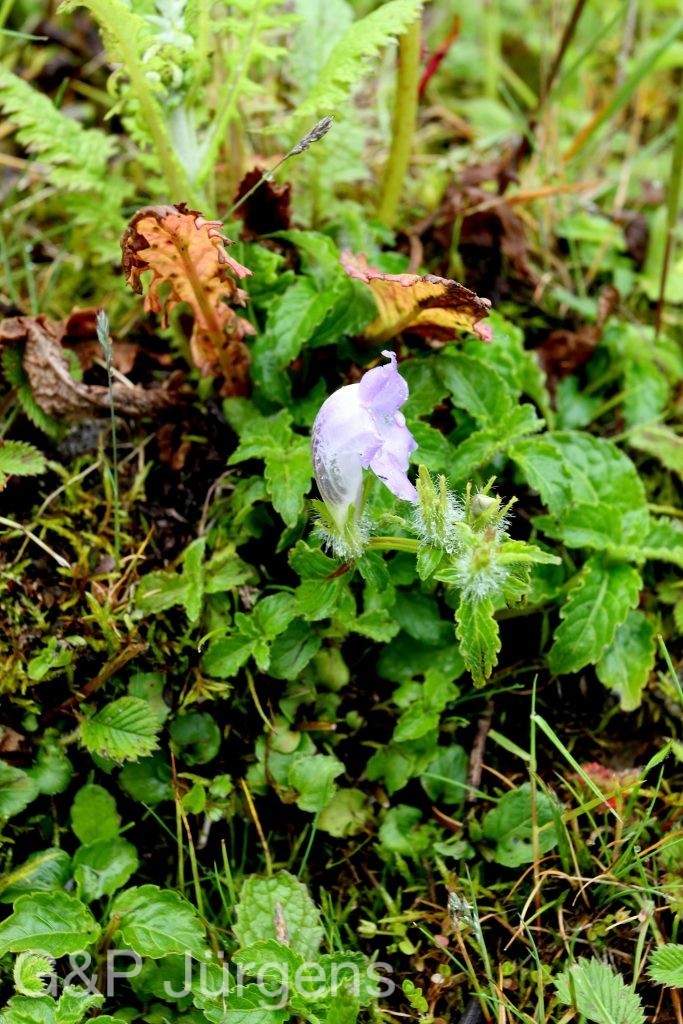
Strobilanthes echinata Nees is a shrubby herb of the acanthus family widely distributed through tropical and subtropical Asia, with GBIF documenting 319 occurrences from India (IN), Bhutan (BT), China (CN), Myanmar (MM), Thailand (TH), Vietnam (VN), Indonesia (ID), Malaysia (MY), Laos, Cambodia and Bangladesh. It is a plant of moist forest understorey, shaded slopes, ravines and clearings ranging from the warm lowlands to high temperate elevations. It was photographed in Bhutan on the Chele-La at 3800 m in July, near the upper limit of its range, where it grows in the cool, humid forest belt. The source URL references Strobilanthes wallichii, indicating a synonymous or closely allied treatment.
The plant is a perennial herb or soft shrub with quadrangular, often anisophyllous-leaved stems. The leaves are opposite and decussate, ovate to elliptic, acuminate and toothed, with cystoliths visible as fine streaks, the paired leaves of a node frequently unequal in size as is characteristic of the genus. The flowers are borne in dense, often spiciform or capitate inflorescences subtended by conspicuous, sometimes spiny-tipped or bristly bracts, the epithet echinata alluding to this prickly aspect. The corolla is tubular and curved, five-lobed and blue to violet or pale lilac. The fruit is an elongate, two-valved, explosively dehiscent capsule bearing a few flattened seeds.
Strobilanthes is a large and taxonomically difficult Asian genus famous for its mass-flowering, plietesial life cycle in which whole populations bloom synchronously after several years and then die. Its centre of diversity lies in the Indo-Burmese and Sino-Himalayan region, making it an important element of Asian forest floras. The bird- and insect-pollinated flowers and explosively dispersed seeds aid colonisation of forest gaps. While many species are narrow endemics of conservation concern, S. echinata is comparatively widespread.
Author: Nees · Sources: POWO (Kew), GBIF, Flora of Bhutan, Flora of China, Strobilanthes monograph (Y. F. Deng & J. R. I. Wood revision)