Tag:

Montane (1500-2500 m)

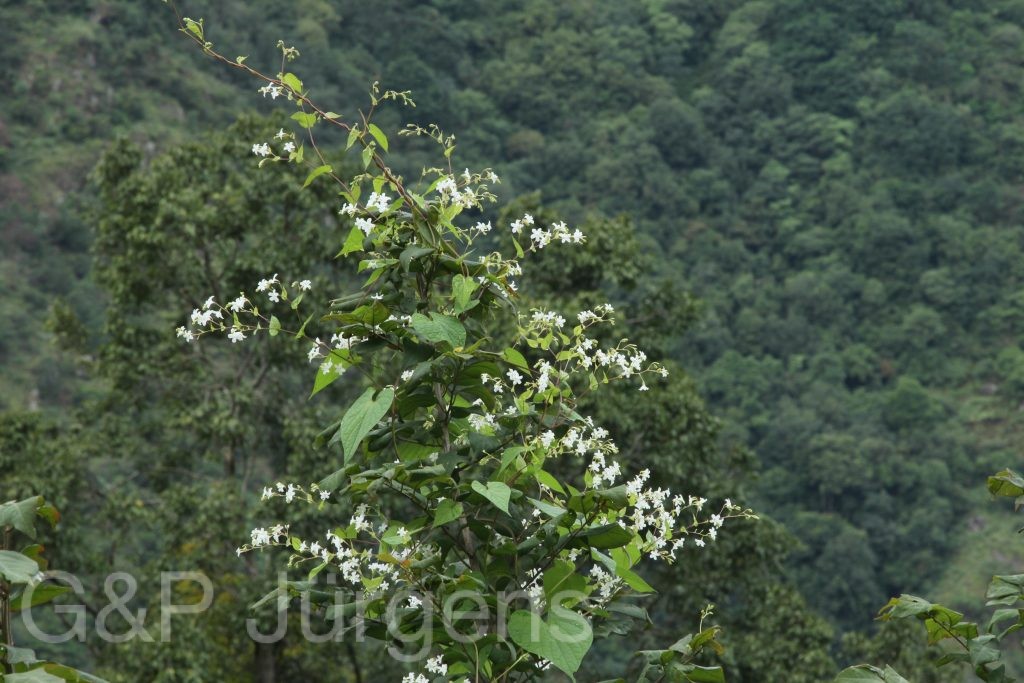
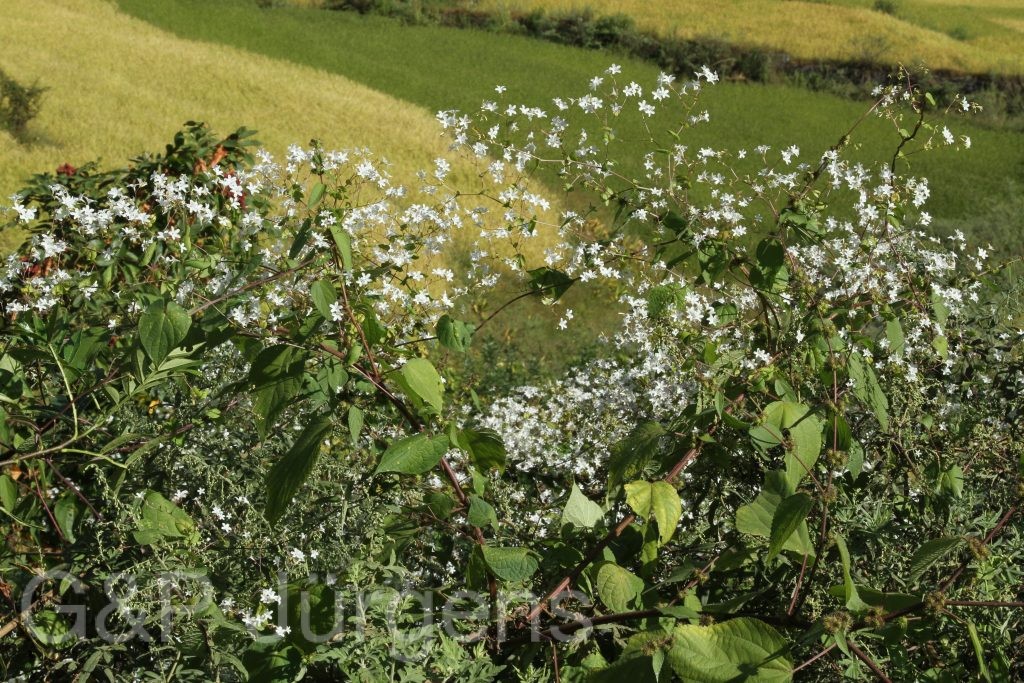
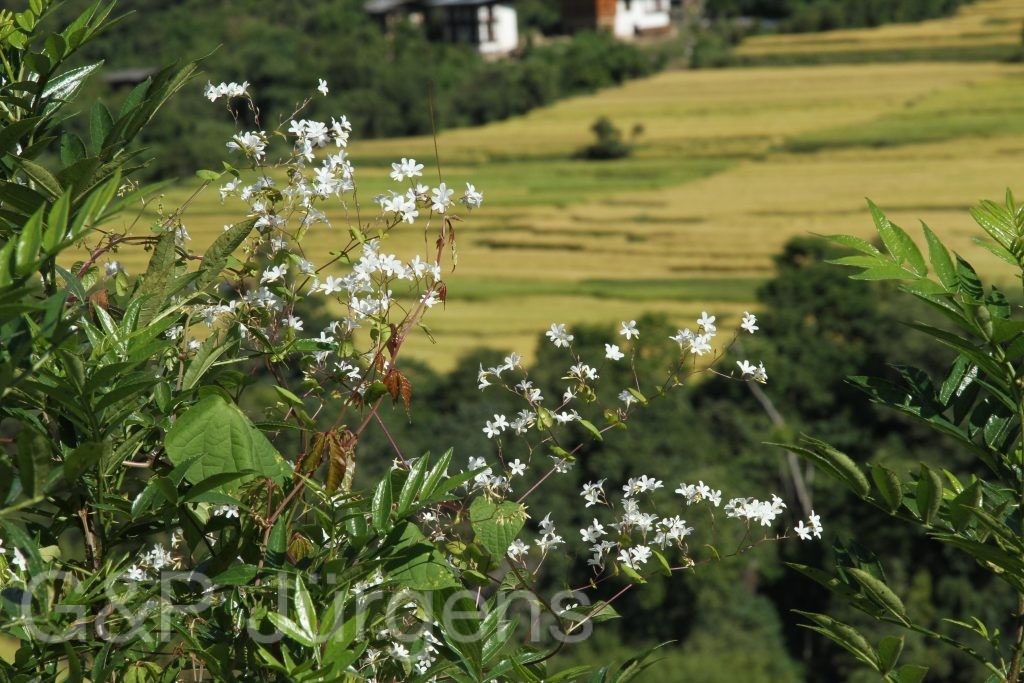
(Roxb.) Sweet

Bhutan2012 1212
Bhutan Mo-Chu 1500m, October
Bhutan2015 565
Bhutan Mo-Chu 1500m, October
Bhutan2015 566
Bhutan Mo-Chu 1500m, October

Description

Dinetus racemosus is a twining climber of the morning-glory family widely distributed across the Himalaya, Indo-Burma and South-East Asia. GBIF records, numbering over 900, place it in India, Nepal, Bhutan and China through Myanmar, Thailand, Laos, Vietnam and Malaysia to Indonesia and Timor-Leste, with cultivated or naturalised records elsewhere. It occupies forest margins, thickets, hedgerows, scrubby roadsides and clearings in subtropical to warm-temperate zones, where it scrambles vigorously over shrubs and small trees. The photographed plant from the Mo Chu valley in Bhutan, at about 1500 m and flowering in October, illustrates its autumn-flowering habit in mid-elevation valley vegetation, where its conspicuous white inflorescences appear after the monsoon.

The species is a perennial, herbaceous to slightly woody, left-twining liana with slender, often pubescent stems. The leaves are alternate, long-petiolate, broadly ovate to ovate-cordate with a deeply cordate base and acuminate apex, the lamina entire and softly hairy. The flowers are borne in elongate, many-flowered, axillary and terminal racemes or panicles, a distinctive feature in a family more usually cymose. Each flower is small, with a five-lobed calyx and a white, broadly funnelform to subcampanulate, five-angled corolla. After flowering the calyx lobes enlarge markedly and become membranous, accrescent wings that surround the small, indehiscent, one- to few-seeded fruit, serving as a wind-dispersal organ.

Dinetus belongs to the tribe Poraneae of Convolvulaceae, a group characterised by racemose inflorescences and accrescent, wing-like fruiting sepals, and the species has long been known under the synonyms Porana racemosa and Porana grandiflora; modern treatments recognise the segregate genus Dinetus. The accrescent calyx wings are a clear adaptation to anemochory, dispersing the light fruits on the wind. The plant is common and ecologically resilient across its broad range and is of no conservation concern; it is locally appreciated as an ornamental for its profuse white autumn flowering and is occasionally used in traditional medicine.

Author: (Roxb.) Sweet · Sources: POWO (Kew), GBIF, Flora of China Vol. 16, Flora of Bhutan Vol. 2, Flora of Nepal, Flora of Pakistan, Staples' systematics of Convolvulaceae (Poraneae)
Wall.

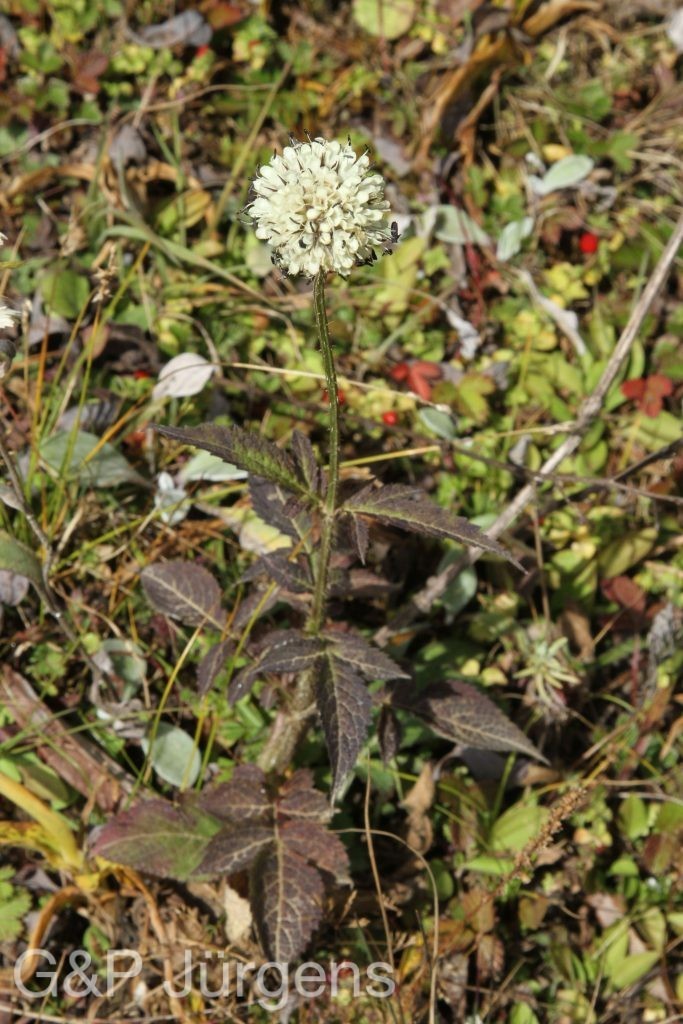
Bhutan2015 479
  Bhutan Pele-La 3200m, October
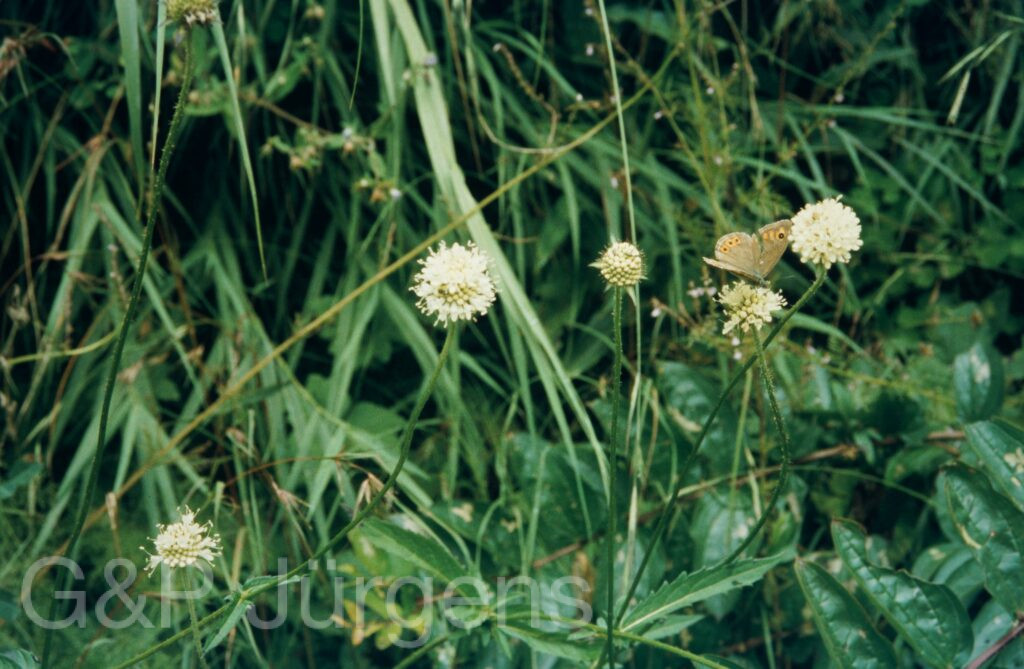
Garw 2005 272 ergebnis
India Garhwal Kunol 2450m, September

Description

Dipsacus inermis is a tall biennial or short-lived perennial herb widely distributed through the temperate Himalaya and into China and Myanmar, with naturalised and casual occurrences recorded as far afield as Britain, Ireland, Portugal, Turkey and the United States among its 830-odd documented records. Within its native range it grows in forest clearings, along streamsides, in damp meadows and on disturbed slopes from about 1800 to 3500 m. The illustrated plants come from Pele-La in Bhutan at 3200 m in October and from Kunol in Garhwal, India, at 2450 m in September, the latter date capturing the fruiting season.

The species develops a furrowed, sparsely prickly to nearly unarmed stem (whence the epithet inermis), distinguishing it from the strongly spiny teasels. Leaves are opposite, the lower petiolate and often lyrate-pinnatifid, the cauline sessile and lanceolate, frequently connate at the base. The inflorescence is a dense ovoid to globose capitulum subtended by linear involucral bracts; the receptacular bracts are awned. Individual flowers are small, with a four-lobed whitish to pale purple corolla and an epicalyx surrounding each floret; the calyx is cup-shaped and the fruit an achene crowned by the persistent calyx.

Formerly placed in the family Dipsacaceae, the genus is now subsumed within an enlarged Caprifoliaceae following molecular reclassification. The plant is insect-pollinated and its seed-heads provide forage for granivorous birds. It is a vigorous coloniser of disturbed ground, accounting for its sporadic naturalisation outside Asia; it carries no conservation concern across its extensive native distribution.

Author: Wall. · Sources: POWO (Kew), GBIF, Flora of China, Flora of Bhutan, Flowers of the Himalaya, Caprifoliaceae monograph

(Lour.) Merr.

Bh2008 447 G698
Bhutan Samtengang 2040m, May
Sikkim2004 113 P194
India West-Bengal, Utaray 2100m April
Nepal 97 373 P733
Nepal Arun-Valley 1750m, May

Description

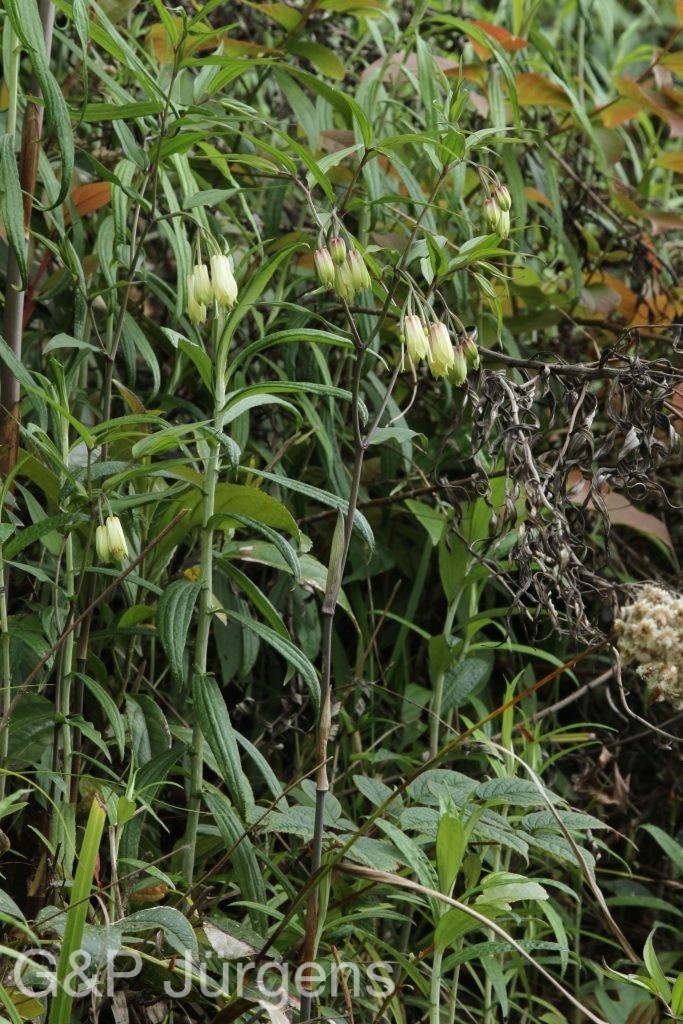
Disporum cantoniense (Lour.) Merr. is a rhizomatous perennial herb of the Colchicaceae with a wide distribution across the Himalaya, mainland and insular Southeast Asia and East Asia. GBIF (nearly 4,000 occurrences) documents it from China, India, Nepal, Bhutan, Thailand, Taiwan, Japan, Vietnam, Myanmar, Malaysia, Indonesia and Sri Lanka, where it grows in shaded broad-leaved and mixed forest, on forest margins, shaded banks and among scrub. It occupies a broad montane belt; the records from Samtengang in Bhutan (2,040 m), Utaray in West Bengal (2,100 m) and the Arun Valley in Nepal (1,750 m), flowering in April–May, illustrate its spring anthesis in mid-elevation Himalayan forest understorey.

The plant arises from a short, knotty rhizome bearing fleshy roots and produces erect, branched aerial stems up to a metre or more tall. The leaves are alternate, ovate-lanceolate to lanceolate, with conspicuous arcuate-parallel venation and somewhat clasping or shortly petiolate bases. The flowers hang in terminal, drooping few-flowered umbel-like clusters at the branch tips; each is narrowly campanulate with six free, spreading to recurved tepals, white, greenish or tinged purple, the tepals saccate or shortly spurred at the base. There are six stamens and a superior ovary; the fruit is a globose, dark blue-black to purplish berry containing few seeds.

Disporum, long placed in Liliaceae and later Convallariaceae, is now firmly assigned to the Colchicaceae on molecular and morphological grounds, distinct from the New World Prosartes. D. cantoniense is a polymorphic, widespread species with several recognised varieties, and the variation in flower colour and stature has generated considerable taxonomic literature. Ecologically it is a characteristic shade-tolerant geophyte of Asian temperate and subtropical forests, with berries dispersed by birds.

Author: (Lour.) Merr. · Sources: POWO (Kew), Flora of China Vol. 24, Flora of Bhutan Vol. 3, GBIF, Conran & Tamura: Colchicaceae in The Families and Genera of Vascular Plants

H.Hara

Bhutan2014 212
Bhutan Trashyangtse 2100m, May
Bhutan2014 215
Bhutan Trashyangtse 2100m, May

Description

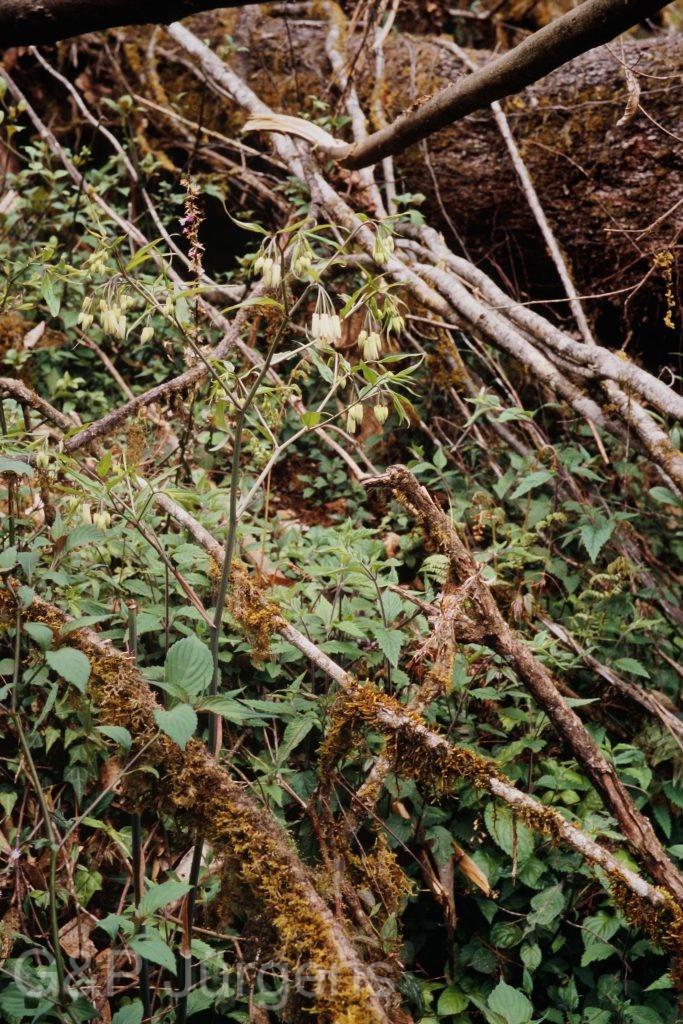
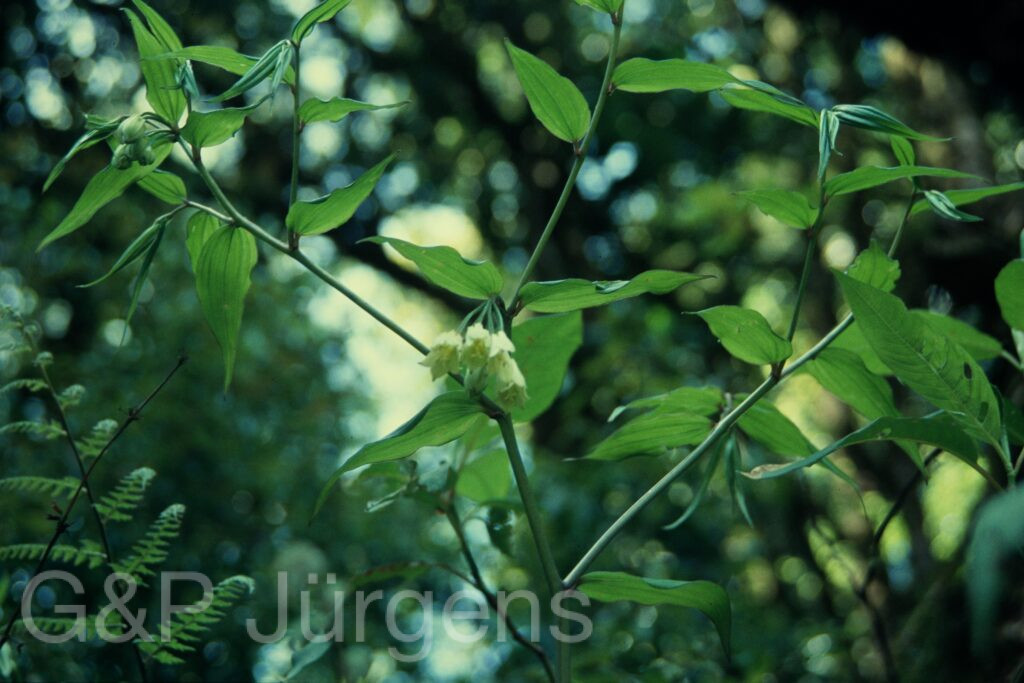
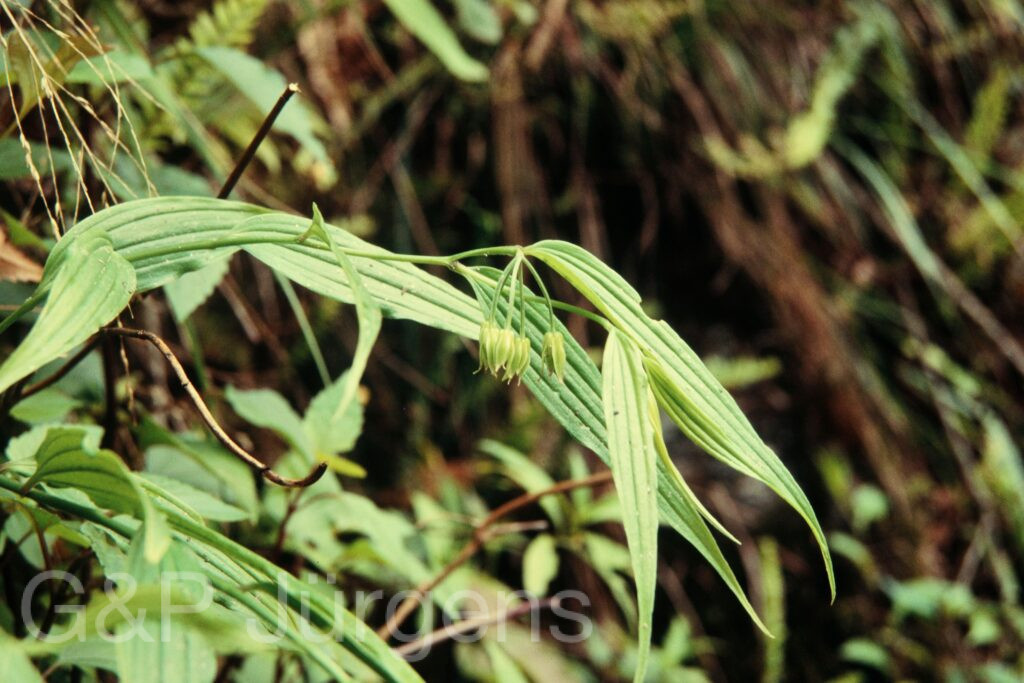
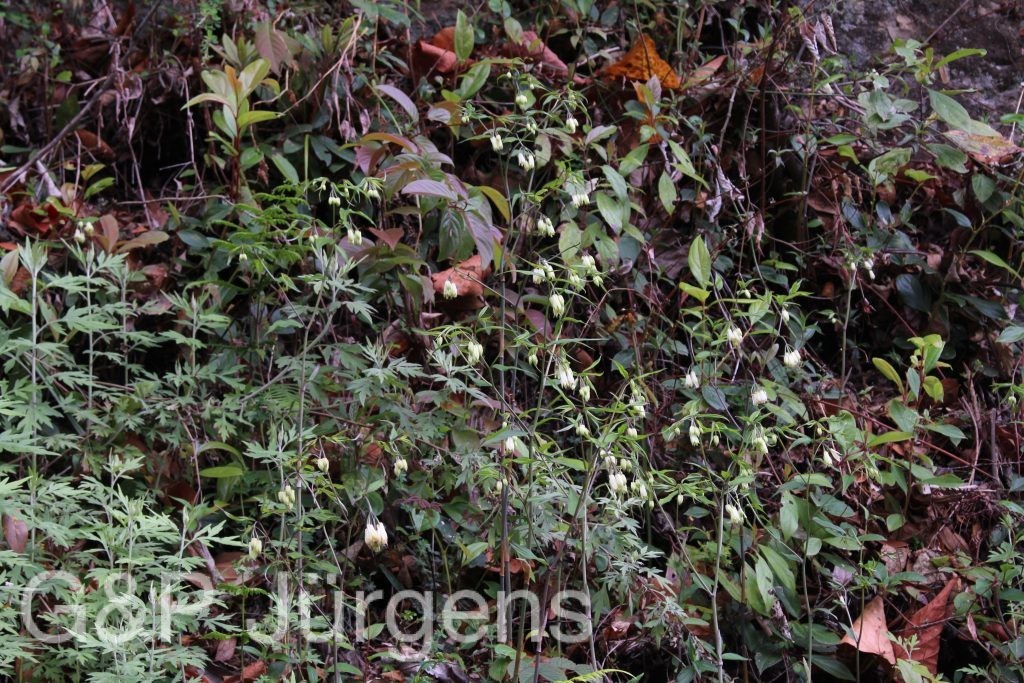
Disporum leucanthum is a woodland perennial of the eastern Himalaya and adjacent regions, recorded from China, India, Bhutan, Myanmar and Nepal, with only some 35 occurrences in GBIF, reflecting both a relatively restricted range and limited collecting. It is a plant of shaded, moist broad-leaved and mixed forest, forest understorey and shaded streamsides, typically in the warm to cool temperate belt. The individual photographed at Trashyangtse in eastern Bhutan at 2100 m in May, flowering in spring under forest cover, is characteristic of its preference for humid, sheltered montane woodland where deep humus and dappled shade prevail.

The species is an erect, sparingly branched perennial herb arising from a short, creeping rhizome with fibrous roots. The slender stems bear alternate, ovate to ovate-lanceolate leaves that are conspicuously parallel-veined, entire and shortly petiolate to subsessile, with a rounded to subcordate base and acuminate apex. The flowers are pendent and borne singly or in small clusters at the branch tips; they are narrowly campanulate to tubular, with six free, white tepals (as the epithet indicates) that are sometimes greenish-tinged, each tepal spurred or saccate at the base. There are six stamens, and the superior ovary develops into a small, fleshy, globose to ovoid berry that ripens dark, containing several seeds.

Disporum is an East Asian genus now placed in the family Colchicaceae following molecular reappraisal, having formerly been treated within Liliaceae or Convallariaceae; the North American fairy-bells once included here are now separated as Prosartes. D. leucanthum belongs to the Sino-Himalayan assemblage of the genus, distinguished among its relatives by floral and tepal characters. The berries are bird-dispersed. Owing to its comparatively narrow distribution and the small number of documented records its populations warrant monitoring, though it is not formally assessed as threatened.

Author: H.Hara · Sources: POWO (Kew), GBIF, Flora of China Vol. 24, Flora of Bhutan Vol. 3, Flora of Nepal, A Revision of the Genus Disporum (Colchicaceae)

(DC.) Anderb.

Bhutan2012 1356
Bhutan Sandrup 1500m, October

Description

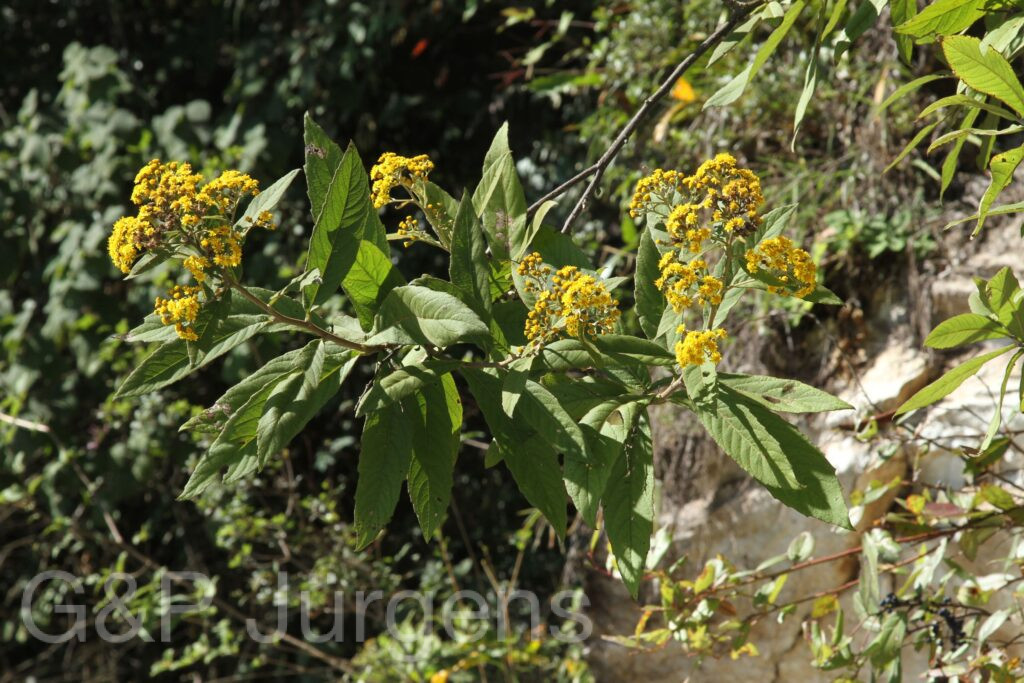
Duhaldea eupatorioides is a subtropical to warm-temperate composite of the Himalaya and adjacent montane Asia, recorded from India, China, Nepal, Bhutan, Thailand, Myanmar, Bangladesh, Pakistan, Laos and Vietnam, with GBIF listing about 156 occurrences. It grows on open hillsides, forest margins, scrub, roadcuts and grassy slopes in the foothill and lower montane belt, broadly from 1000 to 2500 m. The photographed plant was found in Bhutan at Sandrup at 1500 m in October, when the species comes into bloom at the close of the monsoon, its leafy stems carrying numerous small heads above the autumn grassland.

It is an erect, somewhat woody-based perennial herb or subshrub with leafy, branching, often pubescent stems. The leaves are alternate, ovate-lanceolate to elliptic, acuminate, with serrate margins and a finely hairy surface, narrowing to a short petiole or sessile base, the foliage recalling Eupatorium, hence the epithet. The capitula are small, numerous, and aggregated into terminal corymbose panicles; each head is radiate, with an involucre of several rows of imbricate bracts, marginal yellow ray florets and yellow tubular disc florets. The fruit is a ribbed, hairy cypsela crowned by a pappus of barbellate bristles, dispersed by wind.

The species belongs to the tribe Inuleae and to genus Duhaldea, a segregate split from the broadly defined Inula on molecular and morphological grounds; older floras may list it under Inula eupatorioides. A tolerant species of open and disturbed montane habitats, it is widespread and not of conservation concern. Its Sino-Himalayan to Indochinese range typifies the warm-temperate element of the southern Asian mountain arc.

Author: (DC.) Anderb. · Sources: POWO (Kew), GBIF, Flora of China, Flora of Bhutan, Flora of Nepal, generic revision of Inuleae (Anderberg)

(Wall.) Meisn.

Nepal 1994 255 ergebnis
Ost-Nepal Mewa-Khola
2100m April
Nepal 1994 197 ergebnis
Ost-Nepal Mewa-Khola
2100m April
sub1hsn8
Nepal Amjilassa 2400m March

Description

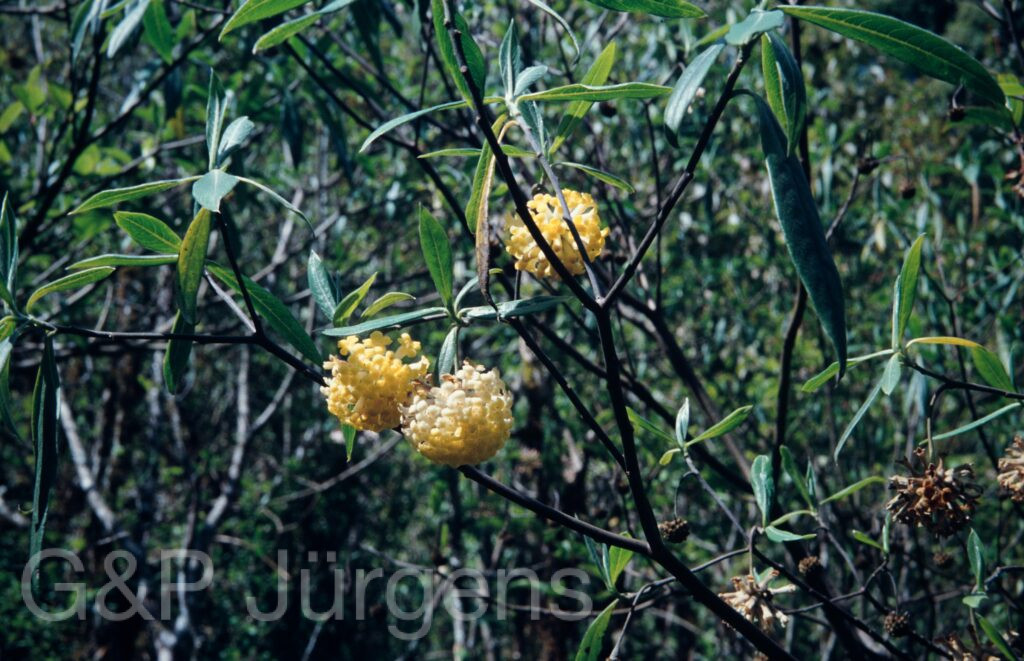
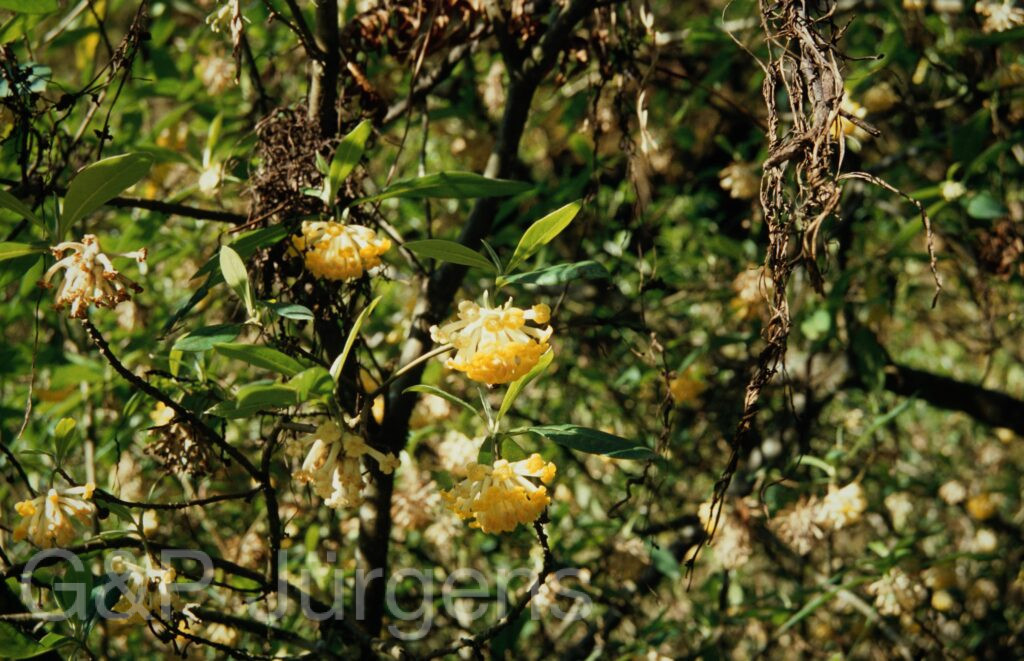
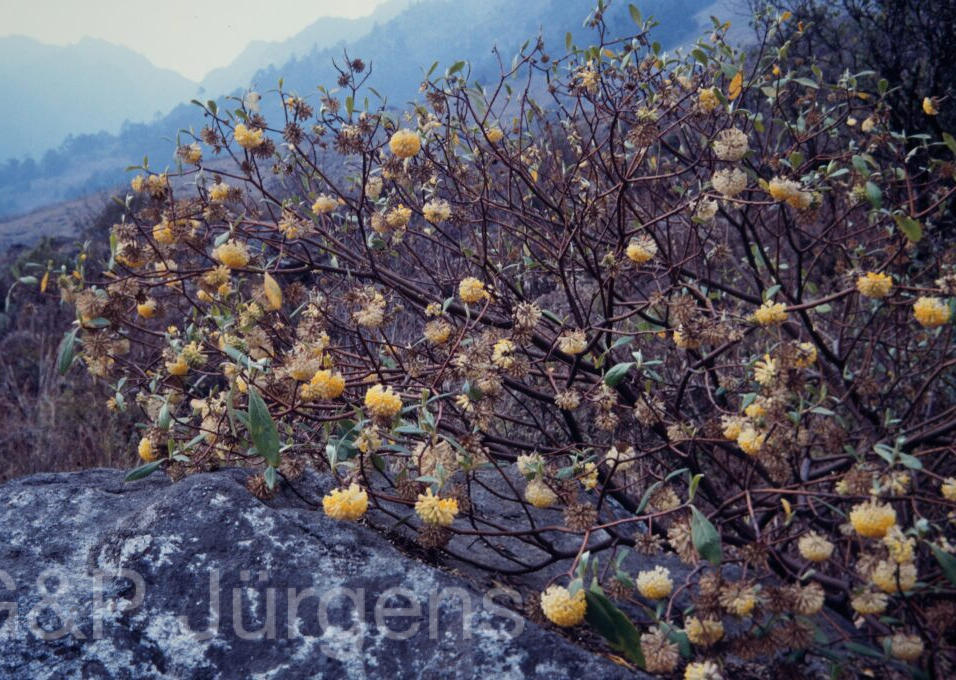
Edgeworthia gardneri is a deciduous to semi-evergreen shrub of the eastern Himalaya and adjacent mountains. GBIF records (some 484 occurrences) place it in China, Nepal, India, Bhutan, Myanmar, Bangladesh and Vietnam, with cultivated material in Japan, France, New Zealand and elsewhere. It grows in moist temperate broadleaved forest, forest margins, ravines and shrubby slopes, typically between about 1,500 and 2,800 m. The illustrated plants are from eastern Nepal at Mewa-Khola (2,100 m, April) and Amjilassa (2,400 m, March), flowering in late winter to early spring before or with leaf flush, characteristic of its phenology in the warm temperate zone.

The plant is a shrub 1–3 m tall with flexible, tough-barked branches that can be tied in a knot without breaking. The leaves are alternate, lanceolate to oblong-lanceolate, entire and somewhat silky beneath. The flowers are aggregated into dense, pendent, hemispherical heads on short peduncles; each flower lacks petals, the floral tube being silky-tomentose outside and yellow within, fragrant. The fruit is a small dry achene-like drupe enclosed in the persistent perianth base.

Like its relative Daphne, Edgeworthia yields strong bast fibre: the bark is an important source of traditional handmade paper (lokta-type) in Nepal and Bhutan, giving the genus economic significance. It is also valued as a winter-flowering ornamental. The species is widespread and not globally threatened, though bark harvesting represents a localised pressure on accessible wild stands.

Author: (Wall.) Meisn. · Sources: POWO (Kew), Flora of China Vol. 13, Flora of Bhutan Vol. 1, GBIF, Halda: The Genus Daphne (and allied Thymelaeaceae)

Schltdl.

Bh09 46 G84
Bhutan Paro 2400m, June
Bhutan2014 852 scaled
Bhutan Thimphu 2500m, May
Bhutan2014 853 scaled
Bhutan Thimphu 2500m, May

Description

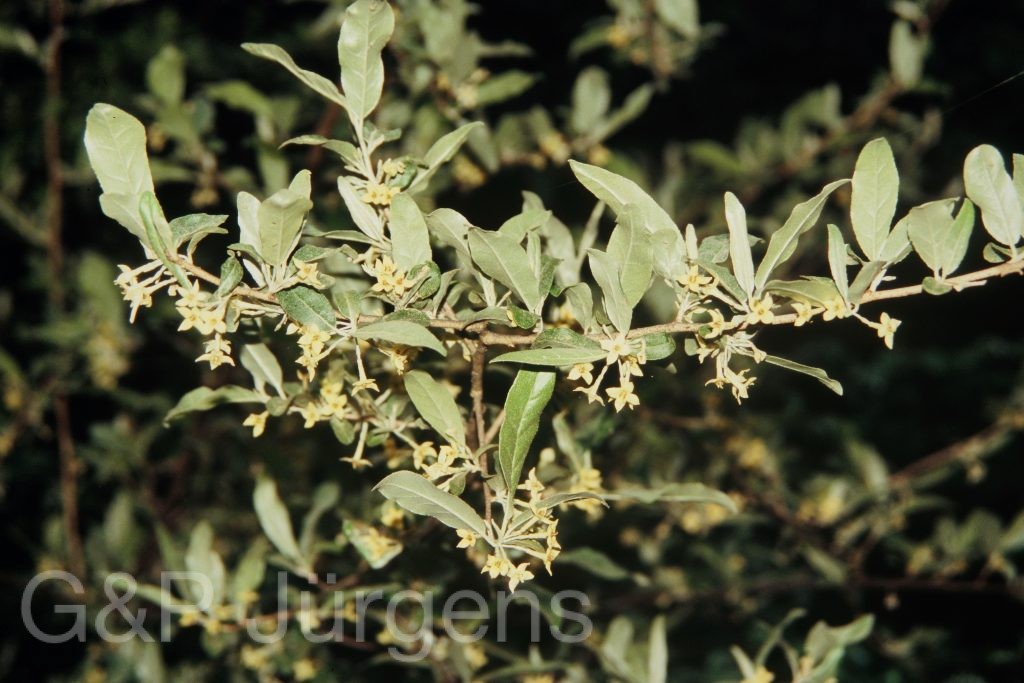
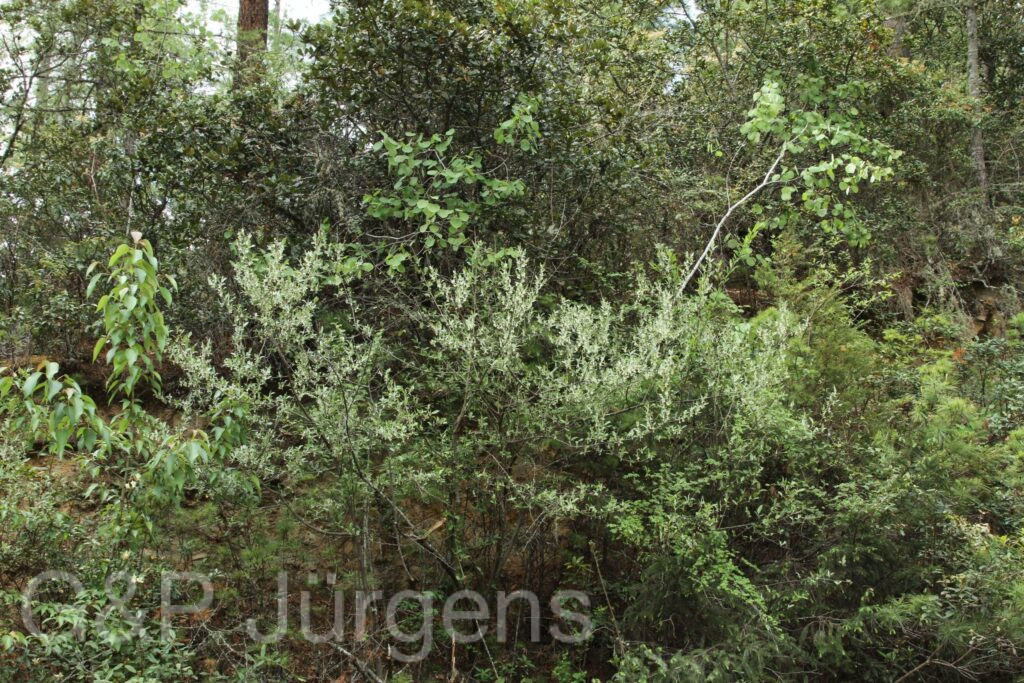
Elaeagnus caudata Schltdl. ex Momiy. is a shrub or small tree of the Elaeagnaceae endemic to the central and eastern Himalaya, known from Nepal, northern India and Bhutan. Documented from only a small number of georeferenced collections, it grows in temperate forest margins, thickets, shrubby slopes and along the edges of cultivation in the mid-montane zone. The photographed plants from the Paro and Thimphu valleys of Bhutan, recorded at 2,400–2,500 m in May and June, are characteristic of its preference for the cool, well-lit temperate belt where it flowers in late spring and early summer.

The plant is densely clothed throughout in the silvery to rusty-brown peltate scales typical of the family, which give the young shoots, leaf undersides and flowers a metallic lustre. The leaves are alternate, elliptic to ovate, often long-acuminate (the caudate apex giving the species its name), green and stellate-scaly above and silvery-lepidote beneath. The flowers are small, tubular and apetalous, with a four-lobed, silvery-scaly perianth, fragrant and borne in axillary clusters. The fruit is an oblong, drupe-like achene enclosed by the fleshy, accrescent perianth tube, ripening reddish and scaly, edible when fully mature.

Like other members of Elaeagnus, the species harbours nitrogen-fixing Frankia actinobacteria in root nodules, enabling it to colonise poor soils and contribute to soil fertility, a trait that makes such shrubs significant in montane succession. Its restricted Himalayan range and the small number of records suggest it is genuinely localised, though the difficulty of distinguishing the many scaly-leaved Himalayan Elaeagnus species means its true distribution may be under-documented and warrants further survey.

Author: Schltdl. · Sources: POWO (Kew), GBIF, Flora of Bhutan Vol. 1, Flora of China Vol. 13, Sun & Lin: Revision of Elaeagnus

nn

Bhutan2014 184
Bhutan Trashyangtse 2150m, May

Description

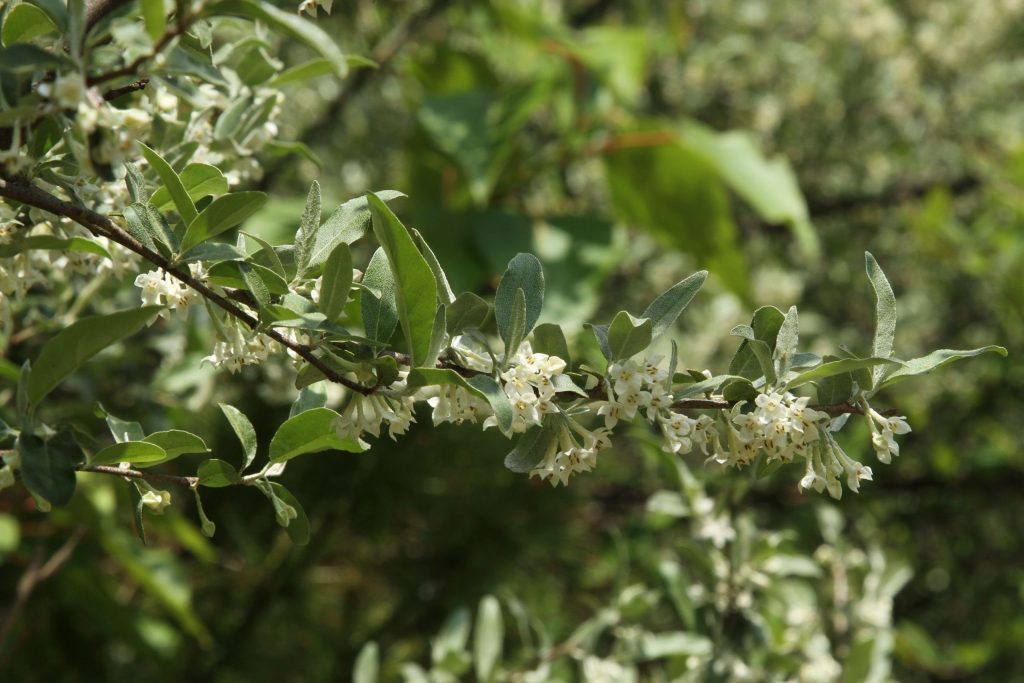
Elaeagnus umbellata var. umbellata is the typical variety of the autumn olive, a deciduous shrub of the Elaeagnaceae native to eastern and southern Asia, with records (GBIF: c. 1,148 occurrences) from Japan, Korea, China, Nepal and India, and naturalised in parts of Europe and North America. In the Himalaya it occupies forest margins, open slopes, thickets and disturbed ground in the temperate zone, roughly between 1,200 and 3,000 m. The photographed plant from Trashyangtse in eastern Bhutan at about 2,150 m, flowering in May, reflects its spring flowering on sunny montane slopes.

The plant is a spreading shrub up to 3–4 m tall, often armed with short thorny lateral branchlets, and the young shoots, leaf undersides and fruits are densely covered with silvery and rufous peltate scales (lepidote indumentum) characteristic of the family. The leaves are alternate, elliptic to oblong-lanceolate, green above and silvery-scaly beneath, with undulate margins. The flowers are small, fragrant, tubular-campanulate and creamy white to pale yellow, borne in axillary clusters; they are apetalous, the showy part being the four-lobed calyx tube. The fruit is a fleshy, drupe-like achene that ripens red, speckled with silvery scales, and is edible and sweet-acidic.

Like other Elaeagnus species, var. umbellata is an actinorhizal nitrogen-fixer hosting symbiotic Frankia in root nodules, allowing it to thrive on poor soils. This trait, combined with prolific bird-dispersed fruiting, has made it a notorious invasive shrub where introduced, though within its native Himalayan range it is a benign, locally useful component of the flora. The GBIF accepted name is rendered as Elaeagnus umbellata umbellata.

Author: nn · Sources: POWO (Kew), Flora of China Vol. 13, Flora of Bhutan Vol. 2, Flora of Nepal, GBIF, Servettaz: Monographie des Elaeagnacees

(Wall. ex Benth.) Makino

Description

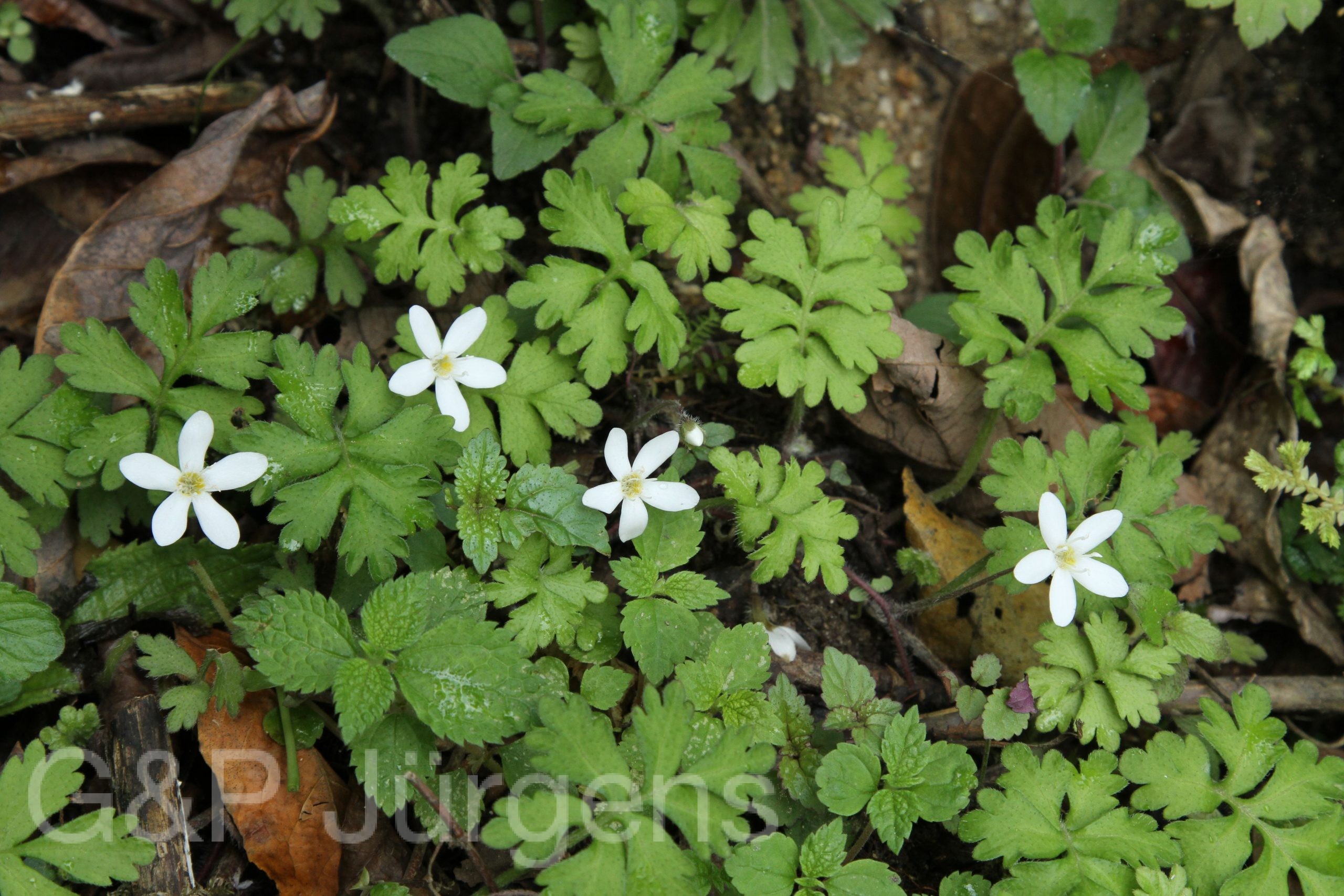
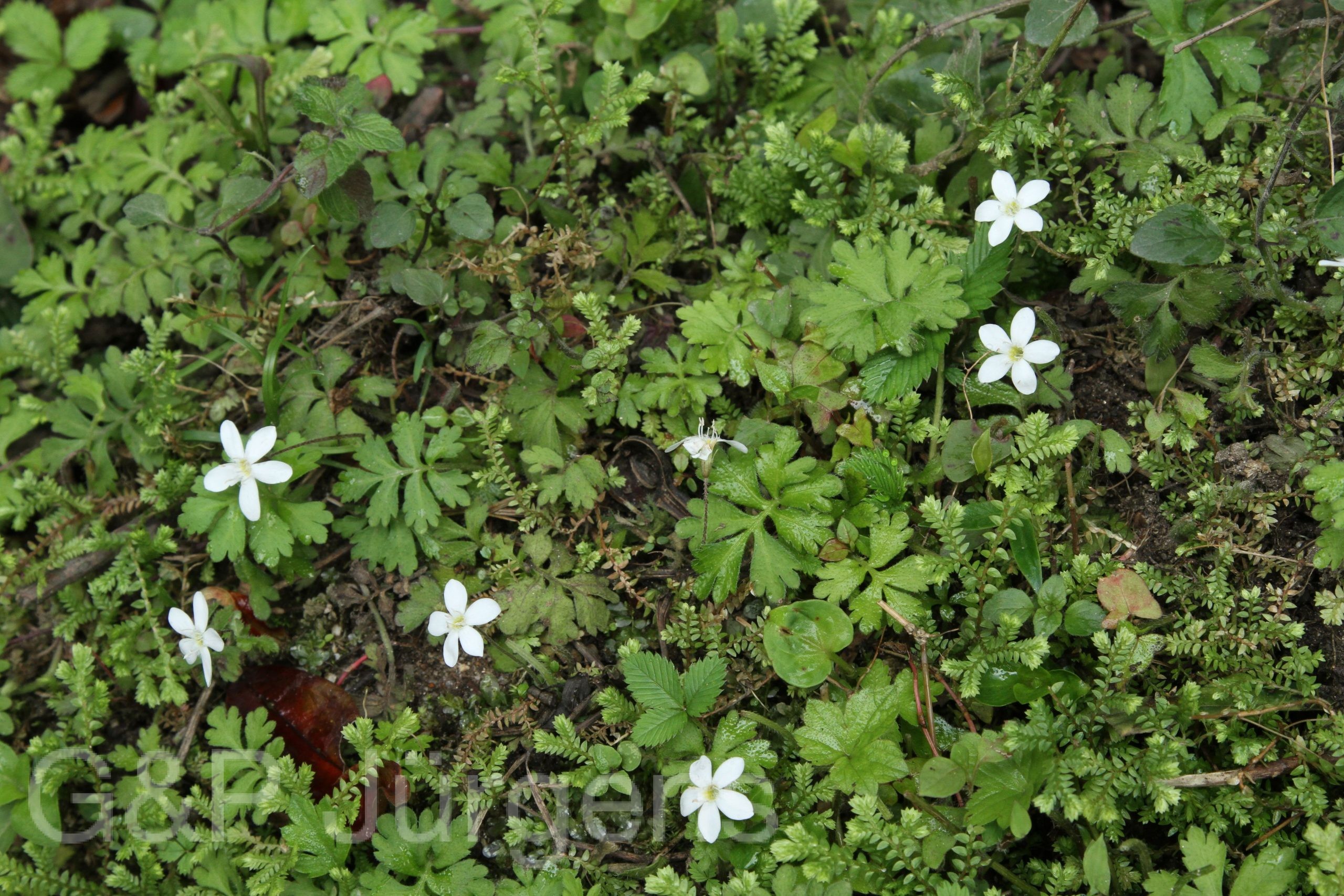
Ellisiophyllum pinnatum is a wide-ranging creeping herb distributed across temperate and montane East and South-East Asia, from the Himalaya through China, Taiwan and Japan to the Philippines, New Guinea and Papua. Its 1616 GBIF records, the highest in this group, confirm a broad native range, with the few European and North American points representing cultivated or herbarium material. It favours moist, shaded ground along streamsides, damp banks, ditches and forest margins, often at lower to middle montane elevations. The plant photographed along the Mo-Chu in Bhutan at about 1500 m in May reflects this preference for cool, humid riparian habitats in the Eastern Himalaya.

It is a slender, softly pubescent perennial that creeps and roots at the nodes, forming loose mats by means of prostrate, filiform stolons. The leaves are alternate, long-petiolate and deeply pinnately lobed to pinnatisect, with rounded, crenate segments. The flowers are solitary on long, slender axillary pedicels; the campanulate calyx has five lobes, and the white, broadly campanulate to rotate corolla is five-lobed, enclosing four didynamous stamens. The fruit is a small capsule enclosed within the accrescent calyx.

Ellisiophyllum is a monotypic genus, E. pinnatum being its sole species, and its placement has long been debated; once referred to the Scrophulariaceae, it is now placed in the Plantaginaceae following molecular phylogenetic studies of the lamiid families. The creeping, stoloniferous, node-rooting habit suits colonisation of unstable, frequently disturbed streambanks. Given its extensive geographic range and ecological adaptability, the species is of no conservation concern.

Author: (Wall. ex Benth.) Makino · Sources: POWO (Kew), GBIF, Flora of Bhutan, Flora of China, Flora of Japan

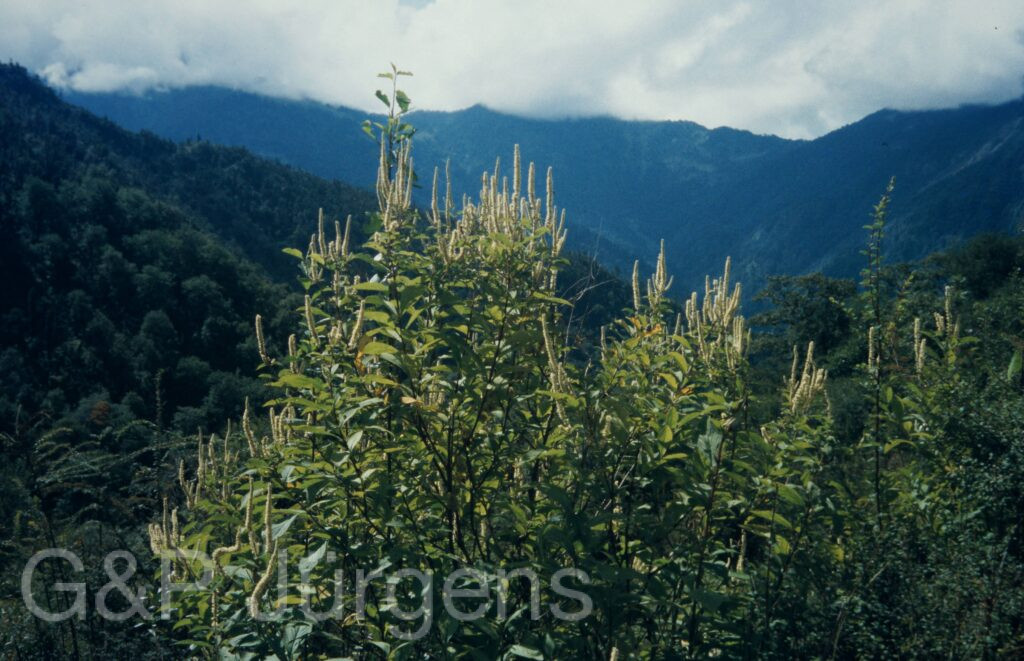
Rehder

Bhutan2015 463
  Bhutan Jakar 2100m, October
Bhutan2012 104
Bhutan Shele-La, 3600m September
Garw 2005 203 ergebnis ergebnis
India Garhwal Pana 2750m, September
Bhutan2015 607
Bhutan Gasa 1950m, October

Description

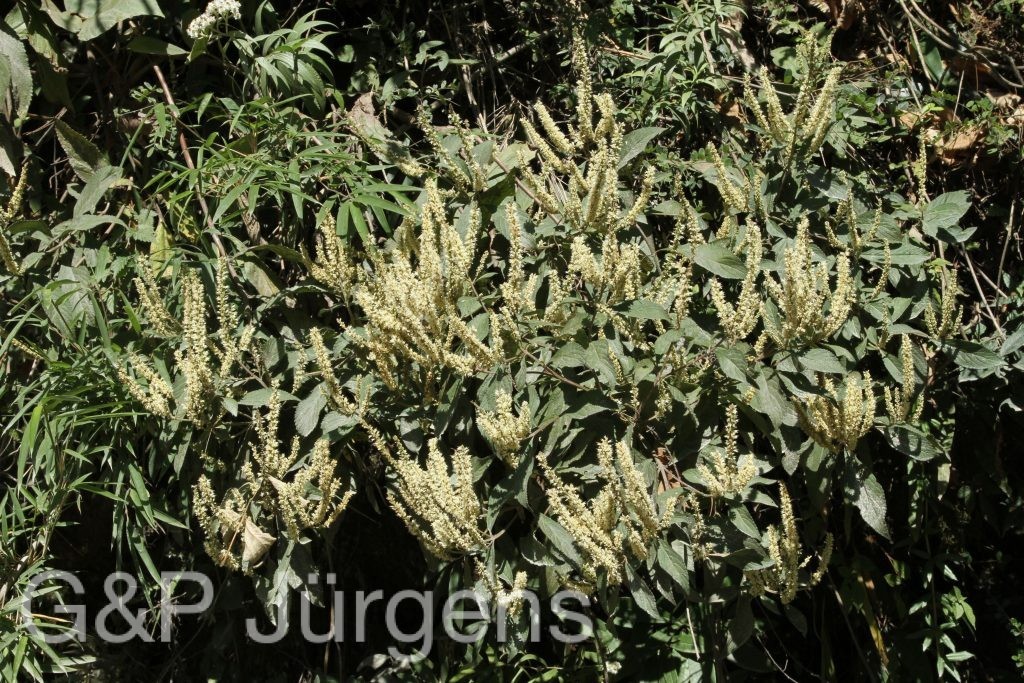
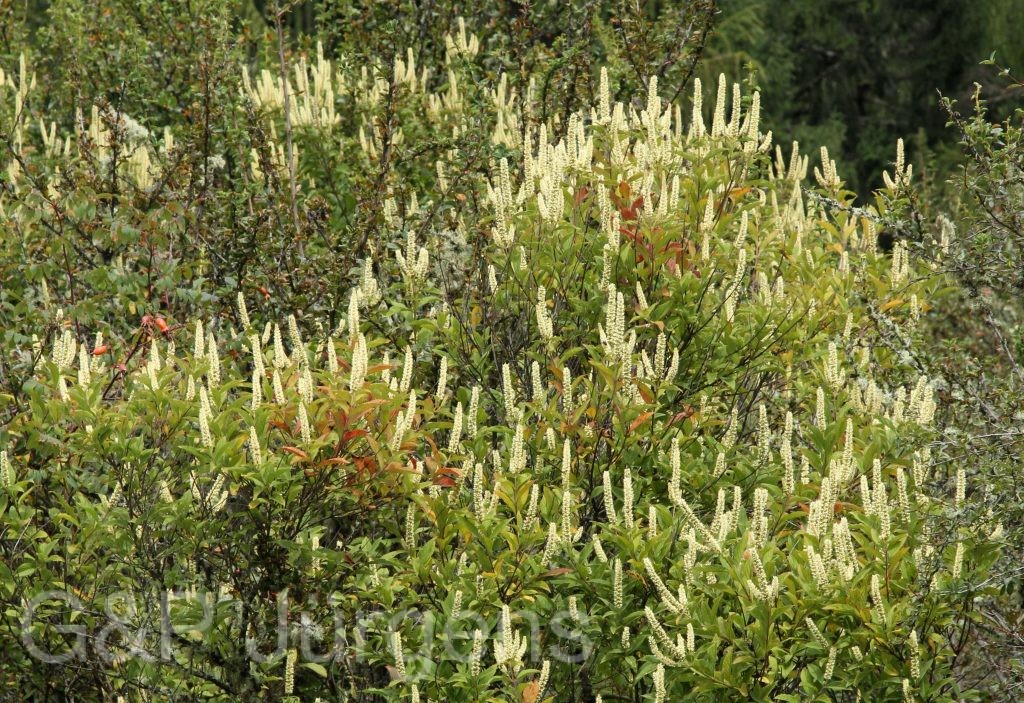
Elsholtzia fruticosa is a widespread shrubby mint of the Himalaya and south-western China, recorded by GBIF (1928 occurrences) from China, Nepal, India, Bhutan, Pakistan, Malaysia and Myanmar. It is a plant of open, disturbed and sunny situations, colonising forest margins, scrub, roadsides, terraced field edges, river banks and clearings, broadly between 1500 and 3600 m. The cited collections span a wide elevational and seasonal range, from Bhutan's Gasa (1950 m) and Jakar (2100 m), through Garhwal in India (Pana, 2750 m), up to the Shele-La pass at 3600 m, flowering from September into October, reflecting its autumn-blooming habit across the central and eastern Himalaya.

The species is an aromatic, much-branched shrub or subshrub reaching 1-3 m, with quadrangular, pubescent stems woody at the base. The opposite leaves are lanceolate to elliptic, serrate, pinnately veined, often greyish-tomentose beneath and dotted with aromatic glands. The small flowers are crowded into dense, cylindrical, spike-like terminal and axillary thyrses, frequently secund, with the whitish to pale-yellow flowers turned to one side of the axis. Each flower has a campanulate calyx and a bilabiate corolla; the four stamens are exserted, giving the inflorescence a feathery aspect. The fruit comprises four small, smooth nutlets (mericarps) enclosed within the persistent calyx.

Described under the combination by Rehder, the species belongs to genus Elsholtzia (subfamily Nepetoideae, tribe Elsholtzieae), a group of aromatic herbs and shrubs centred on temperate Asia. Its essential-oil-rich foliage is used in local traditional medicine and as a minor source of nectar for late-season pollinators. As a vigorous, pioneer-like colonist of disturbed ground with a very broad range, it is of least conservation concern and is locally abundant rather than rare.

Author: Rehder · Sources: POWO (Kew), GBIF, Flora of China, Flora of Bhutan, A Revision of the Genus Elsholtzia (Lamiaceae)