
Schltdl.
Description
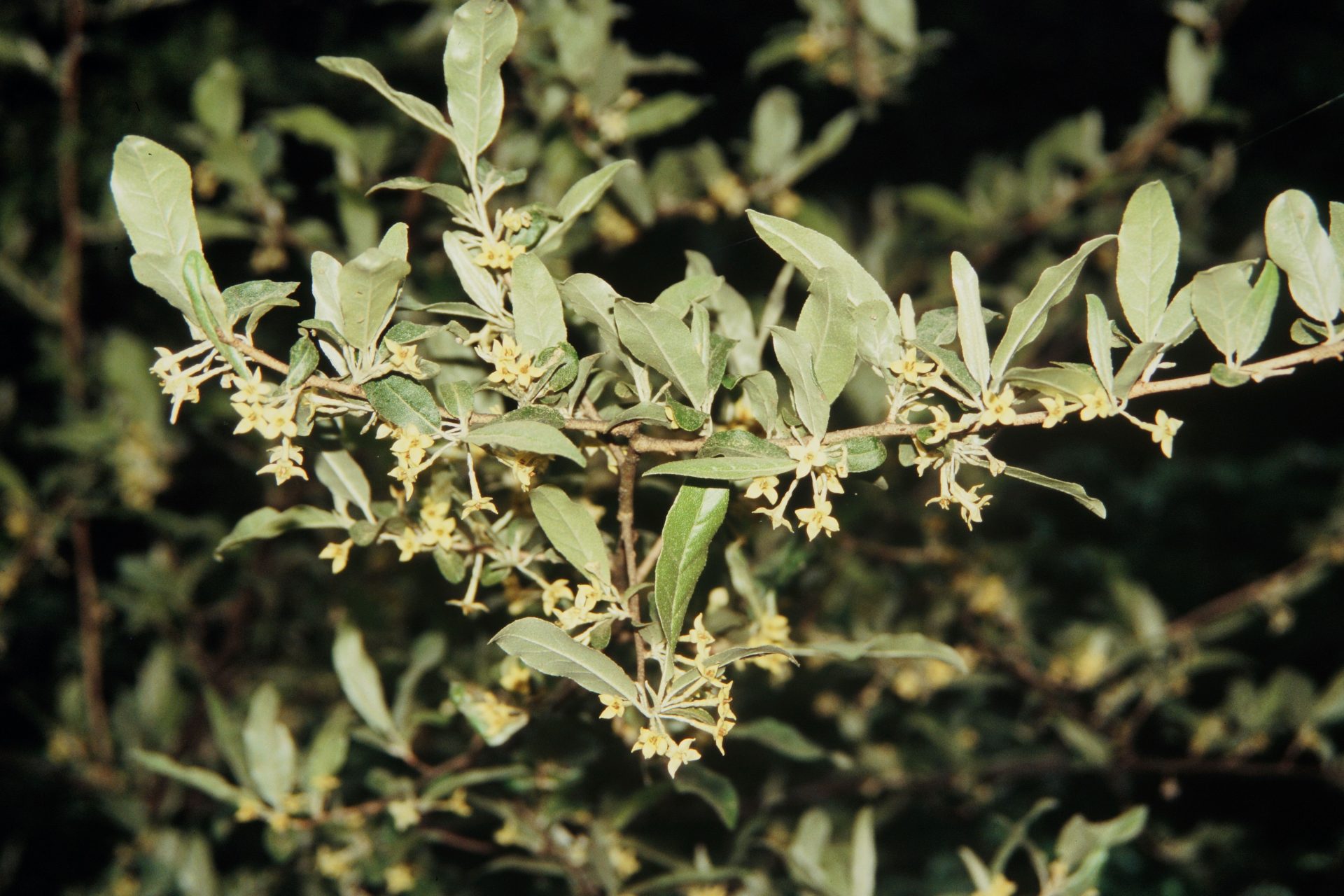
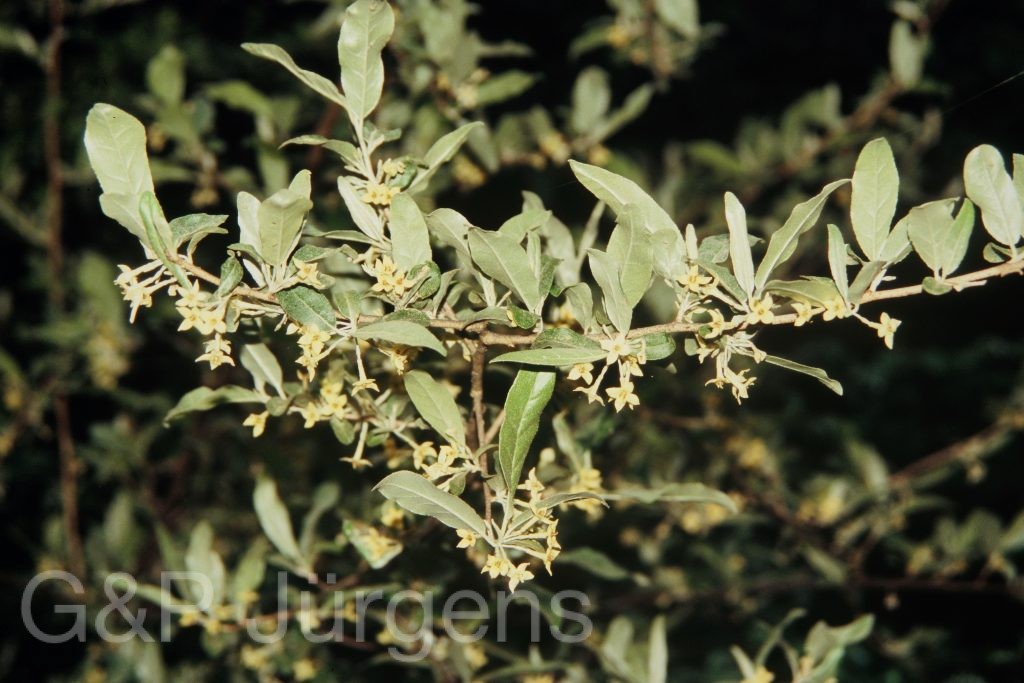
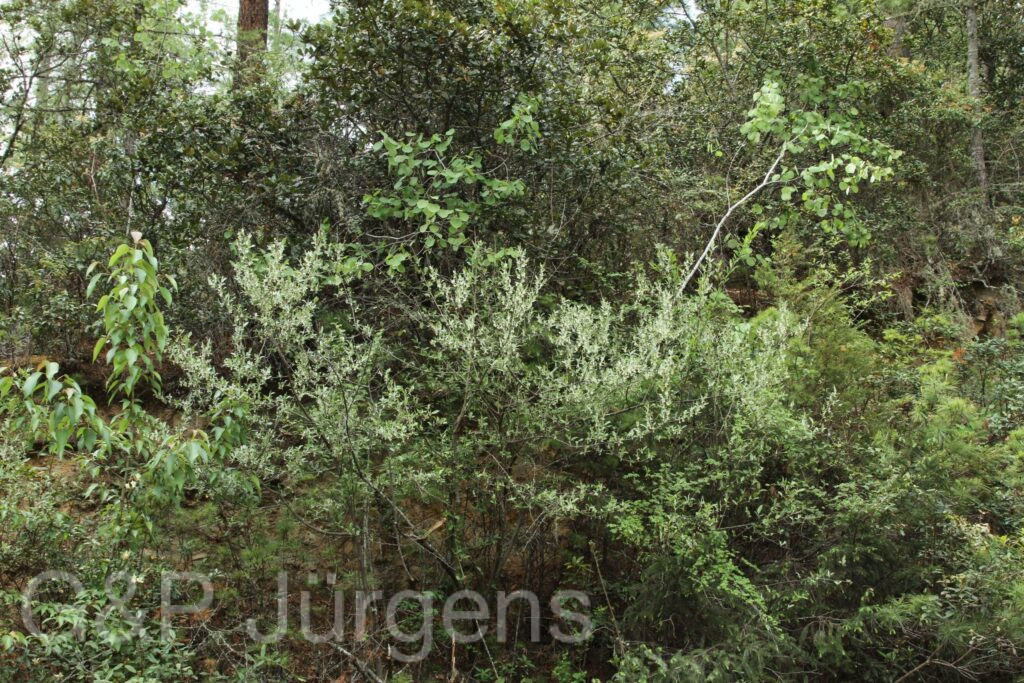
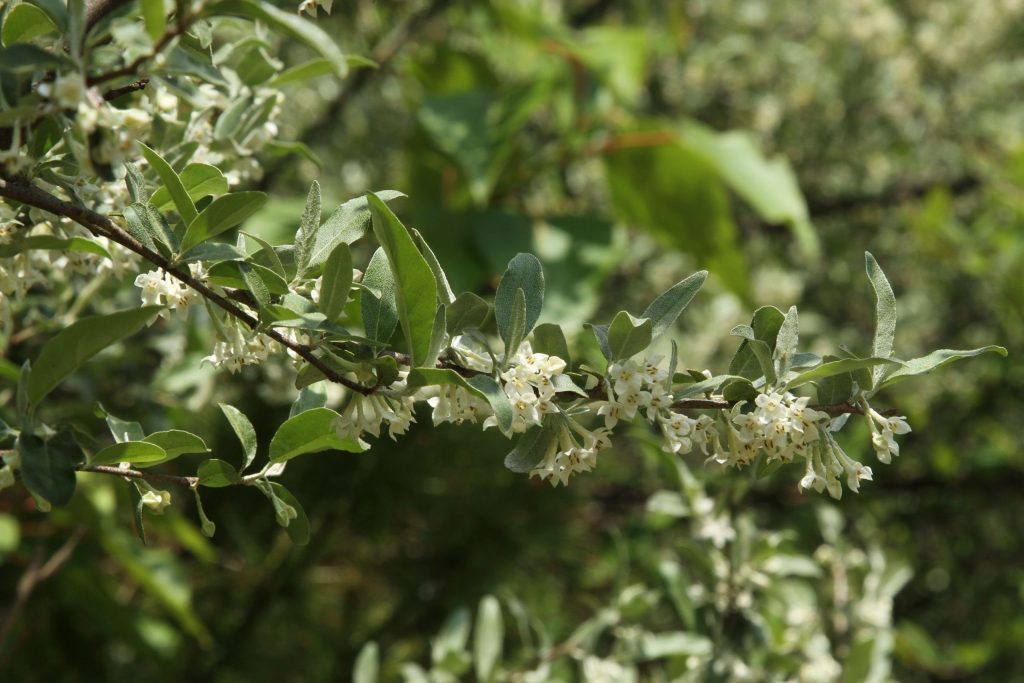
Elaeagnus caudata Schltdl. ex Momiy. is a shrub or small tree of the Elaeagnaceae endemic to the central and eastern Himalaya, known from Nepal, northern India and Bhutan. Documented from only a small number of georeferenced collections, it grows in temperate forest margins, thickets, shrubby slopes and along the edges of cultivation in the mid-montane zone. The photographed plants from the Paro and Thimphu valleys of Bhutan, recorded at 2,400–2,500 m in May and June, are characteristic of its preference for the cool, well-lit temperate belt where it flowers in late spring and early summer.
The plant is densely clothed throughout in the silvery to rusty-brown peltate scales typical of the family, which give the young shoots, leaf undersides and flowers a metallic lustre. The leaves are alternate, elliptic to ovate, often long-acuminate (the caudate apex giving the species its name), green and stellate-scaly above and silvery-lepidote beneath. The flowers are small, tubular and apetalous, with a four-lobed, silvery-scaly perianth, fragrant and borne in axillary clusters. The fruit is an oblong, drupe-like achene enclosed by the fleshy, accrescent perianth tube, ripening reddish and scaly, edible when fully mature.
Like other members of Elaeagnus, the species harbours nitrogen-fixing Frankia actinobacteria in root nodules, enabling it to colonise poor soils and contribute to soil fertility, a trait that makes such shrubs significant in montane succession. Its restricted Himalayan range and the small number of records suggest it is genuinely localised, though the difficulty of distinguishing the many scaly-leaved Himalayan Elaeagnus species means its true distribution may be under-documented and warrants further survey.
Author: Schltdl. · Sources: POWO (Kew), GBIF, Flora of Bhutan Vol. 1, Flora of China Vol. 13, Sun & Lin: Revision of Elaeagnus