Tag:

Subtropical (<1500 m)

(Buch.-Ham. ex Roxb.) Koehne
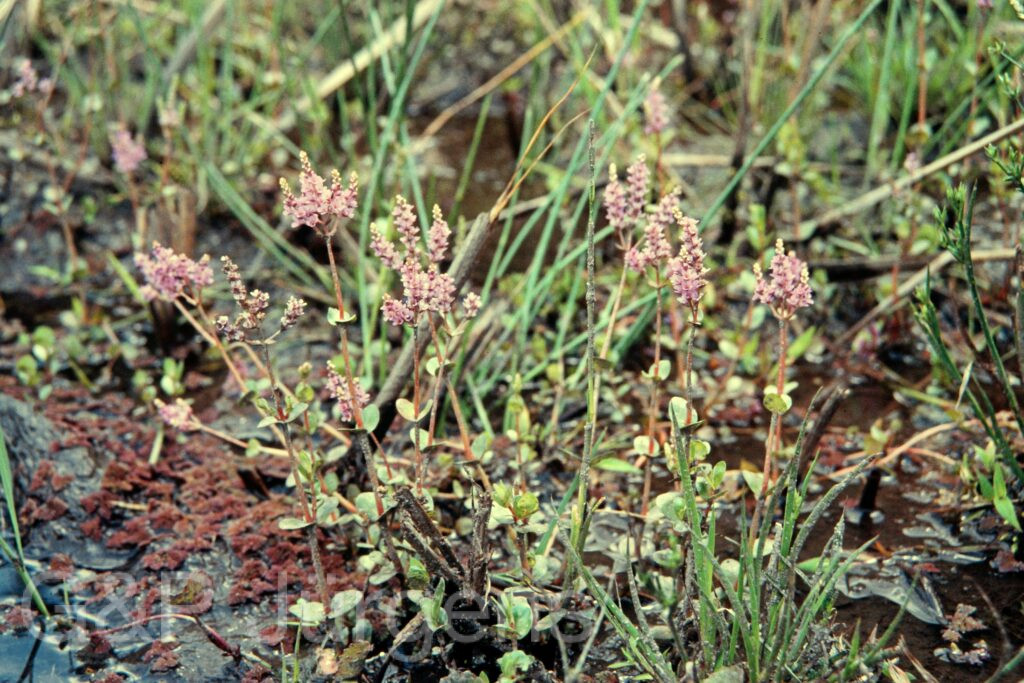
Nepal 97 63 P97
Nepal Mewa-Khola 1195m April

Description

Rotala rotundifolia (Buch.-Ham. ex Roxb.) Koehne is a small amphibious herb of the Lythraceae with a wide Asian distribution and an extensive secondary range. GBIF, with 2,686 occurrences, records it natively across China, Taiwan, India, Nepal, Bhutan, Bangladesh, Myanmar, Thailand, Laos, Vietnam and Japan, and as an introduction in the USA, Australia, Brazil and elsewhere, partly through the aquarium trade. The species inhabits wet paddy margins, ditches, marshes, riverbanks and shallow standing water from the lowlands to around 1,500 m. The illustrated material from the Mewa-Khola in eastern Nepal at 1,195 m, in April, is typical of its subtropical wetland habitat.

The plant is a creeping to ascending annual or short-lived perennial, often rooting at the lower nodes and producing erect flowering shoots. Its stems are slender and four-angled, and the leaves are opposite, sessile, orbicular to ovate (as the epithet indicates) on submerged or basal parts but narrower on emergent shoots, a marked heterophylly. The flowers are minute and sessile, crowded into dense, spike-like terminal racemes; each has a four-lobed campanulate calyx, four small pink to rose-purple petals, and few stamens. The fruit is a small septicidal capsule with a finely striate surface containing numerous tiny seeds.

Rotala rotundifolia is taxonomically variable, with submerged and emergent forms differing strikingly in leaf shape and colour, a plasticity that has made it a popular ornamental aquatic. This same adaptability allows it to behave as an aggressive invasive in introduced regions, where it can clog drainage and displace native wetland flora. In its native Himalayan and Asian range it is an abundant and ecologically unremarkable component of seasonally inundated habitats.

Author: (Buch.-Ham. ex Roxb.) Koehne · Sources: POWO (Kew), GBIF, Flora of China Vol. 13, Flora of Nepal, Flora of British India Vol. 2, Cook: Aquatic and Wetland Plants of India
Bennet & Raizada

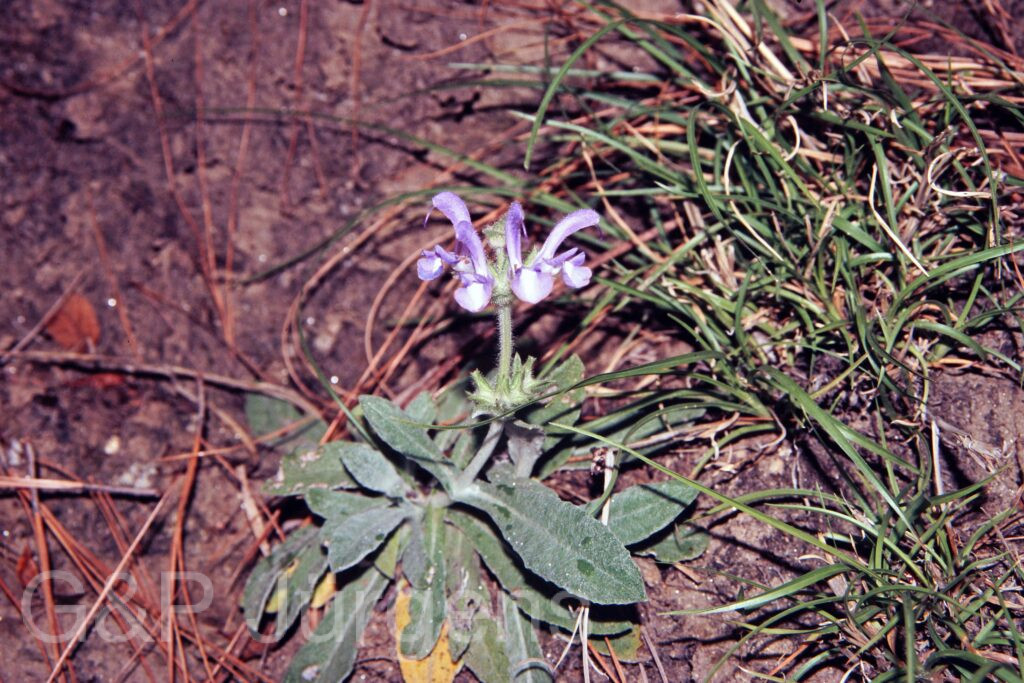
Garh 07 18 ergebnis
India Garhwal Uniana at Mandakini 1350m, June

Description

Salvia mukerjeei is a Himalayan endemic distributed along the southern flank of the western and central ranges, with georeferenced records spanning Pakistan, northern India and Nepal (GBIF documents 91 occurrences across these three countries). It favours shaded banks, forest margins and disturbed slopes in the warm-temperate to lower montane belt; the illustrated material was gathered in India, Garhwal, at Uniana near the Mandakini valley at about 1350 m in June, a setting typical of the moist mid-elevation gorges where the species recurs. Within this zone it grows on humus-rich soils beneath broad-leaved canopy and along streamsides flushed by the early monsoon.

The plant is an erect herb arising from a fibrous-rooted base, the quadrangular stems clothed in spreading eglandular and shorter glandular hairs. Leaves are opposite, petiolate and ovate to broadly cordate, with a crenate-serrate margin, an acuminate apex and a rugose, prominently veined lamina pubescent on both faces. The inflorescence is a lax terminal raceme of distant verticillasters, each subtended by deciduous bracts. Flowers show the characteristic bilabiate calyx and a two-lipped corolla with a hooded upper lip and spreading lower lip; the two fertile stamens bear the elongated connective lever diagnostic of the genus. The fruit comprises four smooth nutlets enclosed in the persistent calyx.

Described from Garhwal collections, the species honours the botanist Mukerjee and belongs to a complex of Asian Salvia centred on the Himalaya. POWO and GBIF treat the name as the accepted taxon. Its restricted range and dependence on undisturbed shaded habitats make it sensitive to forest clearance, though no formal IUCN assessment has been published.

Author: Bennet & Raizada · Sources: POWO (Kew), GBIF, Flora of Pakistan, Flora of British India, A Revision of Salvia in Asia (Lamiaceae monograph), Annotated Checklist of the Flowering Plants of Nepal

Wall.

Bhutan2012 676
Bhutan Galephu 900m, September

Description

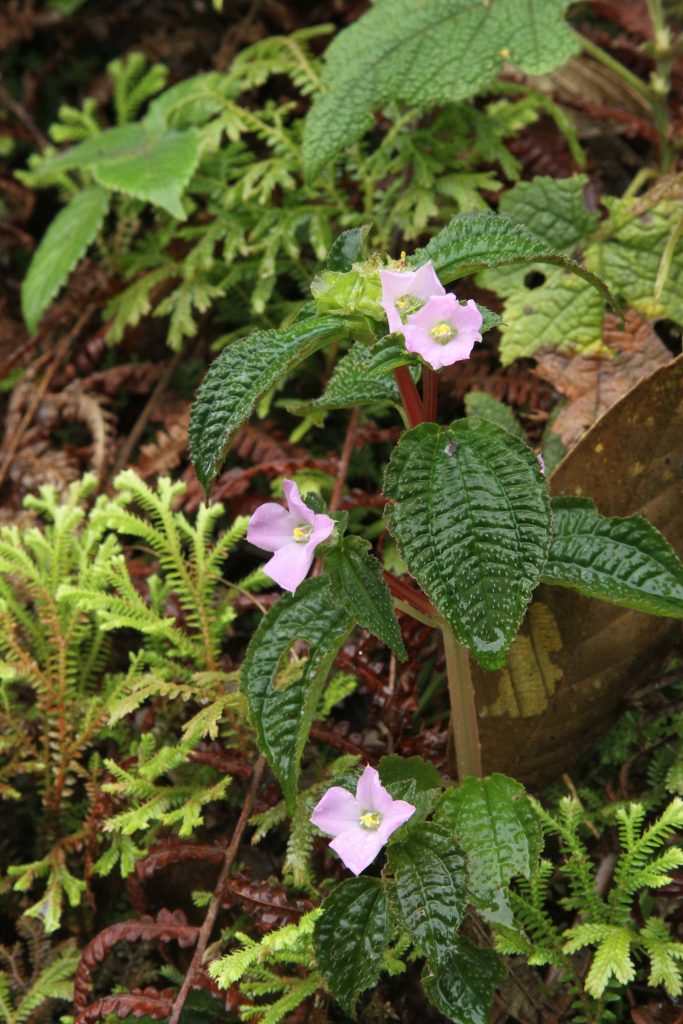
Sarcopyramis nepalensis Wall. is a small, delicate herb of the Melastomataceae distributed through the eastern Himalaya and Southeast Asia. Its several hundred records range across Nepal, northeast India, Bhutan, southern China, Taiwan, Myanmar, Vietnam, Malaysia, Indonesia and the Philippines. The species is a denizen of cool, shaded, perpetually moist habitats, growing on damp humus-rich banks, mossy rocks, ravine sides and the forest floor of evergreen broad-leaved and subtropical forests. It generally occupies low to mid elevations, and the plant photographed near Galephu in southern Bhutan at 900 m in September, late in the monsoon when these herbs flower, is typical of its preference for humid, dripping microsites.

The plant is a small, succulent, low annual or short-lived perennial with weak, ascending, four-angled stems that often root at the lower nodes. The leaves are opposite, membranous, broadly ovate to elliptic, with the three to five arcuate, longitudinally curved veins characteristic of the family, the margins finely toothed and sometimes reddish beneath. The flowers are borne singly or in few-flowered terminal cymes; they have a distinctive urceolate, four-angled hypanthium with prominent crested or winged angles, four pink to pale rose-purple petals, and eight stamens with conspicuously appendaged connectives. The fruit is a small, four-lobed, cup-shaped capsule crowned by the persistent calyx.

Sarcopyramis is a small Asian genus closely allied to Bredia and Phyllagathis within tribe Sonerileae, and the species has at times been treated as a variable complex with several segregate taxa and varieties. Its dependence on humid, shaded forest microhabitats makes it a useful indicator of intact, moisture-rich forest understorey. While not currently regarded as threatened across its broad range, local populations are sensitive to deforestation and the drying of streamside and seepage habitats.

Author: Wall. · Sources: POWO (Kew), GBIF, Flora of China Vol. 13, Flora of Bhutan Vol. 2, Renner et al.: Melastomataceae systematics

DC.

Bhutan2012 757
Bhutan Zemgang 1200m, October
Bhutan2012 758
Bhutan Zemgang 1200m, October

Description

Saurauia napaulensis is a subtropical tree or large shrub widely distributed through the southern Himalaya and Southeast Asia, with abundant GBIF occurrences in China, Nepal, India, Bhutan, Bangladesh, Myanmar, Thailand, Laos, Vietnam, Malaysia and Sri Lanka. It is a frequent component of moist subtropical broad-leaved forest, secondary forest, ravines and stream sides, generally between 600 and 2,100 m. The photographed individual was recorded at Zhemgang in central Bhutan at about 1,200 m in October, within the warm mid-hill belt where the species is a conspicuous understorey and gap-colonising tree.

The plant is a small evergreen tree, typically with stout twigs and young parts clothed in scaly or bristly indumentum characteristic of the genus. The leaves are large, alternate, oblanceolate to elliptic, leathery, with serrate margins and prominent lateral venation, the lower surface bearing scattered scales or appressed setae. The flowers are borne in branched axillary panicles; each is five-merous with white to pink, somewhat cup-shaped petals, numerous stamens, and several distinct or basally united styles. The fruit is a small, fleshy, depressed-globose, greenish to whitish berry containing many minute seeds, attractive to birds and other animal dispersers.

Saurauia is the only genus of Actinidiaceae with a wide Old World tropical distribution, the family also containing the kiwifruit genus Actinidia, and the scaly indumentum and many-styled flowers are diagnostic. Saurauia napaulensis is among the most common and widespread Asian species, used locally for fuel, fodder and edible fruit. It is abundant, regenerates readily in disturbed ground, and is not of conservation concern.

Author: DC. · Sources: POWO (Kew), GBIF, Flora of China Vol. 12 (Actinidiaceae), Grierson & Long: Flora of Bhutan Vol. 2, Hunter: Revision of the Asian species of Saurauia

()DC.) Choisy

Bhutan2014 769
Bhutan Wangdi Punaka 1400m, May
Bhutan2014 769
Bhutan Wangdi Punaka 1400m, May
Nepal 1994 322 ergebnis
Ost-Nepal Chainpur 1300m May 

Description

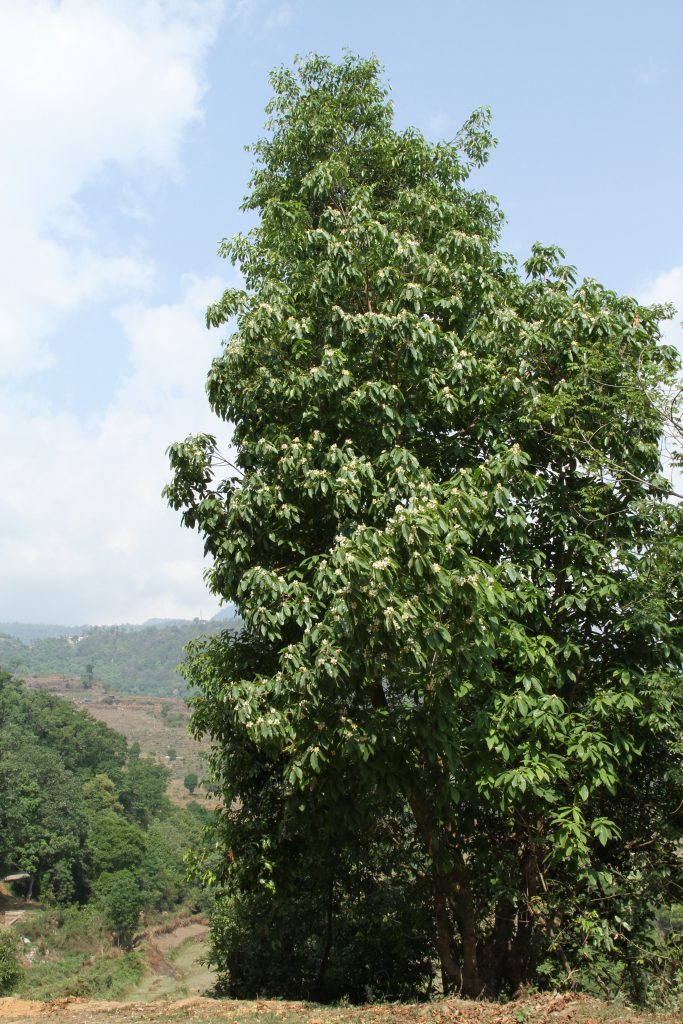
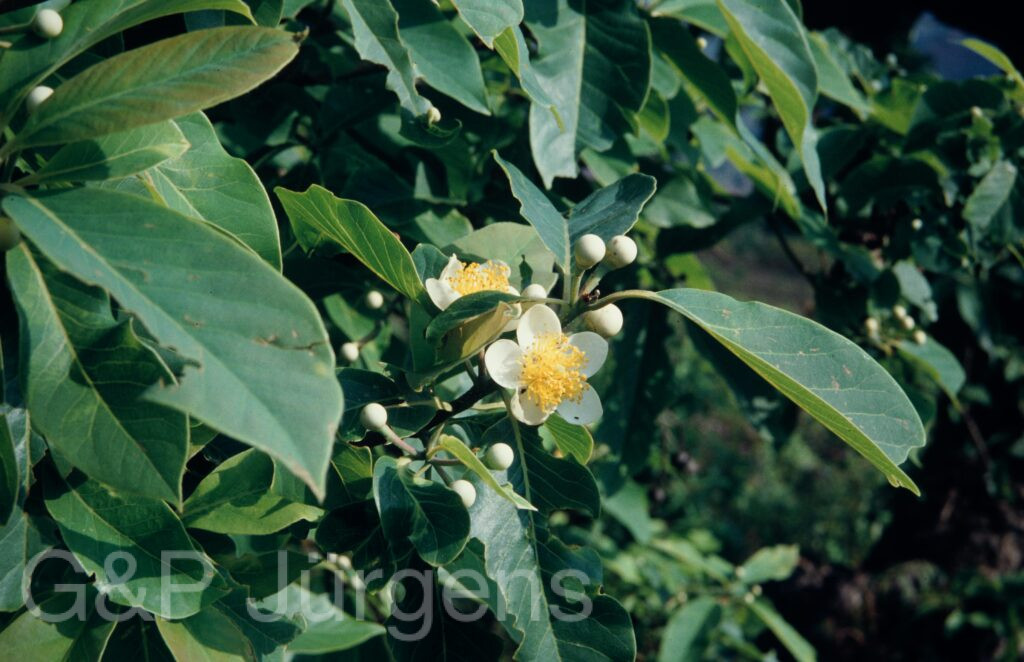
Schima wallichii is a large evergreen tree distributed across the eastern Himalaya and Southeast Asia, with GBIF records from China, Indonesia, Malaysia, Thailand, India, Nepal, Myanmar, Vietnam, Laos, Bhutan, the Philippines, Cambodia and Bangladesh among others, totalling around 3706 occurrences. It is a dominant or co-dominant canopy element of subtropical and lower montane broadleaved forest, frequently a pioneer that colonises forest gaps, secondary woodland and abandoned cultivation on humid hill slopes. The trees photographed at Wangdi-Punakha in Bhutan at about 1400 m and at Chainpur in eastern Nepal at about 1300 m, both in May, illustrate its prevalence in the warm subtropical mid-hill forests of the southern Himalayan front, where it often forms extensive stands with oaks and laurels.

It is an evergreen tree with grey, longitudinally fissured bark and reddish young shoots. The leaves are alternate, coriaceous, elliptic to oblong-lanceolate, entire or obscurely serrate, glabrous and glossy above and somewhat paler beneath. The flowers are solitary or few in the upper leaf axils, large and showy, with five white petals surrounding a dense central mass of numerous yellow stamens, the whole subtended by silky sepals and bracteoles and emitting a sweet fragrance. The fruit is a woody, globose, loculicidal capsule that splits into valves to release flattened, broadly winged seeds adapted to wind dispersal.

A member of the tea family (Theaceae), Schima wallichii is an ecologically important successional and timber species, its hard wood widely used in construction, while the bark and other tissues contain irritant saponins. Its winged seeds and gap-colonising habit make it an effective coloniser of disturbed montane forest, contributing to forest regeneration and watershed protection. Broadly distributed and often abundant, the species is not of conservation concern; rather it is silviculturally valued and frequently retained or planted in mixed broadleaved forestry across its range.

Author: ()DC.) Choisy · Sources: POWO (Kew), GBIF, Flora of China Vol. 12, Flora of Bhutan Vol. 1, Flora of Nepal, Bloembergen A Critical Study in the Complex-Polymorphous Genus Schima (Theaceae)

Tiegh. ex Steenis

Bh2008 527 P803
Bhutan Limbukha 1400m, May
Bh2008 528 P804
Bhutan Limbukha 1400m, May

Description

Schoepfia griffithii is a small tree or shrub of the family Schoepfiaceae, a hemiparasitic member of the sandalwood order Santalales. Its GBIF records are confined to Bhutan, India, China and Myanmar, indicating a restricted eastern Himalayan to northern Indochinese distribution. It occurs in subtropical and warm-temperate broad-leaved forest, on hill slopes, ridges and forest margins, typically between about 1,000 and 1,800 m. The collection illustrated from Limbukha in western Bhutan at around 1,400 m in May is representative of this mid-elevation evergreen forest, where the plant flowers in spring.

The species is a slender, much-branched shrub or small tree with smooth bark and glabrous twigs. The leaves are alternate, simple and entire, ovate to elliptic, leathery and shortly petiolate, with a somewhat acuminate apex. The flowers are small and borne in short axillary racemes or fascicles; the corolla is tubular to campanulate, usually creamy to greenish-yellow, with a small number of lobes and stamens inserted opposite the lobes, set on a partly inferior ovary surrounded by a small disk. The fruit is a small ovoid drupe-like structure enclosed by the persistent, accrescent perianth and receptacle, ripening to a coloured fleshy body attractive to birds.

As a root hemiparasite Schoepfia attaches to the roots of neighbouring trees through haustoria while remaining photosynthetic, a habit shared across the Santalales. The segregation of Schoepfiaceae from the older broadly circumscribed Olacaceae follows molecular phylogenetic studies that resolved the order into more natural families. With a narrow range and a habitat under pressure from forest clearance, S. griffithii is of biogeographic interest as a relatively poorly known component of the eastern Himalayan parasitic flora.

Author: Tiegh. ex Steenis · Sources: POWO (Kew), GBIF, Flora of China Vol. 5, Flora of Bhutan Vol. 1, Nickrent: Phylogeny of Santalales, Flora of Bhutan supplementary checklist

Danser

Bhutan2012 994
Bhutan Trithangebe 1000m, October
Bhutan2012 995
Bhutan Trithangebe 1000m, October
Nepal 97 307 P610
Nepal Honggaon 2360m May
Nepal 97 308 P611
Nepal Honggaon 2360m May

Description

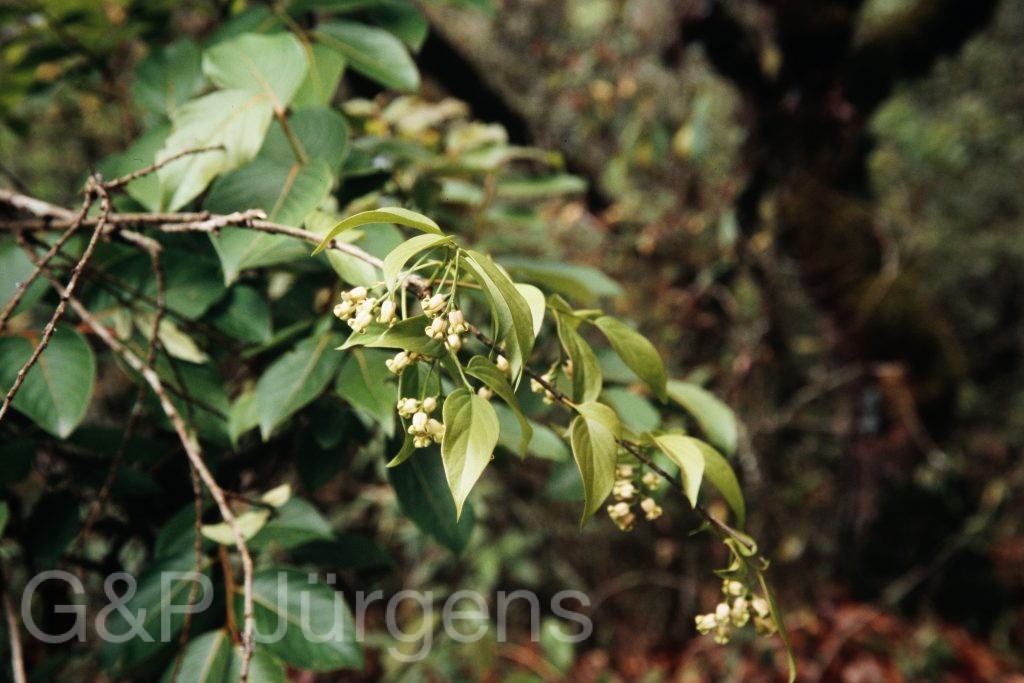
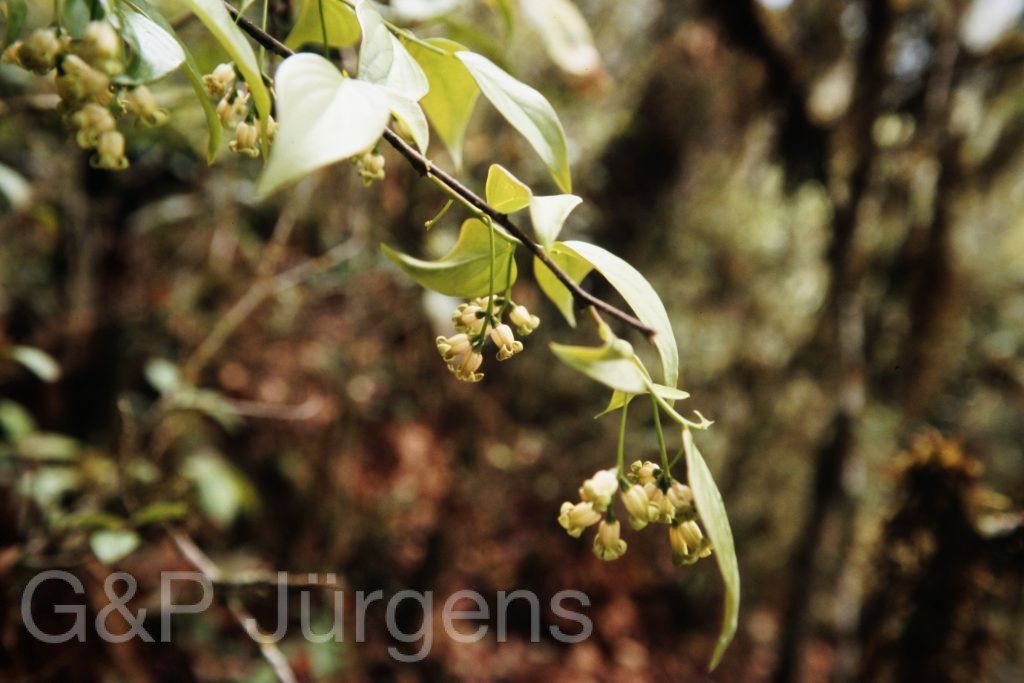
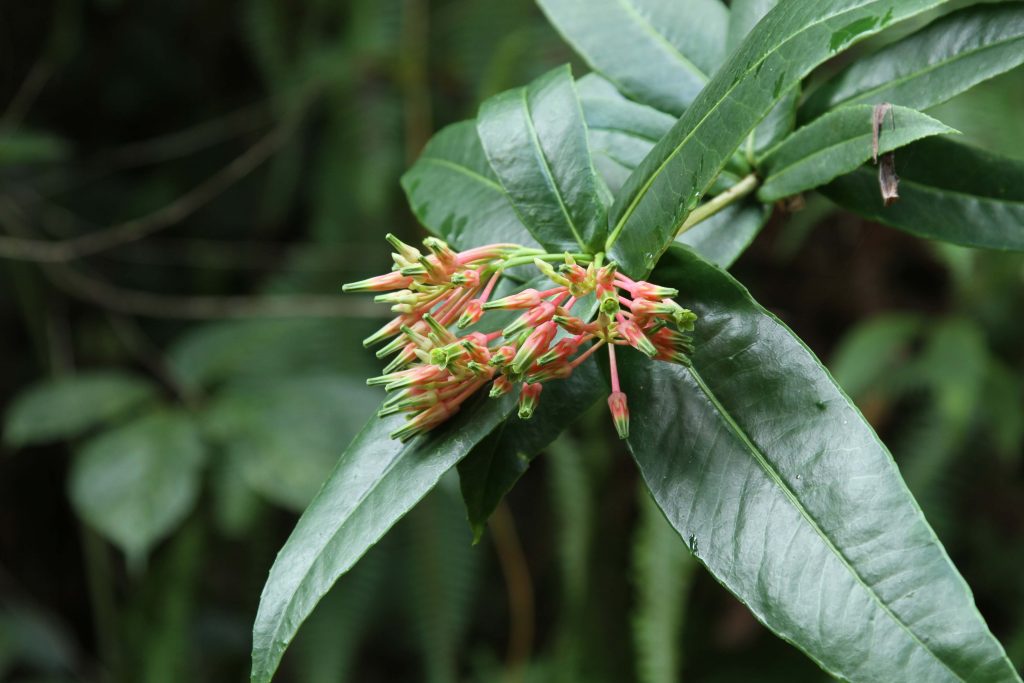
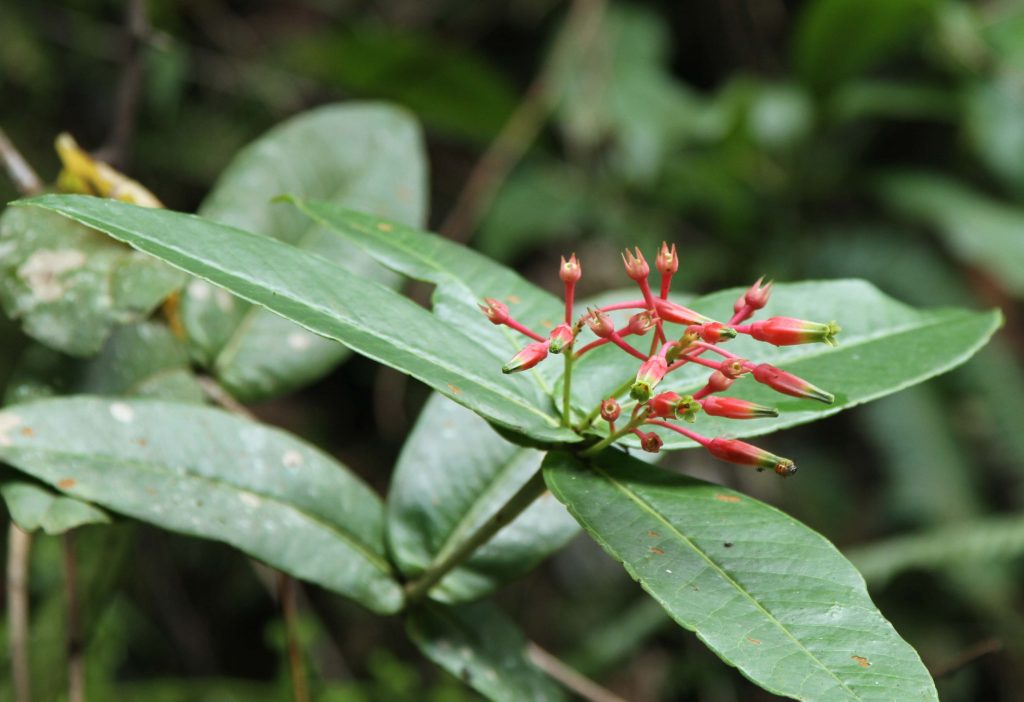
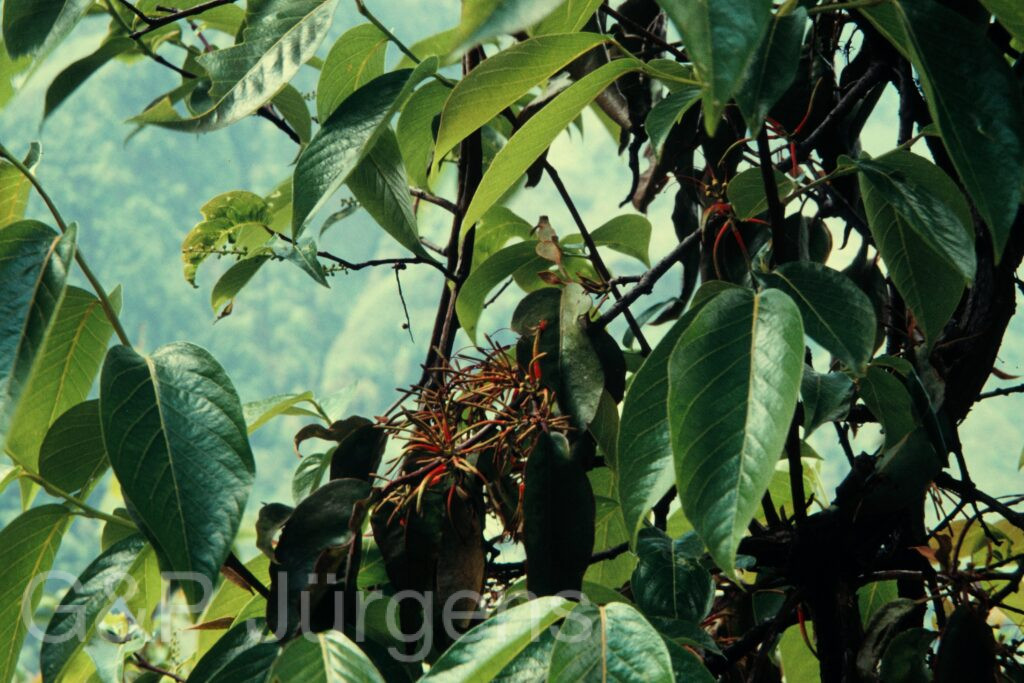
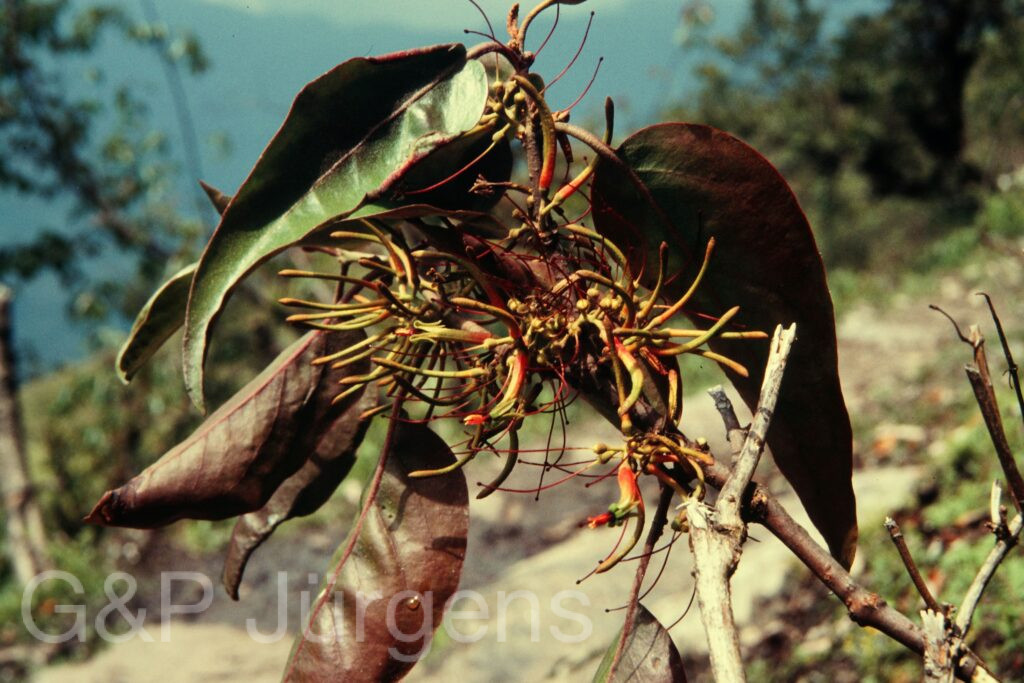
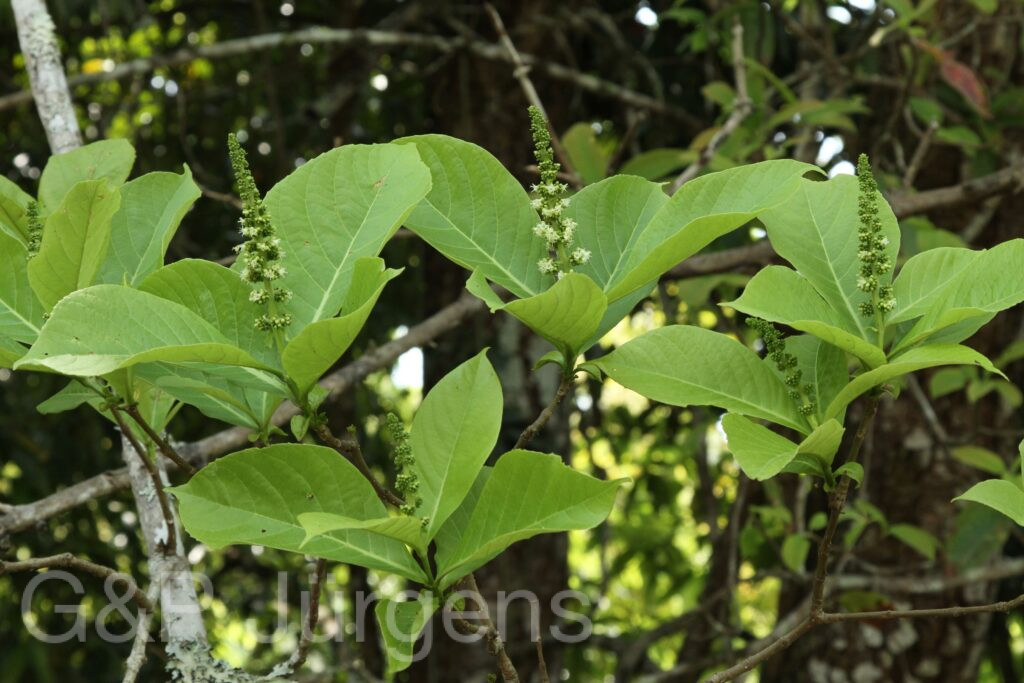
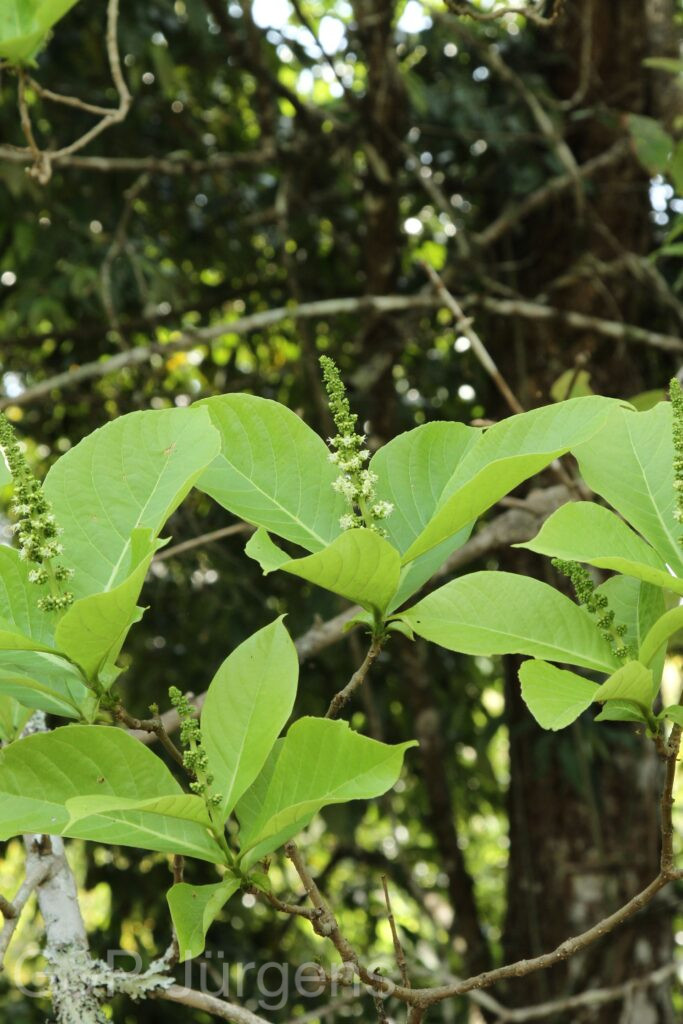
Scurrula elata is a hemiparasitic mistletoe of the eastern and central Himalaya, recorded from Nepal, China, Bhutan and India, with around 200 occurrences in GBIF. As an obligate stem parasite it occurs wherever suitable woody host trees grow in subtropical to warm temperate broad-leaved forest, hill forest and forest edges, drawing water and minerals from its host through a haustorial connection while photosynthesising in its own leaves. Its altitudinal spread is shown by the cited material from Trithangebe in Bhutan at 1000 m, in flower in October, and from Honggaon in Nepal at 2360 m in May, indicating a range across the lower and mid montane forest belt where host diversity is high.

The plant forms a pendent to spreading parasitic shrublet attached to host branches by a swollen haustorial union. The young stems and foliage are clothed in a brownish to rusty stellate or dendritic tomentum. The leaves are opposite or subopposite, ovate to elliptic, entire and shortly petiolate. The flowers are arranged in short axillary racemes and are characteristically zygomorphic, with a slender, curved, tubular corolla that splits along one side as it opens, ranging from greenish to reddish in colour; the calyx is borne on an elongate, club-shaped receptacle. The fruit is a small, club-shaped (turbinate) berry, narrowed below, containing a single viscin-coated seed adapted for bird dispersal and adhesion to new host branches.

Scurrula is a genus of the showy mistletoe family Loranthaceae, distinguished within the family by its pear- or club-shaped fruit and curved, one-sided corolla, and centred on tropical and subtropical Asia. As with other loranths, its flowers are typically pollinated by birds, and its seeds are spread by frugivorous birds such as flowerpeckers that wipe the sticky seeds onto branches. Heavy infestation can damage host trees, but the species is a natural component of Himalayan forest canopies, is widespread within its range and is not considered threatened.

Author: Danser · Sources: POWO (Kew), GBIF, Flora of China Vol. 5, Flora of Bhutan Vol. 1, Flora of Nepal, The Loranthaceae of the Indomalayan Region (Danser)

L.f.

Bhutan2014 678
Bhutan Wangdi Phodrang 1100m, June
Bhutan2014 677
Bhutan Wangdi Phodrang 1100m, June

Description

Semecarpus anacardium, the marking-nut tree, is a tree of the South and Southeast Asian tropics extending into the southern Himalayan foothills. GBIF (some 1,524 occurrences) records it natively from India, Nepal, Bhutan, Myanmar, Bangladesh, Sri Lanka, Vietnam, Indonesia, the Philippines and Papua New Guinea, with cultivated or introduced material in the Neotropics and on islands such as Mauritius. It grows in deciduous and semi-evergreen forest, savanna woodland and forest margins, mostly below 1,200 m. The photographed tree is from Wangdue Phodrang in western Bhutan at about 1,100 m, in June, near the upper limit of its subtropical range along the inner Himalayan valleys.

It is a medium-sized deciduous tree with a spreading crown and grey bark exuding an acrid, blackening resin. The leaves are large, simple, obovate to oblong, clustered towards the branch ends, coriaceous and rounded at the apex, with prominent venation. The flowers are small, greenish-white and borne in terminal panicles. The fruit is a drupe seated on a fleshy, orange, swollen hypocarp (the enlarged receptacle); the drupe itself is ovoid and turns black, its pericarp containing the caustic resin.

The black juice is the source of the indelible "marking-nut" dye used traditionally to mark cloth, and the nut is important in Ayurvedic medicine, though the resin is a potent contact irritant rich in urushiol-type phenolics, like others in the Anacardiaceae. The fleshy hypocarp is edible when roasted. The species is common across its range and of no conservation concern, exemplifying the Indo-Malesian tropical element penetrating the lower Himalaya.

Author: L.f. · Sources: POWO (Kew), Flora of Bhutan Vol. 2, Flora of Nepal, GBIF, Ding Hou: Anacardiaceae (Flora Malesiana)

Senna alata

by GP Jürgens

(L.) Roxb.

Bhutan2012 728
Bhutan Galephu 380m, September

Description

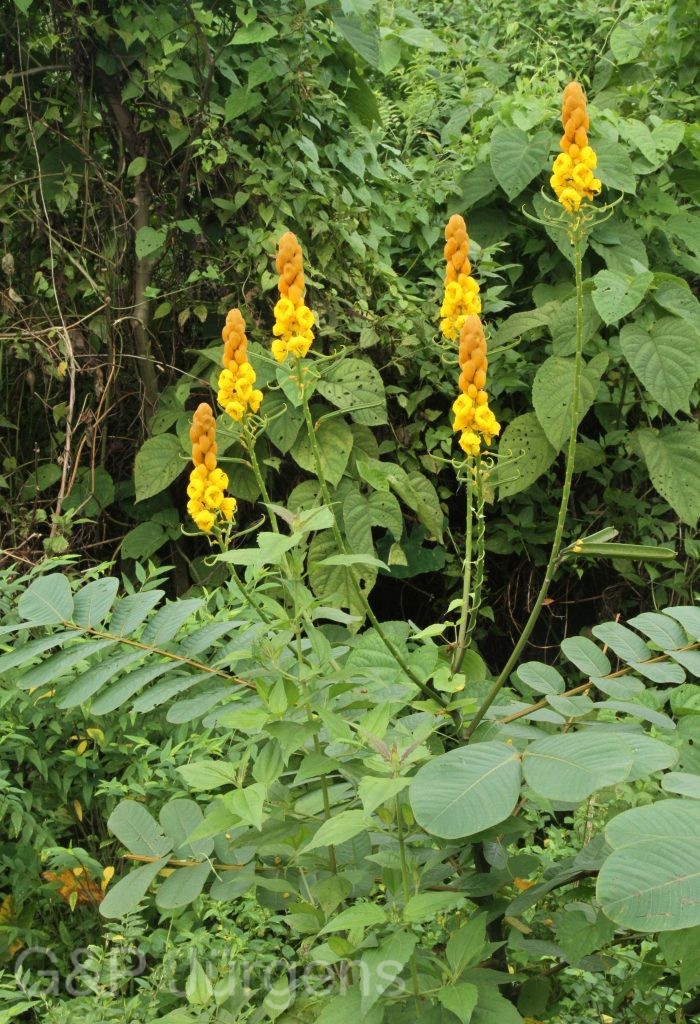
Senna alata, the candle bush or ringworm shrub, is a pantropical species of probable Neotropical origin, now widely naturalised throughout the tropics; GBIF records (12391 occurrences) span Brazil, the United States, Mexico, India, Australia, Indonesia, Taiwan, the Philippines, West Africa and much of Southeast Asia. It thrives in warm, humid lowland habitats, occupying riverbanks, ditches, waste ground, field margins and other disturbed, moist sites, generally below about 1000 m. The photographed plant from Galephu in southern Bhutan at only 380 m, flowering in September, marks its presence in the hot, subtropical Himalayan foothills where it occurs as an introduced or cultivated ornamental and medicinal plant.

The species is a robust, fast-growing shrub or small tree reaching 2-4 m, with stout, sparsely branched stems. The large pinnate leaves bear 6-14 pairs of oblong leaflets that are rounded at the apex, the rachis often narrowly winged. The inflorescence is a dense, erect, candle-like terminal raceme of bright golden-yellow flowers, each enclosed in bud by an orange bract that falls at anthesis. The flowers have five subequal petals and fertile and reduced stamens characteristic of Senna. The distinctive fruit is a straight, oblong, four-winged (alate) pod, dehiscing to release numerous flattened seeds, the wings giving the species its epithet.

Described by Linnaeus and transferred by Roxburgh, the species belongs to genus Senna (Fabaceae, subfamily Caesalpinioideae), segregated from the broad old concept of Cassia. It is renowned in ethnomedicine, its anthraquinone-rich leaves used as a topical antifungal treatment for ringworm and other skin conditions. While valued horticulturally and medicinally, its vigour and prolific seed make it a potential weed of disturbed tropical land. It is of least conservation concern given its enormous, partly anthropogenic range.

Author: (L.) Roxb. · Sources: POWO (Kew), GBIF, Flora of China, Flora of Bhutan, Cassiinae: A Synoptic Revision of Senna (Irwin & Barneby)

C.F.Gaertn.

Nepal 97 35 P54
Nepal Dhoban 800m April
Nepal 97 37 P56
Nepal Dhoban 800m April
Nepal 1994 33 ergebnis
Ost-Nepal Simbhuwa Kola 
1000m April

Description

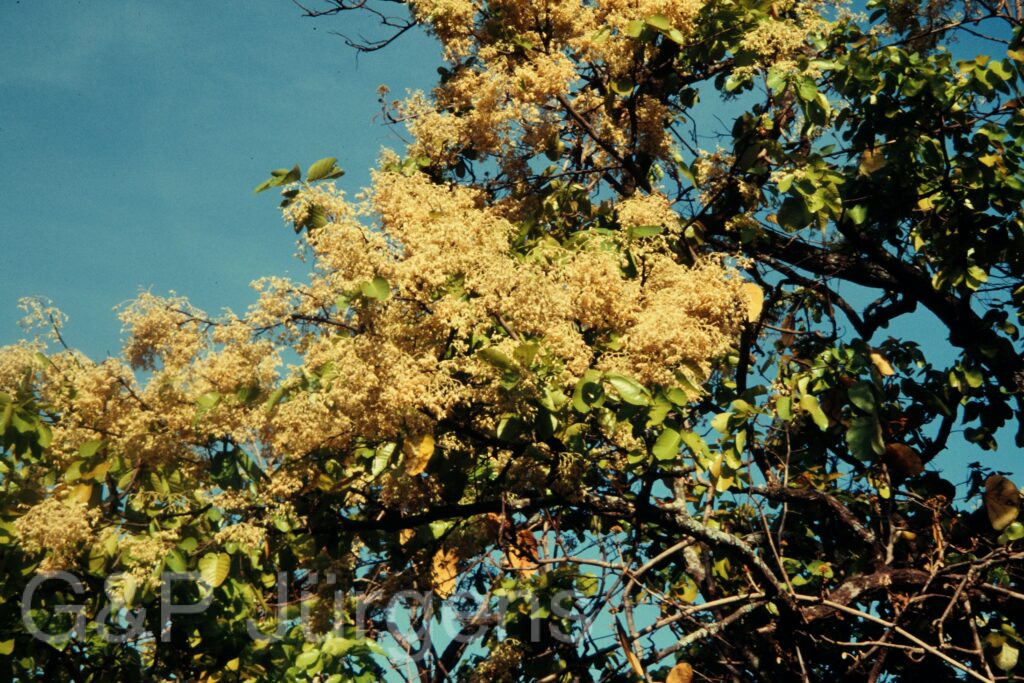
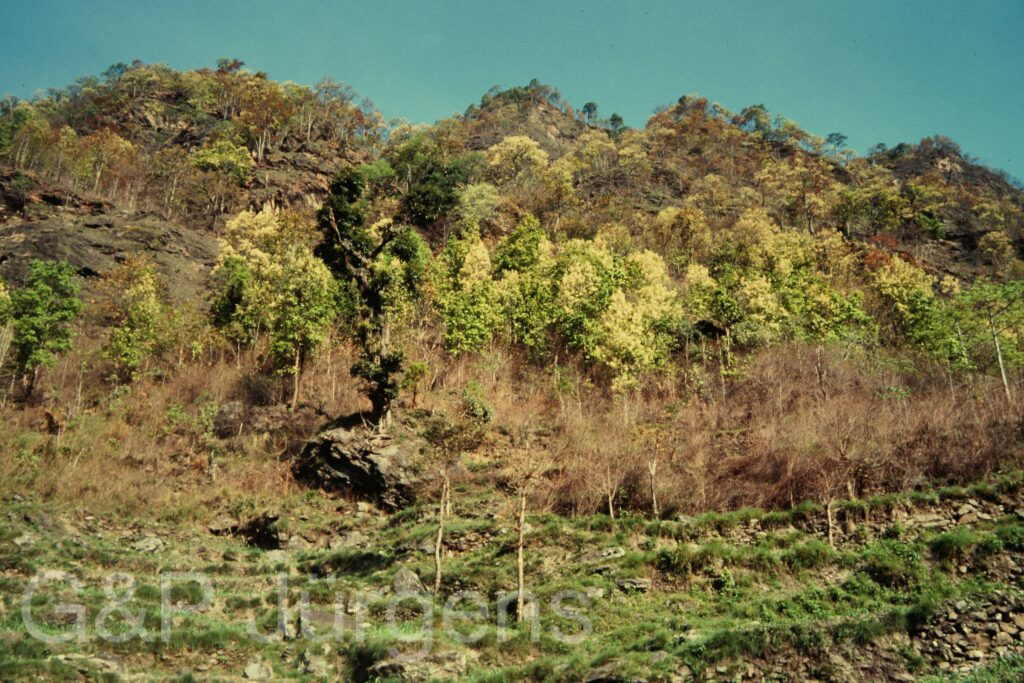
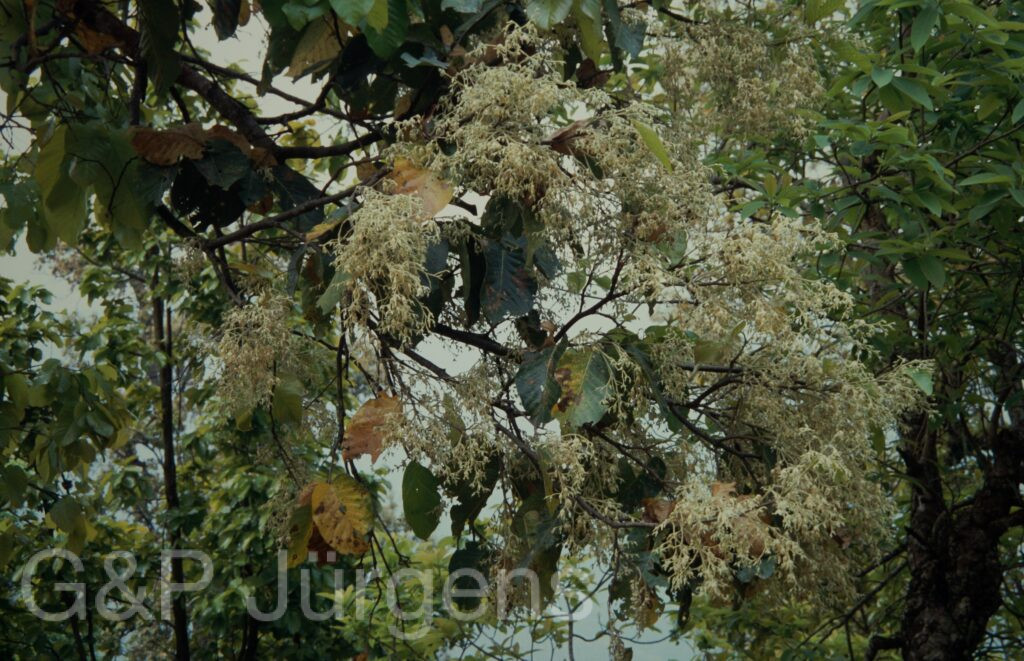
Shorea robusta, the sal tree, is a large, often gregarious dipterocarp dominating extensive lowland and submontane forests of the Indian subcontinent, documented by GBIF (596 occurrences) from India, Nepal, Bangladesh, Bhutan and adjacent regions. It forms the characteristic sal forest of the outer Himalayan foothills, terai and plains, on deep, well-drained alluvial and lateritic soils, typically below about 1200 m. The gatherings from Dhoban at 800 m and the Simbhuwa Kola in East Nepal at 1000 m, both in April, capture its phenology in the foothill belt, where it flushes new leaves and flowers in the hot pre-monsoon season.

The tree is large and may exceed 30 m, with a straight bole, thick longitudinally fissured bark and a dense, spreading crown; in moist sites it is nearly evergreen, briefly leaf-exchanging in the dry season. The leaves are simple, alternate, ovate-oblong, glabrous, shining and acuminate. The fragrant, pale yellow flowers are borne in axillary and terminal panicles, each with five sepals, five petals and numerous stamens. The fruit is a single-seeded nut crowned by the persistent, accrescent calyx, three lobes of which enlarge into elongate, wing-like sepals that aid wind dispersal.

A keystone of the Dipterocarpaceae in South Asia, sal is renowned for its durable timber, its dammar resin and its periodic mast-flowering, in which whole stands fruit synchronously. Ecologically it is a strong dominant forming nearly monospecific canopies and supporting a distinctive forest fauna and flora. Although heavily exploited and locally reduced by clearance, the species remains widespread and is not globally threatened, while being central to forestry and conservation in the region.

Author: C.F.Gaertn. · Sources: POWO (Kew), GBIF, Flora of Bhutan Vol. 1, Flora of Nepal, Flora of Pakistan, Ashton Dipterocarpaceae monograph (Flora Malesiana)