
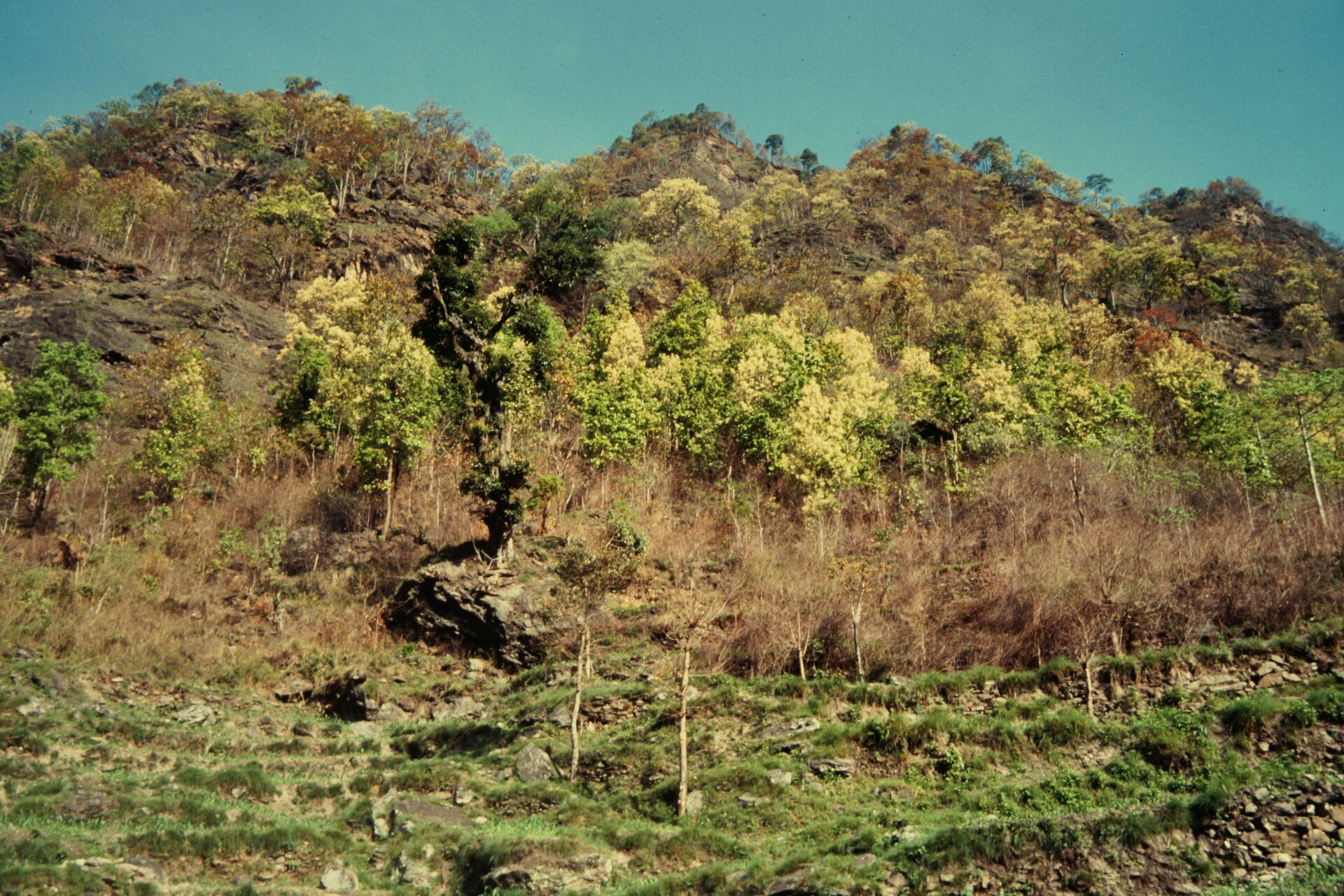
C.F.Gaertn.
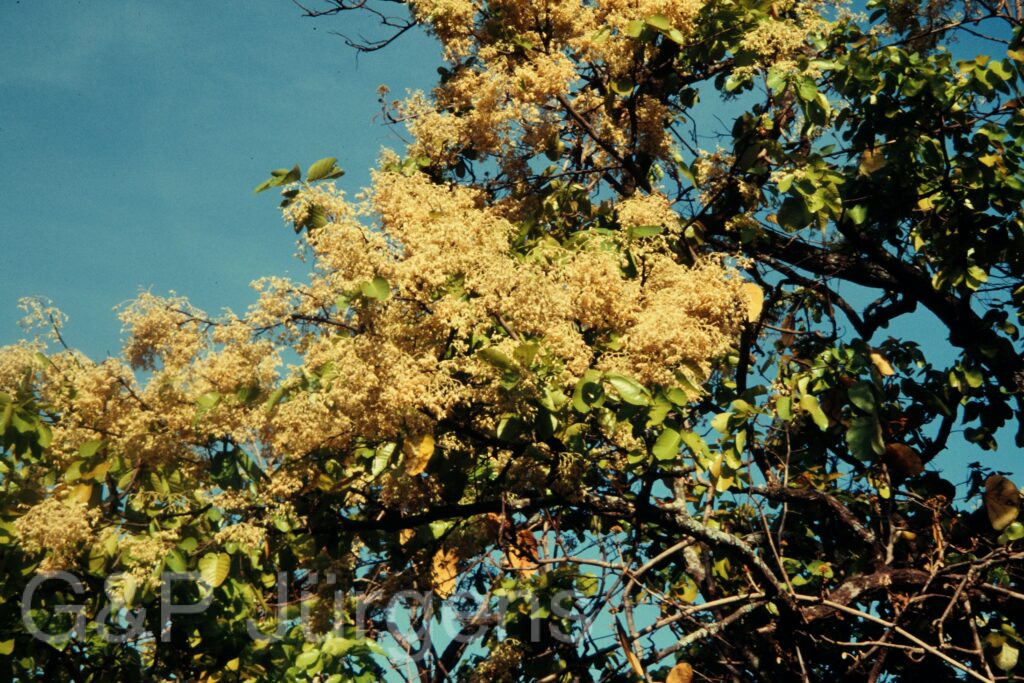
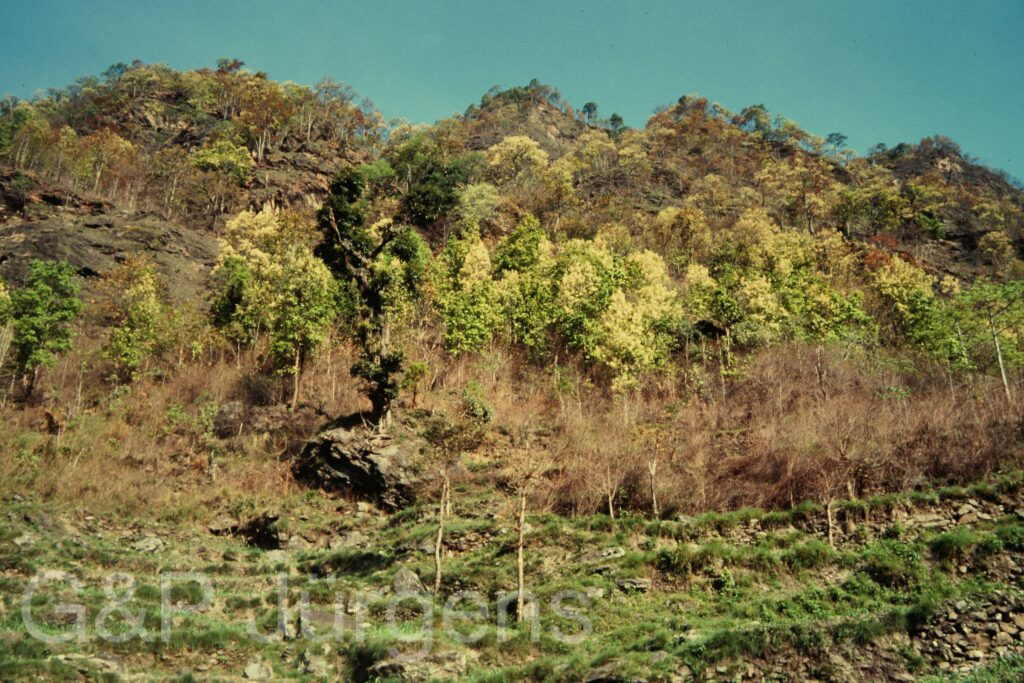
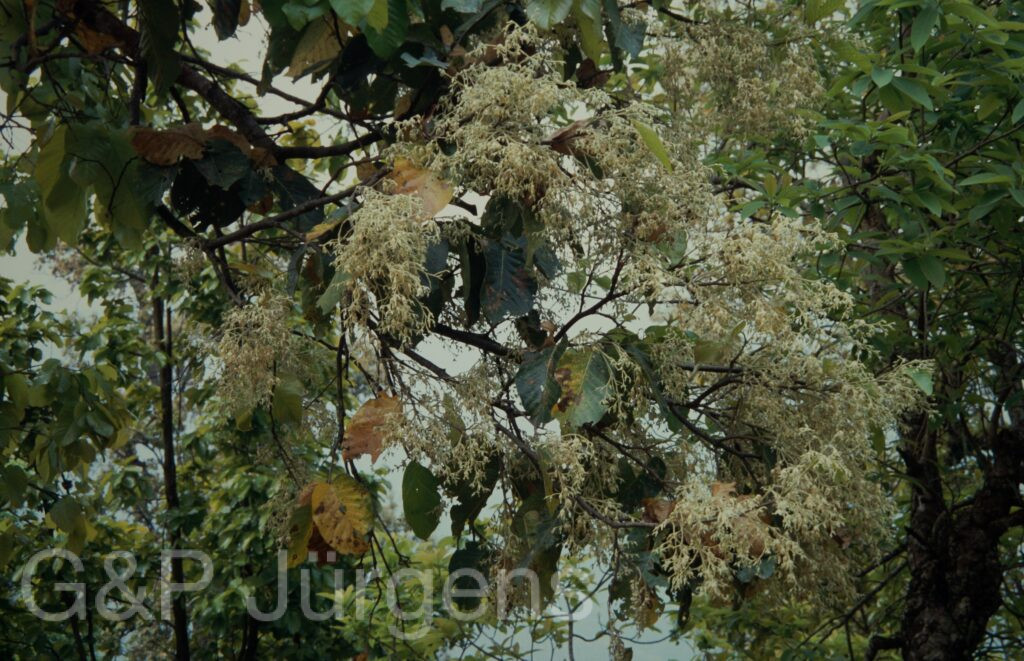
1000m April
Description
Shorea robusta, the sal tree, is a large, often gregarious dipterocarp dominating extensive lowland and submontane forests of the Indian subcontinent, documented by GBIF (596 occurrences) from India, Nepal, Bangladesh, Bhutan and adjacent regions. It forms the characteristic sal forest of the outer Himalayan foothills, terai and plains, on deep, well-drained alluvial and lateritic soils, typically below about 1200 m. The gatherings from Dhoban at 800 m and the Simbhuwa Kola in East Nepal at 1000 m, both in April, capture its phenology in the foothill belt, where it flushes new leaves and flowers in the hot pre-monsoon season.
The tree is large and may exceed 30 m, with a straight bole, thick longitudinally fissured bark and a dense, spreading crown; in moist sites it is nearly evergreen, briefly leaf-exchanging in the dry season. The leaves are simple, alternate, ovate-oblong, glabrous, shining and acuminate. The fragrant, pale yellow flowers are borne in axillary and terminal panicles, each with five sepals, five petals and numerous stamens. The fruit is a single-seeded nut crowned by the persistent, accrescent calyx, three lobes of which enlarge into elongate, wing-like sepals that aid wind dispersal.
A keystone of the Dipterocarpaceae in South Asia, sal is renowned for its durable timber, its dammar resin and its periodic mast-flowering, in which whole stands fruit synchronously. Ecologically it is a strong dominant forming nearly monospecific canopies and supporting a distinctive forest fauna and flora. Although heavily exploited and locally reduced by clearance, the species remains widespread and is not globally threatened, while being central to forestry and conservation in the region.
Author: C.F.Gaertn. · Sources: POWO (Kew), GBIF, Flora of Bhutan Vol. 1, Flora of Nepal, Flora of Pakistan, Ashton Dipterocarpaceae monograph (Flora Malesiana)