
Tiegh. ex Steenis
Description
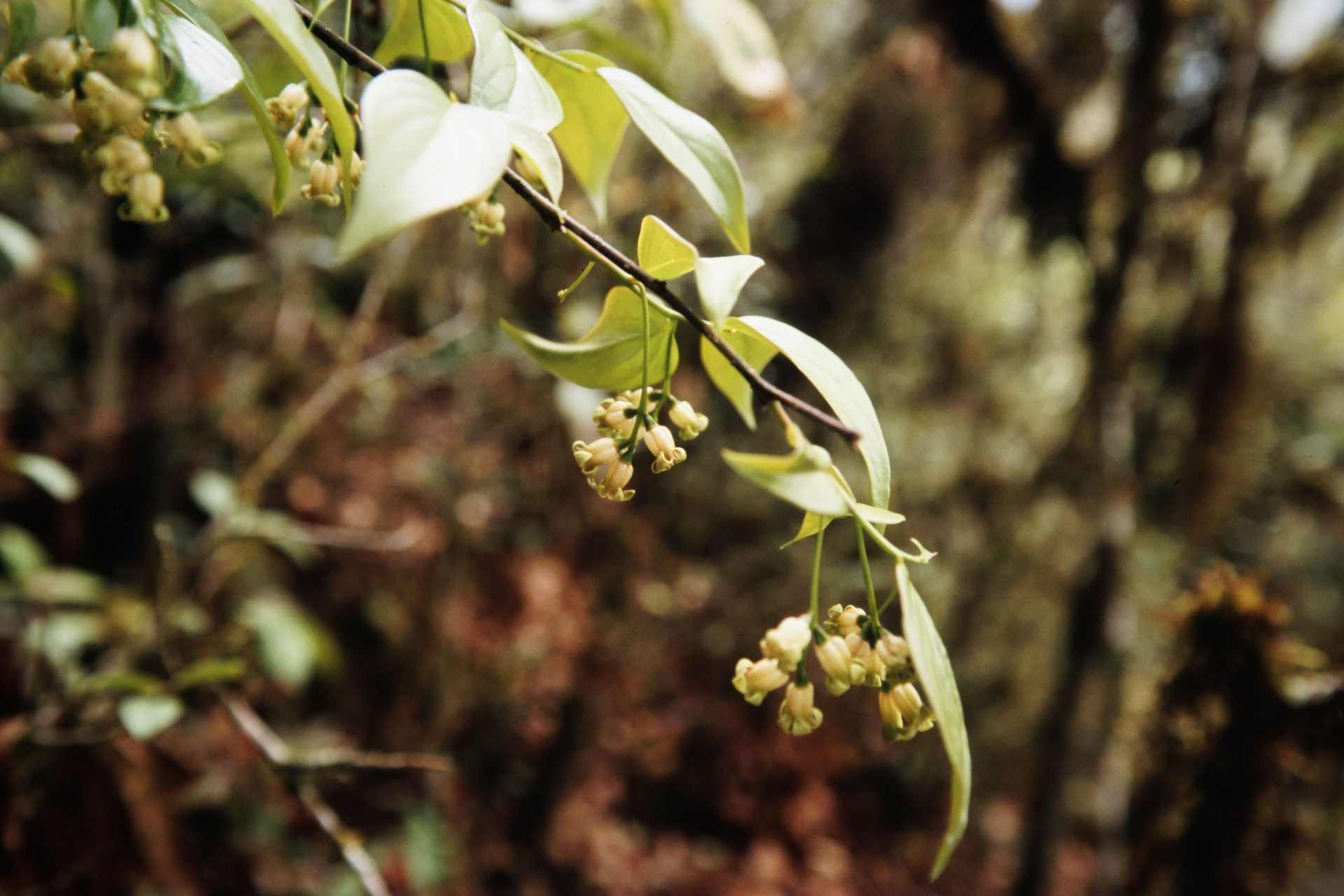
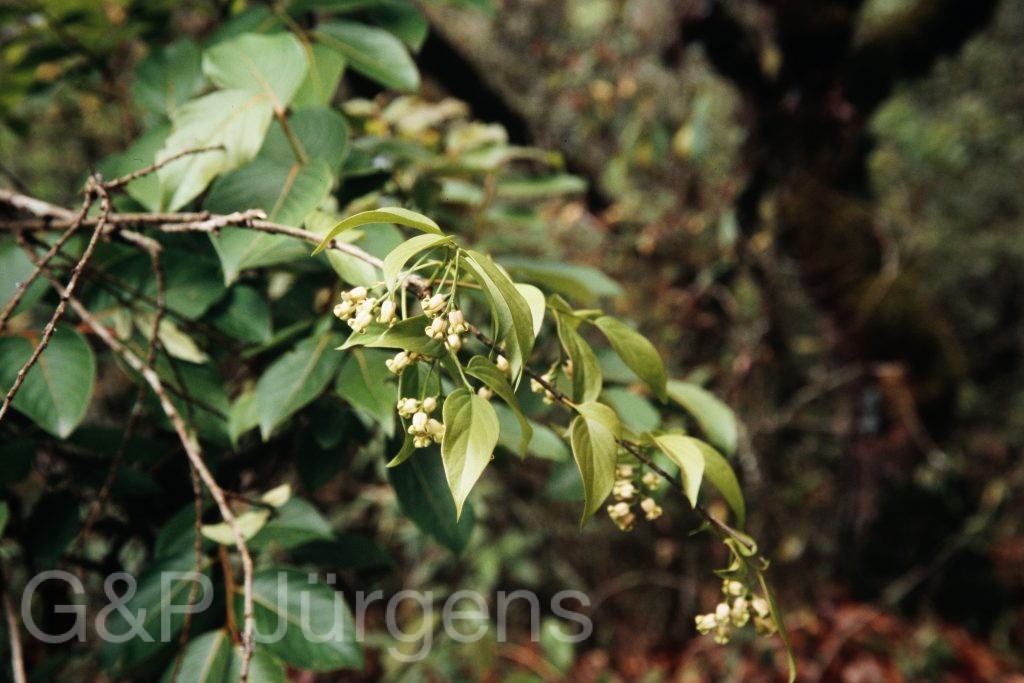
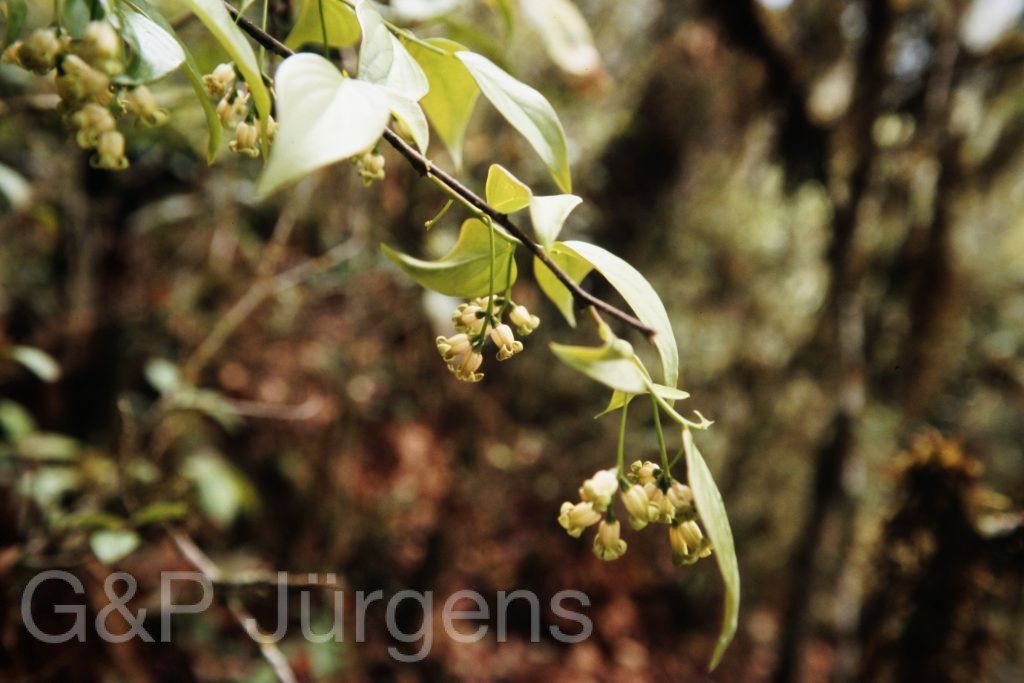
Schoepfia griffithii is a small tree or shrub of the family Schoepfiaceae, a hemiparasitic member of the sandalwood order Santalales. Its GBIF records are confined to Bhutan, India, China and Myanmar, indicating a restricted eastern Himalayan to northern Indochinese distribution. It occurs in subtropical and warm-temperate broad-leaved forest, on hill slopes, ridges and forest margins, typically between about 1,000 and 1,800 m. The collection illustrated from Limbukha in western Bhutan at around 1,400 m in May is representative of this mid-elevation evergreen forest, where the plant flowers in spring.
The species is a slender, much-branched shrub or small tree with smooth bark and glabrous twigs. The leaves are alternate, simple and entire, ovate to elliptic, leathery and shortly petiolate, with a somewhat acuminate apex. The flowers are small and borne in short axillary racemes or fascicles; the corolla is tubular to campanulate, usually creamy to greenish-yellow, with a small number of lobes and stamens inserted opposite the lobes, set on a partly inferior ovary surrounded by a small disk. The fruit is a small ovoid drupe-like structure enclosed by the persistent, accrescent perianth and receptacle, ripening to a coloured fleshy body attractive to birds.
As a root hemiparasite Schoepfia attaches to the roots of neighbouring trees through haustoria while remaining photosynthetic, a habit shared across the Santalales. The segregation of Schoepfiaceae from the older broadly circumscribed Olacaceae follows molecular phylogenetic studies that resolved the order into more natural families. With a narrow range and a habitat under pressure from forest clearance, S. griffithii is of biogeographic interest as a relatively poorly known component of the eastern Himalayan parasitic flora.
Author: Tiegh. ex Steenis · Sources: POWO (Kew), GBIF, Flora of China Vol. 5, Flora of Bhutan Vol. 1, Nickrent: Phylogeny of Santalales, Flora of Bhutan supplementary checklist