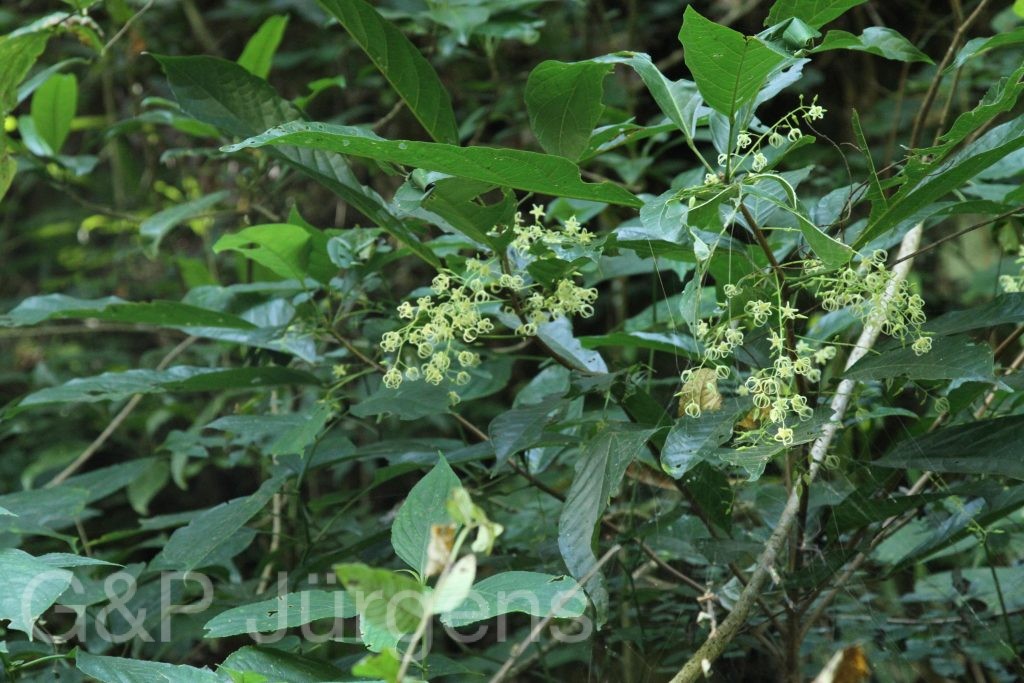
Tag:

Subtropical (<1500 m)

Herb.Madr. ex Wight & Arn.
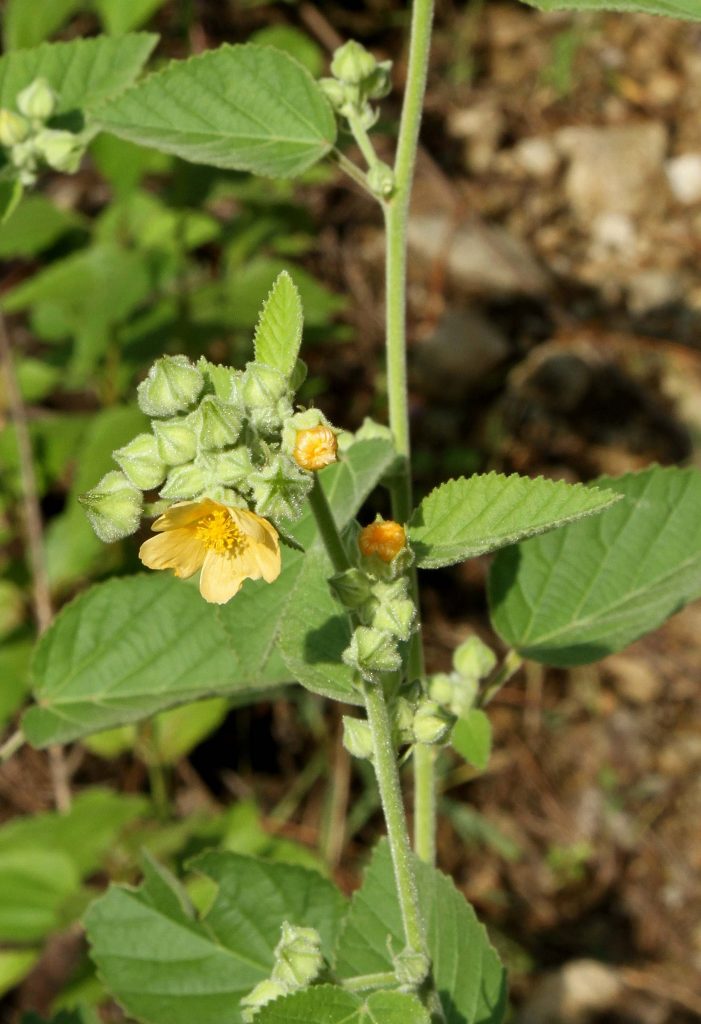
Bhutan2012 976
Bhutan Trithangebe 1000m, October
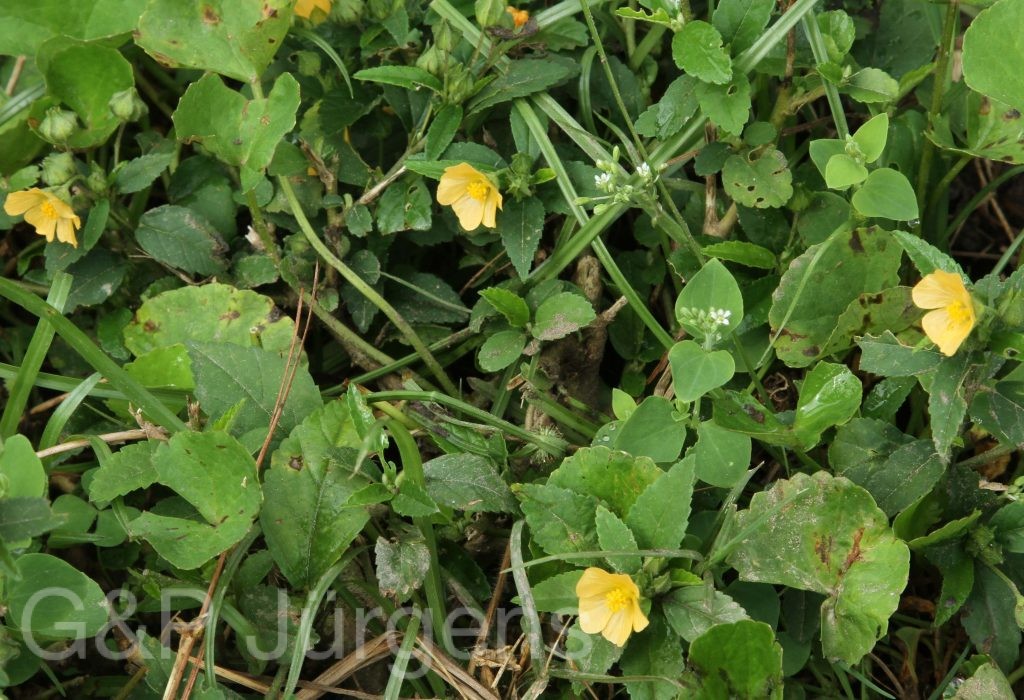
Bhutan2012 806 Kopie
Bhutan Trithangebe 1000m, October
also included: Drymaria cordata

Description

Sida mysorensis is an Old World tropical, weakly pantropical weedy herb, GBIF recording some 630 occurrences across South and Southeast Asia (India, Sri Lanka, China, Taiwan, Myanmar, Thailand, Vietnam, Cambodia, Laos, the Philippines, Indonesia), the Himalayan states (Nepal, Bhutan) and naturalised in the Neotropics (Mexico, Brazil, Colombia, Cuba, Guatemala). It is a plant of warm low to mid elevations, colonising roadsides, waste ground, fallow fields and forest margins. The Bhutanese record from Trithangebe at about 1000 m, flowering in October beside Drymaria cordata, is characteristic of its association with humid, weedy subtropical foothills after the monsoon.

It is an erect to ascending annual or short-lived perennial herb or subshrub, 30–120 cm tall, the stems and foliage softly pubescent to stellate-tomentose and often viscid. The leaves are alternate, ovate to cordate, crenate-serrate and stipulate. Flowers are small, solitary or few in the leaf axils; the corolla is yellow to pale orange, of five obovate petals around a staminal column typical of Malvaceae. The fruit is a schizocarp of several reticulate mericarps, each usually bearing short apical awns aiding dispersal.

Described from a Madras herbarium specimen by Wight and Arnott, S. mysorensis belongs to the large, taxonomically complex genus Sida, in which softly hairy, axillary-flowered species are frequently confused. It is of no conservation concern, being a widespread ruderal and minor agricultural weed, and like many Sida species has been used in folk medicine and as a bast fibre. Ecologically it is an early colonist of disturbed tropical ground.

Author: Herb.Madr. ex Wight & Arn. · Sources: POWO (Kew), GBIF, Flora of Bhutan, Flora of China, Malvaceae of the World (Bayer & Kubitzki treatment)
Dunal

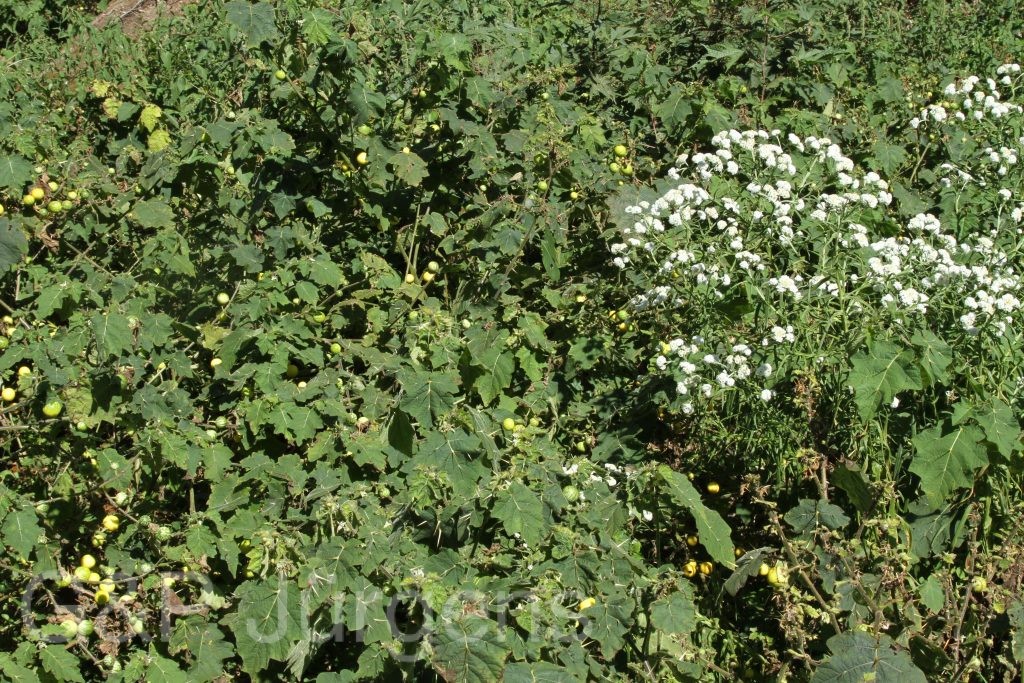
Bhutan2015 219
Bhutan Zhemgang 910m, October
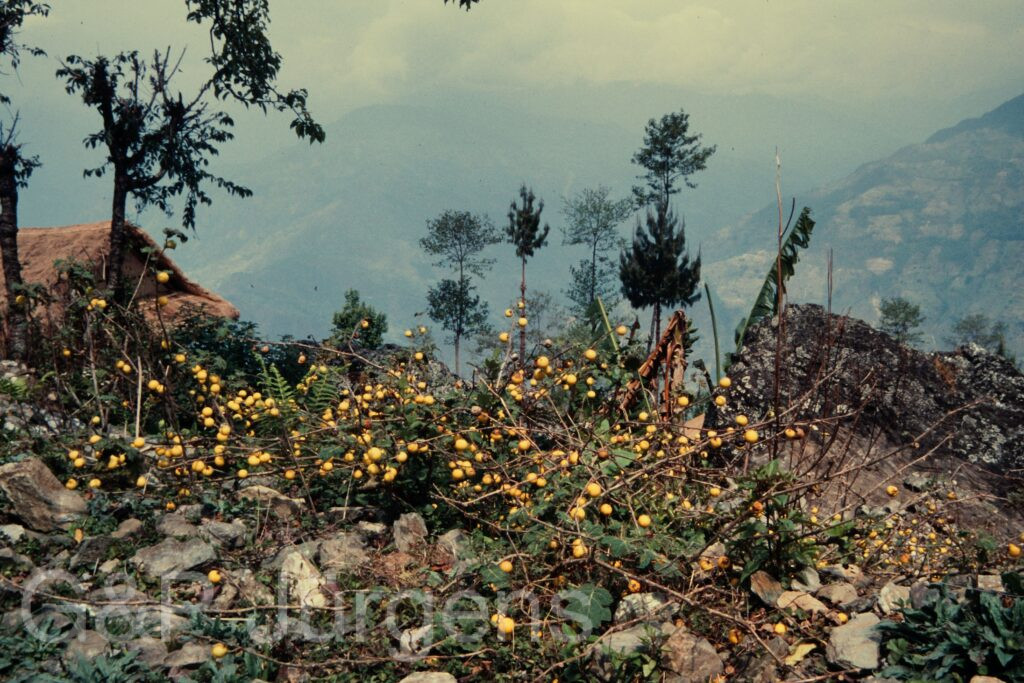
Nepal 97 9 P14
Nepal Taplejung 1000m April

Description

Solanum viarum, the tropical soda apple, is native to subtropical South America, notably Brazil, Argentina, Paraguay and Uruguay, but is now a widespread invasive weed; the GBIF dataset of roughly 32000 records spans the United States, Australia, South Africa, India, China, Vietnam, Thailand, Korea, Mexico and the Himalayan countries Nepal and Bhutan. It colonises pastures, roadsides, field margins, waste ground and disturbed forest edges at low to mid elevations, thriving in open, grazed and ruderal habitats. The illustrated material from Zhemgang in Bhutan at 910 m in October and Taplejung in eastern Nepal at 1000 m in April reflects its establishment in the warm subtropical foothills, where it behaves as an aggressive colonist of disturbed ground.

It is a robust erect prickly perennial herb or subshrub 1–2 m tall, the stems, petioles, leaf veins and calyx armed with stout, broad-based yellowish prickles and clothed in stellate hairs. The leaves are alternate, ovate, deeply lobed and sinuate, prickly on both surfaces along the veins. The inflorescence is a small extra-axillary cyme of white, stellate, five-merous flowers with reflexed petals and a cone of connivent yellow anthers. The fruit is a globose berry about 2–3 cm across, mottled green like a tiny melon when immature and ripening pale yellow, containing numerous flattened seeds embedded in juicy pulp.

Solanum viarum belongs to the spiny Leptostemonum clade of Solanum. Its prolific, animal-dispersed berries, toxic to many vertebrates but readily spread by livestock and wildlife, underlie its notoriety as a noxious weed subject to quarantine and biological control in the United States and elsewhere. In the Himalayan foothills it is a naturalised invader rather than a native element, and its spread is monitored as a threat to pasture and native vegetation.

Author: Dunal · Sources: POWO (Kew), GBIF, Flora of China Vol. 17, Flora of Bhutan Vol. 2, Flora of Nepal, Solanaceae: A Monograph of Solanum (Solanaceae Source)

C.B.Clarke

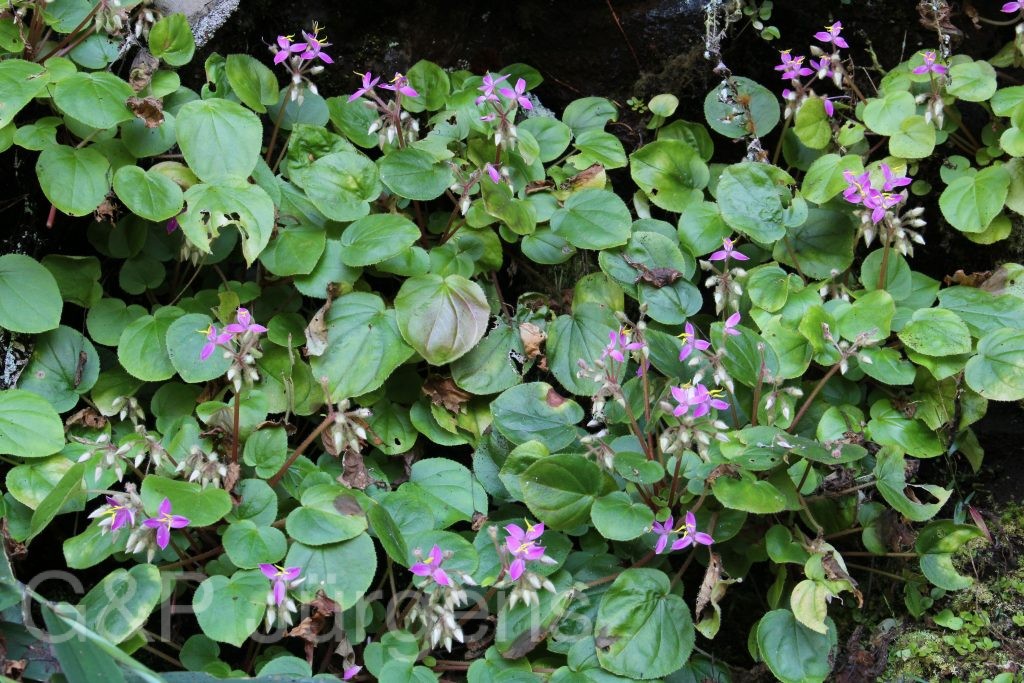
Bhutan2015 138
Bhutan Galephug 600m, October
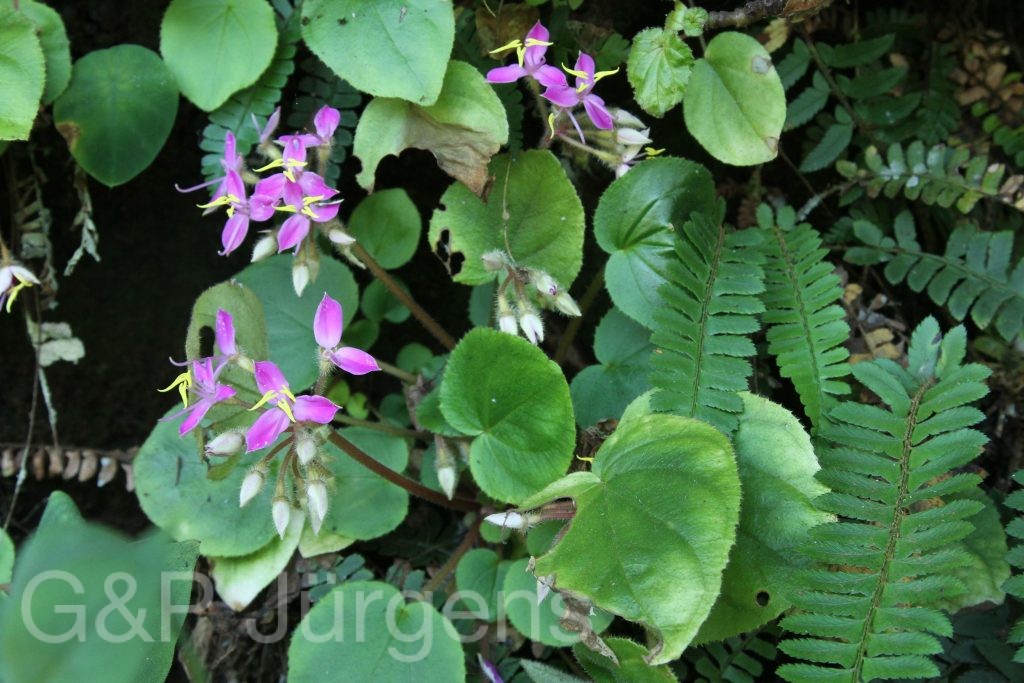
Bhutan2015 142
Bhutan Galephug 600m, October

Description

Sonerila khasiana is a small herb of the eastern Himalayan and northeast Indian region, recorded from India, Nepal, Bhutan, China and Myanmar, with comparatively few documented collections. It is a shade-loving plant of moist, humus-rich forest floors, shaded rock faces and damp banks in subtropical and lower montane forest, typically below about 1500 m. The illustrated plant from Galephug in southern Bhutan, at around 600 m and flowering in October, is characteristic of its lowland, post-monsoon flowering habit in warm, perpetually humid foothill forest where deep shade and constant moisture prevail.

The species is a delicate, often somewhat succulent annual or short-lived perennial with slender, ascending, frequently reddish stems. The leaves are opposite, ovate to elliptic, serrulate and traversed by the curved, parallel-converging nervation diagnostic of the Melastomataceae, the lamina often sparsely setose. The inflorescence is a short, terminal, scorpioid cyme of few flowers. The flowers are trimerous, with three pink to rose-purple petals and typically three stamens bearing the conspicuous, yellow, beaked anthers characteristic of the genus; the fruit is a small, three-angled, top-shaped capsule releasing numerous minute seeds.

The epithet refers to the Khasi Hills of Meghalaya, a centre of diversity for the genus. Sonerila is a large palaeotropical genus notable for its consistently trimerous flowers, unusual within a predominantly pentamerous family, and for its many narrow-range, forest-floor endemics. With relatively few records and a dependence on undisturbed shaded forest, such species are potentially sensitive to deforestation, although its full conservation status remains insufficiently assessed.

Author: C.B.Clarke · Sources: POWO (Kew), GBIF, Flora of China Vol. 13, Flora of Bhutan Vol. 2, Flora of Nepal, Revision of Sonerila (Melastomataceae)

(Lindl.) Rehder

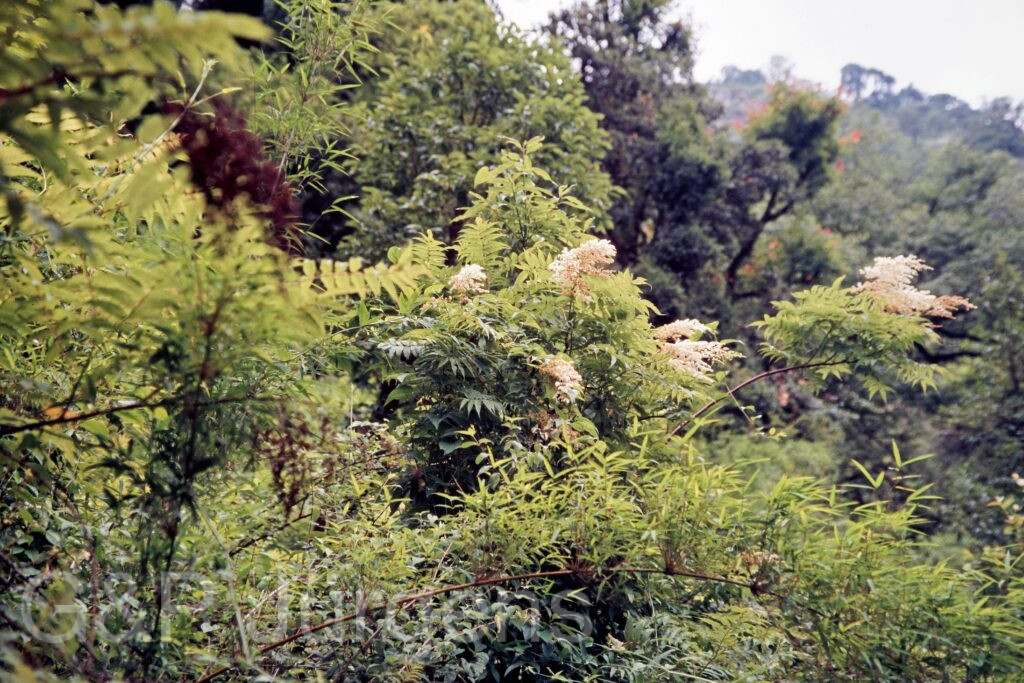
Garh 07 304 ergebnis
India Garhwal Bebra 1400m, June

Description

Sorbaria tomentosa is a deciduous shrub distributed along the temperate Himalaya from Afghanistan and Pakistan eastward through northern India and Nepal into south-western China, with the GBIF record (730 occurrences) further documenting naturalised and cultivated populations across Europe and North America. It favours moist, well-drained slopes, stream banks, forest margins and open thickets, generally between about 1200 and 3000 m. The plant photographed at Bebra in the Garhwal Himalaya at 1400 m in June represents the lower montane part of its native range, where it flowers in early summer in disturbed, sunny situations.

The species forms an erect, multi-stemmed shrub 1-3 m tall, with arching branches and stems that are tomentose when young, becoming glabrescent. The leaves are imparipinnate, comprising numerous lanceolate, doubly serrate leaflets that are densely greyish- to whitish-tomentose beneath, giving the foliage a soft, felted texture. The flowers are small and white, borne in large, dense, terminal pyramidal panicles; each has five sepals and five petals, with numerous exserted stamens conspicuously longer than the petals and a gynoecium of five carpels. The fruit is a small follicle, the carpels dehiscing to release minute seeds.

The genus Sorbaria (Spiraeoideae) is distinguished within Rosaceae by its compound leaves and apocarpous follicular fruits, features uniting it with Spiraea relatives. Sorbaria tomentosa is widely grown as an ornamental for its feathery foliage and showy inflorescences, which accounts for its broad extralimital occurrence. Within its native montane habitat it is a pioneer of forest edges and landslip scars, contributing to early successional vegetation and soil stabilisation.

Author: (Lindl.) Rehder · Sources: POWO (Kew), GBIF, Flora of China Vol. 9, Flora of Bhutan Vol. 2, Flora of Nepal, Flora of Pakistan, Robertson's monograph of Rosaceae genera

Gaertn.

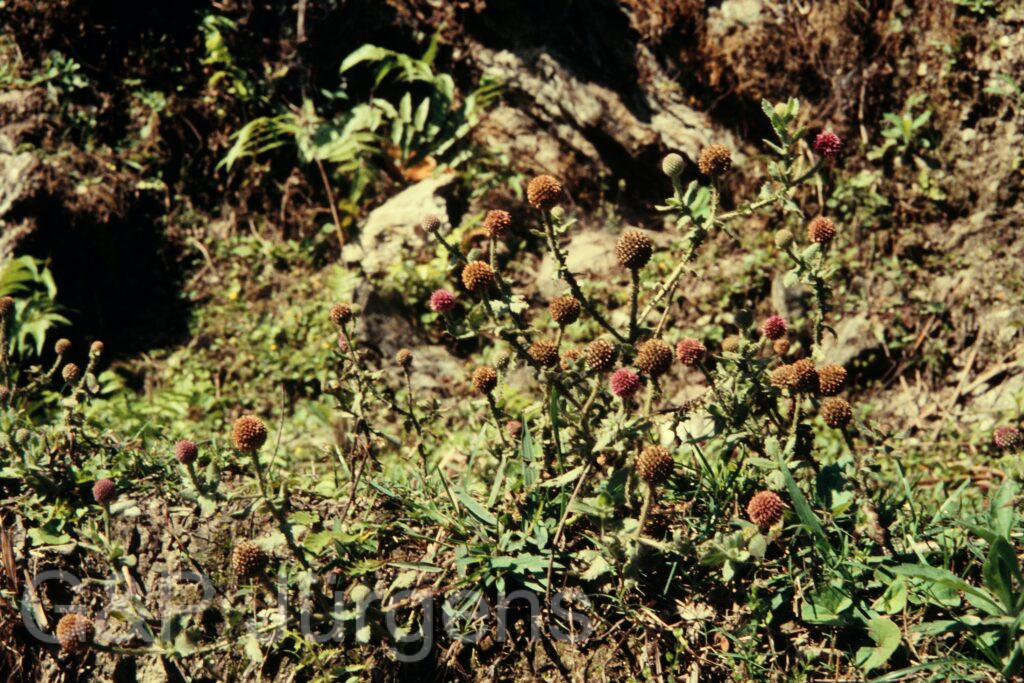
Nepal 97 49 P74
Nepal Mewa-Khola 1100m April

Description

Sphaeranthus indicus Gaertn. is a widespread weedy annual of the Old World tropics and subtropics, with a very broad GBIF footprint (over 1200 occurrences) spanning India, Sri Lanka, Bangladesh, Nepal, Bhutan, Myanmar, Thailand, Laos, Vietnam, southern China and Indonesia, and extending to Australia, Madagascar, Kenya and Ethiopia. It is a plant of seasonally wet, open ground: rice-field margins, fallows, ditches, damp wastelands and the receding edges of pools and tanks, mostly at low elevations. The specimen photographed at Mewa-Khola in Nepal at 1100 m in April occurs in the warm subtropical foothill belt at the upper margin of its lowland range, where post-monsoon wet ground provides its preferred germination sites.

It is a strongly aromatic annual herb with a much-branched, often reddish, ascending to spreading stem bearing conspicuous toothed or undulate wings formed by the decurrent leaf bases. The leaves are obovate to oblanceolate, sessile, and serrate-dentate. The diagnostic feature is its compound capitulescence: numerous tiny, narrow secondary heads are aggregated into a dense, globose to ovoid, purple to violet compound head terminating each branch. Each small head contains a few peripheral female florets and central bisexual florets with tubular corollas. The fruit is a minute, oblong cypsela lacking a conspicuous pappus.

The genus Sphaeranthus is distinctive within tribe Inuleae for its glomerulate, second-order capitula, and S. indicus is its most familiar and economically significant species, valued throughout South Asia in Ayurvedic and folk medicine for its essential oils and bioactive sesquiterpenoids and flavonoids. Ecologically it behaves as a pioneer of disturbed, periodically inundated soils and is locally abundant; it is of least conservation concern and indeed often regarded as a ruderal weed across its pantropical range.

Author: Gaertn. · Sources: POWO (Kew), GBIF, Flora of China, Flowers of the Himalaya, Annotated Checklist of the Flowering Plants of Nepal, Anderberg monograph of tribe Inuleae

(Pers.) Ames

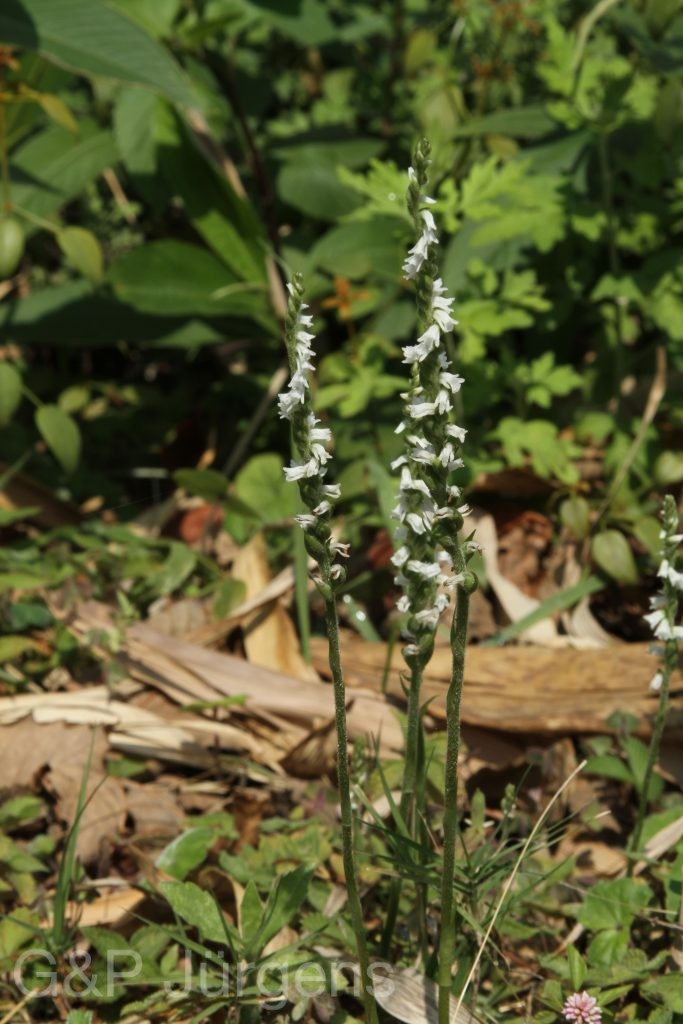
Bhutan2014 92
Bhutan Trashigang 1450m, May
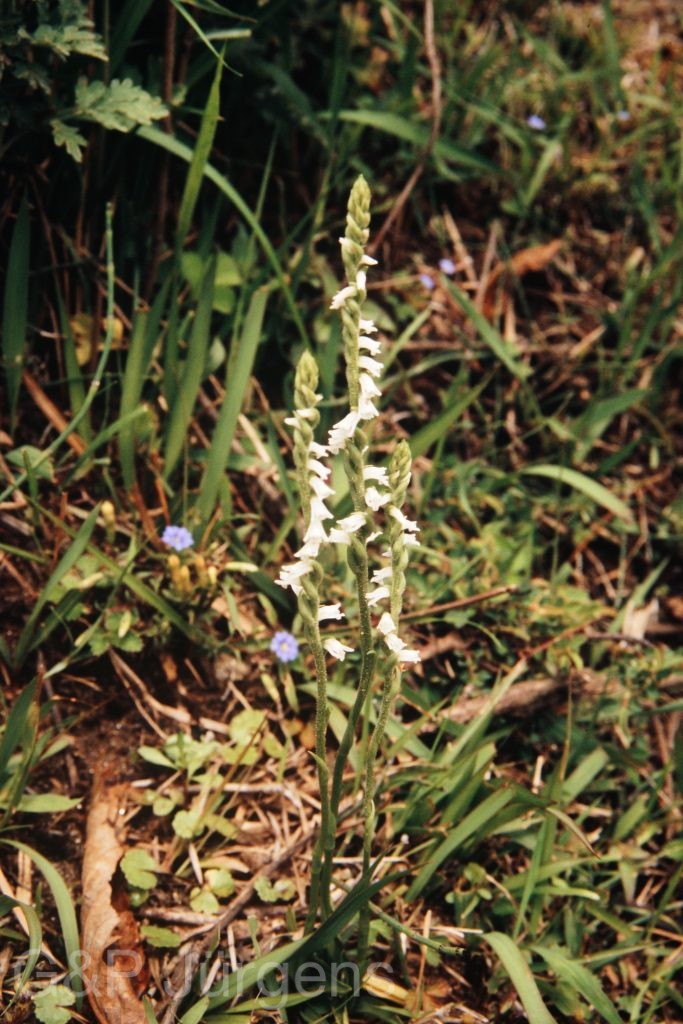
Bh2008 471 G732
Bhutan Tsang-Chu, 1800m April
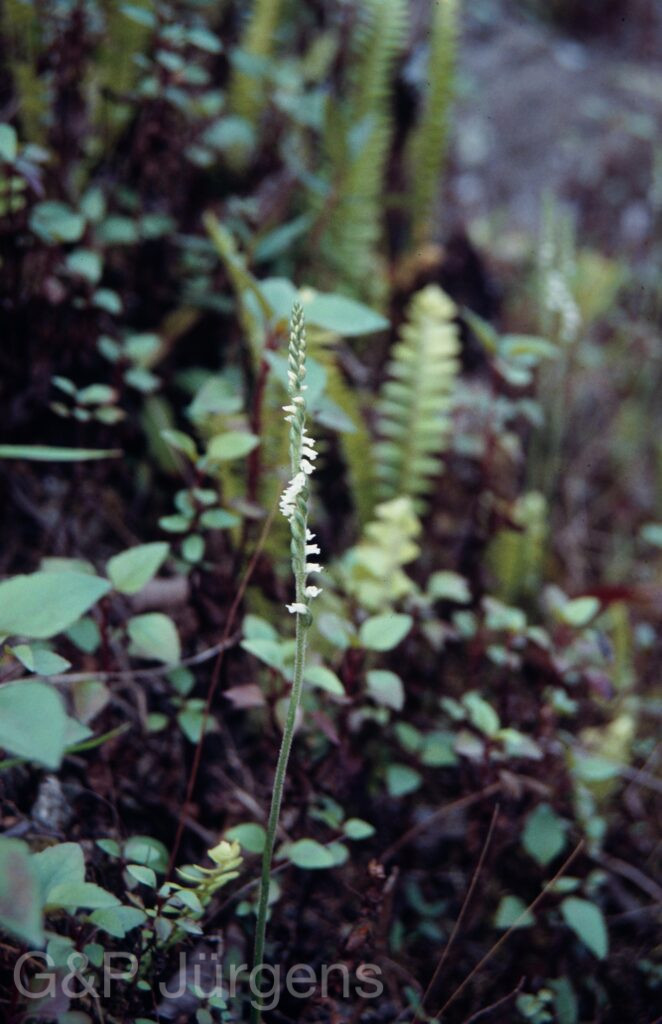
Nepal1992 92 P126 ergebnis
Nepal Amjilassa 2300m March 

Description

Spiranthes sinensis, the Chinese ladies'-tresses, is one of the most widespread terrestrial orchids of the Old World, documented in GBIF by some 7880 occurrences spanning eastern Asia from China, Japan, Korea and Russia through India, Nepal, Bhutan and Southeast Asia to Australia, New Caledonia and Sri Lanka. It occupies open, moist grassland, marshy meadows, streambanks, paddy margins and grassy slopes from near sea level to about 3000 m. The photographed Himalayan plants from Trashigang in Bhutan at 1450 m in May, the Tsang-Chu at 1800 m in April and Amjilassa in eastern Nepal at 2300 m in March illustrate its tolerance of a wide elevational and seasonal range in damp, sunny situations.

It is a slender terrestrial orchid with fleshy, fasciculate, tuberous roots and a tuft of linear to oblanceolate basal leaves. The erect, finely pubescent inflorescence bears numerous small flowers arranged in a characteristic single spiral around the axis. The flowers are typically pink to rose-purple with a white, recurved, crisped-margined labellum bearing a yellowish, papillose central callus; the dorsal sepal and petals converge to form a hood over the short column. The fruit is a small, erect, ellipsoid capsule releasing dust-like seeds.

A member of subtribe Spiranthinae of the Orchidaceae (here under the input spelling Orchideaceae), S. sinensis forms a taxonomically complex, polyploid-rich aggregate from which several segregates such as S. australis and S. hongkongensis have been recognised. Like most orchids it depends on mycorrhizal fungi for germination and is pollinated chiefly by bees. Despite local declines from wetland drainage, its enormous range and weedy persistence in disturbed grassland make it of Least Concern, though it is protected under CITES Appendix II as for all orchids.

Author: (Pers.) Ames · Sources: POWO (Kew), GBIF, Flora of China, Flora of Bhutan, Annotated Checklist of the Flowering Plants of Nepal, Pridgeon et al. Genera Orchidacearum

(Jack) Phengklai

Bhutan2015 230
Bhutan Zhemgang 950m, October

Description

Sterculia lanceolata var. coccinea is a tree of tropical and subtropical Asia, ranging from the Indian subcontinent (India, Nepal, Sri Lanka) through Myanmar, Thailand, Indochina (Vietnam, Laos, Cambodia) and southern China into Malesia (Malaysia, Indonesia, Singapore, Brunei, Philippines), as reflected in the 322 GBIF records. It occurs in evergreen and semi-evergreen lowland to lower-montane forest, along streams and forest margins, typically below about 1500 m. The photographed tree from Zhemgang in central Bhutan at around 950 m, fruiting in October, sits at the warm-temperate northern edge of the species' range, where the bright fruiting display is conspicuous in autumn.

The variety is a small to medium tree with a slender bole and spreading crown. The leaves are alternate, simple, elliptic-lanceolate to oblong, entire, glabrescent and pinnately veined, on slender petioles — the lanceolate blade distinguishing this species from the palmately lobed S. villosa. The small flowers are apetalous with a campanulate, lobed calyx and are borne in axillary panicles; the variety coccinea is named for its scarlet colouring. The fruit is the diagnostic cluster of woody, beaked follicles that ripen a vivid red ('coccineus') and split open to reveal glossy black seeds against the crimson inner wall.

Now classified in Malvaceae subfamily Sterculioideae (formerly Sterculiaceae), Sterculia lanceolata is a variable species, and this variety, based on the basionym described by Jack and recombined by Phengklai, segregates the scarlet-fruited Malesian-Indochinese populations. The boldly coloured dehisced follicles are bird-dispersed, the contrasting red and black serving as a visual lure. Widespread and occurring in both primary and secondary forest, the taxon is not regarded as threatened.

Author: (Jack) Phengklai · Sources: POWO (Kew), GBIF, Flora of Thailand, Flora of China, Flora of British India, Kostermans Sterculiaceae monograph

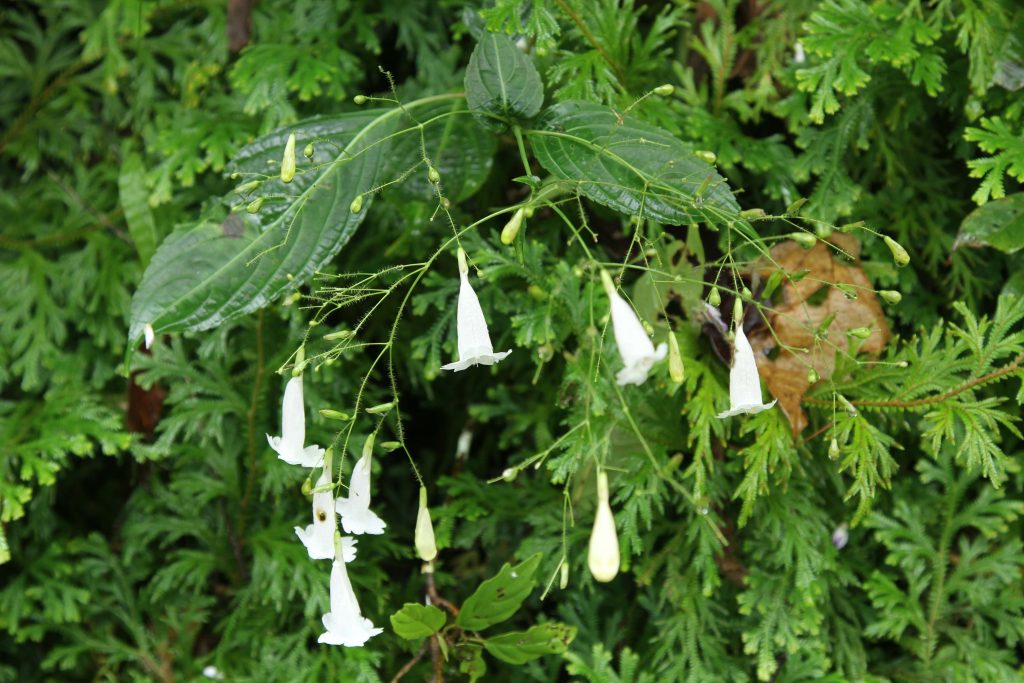
(Steud.) Bosser & Heine

Bhutan2012 992
Bhutan Trithangebe 1100m, October
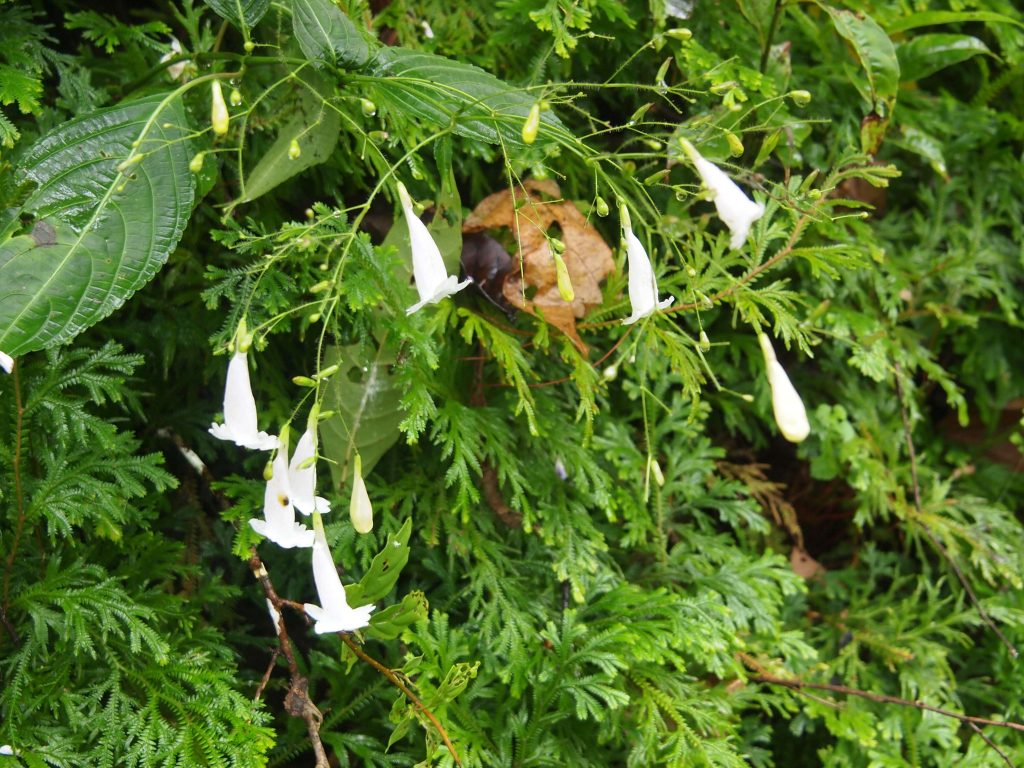
Bhutan2012 993
Bhutan Trithangebe 1100m, October

Description

Strobilanthes hamiltoniana (Steud.) Bosser & Heine is a shrubby Acanthaceae of the eastern Himalaya and Indo-Burmese region, native to India, Bhutan, Nepal, Myanmar and China, but widely naturalised and cultivated, as reflected in its GBIF total of nearly 779 occurrences spanning many tropical islands and the Americas. In its native range it grows along forest margins, streamsides, ravines and shaded roadbanks in the warm subtropical hill zone, flowering in the late monsoon and autumn. The illustrated plant from Trithangebe in Bhutan at 1100 m in October shows it in its characteristic low-elevation forest-edge habitat at the onset of its flowering season.

The species is an erect, much-branched perennial shrub with four-angled stems and opposite, petiolate, ovate-lanceolate leaves that are acuminate and finely toothed, the pairs typically anisophyllous. The inflorescences are slender, lax, often drooping panicles bearing numerous flowers; each corolla is tubular and gracefully curved, pale violet to mauve-blue with a paler tube, the limb shortly five-lobed, and the androecium of four stamens. The fruit is the typical acanthaceous club-shaped capsule that dehisces explosively to disperse the seeds, which are borne on hooked retinacula.

Strobilanthes is a large and taxonomically difficult Asian genus famed for the gregarious, mast (plietesial) flowering of many species, in which whole populations bloom synchronously after a span of years and then die. S. hamiltoniana is popular in ornamental horticulture for its arching sprays of bloom and consequently appears far beyond its native limits. It is not of conservation concern, being common and readily cultivated.

Author: (Steud.) Bosser & Heine · Sources: POWO (Kew), GBIF, Flora of Bhutan, Flora of China, Acanthaceae of the Indian Subcontinent, Carine & Scotland revision of Strobilanthes

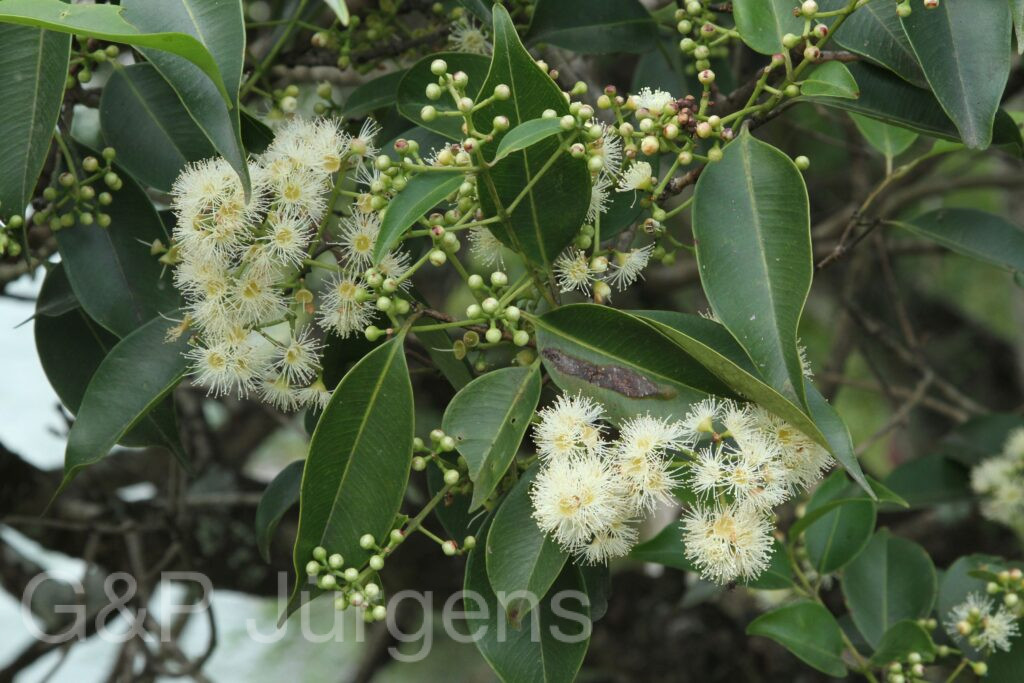
Miq.

Bhutan2015 532
Bhutan Punaka 1400m, October
Bhutan2015 533
Bhutan Punaka 1400m, October

Description

Symplocos acuminata Miq. is an evergreen shrub or small tree of the Symplocaceae, widely distributed across tropical and subtropical Asia. Its substantial GBIF record (over 4,100 occurrences) spans China, Taiwan, India, the Himalaya, Indochina, Sri Lanka, Japan, and the Malesian archipelago, reflecting a broad Indo-Malayan range. The species was recorded near Punakha in Bhutan at 1,400 m in October; it characteristically inhabits broad-leaved evergreen and mixed mesophytic forests, forest margins, and secondary woodland from the lowlands up to around 2,000 m, favouring moist, well-drained slopes.

The plant forms a much-branched crown with coriaceous, alternate leaves that are elliptic to oblong-lanceolate and conspicuously acuminate at the apex, the margins finely serrate and the surfaces glabrous. The flowers are small, white, and fragrant, with numerous stamens arranged in fascicles, borne in short axillary racemes or spikes. The ovary is inferior, developing into an ovoid to ellipsoid drupe that ripens dark blue-black, crowned by the persistent calyx and attractive to frugivorous birds, which act as the principal dispersal agents.

Symplocos is the sole genus of its family and is taxonomically complex, with acuminata representing part of a variable, widely circumscribed species aggregate that has accumulated numerous synonyms across its vast range. Members of the genus are notable for accumulating aluminium, and several have historically been used as natural mordants in dyeing. Given its wide distribution and tolerance of disturbed forest, the species is not considered threatened.

Author: Miq. · Sources: POWO (Kew), Flora of China Vol. 15, Flora of Bhutan Vol. 2, GBIF, Nooteboom: Symplocaceae (Flora Malesiana, 1977)

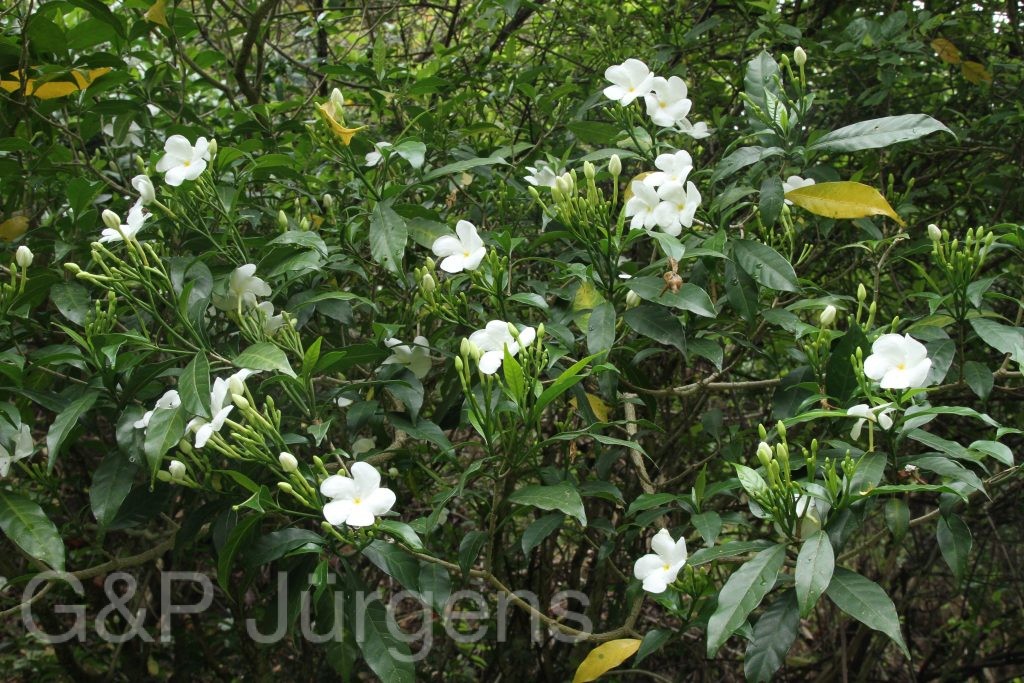
(L.) R.Br. ex Roem. & Schult.

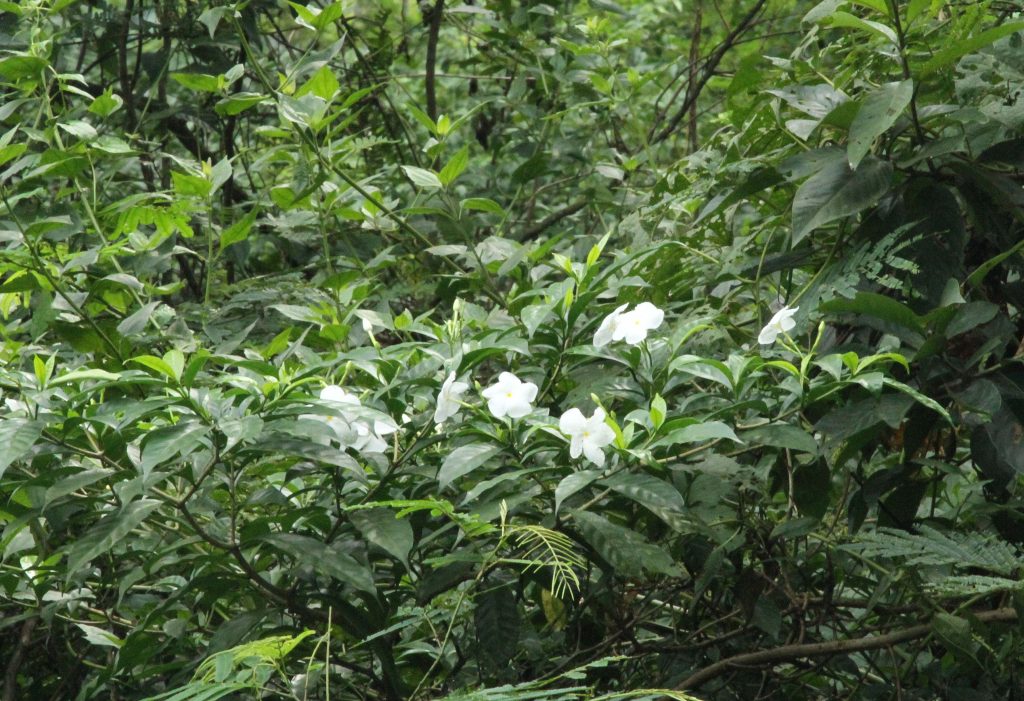
Bhutan2014 64
Bhutan Trashigang 1250m, May
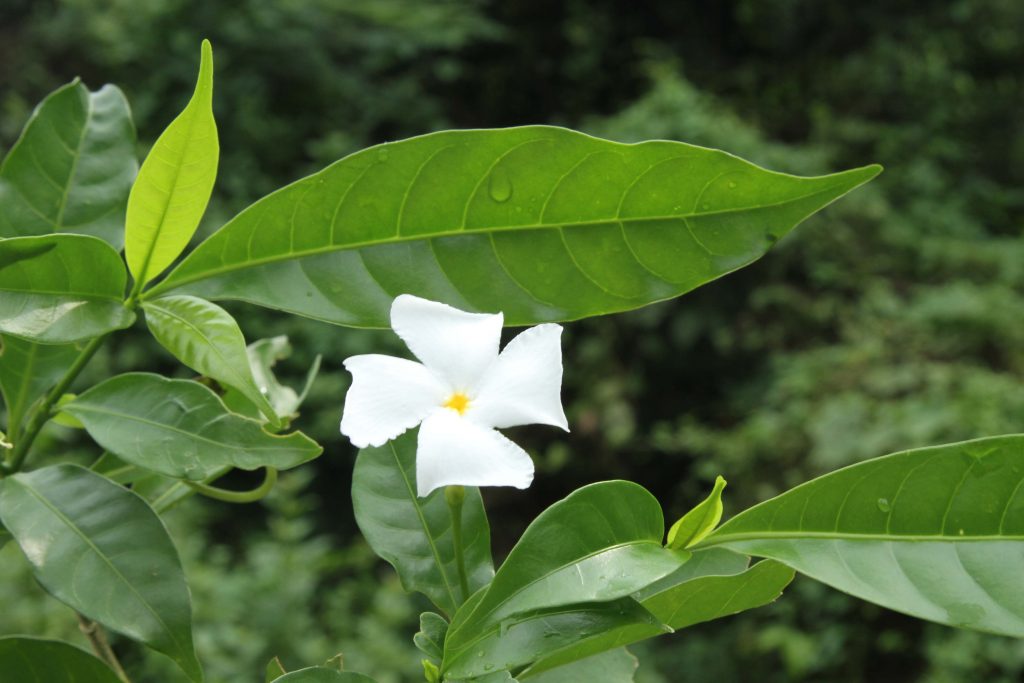
Bhutan2012 732
Bhutan Galephu 550m, October
Bhutan2012 736
Bhutan Galephu 550m, October

Description

Tabernaemontana divaricata is a shrub of tropical and subtropical Asia, native to the Indian subcontinent and Southeast Asia and now pantropically cultivated and naturalised; GBIF records over 6500 occurrences across countries including India, China, Thailand, Sri Lanka, Bangladesh, Malaysia, Vietnam, the Philippines and many introduced ranges in the Americas and Pacific. In Bhutan it was photographed at Trashigang at 1250 m in May and at Galephu at 550 m in October, reflecting its occurrence in warm foothill forests, scrub and village surrounds, where it is also widely planted as the ornamental "crape jasmine."

It is a glabrous, evergreen shrub with dichotomously branched (divaricate) stems exuding copious white latex when cut. The leaves are opposite, simple, elliptic to oblanceolate, glossy dark green, with a tapering apex and prominent lateral venation. The flowers are borne in few-flowered terminal or axillary cymes; each is salverform with a slender tube and five contorted, white, often pinwheel-twisted lobes, fragrant especially at night, and cultivated double-flowered forms are common. The fruit is a paired (often divaricate) follicle, somewhat curved and ridged, splitting to expose seeds embedded in a bright orange-red fleshy aril.

The species belongs to the Apocynaceae (subfamily Rauvolfioideae) and, like its relatives, is rich in indole and monoterpene alkaloids that underpin its use in traditional medicine and account for its toxicity. Long cultivated, it has accumulated many synonyms and horticultural forms. It is not threatened, being abundant in cultivation and naturalising readily; its presence in lowland Bhutan marks the subtropical Himalayan margin of a broadly Indomalayan range.

Author: (L.) R.Br. ex Roem. & Schult. · Sources: POWO (Kew), GBIF, Flora of Bhutan, Flora of China, Flora of British India, revision of Tabernaemontana (Leeuwenberg)