Tag:

Yunnan

Flowers of Yunnan — 68 species from the mountains of Yunnan in southwest China, part of the Hengduan and eastern Himalayan biodiversity hotspot renowned worldwide for its rhododendrons, primulas and gentians. This region is one of the great cradles of temperate plant diversity. Each species page provides a botanical description, distribution, habitat and flowering time with the original photograph.

(W.W.Sm.) Y.Tang & H.Peng
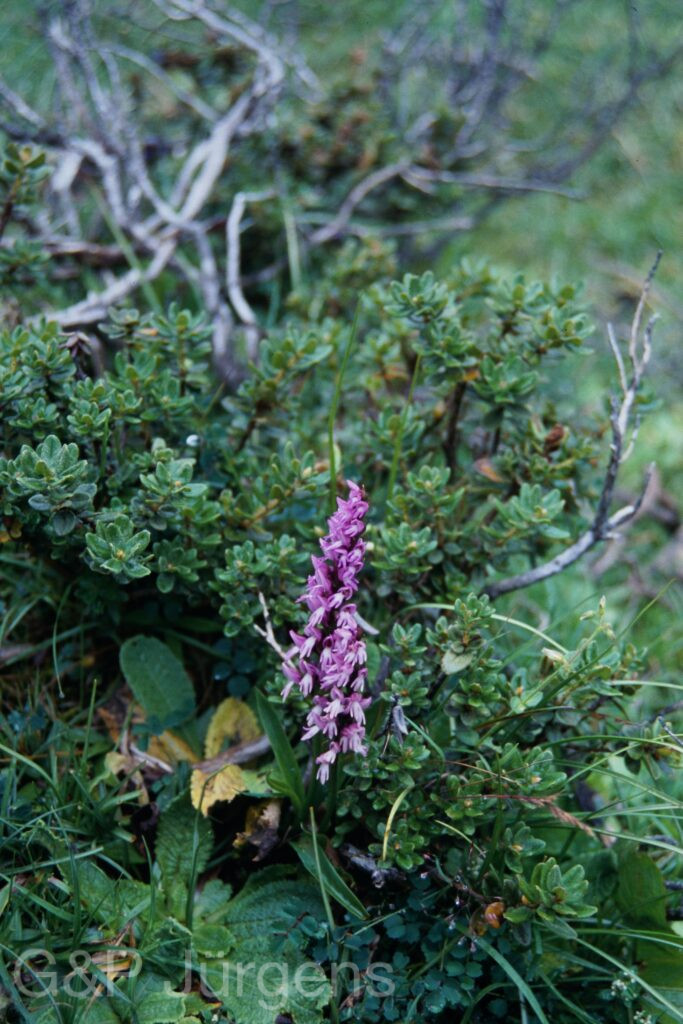
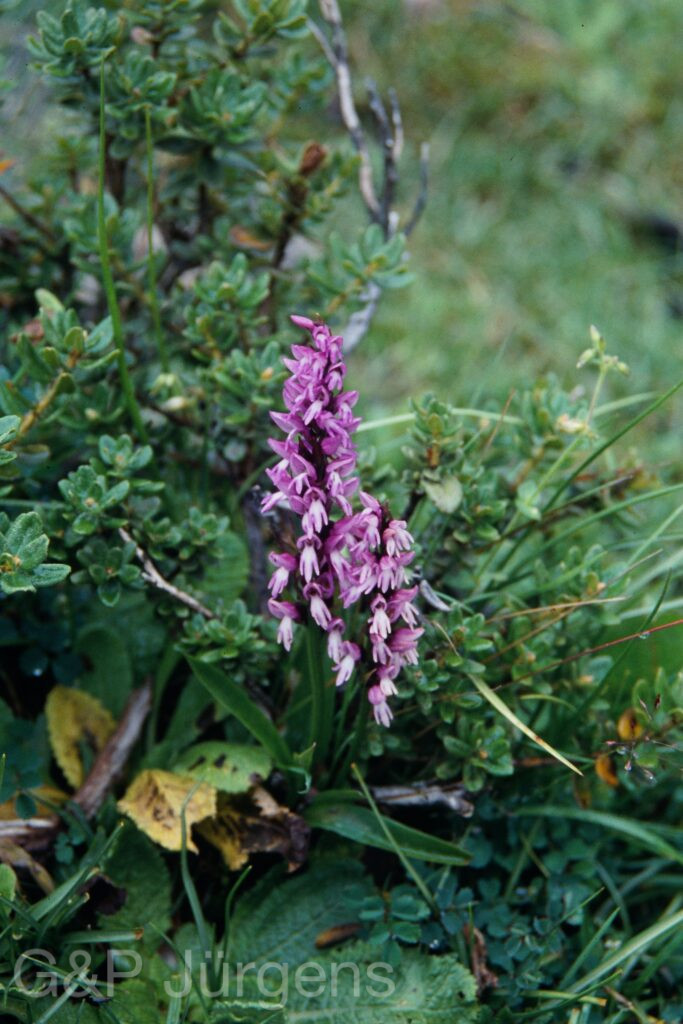
Sikkim2003 458 P634
Sikkim Chopta Valley 4000m August
Sikkim2003 459 G636
Sikkim Chopta Valley 4000m August

Description

Hemipilia calcicola is a terrestrial orchid of the high Sino-Himalaya, recorded from southwestern China (notably Yunnan and Sichuan) and extending into Nepal, Sikkim and Bhutan, with GBIF logging 199 occurrences across CN, NP and BT. As both its epithet calcicola and its habitat preference indicate, it favours calcareous substrates, growing in alpine and subalpine meadows, on grassy limestone slopes and in open turf, typically between about 3000 and 4300 m. The photographed plant was found in the Chopta Valley of Sikkim at around 4000 m, flowering in August during the late-monsoon alpine flowering season.

The species is a slender terrestrial herb arising from an ovoid or globose underground tuberoid. It typically bears a single basal leaf, ovate to cordate and frequently marked above with purplish spots, clasping the base of the erect flowering stem. The inflorescence is a lax raceme of several resupinate flowers; each has spreading sepals and petals and a prominent, deflexed, often three-lobed labellum bearing a slender nectar-spur at its base. The column carries the pollinaria characteristic of the Orchidaceae, and the fruit is a dehiscent capsule releasing dust-like, abundant seeds requiring mycorrhizal association for germination.

The taxon was originally described as a variety under Habenaria/Neottianthe (reflected in the website slug neottianthe-cucullata-var-calcicola) and was transferred to Hemipilia by Tang and Peng on molecular grounds, consolidating Neottianthe within an expanded Hemipilia. It is one of numerous calciphilous Sino-Himalayan orchids whose specialised soil requirements and dependence on pollinators and mycorrhizae make populations vulnerable to grazing, collection and habitat disturbance.

Author: (W.W.Sm.) Y.Tang & H.Peng · Sources: POWO (Kew), GBIF, Flora of China (Orchidaceae), Genera Orchidacearum (Pridgeon et al.), Tang & Peng revision of Hemipilia
Wall.

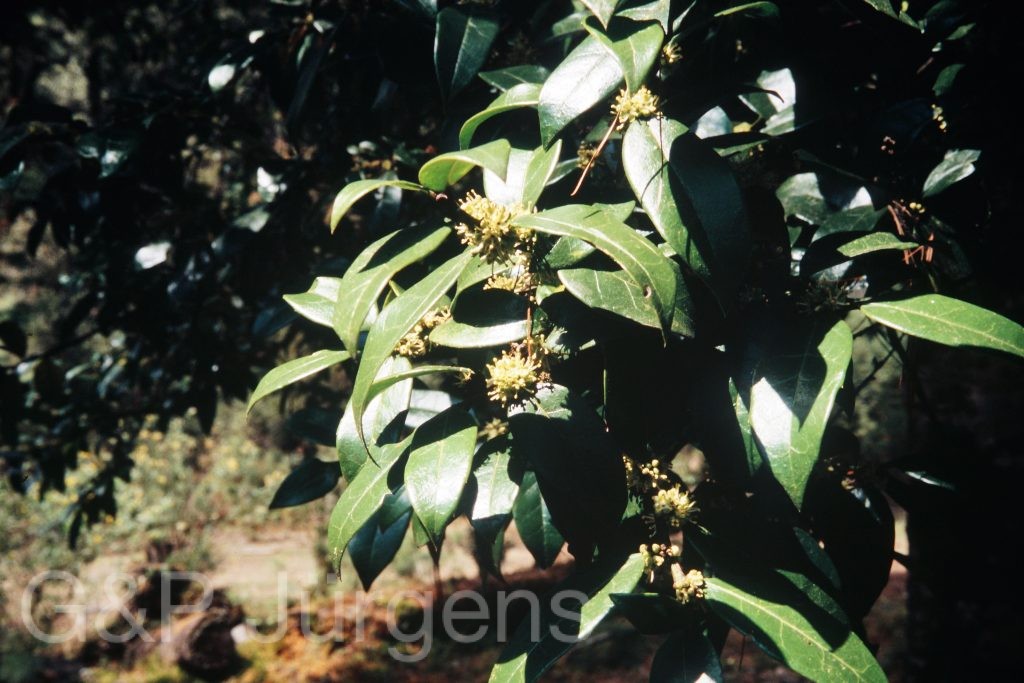
Bh2008 420 P656
Bhutan Phobjika, 3100m April

Description

Ilex dipyrena, the Himalayan holly, is an evergreen tree or large shrub distributed along the Himalaya from Pakistan and northern India through Nepal, Sikkim and Bhutan into southern China (Yunnan, Xizang) and Myanmar. It is a characteristic constituent of cool temperate broad-leaved and mixed conifer forest, growing on shaded slopes, ridges and forest margins. It occurs mainly between about 1,800 and 3,300 m; the plant recorded in the Phobjikha valley of Bhutan at 3,100 m in April lies in the upper part of this band, within the moist temperate forest belt where it forms part of the evergreen understorey.

The plant is a small to medium-sized tree with greyish bark and glabrous twigs. The leaves are alternate, leathery and glossy dark green, elliptic to oblong-lanceolate, with a spinose-dentate margin bearing rigid marginal teeth on vigorous shoots, the teeth often reduced on older growth. The plant is dioecious, with small greenish-white, four-merous flowers clustered in the leaf axils. The fruit is a globose drupe ripening dull red, containing typically two pyrenes, a feature reflected in the epithet dipyrena, distinguishing it from the four- to five-seeded common holly.

Ilex is a large, near-cosmopolitan genus and the sole member of its family. Ilex dipyrena, described by Wallich, is the principal native holly of the Himalaya and a long-cultivated ornamental and parent of garden hybrids. Its evergreen, drupe-bearing habit provides food for birds, which disperse the seeds, and it contributes to the structure of temperate Himalayan forest. The species is widespread and common, and is not considered to be of conservation concern.

Author: Wall. · Sources: POWO (Kew), Flora of China Vol. 11, Flora of Bhutan Vol. 2, GBIF, Loizeau et al.: Ilex phylogeny

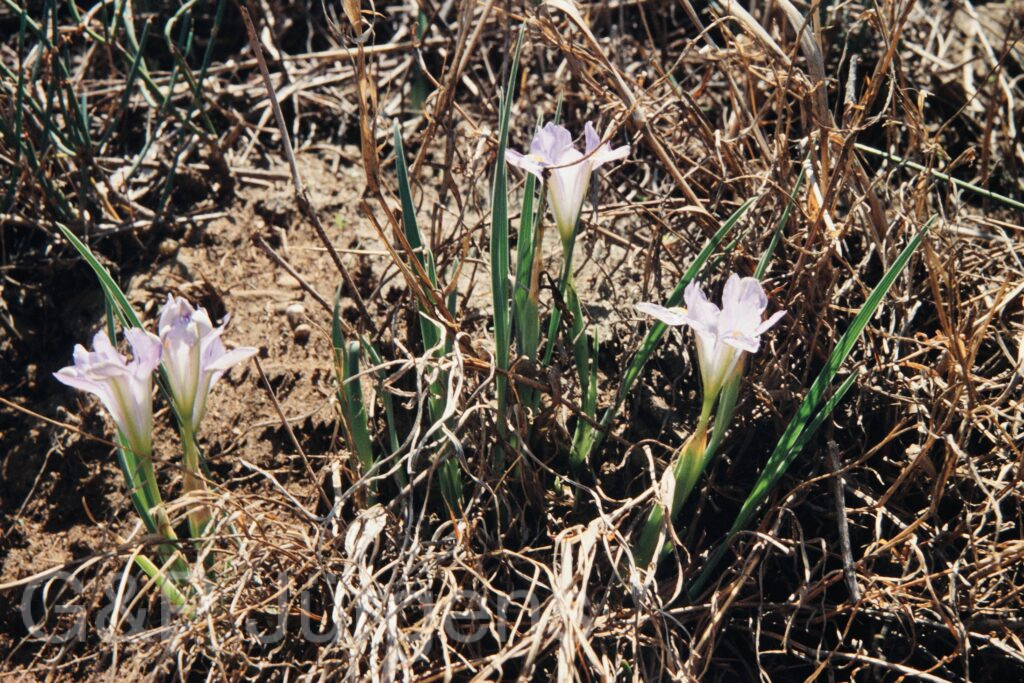
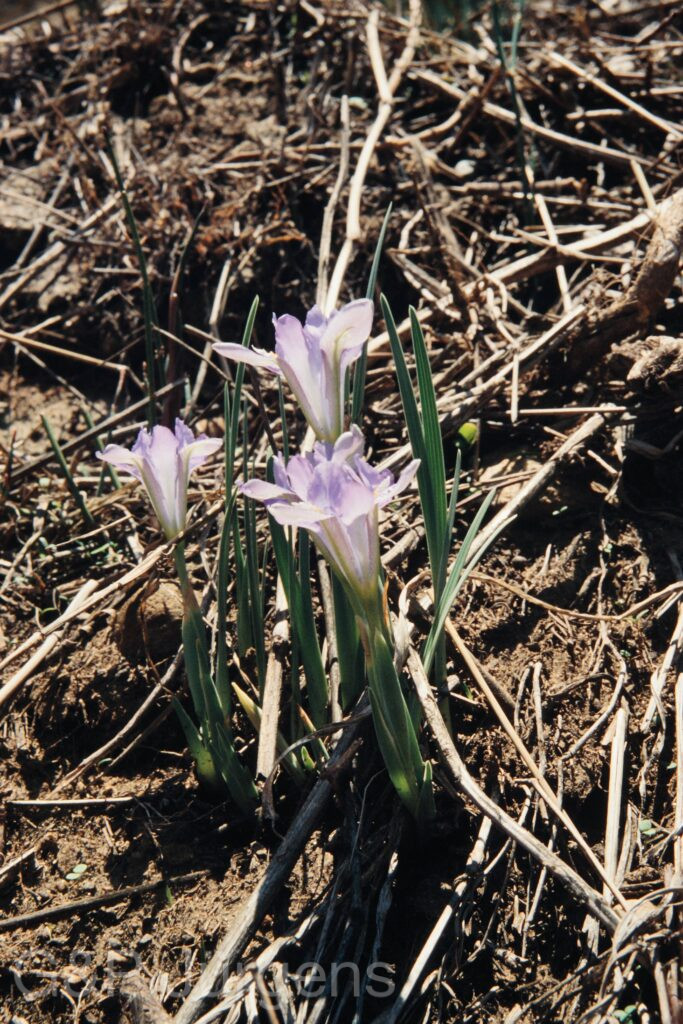
Iris collettii

by G & P Jürgens

Hook.f.

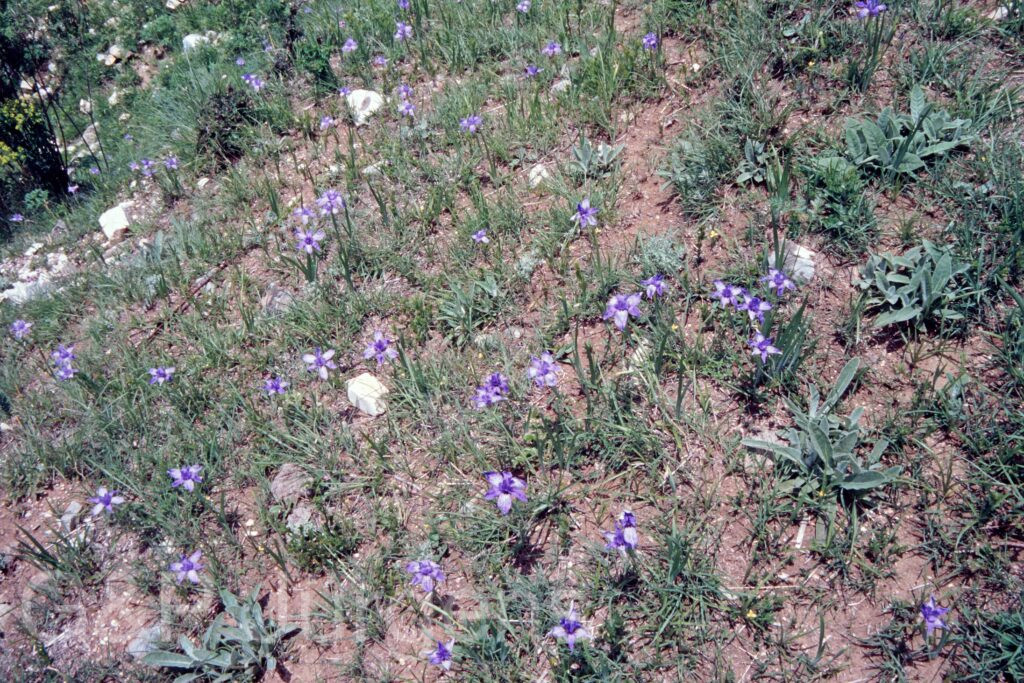
Nepal 99 413 ergebnis
West-Nepal Talphi 2830m, June
Nepal 99 414 ergebnis
West-Nepal Talphi 2830m, June
Nepal 99 415 ergebnis
West-Nepal Talphi 2830m, June

Description

Iris collettii is a Himalayan iris distributed from western Nepal through northeast India and northern Myanmar to southwest China (Yunnan, Sichuan) and northern Thailand. GBIF records approximately 349 occurrences, with the majority from China and Myanmar. The species favours open, grassy slopes, forest margins, and pine-oak woodland clearings at elevations of 1,800–3,200 m, typically on well-drained soils. At Talphi in western Nepal at 2,830 m, it grows in open montane grassland and along forest edges, flowering in June at the onset of the monsoon season — a period when the grassy slopes of the western Nepalese mid-hills support a rich herbaceous flora.
Iris collettii is a rhizomatous perennial herb, 20–40 cm tall. The rhizome is slender, creeping, and clothed in persistent fibrous leaf bases. Leaves are basal, linear-ensiform, 15–30 cm long and 5–10 mm wide, with a prominent midrib, often slightly falcate. The stem bears 1–3 terminal flowers subtended by a pair of spathaceous bracts. Flowers are 4–6 cm in diameter, blue-violet to deep purple; the falls are obovate with a prominent white and yellow signal patch and darker veining, while the standards are erect, oblanceolate, and slightly paler. The style branches are petaloid and arching over the stamens. The fruit is an ellipsoid capsule, trigonous, 2–3 cm long, containing brown angular seeds.
Iris collettii was described by J.D. Hooker and named in honour of Sir Henry Collett, who collected extensively in Myanmar and northern India. The species belongs to subgenus Limniris, section Lophiris (crested irises), and is distinguished from the related I. decora by its generally shorter stature, narrower leaves, and deeper violet flower colour. Its occurrence in western Nepal at Talphi represents the westernmost limit of its known Himalayan distribution. The species is of biogeographical interest as a link between the Sino-Himalayan and Indo-Burmese iris floras.

Author: Hook.f. · Sources: POWO (Kew), GBIF, Flora of China Vol. 24, Flora of Nepal Checklist, Mathew: The Iris (1981)

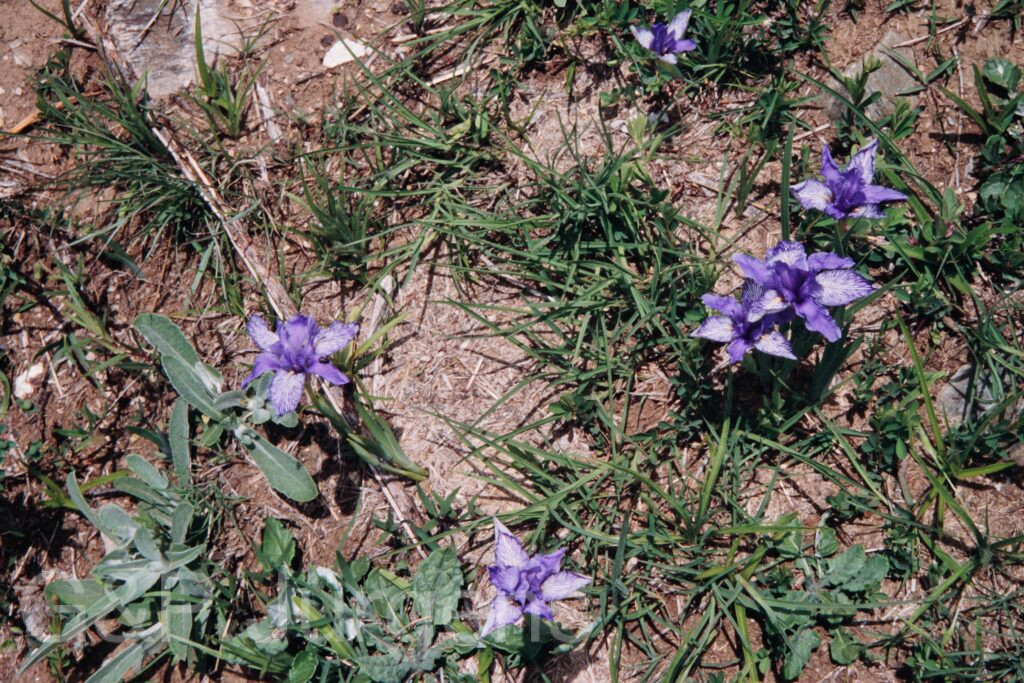
Iris decora

by G & P Jürgens

Wall.

Nepal 99 13 ergebnis
West-Nepal, Jumla 2500m june
Nepal 99 14 ergebnis
West-Nepal, Jumla 2500m june

Description

Iris decora Wall. is a tuberous-rooted iris of the Himalaya and the mountains of southwestern China. GBIF data confirm its presence in Nepal, India, Bhutan, Pakistan, China and Myanmar, a range extending the length of the Himalayan arc into Yunnan. It grows on open grassy hillsides, stony slopes and among scrub in the temperate zone, characteristically between about 1,800 and 3,300 m. The plant recorded near Jumla in west Nepal at 2,500 m, flowering in June, typifies its early-summer flowering on sunny montane meadows.

The species arises from a cluster of slender, fleshy, fascicled roots rather than a true rhizome, and produces narrow, grass-like, ribbed leaves that develop fully after flowering. The flowering stem is short, bearing one to several flowers in succession, each subtended by membranous spathe valves. The flowers are lilac to pale violet-blue, the falls bearing a conspicuous yellow or white crest along the central ridge and the standards smaller and erect. The capsule is oblong-cylindric with a beaked apex, splitting to release numerous seeds.

Iris decora belongs to the subgenus Nepalensis (section Pseudoregelia in older treatments), a small group of Sino-Himalayan irises characterised by fascicled fleshy roots and crested falls. It is grown by alpine-plant enthusiasts and is the type of its species group. Although locally common in suitable grassland, it is vulnerable to overgrazing and habitat conversion in the more accessible parts of its range.

Author: Wall. · Sources: POWO (Kew), GBIF, Flora of China Vol. 24, Flora of Bhutan Vol. 3, Mathew: The Iris (1989)

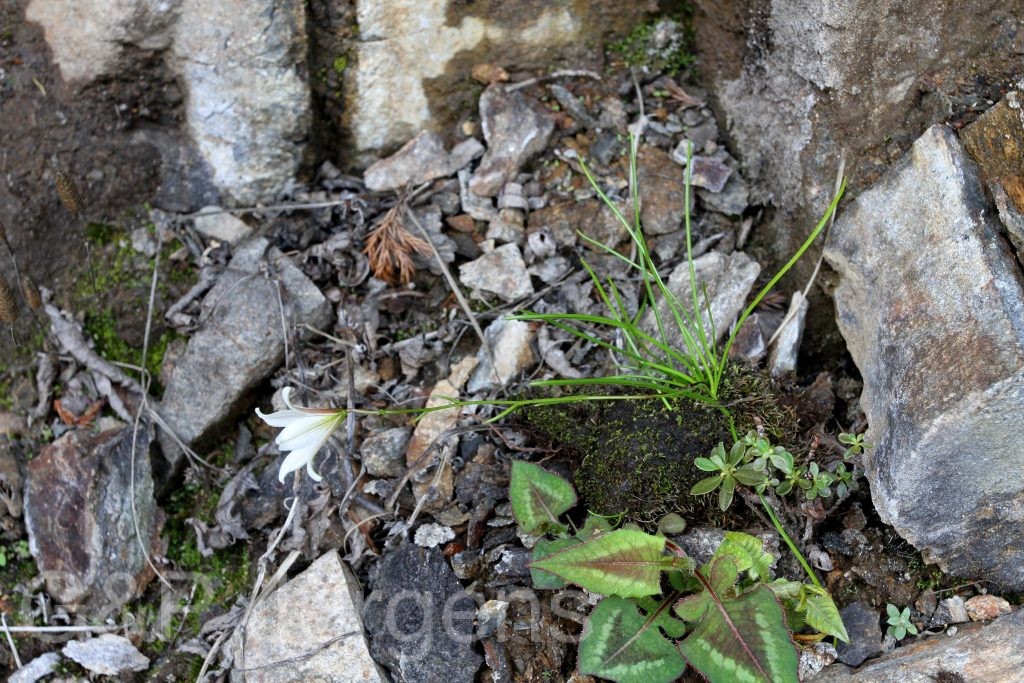
Franch.

BhutanPG2011 123
Bhutan Tsochenchen, 3550m June

Description

Lloydia yunnanensis is a small alpine bulbous herb ranging across south-central China (notably Yunnan and Xizang), the Indian Himalaya, Bhutan and Nepal, with around one hundred and thirty GBIF records testifying to a fairly continuous high-mountain distribution. It grows in alpine and subalpine meadows, on grassy and rocky slopes, in open scrub and among rocks, typically between about 3000 and 4500 m. The photographed plant from Tsochenchen in Bhutan at 3550 m, flowering in June, is characteristic of its early-summer flowering as the snow recedes from the upper pastures it favours.

The species arises from a small ovoid bulb with a fibrous tunic and produces a slender, erect stem. The leaves are few, narrowly linear and grass-like, the lower ones basal and the upper cauline and reduced. The flowers are solitary or few, erect, with six free, spreading tepals that are white to pale yellow, often veined or tinged with purple toward the base and bearing a nectary at the inner base; the six stamens have slender filaments and the superior ovary bears a single style. The fruit is a small loculicidal capsule containing numerous flat seeds.

Lloydia yunnanensis is here treated under the accepted name Lloydia yunnanensis. Although the genus Lloydia has frequently been merged into Gagea in modern molecular treatments, the segregate name is retained here following the input. Its dwarf stature, bulb-protected perennating organ and rapid post-snowmelt flowering are classic adaptations to the brief alpine growing season. The species is widespread and not regarded as threatened, though high-altitude grassland degradation could affect local populations.

Author: Franch. · Sources: POWO (Kew), GBIF, Flora of China, Flora of Bhutan, Peruzzi & Zarrei revision of Gagea/Lloydia (Liliaceae monograph)

(Hook.f. & Thomson) H.Keng

Sikkim 2006 492 ergebnis
India West-Bengal, Chaana 1700m, May

Description

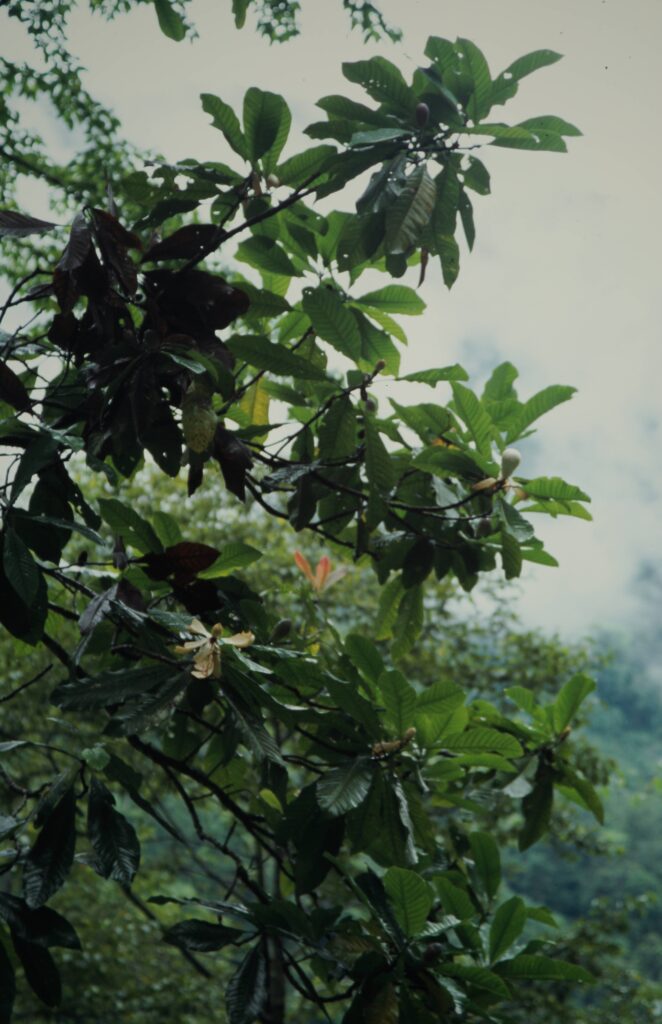
Magnolia hodgsonii is an evergreen tree of the eastern Himalaya and adjacent Southeast Asia, distributed through northeast India, Nepal, Bhutan, southern China (Yunnan, Xizang), Myanmar, Thailand, Vietnam and into Malesia. It is a component of warm, humid subtropical to lower montane broad-leaved evergreen forest, favouring sheltered valleys, ravines and moist hill slopes on deep soils. It generally occurs from the lowlands to around 1,800 m; the tree photographed at Chaana in the Darjeeling hills of West Bengal at 1,700 m in May exemplifies its upper subtropical forest habitat, flowering at the close of the dry season.

The plant is a medium-sized to large tree with smooth grey bark and stout twigs. The leaves are large, alternate, often clustered toward the branch tips, obovate to elliptic-oblong, coriaceous, glabrous and entire, with a prominent venation. The solitary, terminal flowers are large and fragrant, with creamy-white to pale yellow tepals arranged in several whorls; the numerous stamens and the apocarpous gynoecium of free carpels are borne on an elongate floral axis. The fruit is an ellipsoid to ovoid aggregate of follicles which split to expose seeds enveloped in a fleshy red to orange sarcotesta, dispersed by birds.

The species, with basionym attributed to Hooker f. and Thomson and recombined by H. Keng, was formerly placed in the segregate genus Talauma, now subsumed within a broadly circumscribed Magnolia. As an archaic, beetle-pollinated member of one of the most basal angiosperm lineages, it is of considerable evolutionary interest. Valued for its timber and ornamental flowers, it is subject to selective logging and forest clearance, and warm-temperate populations on the forest fringe merit monitoring where habitat loss is ongoing.

Author: (Hook.f. & Thomson) H.Keng · Sources: POWO (Kew), Flora of China Vol. 7, Flora of Bhutan Vol. 1, GBIF, Figlar & Nooteboom: Magnoliaceae notes

DC.

Nepal1992 158 P231 ergebnis
Nepal Yamphudin 1800m March 

Description

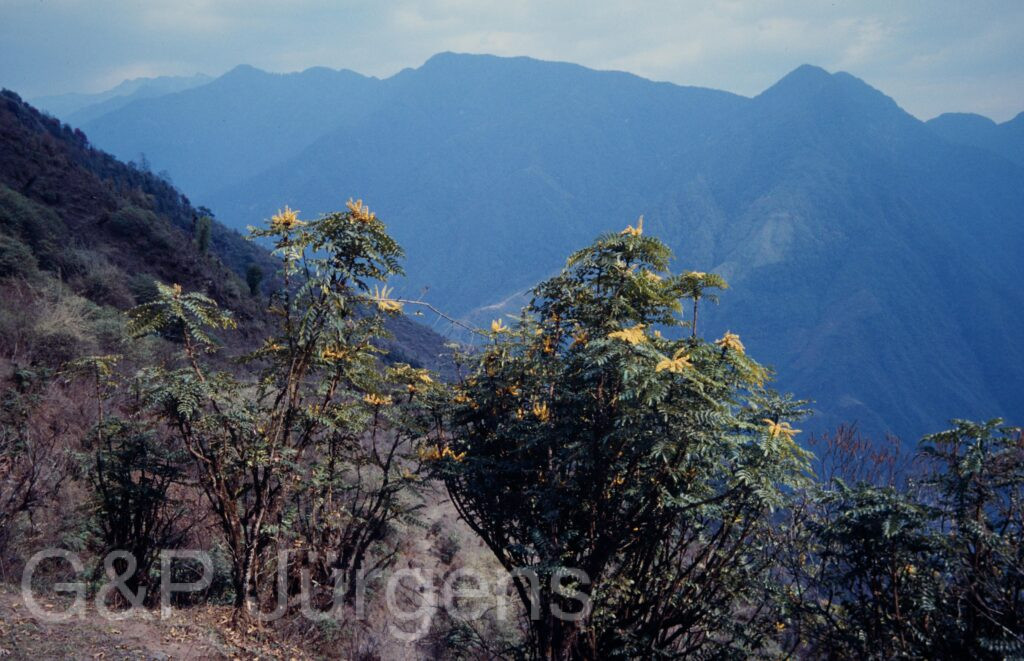
Mahonia napaulensis is a Himalayan evergreen shrub distributed from central Nepal eastward through northeast India, Bhutan, and Myanmar to southern China (Yunnan, Sichuan, Guizhou), with outlying populations recorded in northern Thailand, Vietnam, and Indonesia. GBIF documents nearly 985 occurrences across its range. The species inhabits montane broadleaved and mixed forests, forest clearings, and rocky slopes at elevations of 1,100–2,800 m. Near Yamphudin in eastern Nepal at 1,800 m, it occurs in the understorey of mid-hill Quercus–Rhododendron forests, flowering conspicuously in the dry pre-monsoon months of February to April.
Mahonia napaulensis is an erect, often sparsely branched shrub growing to 2–5 m tall. The leaves are imparipinnately compound, 25–45 cm long, with 7–15 pairs of coriaceous, ovate-lanceolate leaflets that are spinose-serrate along the margins and glossy dark green above. The inflorescence consists of 5–12 fascicled racemes arising from the stem apex, each 12–25 cm long, bearing densely arranged yellow flowers. Individual flowers are trimerous with 6 sepals in two whorls, 6 petals, and 6 stamens with valvate dehiscence. The fruit is a globose berry, 7–10 mm in diameter, blue-black with a waxy bloom at maturity, containing 2–5 seeds.
Mahonia napaulensis is closely allied to M. acanthifolia, from which it is distinguished by its more numerous leaflet pairs and generally longer racemes. Some authorities have treated these taxa as conspecific, but molecular phylogenetic studies support their separation. The berries are consumed by birds, particularly bulbuls and laughingthrushes, which serve as the primary seed dispersers. The species is widely cultivated as an ornamental in temperate gardens worldwide, valued for its architectural foliage and fragrant winter flowers.

Author: DC. · Sources: POWO (Kew), GBIF, Flora of China Vol. 6, Flora of Nepal Checklist, Adhikari et al.: Berberidaceae of Nepal (2010)

C.B.Clarke

Sikkim2004 215 G367
Sikkim/India Gometang 3900m May
Nepal 97 203 P415
Nepal Thudam 3850m April
Nepal 97 202 P414
Nepal Thudam 3850m April

Description

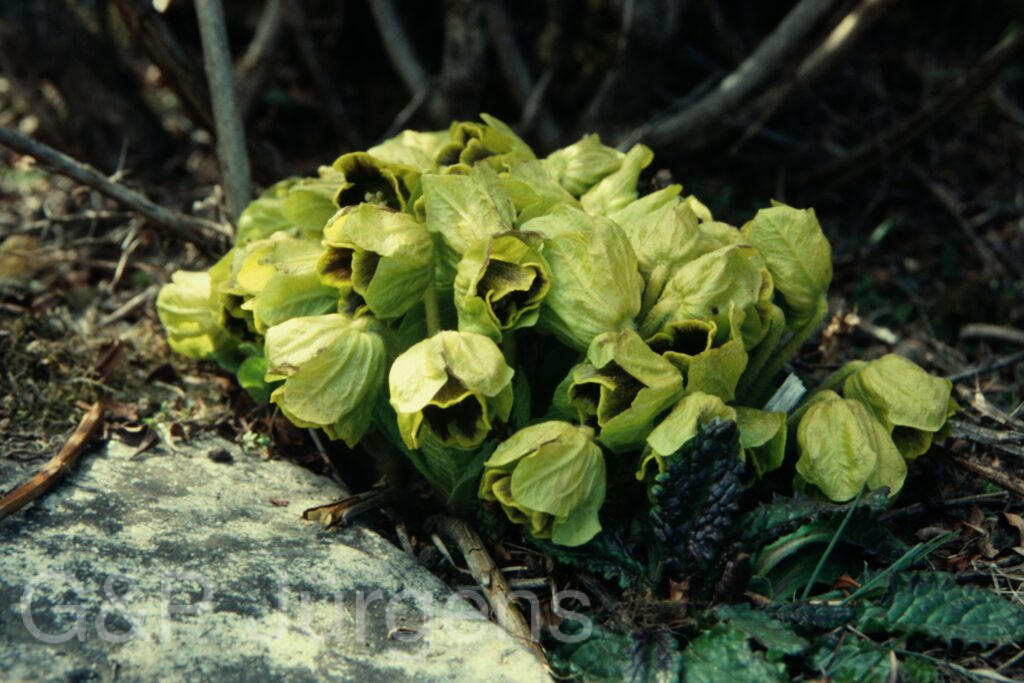
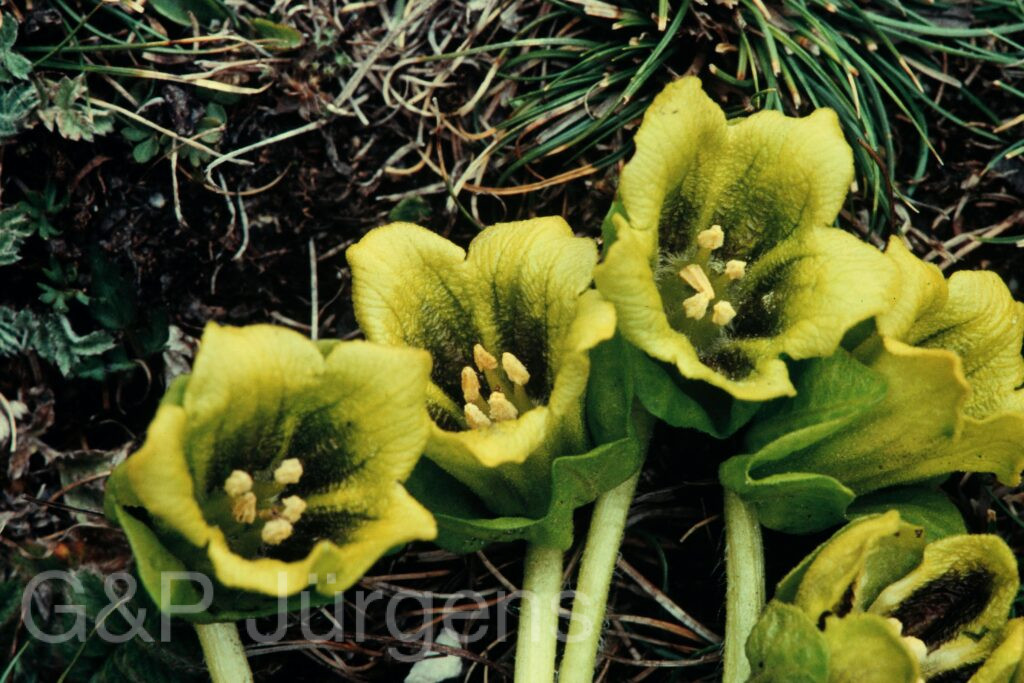
Mandragora caulescens is a stout alpine perennial of the high Himalaya and Tibetan borderlands, distributed across southwestern China (Xizang, Yunnan, Sichuan), northern India, Nepal, Bhutan and Myanmar; GBIF documents some 540 collections, indicating it is locally frequent within its high-elevation range. It occupies open alpine meadows, grassy slopes, scrub margins and stony pasture, generally between about 2500 and 4500 m, often in moist, well-drained turf. The photographed plants were recorded at Gometang on the Sikkim/India border at about 3900 m in May and at Thudam in eastern Nepal near 3850 m in April, typical of this snowmelt-associated meadow species.

Unlike the stemless Mediterranean mandrakes, this species is caulescent, developing a short, leafy aerial stem from a large, fleshy, often forked taproot. The leaves are clustered, oblong to oblanceolate, tapering to the base, entire or sinuate, and somewhat fleshy. The flowers are solitary on long, decurved or nodding peduncles among the leaves; the corolla is broadly campanulate, dull purple to brownish-violet or rarely greenish, five-lobed, subtended by a deeply lobed persistent calyx. The fruit is a globose, fleshy berry seated in the enlarged calyx.

The placement of Mandragora has long been debated; it is treated here in Solanaceae, in which it is conventionally classified, though some authors segregate it. M. caulescens is the principal Asian representative of the genus and, like its western relatives, contains tropane alkaloids and features in regional ethnomedicine. Widespread across the high Sino-Himalayan ranges, it is not regarded as globally threatened.

Author: C.B.Clarke · Sources: POWO (Kew), GBIF, Flora of China Vol. 17, Flora of Bhutan Vol. 2, Flora of Nepal, Flora of Pakistan, Ungricht et al. revision of the genus Mandragora

Nepal 99 41 ergebnis
West-Nepal Nyor Gaad 2800m, June
Nepal 99 38 ergebnis
West-Nepal Nyor Gaad 2800m, June
Nepal 99 39 ergebnis
West-Nepal Nyor Gaad 2800m, June

Description

Meconopsis is a genus of approximately 50–80 species of poppy-like herbs predominantly centred on the Sino-Himalayan region, with a single outlying species (M. cambrica) in western Europe. The genus ranges from Pakistan through the Himalayas to southwestern China and northern Myanmar, with its greatest species diversity in southeastern Xizang, northwestern Yunnan, and western Sichuan. Species occupy diverse montane to alpine habitats including forest clearings, scrub, rocky slopes, scree, and high-altitude meadows at elevations from 2,000 to over 5,500 m. The present specimen, photographed in the Nyor Gaad valley of western Nepal at 2,800 m in June, represents a population in the lower elevational range typical for the genus.
Meconopsis species are annual, biennial, or monocarpic to polycarpic perennial herbs, producing rosettes of basal leaves that are variously lobed, pinnatifid, or entire, and typically covered with bristly or plumose hairs. The flowers are borne singly or in racemose to paniculate inflorescences and are characteristically large and showy, 3–10 cm across, with 4–8 petals in shades of blue, purple, red, yellow, or white. The stamens are numerous, with conspicuous yellow to orange anthers. The gynoecium consists of a syncarpous ovary that matures into a capsule dehiscing by apical valves. Identification to species level often requires examination of fruit morphology, indumentum type, and style characters.
Species-level determination in Meconopsis from photographs alone is frequently unreliable, as many taxa overlap in floral colour and vegetative morphology, and the genus has undergone considerable taxonomic revision. Western Nepal harbours several species including M. regia, M. napaulensis, and M. paniculata, among others. Over 9,200 occurrence records in GBIF attest to the genus's wide distribution and collecting interest. Many species are of significant horticultural value, particularly the blue-flowered taxa, while several narrow endemics face conservation concerns due to climate-driven habitat shifts and overcollection. Continued field surveys and molecular phylogenetic studies are essential for resolving species boundaries within this iconic Himalayan genus.

Sources: POWO (Kew), GBIF, Grey-Wilson: The Genus Meconopsis (2014), Flora of China Vol. 7, Flora of Nepal

(C.B.Clarke) C.B.Shang

Sikkim2011 387
Sikkim Lachung 3200m, June
Sikkim2011 389
Sikkim Lachung 3200m, June
Sikkim 2006 327 ergebnis
India West-Bengal, Tolung 2400m, May

Description

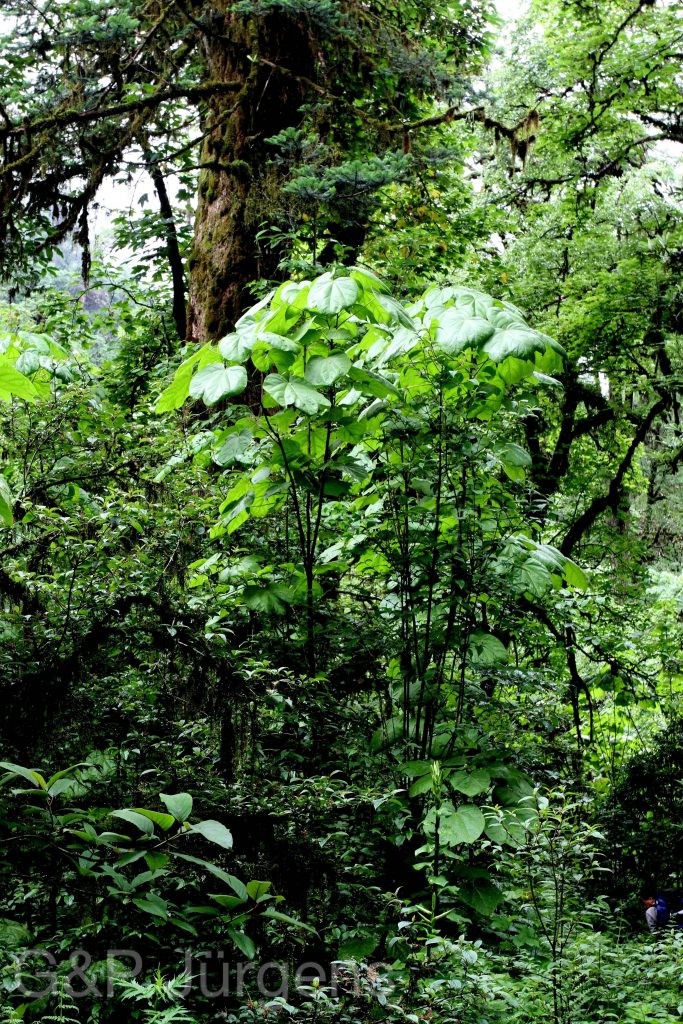
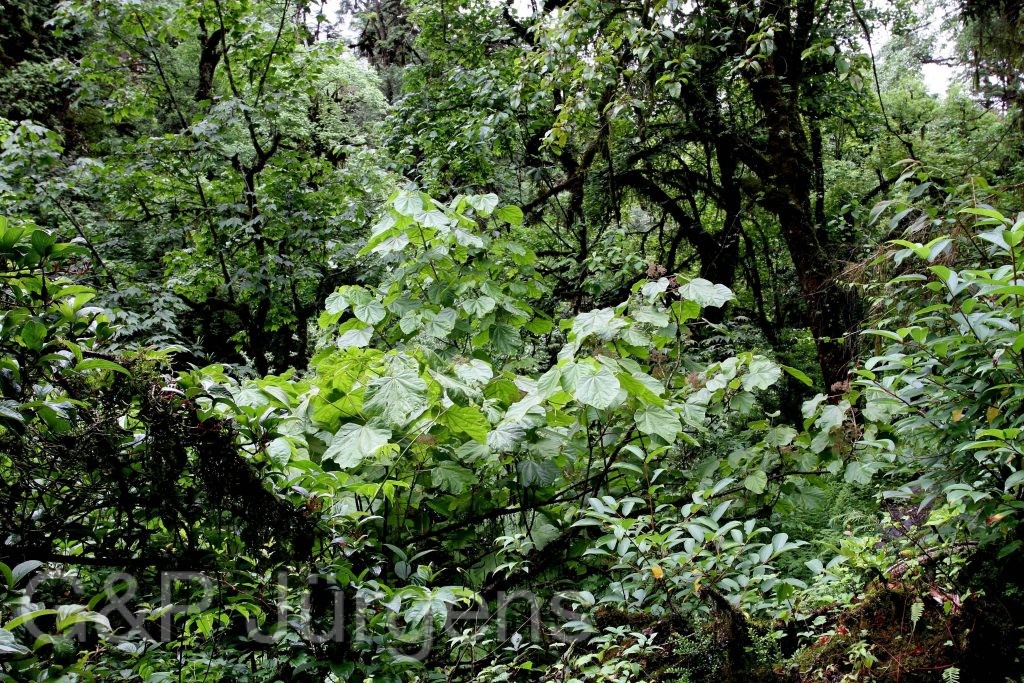
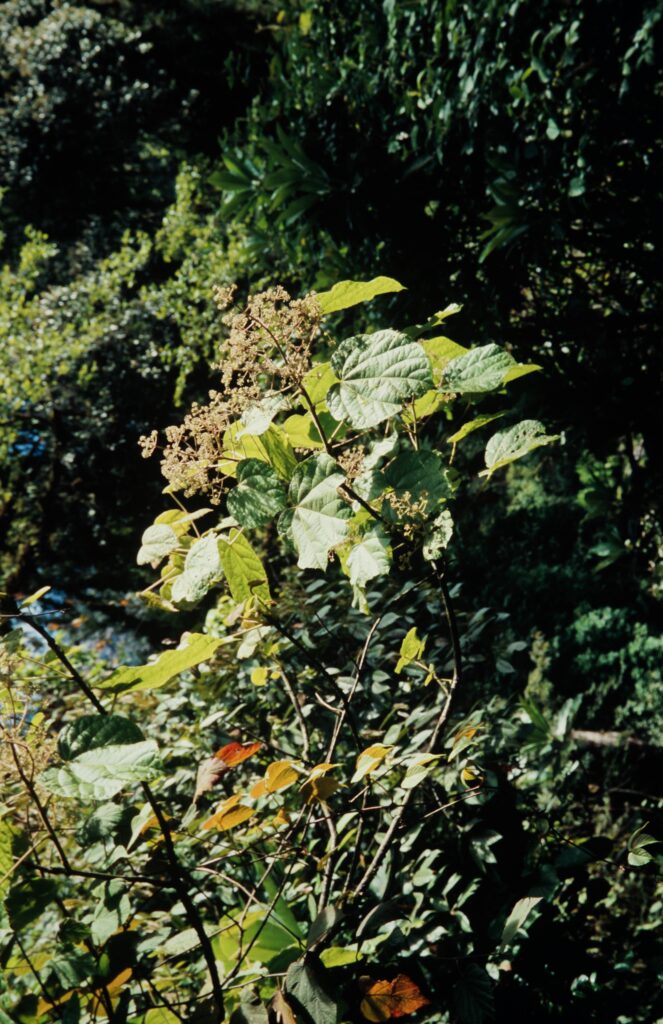
Merrilliopanax alpinus is a small tree or shrub of the eastern Himalaya and south-western China, recorded from Nepal, northern India, Bhutan and Yunnan, a comparatively narrow range reflected in only some 59 occurrence records. It inhabits moist, evergreen broad-leaved and mixed montane forest and forest margins, generally between about 2000 and 3500 m, often in shaded, humid ravines. The images here derive from Sikkim at Lachung (3200 m, June) and from the Tolung area of West Bengal (2400 m, May), localities typical of the rich, mist-bathed mid-montane forests where the genus reaches its diversity.

The plant is an evergreen with stout, sparingly branched stems bearing simple, leathery leaves clustered toward the branch tips. The leaves are large, ovate to elliptic, entire or shallowly toothed, glabrous and shining above and frequently rusty-tomentose beneath, on long petioles. The inflorescence is a terminal panicle of small umbels; the flowers are small, polygamous and greenish, with a reduced calyx, several petals and stamens, and an inferior ovary. The fruit is a small, globose to ellipsoid drupe crowned by the persistent styles.

Merrilliopanax is a small genus of the Araliaceae segregated from the broadly defined Schefflera/Aralia complex and is restricted to the Sino-Himalayan region; M. alpinus was described by C.B.Clarke and transferred to the genus by C.B.Shang. Its simple (rather than compound) leaves distinguish it from many relatives. The drupes are bird-dispersed, and the species is a localised but characteristic element of eastern Himalayan cloud forest. Its restricted range makes it of biogeographic interest and potentially sensitive to forest loss, though no formal threat assessment is widely established.

Author: (C.B.Clarke) C.B.Shang · Sources: POWO (Kew), GBIF, Flora of China, Flora of Bhutan, Shang revision of Merrilliopanax, Frodin & Govaerts World Checklist of Araliaceae