Author

G & P Jürgens

Buch.-Ham.

Bhutan2014 432
Bhutan Yatong-La 2800m, May

Description

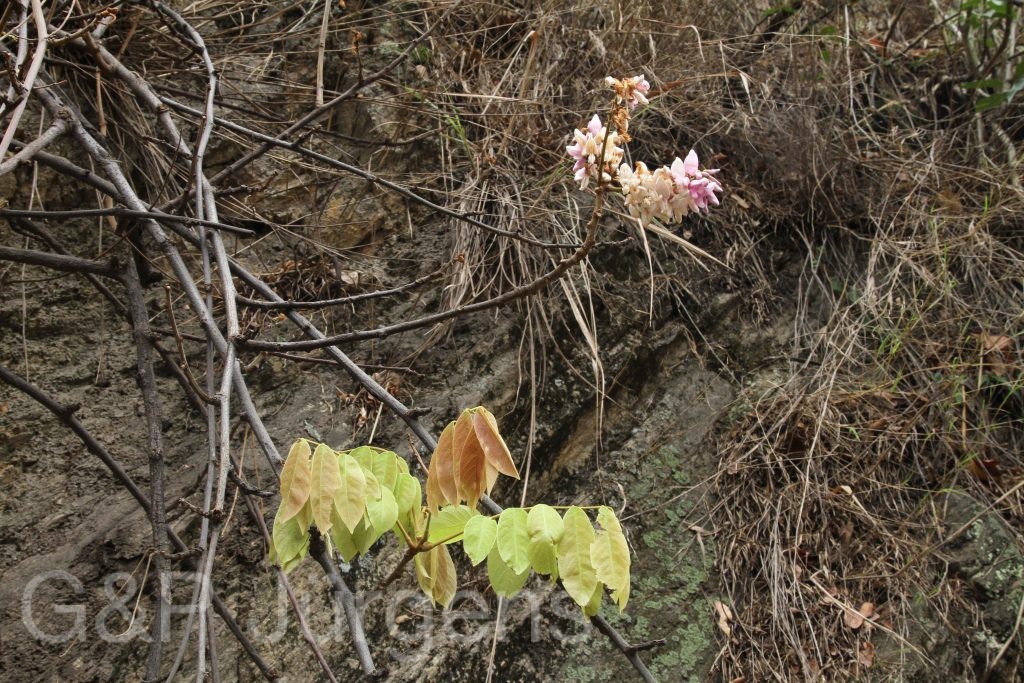
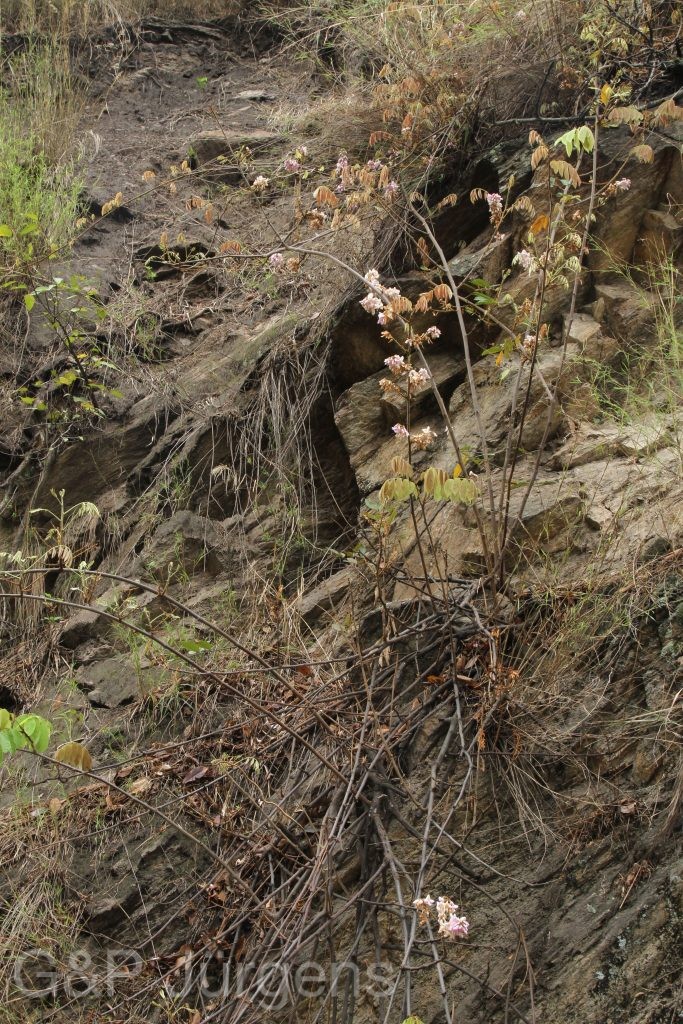
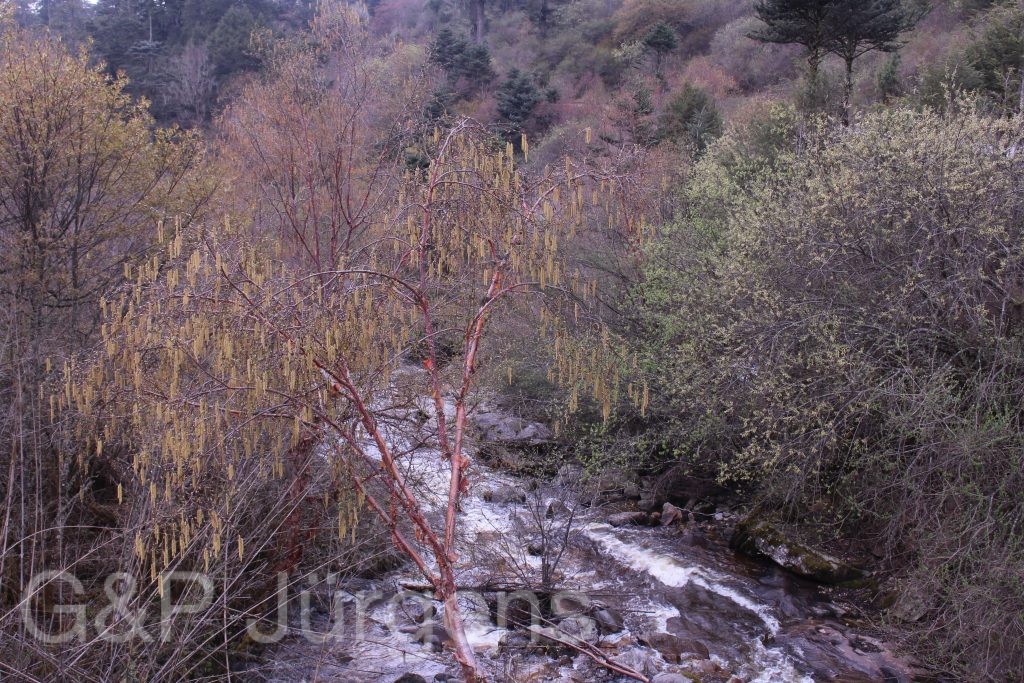
Betula alnoides Buch.-Ham. ex D.Don is a tall, fast-growing birch of the warm-temperate and subtropical mountains of southern and eastern Asia. Its distribution covers Nepal, northeast India, Bhutan, southern China, Myanmar, Thailand, Laos and Vietnam, with cultivated and trial occurrences recorded elsewhere. It is a light-demanding, often pioneering tree of moist broad-leaved and mixed montane forests, ravines and disturbed slopes, typically between about 1,000 and 2,800 m. The tree photographed at Yatong-La in Bhutan at 2,800 m in May sits near the upper edge of this band, within the humid mid-montane forest belt where the species frequently colonises gaps and forest margins.

The tree is deciduous and may reach 20–30 m, with smooth, brownish to reddish bark that exfoliates in thin papery sheets and bears conspicuous horizontal lenticels. The leaves are alternate, ovate-lanceolate with a long acuminate apex, doubly serrate margins and several pairs of straight lateral veins. As in all birches the plant is monoecious: the pendulous male catkins elongate at anthesis, while the smaller female catkins develop into slender, drooping, cylindrical infructescences that disintegrate to release small two-winged samaras adapted for wind dispersal.

Betula alnoides is the most important commercial birch of subtropical Asia, valued for its high-quality, reddish, fine-grained timber and increasingly grown in plantations and agroforestry across southern China and adjacent countries. Its rapid early growth and ability to fix sites make it useful in reforestation of degraded montane land. The species belongs to a group of subtropical birches distinct from the better-known temperate white birches, and although widely exploited it remains common and is not regarded as threatened.

Author: Buch.-Ham. · Sources: POWO (Kew), GBIF, Flora of China Vol. 4, Flora of Bhutan Vol. 1, Ashburner & McAllister: The Genus Betula (2013)
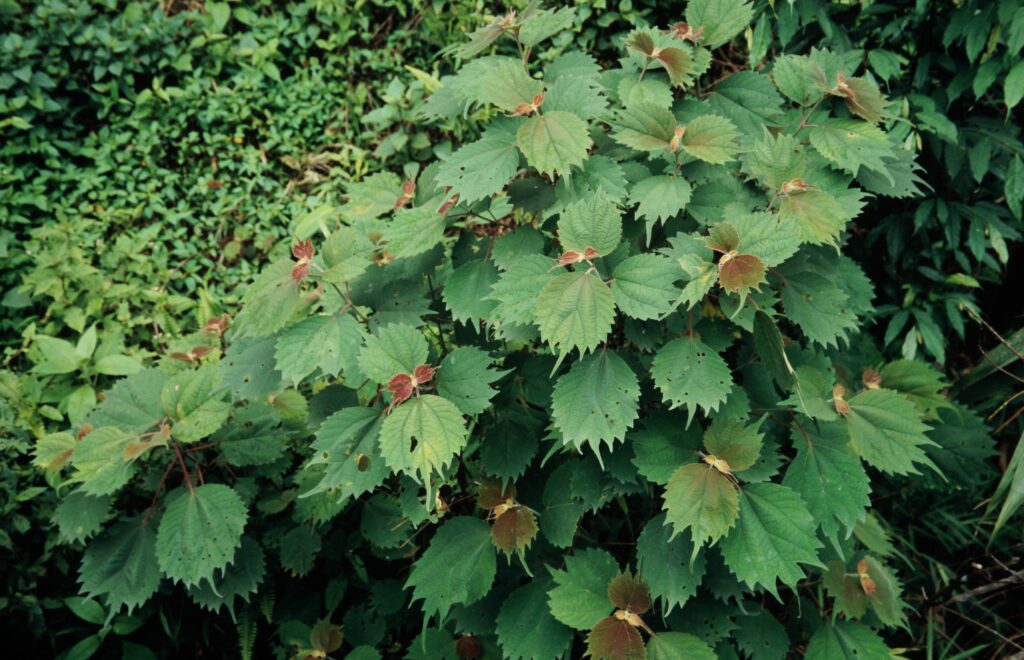
H.Lév.

Nepal 99 35 ergebnis
West-Nepal Nyor Gaad 2700m, June

Description

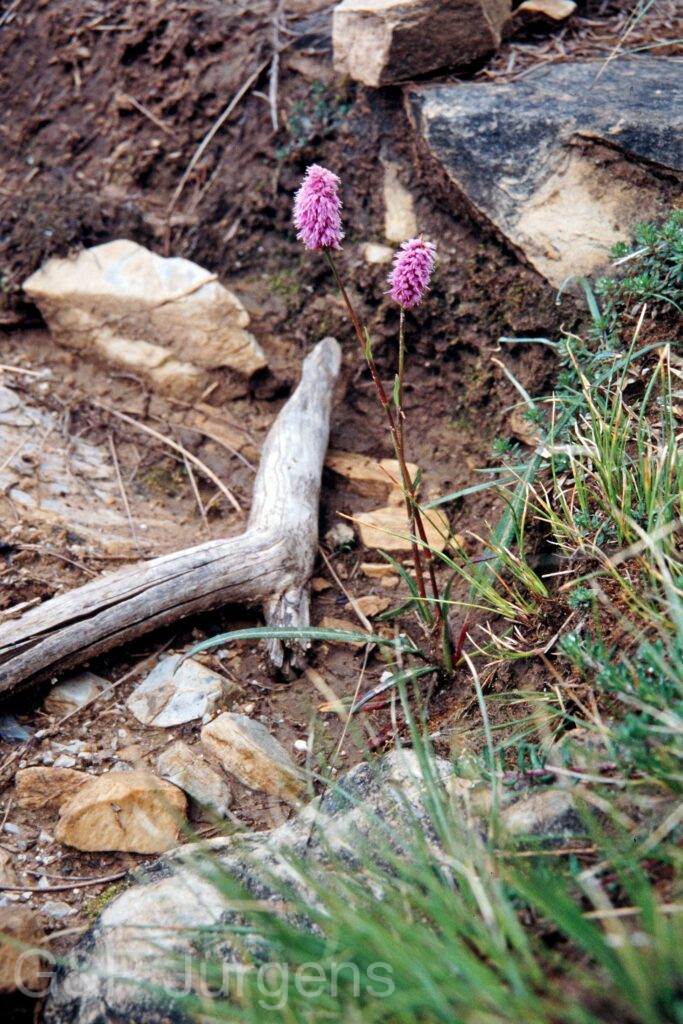
Bistorta milletii is a Sino-Himalayan knotweed distributed through China, Nepal, India and Bhutan, with GBIF recording 185 occurrences along this temperate to subalpine arc. It grows in open grassy slopes, moist meadows, forest margins and rocky banks, broadly between about 2500 and 4000 m. The illustrated plant was photographed in West Nepal at Nyor Gaad at 2700 m in June, a representative mid-montane meadow station where the species flowers through the early summer. It commonly forms patches in damp turf alongside other alpine and subalpine herbs.

The plant is a rhizomatous perennial herb arising from a stout, often contorted rhizome that anchors it in the sward. Basal leaves are long-petiolate with ovate-lanceolate to narrowly elliptic blades, the base cuneate to subcordate and the lower surface frequently pale; the membranous, tubular ochreae sheathing the stem are diagnostic of the family. The flowering stem is simple and erect, terminating in a dense, cylindrical, spike-like raceme. The small flowers have a five-parted, petaloid perianth, deep pink to red, with eight exserted stamens and a superior ovary bearing three styles. The fruit is a small, trigonous, dark brown achene enclosed in the persistent perianth.

The species belongs to genus Bistorta, segregated from Polygonum sensu lato and supported as a distinct lineage by molecular work; the input file's alternate web slug references the related B. affinis. POWO and GBIF accept the name B. milletii. As a meadow component with starch-rich rhizomes, members of the genus are locally grazed and occasionally used as famine food.

Author: H.Lév. · Sources: POWO (Kew), GBIF, Flora of China, Flora of Bhutan, Annotated Checklist of the Flowering Plants of Nepal, A Systematic Revision of Bistorta (Polygonaceae)

D.Don

Sikkim 2006 258 ergebnis
India West-Bengal, Lingza 1300m, May

Description

Boehmeria ternifolia is a shrubby member of the nettle family ranging through the eastern Himalaya and adjacent regions, recorded from Nepal, India and Bhutan, with GBIF documenting nearly two hundred occurrences across these countries; scattered records from France and the United States represent herbarium and cultivated holdings rather than wild populations. It is a plant of warm-temperate to subtropical broadleaved forest, favouring shaded ravines, streamsides, moist forest margins and roadside banks, typically between roughly 1000 and 2200 m. The specimen illustrated from Lingza in the Darjeeling district of West Bengal at about 1300 m, in May, is representative of these humid mid-elevation forests of the Sikkim-Darjeeling Himalaya, where high rainfall and deep shade favour the soft-leaved, non-stinging habit of the genus.

The plant is an erect shrub or subshrub with woody lower stems and herbaceous, often four-angled younger branches that lack stinging hairs. The leaves are characteristically arranged in whorls of three (occasionally opposite), the basis of the epithet ternifolia; they are ovate to lanceolate, with a long-acuminate apex, serrate margins and a three-veined base, the lamina thin and somewhat rough above. Stipules are present and soon falling. The minute unisexual flowers are borne in slender, interrupted axillary spikes or glomerules, the staminate flowers with a four-lobed perianth and four stamens, the pistillate flowers tubular and enclosing a single ovary with a filiform stigma. The fruit is a small achene tightly invested by the persistent perianth.

Boehmeria is a pantropical and warm-temperate genus best known for ramie (B. nivea), an important bast-fibre crop, and several Himalayan species likewise yield serviceable cordage fibres from their stems. The whorled, ternate leaf arrangement of B. ternifolia is a useful diagnostic character separating it from the many opposite-leaved congeners of the region. As a common, ecologically tolerant forest-edge shrub with a wide elevational and geographic span, it is of no conservation concern, and its abundance along disturbed margins suggests considerable resilience to moderate human impact within the eastern Himalayan forest belt.

Author: D.Don · Sources: POWO (Kew), GBIF, Flora of China Vol. 5, Flora of Bhutan Vol. 1 Part 2, Flora of Nepal, A Revision of Boehmeria (Urticaceae) (W.T. Wang and C.J. Chen)

J. D. Hooker et Thomson

BhutanPG2011 101
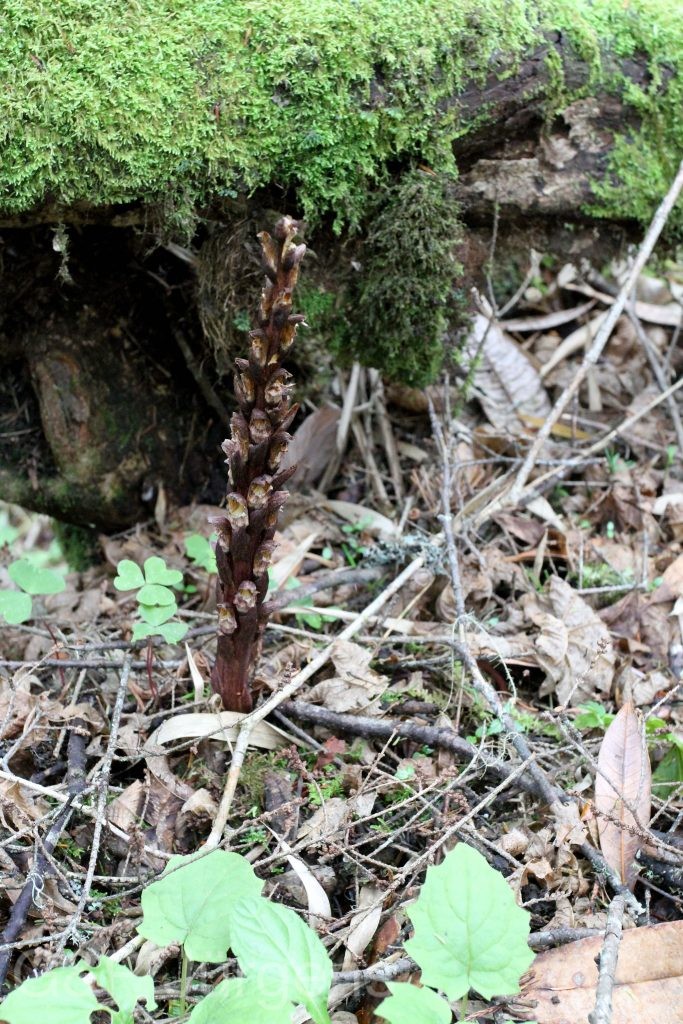
Bhutan Chognam 3240m, June

Description

A non-photosynthetic, root-parasitic herb of the eastern Himalaya and East Asia, recorded from China, Taiwan, Nepal, India, Bhutan, Japan and Myanmar, with about 711 GBIF occurrences (a few outlying entries reflect data errors). It parasitises the roots of woody Ericaceae, particularly Rhododendron and Gaultheria, and is found in subalpine shrubberies, forest margins and moist thicket floors, generally between about 2700 and 4000 m. The illustrated plant was photographed in June at Chognam in Bhutan at around 3240 m, a typical rhododendron-dominated montane habitat.

Lacking chlorophyll, the plant draws all nutrition from its host. It arises from a swollen, tuberous, scale-covered basal organ attached to the host root, from which emerge fleshy, erect, unbranched stems coloured purplish-brown, yellowish or reddish and clothed only in small scale-leaves. The inflorescence is a dense, cylindrical, many-flowered terminal spike. Each flower is subtended by a bract and has a short cup-like calyx and a two-lipped, tubular corolla in dull purple to brownish-yellow, with a hooded upper lip and a shorter spreading lower lip; four didynamous stamens are inserted in the tube. The superior ovary ripens into a capsule packed with numerous minute, dust-like seeds adapted to wind dispersal.

Accepted by POWO and GBIF, B. himalaica is one of a small genus of broomrape relatives specialised on ericaceous hosts. Its life cycle is intimately governed by host availability and the germination of its tiny seeds in response to host-root chemical cues. Because it depends entirely on healthy Rhododendron-rich communities, it serves as an indicator of intact subalpine ericaceous vegetation. It is widespread but inconspicuous and locally sporadic; no significant conservation concern is recognised at present.

Author: J. D. Hooker et Thomson · Sources: POWO (Kew), GBIF, Flora of China, Flora of Bhutan, Beck monograph of Orobanchaceae

W.W.Sm.

Bhutan2012 413
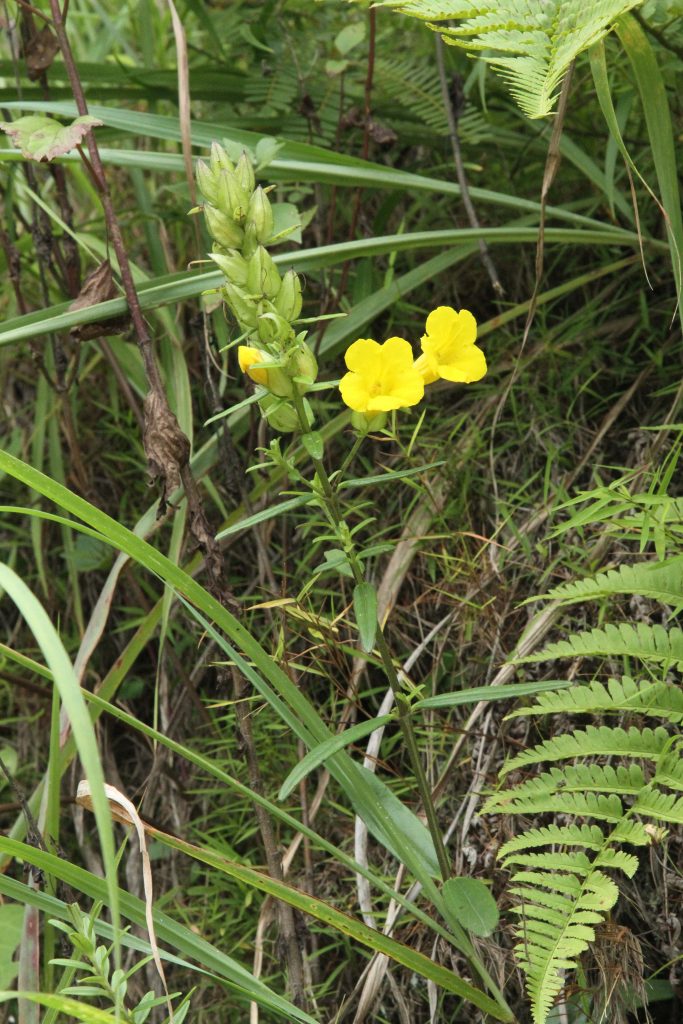
Bhutan Wangdi 2700m, September

Description

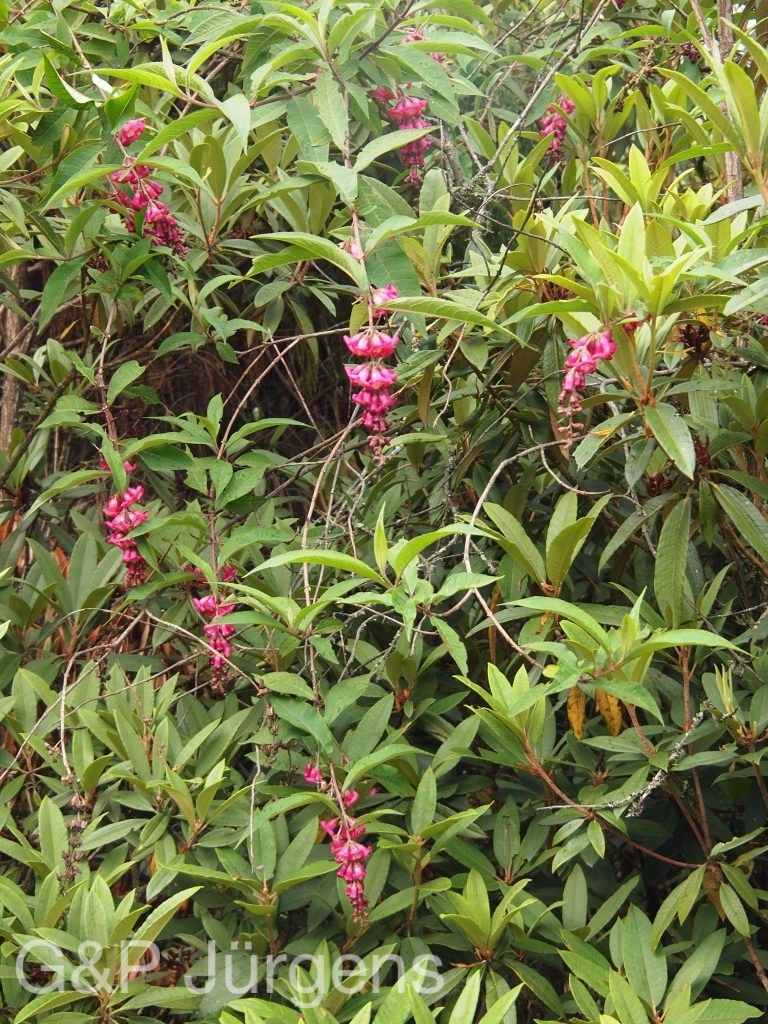
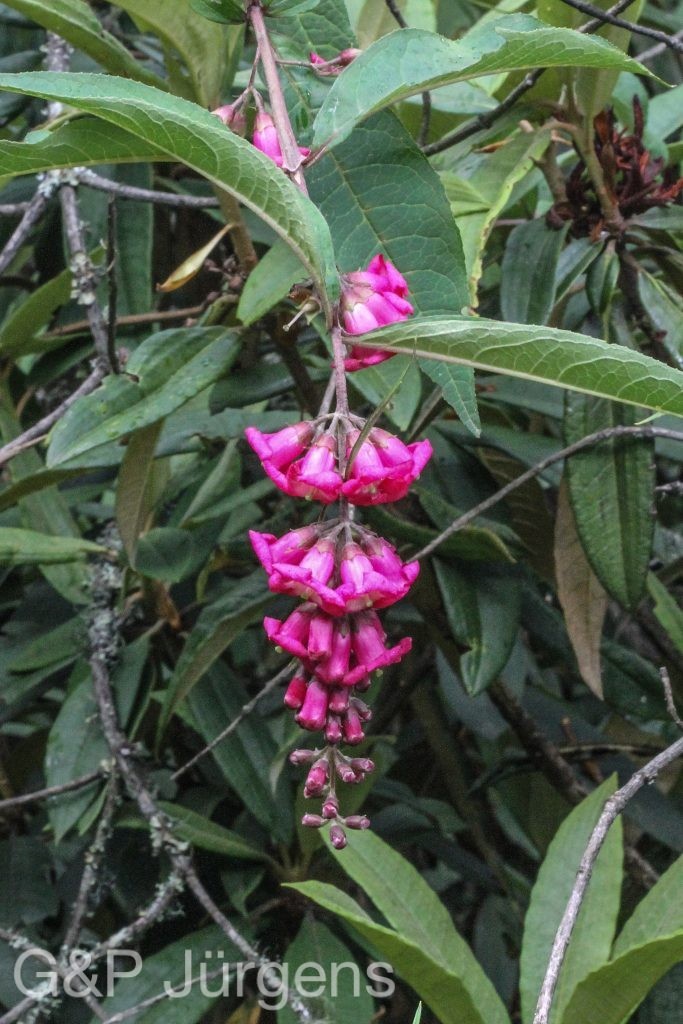
Brandisia rosea is a shrubby, often scandent plant of the eastern Himalaya and adjacent China, recorded by GBIF (about 63 occurrences) from China, India and Bhutan, a small total that reflects its restricted range and rather localised occurrence. It inhabits open forests, thickets, forest margins, scrub and rocky slopes in the warm-temperate montane zone, broadly between 2000 and 3000 m. The plant photographed near Wangdi in Bhutan at about 2700 m in September lies within this band and within the autumn flowering season, when its rosy blooms appear among the post-monsoon vegetation of the eastern Himalayan hillsides, a region where the genus reaches the western edge of its distribution.

It is a woody shrub, sometimes clambering or half-scandent, with young branches and foliage characteristically clothed in a fine stellate or scaly indumentum giving a greyish or rusty cast. The leaves are opposite, simple, ovate to lanceolate, entire or nearly so, and often tomentose beneath. The flowers are showy and borne in the leaf axils or in short clusters; the calyx is campanulate and toothed, and the corolla is conspicuously two-lipped (bilabiate), rose-pink to reddish, with the upper lip arched and the lower spreading and lobed, the form and colour suiting pollination by bees or birds. There are four didynamous stamens. The fruit is a loculicidal capsule containing numerous small seeds.

The genus Brandisia has had an unsettled familial history, long placed in the broadly defined Scrophulariaceae and subsequently reassigned; molecular and morphological studies have aligned it with the small woody clade comprising Paulownia and its relatives, hence its treatment here under Paulowniaceae (it is elsewhere placed in Orobanchaceae by some authors, and its position remains debated). Whatever its precise placement, Brandisia is a distinctive Sino-Himalayan element of montane shrubberies. With its limited range and modest number of records B. rosea has not been formally assessed for conservation, but as a habitat-specific montane shrub it would merit monitoring against forest disturbance in its core eastern Himalayan area.

Author: W.W.Sm. · Sources: POWO (Kew), GBIF, Flora of China Vol. 18, Flora of Bhutan Vol. 2, Flora of Nepal, Hong et al. Scrophulariaceae of China

Seem.

Sikkim 2006 309 ergebnis
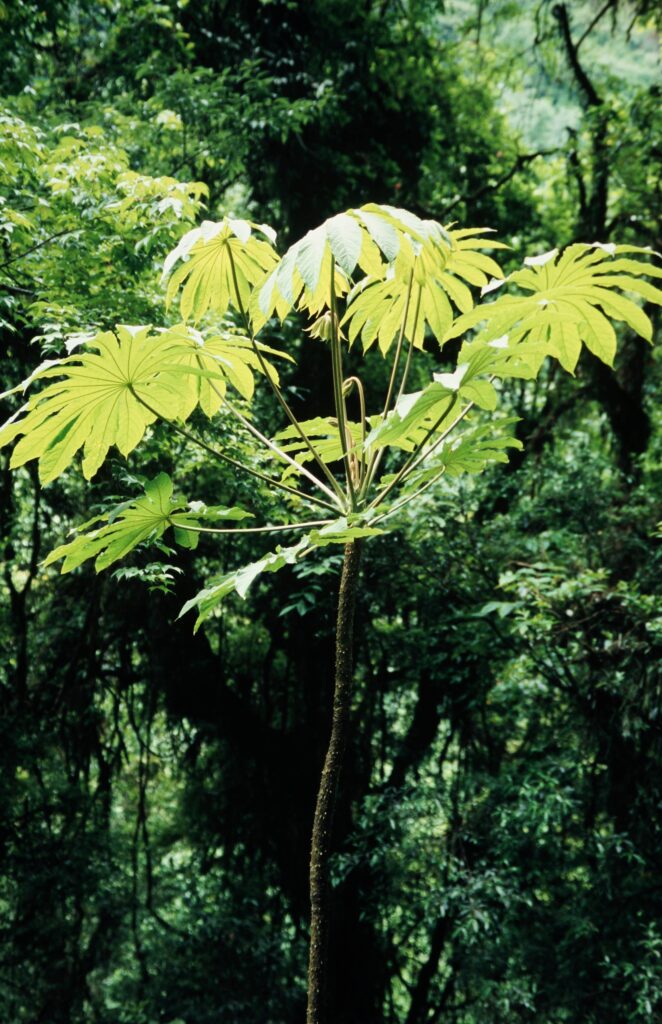
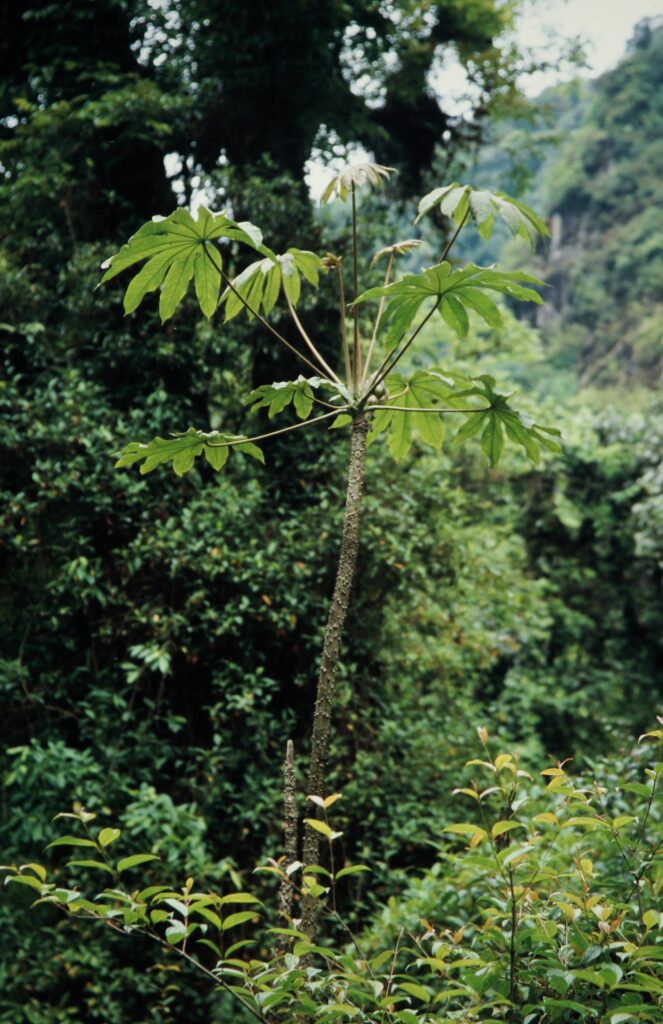
India West-Bengal, Chaana 1750m, May
Sikkim 2006 455 ergebnis
Sikkim Ringi-Chu 2300m, May

Description

Brassaiopsis hispida Seem. is a prickly shrub or small tree of the ginseng family ranging through the eastern Himalaya and the Sino-Himalayan region. GBIF records document it in India, Nepal, Bhutan, China and Myanmar, reflecting a distribution centred on the moist eastern Himalayan foothills and adjacent uplands. It occupies humid broad-leaved evergreen and semi-evergreen forest, forest margins and ravines, typically between roughly 1,200 and 2,500 m. The collections illustrated from Chaana in West Bengal at 1,750 m and from the Ringi-Chu in Sikkim at 2,300 m, both flowering in May, are representative of its damp montane forest habitat.

The plant is an armed shrub to small tree, the stems and petioles bearing scattered prickles and a hispid indumentum. The large, long-petiolate leaves are palmately lobed or compound, with the lobes or leaflets coarsely serrate and abruptly acuminate, the surfaces rough-hairy. The inflorescence is a terminal panicle of umbels bearing small, greenish to yellowish, functionally polygamous flowers with five petals and a five-merous ovary. The fruit is a small subglobose drupe with the persistent styles at the apex.

Brassaiopsis is a Palaeotropical Asian genus closely allied to Trevesia and Aralia, distinguished by its prickly habit and lobed leaves. B. hispida is one of several morphologically variable Himalayan species, and the genus has attracted phytochemical interest for its triterpenoid saponins. Though locally common in suitable forest, it is sensitive to habitat clearance in the lower hills.

Author: Seem. · Sources: POWO (Kew), GBIF, Flora of China Vol. 13, Flora of Bhutan Vol. 2, Lowry & Frodin: Studies in Asian Araliaceae

(C.A.Mey.) B.L.Rob.

Bhutan Kupong 3250m, June

Description

Braya humilis (C.A.Mey.) B.L.Rob. is a widely distributed arctic-alpine crucifer with a circumpolar to Central Asian range, recorded by GBIF from Canada, the United States, Russia, Greenland, China, India, Nepal, Bhutan, Mongolia, Pakistan, Afghanistan and Scandinavia, with over 4200 occurrences. In the Himalaya it occupies high alpine pastures, stony slopes and moraines, as exemplified by the Bhutanese collection from Kupong at 3250 m in June, favouring calcareous, base-rich soils of the upper subalpine to alpine zone.

It is a small biennial or short-lived perennial herb with a stout taproot crowned by a leaf rosette and one to several ascending stems. The basal leaves are linear-oblanceolate, entire to remotely dentate and somewhat fleshy, bearing simple and forked trichomes typical of the genus; cauline leaves are few and reduced. The inflorescence is a compact, bracteate raceme that elongates in fruit, the small flowers with four white to pale lilac petals and the tetradynamous androecium of six stamens. The fruit is a short, terete to slightly flattened silique, often torulose, narrowed to a short persistent style and containing biseriate seeds.

Braya humilis is a polymorphic, taxonomically complex species within tribe Euclidieae, with numerous infraspecific taxa and regional segregates across its vast amphi-Beringian and montane Asian distribution. Its great ecological amplitude and association with cold, open, calcareous habitats make it a classic arctic-alpine disjunct, linking high-latitude tundra floras with the Himalayan and Central Asian mountains. Some peripheral arctic populations are of national conservation interest, though the species is secure overall.

Author: (C.A.Mey.) B.L.Rob. · Sources: POWO (Kew), GBIF, Flora of Bhutan Vol. 1, Flora of China Vol. 8, Flora of Pakistan, Warwick & Al-Shehbaz studies of tribe Euclidieae (Brassicaceae)

Hook.f.

BhutanPG2011 53
Bhutan Jakar, 2500m June
BhutanPG2011 552011 Bhutan Buddleia colvilei
Bhutan Jakar, 2500m June

Description

Buddleja colvilei is a large-flowered shrub or small tree of the eastern Himalaya, native to Bhutan, India, Nepal and China, and widely grown in temperate gardens, as its 166 occurrences from Britain, North America, New Zealand and Spain attest. In the wild it occupies open temperate forest margins, clearings, stream banks and shrubberies, typically between about 2400 and 4000 m. The plant recorded at Jakar in Bhutan at 2500 m in June represents its early-summer flowering within the moist temperate zone, where it forms a spreading, often arching woody framework.

The plant has stout branches with peeling bark and is clothed, especially when young, in a pale stellate or floccose indumentum. The leaves are opposite, lanceolate to elliptic, acuminate, with finely toothed margins, dark green above and paler and tomentose beneath. The inflorescence is a pendent terminal panicle of relatively few but exceptionally large flowers; the corolla is tubular with a flared, four-lobed limb, deep rose-red to crimson with a pale or whitish throat, and bears the largest flowers of any Buddleja. The fruit is a small two-valved septicidal capsule releasing numerous tiny seeds.

Buddleja is here placed in Scrophulariaceae following the family circumscription used in the source, though the genus is also treated in a segregate family Buddlejaceae and within an expanded Scrophulariaceae in current systems. B. colvilei is celebrated horticulturally for its outsized, vividly coloured flowers and has received garden awards. In its native range it remains locally frequent in disturbed and edge habitats and is not regarded as threatened.

Author: Hook.f. · Sources: POWO (Kew), GBIF, Flora of China, Flora of Bhutan, A Revision of the Genus Buddleja (Leeuwenberg), Flowers of the Himalaya (Polunin & Stainton)

Hatus.

Nepal 99 771 ergebnis
West-Nepal, Baga-La-Phedi 3750m, July
Nepal 99 772 ergebnis
West-Nepal, Baga-La-Phedi 3750m, July

Description

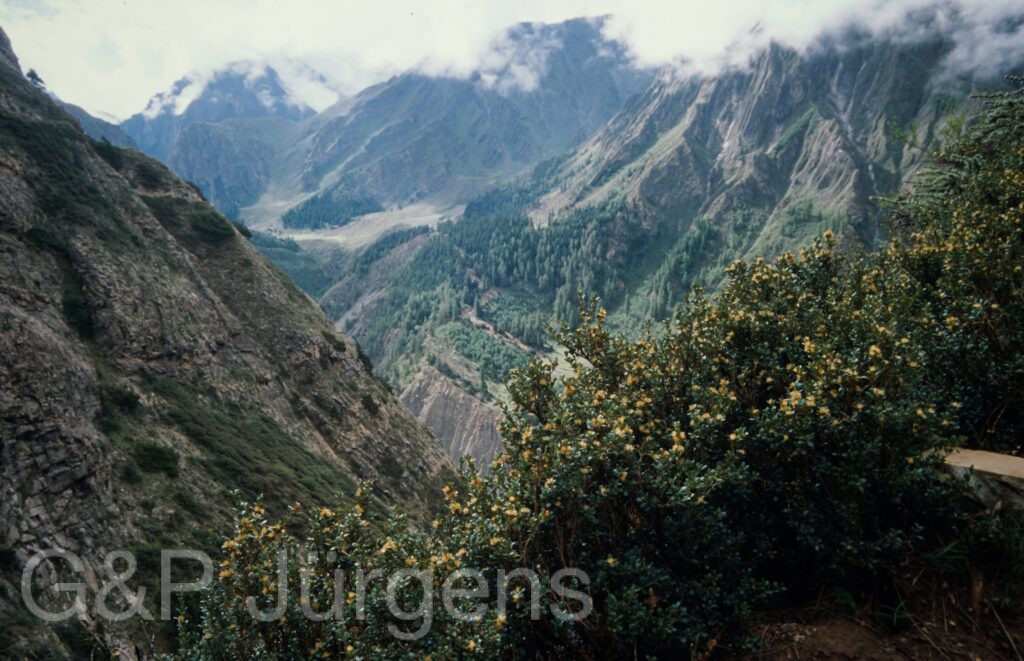
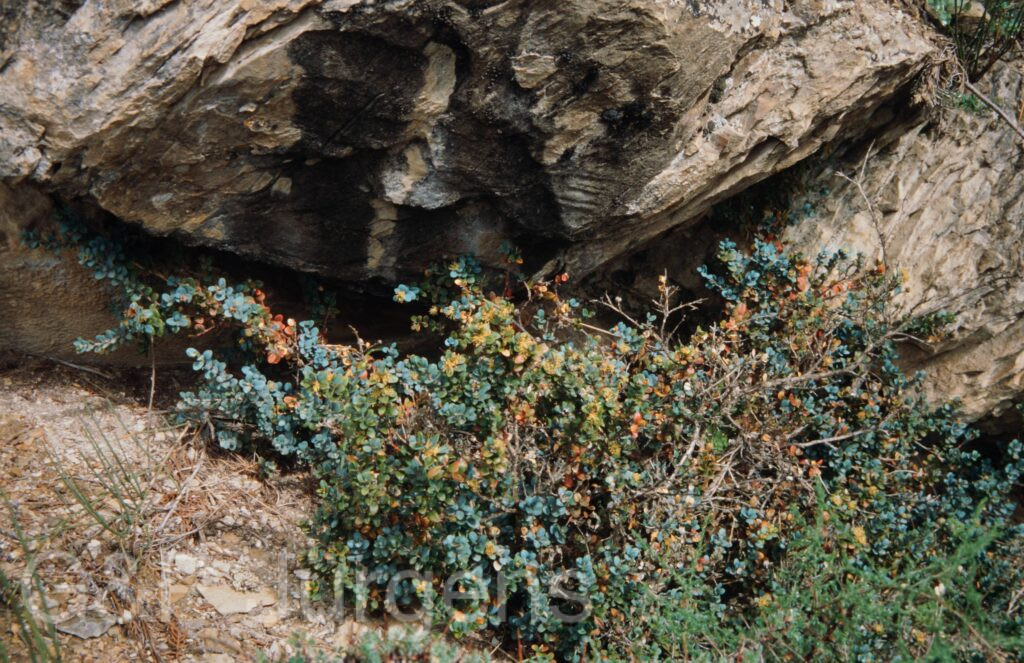
Buxus rugulosa is an evergreen shrub of the high Himalaya and the mountains of western China. GBIF (some 313 occurrences) records it from China, Nepal and Pakistan, with a few outlying records from Turkey likely reflecting cultivation. It grows on open rocky slopes, in alpine scrub, among boulders and at the upper forest margin, ascending to high elevations. The illustrated plant is from western Nepal at Baga-La-Phedi at about 3,750 m, flowering in July, a characteristically high station near or above treeline, where it forms low, hardy thickets exposed to intense radiation and cold.

The plant is a low, much-branched evergreen shrub, often dwarf and cushion-forming in exposed sites, with quadrangular young shoots. The leaves are opposite, small, leathery, obovate to elliptic and rounded or notched at the apex, with a characteristically rugulose (finely wrinkled) upper surface, glossy dark green. The flowers are small, unisexual and apetalous, borne in axillary clusters with a single terminal female flower surrounded by several males; the perianth consists of inconspicuous tepals. The fruit is a three-horned woody capsule that dehisces explosively, ejecting the shiny black seeds.

Buxus (box) is a genus of slow-growing evergreens placed in the basal eudicot family Buxaceae; the wood is dense and finely grained. Buxus rugulosa is distinguished within the Himalayan-Chinese box species by its small rugulose leaves and dwarf alpine habit. It is not currently regarded as threatened, though high-altitude Himalayan populations are restricted to specialised rocky habitats and merit monitoring, particularly given upslope pressures from a warming climate.

Author: Hatus. · Sources: POWO (Kew), Flora of China Vol. 11, Flora of Pakistan, GBIF, Köhler: Buxaceae (Species Plantarum: Flora of the World)

(Franch.) Prain

Bhutan2014 68
Bhutan Trashigang 1600m, May
Bhutan2014 67
Bhutan Trashigang 1600m, May

Description

Cladrastis delavayi (here spelled Cadrastis delavayi) is a deciduous tree of the eastern Sino-Himalaya, distributed from Bhutan and northeast India through northern Myanmar into south-central and southwestern China. It occurs in mixed broad-leaved and evergreen forest on warm-temperate to subtropical mountain slopes, generally between roughly 1000 and 2500 m. The photographed individual was recorded at Trashigang in eastern Bhutan at about 1600 m, flowering in May. The associated GBIF record is a spurious genus-level match (returning the kingdom-rank name and a global occurrence figure), so distribution here follows regional floristic accounts rather than the misapplied dataset.

The species is a medium-sized tree with smooth bark and odd-pinnate (imparipinnate) leaves bearing several alternate, ovate-elliptic, entire leaflets that are softly pubescent beneath. The flowers are borne in terminal, branched panicles and have the papilionaceous structure typical of Faboideae: a broad standard, two lateral wings and a keel of two partly fused petals, the colour white to creamy and often fragrant. The androecium comprises ten free or basally connate stamens, and the fruit is a flattened, several-seeded legume that is narrowly winged along the sutures and dehisces tardily.

Cladrastis is a small disjunct genus of the temperate Northern Hemisphere, with species in eastern Asia and a single North American representative (the yellowwood, C. kentukea), making it a classic example of the East Asian–North American floristic disjunction. C. delavayi, named for the French missionary-collector Père Delavay, is one of the Chinese species and yields a hard, attractively grained timber. It is locally distributed but not regarded as globally threatened.

Author: (Franch.) Prain · Sources: POWO (Kew), GBIF, Flora of Bhutan, Flora of China (Fabaceae), Duley & Vincent revision of Cladrastis (Leguminosae)