
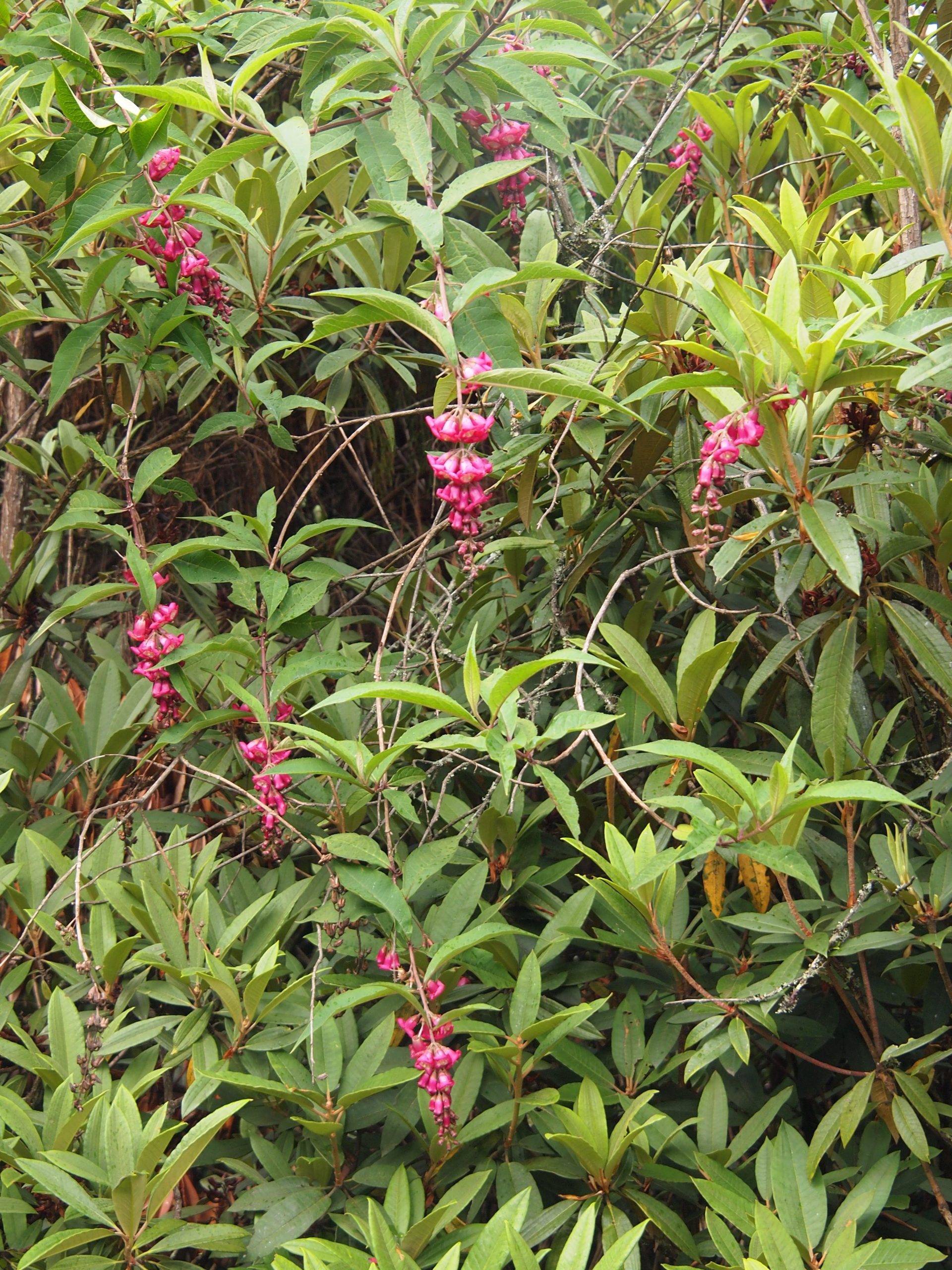
Hook.f.
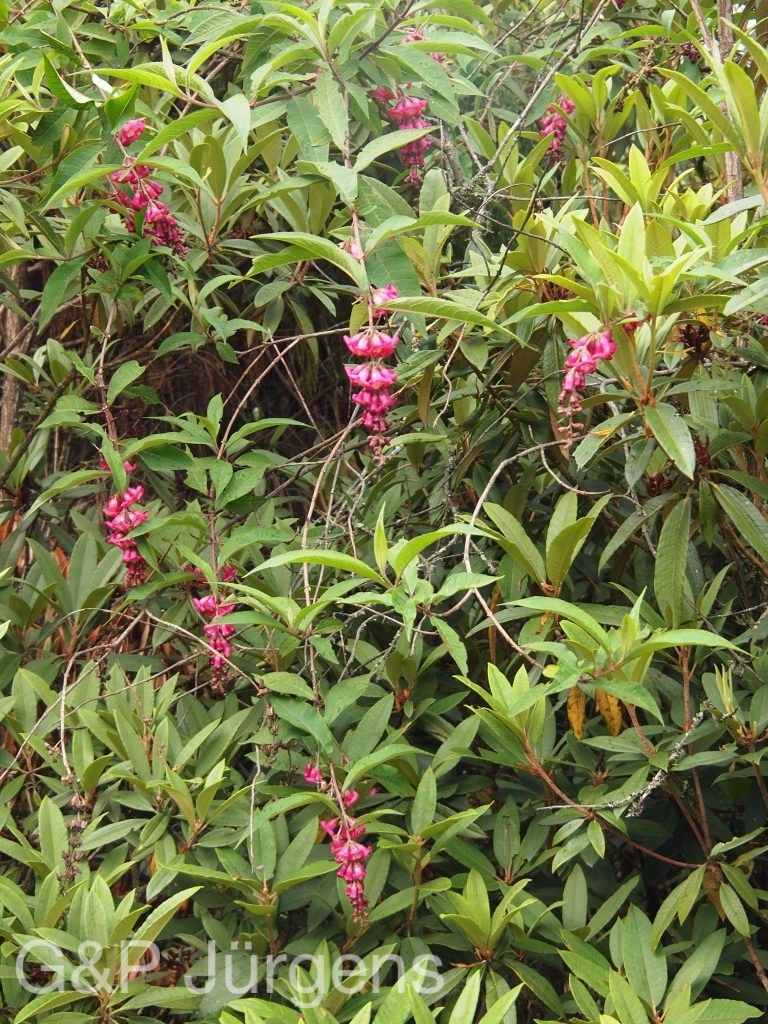
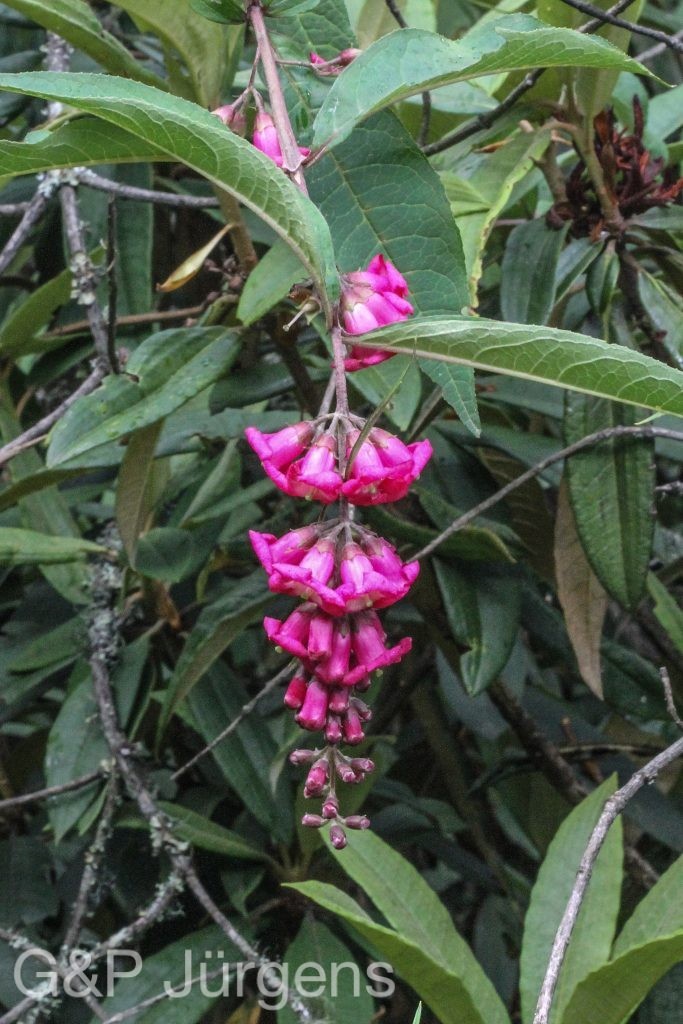
Description
Buddleja colvilei is a large-flowered shrub or small tree of the eastern Himalaya, native to Bhutan, India, Nepal and China, and widely grown in temperate gardens, as its 166 occurrences from Britain, North America, New Zealand and Spain attest. In the wild it occupies open temperate forest margins, clearings, stream banks and shrubberies, typically between about 2400 and 4000 m. The plant recorded at Jakar in Bhutan at 2500 m in June represents its early-summer flowering within the moist temperate zone, where it forms a spreading, often arching woody framework.
The plant has stout branches with peeling bark and is clothed, especially when young, in a pale stellate or floccose indumentum. The leaves are opposite, lanceolate to elliptic, acuminate, with finely toothed margins, dark green above and paler and tomentose beneath. The inflorescence is a pendent terminal panicle of relatively few but exceptionally large flowers; the corolla is tubular with a flared, four-lobed limb, deep rose-red to crimson with a pale or whitish throat, and bears the largest flowers of any Buddleja. The fruit is a small two-valved septicidal capsule releasing numerous tiny seeds.
Buddleja is here placed in Scrophulariaceae following the family circumscription used in the source, though the genus is also treated in a segregate family Buddlejaceae and within an expanded Scrophulariaceae in current systems. B. colvilei is celebrated horticulturally for its outsized, vividly coloured flowers and has received garden awards. In its native range it remains locally frequent in disturbed and edge habitats and is not regarded as threatened.
Author: Hook.f. · Sources: POWO (Kew), GBIF, Flora of China, Flora of Bhutan, A Revision of the Genus Buddleja (Leeuwenberg), Flowers of the Himalaya (Polunin & Stainton)