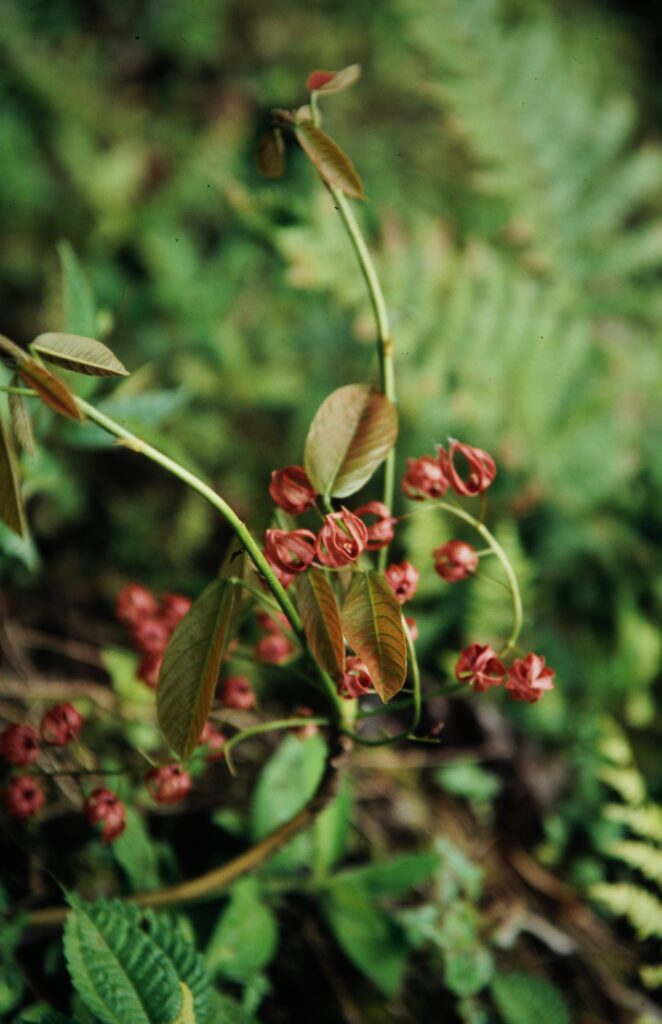
Author

G & P Jürgens

(CB.Clarke) Nayar

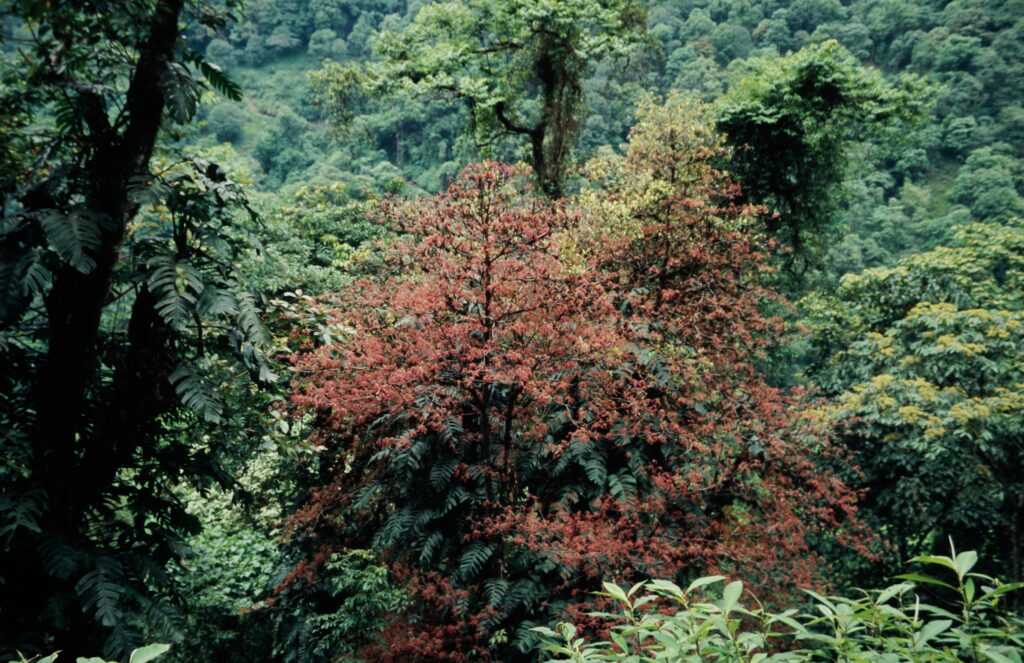
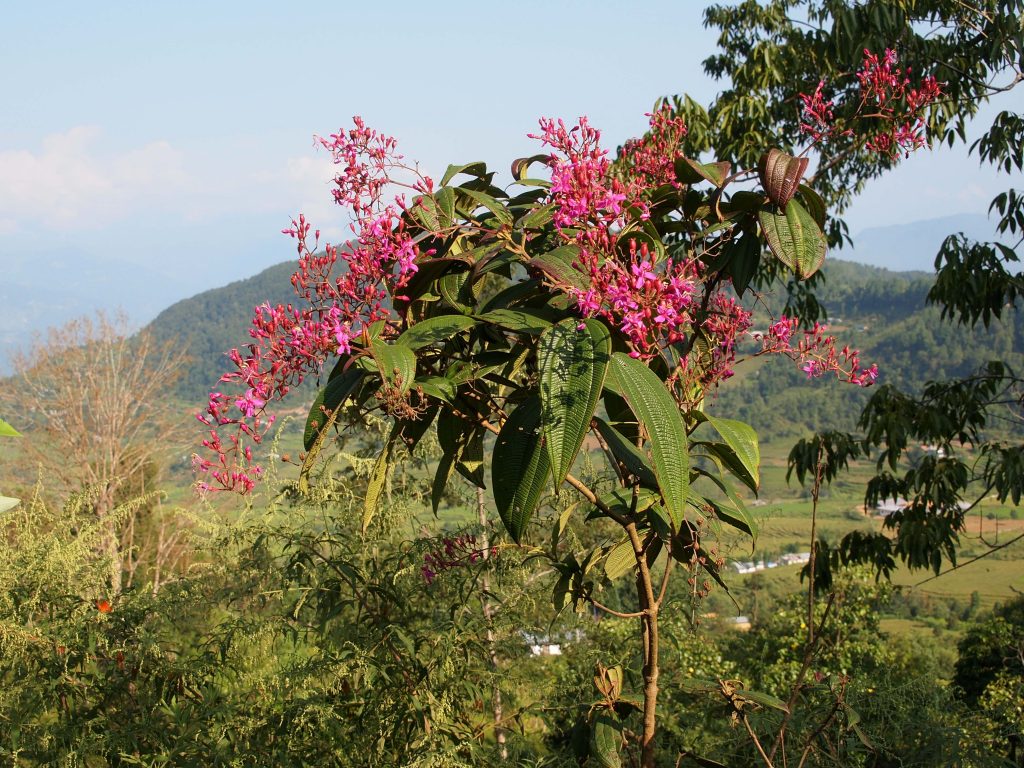
Bhutan2012 632
Bhutan Tserang 1600m
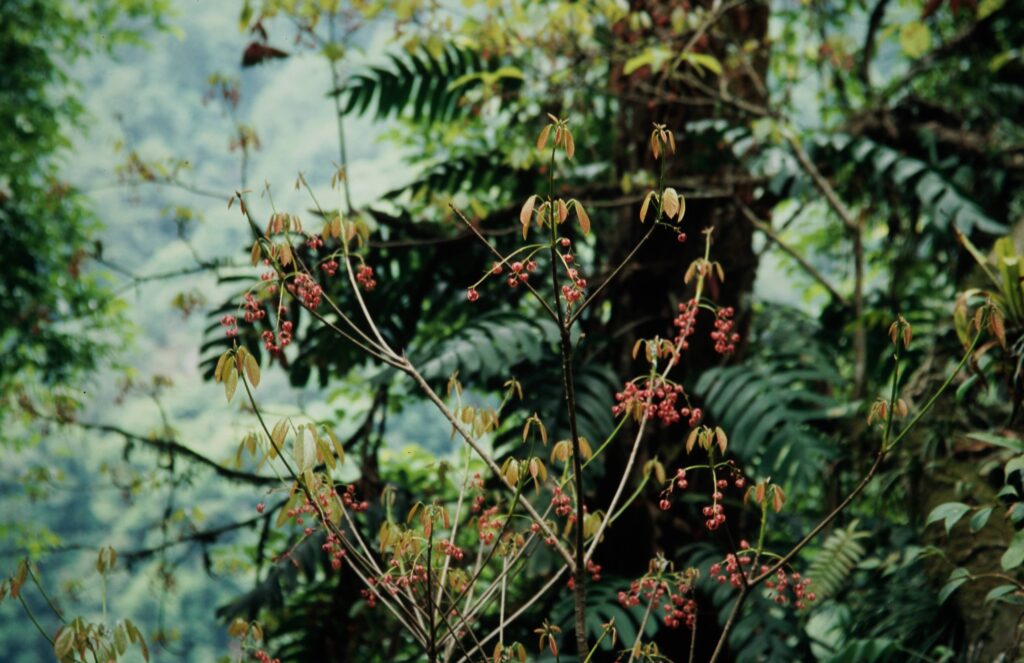
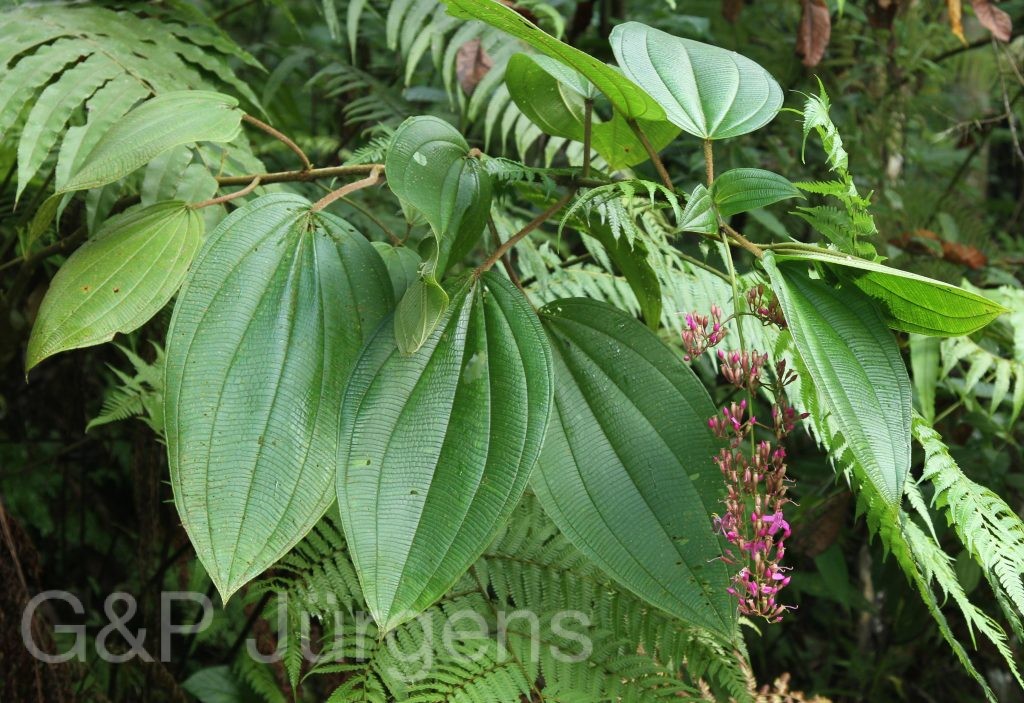
Bhutan2012 1239
Bhutan Tserang 1600m

Description

Pseudodissochaeta assamica is a forest shrub of the Sino-Himalayan and Indo-Burmese region, recorded from China, Vietnam, India, Laos, Bhutan, Myanmar and Bangladesh, with a moderate body of data (c. 126 records in GBIF). It is a plant of warm, humid broad-leaved evergreen and semi-evergreen forest, growing in shaded understorey, along streamsides, ravines and forest margins, typically in the subtropical to lower montane belt around 1000–2000 m. The photographed individual from Tserang in Bhutan, at 1600 m, is representative of this moist, shaded mid-elevation forest habitat where members of the family flourish.

The plant is an erect to scrambling shrub with quadrangular young stems and the opposite, decussate leaves typical of Melastomataceae. The leaves are large, ovate to elliptic-lanceolate, with the characteristic curvinerved (acrodromous) venation of several main veins arising near the base and converging at the apex, the lamina often scabrous or sparsely setose. The flowers are borne in terminal or axillary panicles; each has a campanulate hypanthium, four small petals, and conspicuous stamens that are markedly dimorphic or unequal, with appendaged, often geniculate connectives and poricidal anthers adapted to buzz-pollination. The fruit is an urceolate, several-seeded capsule or berry-like structure crowned by the persistent calyx.

The genus Pseudodissochaeta (tribe Dissochaeteae) was segregated by Nayar from Dissochaeta on differences in stamen and connective structure. This taxon was based on a Clarke name and has a complex synonymy; the source page links to Oxyspora paniculata, an allied melastome with which it has at times been confused, underscoring the taxonomic intricacy of the group. As a fairly widespread forest shrub it is not regarded as threatened, though it depends on intact mid-elevation forest.

Author: (CB.Clarke) Nayar · Sources: POWO (Kew), GBIF, Flora of China (Melastomataceae), Flora of Bhutan, A Revision of the Asiatic Melastomataceae
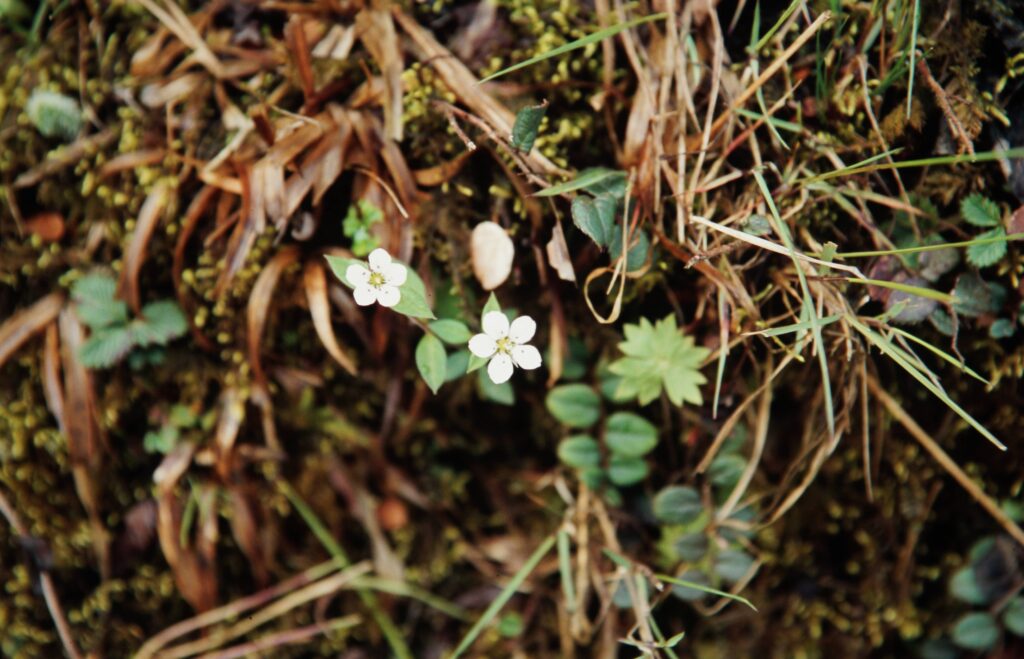
(Franch.) Pax

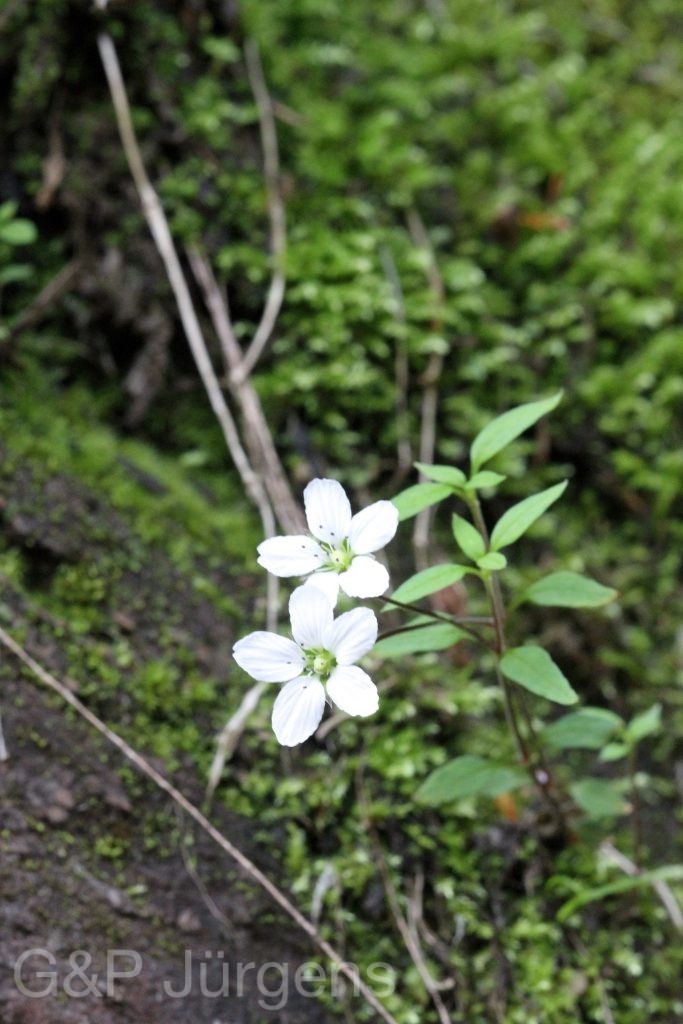
BhutanPG2011 117
Bhutan Chogham, 3450m June
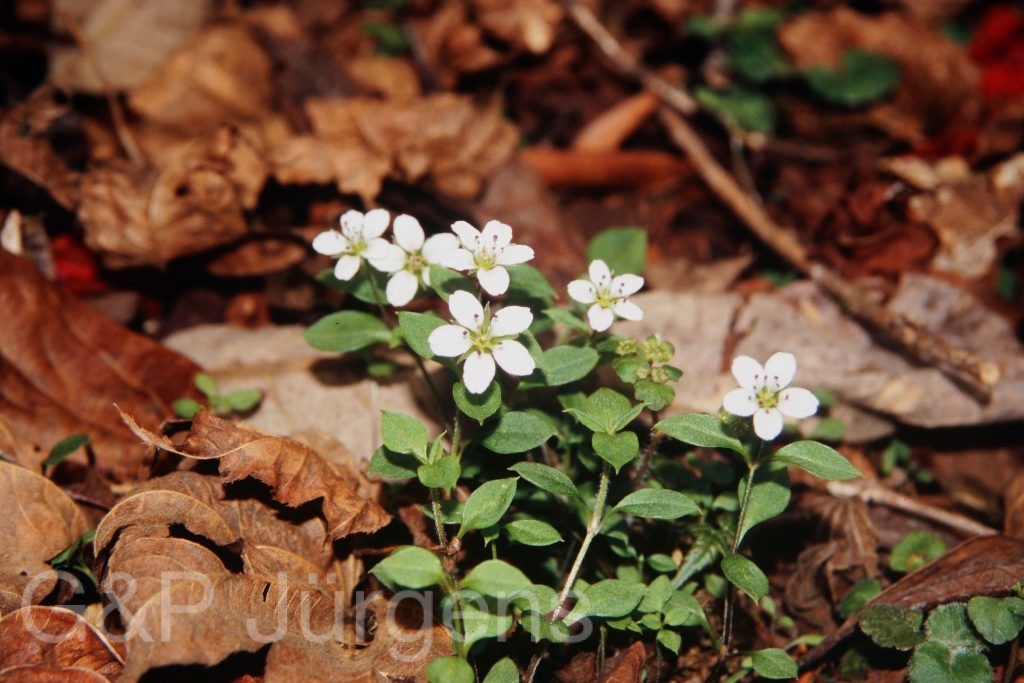
Bh2008 38 G66
Bhutan Dochu-La, 3000m April
Sikkim 2006 79 ergebnis
India West-Bengal, Kalipokkri 3100m, May

Description

Pseudostellaria himalaica (Franch.) Pax is a small woodland perennial of the Himalaya and adjacent ranges, distributed through Bhutan, India, Nepal, Pakistan, Afghanistan and south-western China, with a comparatively modest GBIF record of about 118 occurrences reflecting its inconspicuous habit. It grows in cool, shaded, humus-rich conditions: the floor of temperate broadleaf and conifer forest, mossy banks, Rhododendron understorey and damp rocky slopes. The illustrated material spans three localities and seasons, from Chogham in Bhutan at 3450 m in June and Dochu-La at 3000 m in April to Kalipokkri in West Bengal, India, at 3100 m in May, indicating a flowering period extending through spring and early summer in the temperate to lower subalpine zone.

The plant is a delicate, glabrous to sparsely hairy perennial arising from slender, fusiform to tuberous-thickened roots. The stems are weak, slender and ascending, bearing opposite, sessile to shortly petiolate, ovate to lanceolate leaves with entire margins. The flowers are of two kinds in the manner typical of Pseudostellaria: showy, chasmogamous flowers borne in the upper axils or terminally, with five free white petals (often bifid or notched) somewhat exceeding the five lanceolate sepals, ten stamens and a three-styled ovary; and inconspicuous, often petal-less cleistogamous flowers produced lower on the plant that self-fertilise. The fruit is a small capsule dehiscing by valves to release few seeds.

This taxon has frequently been treated as Pseudostellaria heterantha var. himalaica, reflecting its close affinity with the variable P. heterantha aggregate, and authors differ on whether to recognise it at species or varietal rank, as the source page name indicates. The combination of showy outcrossing flowers with reliably self-pollinating cleistogamous ones is a reproductive strategy that buffers seed-set in the short, cool growing season of shaded montane forest. The species is widespread if seldom abundant, and no specific conservation threat is recorded, though it depends on intact forest understorey.

Author: (Franch.) Pax · Sources: POWO (Kew), GBIF, Flora of China, Flora of Bhutan, Caryophyllaceae of the Himalaya (Majumdar)

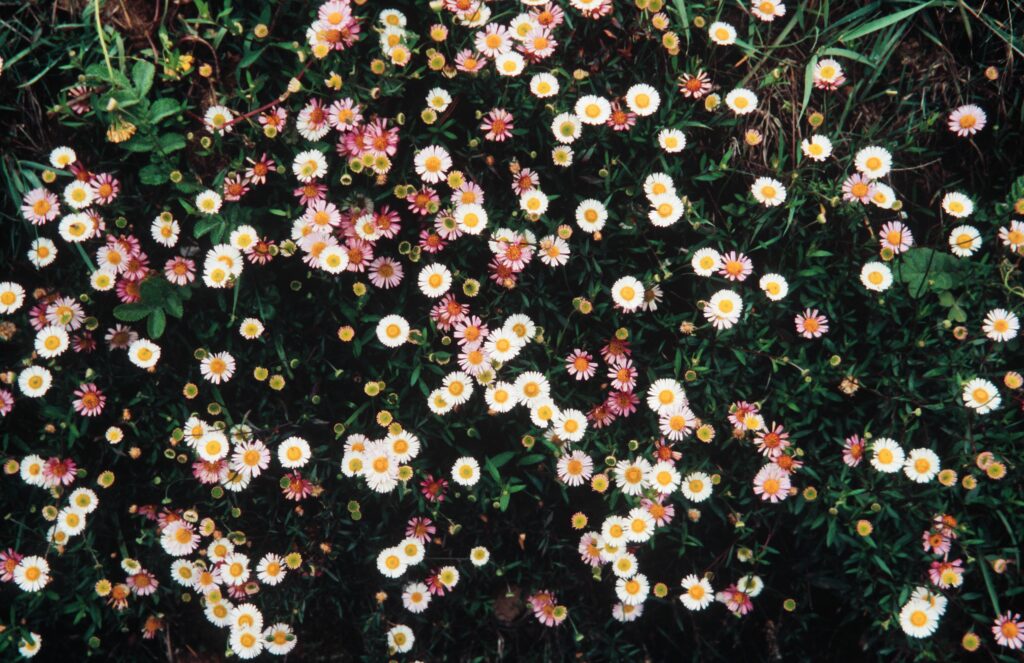
Krasch.

Sikkim 2006 178 ergebnis
India West-Bengal, Samadan 2400m, May

Description

Psychrogeton alexeenkoi is a high-mountain composite of the arid ranges of Central and South-West Asia, its georeferenced records concentrated in Afghanistan, Kazakhstan, Tajikistan, Iran, Pakistan and Turkey, GBIF accumulating some 58 occurrences that reflect a narrow, sparsely collected range. It grows on stony slopes, rock crevices, gravelly screes and dry alpine to subalpine meadows, typically on calcareous or schistose substrates. The population recorded in May at Samadan in West Bengal, India, near 2400 m marks an eastern, lower-elevation extension where it occupies open, well-drained sunny situations subject to strong diurnal temperature fluctuation.

The species is a perennial herb forming a woody caudex from which arise several ascending leafy stems clothed in spreading eglandular and gland-tipped hairs. The basal and lower cauline leaves are oblanceolate to spathulate, entire or obscurely toothed and narrowed to a winged petiole, the upper ones smaller and sessile. The solitary or few terminal capitula are radiate: numerous slender lilac to pale violet ray florets surround a disc of yellow tubular perfect florets, the involucral bracts linear-lanceolate, herbaceous and pubescent in subequal series. Achenes are flattened, oblong and pubescent, crowned by a pappus of fine barbellate bristles aiding anemochory.

Psychrogeton is a small Asiatic genus segregated from Erigeron, distinguished by habit and pappus and frequently treated as transitional to Aster within tribe Astereae. P. alexeenkoi, described by Krascheninnikov, is endemic to the mountains of Middle Asia and the Hindu Kush-Karakoram and is adapted to cold continental conditions, as its name ("cold-dweller") implies. No formal conservation assessment exists, but its restricted range and reliance on undisturbed montane habitat warrant monitoring of overgrazing and degradation.

Author: Krasch. · Sources: POWO (Kew), GBIF, Flora of Pakistan, Flora Iranica, Conspectus Florae Asiae Mediae, Nesom monograph of Astereae

(Roxb.) R.Br.

Sikkim 2006 285 ergebnis
India West-Bengal, Chaana 1650m, May

Description

Pterygota alata is a large deciduous tree of tropical and subtropical Asia, distributed from India, Bangladesh, Sri Lanka and Nepal eastward through Myanmar, Thailand, the Malay Peninsula, Indonesia, the Philippines and southern China, with cultivated records elsewhere; GBIF lists some 350 occurrences, a number inflated by its frequent planting as an avenue and shade tree. It grows in lowland and lower-montane evergreen and semi-evergreen forest, often along valley bottoms on deep moist soils. The photographed individual was recorded in the West Bengal hills at Chaana around 1650 m in May, near the upper margin at which this tropical tree persists in the eastern Himalayan foothills.

It is a tall tree with a straight bole and spreading crown, the bark grey and rather smooth, often buttressed at the base. The leaves are alternate, large, broadly ovate to orbicular with a cordate base and abruptly acuminate apex, palmately veined and clustered toward the branch tips. The flowers are borne in axillary panicles, lacking a corolla, with a coloured, campanulate, lobed calyx. The most distinctive feature is the fruit, a cluster of large, woody, globose follicles that split to release numerous broadly winged seeds adapted for wind dispersal, the wing giving the genus its name.

Formerly placed in Sterculiaceae, Pterygota is now treated within an expanded Malvaceae (subfamily Sterculioideae), as reflected in the family given here. The winged seed and apetalous flowers ally it with Sterculia and Firmiana. Valued for its light timber and as an ornamental, P. alata is not considered globally threatened, although natural lowland-forest populations are locally reduced by logging.

Author: (Roxb.) R.Br. · Sources: POWO (Kew), GBIF, Flora of China Vol. 12, Flora of Bhutan Vol. 1, Flora of Nepal, Flora of Pakistan, Kostermans revision of Asian Sterculiaceae

Lindl. ex A.Camus

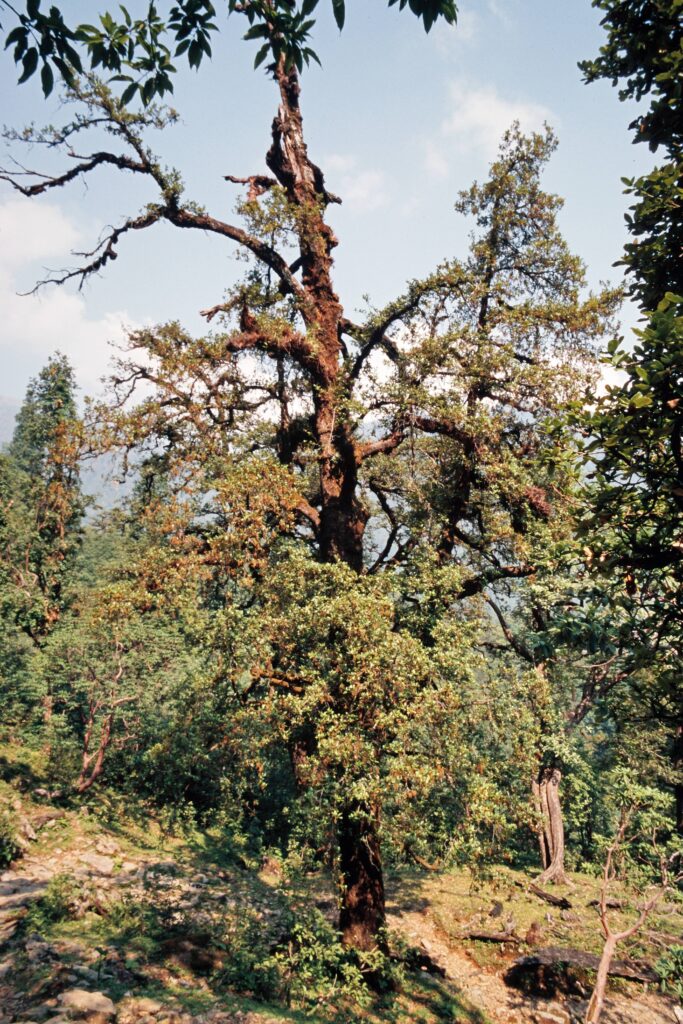
Garh 07 97 ergebnis
India Garhwal Trijugi Narayan 2250m, June
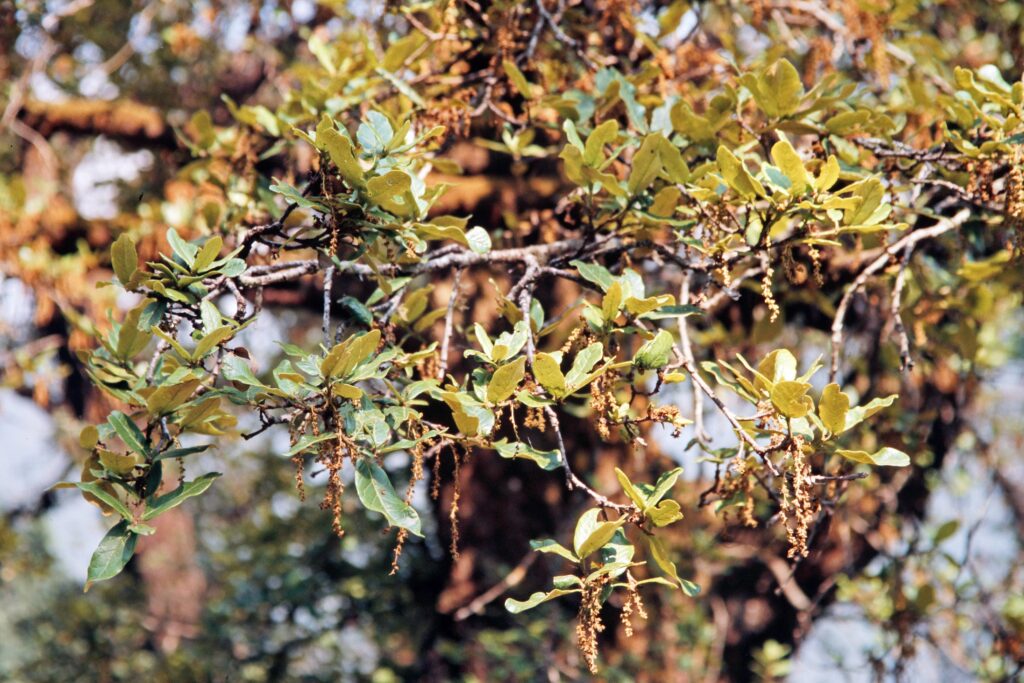
Garh 07 98 ergebnis
India Garhwal Trijugi Narayan 2250m, June

Description

Quercus floribunda Lindl. ex A.Camus, the moru or green oak, is an evergreen tree of the Fagaceae forming a major element of the temperate forests of the western and central Himalaya. GBIF records, totalling 278 occurrences, span India, Nepal, China, Pakistan and Afghanistan, with peripheral reports. The species dominates moist, cool-temperate slopes typically between 2,000 and 2,700 m, often in association with Quercus leucotrichophora, Rhododendron arboreum and Lyonia. The photographed tree from Trijugi Narayan in Garhwal at 2,250 m, in June, is representative of these mid-altitude oak forests that are climatically and hydrologically critical to the Himalayan watershed.

The plant is a large evergreen tree reaching 25–30 m, with a rounded crown and greyish, fissured bark. The leaves are coriaceous, oblong-lanceolate to elliptic, glossy dark green above and glaucous-pubescent or glabrescent beneath, the margins entire to spinulose-serrate especially on young foliage. The species is monoecious: the staminate flowers are borne in slender pendulous catkins, while the pistillate flowers are few and inconspicuous. As the name suggests, flowering is profuse. The fruit is an ovoid acorn seated in a shallow, scaly cupule, maturing in the second year.

Quercus floribunda has long been confused with Q. dilatata and other Himalayan oaks, and its nomenclature reflects a tangled taxonomic history within the ring-cupped oak group (subgenus Cerris / section Ilex). Ecologically these oak forests are keystone communities, regulating spring discharge and supporting rich epiphyte and lichen assemblages, yet they are heavily exploited for fuelwood, fodder and leaf-litter, making mature stands increasingly fragmented and locally threatened.

Author: Lindl. ex A.Camus · Sources: POWO (Kew), GBIF, Flora of China Vol. 4, Flora of Pakistan (Fagaceae), Flora of British India Vol. 5, Menitsky: Oaks of Asia

A.Camus

Garh 07 580 ergebnis
India Garhwal Seena 3350m, June

Description

Quercus leucotrichophora, commonly known as banj oak, is a dominant broadleaved tree of the western and central Himalaya, distributed from northern Pakistan through India (Jammu & Kashmir, Himachal Pradesh, Uttarakhand) to Nepal, Bhutan, and adjacent parts of Myanmar. It forms extensive forests on north-facing slopes and mesic sites at elevations of 1,500–3,500 m, constituting one of the most ecologically important tree species in the Himalayan mid-montane zone. The species has been documented at Seena in the Garhwal Himalaya of Uttarakhand at 3,350 m in June, representing the upper elevational margin of its range where it transitions into subalpine communities.
Quercus leucotrichophora is an evergreen tree, typically 15–25 m tall, with a stout trunk and spreading, dense crown. The bark is dark grey to blackish, deeply furrowed on mature trees. Leaves are elliptic to lanceolate, 6–15 cm long and 2–5 cm wide, with a sharply serrate margin bearing spine-tipped teeth, coriaceous in texture, dark green and glabrous above, and distinctly white-tomentose beneath — the specific epithet referring to these white (leuco-) hairs (tricho-) on the leaf (phora). Flowers are unisexual and monoecious; male catkins are pendulous, 5–10 cm long, while female flowers are borne in short, erect spikes. The acorn is ovoid, 1–1.5 cm long, seated in a shallow, scaly cupule with appressed, imbricate scales.
Quercus leucotrichophora belongs to the subgenus Cerris, section Ilex, a group of evergreen oaks centred in East and South Asia. It is a keystone species in western Himalayan forests, supporting a rich community of epiphytes, mycorrhizal fungi, and avifauna. The leaf litter is a critical source of organic matter and nutrient cycling in montane soils. Banj oak forests are widely exploited for fuelwood and fodder — the leaves being an essential winter fodder resource for livestock — and ongoing lopping pressure has led to degradation of many stands, prompting conservation and restoration efforts across Uttarakhand and Himachal Pradesh.

Author: A.Camus · Sources: POWO (Kew), GBIF, Flora of China Vol. 4, Singh & Rawat: Flora of the Great Himalayan National Park (2000), Troup: Silviculture of Indian Trees Vol. 3

Royle

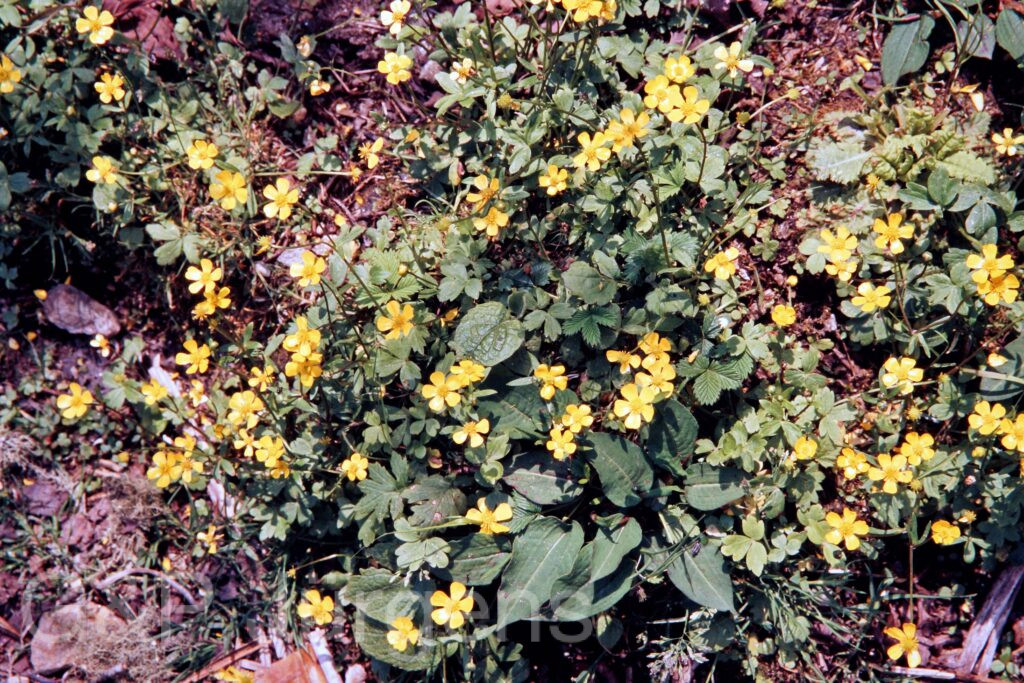
Garh 07 105 ergebnis 1
India Garhwal Meggu Kichatti 3100m, June

Description

Ranunculus hirtellus is a widespread buttercup of the Himalaya and adjacent high mountains of Central Asia, recorded across India, Nepal, Pakistan, Afghanistan, China and Bhutan, its more than 770 georeferenced collections also reflecting extralimital and cultivated records in Iran, Japan, Korea and North America. It occupies alpine and subalpine meadows, open turf, moist grassy slopes and the margins of seasonal flushes, typically between about 2500 and 4500 m. The plant photographed at Meggu Kichatti in Garhwal at 3100 m in June shows its characteristic habitat in damp, herb-rich pasture during the early monsoon, when snowmelt keeps the soil moist.

It is a small perennial herb forming tufts from a short rootstock bearing fascicled, fibrous roots. The basal leaves are long-petioled, the blade orbicular to reniform and palmately three- to five-lobed or divided, the segments cuneate and again toothed or lobed, often hirsute with spreading hairs. Cauline leaves are smaller, sessile and more deeply dissected into narrow lobes. The flowering stems are erect to ascending and bear one to few solitary flowers; the five glossy golden-yellow petals each enclose a nectary scale and surround numerous stamens and free carpels. The fruit is an aggregate of glabrous to minutely pubescent achenes with a short, often curved beak.

Within the large and taxonomically complex genus Ranunculus, R. hirtellus belongs to a Himalayan assemblage of yellow-flowered alpine species distinguished by leaf dissection and achene characters, and it has frequently been confused with R. pulchellus and allies. Its broad altitudinal and geographic range, coupled with abundant occurrence data, indicates a secure conservation status. Like many high-elevation buttercups it contains acrid protoanemonin compounds that deter grazing, and it functions ecologically as an early-season nectar source for montane pollinators.

Author: Royle · Sources: POWO (Kew), GBIF, Flora of Pakistan, Flora of China, Annotated Checklist of the Flowering Plants of Nepal, Tamura's monograph of Ranunculaceae

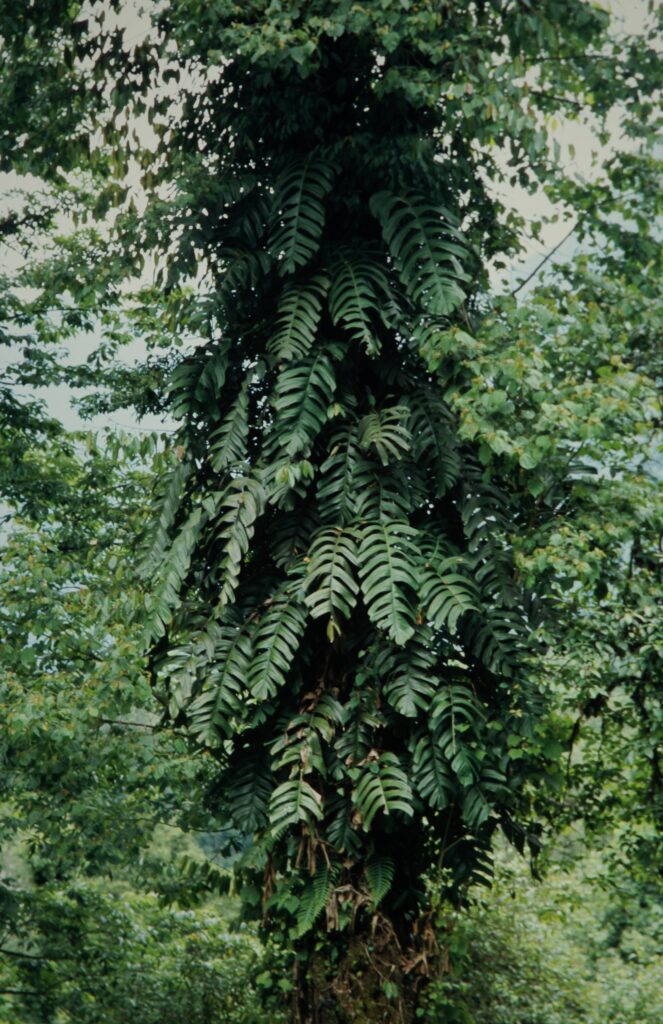
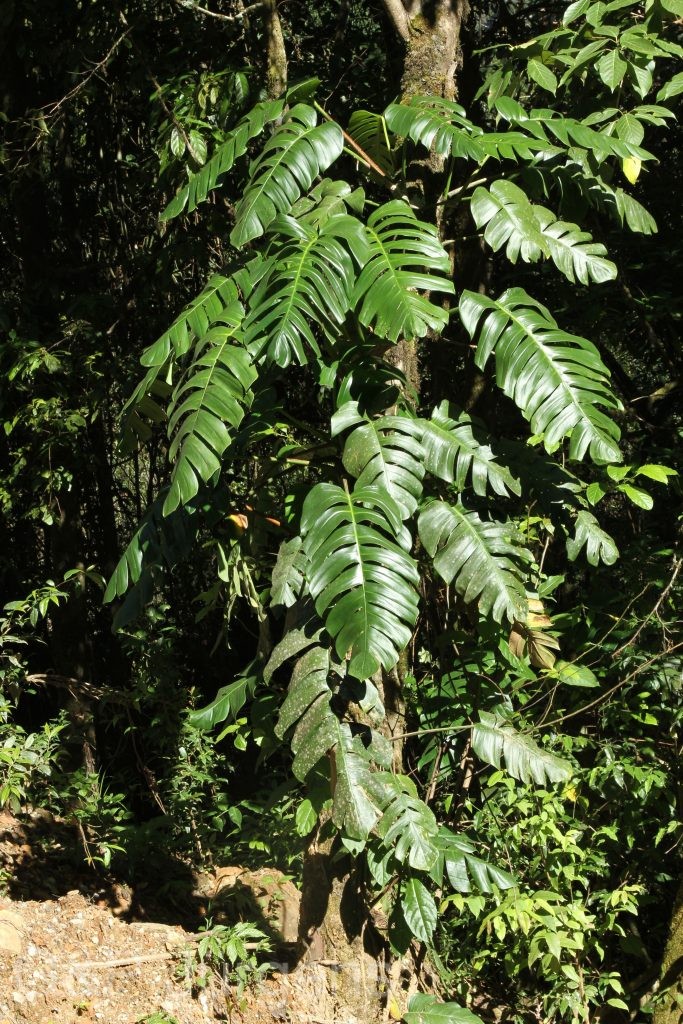
(Roxb.) Schott

Sikkim 2006 487 ergebnis
India West-Bengal, Ruigi-Chu 1800m, May
Bhutan2015 147
Bhutan Galephug 800m, October

Description

Rhaphidophora decursiva ((Roxb.) Schott) is a robust root-climbing aroid widely distributed across tropical and subtropical Asia, ranging from the eastern Himalaya and northeast India through Bangladesh, Myanmar, Thailand, Laos, Vietnam and southern China to Sri Lanka and the Malay region. The roughly 700 GBIF records confirm a strong concentration in the Indo-Burmese hill forests. It is a hemiepiphyte of humid evergreen and semi-evergreen broad-leaved forest, climbing tree trunks and clambering over rocks in shaded, moist ravines from near sea level to about 2,000 m. The cited material from Ruigi-Chu in West Bengal at 1,800 m in May and from Galephug, Bhutan, at 800 m in October illustrates its wide altitudinal amplitude across the Himalayan foothills.

The plant produces stout, scandent stems that cling by abundant clasping adventitious roots, the internodes green to brownish and somewhat flattened against the support. The leaves are large and long-petiolate, the lamina ovate-oblong in juveniles but becoming deeply pinnatifid in adults, divided almost to the midrib into numerous decurrent segments that give the species its epithet. The inflorescence is a cylindrical spadix subtended by a thick, boat-shaped, yellowish to greenish spathe; the flowers are bisexual and naked, lacking a perianth, and the infructescence ripens into a dense cluster of berries.

The genus Rhaphidophora belongs to the tribe Monstereae and is distinguished from the Neotropical Monstera by its Old World distribution and bisexual flowers. R. decursiva is among the most widespread members of the genus and shows considerable leaf heteroblasty between juvenile shingling and mature pinnatifid stages. Locally the plant is used in traditional medicine and is occasionally grown as a foliage ornamental. It is common and not regarded as threatened.

Author: (Roxb.) Schott · Sources: POWO (Kew), Flora of Bhutan Vol. 3, GBIF, Flora of China Vol. 23, Boyce & Croat: The Überlist of Araceae (Monstereae)

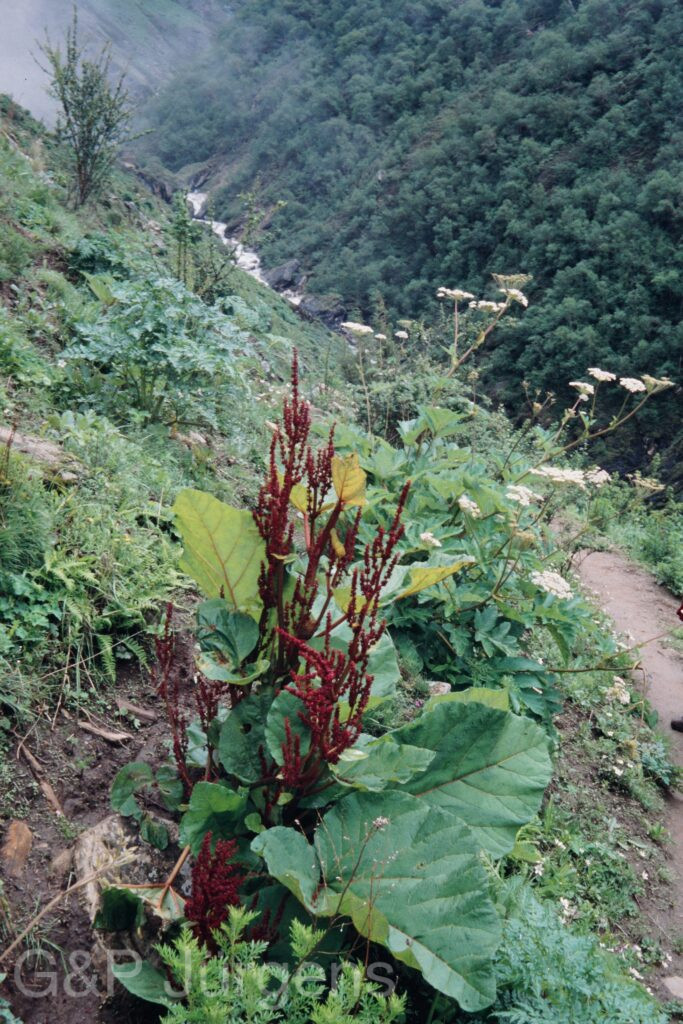
D. Don

Nepal 99 583 ergebnis
West-Nepal Garpung-Khola 3500m, July

Description

Rheum australe, the Himalayan rhubarb, ranges along the Himalaya from Pakistan through India, Nepal and Bhutan into south-western China (Tibet), with the bulk of its roughly 210 GBIF records falling within this arc; occurrences in Germany, the United States, France, Belgium, Norway, Romania and Sweden derive from cultivation and herbarium accessions. It grows on open alpine and subalpine slopes, in moist rocky meadows, along stream banks and amid boulder fields, generally between 3000 and 4300 m. The photographed plant from the Garpung-Khola valley of West Nepal at 3500 m in July reflects its typical mid-summer growth on damp, high-elevation slopes.

It is a robust, tall perennial herb arising from a thick, woody, reddish rhizome and stout root. The large basal leaves are broadly ovate to orbicular-cordate, with palmate venation, an entire to undulate margin and long, reddish, fleshy petioles. The erect, hollow, often reddish flowering stem reaches one to two metres and bears a large, branched, paniculate inflorescence of small flowers with a dark red to purplish perianth of six segments. The fruit is a broadly winged, ovate-elliptic trigonous achene, the three reddish wings aiding wind dispersal across open terrain.

Rheum australe (long known as R. emodi) is the principal medicinal rhubarb of the Himalaya, its rhizome rich in anthraquinones and valued in traditional systems for digestive and purgative use. Sustained harvesting for the herbal trade, combined with slow regeneration in the alpine zone, has raised conservation concern, and the species is regarded as vulnerable to over-collection across parts of its range, prompting cultivation efforts.

Author: D. Don · Sources: POWO (Kew), GBIF, Flora of China, Flora of Bhutan, Annotated Checklist of the Flowering Plants of Nepal, Rheum (rhubarb) taxonomic monograph

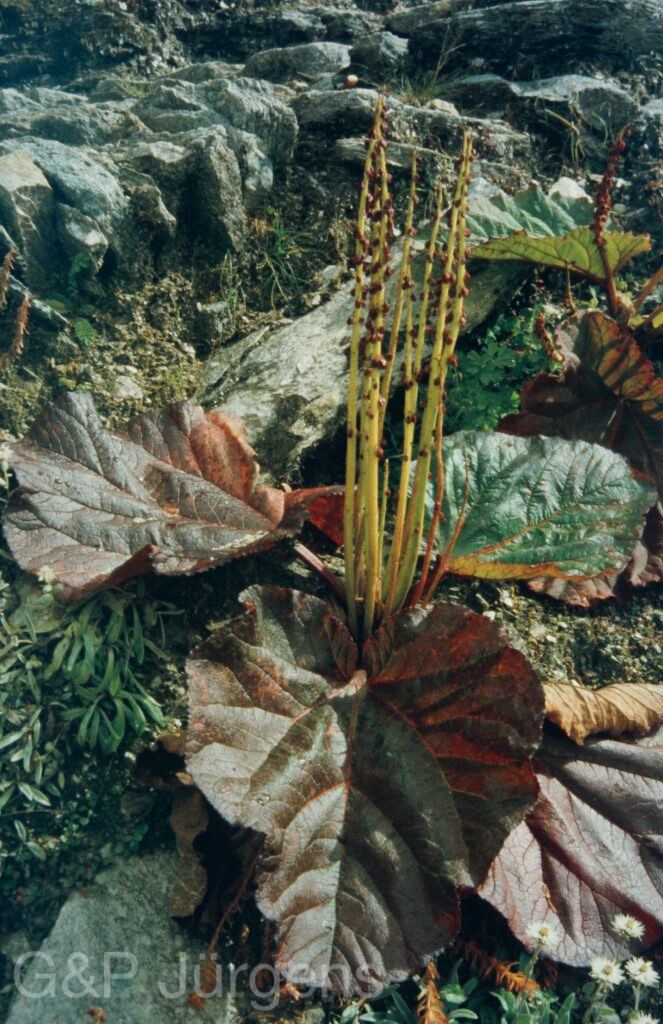
Royle

Garw 2005 324 ergebnis
India Garhwal Bagubasa 4100m, September

Description

Rheum moorcroftianum is a high-alpine rhubarb of the Western and Central Himalaya, ranging from Pakistan and Kashmir eastward through the Indian Himalaya (including Garhwal) and Nepal to the Tibetan plateau of China; GBIF records 129 occurrences across China, Nepal and India (with stray data points). It is a plant of open alpine slopes, screes, stabilised moraines, glacial flats and grazed meadows generally between 3500 and 5000 m, where it withstands intense insolation, drought and a short growing season. The illustrated specimen from Bagubasa in Garhwal at 4100 m in September shows the plant in its post-flowering, fruiting state at the close of the alpine summer.

It is a low, stout, often almost stemless perennial herb developing from a thick woody rhizome and tap-root. The conspicuous radical leaves form a flattened rosette and are orbicular to ovate-cordate, leathery, the blade prominently reticulate-veined and frequently flushed red or with reddish margins and undersides; petioles are short and stout. The inflorescence is a congested, scapose panicle scarcely exceeding the leaves, bearing numerous small flowers with usually six greenish to reddish perianth segments. The fruit is a broadly winged trigonous achene, the three membranous wings reddish-tinged and conspicuously veined, an adaptation aiding wind and surface dispersal across open terrain.

The species belongs to Rheum (Polygonaceae), a genus centred on the high mountains of Central Asia and the Sino-Himalaya. Its dwarf, ground-hugging rosette habit is a classic adaptation to the cold, windswept alpine environment, contrasting with the giant "glasshouse" rhubarbs such as R. nobile. Like other Himalayan Rheum it is locally harvested for medicinal roots and is subject to grazing pressure, but its wide range and remote habitat mean it is not currently considered threatened.

Author: Royle · Sources: POWO (Kew), GBIF, Flora of China Vol. 5, Flora of Pakistan, Flora of Nepal, A Revision of the Genus Rheum (Losina-Losinskaja)