Tag:

Autumn

(C.B.Clarke) Fujikawa & H.Ohba
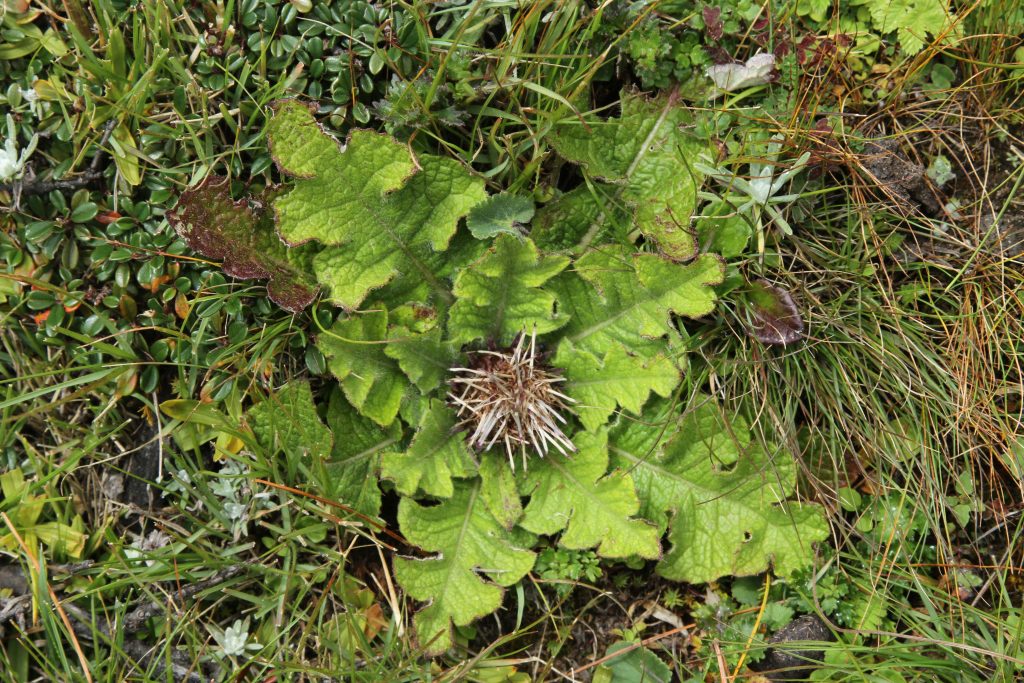
Bhutan2012 256
Bhutan Shele-La, 4000m September

Description

Himalaiella yakla is a high-alpine thistle-like composite of the Eastern Himalaya, recorded from China and Nepal and extending into Bhutan, where it is very seldom collected, the aggregated databases holding only a handful of occurrences. It is a plant of the upper alpine zone, growing on open stony slopes, scree, rocky pastures and exposed ridges generally near and above 4000 m. The specimen illustrated was photographed at Shele-La in Bhutan at about 4000 m in September, its late-season flowering reflecting the short growing window of these cold, wind-swept high passes.

The plant is a perennial herb with a stout caudex and an erect, often somewhat woolly stem, frequently clothed in white arachnoid or floccose tomentum that mitigates intense alpine radiation and desiccation. The leaves are oblong to lanceolate, sessile or shortly petiolate, with toothed to pinnatifid, sometimes spinulose margins, green above and greyer beneath. The capitula are discoid, solitary or few, with an ovoid involucre of imbricate, often spine-tipped phyllaries. The florets are tubular, bisexual and purple to violet, and the achenes are crowned by a pappus of plumose or barbellate bristles in series, adapted to wind dispersal across open terrain.

The name appears in GBIF as a synonym, with Himalaiella yakla treated as the accepted name; the taxon was segregated from the large genus Saussurea, under which it long stood as Saussurea yakla, following molecular studies that resolved Himalaiella as a distinct Sino-Himalayan lineage. Its rarity, restricted high-elevation range and sensitivity to climatic shifts and grazing render it of biogeographic significance and best regarded as data-deficient pending targeted survey.

Author: (C.B.Clarke) Fujikawa & H.Ohba · Sources: POWO (Kew), GBIF, Flora of China, Flora of Bhutan, Saussurea and Himalaiella systematic studies, Compositae of the Himalaya
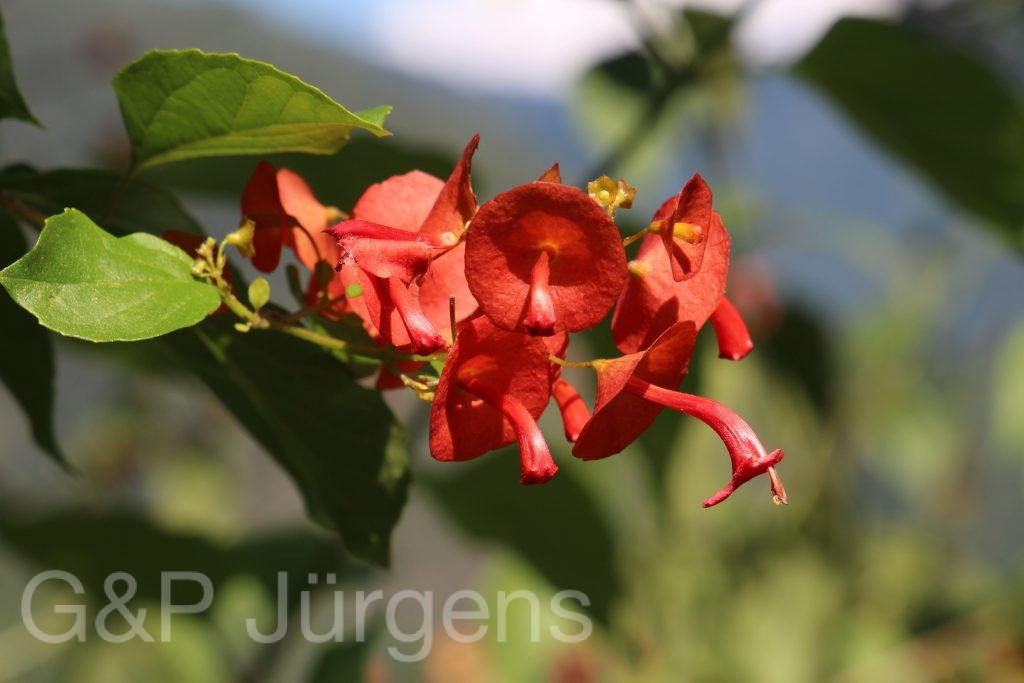
Retz.

Bhutan2015 276
Bhutan Zhemgang 1000m, October
Bhutan2012 1040
Bhutan Trithangebe 900m, October
Bhutan2012 1042
Bhutan Trithangebe 900m, October

Description

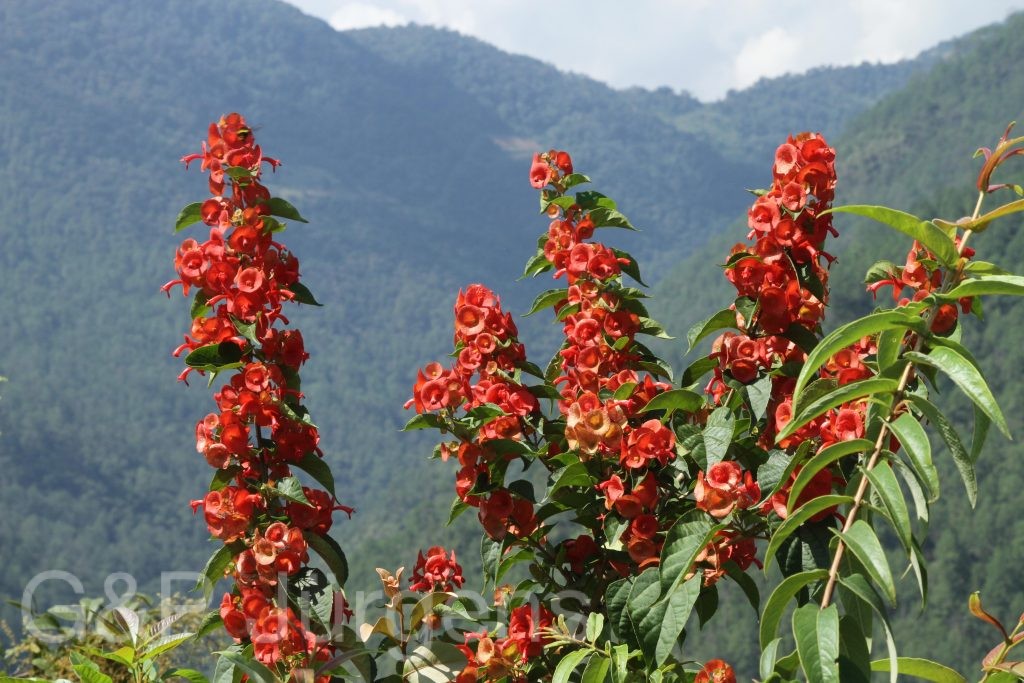
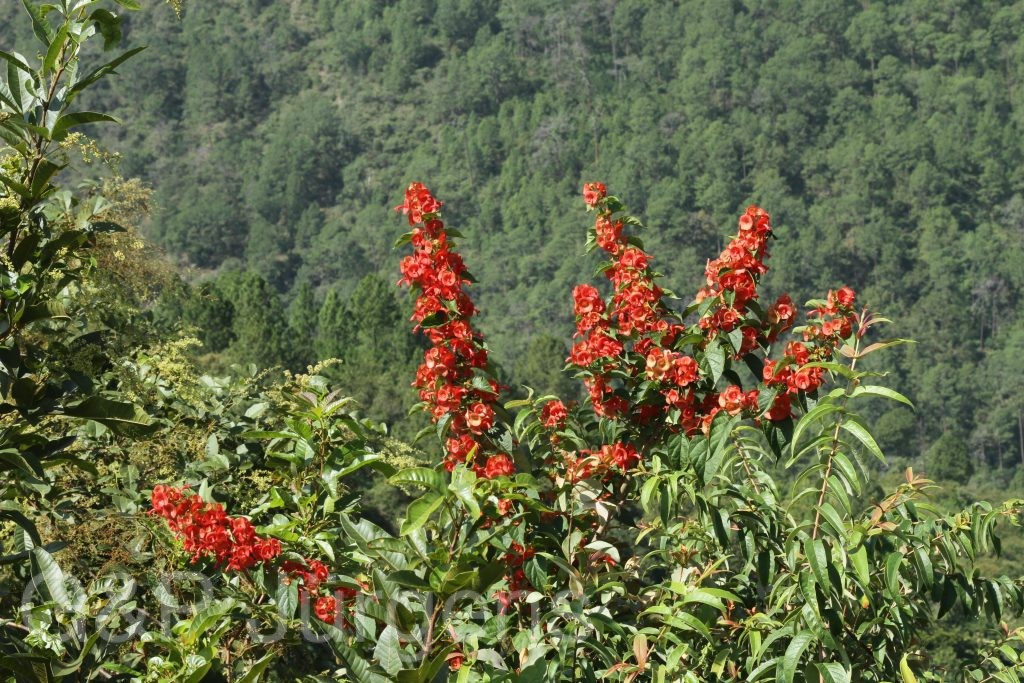
Holmskioldia sanguinea Retz., the Chinese hat plant or cup-and-saucer plant, is a subtropical shrub native to the foothills of the Himalaya in India, Nepal and Bhutan; GBIF lists nearly 1995 occurrences, the great majority from cultivation across the tropics, with records from the Americas, the Caribbean, the Philippines, Mauritius and Reunion attesting to its global ornamental dispersal. In its native range it grows along forest margins, ravines and warm valley slopes in the subtropical zone, generally below about 1500 m. The Bhutan records from Zhemgang at 1000 m and Trithangebe at 900 m, flowering in October, exemplify its occurrence in warm, low-elevation submontane habitats.

The species is a straggling to scandent evergreen shrub with quadrangular branches. The leaves are opposite, ovate, acuminate and serrate. The conspicuous flowers are borne in axillary cymes and are remarkable for the large, brick-red to orange, persistent, saucer-shaped calyx, from the centre of which the slender, curved, tubular corolla projects like a cup upon a saucer, with exserted stamens; this striking calyx accounts for both the common and specific names. The fruit is a small, four-lobed schizocarp seated within the persistent calyx.

Formerly placed in Verbenaceae, Holmskioldia is now classified in the Lamiaceae (subfamily Viticoideae) following molecular reappraisal of the verbenoid genera. Widely cultivated as a flowering ornamental in warm climates, it is of no conservation concern and occasionally naturalises beyond its native range.

Author: Retz. · Sources: POWO (Kew), GBIF, Flora of Bhutan, Flora of British India, Flora of China, Harley et al. Labiatae treatment in The Families and Genera of Vascular Plants

Hook.f.

Bhutan2015 213
Bhutan Zhemgang 910m, October

Description

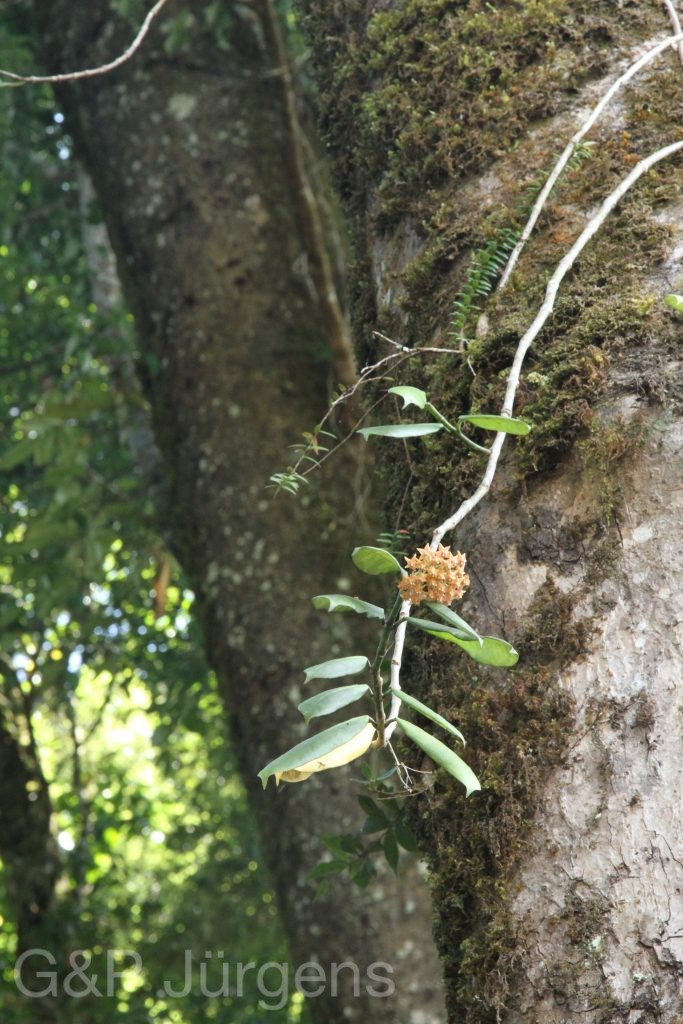
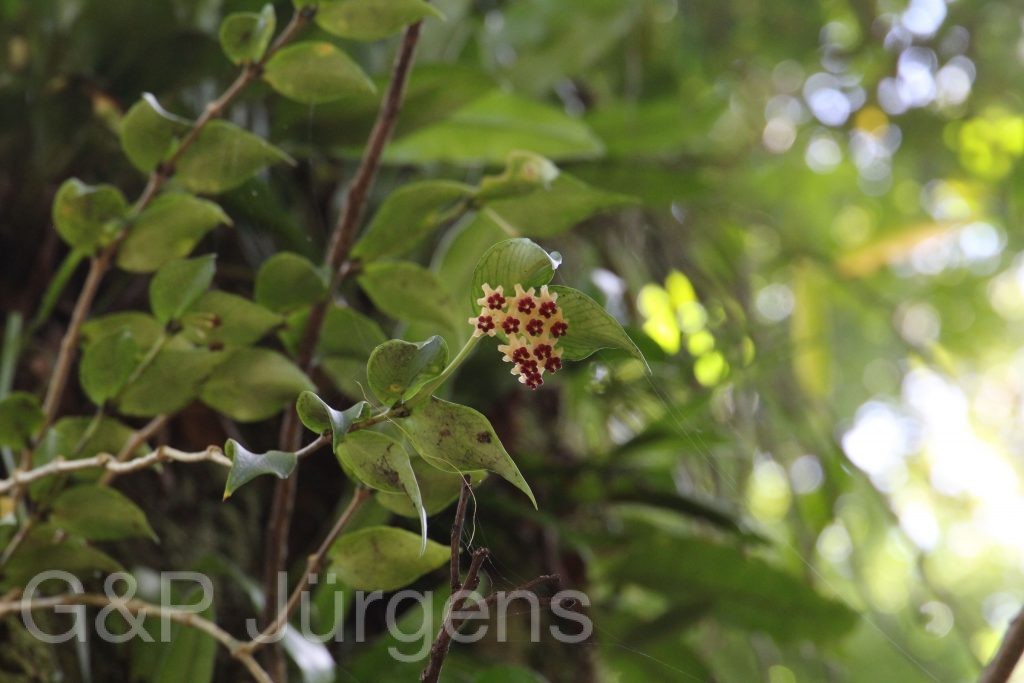
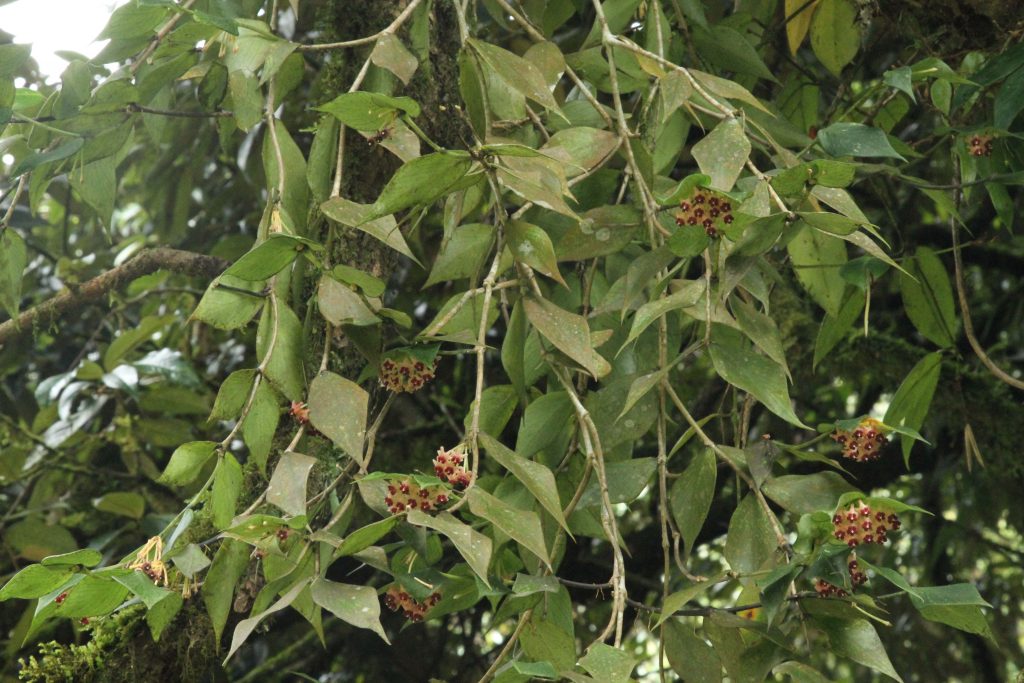
Hoya globulosa Hook.f. is an epiphytic climber of the eastern Himalaya and adjoining Indochina, recorded from India, Bhutan, China and Vietnam, with scattered cultivated material elsewhere; the GBIF total of about 115 occurrences reflects its moderately frequent presence in warm, humid montane forest. It grows as an epiphyte on mossy trunks and branches, occasionally as a lithophyte, in subtropical to warm-temperate broad-leaved evergreen forest, broadly between 700 and 1800 m. The photographed plant from Zhemgang in central Bhutan at about 910 m, flowering in October, typifies its occurrence in the moist, shaded foothill forests of southern Bhutan during the post-monsoon season.

The species is a robust, woody, climbing or pendent epiphytic vine with stout stems rooting at the nodes and exuding milky latex when broken. The leaves are opposite, thick and coriaceous, large, elliptic to oblong-lanceolate, acuminate, with a stout midrib and prominent, somewhat impressed lateral venation. The inflorescence is a dense, many-flowered, globose, umbelliform cyme on a persistent peduncle — the rounded flower-head giving the epithet globulosa. The flowers are small, with a fleshy, reflexed, hairy-margined corolla, pale yellow to greenish-white often suffused pink, surmounted by the characteristic waxy, glistening, star-shaped staminal corona. Pollen is borne in paired pollinia, and the fruit is a slender, elongate paired follicle releasing plumed seeds.

Hoya (Apocynaceae, subfamily Asclepiadoideae) is a large palaeotropical genus distinguished by its waxy coronate flowers and pollinarial reproduction; H. globulosa belongs to the large-leaved, dense-umbelled Himalayan-Indochinese assemblage. Its bold foliage and tight spherical flower-heads have made it sought-after in specialist Hoya cultivation. As a forest-dependent epiphyte it is potentially threatened by lowland deforestation and collection pressure, although formally unassessed and locally not uncommon within intact forest.

Author: Hook.f. · Sources: POWO (Kew), GBIF, Flora of China, Flora of Bhutan, Flora of British India, Surveswaran et al. — Phylogeny and revision of Hoya

Wall. ex D.Don

Bhutan2012 1175
Bhutan Trashiyantse 1780m, October
Bhutan2012 1177
Bhutan Trashiyantse 1780m, October

Description

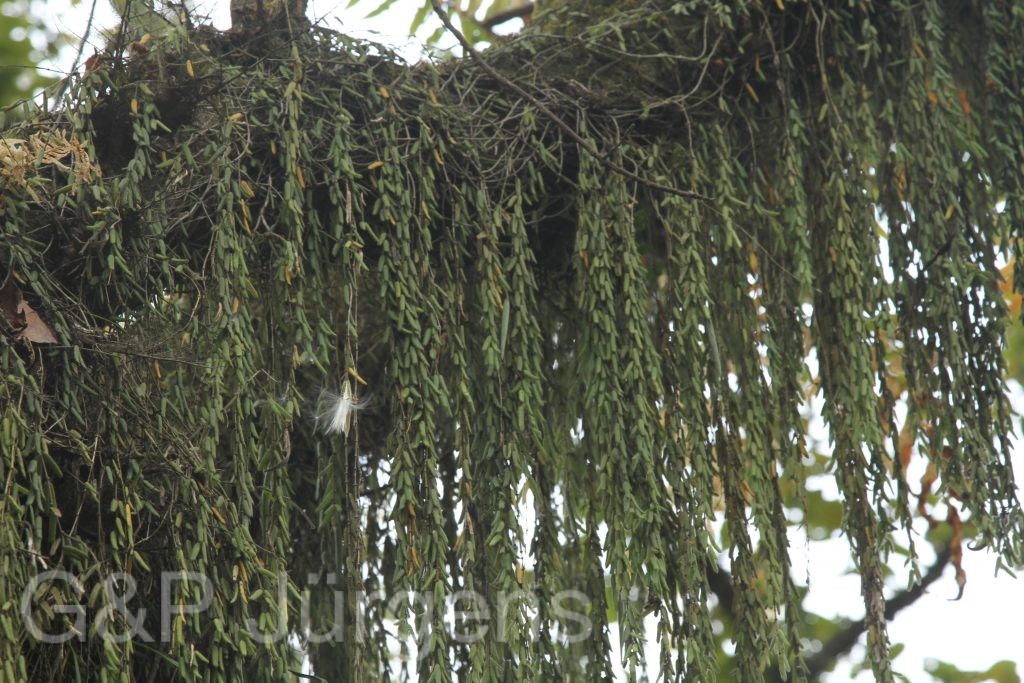
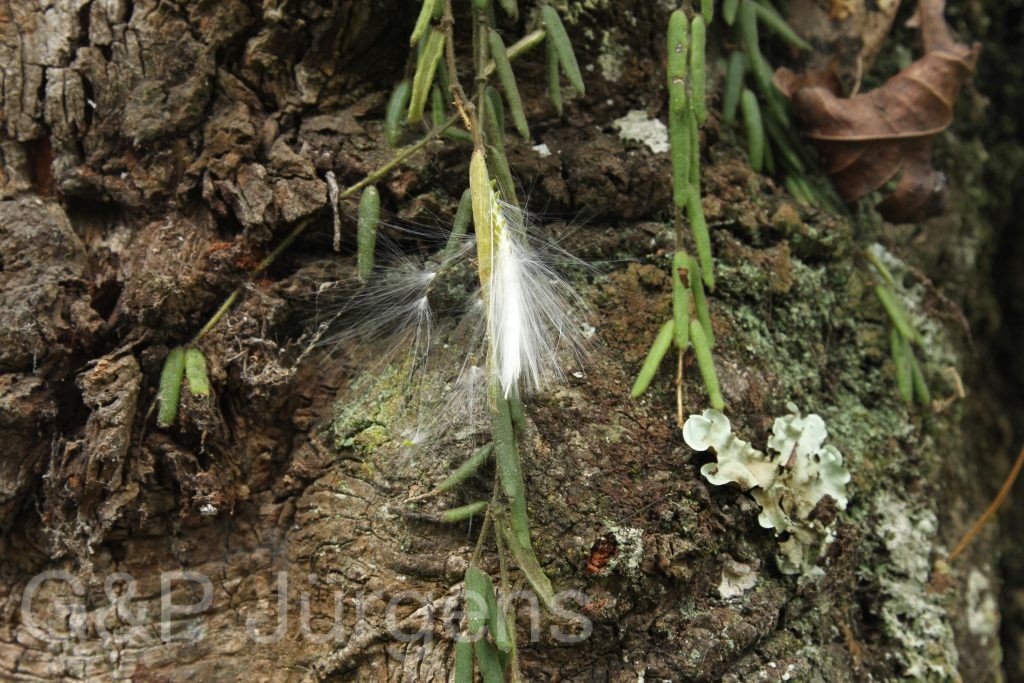
Hoya linearis is a Himalayan epiphytic wax-plant, GBIF recording around 106 occurrences from India, Bhutan, Nepal, China and Myanmar, the remaining records (US, ZA, FI, VN) representing cultivated material of this popular ornamental. It grows as a pendent epiphyte on mossy tree trunks and branches in humid, shaded broadleaved and evergreen montane forest, generally between about 1500 and 2500 m, where persistent cloud and high humidity sustain its succulent foliage. The plant photographed from Trashiyangtse (Trashiyantse) in eastern Bhutan at 1780 m, flowering in October, typifies its occurrence in cool, moist mid-montane forest where it festoons the canopy in long hanging masses.

It is a glabrous to softly hairy epiphytic subshrub with slender, trailing or pendent stems rooting at the nodes. The leaves are distinctive: linear, narrow, soft, slightly fleshy and grooved above, hanging in dense curtains quite unlike the broad succulent leaves of most Hoya. The flowers are borne in pendent umbellate cymes; each has a small calyx and a fleshy, white, five-lobed, star-shaped corolla with a central corona typical of the asclepiad group, sweetly fragrant especially in the evening. The fruit is a slender paired follicle releasing comose seeds dispersed by wind.

Described by Wallich (ex D. Don), H. linearis is placed in Hoya within Apocynaceae (subfamily Asclepiadoideae, formerly Asclepiadaceae). Its specialised epiphytic, narrow-leaved habit makes it readily recognisable and a much-grown houseplant, though wild populations depend on intact humid montane forest and are vulnerable to deforestation and over-collection. Ecologically its fragrant flowers attract insect pollinators, while its plumed seeds exploit air currents to colonise new host trees.

Author: Wall. ex D.Don · Sources: POWO (Kew), GBIF, Flora of Bhutan, Flora of China, The Genus Hoya (Asclepiadaceae) – Kleijn & van Donkelaar monograph

Hook.f.

Bhutan2015 202
Bhutan Zhemgang 1000m, October
Bhutan2012 764
Bhutan Zemgang 1400m, October

Description

Hoya polyneura Hook.f. is an epiphytic vine of the eastern Himalaya and adjoining ranges, recorded from India, Bhutan, Nepal and China, with disjunct material from Japan; the GBIF total of about 59 occurrences reflects its scattered, locally frequent presence in humid mid-montane forest. It grows as an epiphyte or lithophyte on mossy trunks and damp rock faces in subtropical to warm-temperate broad-leaved evergreen forest, broadly between 800 and 2000 m. The photographed plants from Zhemgang in central Bhutan at about 1000 and 1400 m, flowering in October, illustrate its occurrence in the moist, shaded forest interior of the southern Bhutanese foothills.

The species is a slender, twining to pendent epiphytic subshrub with thin, flexible stems rooting at the nodes and exuding milky latex when cut. The leaves are opposite, distinctly thin-textured and elliptic to ovate, with a prominent, fish-bone-like venation of fine, parallel lateral nerves arching to the margin — the feature giving the epithet polyneura. The inflorescence is an axillary, umbelliform cyme of few to several flowers; each has a fleshy, reflexed, five-pointed corolla, cream to yellowish often marked with red, surmounted by the waxy, star-shaped, glistening staminal corona typical of the genus. Pollen is aggregated into paired pollinia, and the fruit is a slender paired follicle releasing comose seeds.

Hoya (Apocynaceae, subfamily Asclepiadoideae) is a large palaeotropical genus distinguished by its waxy, coronate flowers and pollinarial pollination. H. polyneura is among the most distinctive Himalayan species owing to its conspicuously veined, almost translucent leaves, a prized character in cultivation where it is grown as the "fishtail Hoya." As a forest-dependent epiphyte it is sensitive to deforestation and over-collection for the ornamental trade, though formally unassessed and locally not uncommon within intact montane forest.

Author: Hook.f. · Sources: POWO (Kew), GBIF, Flora of China, Flora of Bhutan, Flora of British India, Surveswaran et al. — Phylogeny and revision of Hoya

(Thunb.) Ser.

Bhutan2015 285
Bhutan Zhemgang 910m, October

Description

Hydrangea macrophylla is a deciduous shrub of East Asian origin, now among the most widely cultivated ornamental hydrangeas worldwide; this is reflected in its very large GBIF record (over 16,000 occurrences) spanning Japan, China, Korea, much of Europe, the Americas, Australasia and beyond, where most points represent garden or naturalised plants. In the Himalaya it occurs chiefly in cultivation and around settlements, growing in moist, humus-rich, partially shaded ground at low to mid elevations. The documented plant from Zhemgang in Bhutan at 910 m in October indicates such a subtropical montane setting, flowering and fruiting late in the season in the warm-temperate belt.

The species is a rounded, much-branched shrub with stout, glabrous stems and large, opposite, broadly ovate to elliptic leaves that are coarsely serrate, glossy and somewhat fleshy. The inflorescence is a broad, flattened to globose terminal corymb; in wild and lacecap forms the small fertile flowers occupy the centre while showy sterile flowers with four enlarged, petaloid sepals form the margin, whereas cultivated mopheads are dominated by sterile flowers. Corolla colour ranges from white through pink to blue, the latter influenced by soil acidity and available aluminium. The fruit is a small ribbed capsule with numerous minute seeds.

Within Hydrangeaceae the species belongs to the mophead and lacecap group and has given rise to innumerable cultivars. Its sterile marginal flowers act as visual attractants for pollinators of the inner fertile florets, and its pigment chemistry makes flower colour a notable indicator of substrate pH. Wild populations are restricted to coastal Japan, while elsewhere occurrence is overwhelmingly anthropogenic.

Author: (Thunb.) Ser. · Sources: POWO (Kew), GBIF, Flora of China Vol. 8, Flora of Bhutan Vol. 1, McClintock A Monograph of the Genus Hydrangea

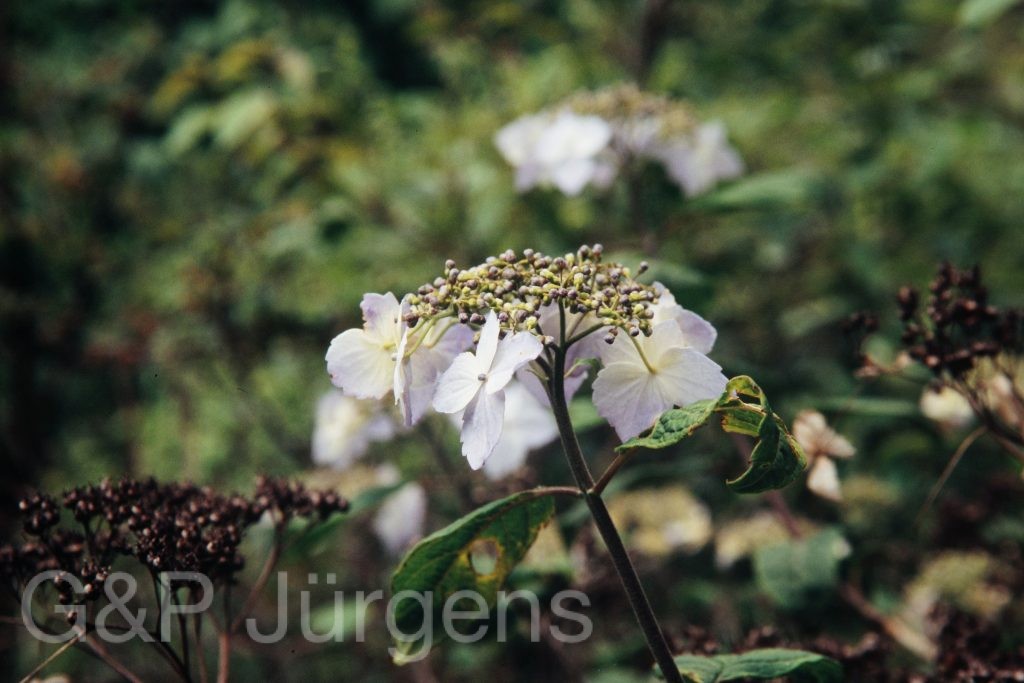
Hook. f. & Thomson

Bhutan2012 692
Bhutan Galephu, 850m September
Bh09 216 G363
Bhutan Dochu-La, 3000m June
Bh09 217 P364 2
Bhutan Dochu-La, 3000m June

Description

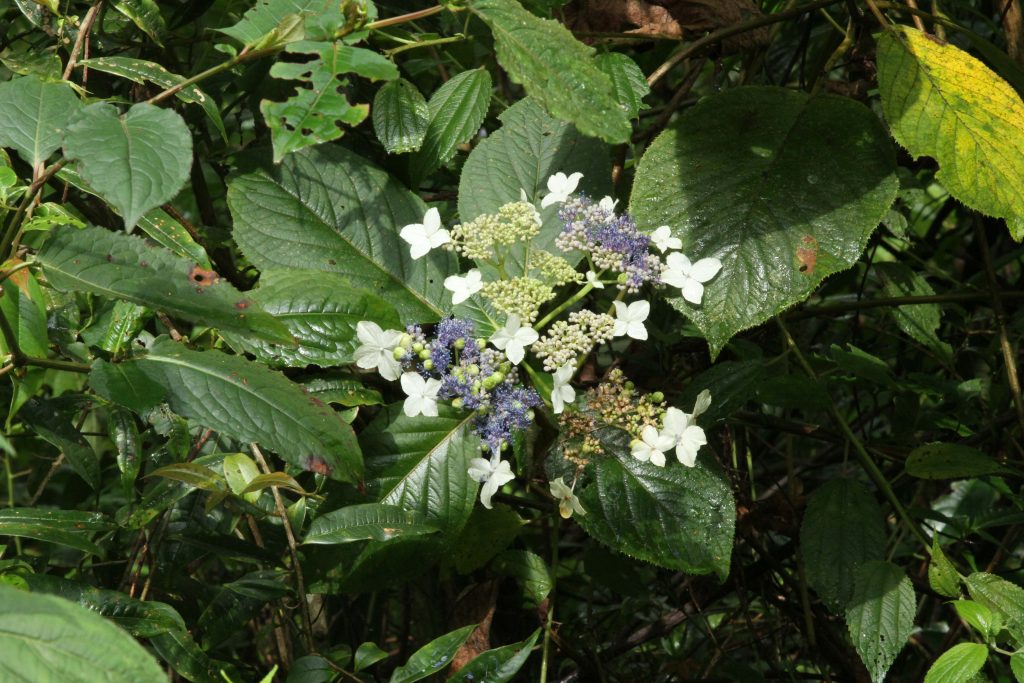
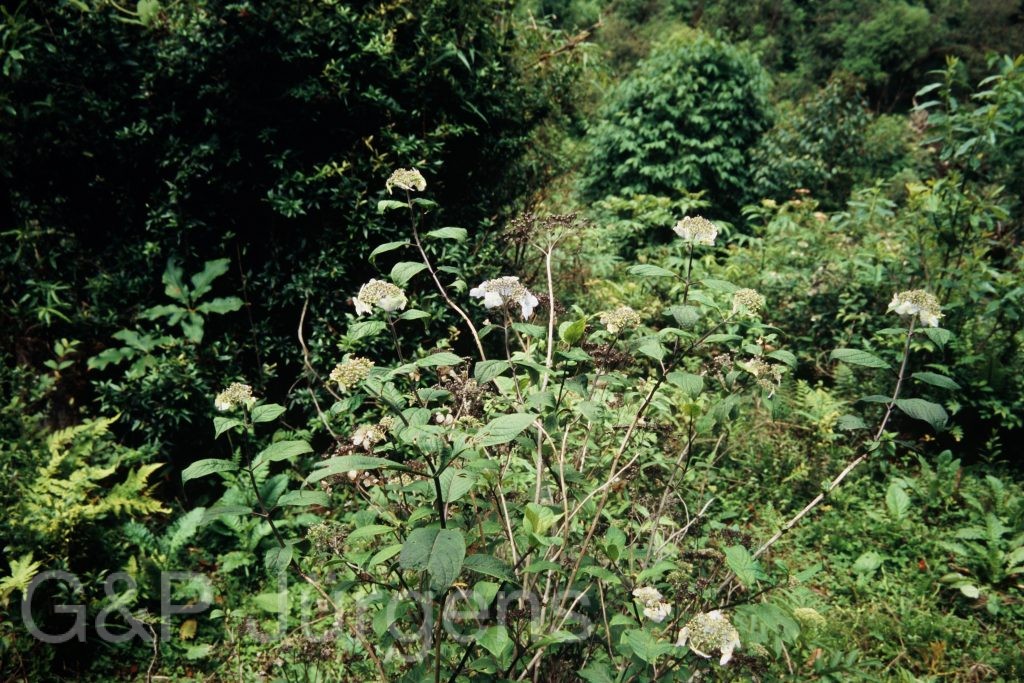
Hydrangea stylosa Hook.f. & Thomson is a Sino-Himalayan shrub recorded by GBIF from China, Bhutan, India, Vietnam and Japan, with cultivated occurrences from Canada and New Zealand, totalling about 85 records. It occupies a broad altitudinal range in moist broad-leaved and mixed forest, thickets and forest margins, on shaded slopes and along ravines. The Bhutanese material spans this amplitude strikingly, with collections from Galephu at 850 m in September and from the Dochu-La at 3000 m in June, showing occurrence from low submontane forest up into the cool temperate zone.

It is a deciduous shrub with terete branches, the young growth often pubescent and the bark exfoliating on older stems. The leaves are opposite, ovate to oblong-lanceolate, with a serrate margin, an acuminate apex and pinnate venation, pilose along the veins beneath. The inflorescence is a terminal corymbose cyme bearing two kinds of flowers: numerous small fertile flowers with minute petals, and a marginal ring of showy sterile flowers whose enlarged, petaloid white to pinkish sepals attract pollinators. The fertile flowers are notable for their elongate, persistent styles, emphasised by the epithet stylosa; the fruit is a small ribbed capsule opening between the styles.

Within Hydrangea, H. stylosa belongs to the lacecap-type species, in which marginal sterile flowers advertise the fertile centre to insects. Its distribution forms part of the eastern Himalayan to Sino-Japanese floristic continuum, and the species is of horticultural interest, accounting for the cultivated records beyond its native range. As a forest understorey shrub it depends on humid montane woodland.

Author: Hook. f. & Thomson · Sources: POWO (Kew), GBIF, Flora of Bhutan Vol. 1, Flora of China Vol. 8, McClintock monograph of the genus Hydrangea, Flora of Nepal

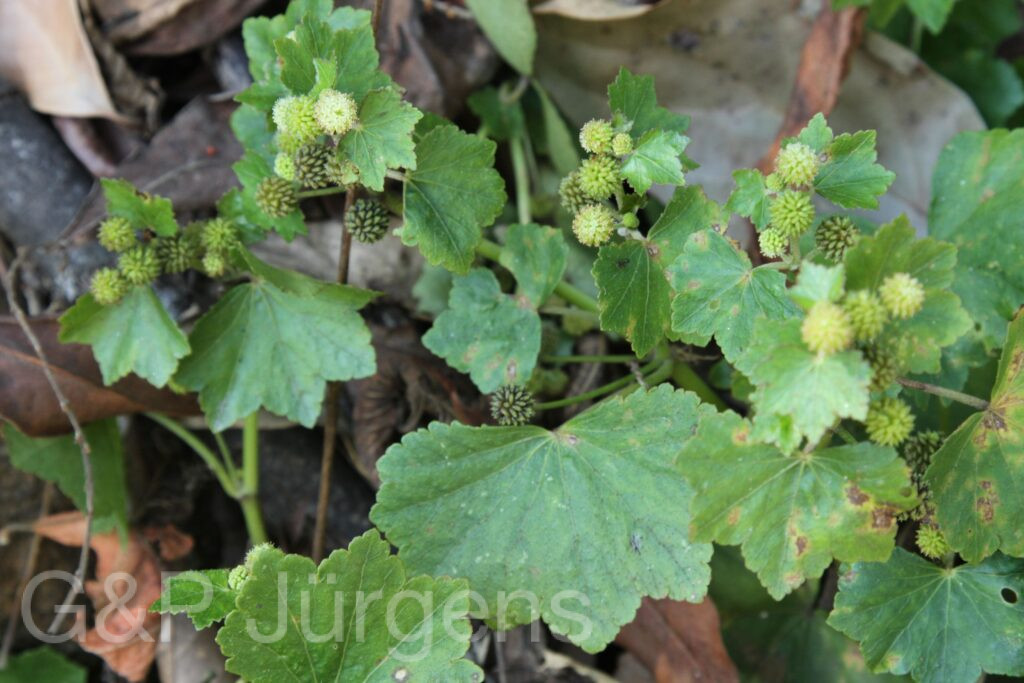
Thunb.

Bhutan2015 150
Bhutan Zhemgang 900m, October

Description

Hydrocotyle javanica is a widespread perennial herb of tropical and subtropical Asia and the western Pacific, recorded from the Himalaya (Nepal, NE India, Bhutan) through southern China, Taiwan, Japan and Korea to Sri Lanka, Myanmar, Indochina, Malesia, the Philippines, New Guinea, Australia and Fiji; with 2,061 GBIF occurrences it is among the better-documented members of its genus. It favours moist, shaded ground along streams, forest floors, seepage banks and damp roadside verges. The Bhutan record from Zhemgang at about 900 m in October places it in warm, humid subtropical forest, where it grows as a creeping ground cover.

It is a creeping to ascending herb rooting at the nodes, with slender, often pilose stems. The leaves are alternate, long-petioled, orbicular to reniform in outline, 2–7 cm wide, palmately 5–7-lobed with the lobes again toothed, cordate at the base, and frequently bearing scattered hairs. The inflorescences are condensed simple umbels, sometimes verticillate along the stem, on peduncles shorter than the petioles; the minute flowers are whitish to greenish, with five petals and an inferior bicarpellate ovary. The fruit is a small, laterally compressed schizocarp, broader than long, the mericarps with conspicuous lateral ribs.

Long placed in Apiaceae, Hydrocotyle is now segregated into Araliaceae (Hydrocotyloideae) on molecular grounds, so the input family is botanically defensible. GBIF lists the name as accepted. The species is highly variable across its enormous range, and several infraspecific taxa have been described; it is common, weedy and of no conservation concern.

Author: Thunb. · Sources: POWO (Kew), Flora of China Vol. 14, Flora of Bhutan Vol. 2, GBIF, Pimenov & Leonov: The Genera of the Umbelliferae (1993)

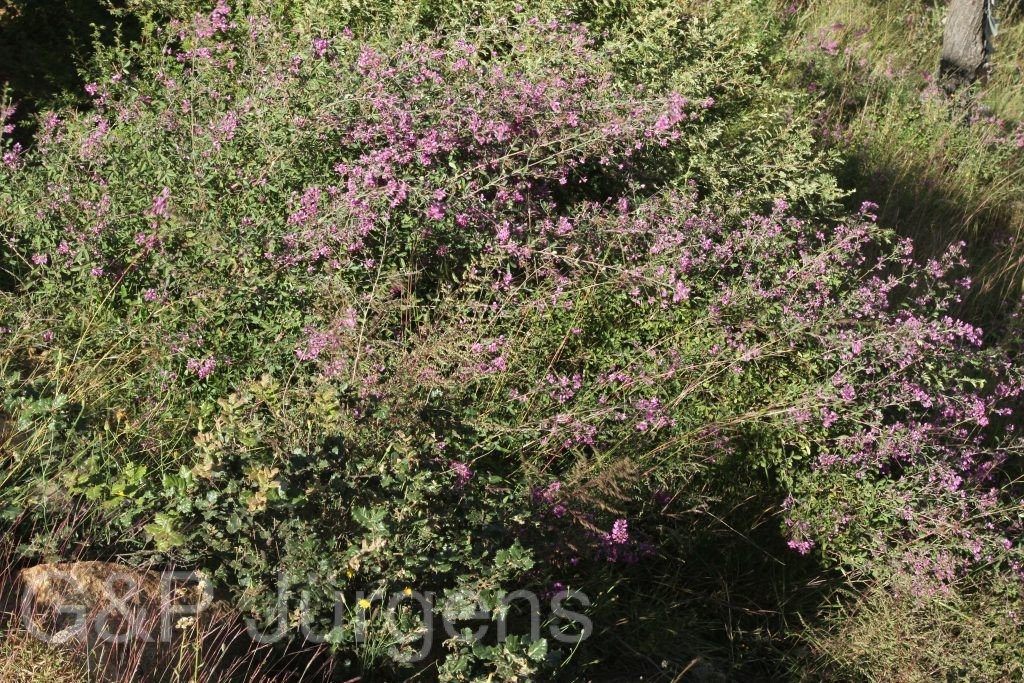
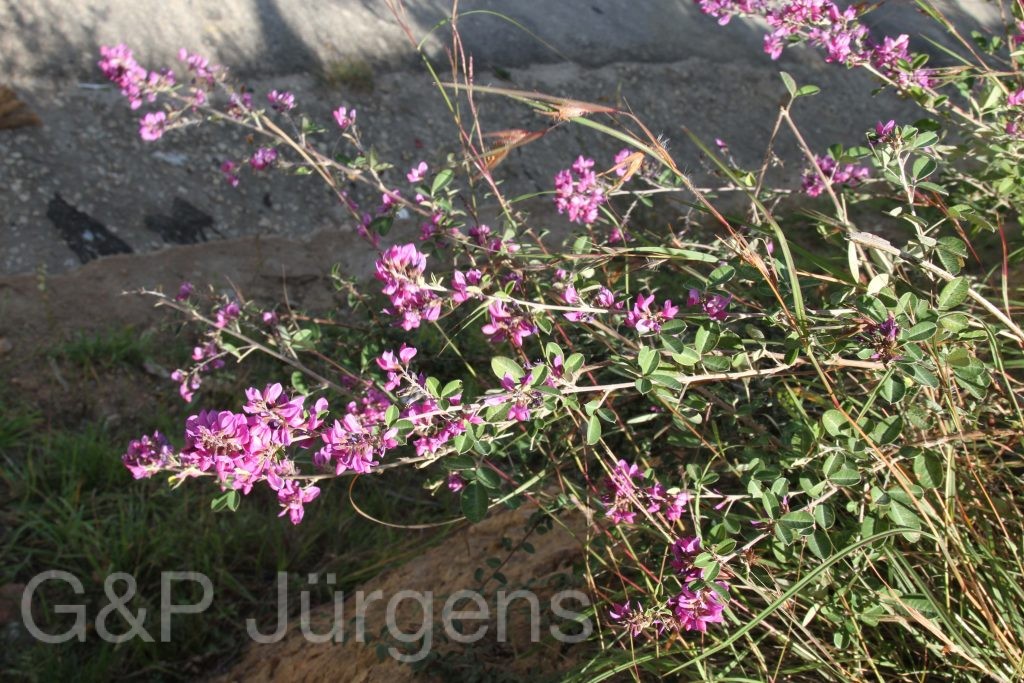
(DC.) H.Ohashi & R.R.Mill

Bhutan2012 572
Bhutan Wangdi 2700m, September
Bhutan2012 573
Bhutan Wangdi 2700m, September

Description

Hylodesmum laxum is a widely distributed forest herb of warm-temperate and subtropical Asia, recorded from Japan, China, Taiwan, the Philippines, Indonesia, Papua New Guinea, India, Vietnam, Sri Lanka, Thailand, Nepal and Bhutan, with some 740 georeferenced occurrences. It is a characteristic understorey element of moist broad-leaved and mixed evergreen forests, favouring shaded slopes, forest margins and streamside thickets on humus-rich soils. In the eastern Himalaya it ascends to the middle montane belt, as illustrated by the material gathered near Wangdi in central Bhutan at about 2700 m in September, when it flowers and fruits in the post-monsoon season.

The species is a perennial herb with erect or ascending, slender, ridged stems arising from a woody rootstock. The leaves are pinnately trifoliolate and crowded toward the stem apex, the terminal leaflet rhombic-ovate to elliptic and larger than the lateral ones, acuminate and entire, thinly membranous and sparsely appressed-pubescent. The inflorescence is a lax, elongate terminal raceme or panicle bearing small papilionaceous flowers with a pink to pale purple corolla, the standard obovate and the keel obtuse. The fruit is a flattened, stipitate loment constricted between the segments, the articles covered with uncinate hairs that promote epizoochorous dispersal.

The genus Hylodesmum was segregated from Desmodium by Ohashi and Mill to accommodate species with stipitate, deeply constricted loments and a forest-herb habit, and H. laxum is among its more widespread members. Its very broad transcontinental range, spanning the Himalaya to the western Pacific, points to effective long-distance dispersal by the hooked fruit articles. Locally common and of no immediate conservation concern, its populations nonetheless remain dependent on intact forest cover, and the species is a useful indicator of relatively undisturbed montane woodland.

Author: (DC.) H.Ohashi & R.R.Mill · Sources: POWO (Kew), GBIF, Flora of China Vol. 10, Flora of Bhutan Vol. 1, Flora of Nepal, Ohashi & Mill revision of Hylodesmum (Desmodium group)

Lindl.

Description

Hymenidium brunonis is a high-alpine umbellifer of the Himalaya, recorded from Pakistan eastward through north-west and central India to Nepal. Long familiar under the name Pleurospermum brunonis, it inhabits open alpine meadows, screes, rocky slopes and moist hollows above the treeline, generally between about 3,500 and 4,800 m. The individual photographed at the Kuari Pass in Garhwal, India, at 4,000 m in September shows the species in its characteristic late-season setting, fruiting as the short alpine summer closes. Its scattered but consistent occurrence across the chain (some 75 georeferenced records) reflects a true alpine specialist of the inner Himalayan ranges.

It is a low, glabrous, somewhat fleshy perennial arising from a stout taproot and a sheath of fibrous remains of old petioles. The leaves are mostly basal, pinnate to bipinnate, the segments oblong and often crowded, the petioles broadly sheathing at the base. The inflorescence is a compound umbel subtended by conspicuous, broad, membranous-margined, often leafy bracts and bracteoles — a diagnostic feature of the group. The small flowers are white to pinkish, with five petals and an epigynous disc. The fruit is an ovoid to oblong schizocarp with prominently winged or ridged mericarps.

The transfer of many Asian Pleurospermum species to Hymenidium follows molecular work resolving the polyphyly of Pleurospermum sensu lato; the conspicuous scarious bracts unite the segregate. As a plant of remote high-elevation habitats it faces little direct pressure, though alpine flora of this belt is sensitive to grazing intensity and to the upslope compression of habitat under a warming climate.

Author: Lindl. · Sources: POWO (Kew), Flora of China Vol. 14, Flora of Pakistan (Umbelliferae), GBIF, Pimenov & Leonov: The Genera of the Umbelliferae (1993)