Tag:

Nepal

Flowers of Nepal — 1313 wild plant species documented from the Nepalese Himalaya, from subtropical foothills to high alpine meadows above 4,000 m. Nepal’s dramatic elevation gradient makes it one of the richest botanical regions on Earth, home to rhododendrons, primulas, gentians and the famed blue poppies (Meconopsis). Every entry gives a botanical description, native distribution, habitat and flowering season, alongside the original field photograph and the location where it was taken.

Cauwet & S.B.Malla

Bhutan2012 244
Bhutan Shele-La, 3900m September

Description

Keraymonia cortiformis is a high-alpine umbellifer of the eastern Himalaya, restricted to Nepal, Bhutan and adjacent China, where GBIF records only about 30 occurrences, reflecting its narrow range and limited collection. It is a plant of the upper subalpine to alpine zone, growing on open stony slopes, screes, rock crevices and short alpine turf above the treeline, typically between roughly 3500 and 4500 m. The image from Shele-La in Bhutan at about 3900 m in September captures it in a characteristic exposed high-pass habitat, where late-season fruiting plants persist among cushion vegetation and frost-disturbed gravels.

It is a low, tufted perennial herb arising from a stout, often woody rootstock crowned by fibrous remains of old leaf bases. The stems are short, decumbent to ascending and few. Leaves are mostly basal, petiolate with sheathing bases, the blades one- to two-pinnate or ternately divided into small, crowded, oblong to cuneate segments, somewhat fleshy and glabrous to minutely scabrid. The inflorescence is a compact compound umbel with few short, unequal rays, subtended by bracts and bracteoles; flowers are small with white to pinkish petals. The fruit is an ovoid to oblong schizocarp, the mericarps dorsally compressed with prominent ribs and vittae characteristic of the genus.

Keraymonia is a small Himalayan genus segregated from broader concepts within the Apiaceae on fruit and habit characters; this species was described by Cauwet and S.B. Malla. Its cushion-forming, taprooted habit and reduced umbels are typical adaptations to cold, wind-exposed alpine environments with short growing seasons. Owing to its restricted distribution and small known population, it is of biogeographic interest as a high-elevation endemic, and warrants monitoring given the vulnerability of narrowly ranging alpine taxa to climatic warming.

Author: Cauwet & S.B.Malla · Sources: POWO (Kew), GBIF, Flora of Bhutan, Flora of China (Apiaceae), Pimenov & Leonov Genera of the Umbelliferae
Mast.

Bhutan2012 1294
Bhutan Trashigang 1720m, October
Bhutan2012 1295
Bhutan Trashigang 1720m, October

Description

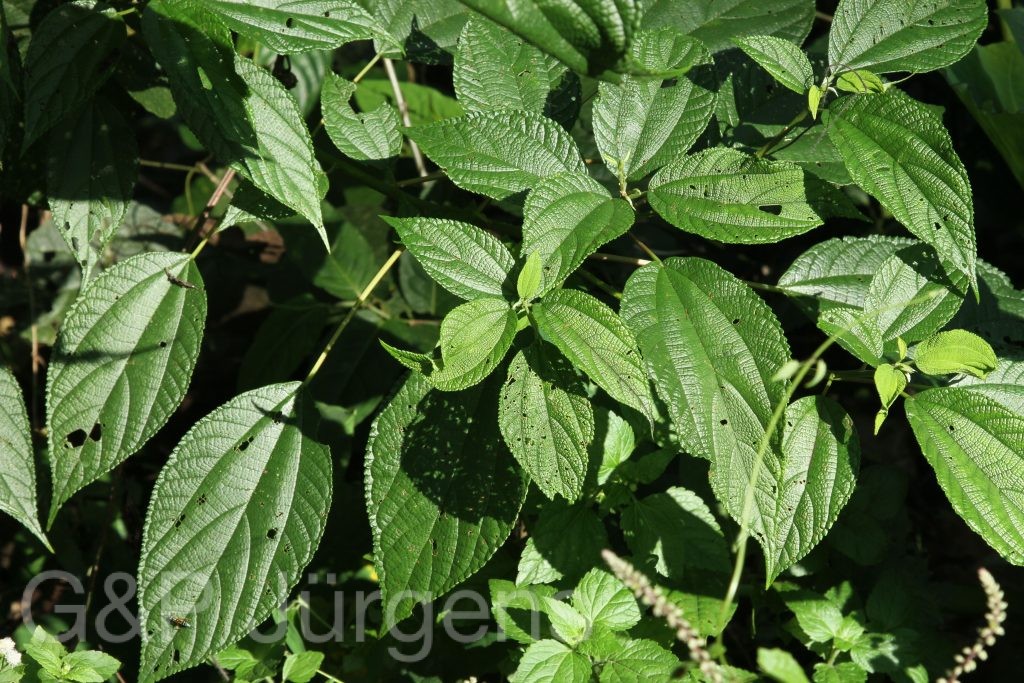
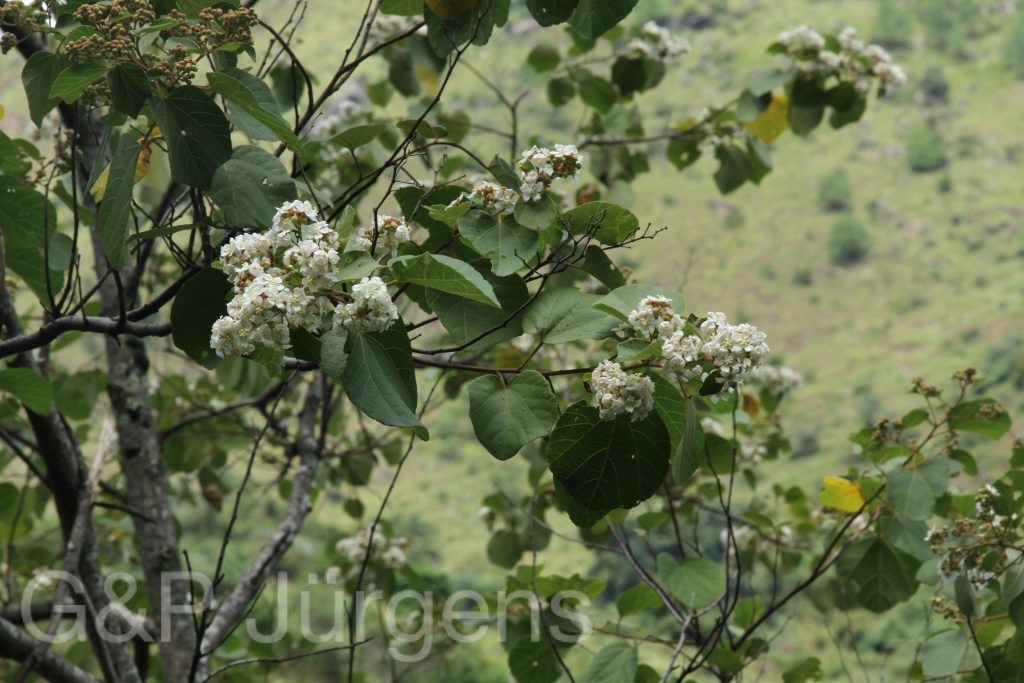
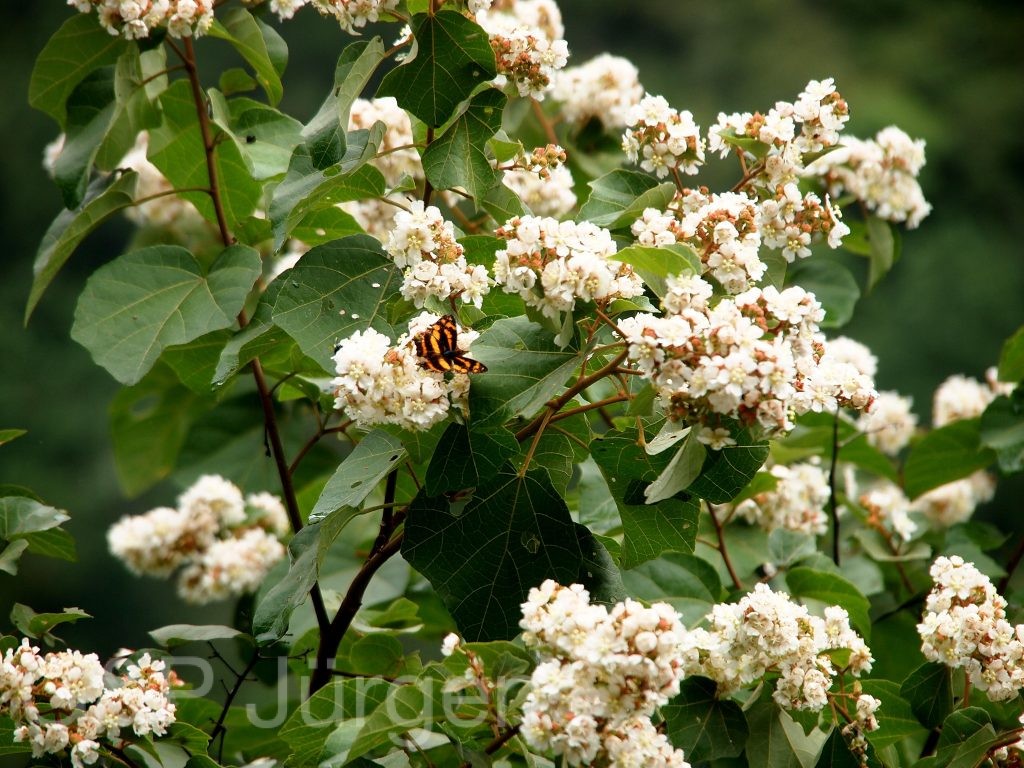
Kydia glabrescens is a small tree of the eastern Himalayan and Indo-Chinese region, recorded from China, Thailand, Nepal, Vietnam, Bhutan, India and Myanmar, with about 140 georeferenced occurrences. It occurs in subtropical and warm-temperate broadleaved forest, secondary woodland and forest margins at low to moderate elevations. The individual documented near Trashigang in eastern Bhutan at about 1720 m in October illustrates its mid-elevation habitat, flowering and fruiting in autumn on well-drained slopes within and at the edges of mixed hill forest.

The plant is a deciduous tree with grey bark whose young parts are stellate-tomentose but become more glabrescent with age, a feature underlying its epithet. The leaves are alternate, broadly ovate to suborbicular, palmately three- to five-veined and often shallowly lobed, with crenate-dentate margins. The flowers are borne in terminal and axillary panicles and are subtended by conspicuous epicalyx bracts that enlarge and become wing-like in fruit, a diagnostic feature of the genus; the small five-petalled corolla is white to pale pink, the stamens united into a staminal column typical of the Malvaceae. The fruit is a small capsule subtended by the accrescent, persistent bracts that aid wind dispersal.

Kydia is a small Asian genus traditionally placed in the Malvaceae (subfamily Grewioideae or related tribes in the broadly circumscribed family), distinguished by its enlarged fruiting epicalyx and dioecious or polygamous breeding system. The timber is used locally and the mucilaginous bark has minor traditional uses. Reasonably widespread through the eastern Himalaya and Southeast Asia, K. glabrescens is not considered threatened.

Author: Mast. · Sources: POWO (Kew), GBIF, Flora of Bhutan, Flora of China, Flora of British India, Tang, Gilbert & Dorr's account of Malvaceae

Kitam.

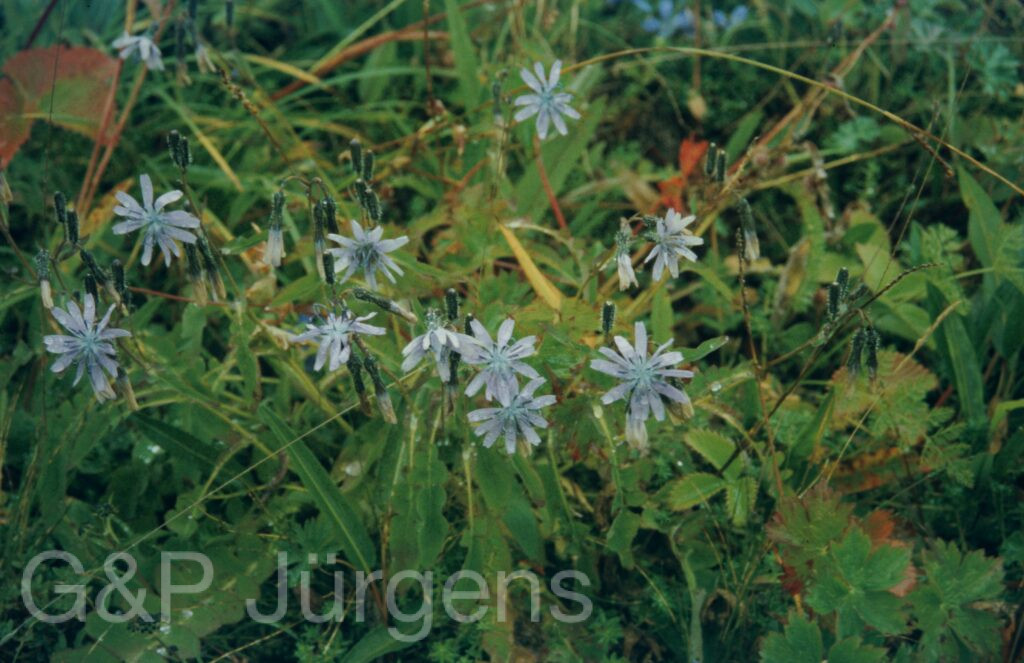
Garw 2005 68 ergebnis ergebnis
India Garhwal Valley of flowers 3200m, September

Description

Lactuca dolichophylla is a Himalayan and Central Asian perennial herb distributed through the Indian Himalaya, Pakistan, Nepal, Bhutan, southern China, Afghanistan, Russia and Myanmar, documented from a modest number of georeferenced collections. It is a plant of the subalpine and alpine zone, growing on open grassy slopes, herb-rich meadows, forest clearings and stony banks. The photographed material is from the Valley of Flowers in Garhwal, India, at about 3200 m in September, a celebrated high-montane meadow habitat where the species flowers in the late post-monsoon season.

The plant is an erect perennial herb with a leafy, often glaucous stem exuding milky latex when cut. The leaves are elongate and narrow, as the epithet 'dolichophylla' (long-leaved) implies, lanceolate to linear-lanceolate, entire to runcinate-lobed, with the upper leaves sessile and often clasping. The capitula are arranged in a lax paniculate-corymbose synflorescence; each head is ligulate, with an imbricate cylindrical involucre and several blue to bluish-purple or violet ray florets, a colour characteristic of the Himalayan blue-flowered lettuces. The fruit is a flattened, ribbed achene (cypsela) narrowed into a beak and crowned by a pappus of simple white capillary bristles.

Lactuca belongs to the tribe Cichorieae of Asteraceae, the dandelion-and-lettuce alliance with milky latex and ligulate florets. The blue-flowered Himalayan species, sometimes segregated under Cicerbita or Mulgedium, form a taxonomically intricate group, and this taxon was described by Kitamura. Wind-dispersed by its pappus, L. dolichophylla is a characteristic component of moist alpine meadows and is not regarded as threatened.

Author: Kitam. · Sources: POWO (Kew), GBIF, Flora of China, Flora of Pakistan, Kitamura's studies of Himalayan Cichorieae (Compositae)

(Royle ex Benth.) Rupr.

Sikkim2003 197 P275
Sikkim Dzongri 4100m 08.2003
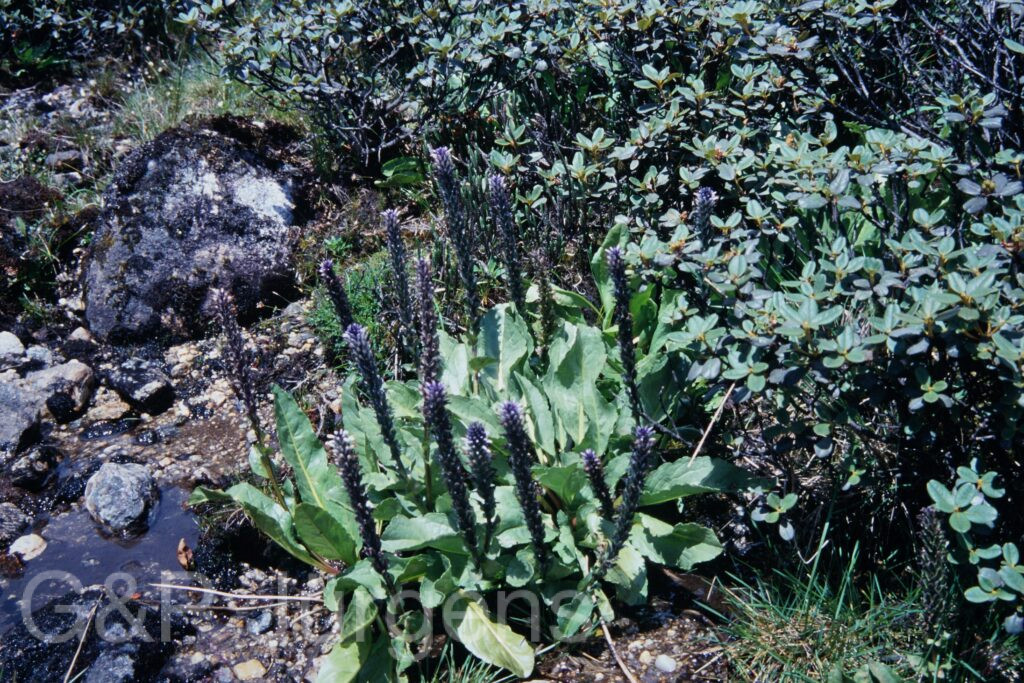
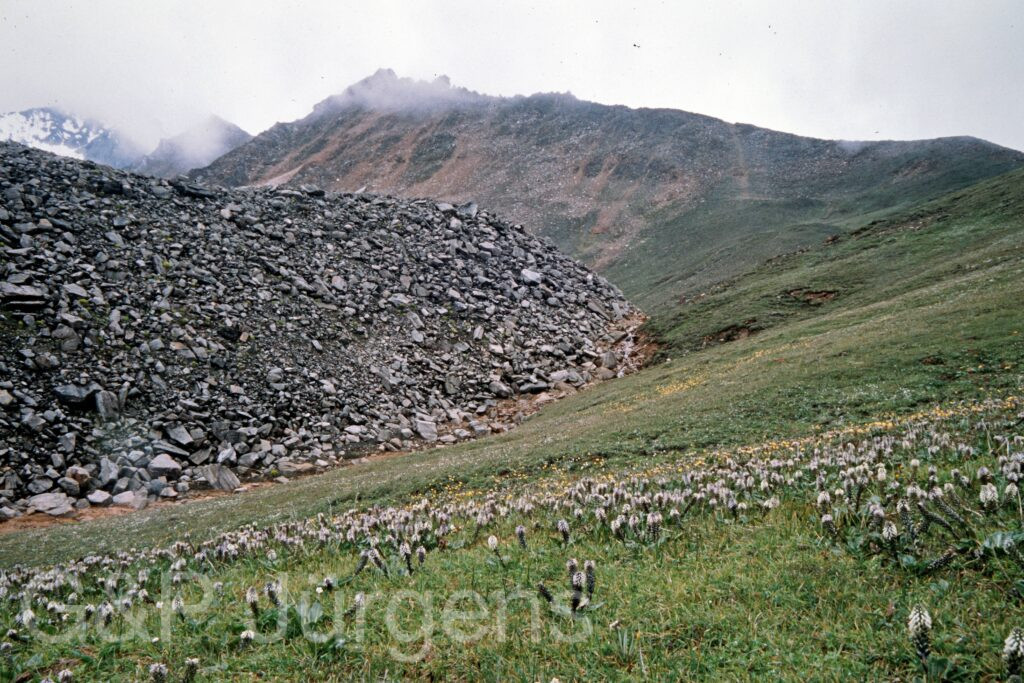
Nepal 99 650 ergebnis
West-Nepal Kagmara-La 5000m, July
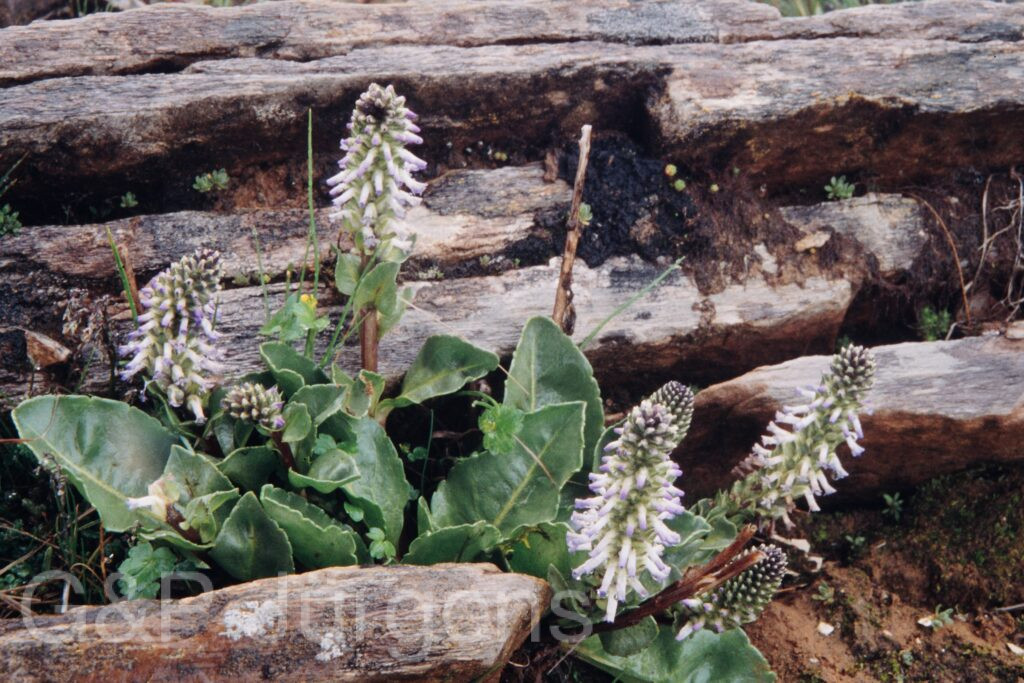
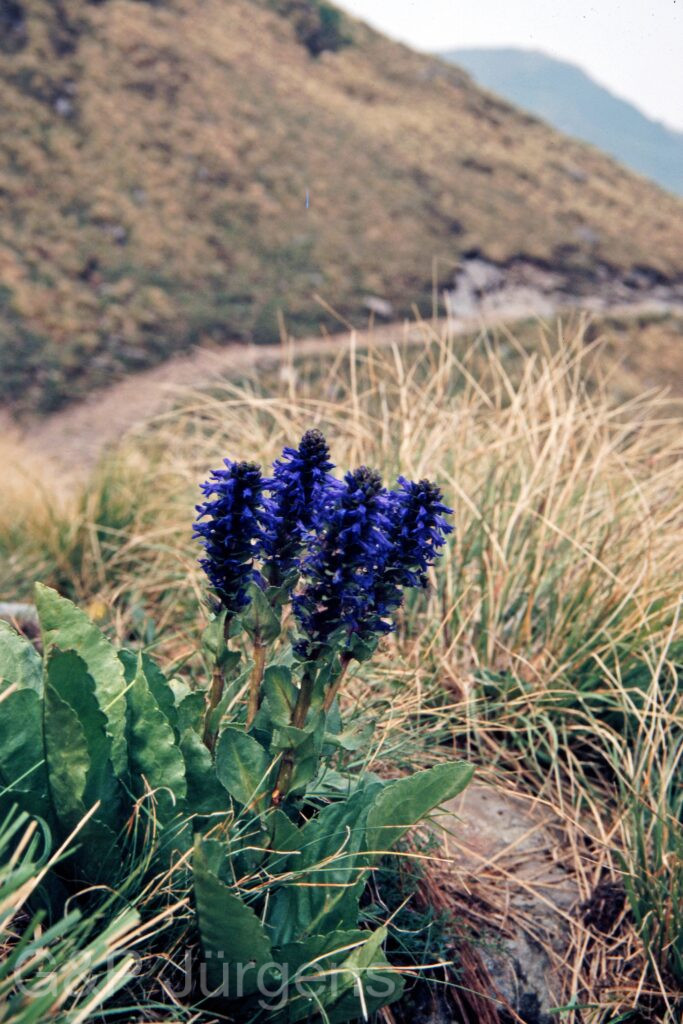
Nepal 99 648 ergebnis
West-Nepal Kagmara-La 5000m, July
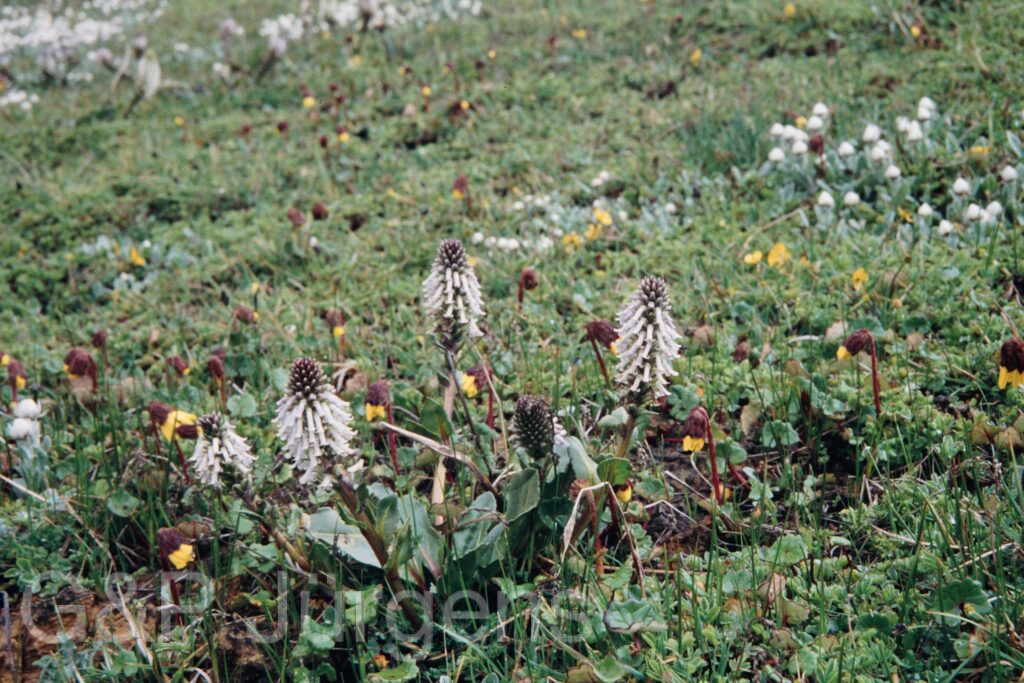
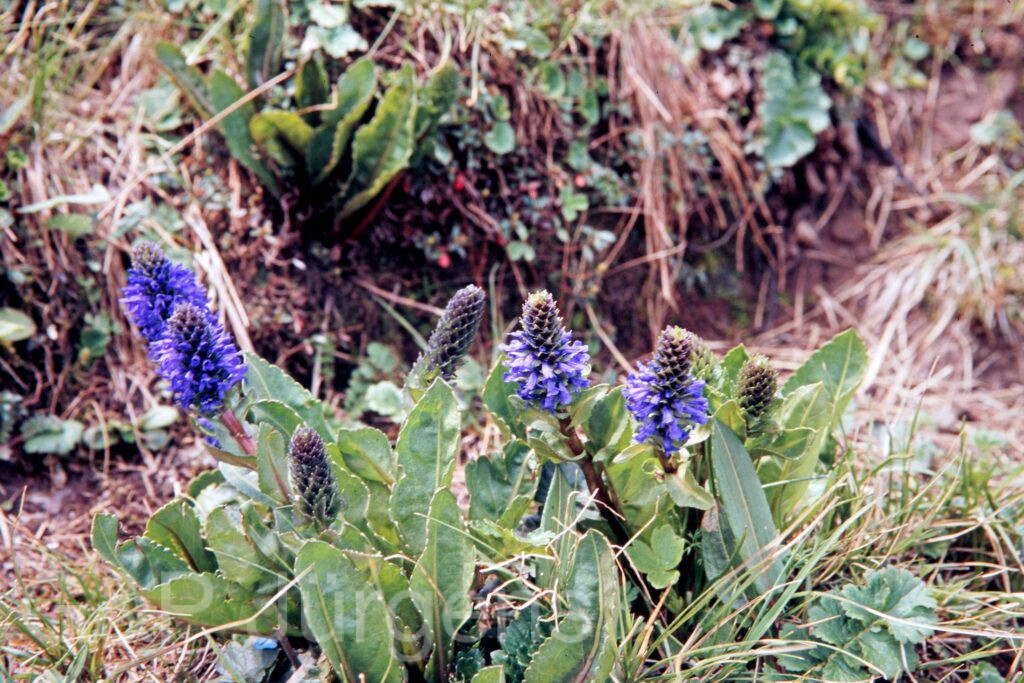
Nepal 99 662 ergebnis
West-Nepal Kagmara-La 5000m, July

Description

Lagotis kunawurensis is a low alpine herb of the high Himalaya, recorded by GBIF (about 116 occurrences) from Nepal, India, Pakistan and Bhutan, tracing the alpine belt from the western to the eastern part of the range. It is a plant of cold, open, high-elevation ground: short turf, stony slopes, moist alpine meadows, moraines and snow-flush margins, typically from 3500 m to well above 5000 m. The collections cited for the image span this full amplitude, from Dzongri in Sikkim at about 4100 m, to Kinkhola in Garhwal at 3550 m in June, up to the Kagmara-La in West Nepal at around 5000 m in July, the last representing one of the highest zones colonised by flowering plants in the region.

It is a small, fleshy, glabrous perennial arising from a stout rhizome or caudex with thickened roots. The leaves are mostly basal, long-petiolate, with ovate to oblong, somewhat succulent blades that are entire or shallowly crenate-toothed. The flowering stems are short and stout, the inflorescence a dense terminal spike or head of small bracteate flowers. The corolla is two-lipped (bilabiate), blue to violet or purplish, with the upper lip entire or notched and a lower lip of one to three lobes; there are typically two stamens. The fruit is a small drupe-like or two-seeded structure rather than the dry dehiscent capsule of many relatives, a feature distinctive of the genus.

Lagotis, with its concentration of species across the high mountains of Central Asia, the Himalaya and the Tibetan plateau, is now placed in Plantaginaceae following the molecular dismantling of the old Scrophulariaceae. The cushion-like, fleshy habit, short stature and early flowering are classic adaptations to the brief, cold, wind-exposed alpine growing season. Several Lagotis species are used in Tibetan and Himalayan ethnomedicine. As a widespread high-elevation specialist L. kunawurensis is not of conservation concern, though such strictly alpine taxa are intrinsically vulnerable to the upslope compression of habitat under climate warming.

Author: (Royle ex Benth.) Rupr. · Sources: POWO (Kew), GBIF, Flora of China Vol. 18, Flora of Pakistan, Flora of Nepal, Hong Monograph of the Subtribe Lagotidinae (Scrophulariaceae)

Hook. f. & Thomson

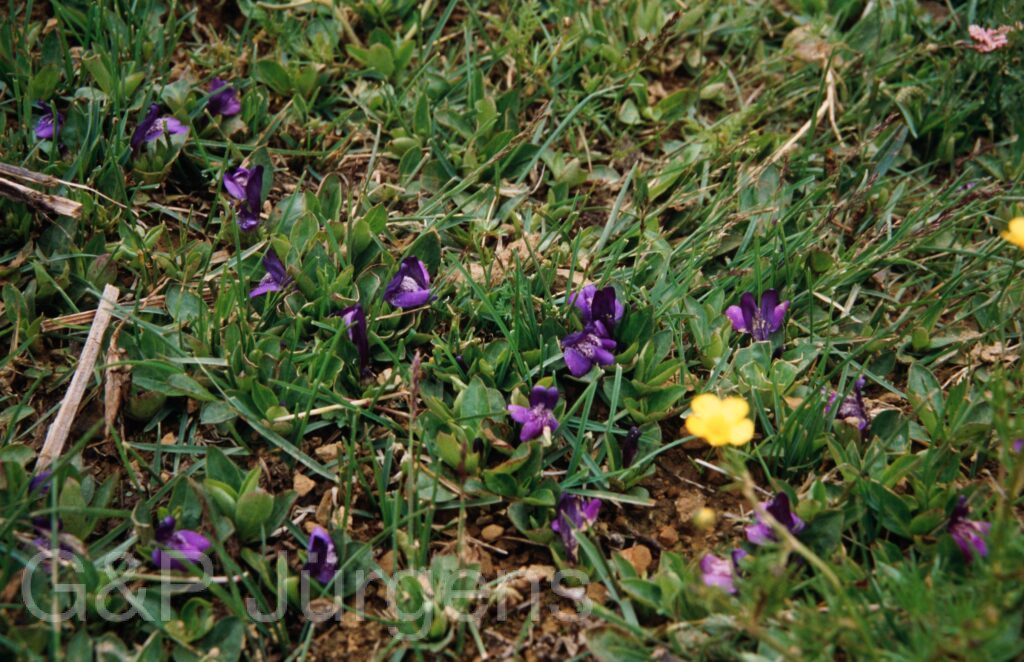
Nepal 99 681 ergebnis
West-Nepal, Pungmo-Khola 4700m, July

Description

Lancea tibetica Hook.f. & Thomson is a low, perennial herb of the high Tibetan Plateau and surrounding mountains, recorded by GBIF from China, India, Nepal, Bhutan, Mongolia and Pakistan. It is a true high-alpine plant of open turf, gravelly and sandy meadows, riverine flats and grazed grassland, generally between about 3,000 and 5,000 m. The July collection from the Pungmo Khola valley in west Nepal at 4,700 m exemplifies its preference for moist alpine swards close to the upper limit of vascular plant growth, where it grows in short, frost-prone vegetation alongside other cushion and rosette herbs of the Trans-Himalayan zone.

The plant is a small, nearly stemless perennial arising from a creeping rhizome and forming low tufts seldom more than a few centimetres tall. The leaves are crowded in a basal rosette, spathulate to oblanceolate, thick, entire or slightly toothed and glabrous. The conspicuous flowers are borne almost at ground level among the leaves; the corolla is deep violet-blue to purple, tubular below and expanded into a two-lipped limb, the lower lip three-lobed and the throat often paler or marked. The fruit is a fleshy, berry-like capsule containing numerous seeds, an unusual feature among its relatives.

Formerly placed in Scrophulariaceae, Lancea is now classified in Phrymaceae following molecular phylogenetic studies, forming with the related Mazus a distinctive Asian lineage. The genus comprises only two species, making L. tibetica of considerable systematic interest as a characteristic endemic of the Qinghai-Tibetan Plateau flora. Well adapted to cold, high-altitude grassland, it serves as an indicator of intact alpine meadow ecosystems increasingly affected by grazing pressure and climate change.

Author: Hook. f. & Thomson · Sources: POWO (Kew), GBIF, Flora of China Vol. 18, Flora of Nepal, Beardsley & Olmstead: Phylogeny of Phrymaceae (American Journal of Botany)

(D.Don) Tzvelev

Sikkim2004 102 P173
India West-Bengal, Utaray 2000m April
Sikkim 2006 186 ergebnis
India West-Bengal, Samadan 2400m, May

Description

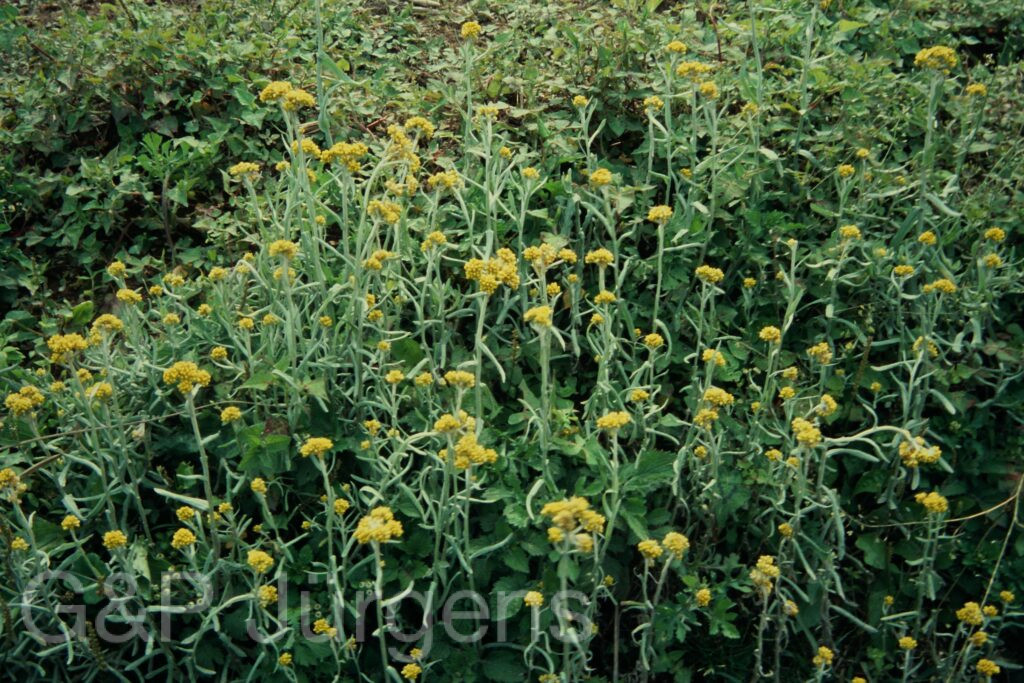
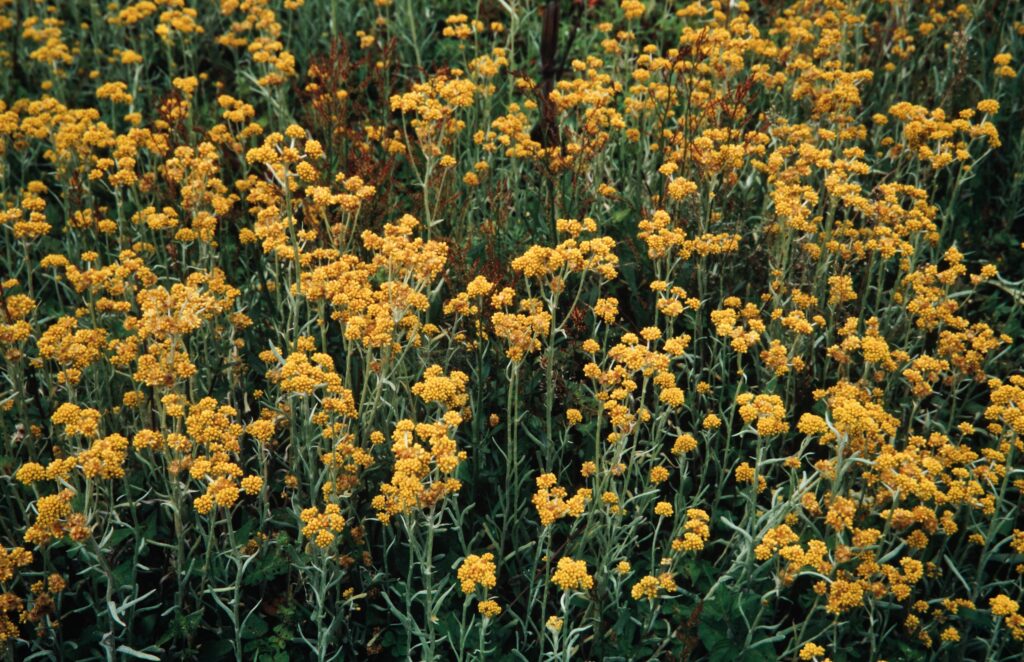
Laphangium affine is a widespread East and South Asian cudweed recorded from China, Japan, India, Taiwan, Vietnam, Nepal, Pakistan, Thailand, Georgia and Turkey, the roughly 99 georeferenced occurrences reflecting a broad continental range that extends westward into the Caucasus and Anatolia. It occurs from lowland to mid-montane elevations, the images documenting plants in West Bengal, India, at Utaray about 2000 m in April and Samadan about 2400 m in May. A plant of open, disturbed and seasonally moist ground, it colonises fields, fallows, roadsides, terrace banks, streamsides and weedy grassland, behaving as a fast-growing ruderal of cultivated and human-modified landscapes.

It is an erect annual or short-lived herb with simple or branched stems clothed, like the foliage, in a soft greyish-white woolly tomentum. The leaves are alternate, sessile, narrowly oblanceolate to linear-spathulate, entire-margined and densely lanate on both surfaces, the lower often withered at flowering. The numerous small capitula are aggregated into dense terminal and axillary glomerules; each head bears straw-coloured to yellowish, dry, scarious involucral bracts and contains many slender female florets surrounding a few central bisexual ones. The cypselae are minute and crowned by a caducous pappus of barbellate bristles, adapted for wind dispersal.

Under GBIF this name is treated as a synonym, with Laphangium affine itself standing as the accepted name; the taxon has been variously placed in Gnaphalium and Pseudognaphalium, reflecting the unsettled generic limits of the woolly cudweeds in tribe Gnaphalieae. Originally described by D. Don and transferred by Tzvelev, it is a successful weed across much of Asia, valued in some regions for medicinal and edible use. Given its wide range and ruderal ecology it is of no conservation concern.

Author: (D.Don) Tzvelev · Sources: POWO (Kew), GBIF, Flora of China, Flora of Pakistan, Gnaphalieae generic revision (Asteraceae)

Hook.f.

Bhutan2014 610
Bhutan Phobjika 2810, May
Bh2008 266 P418
Bhutan Tumchinching-La 3760m, April

Description

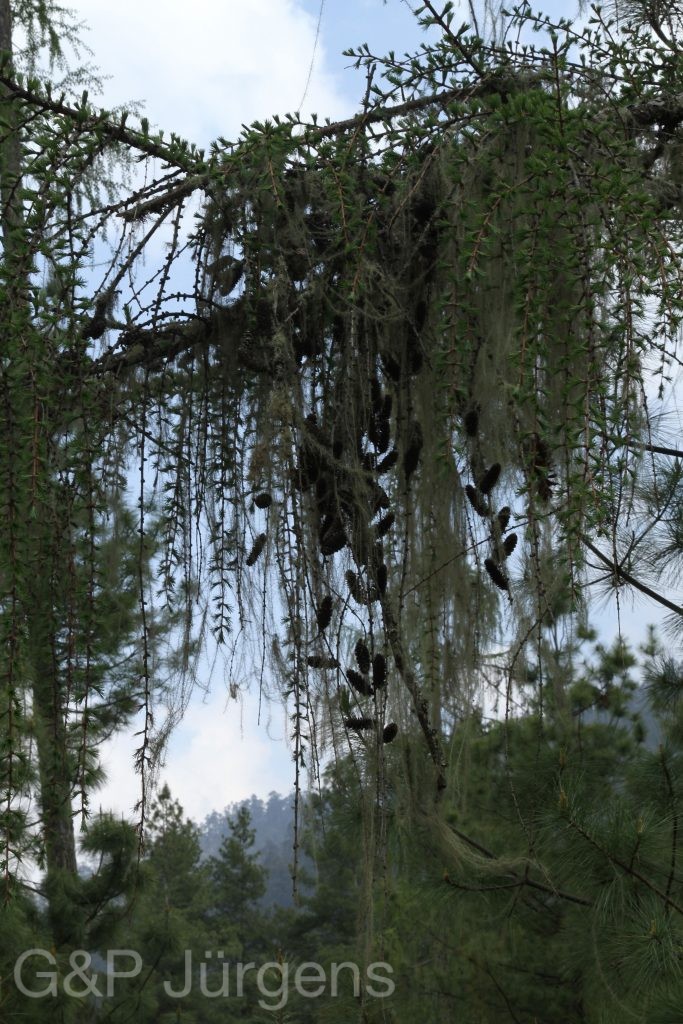
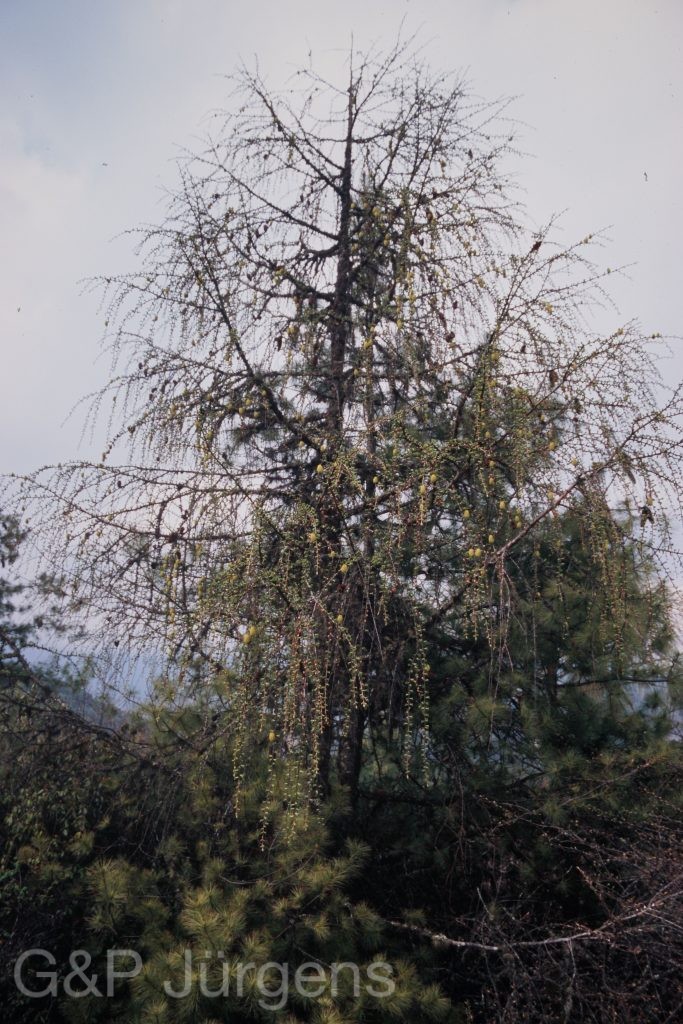
Larix griffithii, the Sikkim or Himalayan larch, is a deciduous conifer of the eastern Himalaya, native to China (Xizang), Bhutan, India (Sikkim) and Nepal; GBIF lists 525 occurrences, including many cultivated specimens in temperate arboreta abroad. In the wild it forms open montane to subalpine forests, often near the treeline on rocky slopes and moraines, generally between about 2800 and 4100 m. The trees illustrated were photographed in Bhutan at Phobjika (2810 m) in May and at the Tumchinching-La pass (3760 m) in April, the latter near its upper altitudinal limit.

It is a medium-sized deciduous tree with a conical crown and long, often pendulous branchlets. The soft, needle-like leaves are borne singly on long shoots and in dense rosette-like clusters on short, knob-like spur shoots; they are bright green, flushing in spring and turning golden-yellow before falling in autumn, an unusual habit among Himalayan conifers. The pendulous seed cones are oblong-cylindrical with conspicuous, exserted, often reflexed bracts that exceed the seed scales, a key diagnostic character; the winged seeds are wind-dispersed when the cones open.

Larix griffithii belongs to Pinaceae and is the principal larch of the eastern Himalaya, characteristically associated with Abies, Picea and rhododendron scrub at the upper forest limit. Its long-exserted cone bracts readily distinguish it from other larches. The wood is used locally for timber and fuel, and the tree's graceful weeping form has led to its cultivation in temperate collections, accounting for the wide scatter of records. Restricted in natural range but locally frequent, it faces pressure from logging, fire and grazing in the fragile treeline ecotone.

Author: Hook.f. · Sources: POWO (Kew), GBIF, Flora of China, Flora of Bhutan, Conifers of the World, Farjon A Handbook of the World's Conifers

(Royle) Wedd.

Bhutan2015 105
Bhutan Galephug 600m, October

Description

Lecanthus peduncularis is a widespread herb of tropical and subtropical Asia and beyond, ranging from the Himalaya (Nepal, India, Bhutan, Pakistan) through China, Taiwan, Japan and South-East Asia to Indonesia, the Philippines, Papua New Guinea and parts of Africa (Cameroon, Equatorial Guinea, Ethiopia); its very numerous GBIF records (over 2150) reflect this broad distribution. It grows in moist, shady places in evergreen and mixed forest, on damp banks, by streams, on dripping rocks and at forest margins, from the lowlands up to mid-montane elevations of around 2500 m. The photographed plant from Galephug in southern Bhutan at 600 m in October is typical of its warm, humid foothill habitat.

It is a soft, succulent perennial or annual herb with weak, ascending to creeping stems, glabrous to sparsely hairy and rooting at the lower nodes. The opposite leaves are ovate to elliptic, membranous, with a serrate to crenate-dentate margin, an acuminate apex and conspicuous cystoliths, borne on slender petioles. The minute, unisexual flowers are crowded in flat, disc-like receptacular heads subtended by an involucre and carried on long, slender axillary peduncles, the long peduncle giving the species its epithet. The fruit is a small, compressed, ovoid achene.

The small genus Lecanthus belongs to the Urticaceae and is allied to Pilea and Elatostema, distinguished by its long-stalked, involucrate flower-heads. As a shade- and moisture-loving understorey herb of wide ecological tolerance, L. peduncularis is common and not of conservation concern; it has minor local use as a potherb and in traditional remedies across its Asian range.

Author: (Royle) Wedd. · Sources: POWO (Kew), GBIF, Flora of China, Flora of Bhutan, Annotated Checklist of the Flowering Plants of Nepal, Urticaceae revision (Friis & Wilmot-Dear)

Gand.

Sikkim2003 428 P595
Sikkim Chopta Valley 4100m August
Garw 2005 158 ergebnis
India Garhwal valley of flowers 3550m, October

Description

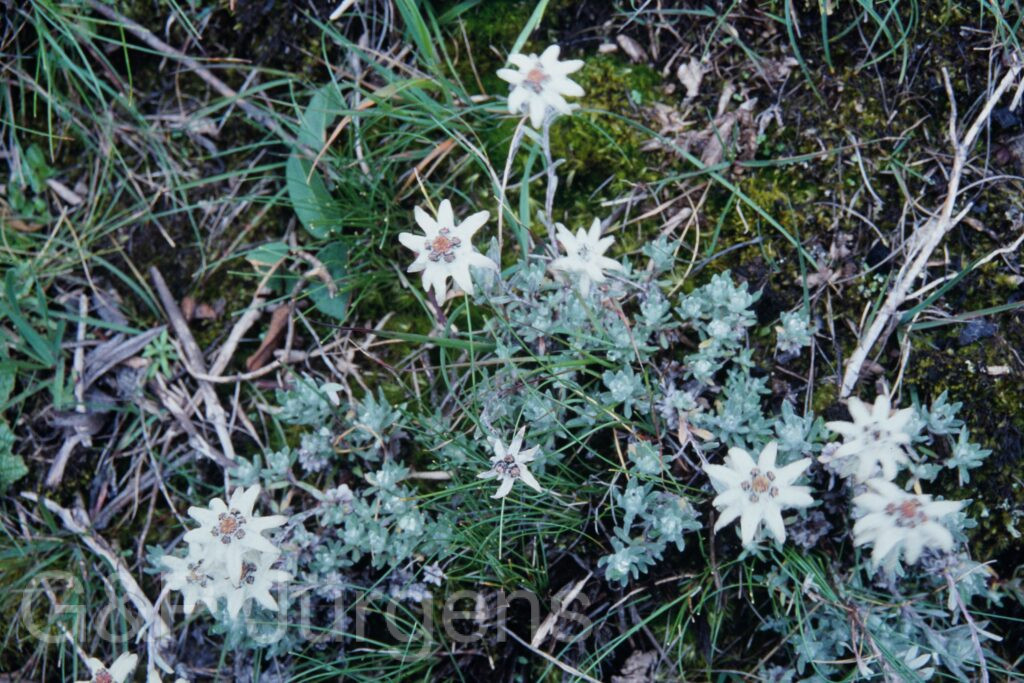
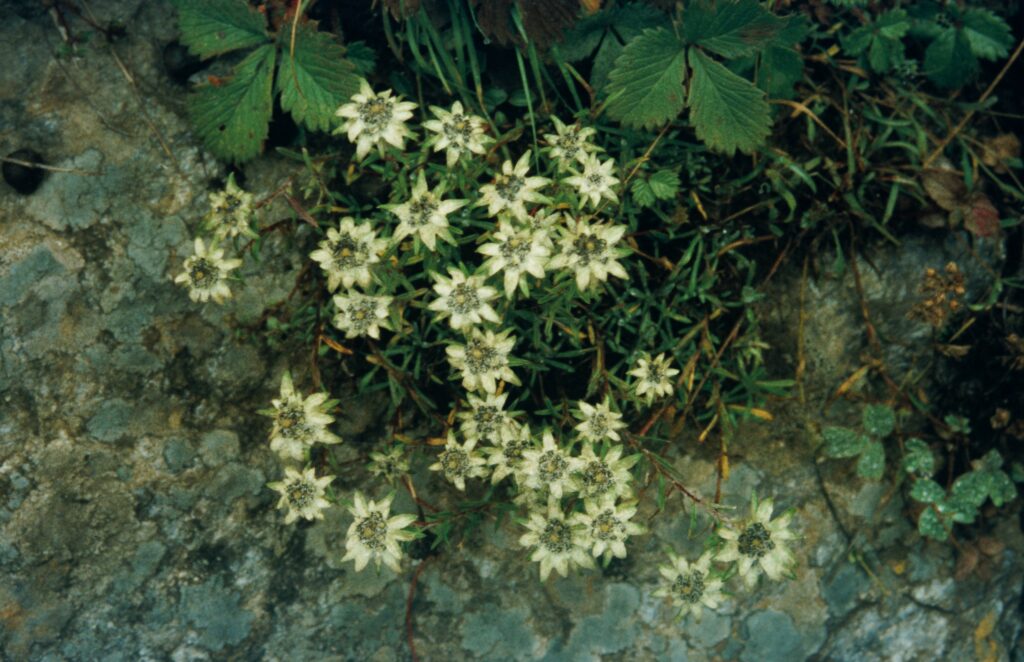
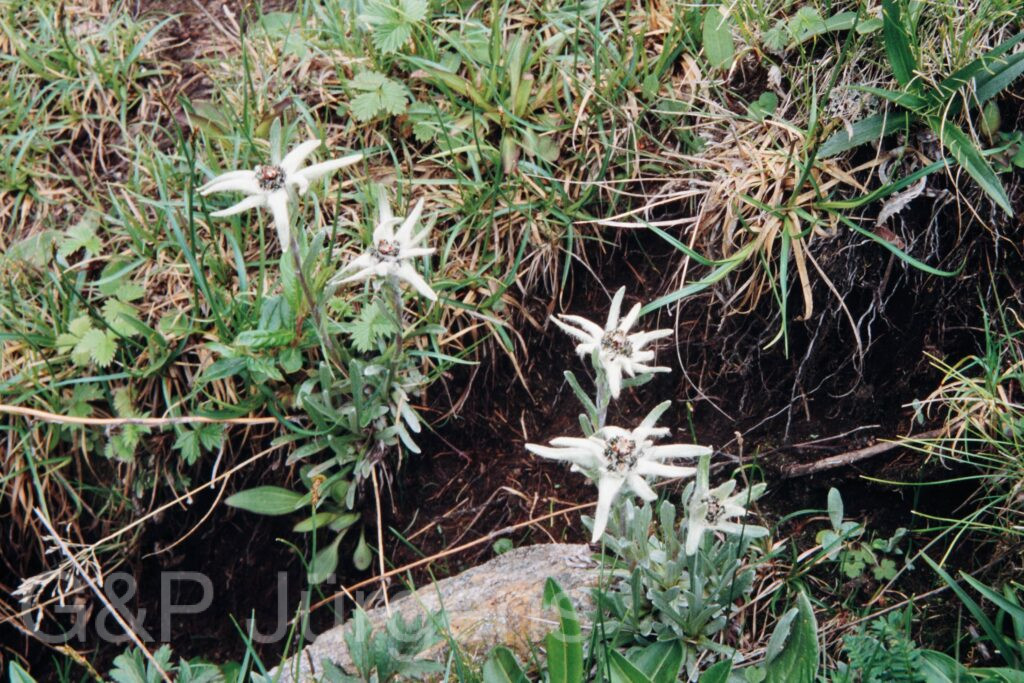
Leontopodium brachyactis is a high-alpine edelweiss of the Sino-Himalayan and Central Asian uplands, recorded from India, Pakistan, Nepal and China, with scattered occurrences extending west into Kyrgyzstan, Tajikistan, Afghanistan and Russia; the c. 92 georeferenced collections trace a distribution centred on the inner Himalaya and Tibetan margins. It inhabits open alpine turf, stony slopes, moraines and grazed meadows above the treeline, typically between 3500 and 4500 m. The species was photographed in the Sikkim Chopta Valley at 4100 m in August and in the Garhwal Valley of Flowers at 3550 m in October, sites representative of its preference for cold, well-drained, seasonally snow-covered ground.

It is a low, tufted, woolly perennial herb arising from a branched woody caudex, the stems erect to ascending and densely white-lanate. The leaves are linear to oblanceolate, entire, grey-green above and clothed beneath in a felt of appressed hairs that reflects intense montane irradiance. The capitula are small, several to many, aggregated into a dense terminal glomerule and subtended by a stellate ruff of leaf-like, densely tomentose floral bracts forming the characteristic edelweiss "star." The heads are heterogamous and disciform, with whitish corollas; the fruit is a small ribbed cypsela bearing a pappus of barbellate bristles.

The genus Leontopodium (tribe Gnaphalieae) is taxonomically intricate, its species delimited by indumentum, bract arrangement and capitulum structure, and L. brachyactis belongs to the compact-headed Himalayan element. Its dense white tomentum is a classic adaptation to alpine cold, desiccating winds and ultraviolet exposure. Though locally frequent across a wide range and not presently considered threatened, populations in accessible valleys face pressure from heavy summer grazing and increasing tourism in the Himalayan flower meadows.

Author: Gand. · Sources: POWO (Kew), GBIF, Flora of China, Flowers of the Himalaya (Polunin & Stainton), Handel-Mazzetti revision of Leontopodium

DC.

BhutanPG2011 507
Bhutan Ludlow-Sherriff-Trail Shashuna, 4000m June
Nepal 99 528 ergebnis
West-Nepal Churta-Khola 3800m, June

Description

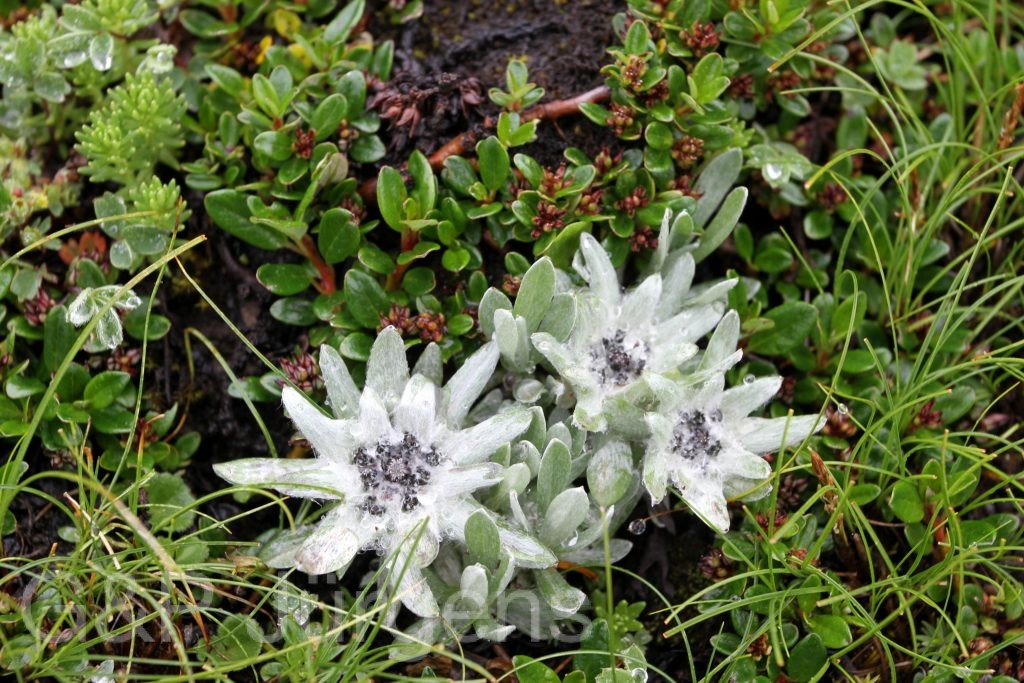
Leontopodium himalayanum is the characteristic Himalayan edelweiss, distributed across China, Nepal, India, Bhutan, Pakistan and Myanmar (CN, NP, IN, BT, PK, MM), with about 437 GBIF occurrences mapping a broad but strictly montane range along the chain. It occupies alpine and subalpine meadows, open grassy and stony slopes, screes and rocky banks, generally above the forest limit. The photographed plants were recorded on the Ludlow-Sherriff Trail at Shashuna in Bhutan at 4000 m and at the Churta-Khola in West Nepal at 3800 m, both in June, flowering early in the high-mountain season on exposed turf.

It is a tufted perennial herb growing from a short branched rhizome, producing several erect or ascending flowering stems 5–30 cm tall, the herbage greyish with a dense appressed white tomentum. The leaves are linear, linear-lanceolate or oblong-spathulate, sessile, woolly especially beneath. The inflorescence is crowned by a spreading rosette of lanceolate floral bracts much more densely white-lanate than the foliage, forming the radiating star that distinguishes the edelweiss. Several small subglobose capitula are clustered at the centre of this ruff; the heads bear yellowish tubular florets and are functionally subdioecious. The fruit is a minute cypsela tipped with a pappus of slender, barbellate to subplumose bristles facilitating wind dispersal.

Within Leontopodium (tribe Gnaphalieae) the Himalayan species form a closely allied group differentiated chiefly by indumentum density and bract proportions, and L. himalayanum (described by DC.) is the most widespread representative across the range. Its conspicuous woolly star is a classic alpine adaptation buffering the reproductive organs against ultraviolet exposure, cold and water loss. The species is common and not regarded as threatened, although picking and collection have locally reduced populations near trekking routes.

Author: DC. · Sources: POWO (Kew), GBIF, Flora of China Vol. 20-21, Flora of Bhutan, Flora of Nepal, Leontopodium monograph (Handel-Mazzetti, revision of the genus)