
Hook. f. & Thomson
Description
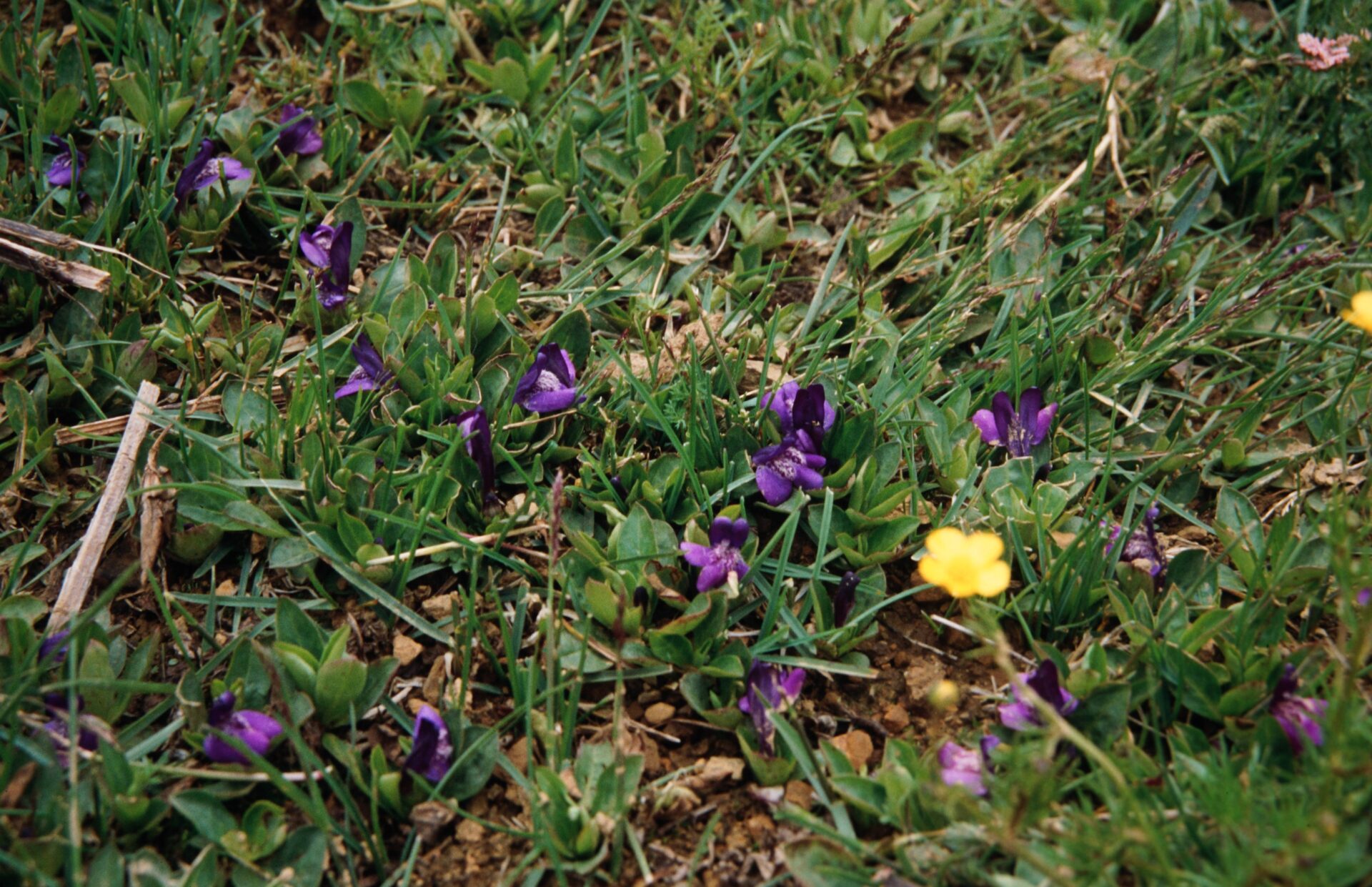
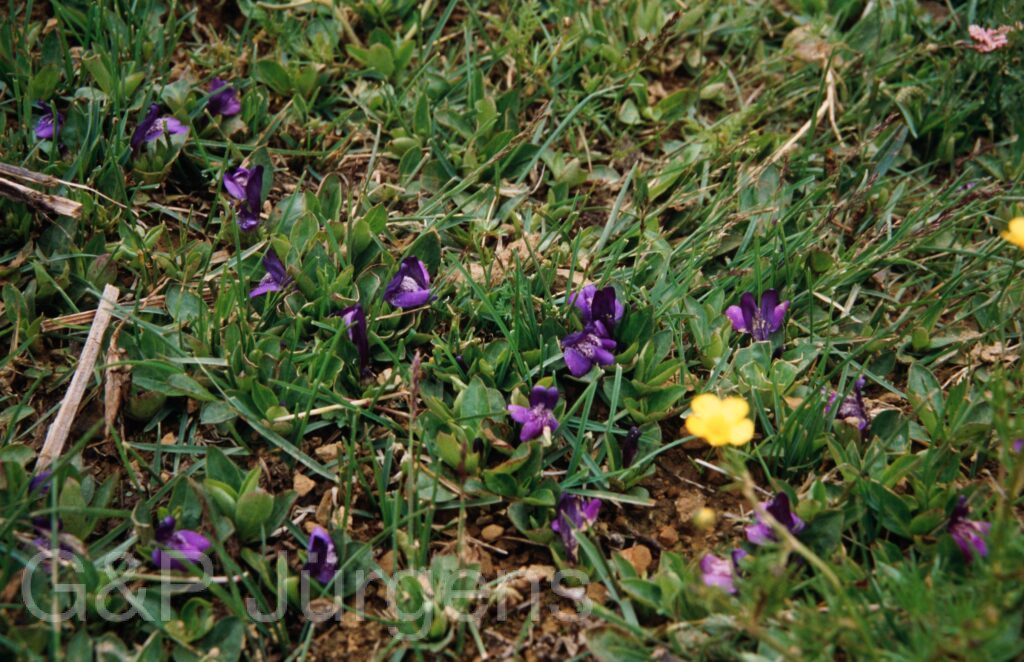
Lancea tibetica Hook.f. & Thomson is a low, perennial herb of the high Tibetan Plateau and surrounding mountains, recorded by GBIF from China, India, Nepal, Bhutan, Mongolia and Pakistan. It is a true high-alpine plant of open turf, gravelly and sandy meadows, riverine flats and grazed grassland, generally between about 3,000 and 5,000 m. The July collection from the Pungmo Khola valley in west Nepal at 4,700 m exemplifies its preference for moist alpine swards close to the upper limit of vascular plant growth, where it grows in short, frost-prone vegetation alongside other cushion and rosette herbs of the Trans-Himalayan zone.
The plant is a small, nearly stemless perennial arising from a creeping rhizome and forming low tufts seldom more than a few centimetres tall. The leaves are crowded in a basal rosette, spathulate to oblanceolate, thick, entire or slightly toothed and glabrous. The conspicuous flowers are borne almost at ground level among the leaves; the corolla is deep violet-blue to purple, tubular below and expanded into a two-lipped limb, the lower lip three-lobed and the throat often paler or marked. The fruit is a fleshy, berry-like capsule containing numerous seeds, an unusual feature among its relatives.
Formerly placed in Scrophulariaceae, Lancea is now classified in Phrymaceae following molecular phylogenetic studies, forming with the related Mazus a distinctive Asian lineage. The genus comprises only two species, making L. tibetica of considerable systematic interest as a characteristic endemic of the Qinghai-Tibetan Plateau flora. Well adapted to cold, high-altitude grassland, it serves as an indicator of intact alpine meadow ecosystems increasingly affected by grazing pressure and climate change.
Author: Hook. f. & Thomson · Sources: POWO (Kew), GBIF, Flora of China Vol. 18, Flora of Nepal, Beardsley & Olmstead: Phylogeny of Phrymaceae (American Journal of Botany)