
D.Don
Description
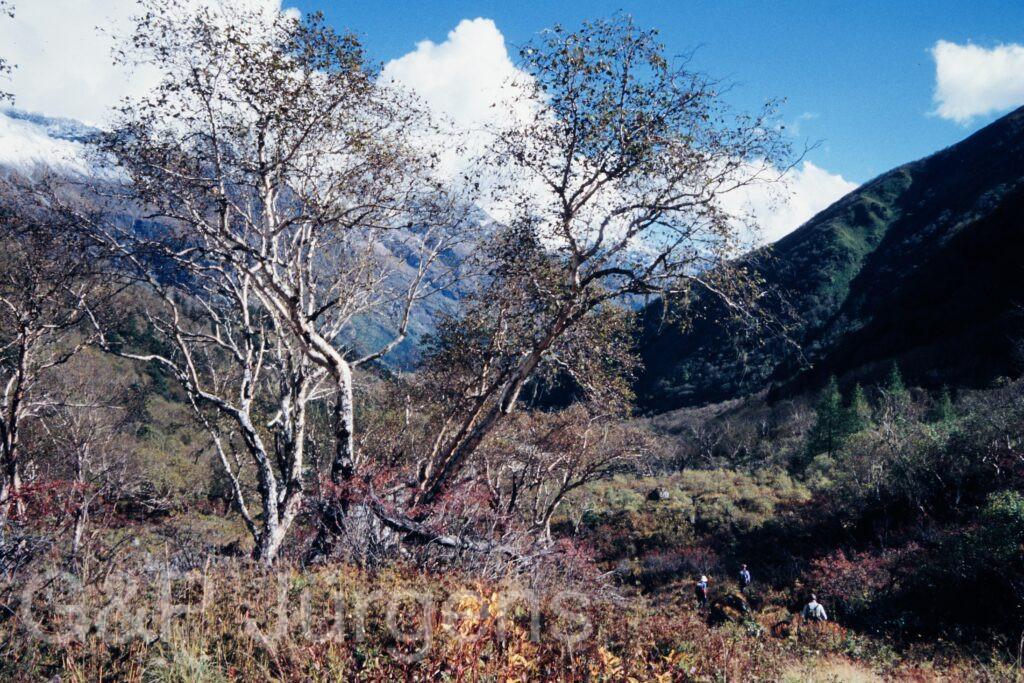
Betula utilis, the Himalayan birch, is the characteristic tree of the upper subalpine forest belt throughout the Himalaya and into western China, native across China, Nepal, India, Pakistan, Bhutan and Afghanistan; its roughly 6400 GBIF records combine wild Himalayan occurrences with cultivation in Britain, Germany, France and North America. It forms the treeline forests of the range, as recorded north of the Rupien La in Nepal at about 3200 m in October, typically between 3000 and 4000 m. There it forms pure stands or grows with rhododendron, fir and juniper on cool, moist north-facing slopes, marking the limit of arborescent vegetation.
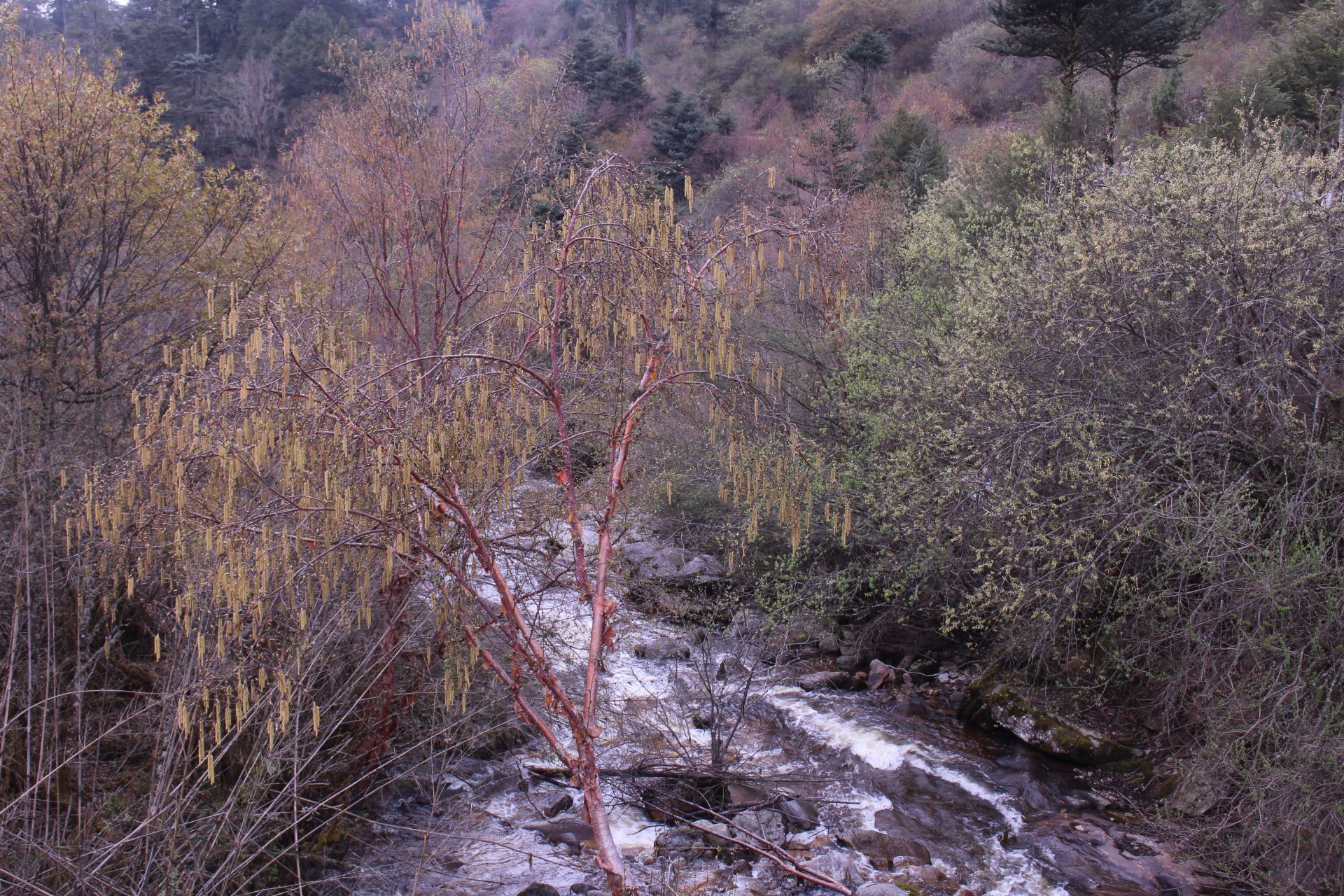
The species is a deciduous tree, often gnarled near the treeline, with the famous smooth, papery, peeling bark ranging from white and pinkish to coppery or dark brown that exfoliates in horizontal sheets. The leaves are alternate, ovate, doubly serrate and acuminate, turning gold in autumn. As a wind-pollinated monoecious birch it bears separate male and female catkins; the pendulous male catkins shed pollen in spring, while the female catkins mature into cylindrical, disintegrating fruiting catkins releasing small, winged nutlets.
Betula utilis is taxonomically variable, divided into several subspecies and varieties differing in bark colour and leaf form, including the white-barked western populations grown horticulturally as var. jacquemontii. Ecologically it is a keystone of Himalayan treeline ecosystems, its bark long used as a writing material and in traditional medicine. As the treeline shifts under climatic warming and forests face grazing pressure, it is an important indicator species in studies of mountain ecosystem change.
Author: D.Don · Sources: POWO (Kew), GBIF, Flora of China Vol. 4, Flora of Bhutan Vol. 1, Flora of Nepal, Birches: The Genus Betula (Ashburner & McAllister)