
Hand.-Mazz.
Description
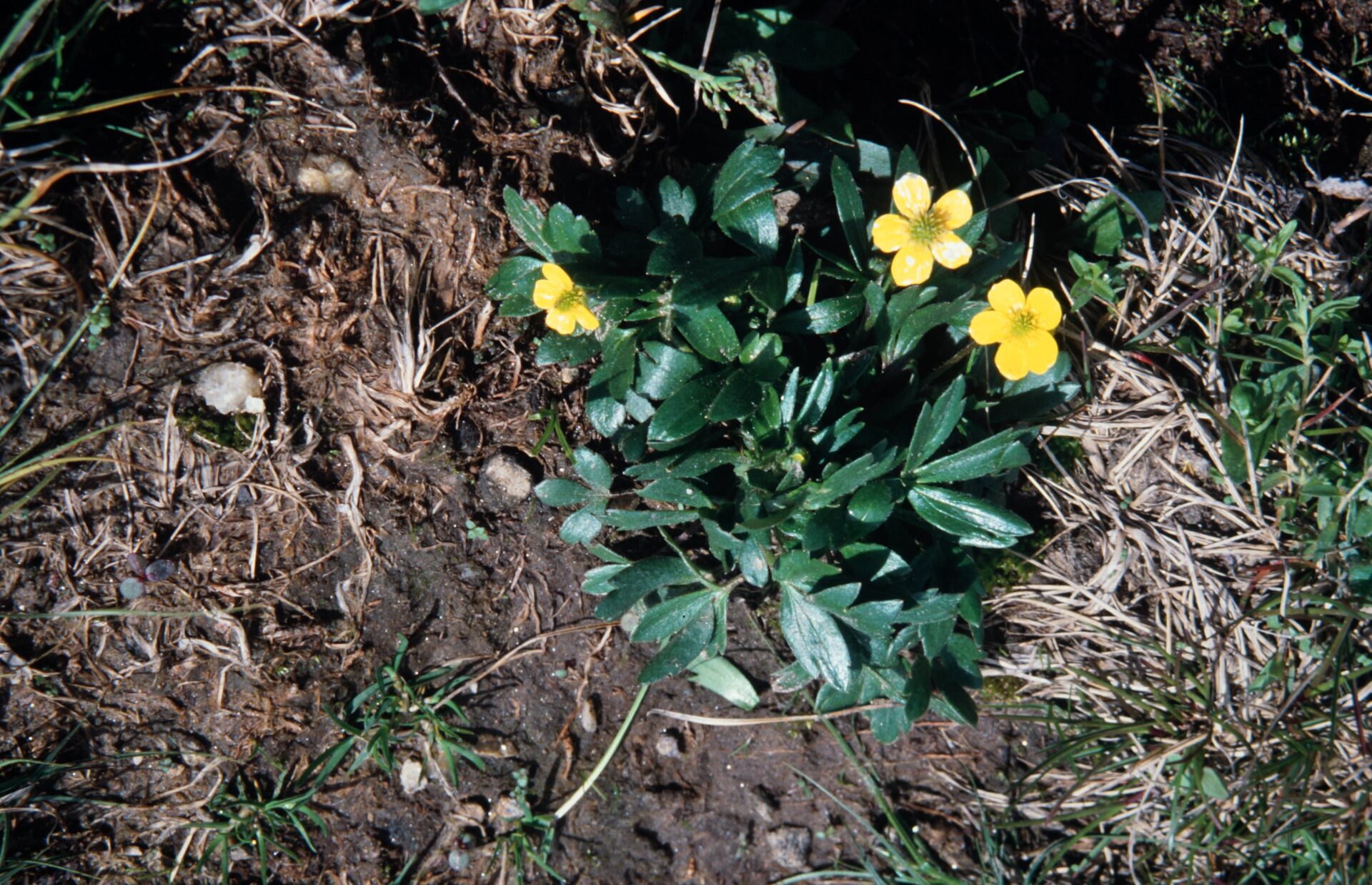
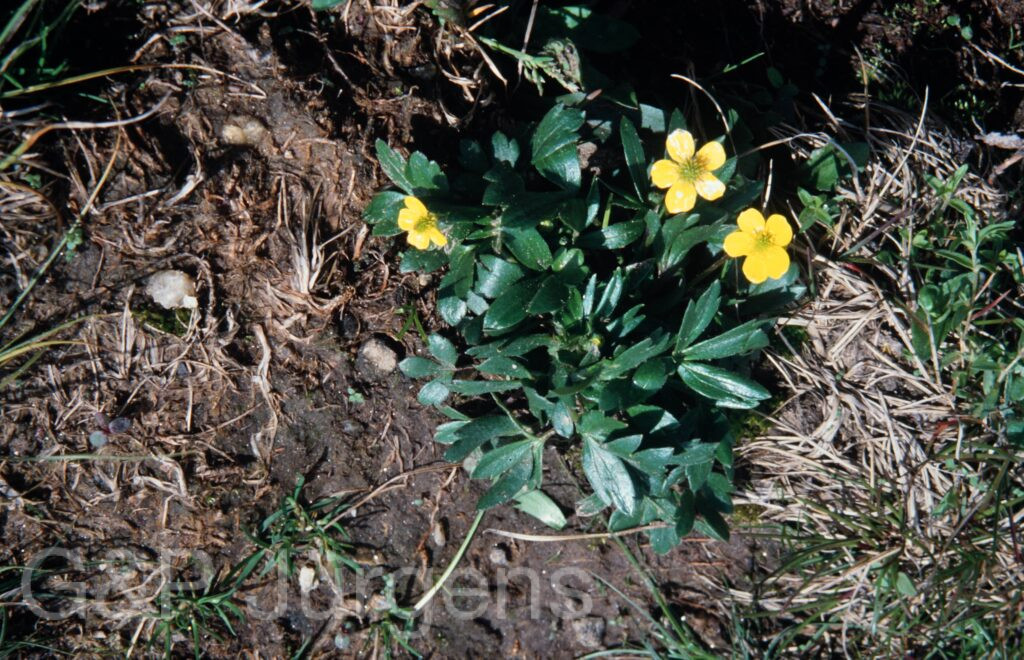
Ranunculus adoxifolius is a small buttercup of the Sino-Himalayan region, recorded from Nepal, India and Bhutan, with GBIF listing about 76 occurrences (the French record reflecting herbarium or cultivated provenance). It occupies moist subalpine to alpine habitats, including shaded forest margins, damp meadows, mossy banks and seepage slopes, generally between roughly 3000 and 4000 m. The photographed plant was found in the Gorkha district of Nepal at a kharka (high pasture) at 3140 m in May, flowering early in the season as snowmelt moistens the ground beneath open forest and on grassy slopes.
It is a delicate, low perennial herb with a short rhizome and fibrous roots. The basal leaves are long-petiolate with rounded, three-lobed to ternately divided blades whose segments are crenate-lobed, recalling the foliage of Adoxa, hence the epithet. The slender, few-leaved stems bear one to a few small flowers. Each flower has five (sometimes more) spreading, glossy yellow petals each with a basal nectary scale, numerous yellow stamens, and a domed receptacle of many free carpels. The fruiting head is a globose to ovoid cluster of small, glabrous, beaked achenes.
The species belongs to the cosmopolitan genus Ranunculus (Ranunculaceae), within the assemblage of small-flowered Asian alpine buttercups. Like its relatives it contains the acrid glycoside ranunculin, rendering the fresh plant unpalatable to grazing stock. With a restricted Himalayan range tied to undisturbed moist montane habitat, it is a useful indicator of intact subalpine vegetation; it has not been formally assessed, but its specialised habitat warrants attention where disturbance and grazing intensify.
Author: Hand.-Mazz. · Sources: POWO (Kew), GBIF, Flora of Nepal, Flora of China, Annotated Checklist of the Flowering Plants of Nepal, Ranunculus monographs (Tamura)