
L.
Description
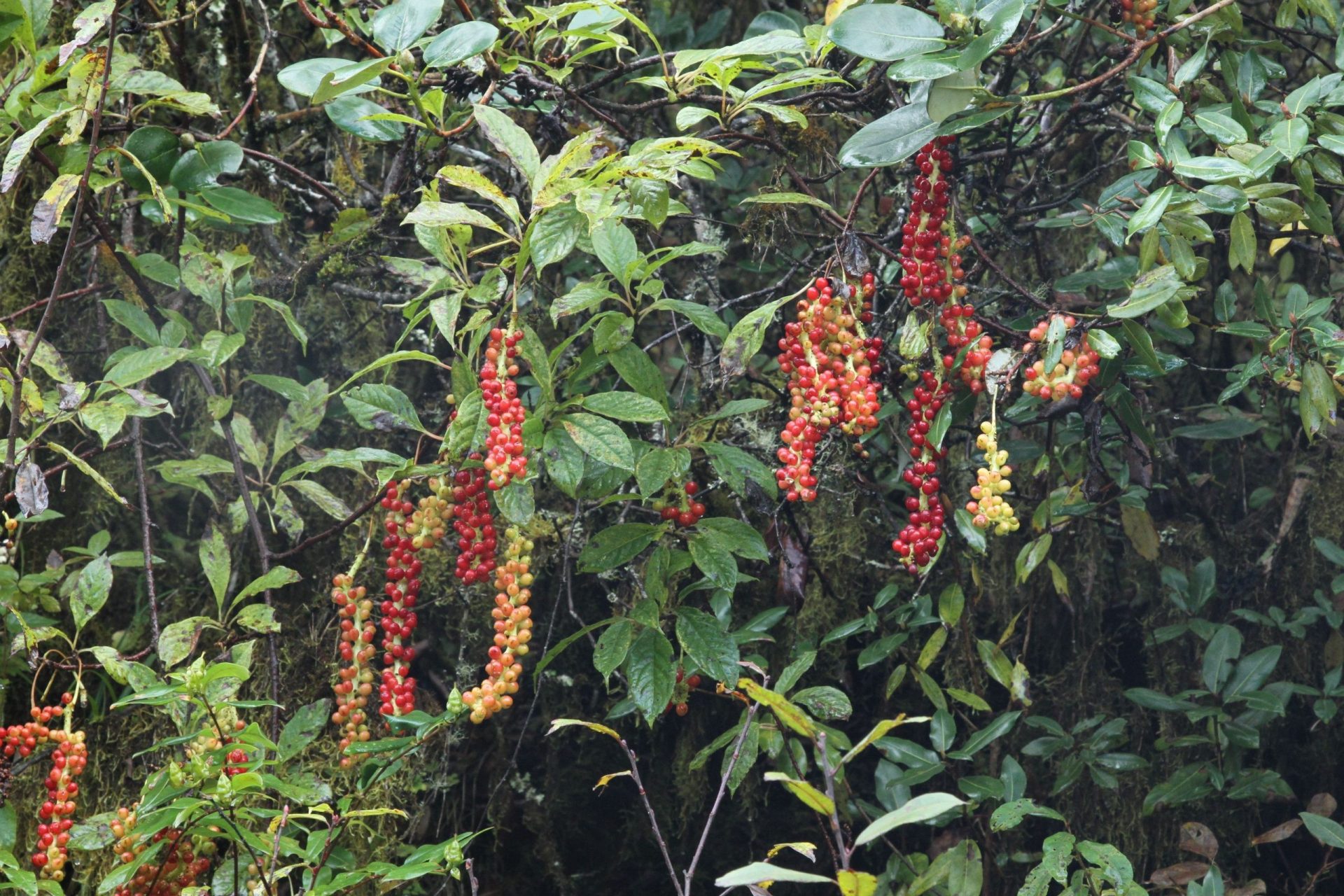
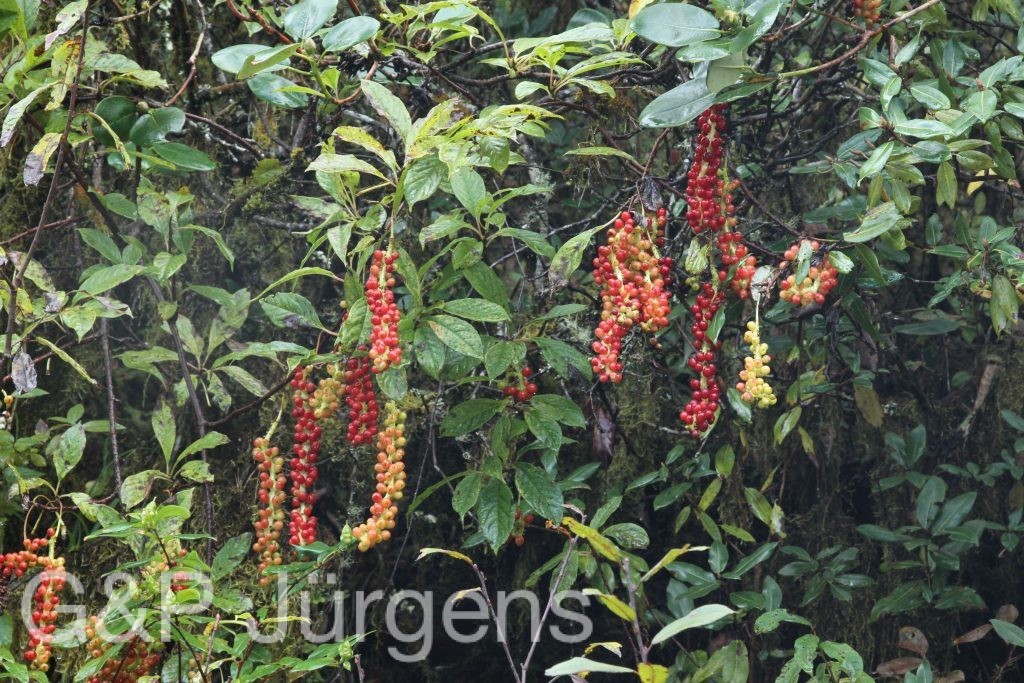
Duranta erecta, commonly called golden dewdrop or pigeon berry, is native to the Neotropics, ranging from Mexico, the Caribbean and Central America through tropical South America to Argentina and Brazil. It has, however, become one of the most widely cultivated and naturalised ornamental shrubs in warm regions worldwide, a fact reflected in its enormous GBIF tally of over nineteen thousand occurrences spanning the Americas, Asia, Africa and Australia. In the Himalaya it occurs only as a cultivated and locally escaping plant; the individual photographed at Phobjika in Bhutan at 2800 m in October represents such a planting in a temperate valley, well above the species' tropical comfort zone, where it is grown as a hedge or garden ornamental and flowers and fruits abundantly in the warm season. It thrives in disturbed ground, gardens, roadsides and waste places, and in many tropical countries is regarded as an invasive weed.
The plant is an evergreen, often spreading shrub or small tree to several metres, with slender, arching, sometimes pendulous and frequently spiny branches that may be four-angled when young. The leaves are opposite or whorled, elliptic to obovate, entire to toothed in the upper half, and light green. The flowers are borne in slender terminal and axillary racemes; the tubular corolla is pale blue to lavender (occasionally white), with five spreading, slightly unequal lobes. The fruit is a glossy, rounded, yellow to orange drupe enclosed by the persistent, beaked calyx, borne in showy pendent clusters; the berries and foliage contain saponins and are toxic to humans and livestock, though birds disperse the seeds freely.
Duranta is a small genus traditionally placed in the Verbenaceae, and D. erecta is its most familiar species, prized horticulturally for its long flowering season, attractive golden fruits and several variegated and golden-leaved cultivars. Its ornamental virtues are matched by a significant ecological downside: through bird-mediated seed dispersal it has become a serious environmental weed in parts of Australia, southern Africa and the Pacific. Its presence in the high Bhutanese Himalaya illustrates the global reach of horticultural commerce, and although frost limits its persistence at such elevations, its weediness elsewhere makes it a species of note for biosecurity rather than conservation.
Author: L. · Sources: POWO (Kew), GBIF, Flora of China Vol. 17, Flora of Bhutan Vol. 2 Part 2, Flora of Nepal, Flora of Pakistan, A Generic Revision of the Verbenaceae (Harold N. Moldenke)