
L.
Description
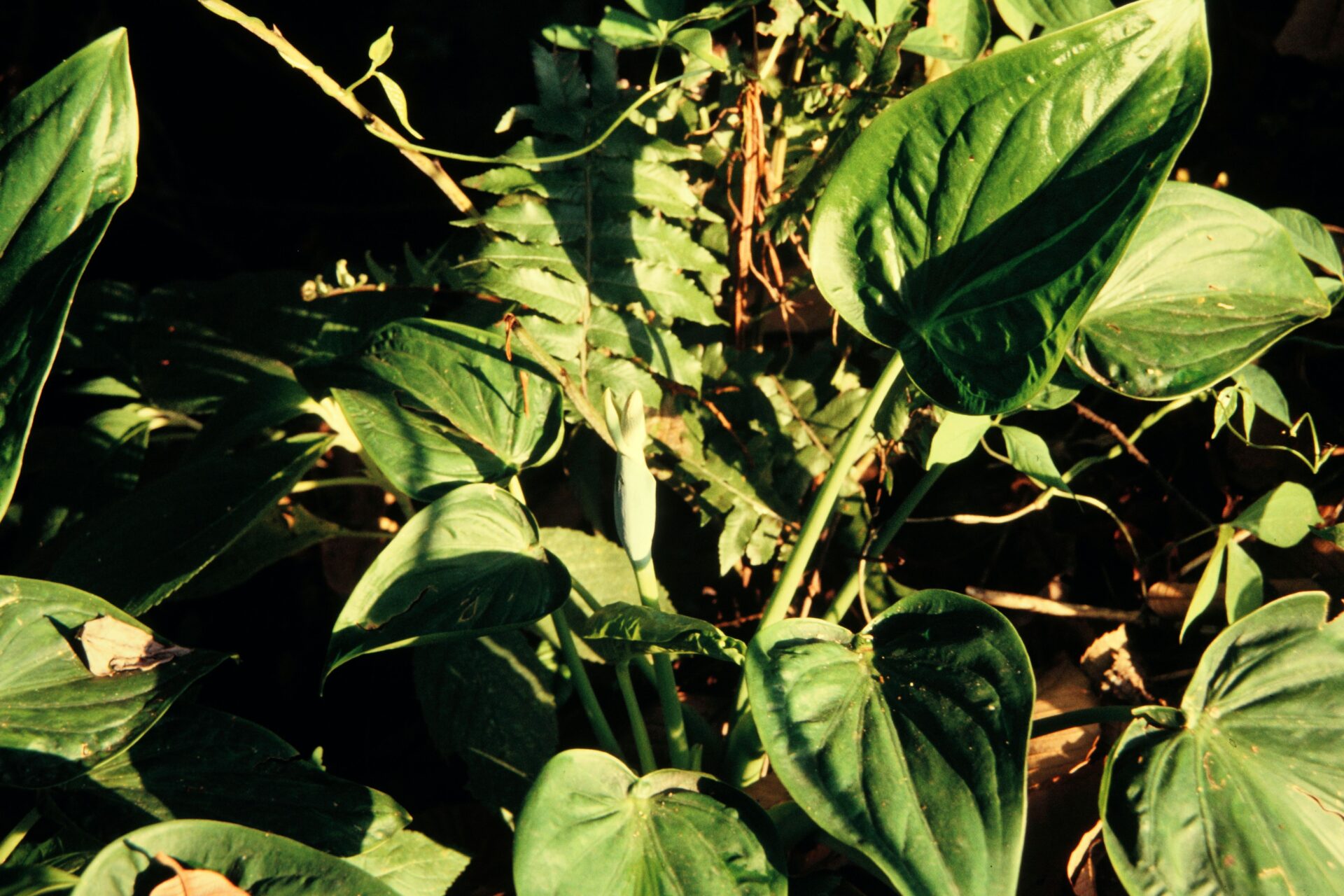
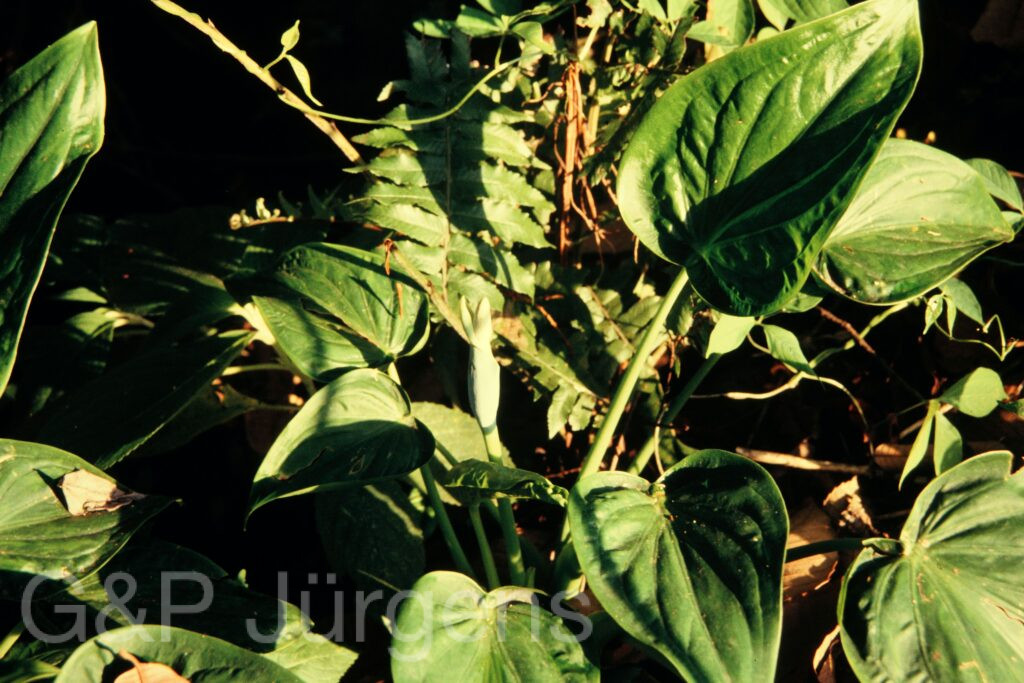
Pontederia hastata is an aquatic to semi-aquatic herb of tropical and subtropical Asia and Australasia, with 931 GBIF occurrences extending from India, Nepal, China and Sri Lanka through Southeast Asia to the Philippines, Papua New Guinea, Fiji and northern Australia. It grows in still and slow-moving fresh water, inhabiting ponds, ditches, marshes, paddy fields and the margins of streams and pools in the lowlands and low hills. The plant recorded along the Sabha-Khola in Nepal at 530 m in May exemplifies its lowland wetland habitat, where it grows rooted in shallow water or mud and flowers in the warm pre-monsoon period.
The species is a perennial, more or less emergent herb arising from a creeping rhizome and rooting at the nodes. The leaves are long-petiolate, the petioles sometimes slightly spongy and inflated, bearing sagittate to hastate blades with diverging basal lobes that give the plant its epithet. The flowers are borne in a dense spike or raceme subtended by a leaf-like spathe; each is bluish to pale violet, with six perianth segments fused below into a tube, six stamens often differing in length, and a tricarpellate ovary. The fruit is a capsule enclosing numerous small seeds dispersed by water.
The taxon has long been known as Monochoria hastata, reflected in the source link, but Monochoria is now subsumed within an enlarged Pontederia on phylogenetic grounds, making Pontederia hastata the accepted name. Like its relatives, the plant is an effective coloniser of disturbed aquatic and agricultural wetlands; it is widely used as a leaf vegetable and remains common, of no conservation concern across its broad range.
Author: L. · Sources: POWO (Kew), GBIF, Flora of China Vol. 24, Flora of Bhutan Vol. 3, Flora of Nepal, Flora of Pakistan, Pellegrini's revision of Pontederiaceae