
Munz
Description
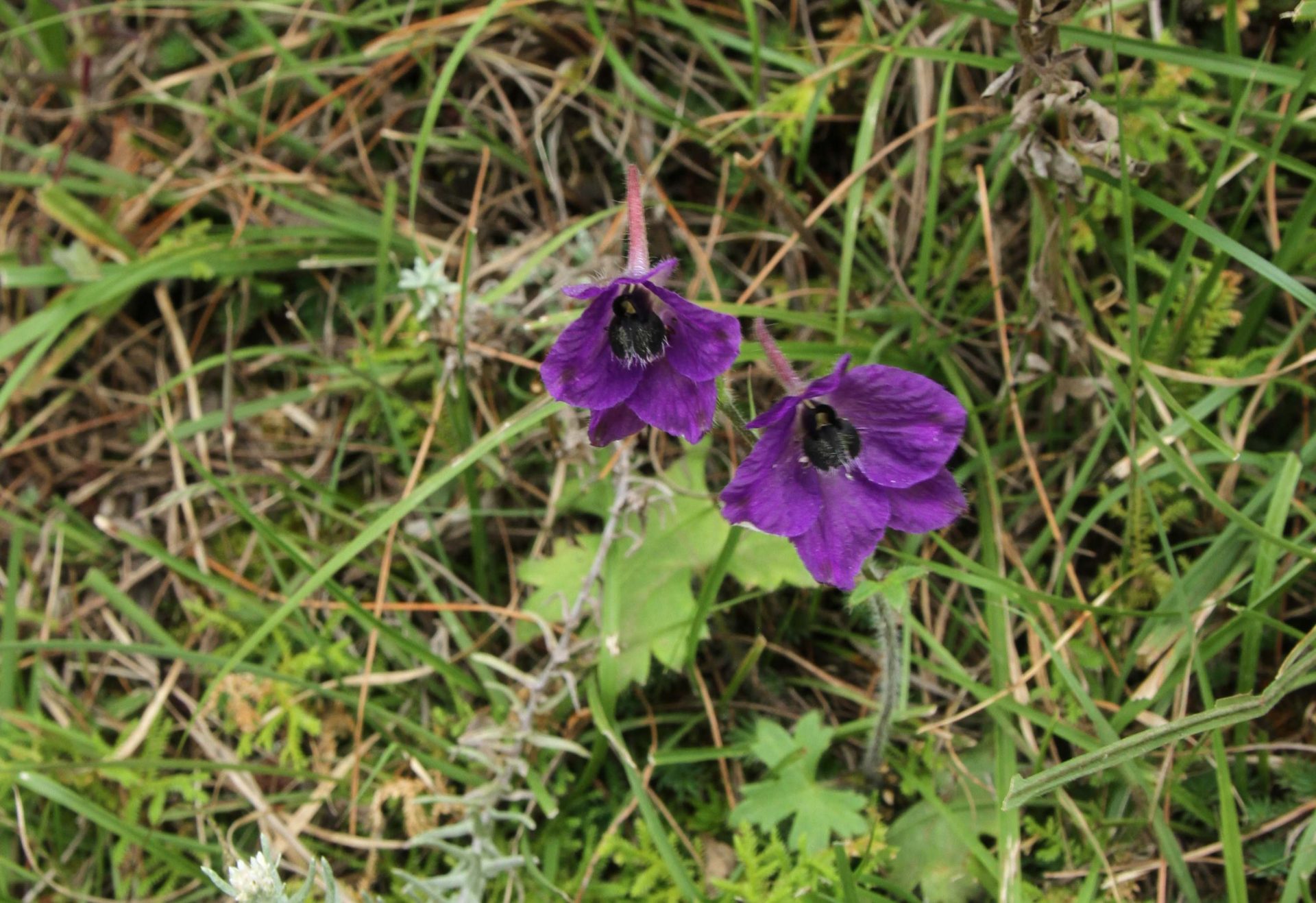
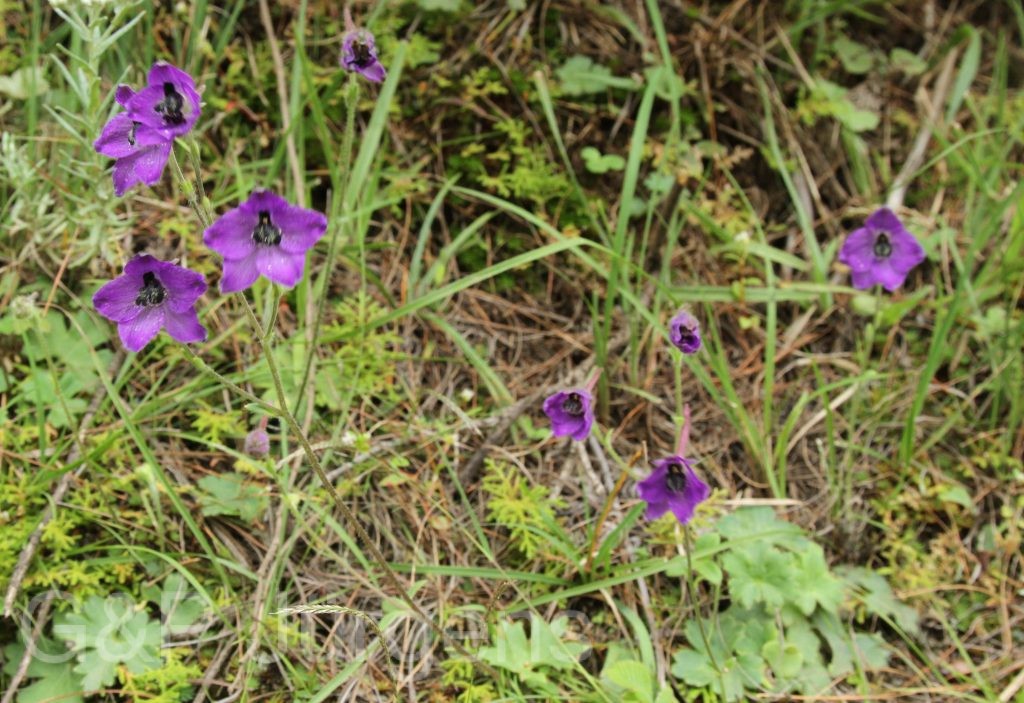
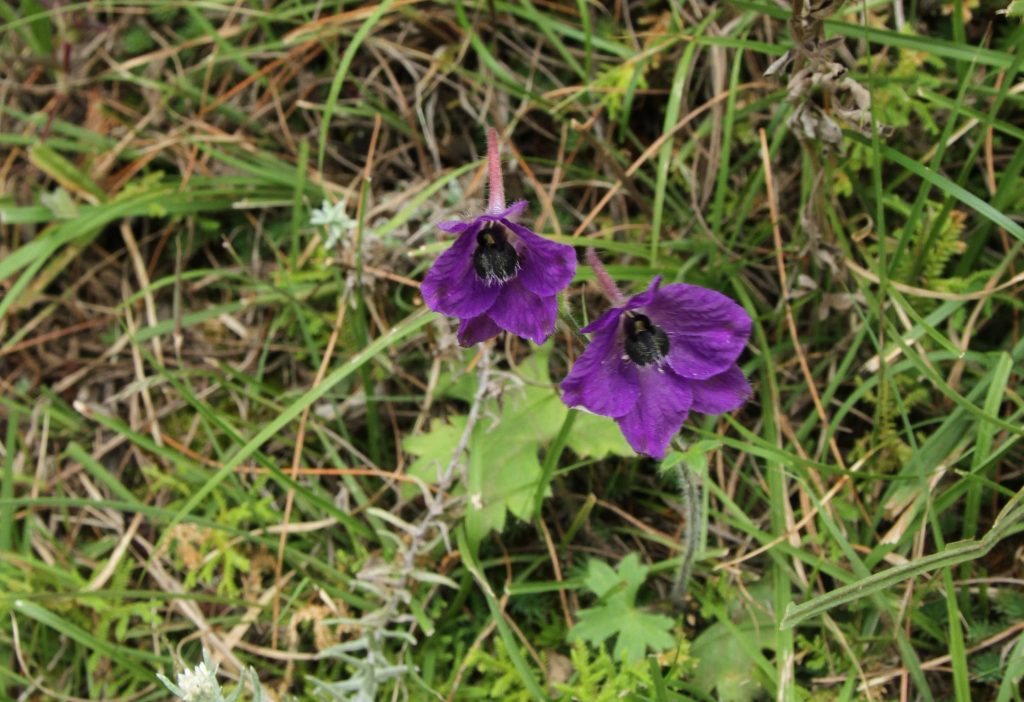
Delphinium cooperi is a Himalayan larkspur of restricted range, recorded principally from Bhutan and Nepal, with only about 42 GBIF occurrences reflecting its narrow distribution. It grows on open alpine and subalpine slopes, meadow margins and among scrub in cool, moist montane settings. The photographed plant in the Haa (Haar) valley of western Bhutan at 3200 m, flowering in September, captures its late-season anthesis in the high inner valleys, where it occupies humus-rich, well-drained ground in a cool, monsoon-influenced climate. Its limited recorded range marks it as a regional endemic of the eastern Himalaya.
The species is an erect perennial herb arising from a fibrous or somewhat thickened rootstock. The leaves are palmately divided into several cuneate, toothed or further-lobed segments, larger and longer-petiolate toward the base and reduced upward. The inflorescence is a terminal raceme of zygomorphic flowers in shades of blue to violet; as in all Delphinium the upper sepal is prolonged backward into a conspicuous spur that encloses the nectariferous petal spurs. Stamens are numerous and the gynoecium of free carpels matures into a cluster of erect, many-seeded follicles that split along the inner suture to shed angular seeds.
Delphinium belongs to the buttercup family Ranunculaceae, within the tribe Delphinieae characterised by spurred, bilaterally symmetrical flowers. The long-spurred corolla of D. cooperi is adapted to pollination by long-tongued bumblebees that probe the nectar spurs. As with many members of the genus, the plant contains toxic diterpenoid alkaloids that deter grazing. Given its apparently narrow eastern-Himalayan range and modest population records, the species warrants attention as a potentially vulnerable regional endemic dependent on intact subalpine habitat.
Author: Munz · Sources: POWO (Kew), GBIF, Flora of Bhutan, Annotated Checklist of the Flowering Plants of Nepal, Munz Delphinium monograph