
DC.
Description
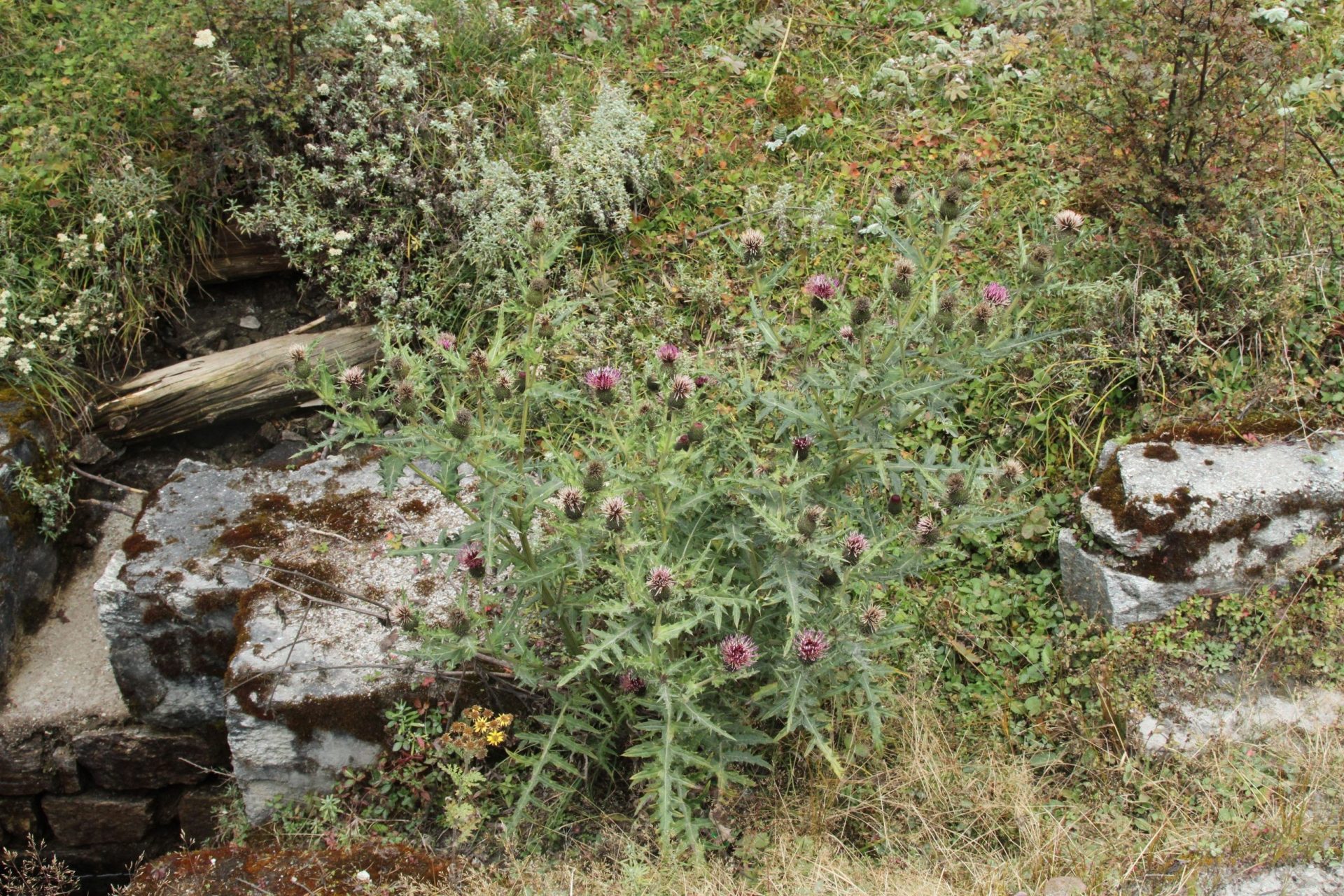
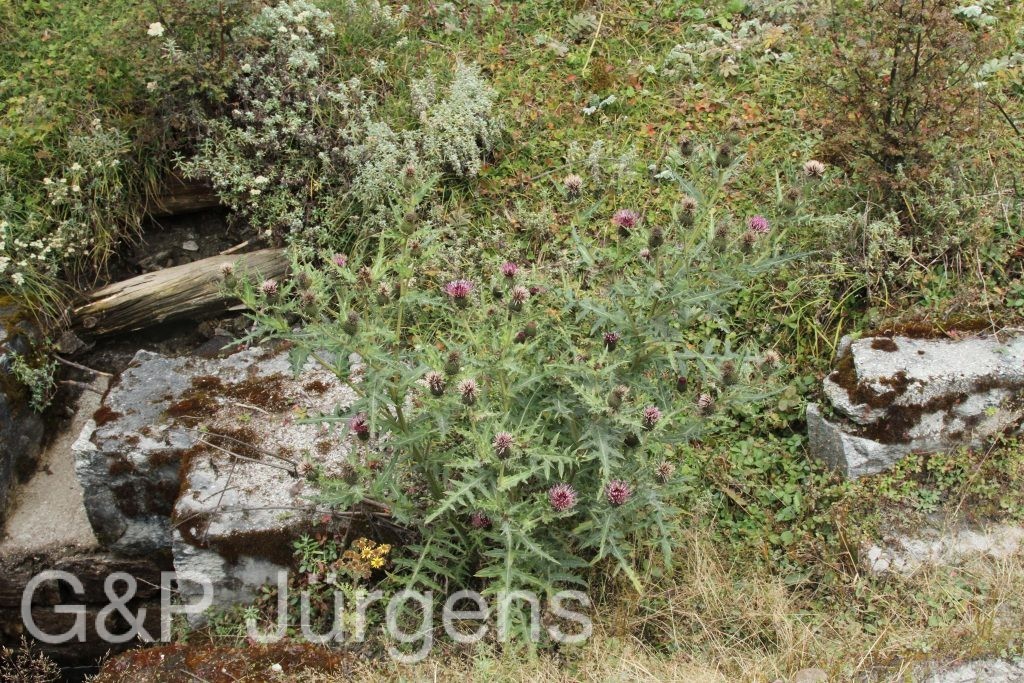
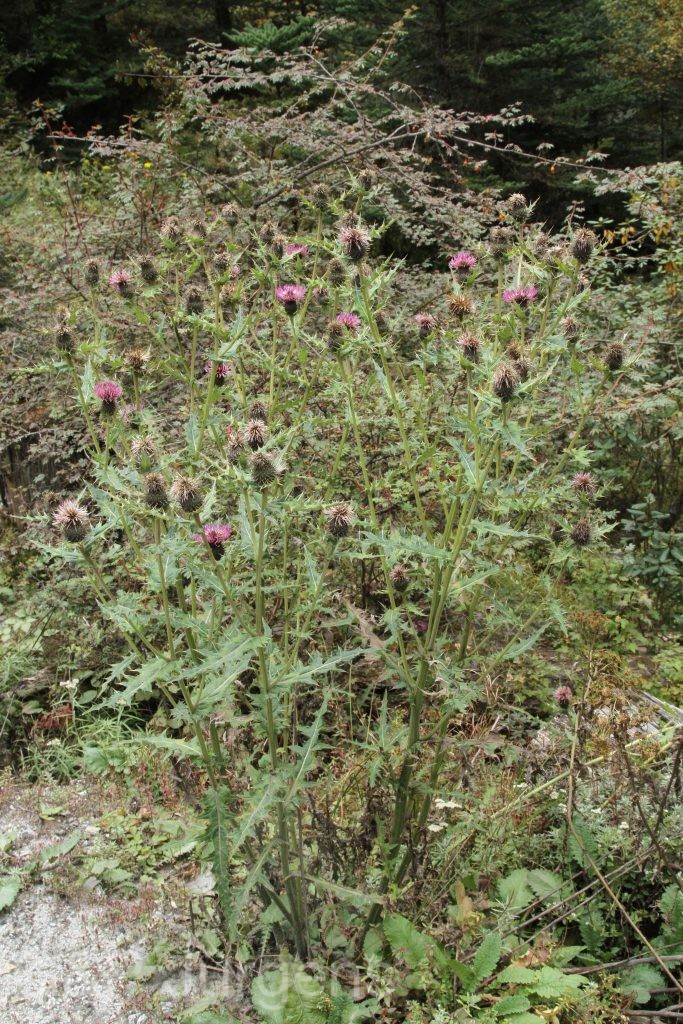
Cirsium argyracanthum is a Sino-Himalayan thistle distributed across China, India, Nepal, Afghanistan, Bhutan and Pakistan, with GBIF holding around 150 occurrences along this mountain belt. It is characteristic of open, sunny, frequently disturbed ground in the temperate and subalpine zones, growing on grassy slopes, pasture, fallow fields, trackside banks and forest clearings where grazing keeps the sward open. The cited records from the Pele-La pass at 2900 m and from Jakar in central Bhutan at 3100 m, both in October, illustrate its occurrence in upper temperate to subalpine settings, where it persists and fruits late into the autumn after the main summer flowering.
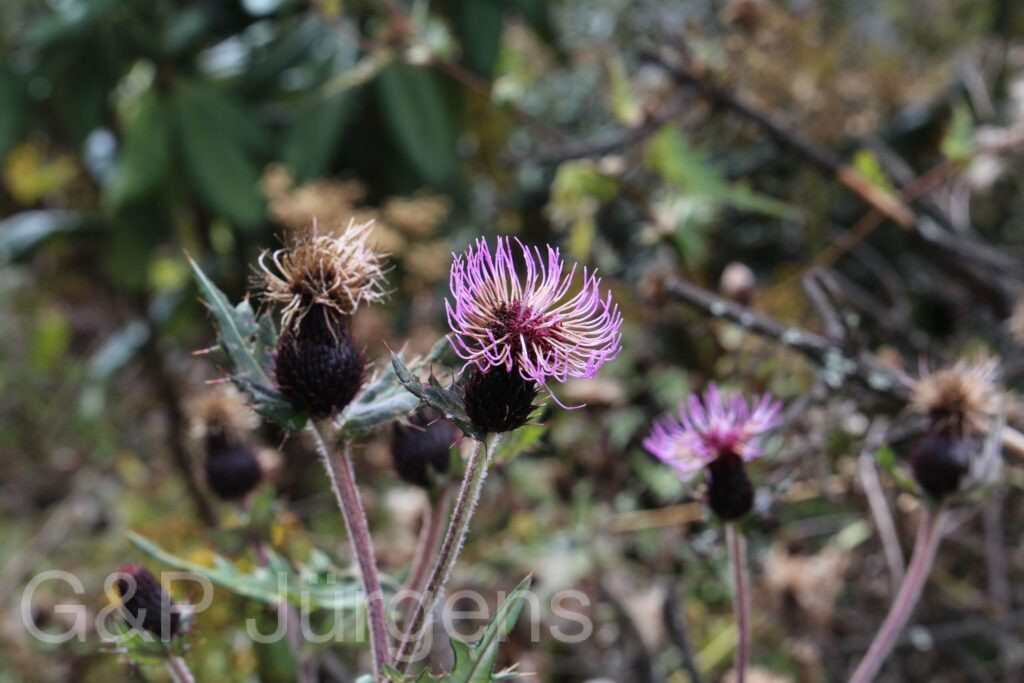
It is a stout biennial or perennial herb with an erect, longitudinally ribbed, spiny-winged stem. The leaves are oblong to lanceolate in outline, pinnatifid to pinnatisect with spinose-toothed lobes, the upper surface green and the lower paler and thinly tomentose, the margins armed with stiff spines. The capitula are discoid and ovoid, solitary or few at the branch tips, subtended by spiny upper leaves; the involucre bears numerous imbricate phyllaries tipped with conspicuous silvery, spreading spines that give the species its epithet. The florets are all tubular and bisexual, purple to pinkish. The cypselae are oblong and smooth, crowned by a pappus of long, plumose bristles aiding wind dispersal.
Within the large, taxonomically intricate genus Cirsium (tribe Cardueae), C. argyracanthum is distinguished by its silvery-spined involucre, and it has often been confused with related Himalayan thistles such as C. verutum, reflecting the difficulty of delimiting species in this group. Its spiny defences deter grazing, while the purple heads attract bees and butterflies. As a tolerant plant of disturbed montane habitats it is widespread and secure, of no conservation concern across its range.
Author: DC. · Sources: POWO (Kew), GBIF, Flora of Bhutan, Flora of China, Annotated Checklist of the Flowering Plants of Nepal, Petrak's revision of Asiatic Cirsium (Cardueae)