
Willd. ex Schult.
Description
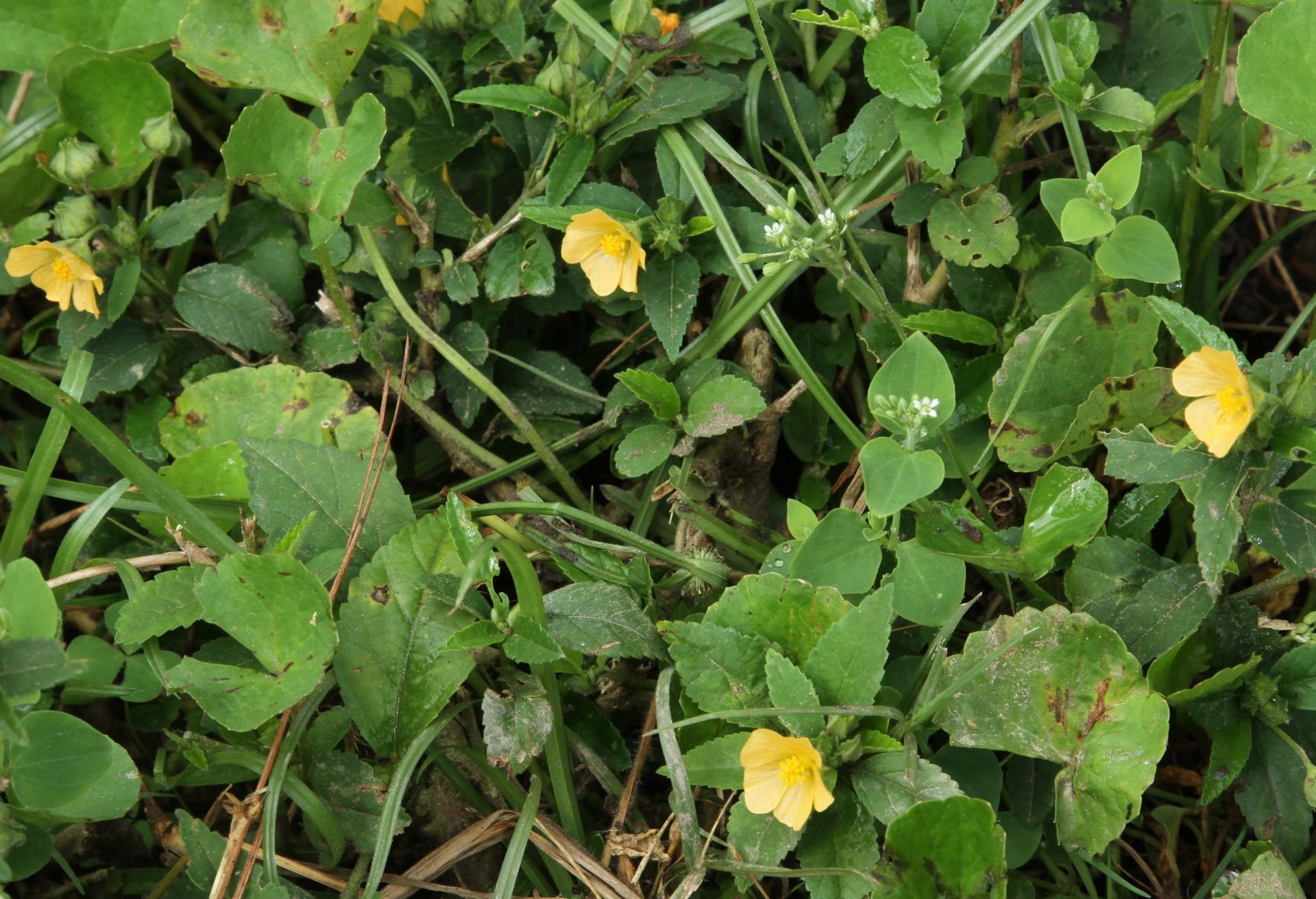
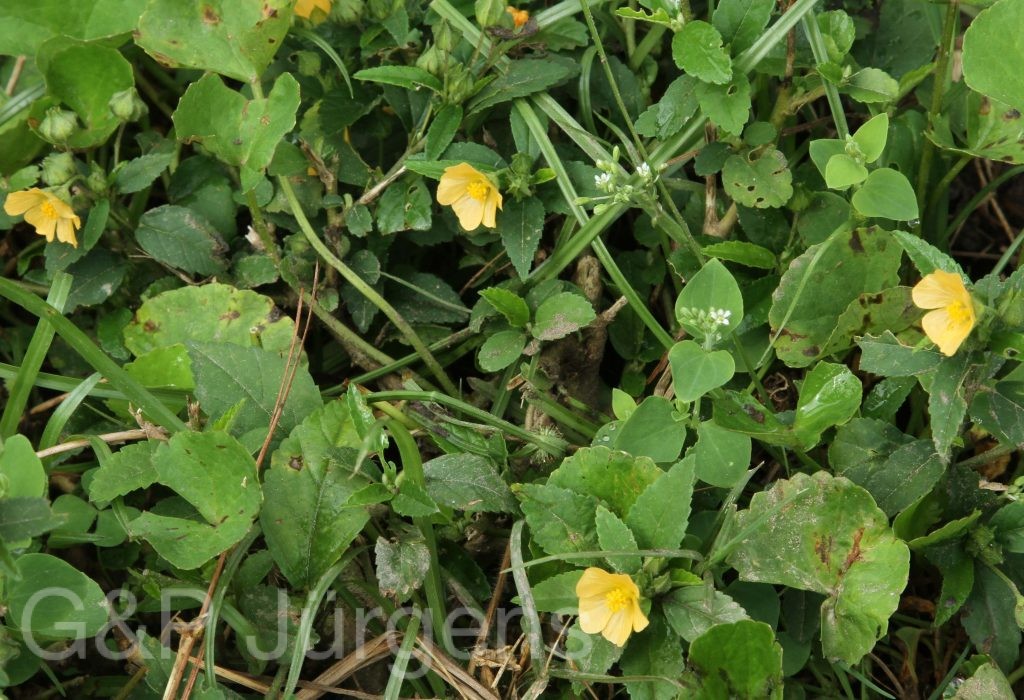
Drymaria cordata, the heartleaf or tropical chickweed, is a pantropical weed of Neotropical origin now naturalised throughout the warmer regions of the world, with nearly 14,000 GBIF occurrences spanning the Americas (United States, Brazil, Mexico, Colombia, Ecuador, Peru, Panama), Africa (South Africa, Cameroon, Tanzania, the Congo basin, Réunion), tropical Asia (Taiwan, China, India, Indonesia) and Australia and Papua New Guinea. It is a ubiquitous colonist of moist shaded ground – forest floors, plantations, gardens, roadsides and stream banks – from the lowlands into the lower hills, and in Bhutan, the source of the cited image, it occurs as a common weed of cultivated and disturbed warm-temperate sites.
It is a slender, straggling annual or short-lived perennial with weak, diffusely branched stems that root at the lower nodes and form loose tangles. The leaves are opposite, broadly ovate to orbicular-cordate, thin, three- to five-veined from the base, with small membranous stipules characteristic of the tribe. The flowers are tiny, borne in lax leafy-bracted cymes; each has five free green sepals, five deeply bifid white petals shorter than the sepals, few stamens and a superior ovary. The fruit is a small ovoid capsule splitting into three valves to release minute, tuberculate, horseshoe-shaped seeds, which together with glandular hairs aid epizoochorous dispersal.
Within Caryophyllaceae, Drymaria is allied to Stellaria but distinguished by its stipulate, broad cordate leaves and bifid petals. D. cordata is a notorious tropical agricultural weed, dispersed clinging to clothing, animals and soil, and is of management rather than conservation concern.
Author: Willd. ex Schult. · Sources: POWO (Kew), GBIF, Flora of China, Flora of Bhutan, Flora of Tropical East Africa, Duke monograph of Drymaria