
Thunb.
Description
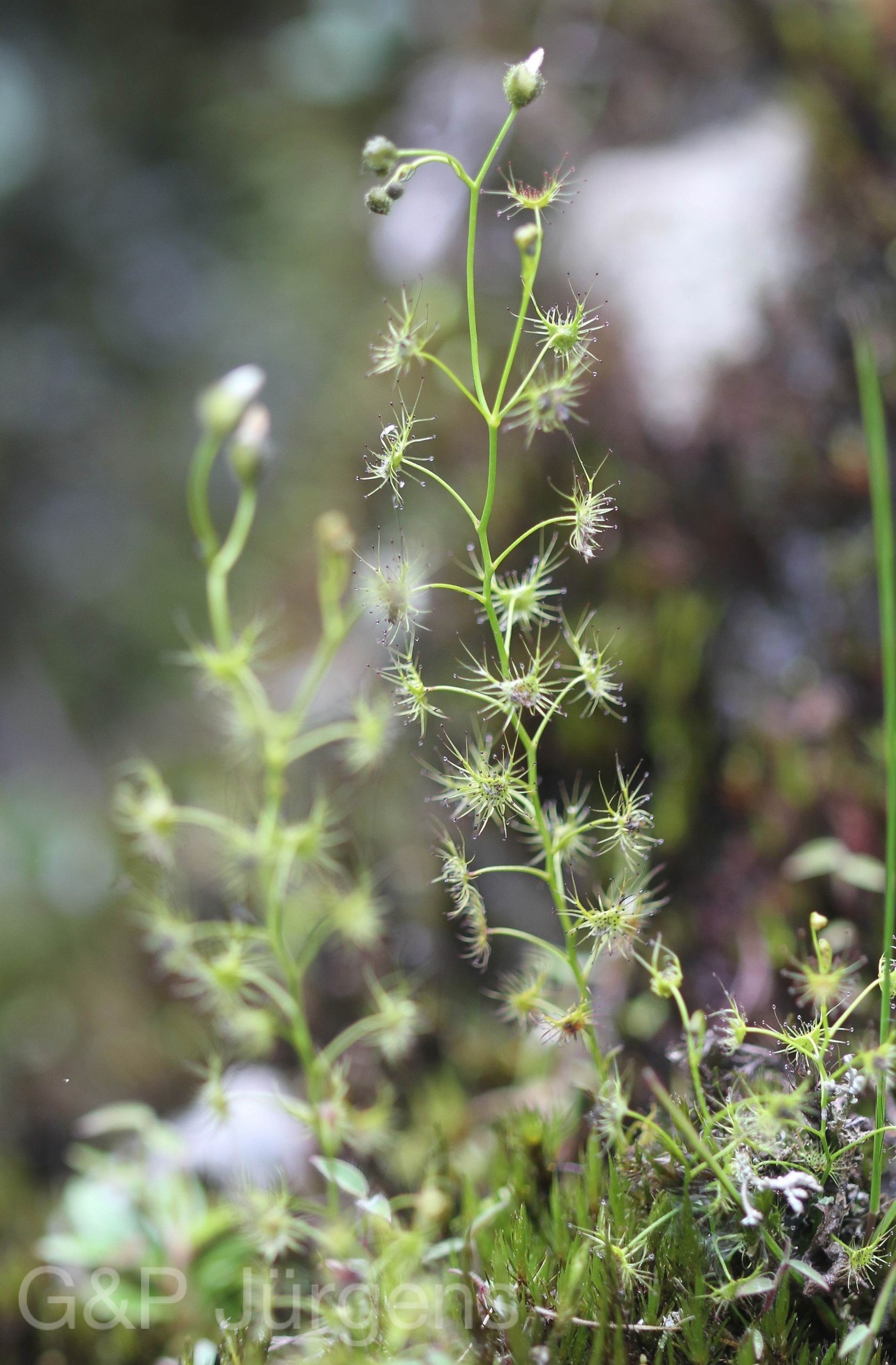
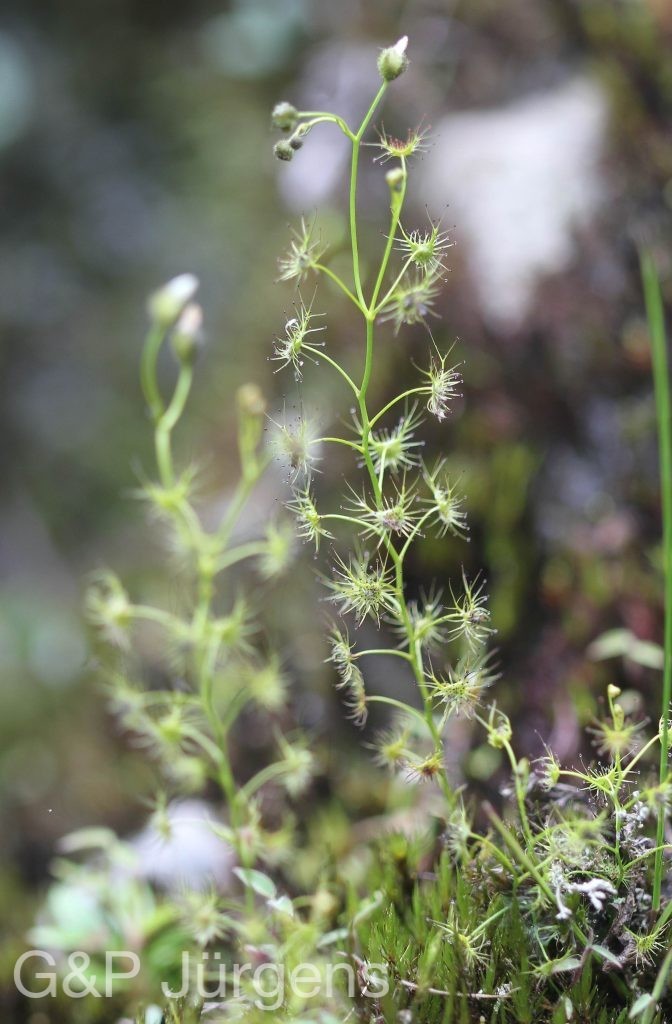
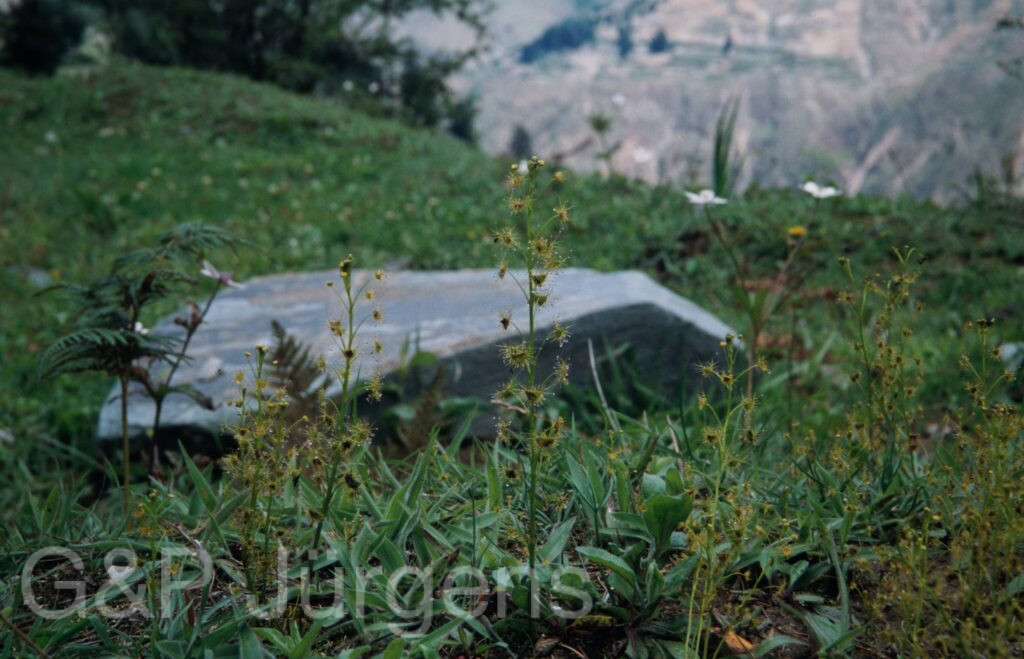
Drosera peltata is one of the most widely distributed of all sundews, a carnivorous herb ranging from Australia and New Zealand through East and Southeast Asia to the Himalaya, with GBIF holding an exceptional 32363 occurrences across Australia, China, Japan, India, Nepal, Thailand, Indonesia, the Philippines, Korea and many further countries. In the Himalaya it grows in open, wet, nutrient-poor situations: boggy grassland, mossy banks, seepage slopes, marshy meadows and damp roadside cuttings, generally between 1500 and 3000 m. The localities cited for the image, Lachung in Sikkim at about 2600 m in June and Juphal in West Nepal at around 2550 m in July, are typical mid-montane wet-meadow sites where the plant flowers during the early monsoon.
Unlike the rosette-forming sundews, D. peltata is an erect, often tuberous-rooted herb whose slender stem bears alternate, peltate to lunate leaves on long petioles. The leaf blades are crescent-shaped and clothed on their margins and upper surface with stalked glandular hairs (tentacles) tipped with glistening mucilaginous droplets that entrap small insects; the tentacles then bend inward and the leaf secretes enzymes to digest the prey. Basal rosette leaves may be present at germination but wither as the stem elongates. The inflorescence is a one-sided raceme of small white to pinkish five-merous flowers, opening in bright sunshine, and the fruit is a small capsule with numerous minute seeds.
Droseraceae are carnivorous, and the tuberous, stem-forming peltata complex constitutes a distinctive lineage within Drosera that has been variously subdivided into segregate species and subspecies by different authors, making it one of the more taxonomically contentious sundew groups. Insect capture supplies nitrogen and phosphorus otherwise scarce in the acidic, waterlogged soils it inhabits, and the underground tuber permits dormancy through dry or unfavourable seasons. Given its enormous geographic range the species as a whole is of no conservation concern, although individual Himalayan wetland populations are locally susceptible to drainage and habitat loss.
Author: Thunb. · Sources: POWO (Kew), GBIF, Flora of China Vol. 8, Flora of Bhutan Vol. 1, Flora of Nepal, Lowrie Carnivorous Plants of Australia Magnum Opus