
Wall. ex G. Don
Description
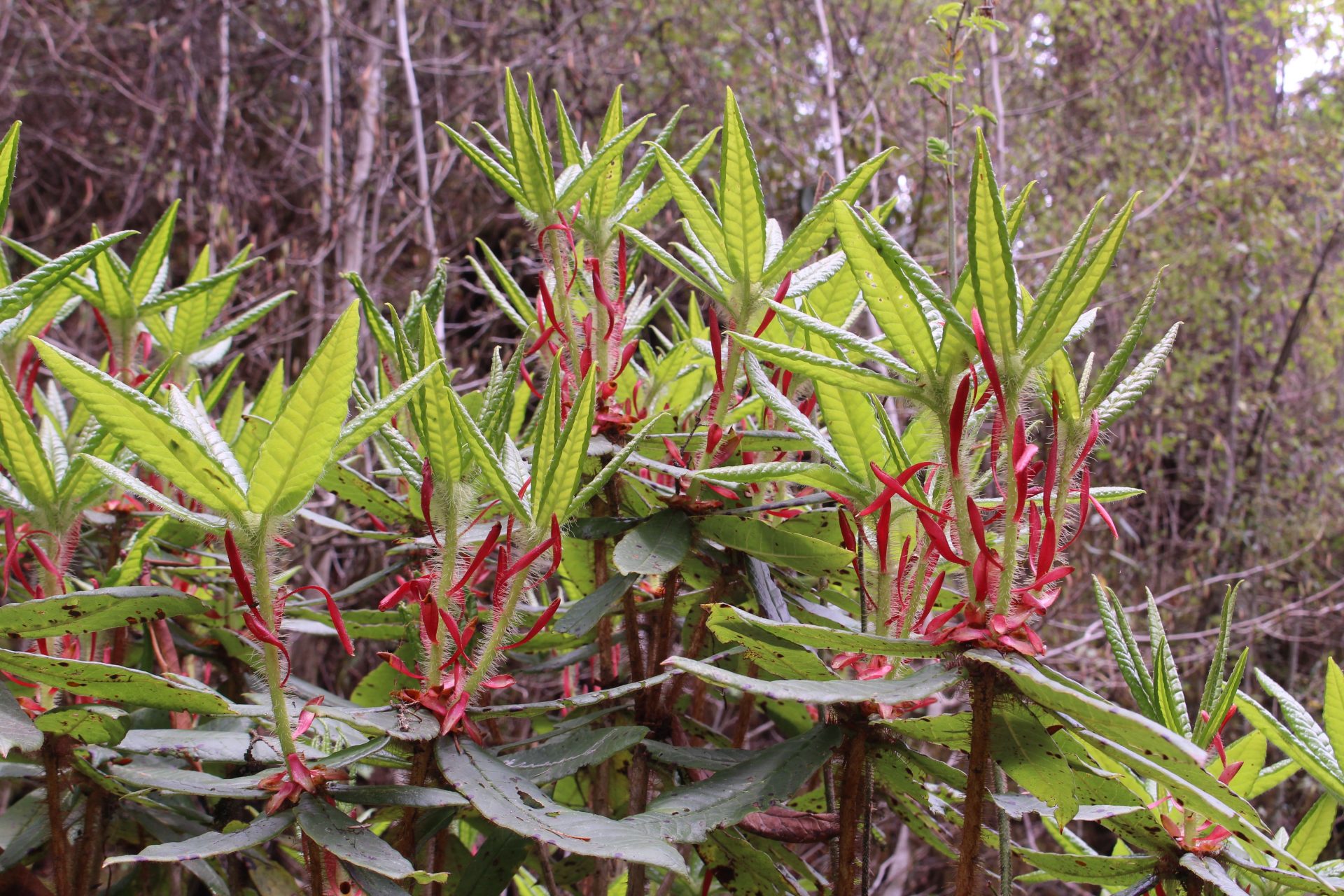
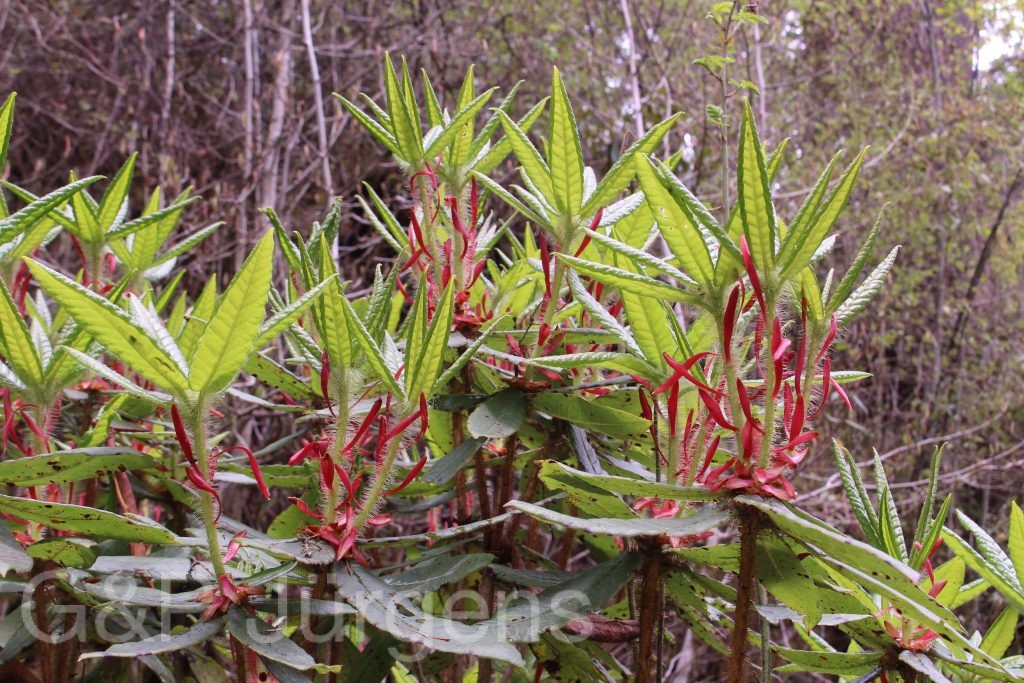
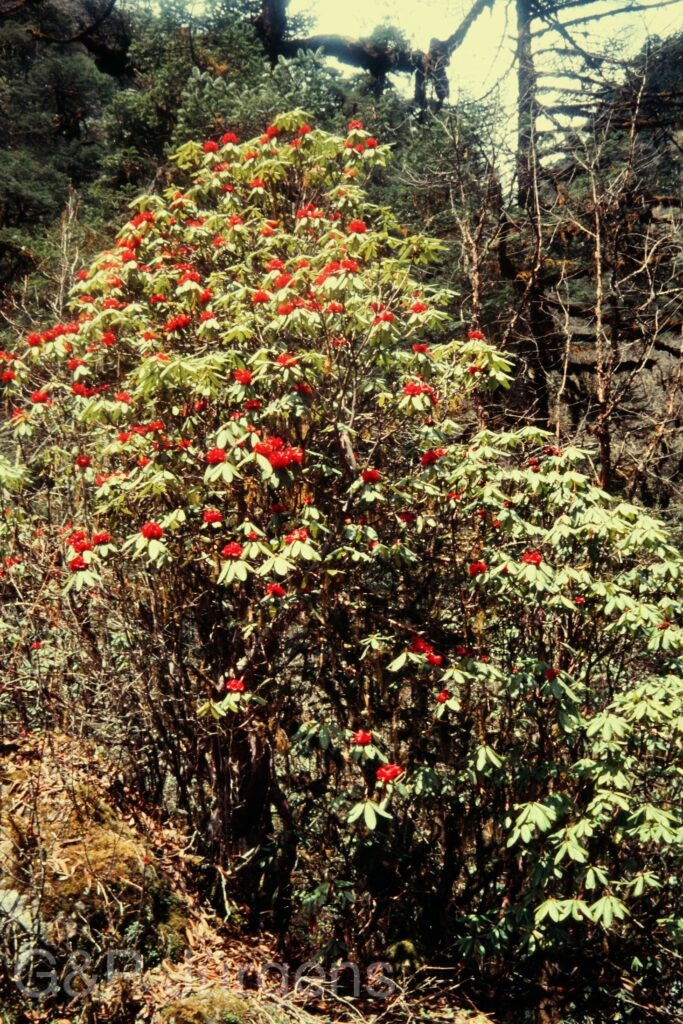
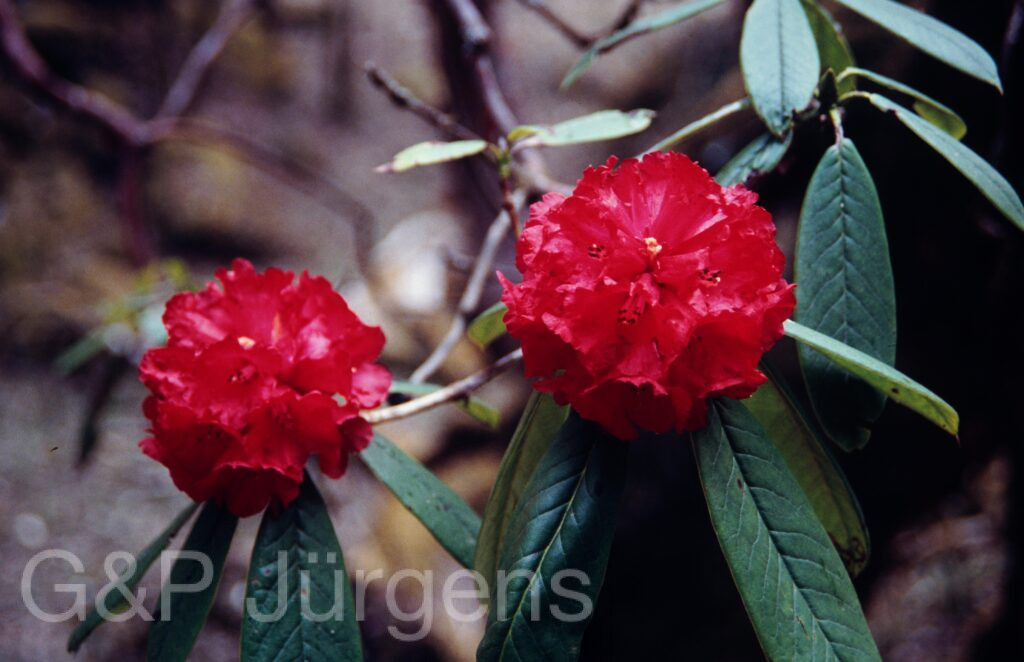
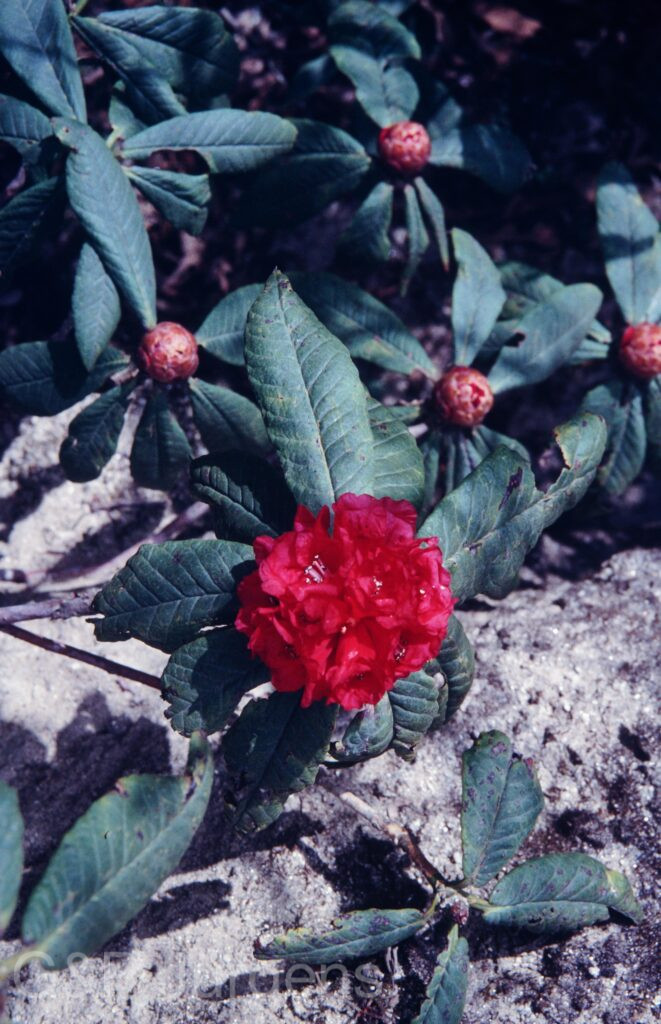
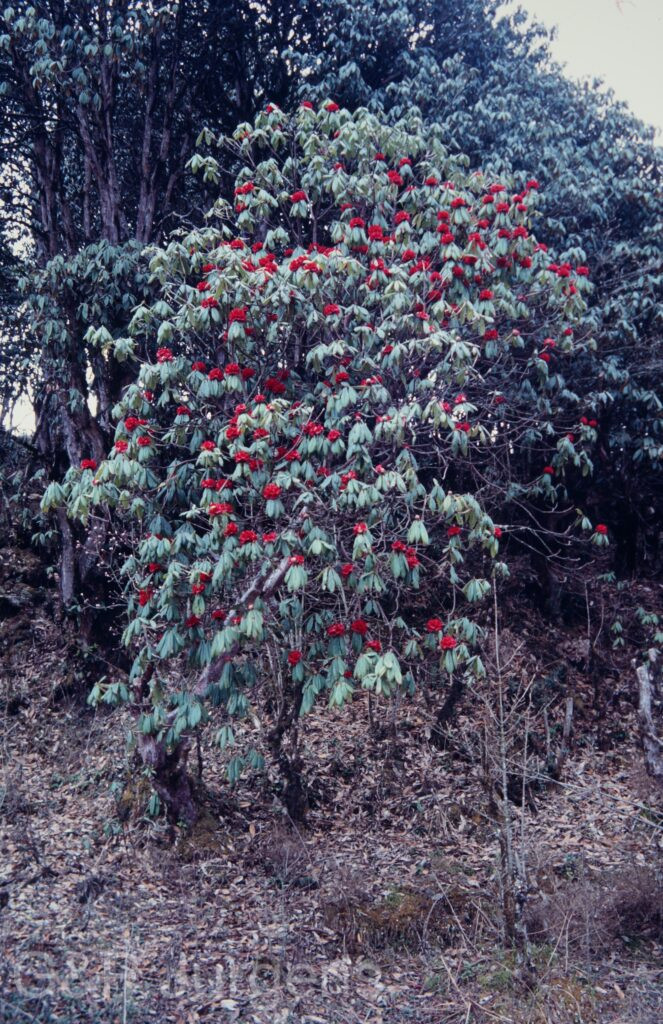
Rhododendron barbatum is a tree-forming rhododendron of the central and eastern Himalaya, distributed through Nepal, India, China and Bhutan, with about 509 occurrence records (those reported from Britain, North America and Korea reflecting its long history in cultivation). It forms a major component of temperate broadleaf and conifer forests, often dominating moist, north-facing slopes and ridge crests, generally between about 2400 and 3700 m. The photographed plants—Gogona in Bhutan at 2950 m in May, and Mewa-Khola and Milka Danda in eastern Nepal at 2800 m in March and April—illustrate its early-spring flowering in these mid-montane forests.
It is an evergreen shrub or small tree with smooth, peeling, reddish-brown to purplish bark, a striking feature of mature trunks. Young shoots and petioles bear conspicuous stiff bristles, the "barbate" character giving the species its name. The leaves are leathery, oblong-elliptic to obovate, glabrous and dark green above and pale beneath. The flowers are borne in dense, rounded terminal trusses; the corolla is tubular-campanulate and a vivid blood-red, with darker nectar pouches at the base, and the calyx is enlarged and coloured. The fruit is a woody, curved, several-valved capsule releasing many minute seeds.
Rhododendron barbatum, described from Wallich's material by G. Don, belongs to subgenus Hymenanthes, the large-leaved "true" rhododendrons, and hybridises in cultivation with allied red-flowered species. Its early bloom is an important nectar source for high-altitude birds and insects. Although widespread and locally abundant, Himalayan forest rhododendrons face pressure from fuelwood cutting, grazing and a warming climate altering the temperate forest belt.
Author: Wall. ex G. Don · Sources: POWO (Kew), GBIF, Flora of China (Ericaceae), Annotated Checklist of the Flowering Plants of Nepal, Grierson & Long Flora of Bhutan, Royal Botanic Garden Edinburgh's Revision of the Genus Rhododendron