
Kunth
Description
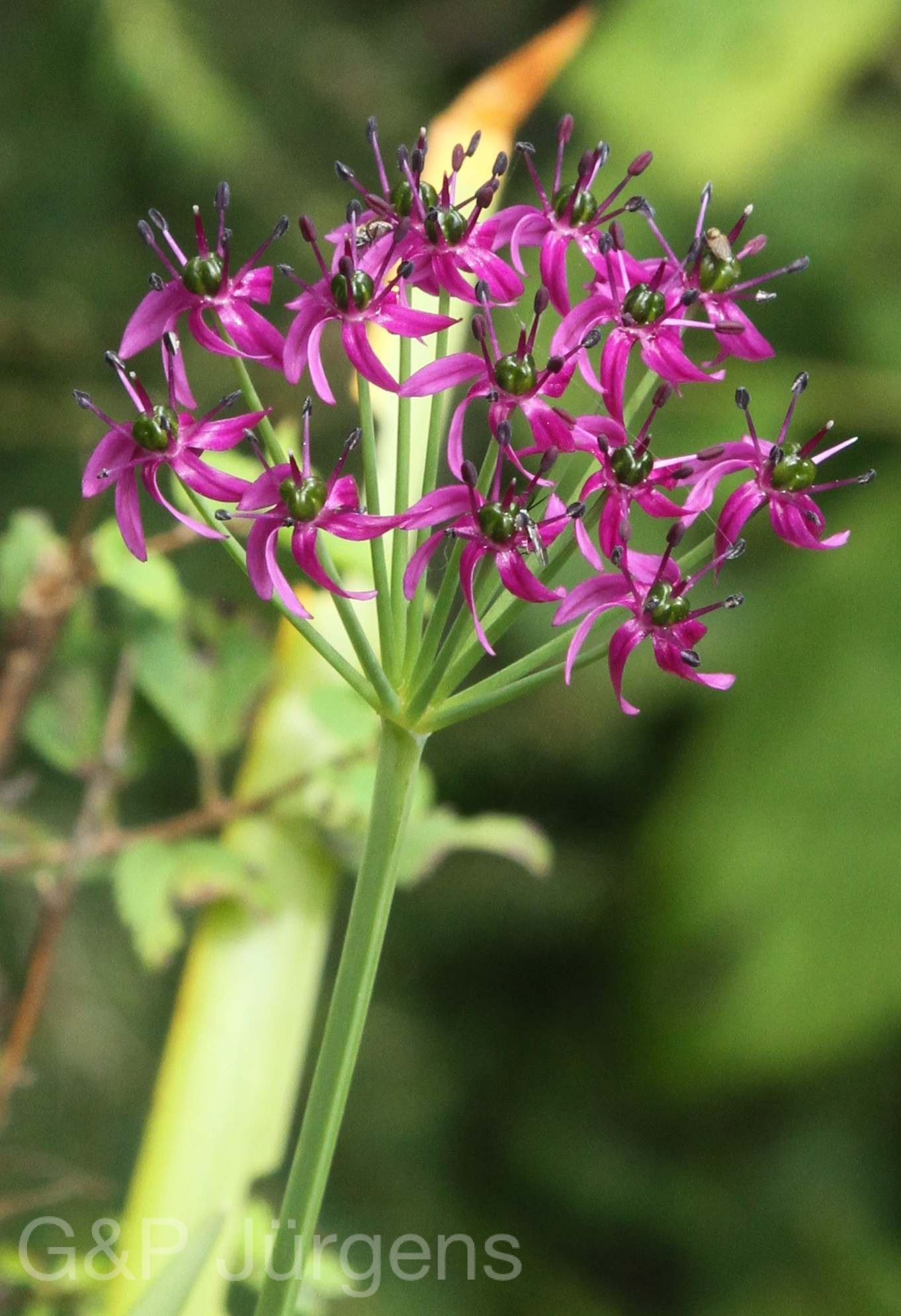
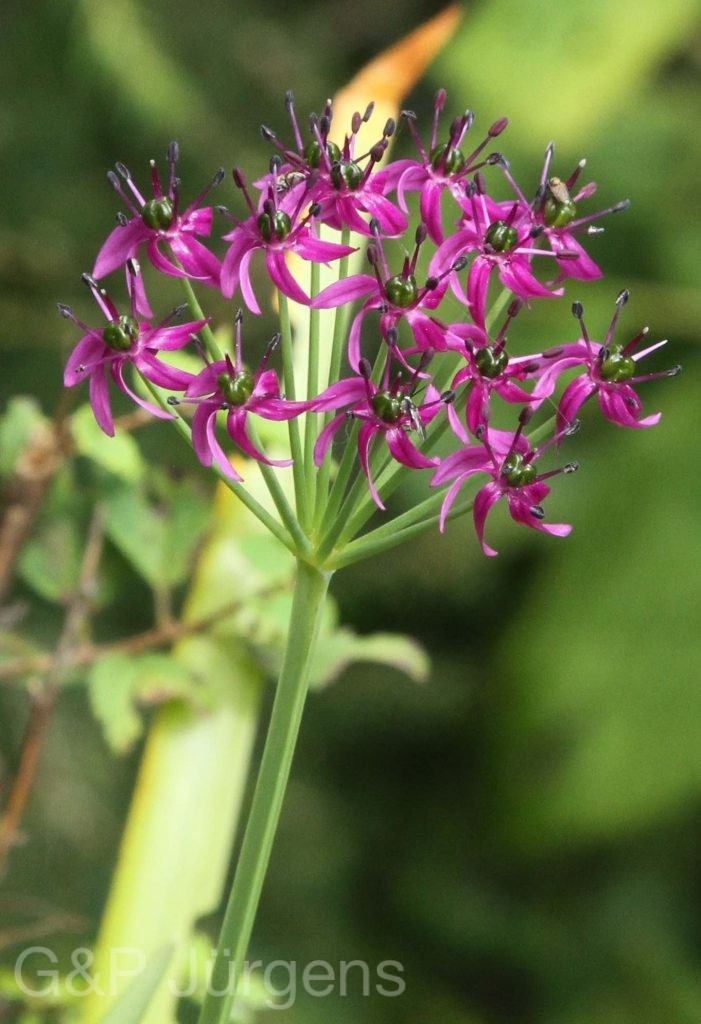
Allium wallichii is a Himalayan and Sino-Himalayan onion widely distributed through SW China, Nepal, NE India, Bhutan, Myanmar and Pakistan, GBIF recording around 1,300 occurrences (with cultivated records reaching Europe). It is a plant of the subalpine and alpine zone, growing in open meadows, grassy slopes, forest clearings and damp pastures, generally between about 2,300 and 4,800 m. The photographed plant from Chele-La in western Bhutan at 3,400 m (September) is characteristic, flowering in the late-monsoon period when the high meadows are at their richest.
It is a perennial herb arising from a slender, oblique rhizome bearing a poorly developed, narrowly conic bulb. The leaves are basal, several, narrowly linear to lorate and flat or shallowly keeled, sheathing the lower part of the triangular or angled scape. The inflorescence is a terminal, many-flowered umbel that is hemispherical to globose and lacks bulbils; the flowers are stellate, with six spreading purple to reddish-purple (rarely whitish) tepals, exserted stamens and a superior ovary. The fruit is a small loculicidal capsule.
The family is given verbatim as Alliaceae, the segregate now generally subsumed within Amaryllidaceae subfamily Allioideae. Allium wallichii is gathered as a wild vegetable and flavouring (jimbu and related condiments) across the Himalaya and is used medicinally, which together with grazing places local pressure on accessible populations. The species is morphologically variable across its wide range, and its rhizomatous, non-bulbous habit and flat leaves distinguish it within the alpine Himalayan alliums; it is not currently regarded as globally threatened.
Author: Kunth · Sources: POWO (Kew), Flora of Bhutan Vol. 2, GBIF, Flora of China Vol. 24, Stearn: The Genus Allium in the Himalaya