
Paxton & Lindl.
Description
Calanthe griffithii is a terrestrial orchid of the eastern Himalayas, named in honour of William Griffith, whose botanical collections from Bhutan and Assam in the 1830s–40s remain foundational for Himalayan botany. The species is distributed from Pakistan through Nepal, northeast India, and Bhutan to southwest China. It inhabits cool, moist montane forests and Rhododendron scrub at 1,600–3,500 m elevation, typically growing in deep humus under dense canopy shade.
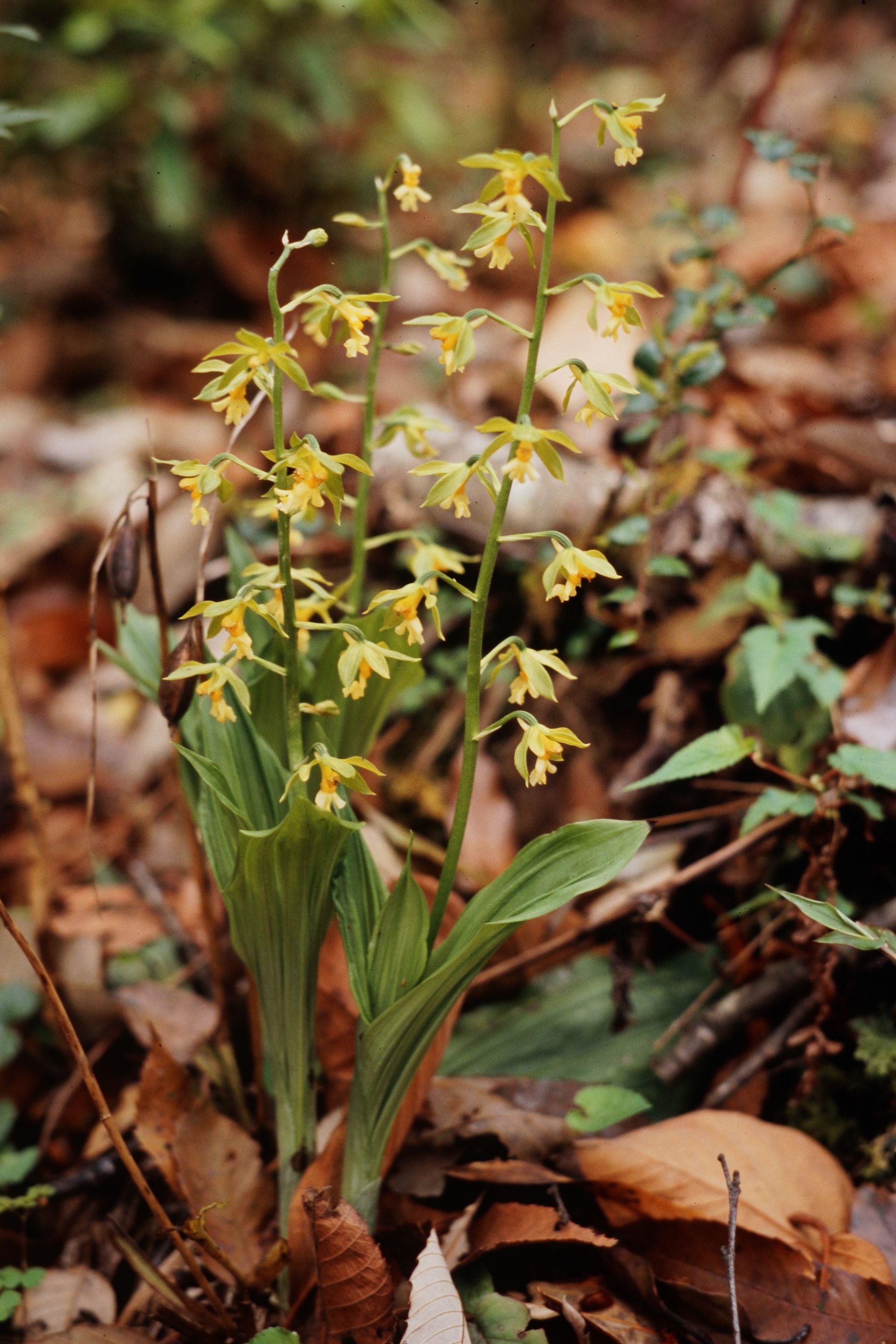
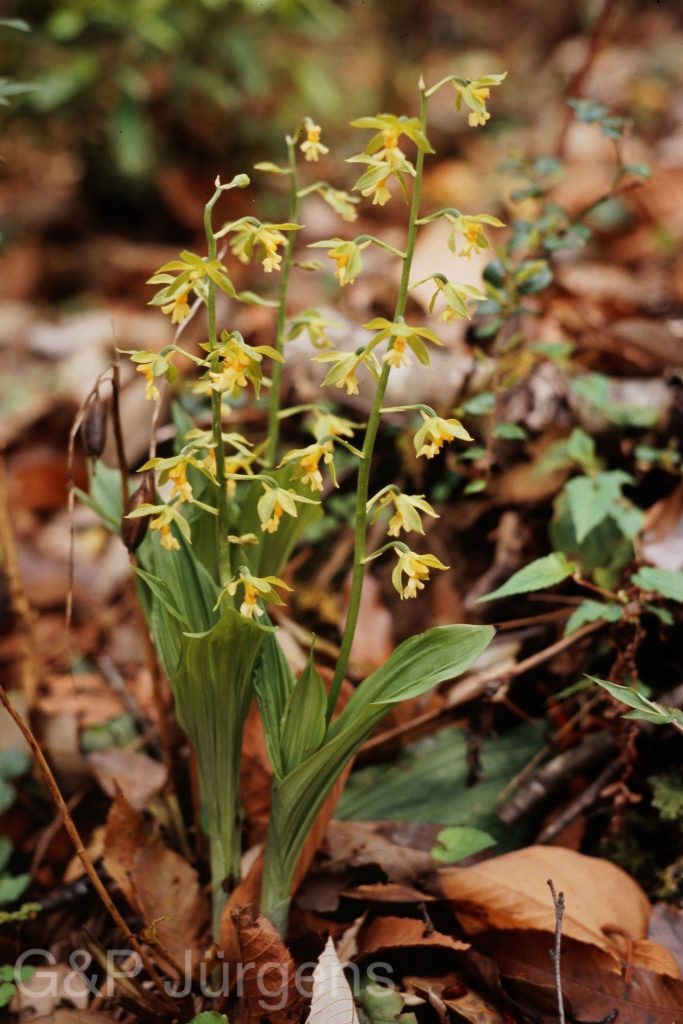
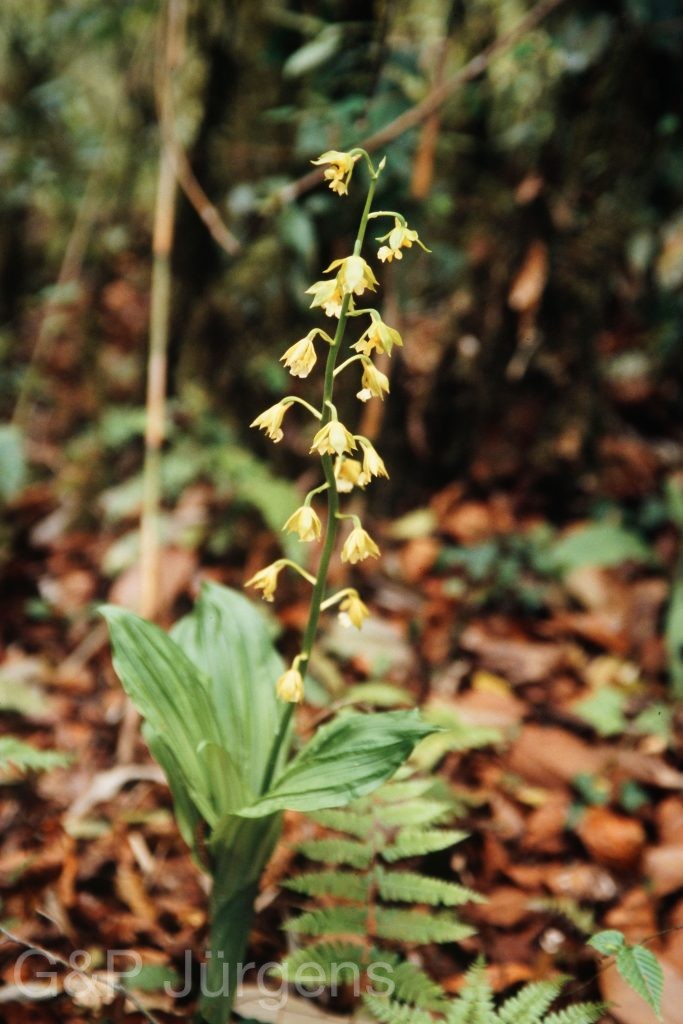
This is an evergreen Calanthe with short, inconspicuous pseudobulbs. The leaves are 3–5, broadly elliptic, 15–30 cm long, plicate, and persist through winter. The inflorescence is an erect, pubescent raceme 15–30 cm tall, emerging before or with the new leaves. The flowers are 2–3 cm across, typically pale yellow to greenish-yellow, sometimes with a pinkish tinge. The lip is trilobed, the mid-lobe bifid, with raised yellow lamellae on the disc. The spur is slender, 1–1.5 cm long. Flowering in Bhutan occurs from March to May.
The collection locality at Gogona (3,400 m) in Bhutan represents the high-altitude forests of the inner valleys where C. griffithii flowers early in the spring before canopy closure. The species' relatively wide altitudinal range (1,600–3,500 m) reflects its adaptability to various forest types from warm temperate to subalpine.
Author: Paxton & Lindl. · Sources: POWO (Kew), Flora of Bhutan Vol. 3, GBIF, Pearce & Cribb: The Orchids of Bhutan (2002)