
Petr.
Description
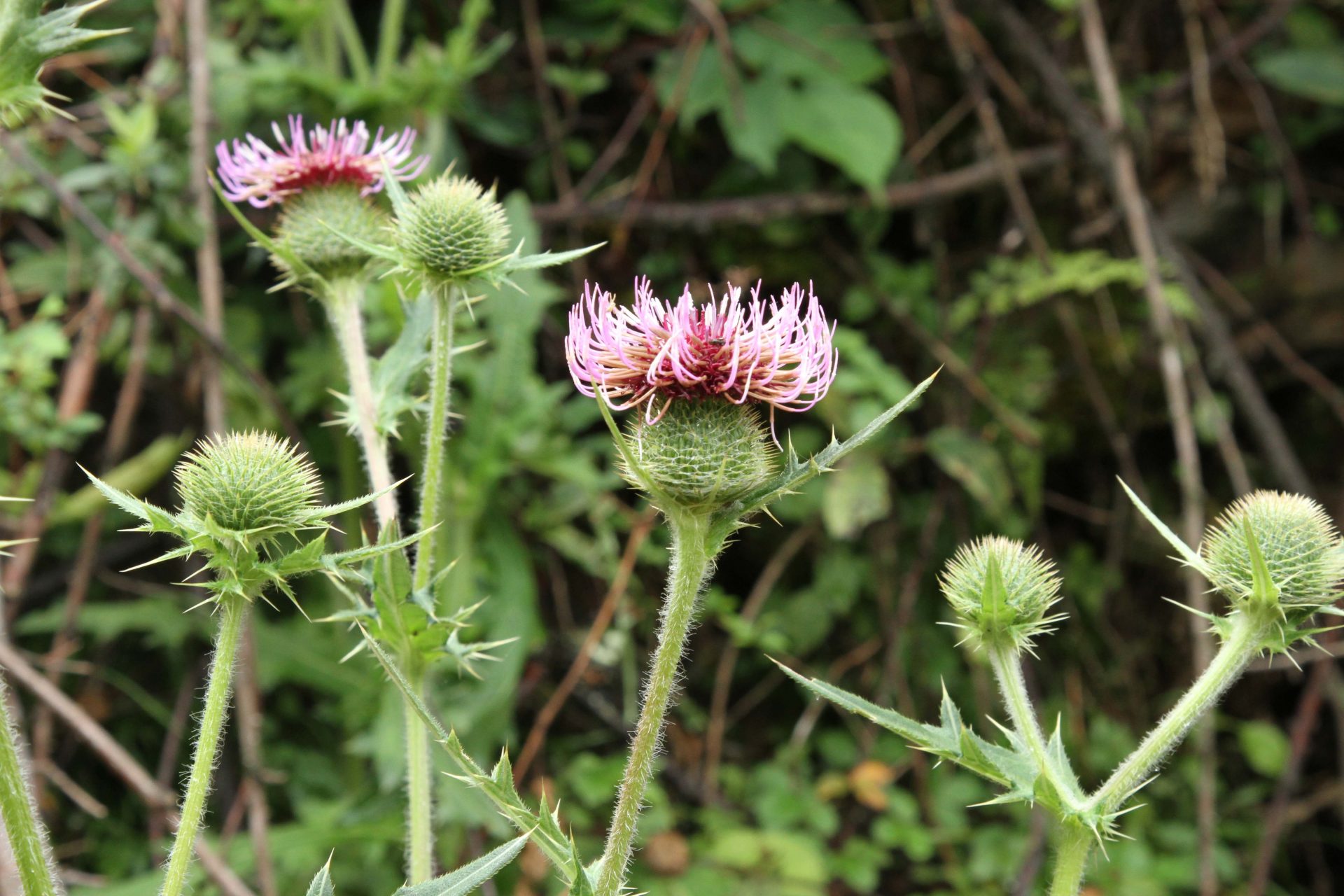
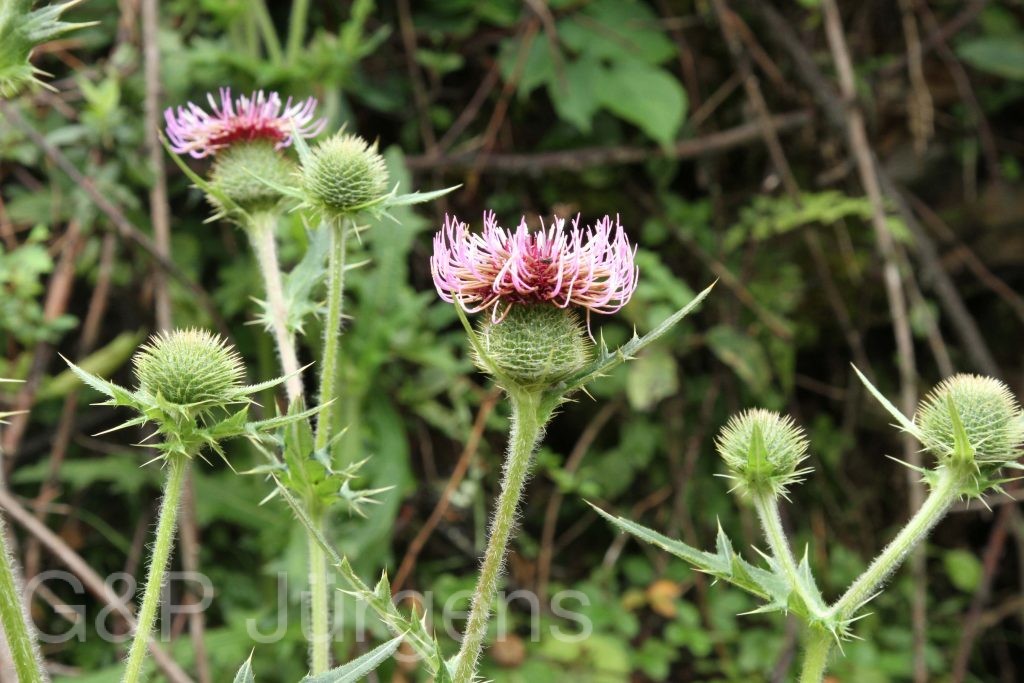
Cirsium shansiense is an Asian thistle distributed from China through the Himalaya, recorded from China, India, Bhutan, Japan and Turkey, with 575 georeferenced occurrences indicating a broad and well-collected range. It grows on grassy slopes, in open scrub, along forest margins, roadsides and disturbed clearings, from the warm-temperate into the montane zone. It was photographed in the Haa Valley of western Bhutan at 3200 m in September, flowering in the late-monsoon to early-autumn period when it is conspicuous on open montane slopes and pastures.
It is a robust erect perennial herb 0.5 to 1.5 m or more tall, with ribbed, often somewhat cobwebby stems arising from a stout root. The alternate leaves are lanceolate to elliptic in outline, pinnately lobed and conspicuously spiny along the margins, green above and grey-arachnoid-tomentose beneath, with bases that are sessile or slightly decurrent. The flower heads are ovoid, solitary or few at the branch tips, with an involucre of numerous imbricate, narrow, spine-tipped phyllaries that are usually arachnoid-hairy. All florets are tubular and reddish-purple to rose-purple. The fruit is a smooth oblong cypsela crowned by a pappus of long plumose bristles.
The species belongs to tribe Cardueae; like other members of Cirsium it is separated from Carduus by the feathery (plumose) pappus bristles. Cirsium shansiense is one of the more widespread and variable East Asian thistles, and its broad distribution from Japan to Turkey reflects considerable ecological tolerance. Its nectar-rich heads attract bees and butterflies, and it readily colonises grazed and disturbed ground. It is common and of no conservation concern.
Author: Petr. · Sources: POWO (Kew), GBIF, Flora of China, Flora of Bhutan, Cirsium monograph (Cardueae systematics, Petrak & Werner)