
Griff.
Description
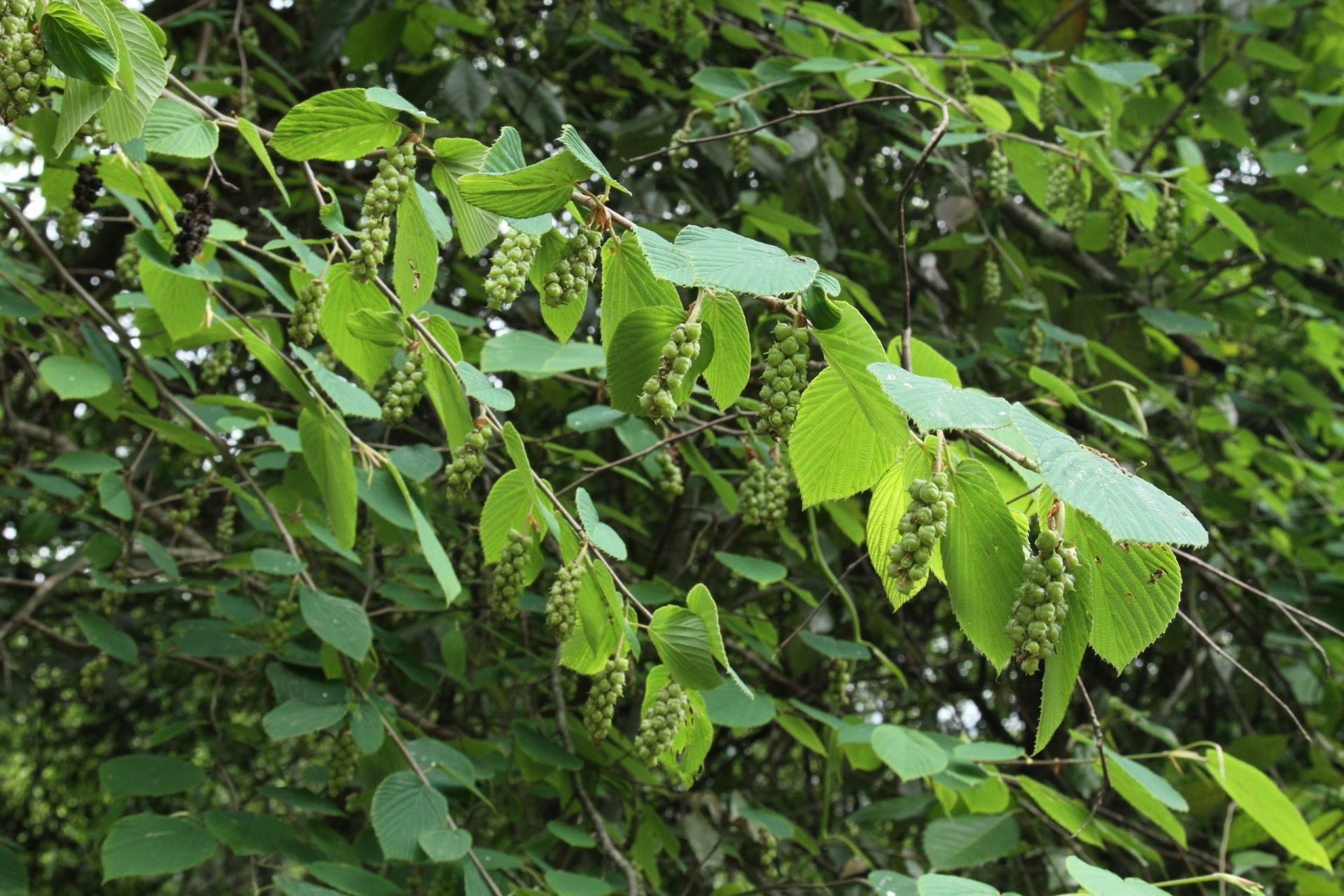
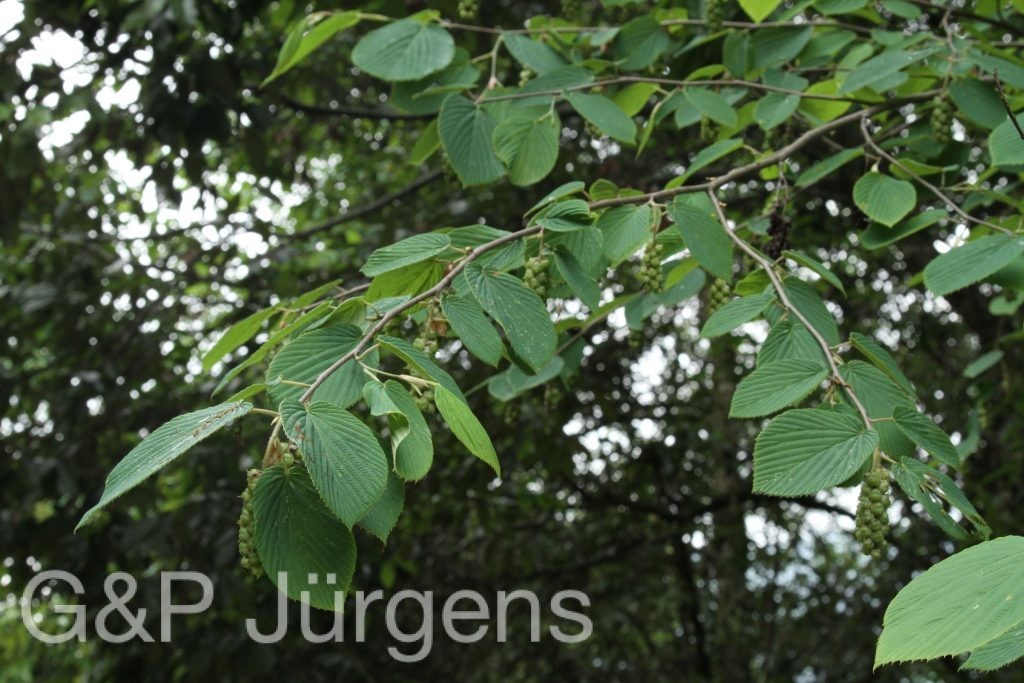
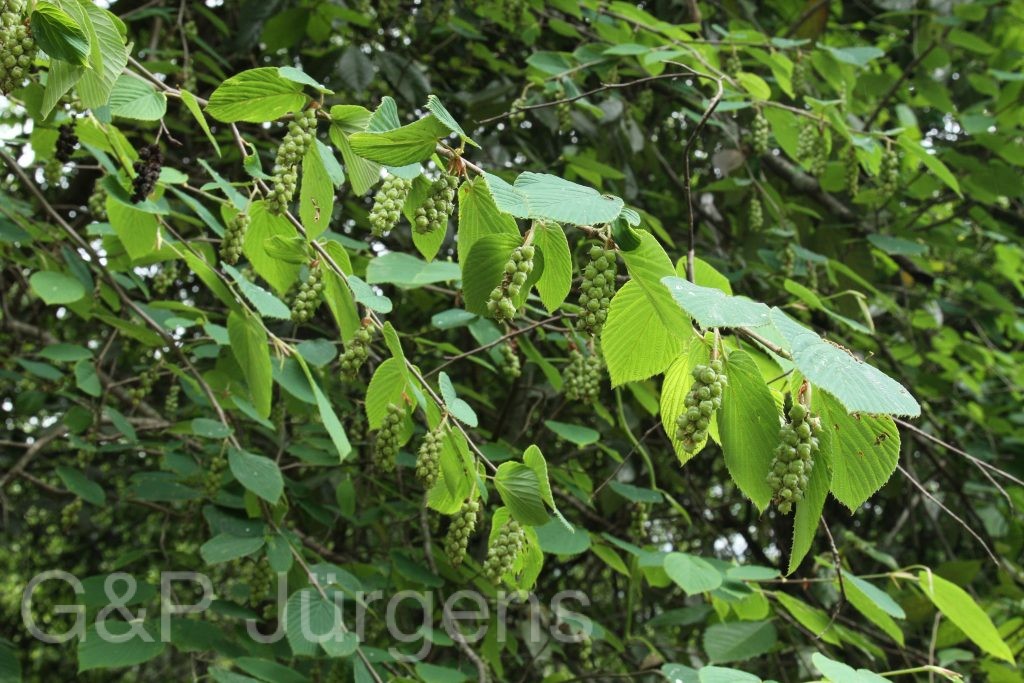
Corylopsis himalayana is an eastern Himalayan winter-hazel distributed through NE India, Bhutan and adjacent SW China, GBIF recording around 181 occurrences (together with scattered cultivated records elsewhere). It is a shrub or small tree of temperate broadleaved forest, forest margins and thickets, typically on moist, well-drained slopes. The photographed plant from Trashigang in eastern Bhutan at 1,570 m (May) is characteristic of its mid-elevation habitat in the warm temperate forest zone, where it occurs among other deciduous understorey and edge species.
It is a deciduous shrub or small tree with alternate, ovate to obovate leaves that are obliquely cordate at the base, with a serrate margin, prominent straight lateral veins and stellate or simple hairs beneath, the foliage often expanding after or with the flowers. The flowers are borne in pendent, catkin-like racemes; each is small, with five yellow, spathulate petals, five stamens and a half-inferior ovary, and the inflorescences are subtended by conspicuous bracts. The fruit is a woody, two-beaked capsule splitting to release shining black seeds.
Corylopsis belongs to the witch-hazel family Hamamelidaceae, a lineage of considerable phylogenetic interest as an early-diverging element of the eudicots, and the genus is prized horticulturally for its early-spring display of fragrant yellow racemes. C. himalayana represents the western, Himalayan outpost of a genus otherwise centred on East Asia, a distribution pattern echoing the well-known Sino-Himalayan to Japanese floristic links. Restricted to montane forest, it benefits from the conservation of intact temperate woodland across its limited range.
Author: Griff. · Sources: POWO (Kew), Flora of Bhutan Vol. 1, GBIF, Flora of China Vol. 9, Endress: Hamamelidaceae (in Families and Genera of Vascular Plants)