
Wall.
Description
Platystemma violoides is a small Himalayan herb of the Gesneriaceae, restricted to the western and central Himalaya in Nepal, India, Bhutan and adjacent China, with around 179 recorded occurrences across this comparatively narrow range. It is a chasmophyte of moist, shaded rock faces, damp cliffs and mossy boulders, often in spray zones and on dripping banks within temperate forest, flowering toward the close of the monsoon. In the Indian Garhwal Himalaya it occupies the middle montane belt, as documented by the collection at Simkarok at about 2700 m in September, when the plants are in flower on rain-soaked rock.
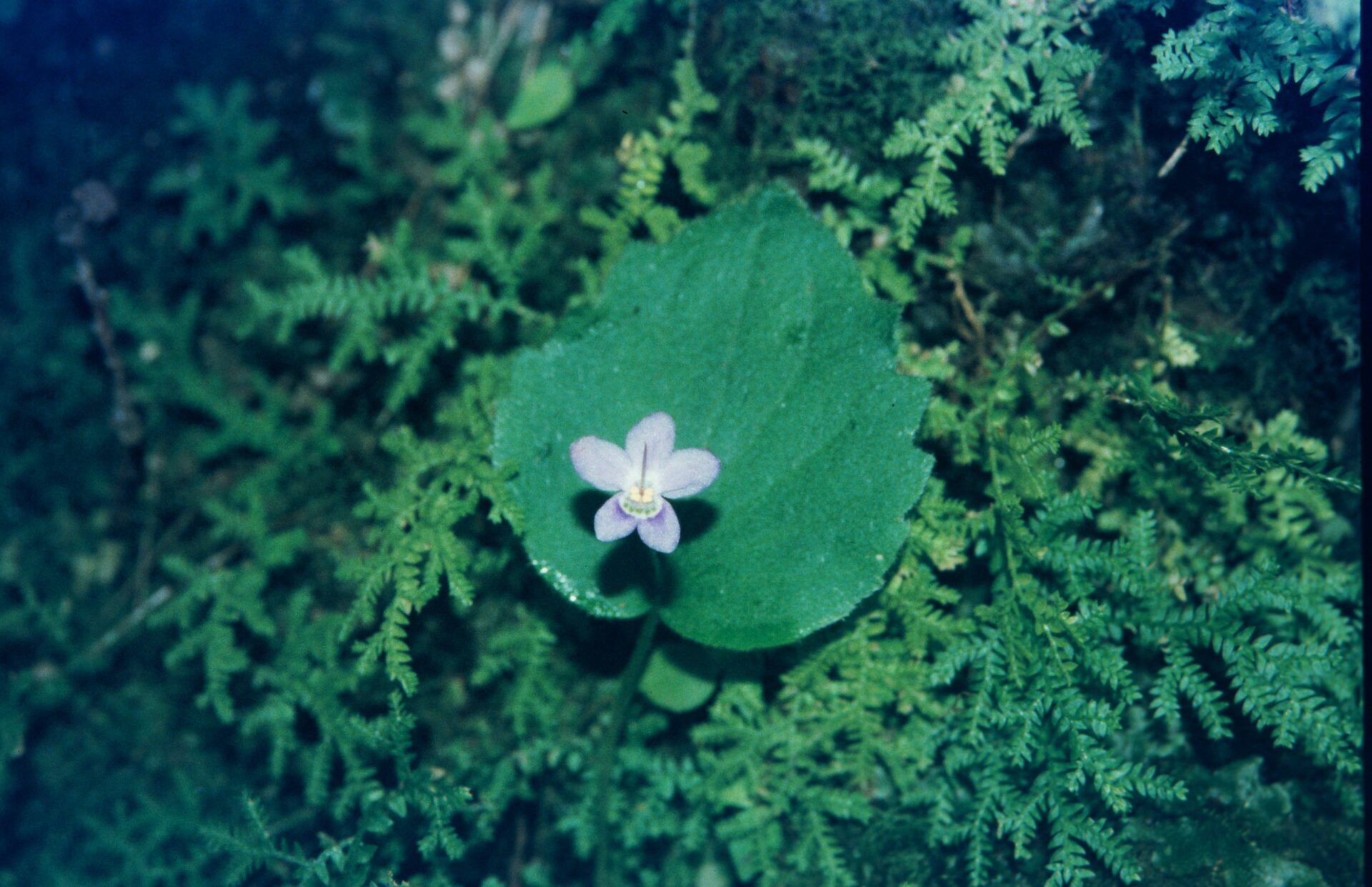
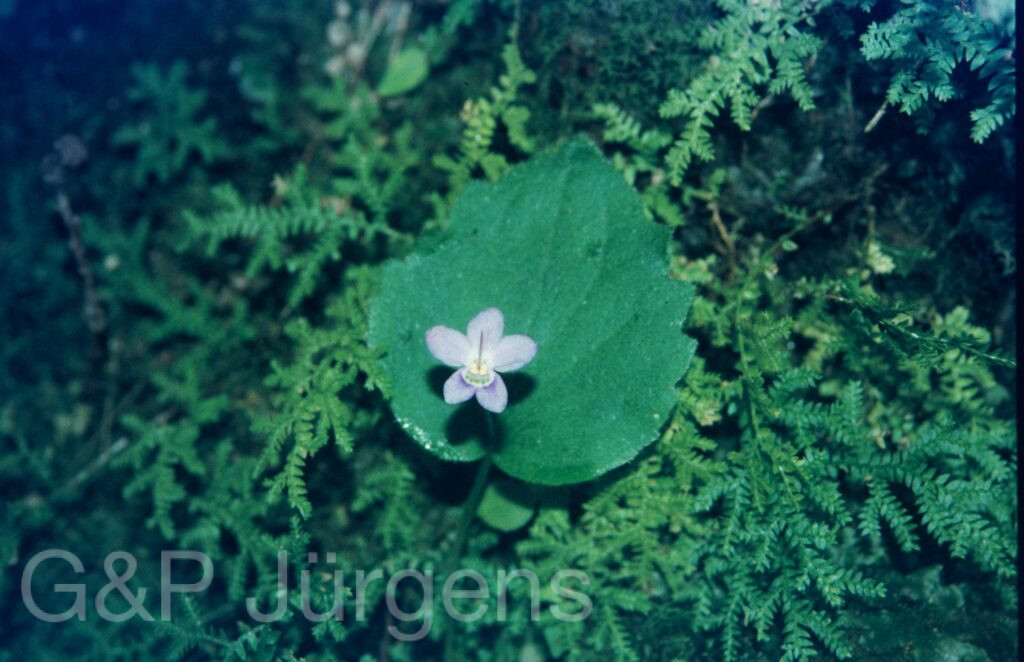
The plant is a delicate annual or short-lived perennial that develops a single, large, suborbicular to broadly ovate leaf, cordate at the base, softly hairy and shallowly toothed, pressed against the rock surface in the manner of a monophyllous gesneriad. From the base of the leaf arises a slender scape bearing one or a few showy flowers; the corolla is broadly campanulate to rotate and violet to purplish-blue, recalling a violet and giving the epithet violoides, with a short tube, spreading lobes and two to four stamens. The fruit is a small capsule releasing numerous minute seeds.
The family in this record is given as Leptoboeinae, the subtribe of Old World Gesneriaceae to which the monotypic genus Platystemma belongs, alongside Loxostigma, Leptoboea and related rock-dwelling herbs; the species is properly placed in Gesneriaceae. Its single-leaved habit and adaptation to vertical rock microhabitats parallel those of other Himalayan gesneriads such as Corallodiscus and the African Streptocarpus. Confined to specialised cliff niches, P. violoides is naturally local though not currently regarded as threatened, its persistence depending on the integrity of shaded, perennially moist rock habitats.
Author: Wall. · Sources: POWO (Kew), GBIF, Flora of China Vol. 18, Flora of Bhutan Vol. 2, Flora of Nepal, Weber & Burtt classification of Gesneriaceae