
Hook.f.
Description
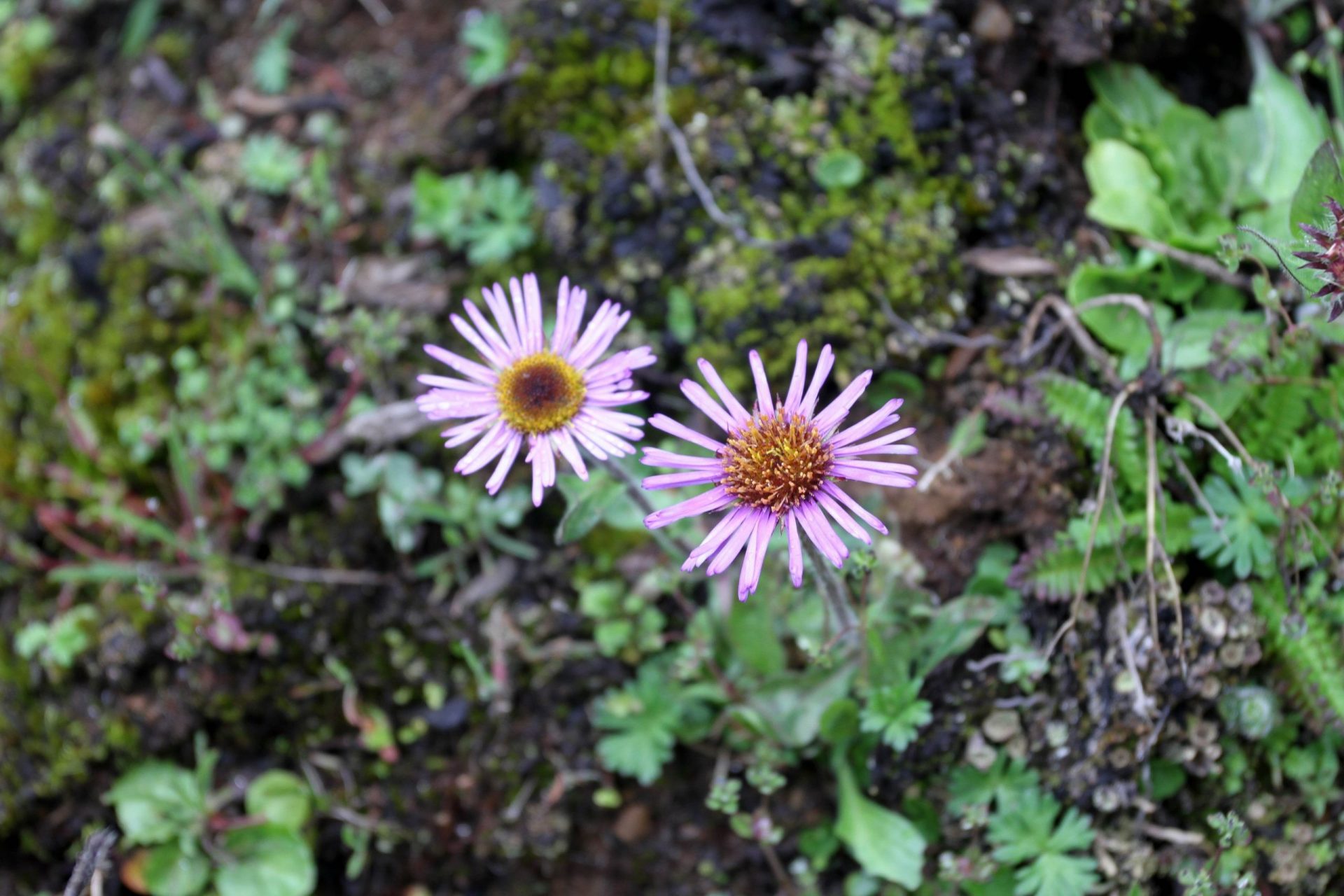
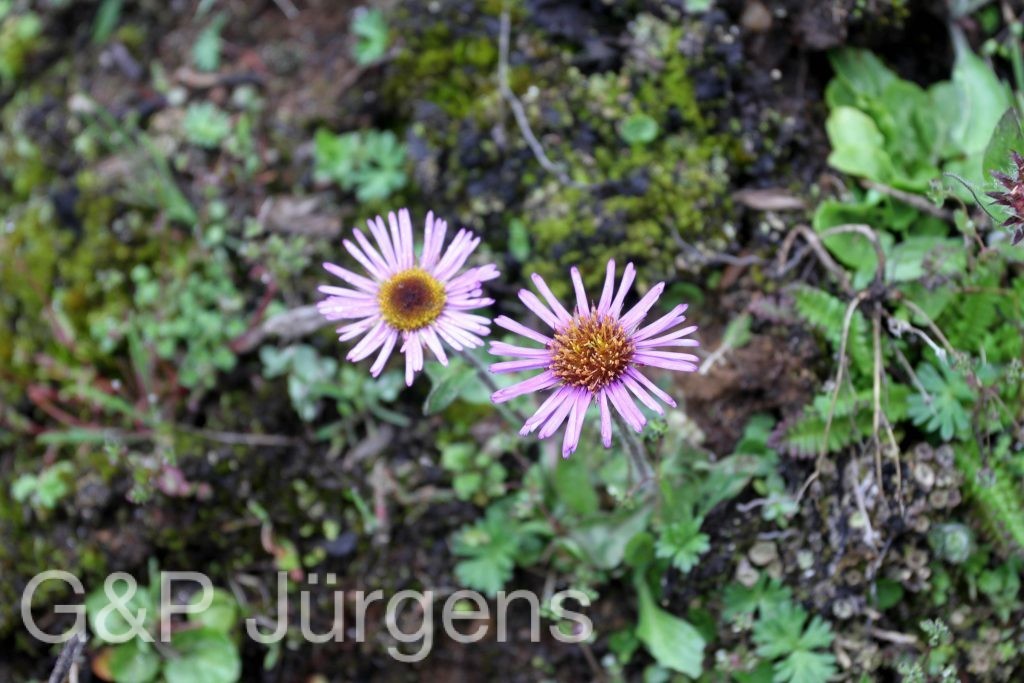
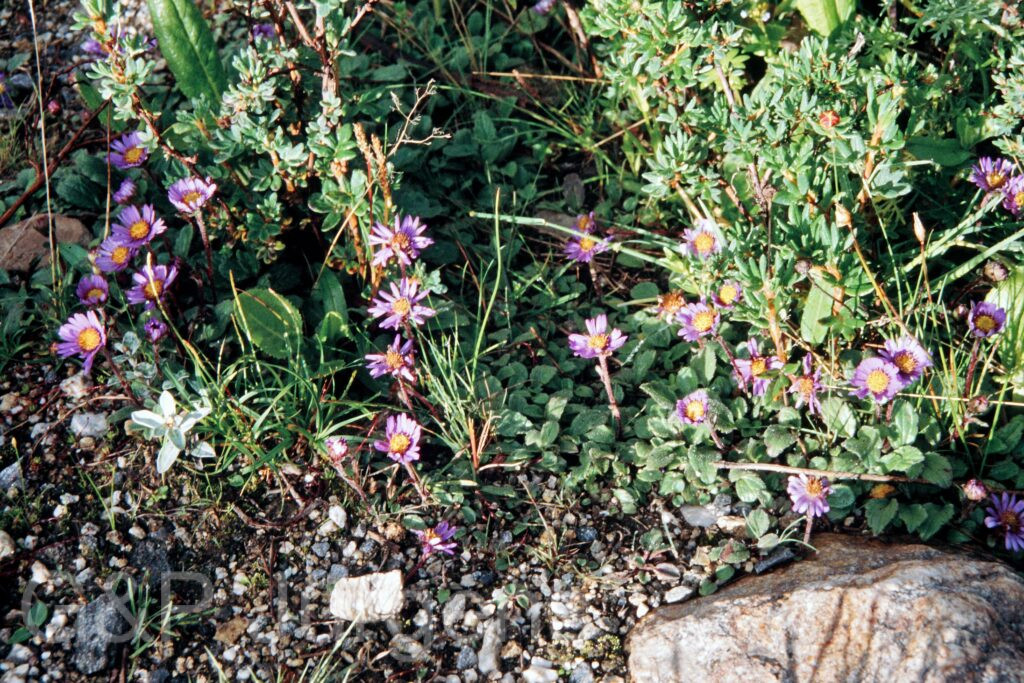
Aster stracheyi is a dwarf, mat-forming alpine daisy of the high Himalaya, recorded from Nepal, India, Bhutan and China, with around 202 GBIF occurrences. In GBIF the name is returned with synonym status, the accepted name nonetheless being Aster stracheyi, under which it is here treated. It is a plant of high alpine turf, screes, gravelly flats and stony slopes well above the treeline, typically between about 3700 and 5000 m. The photographed plants are from Jule-Tso in Bhutan at 4400 m and from Churta-Khola in west Nepal at 3750 m, both flowering in June at the start of the high-alpine season.
The species is a low, cushion- to mat-forming perennial herb spreading by slender creeping rhizomes or stolons, the short flowering stems clothed in small, crowded leaves. The leaves are spathulate to oblanceolate, entire, somewhat fleshy and often ciliate, forming dense basal tufts. The capitula are solitary and almost sessile among the leaves, radiate, with a single series of narrow lilac to pale purple ray florets surrounding a compact disc of yellow tubular florets; the involucre is hemispherical with herbaceous, often purple-tinged phyllaries. The fruit is a flattened, hairy cypsela bearing a pappus of barbellate bristles.
Aster in the broad sense is a large and much-revised genus of the tribe Astereae, and A. stracheyi, named for Richard Strachey, exemplifies the cushion-forming high-elevation asters of the Sino-Himalaya, an adaptation to cold and exposure. Restricted to remote alpine ground, it is not regarded as threatened.
Author: Hook.f. · Sources: POWO (Kew), GBIF, Flora of Bhutan, Flora of China, Annotated Checklist of the Flowering Plants of Nepal, Revision of Himalayan Aster (Astereae)