
(L.) Kuntze
Description
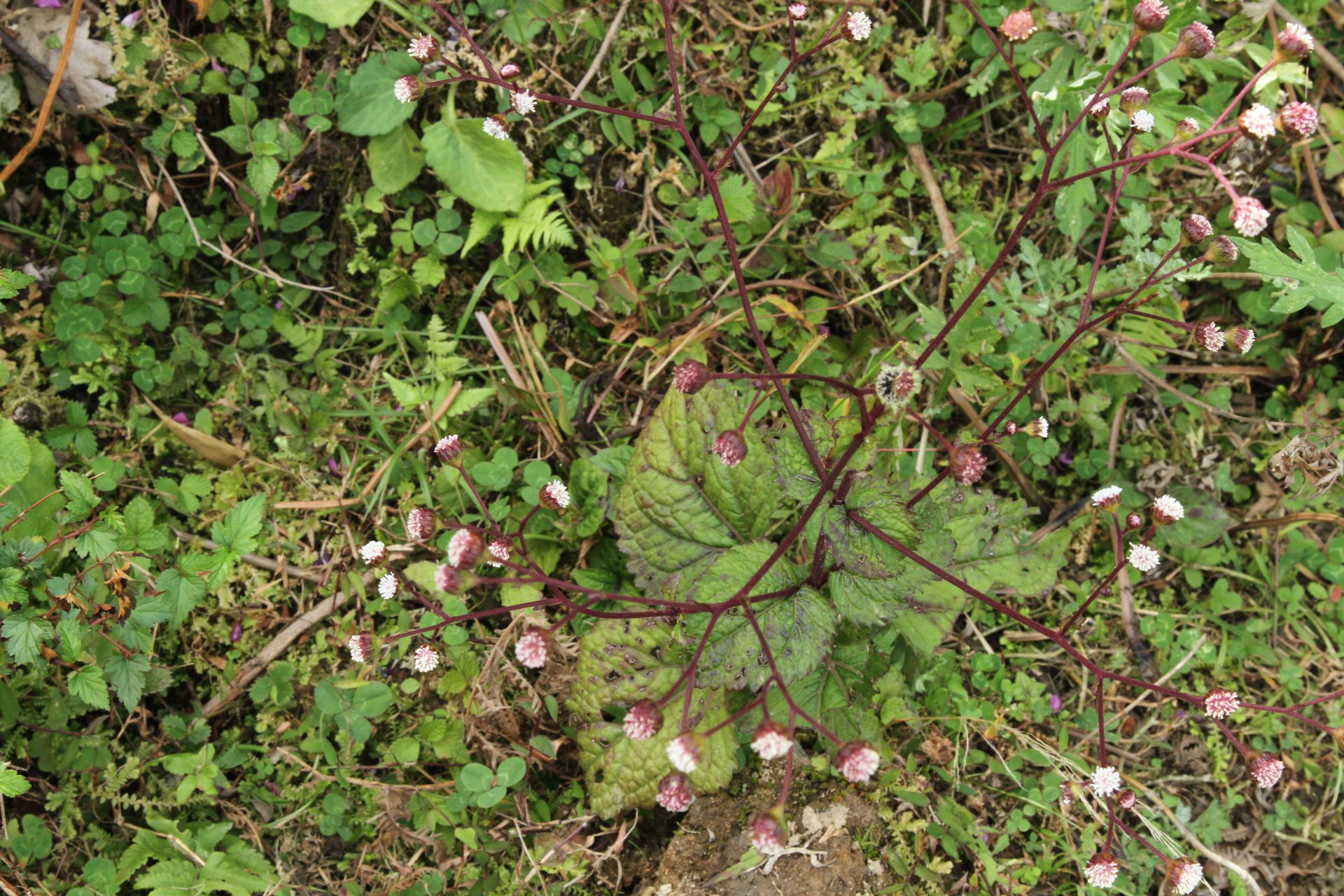
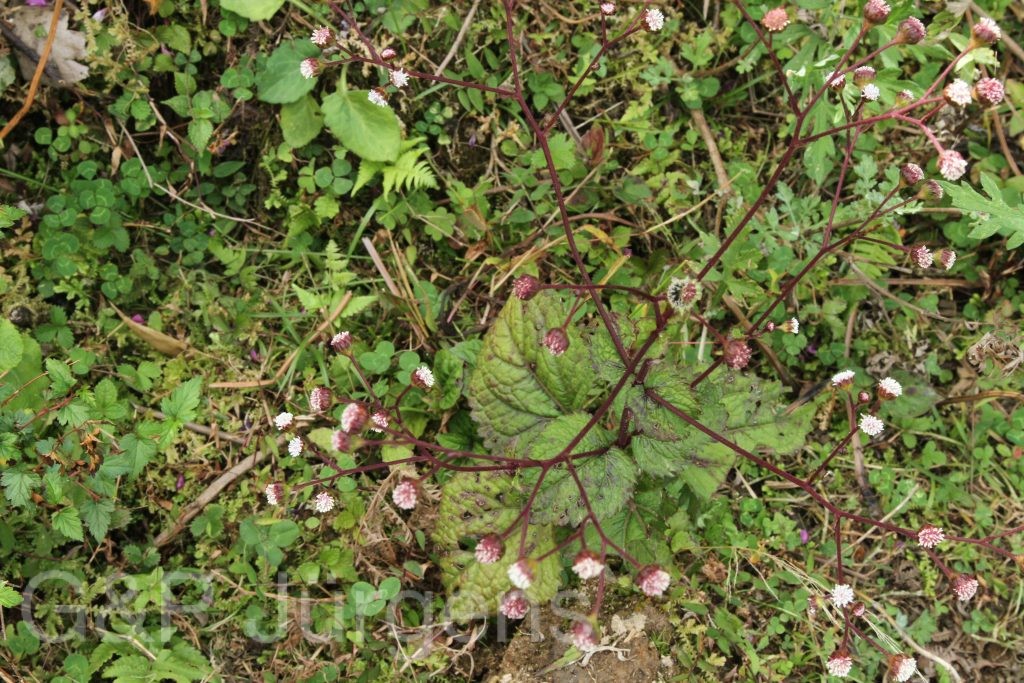
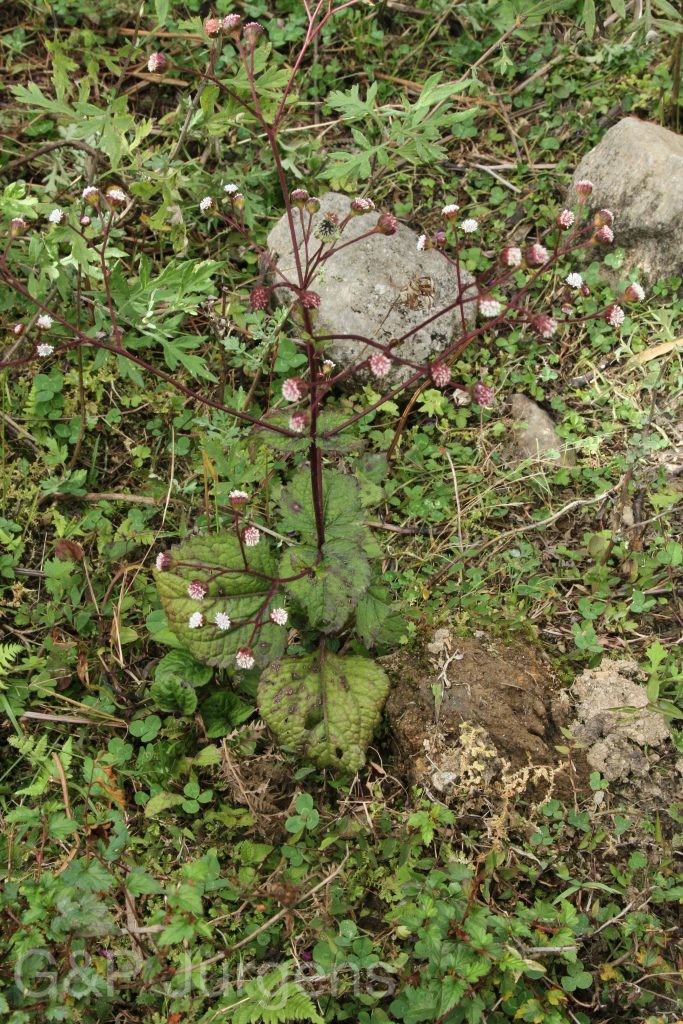
Adenostemma lavenia is a near-pantropical composite of remarkably wide distribution, with GBIF documenting some 4700 occurrences across Asia, Australasia, the Americas, Africa and the Pacific, including China, Japan, India, Nepal, Australia, the Philippines, Brazil and many other countries. It is a weed of moist, shaded habitats, favouring streambanks, wet forest margins, ditches and damp disturbed ground, mostly at low to mid elevations. The photographed plant is from the Mo-Chu valley in Bhutan at 1900 m in October, growing in humid riparian thicket within subtropical hill forest.
The species is an erect to ascending annual or short-lived perennial herb with branched, ridged, sparsely pubescent stems. The leaves are opposite, ovate to deltoid, coarsely crenate-serrate, with a cuneate to truncate base narrowing to a winged petiole. The capitula are small, discoid and white, lacking ray florets, arranged in lax terminal corymbose cymes; each holds few tubular florets within a two-seriate involucre of subequal phyllaries. The most diagnostic feature is the cypsela, which is glandular-tuberculate and crowned by a pappus reduced to a few short, stout, gland-tipped (clavate) bristles that act as a clinging burr.
Adenostemma is a small genus of the tribe Eupatorieae, and A. lavenia is the type and most cosmopolitan species, its sticky fruits readily dispersed on animals and clothing, explaining its global spread. Highly variable and broadly circumscribed, it has long been used in folk medicine. It is abundant and weedy, hence of no conservation concern.
Author: (L.) Kuntze · Sources: POWO (Kew), GBIF, Flora of China, Flora of Bhutan, Annotated Checklist of the Flowering Plants of Nepal, Revision of Adenostemma (Eupatorieae)