
Wall. ex Meisn.
Description
Anisadenia saxatilis is a slender herb of the eastern Himalaya and adjacent Southeast Asia, distributed from Nepal through NE India, Bhutan and southern China to Myanmar, Thailand, Bangladesh and Malaysia, with 69 GBIF occurrences reflecting its rather localised, forest-dwelling habit. It grows in shaded, humid broad-leaved and mixed forest, on mossy banks, rock ledges and along streamsides in the temperate to warm-temperate zone. The Bhutanese collection from Tashiyangtse at about 2,000 m in October corresponds to its autumn flowering in cool, moist montane forest understorey.
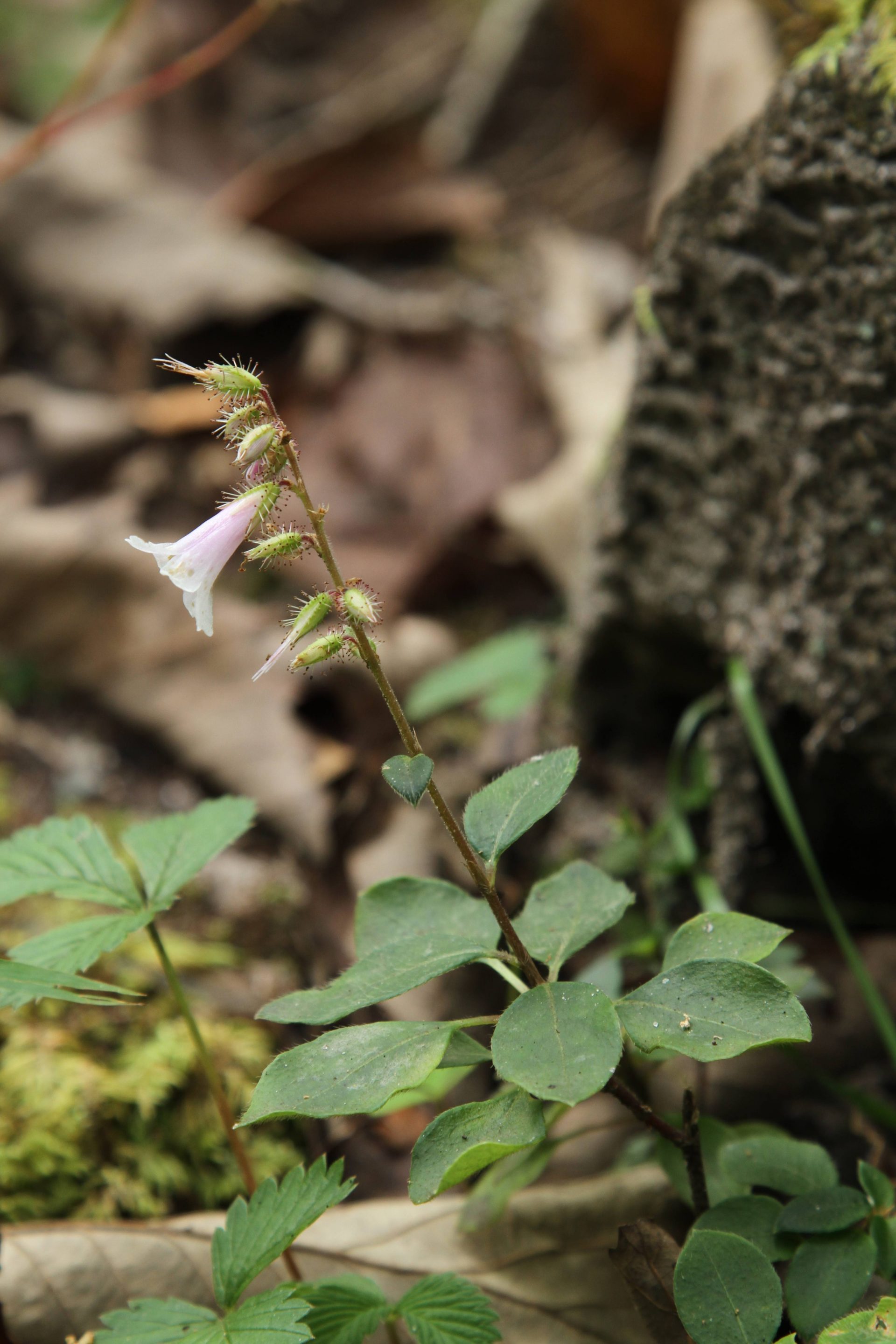
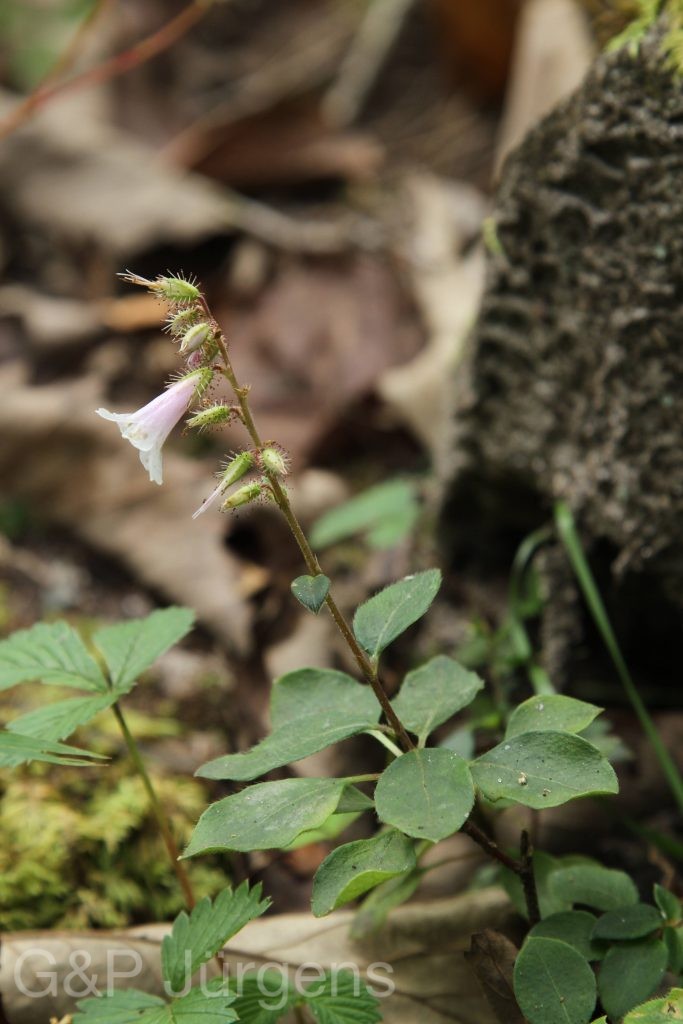
It is a perennial herb with a slender rootstock and erect, wiry stems. The leaves are mostly clustered or subrosulate toward the base and along the lower stem, ovate to elliptic, with prominent parallel-converging venation and crenate to serrate margins, the upper leaves much reduced and bract-like. The flowers are borne in a slender, lax, terminal spike-like raceme; each small flower has five sepals (the outer often glandular-fringed), five pink to pale purple petals, and a characteristic androecium with unequal or appendaged (anisadenous) staminal glands, from which the genus takes its name. The fruit is a small dry capsule.
Anisadenia is a small Asian genus of two or three species, here correctly placed in Linaceae though distinctive within the family for its spicate inflorescence and herbaceous habit. GBIF treats the name as accepted. As a shade- and humidity-dependent forest herb of limited occurrence, it is sensitive to forest clearance; it is not formally assessed but its narrow ecological amplitude merits attention.
Author: Wall. ex Meisn. · Sources: POWO (Kew), Flora of China Vol. 11, Flora of Bhutan Vol. 1, GBIF, Robson: Linaceae in Flora Zambesiaca and comparative studies (1963)