
Wall.
Description
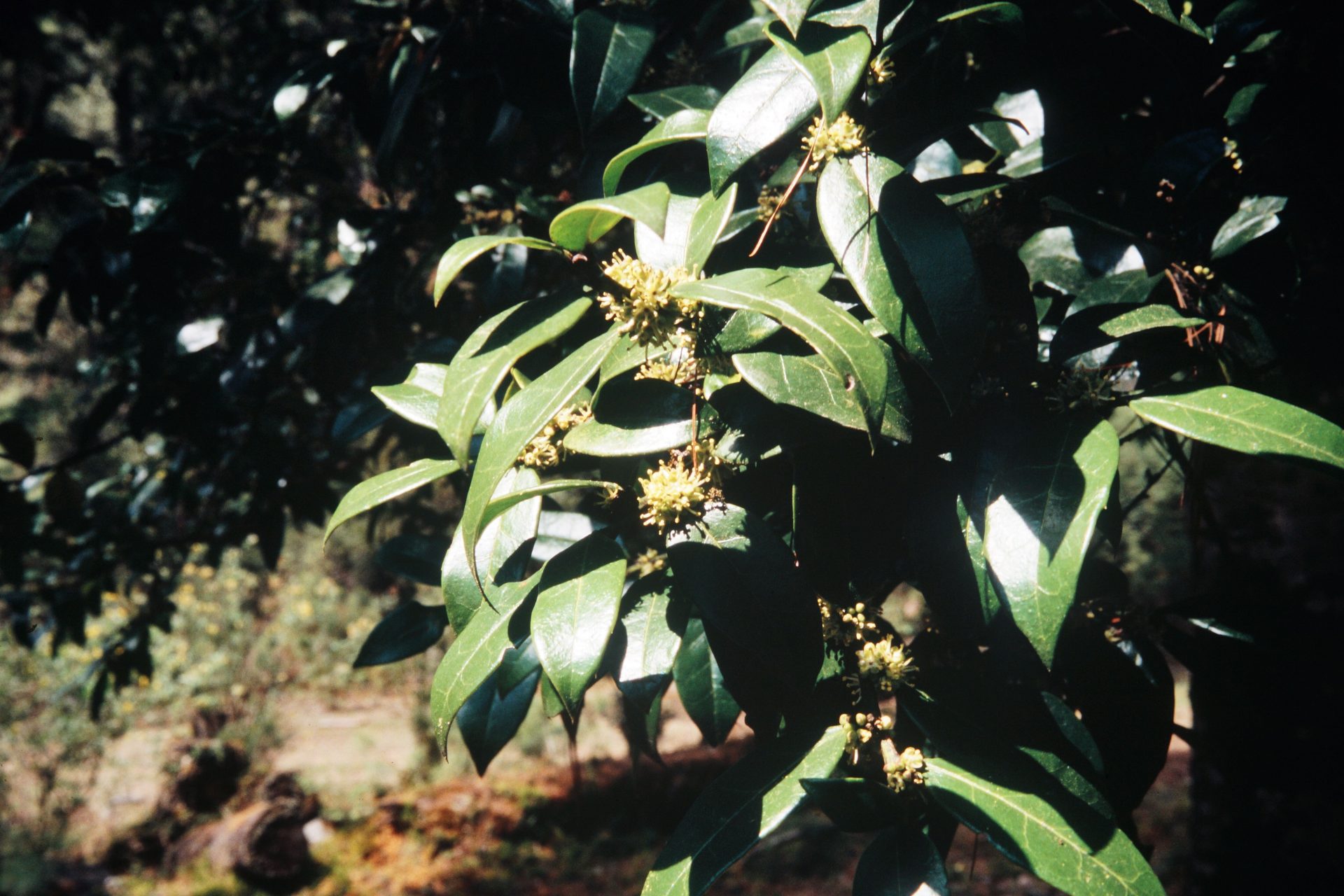
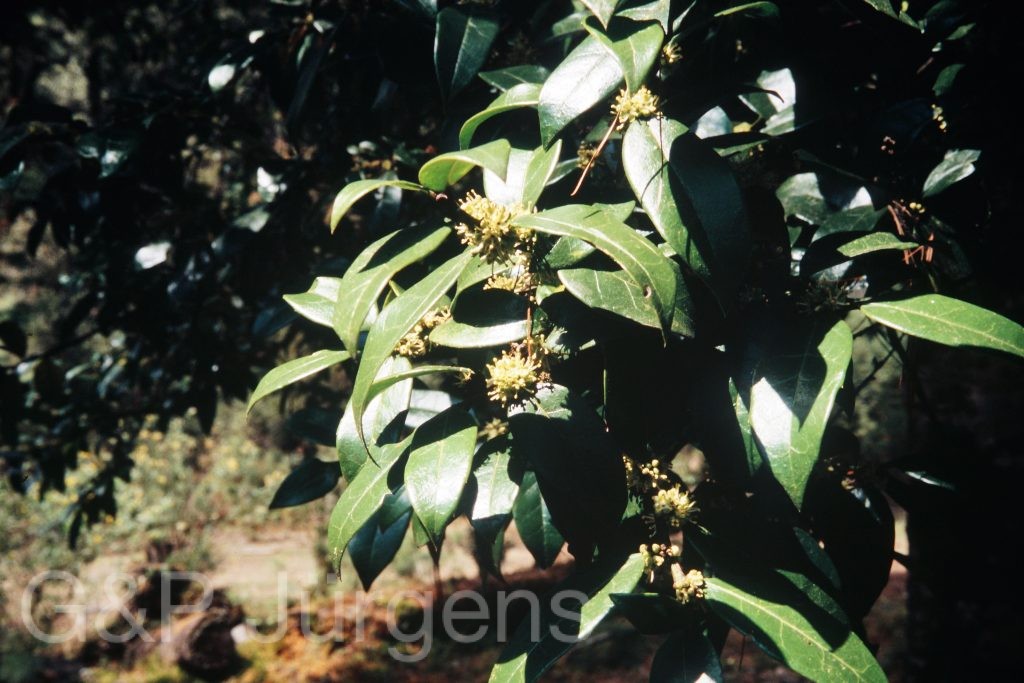
Ilex dipyrena, the Himalayan holly, is an evergreen tree or large shrub distributed along the Himalaya from Pakistan and northern India through Nepal, Sikkim and Bhutan into southern China (Yunnan, Xizang) and Myanmar. It is a characteristic constituent of cool temperate broad-leaved and mixed conifer forest, growing on shaded slopes, ridges and forest margins. It occurs mainly between about 1,800 and 3,300 m; the plant recorded in the Phobjikha valley of Bhutan at 3,100 m in April lies in the upper part of this band, within the moist temperate forest belt where it forms part of the evergreen understorey.
The plant is a small to medium-sized tree with greyish bark and glabrous twigs. The leaves are alternate, leathery and glossy dark green, elliptic to oblong-lanceolate, with a spinose-dentate margin bearing rigid marginal teeth on vigorous shoots, the teeth often reduced on older growth. The plant is dioecious, with small greenish-white, four-merous flowers clustered in the leaf axils. The fruit is a globose drupe ripening dull red, containing typically two pyrenes, a feature reflected in the epithet dipyrena, distinguishing it from the four- to five-seeded common holly.
Ilex is a large, near-cosmopolitan genus and the sole member of its family. Ilex dipyrena, described by Wallich, is the principal native holly of the Himalaya and a long-cultivated ornamental and parent of garden hybrids. Its evergreen, drupe-bearing habit provides food for birds, which disperse the seeds, and it contributes to the structure of temperate Himalayan forest. The species is widespread and common, and is not considered to be of conservation concern.
Author: Wall. · Sources: POWO (Kew), Flora of China Vol. 11, Flora of Bhutan Vol. 2, GBIF, Loizeau et al.: Ilex phylogeny