
Munz
Description
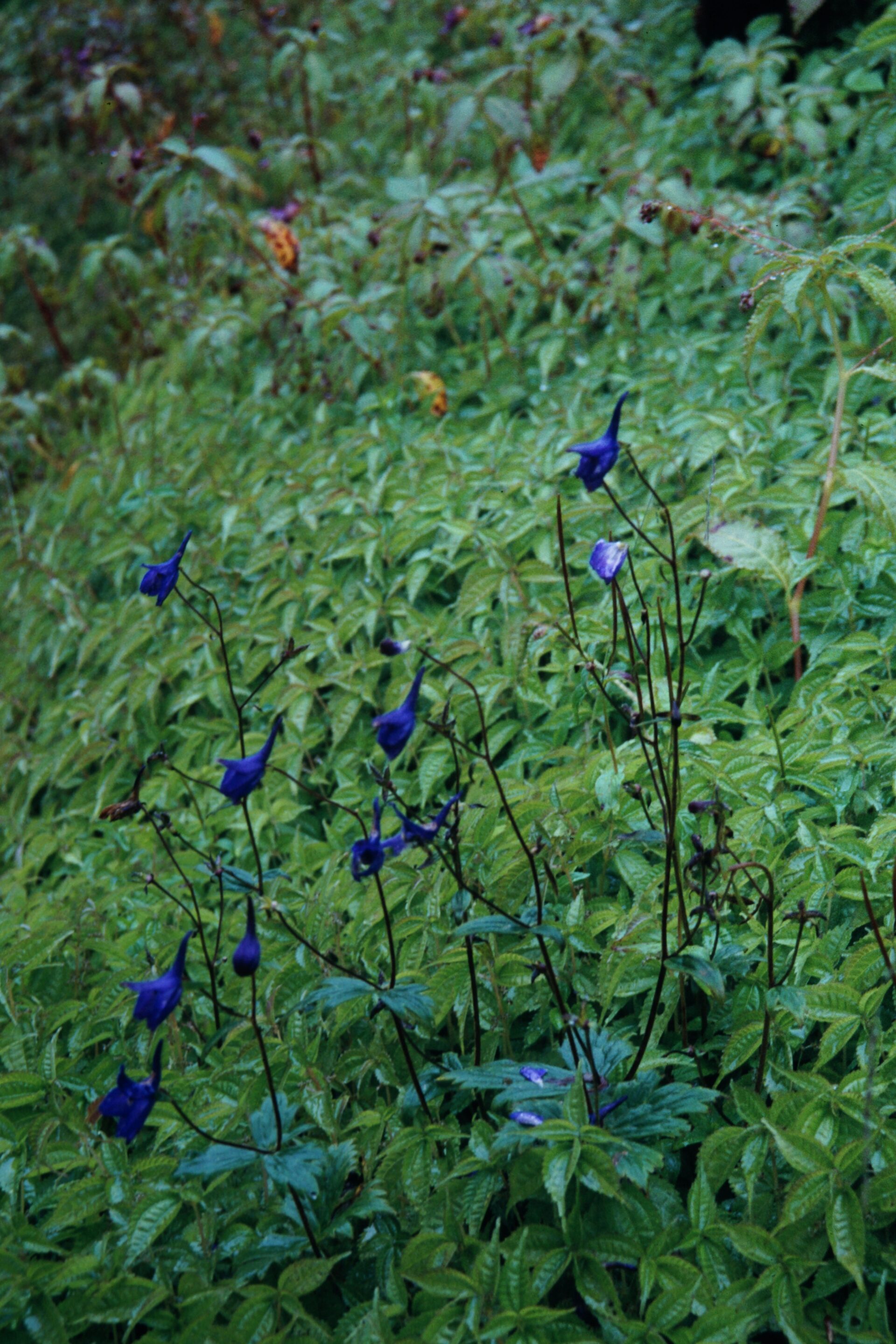
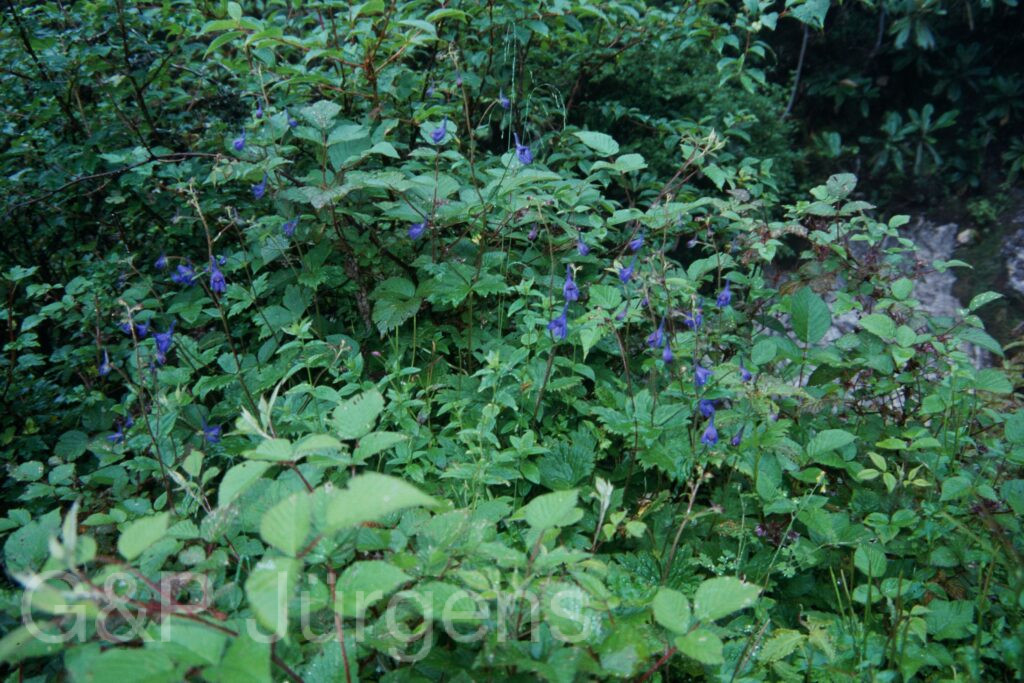
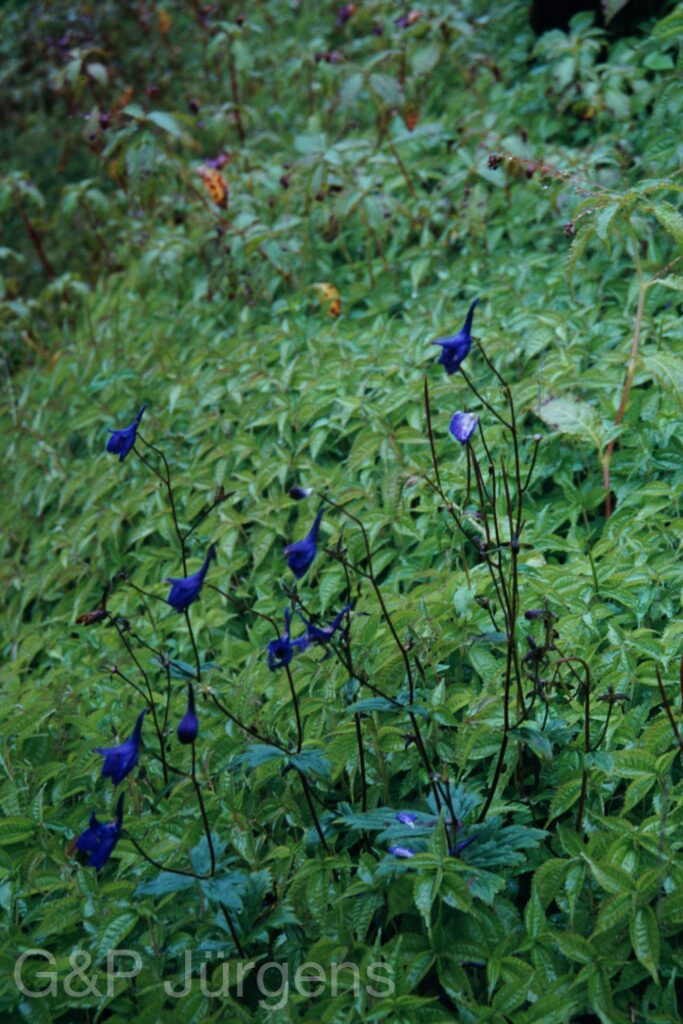
Delphinium ludlowii Munz is a narrowly distributed alpine larkspur of the eastern Himalaya, known only from Bhutan and adjacent Nepal and Sikkim, where the very small number of records reflects both its restricted range and its remote, high-elevation habitat. It grows on open alpine and subalpine slopes, among rocks, in moist meadows and along the margins of scrub at the upper limits of vegetation. The photographed plant from Choka in Sikkim at 3200 m, flowering in August at the height of the monsoon growing season, illustrates its association with cool, humid, well-watered high-mountain sites where the snowmelt and summer rains sustain a brief but vigorous flowering period.
The plant is an erect perennial herb arising from a fibrous or somewhat tuberous rootstock, bearing palmately divided leaves whose segments are further cut into narrow lobes. The inflorescence is a terminal raceme of characteristically spurred, zygomorphic flowers; the showy, petaloid sepals are blue to violet-blue, the uppermost prolonged backward into a conspicuous nectar spur, within which the smaller true petals are concealed. The fruit consists of several erect, many-seeded follicles typical of the genus, splitting along the inner suture to release the angular seeds.
Within the taxonomically intricate genus Delphinium, D. ludlowii belongs to the Sino-Himalayan alpine larkspurs and commemorates the collector Frank Ludlow, whose Bhutan expeditions yielded much of the type material. Like related montane species it is bumblebee-pollinated, the long spur matching its visitors, and all parts are toxic owing to diterpene alkaloids. Its very limited known range and few documented occurrences make it of conservation interest, dependent on intact alpine habitats in the eastern Himalaya.
Author: Munz · Sources: POWO (Kew), GBIF, Flora of Bhutan, Flora of China (Ranunculaceae), Ludlow & Sherriff Himalayan collections, A Monograph of the Genus Delphinium (Munz)