
Roxb.
Description
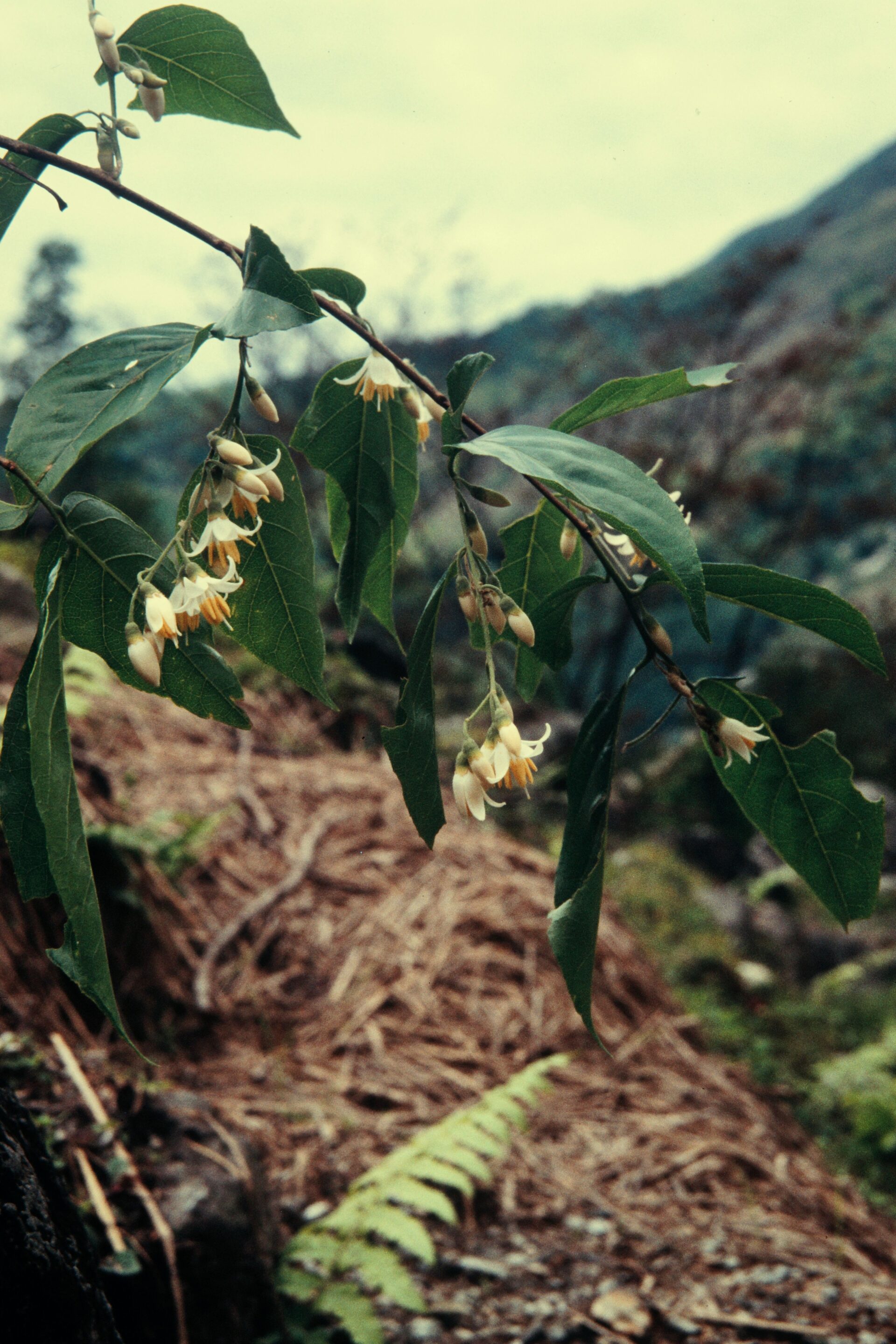
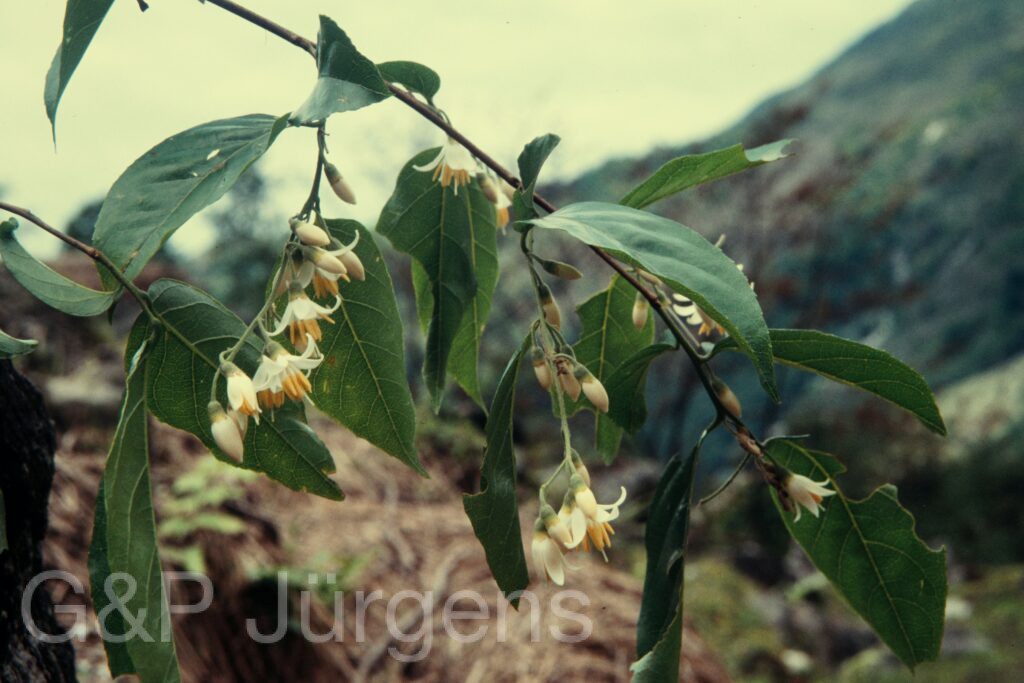
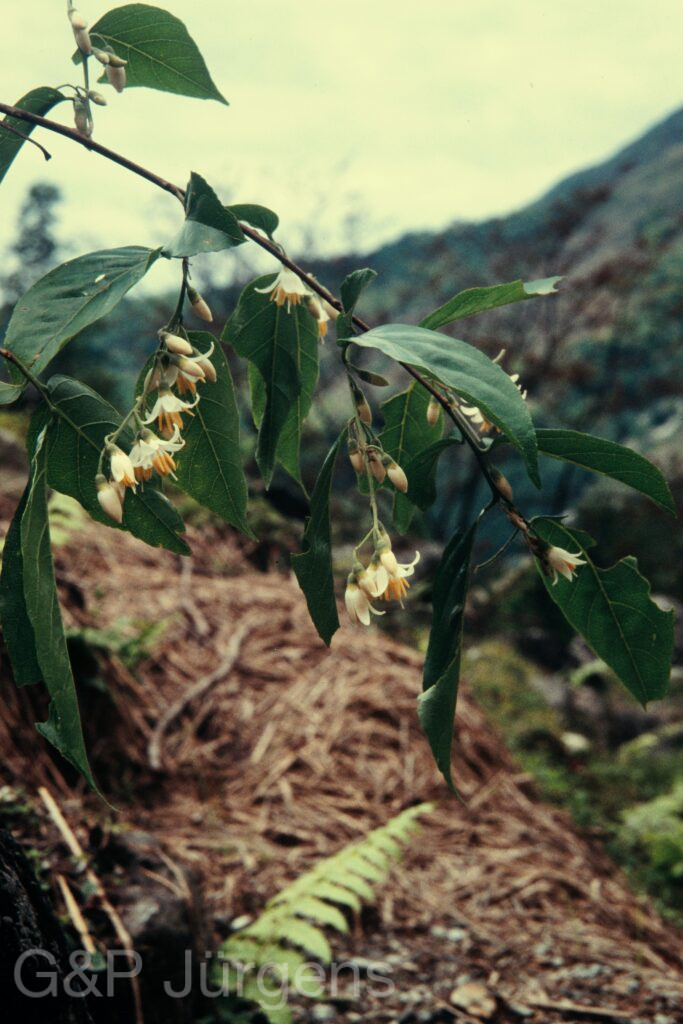
Styrax serrulatus is a small tree or shrub of the eastern Himalaya and mainland Southeast Asia, distributed from India and Nepal through Bhutan, Bangladesh, Myanmar, Thailand, Laos, Vietnam and southern China to Malaysia and Indonesia, with around 395 GBIF records (the few from Korea and the United States reflecting cultivation). It grows in subtropical to lower-temperate broad-leaved evergreen and mixed forest, forest margins and along streams, generally between about 1,000 and 2,400 m. The plant photographed in the Arun Valley of eastern Nepal at 1,750 m, flowering in April, exemplifies its spring anthesis in the warm, humid mid-elevation forests of the eastern Himalaya.
The plant is a deciduous to semi-evergreen shrub or small tree, the young branchlets, buds and lower leaf surfaces clothed in characteristic stellate hairs. The leaves are alternate, simple, elliptic to ovate-oblong with finely serrulate margins (as the epithet indicates), shortly petiolate and acuminate. The flowers are borne in short axillary or terminal racemes; each is white and fragrant, with a five-lobed campanulate calyx and a five-lobed, deeply divided corolla, the ten stamens united at the base into a short tube. The fruit is a subglobose, dry to leathery drupe-like capsule, often crowned by the persistent calyx, containing one or few seeds.
Styrax is the principal genus of the family Styracaceae, several species of which yield aromatic resins (benzoin). The genus has a notable disjunct distribution between eastern Asia and the Americas, and S. serrulatus belongs to its species-rich Asian assemblage. Widespread and occurring in both primary and secondary forest, it is not considered threatened.
Author: Roxb. · Sources: POWO (Kew), Flora of China Vol. 15, Flora of Bhutan Vol. 2, GBIF, Hwang & Grimes: Styracaceae monographic treatments