
Krasch.
Description
Psychrogeton alexeenkoi is a high-mountain composite of the arid ranges of Central and South-West Asia, its georeferenced records concentrated in Afghanistan, Kazakhstan, Tajikistan, Iran, Pakistan and Turkey, GBIF accumulating some 58 occurrences that reflect a narrow, sparsely collected range. It grows on stony slopes, rock crevices, gravelly screes and dry alpine to subalpine meadows, typically on calcareous or schistose substrates. The population recorded in May at Samadan in West Bengal, India, near 2400 m marks an eastern, lower-elevation extension where it occupies open, well-drained sunny situations subject to strong diurnal temperature fluctuation.
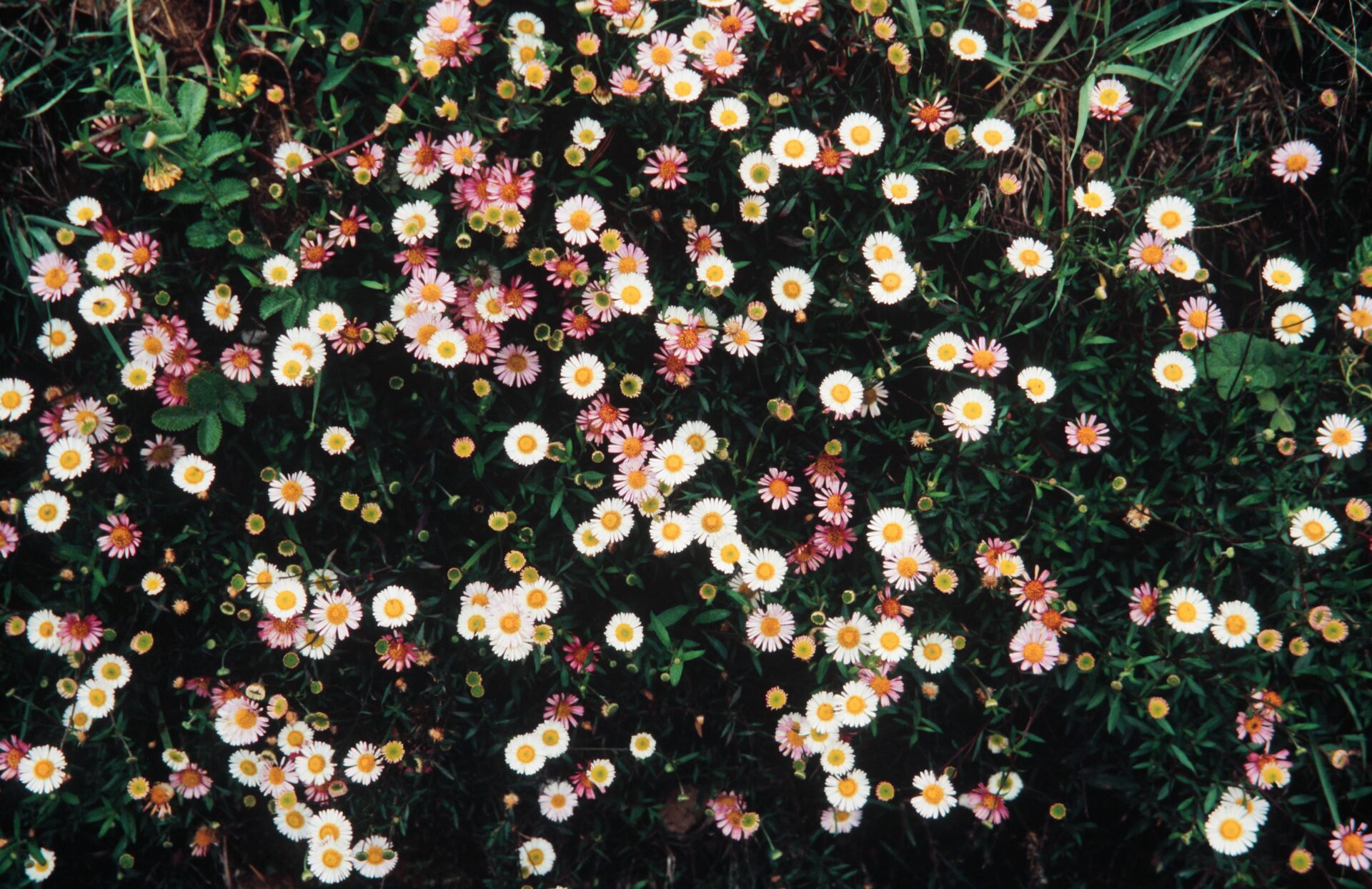
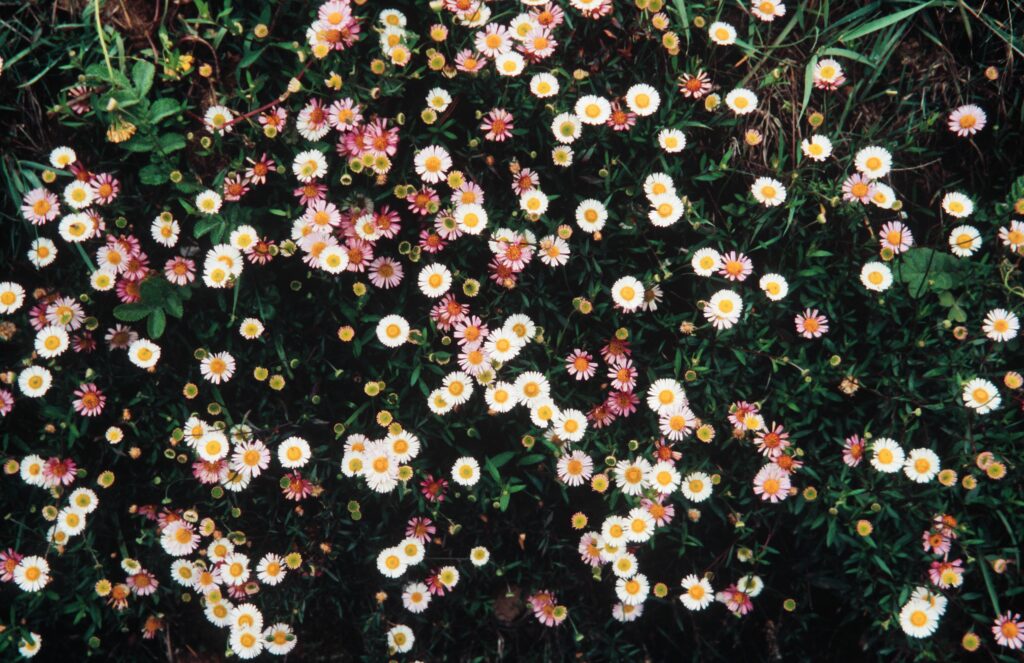
The species is a perennial herb forming a woody caudex from which arise several ascending leafy stems clothed in spreading eglandular and gland-tipped hairs. The basal and lower cauline leaves are oblanceolate to spathulate, entire or obscurely toothed and narrowed to a winged petiole, the upper ones smaller and sessile. The solitary or few terminal capitula are radiate: numerous slender lilac to pale violet ray florets surround a disc of yellow tubular perfect florets, the involucral bracts linear-lanceolate, herbaceous and pubescent in subequal series. Achenes are flattened, oblong and pubescent, crowned by a pappus of fine barbellate bristles aiding anemochory.
Psychrogeton is a small Asiatic genus segregated from Erigeron, distinguished by habit and pappus and frequently treated as transitional to Aster within tribe Astereae. P. alexeenkoi, described by Krascheninnikov, is endemic to the mountains of Middle Asia and the Hindu Kush-Karakoram and is adapted to cold continental conditions, as its name ("cold-dweller") implies. No formal conservation assessment exists, but its restricted range and reliance on undisturbed montane habitat warrant monitoring of overgrazing and degradation.
Author: Krasch. · Sources: POWO (Kew), GBIF, Flora of Pakistan, Flora Iranica, Conspectus Florae Asiae Mediae, Nesom monograph of Astereae