
R.Br. ex G.Don
Description
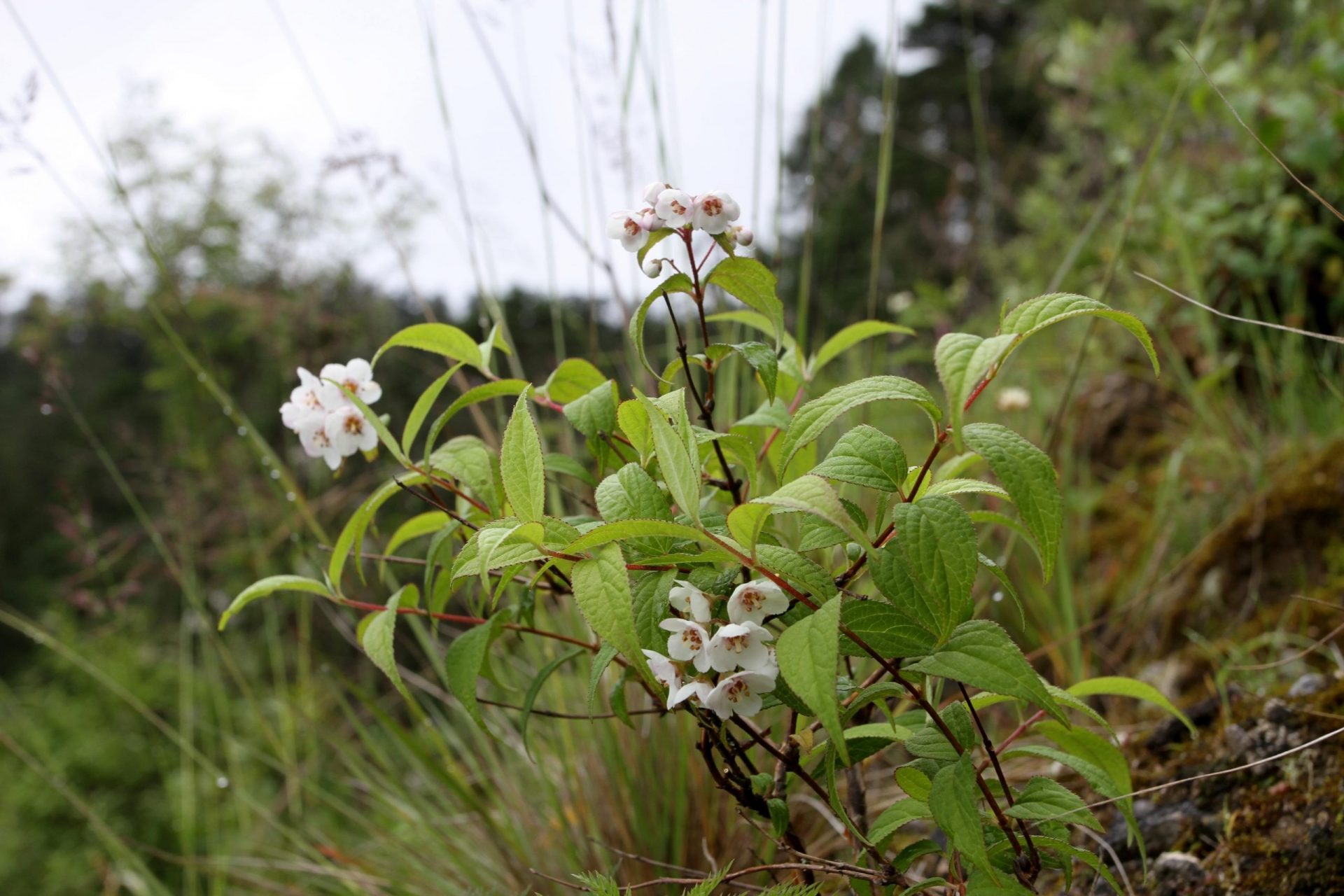
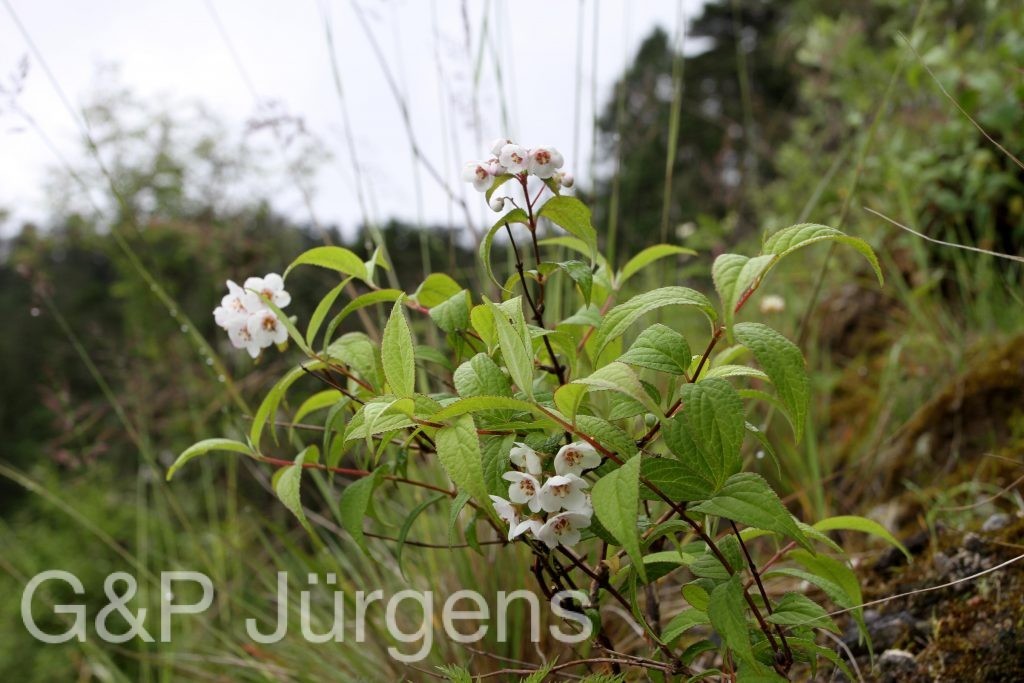
Deutzia corymbosa is a flowering shrub of Himalayan temperate forests, with GBIF documenting 99 occurrences from India, China, Nepal and Bhutan, plus a few cultivated or vouchered records from Europe and North America. It grows on forest margins, shrubby slopes, rocky banks and clearings in the temperate to lower subalpine zone, often in mixed broadleaved and conifer forest. It was recorded on the Chele-La in Bhutan at about 3400 m in July, a high-summer flowering at the upper part of its range where the white corymbs are conspicuous against the montane scrub.
It is a deciduous shrub with erect to arching branches and exfoliating bark on the older stems. The leaves are opposite, ovate to ovate-lanceolate, acuminate, finely serrate, and clothed in stellate hairs that give the foliage a slightly rough texture characteristic of the genus. The inflorescence is a flattened, many-flowered corymb, as the epithet corymbosa indicates; each flower has five white, spreading petals, five sepals, ten stamens with the toothed or winged filaments typical of Deutzia, and three to four styles. The fruit is a small, hemispherical to top-shaped, several-valved capsule.
Deutzia (Hydrangeaceae) comprises shrubs of east Asia, Central America and the Himalaya, with a rich Sino-Himalayan representation and many ornamental species; the corymbose-inflorescenced group to which D. corymbosa belongs is distinctive within the genus. Widely grown and hybridised in horticulture, it is common across its broad native range and not of conservation concern. As an element of the temperate Himalayan shrub layer, it is of biogeographic interest within the disjunct east-Asian to Himalayan distribution pattern shown by many Hydrangeaceae.
Sources: POWO (Kew), GBIF, Flora of China, Flora of Bhutan, Annotated Checklist of the Flowering Plants of Nepal, Zaikonnikova's monograph of Deutzia (Hydrangeaceae)