
Wall. ex Klotzsch & Garcke
Description
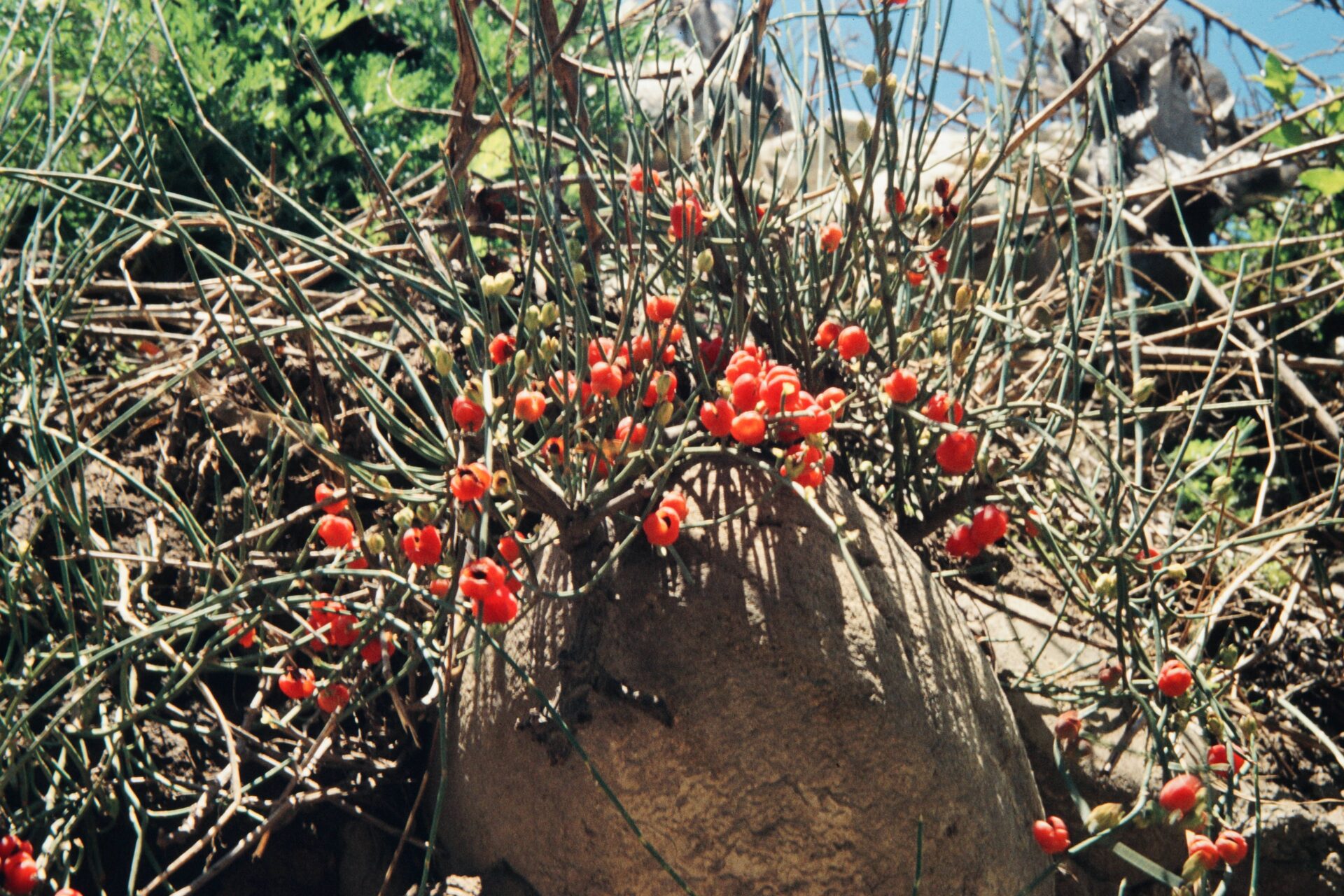
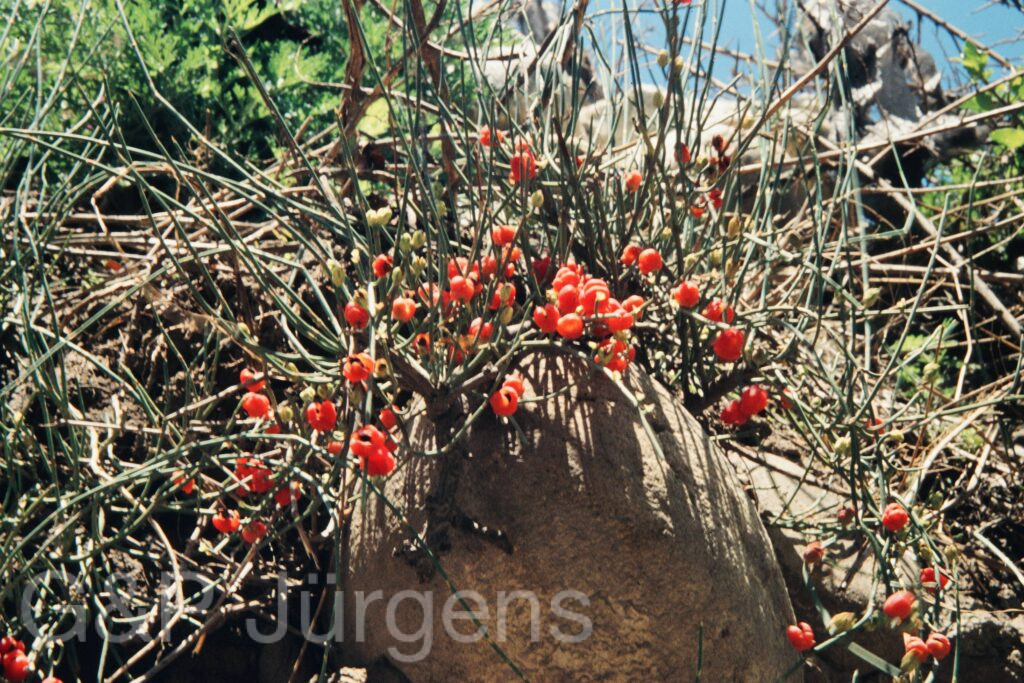
Ephedra gerardiana is a dwarf gymnosperm shrub of the high mountains of central and southern Asia, native across China, Nepal, India, Pakistan, Afghanistan, Bhutan, Tajikistan and Kyrgyzstan; its roughly 539 GBIF occurrences cluster along the Himalaya and the Tibetan plateau margins. It is a plant of dry, cold, high-elevation environments, as recorded near Jumla in West Nepal at about 2300 m in June, and ascends well above the treeline into the alpine and steppe zone. It thrives on stony slopes, gravel terraces and dry riverbeds, tolerating intense insolation, drought and winter cold in the rain-shadow valleys of the inner Himalaya.
The plant is a low, densely tufted, mat-forming shrublet with rigid, jointed, green photosynthetic stems that perform the work of the much-reduced, scale-like leaves borne in pairs at the swollen nodes. As a gymnosperm it bears no true flowers; reproductive structures are small cones, the plants typically dioecious, with pollen in axillary microsporangiate cones and ovules in compact megasporangiate cones. After pollination the female bracts become fleshy and bright red, forming a berry-like structure enclosing one or two seeds, dispersed by birds.
Ephedra is the sole genus of Ephedraceae within the gnetophytes, an isolated lineage of seed plants; E. gerardiana is the principal Himalayan species and a traditional source of the alkaloid ephedrine, harvested medicinally as somlata. This value, combined with slow growth and harsh, slowly regenerating habitats, has made wild populations locally vulnerable to over-collection and grazing, prompting conservation attention in parts of its range even though the species remains widespread overall.
Author: Wall. ex Klotzsch & Garcke · Sources: POWO (Kew), GBIF, Flora of China Vol. 4, Flora of Pakistan, Flora of Nepal, Monograph of the Genus Ephedra (Stapf)